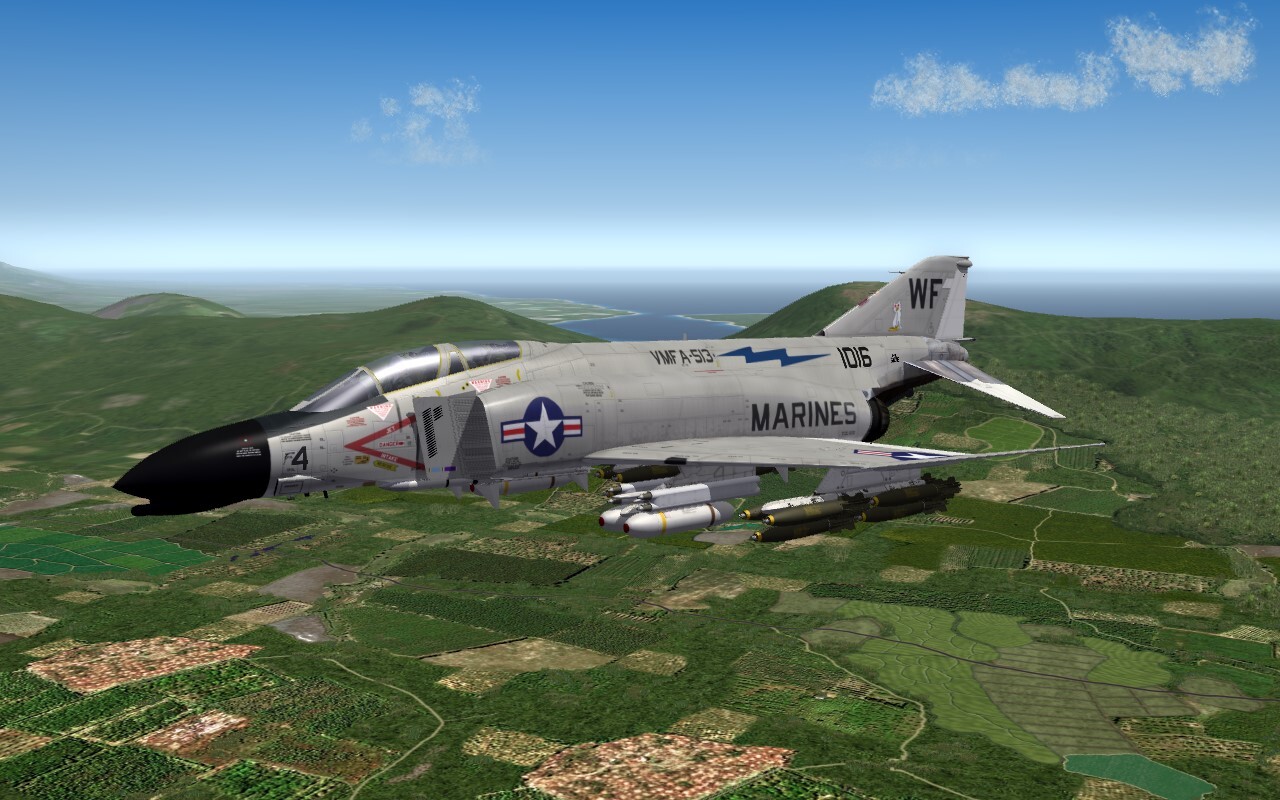
From The 331Killerbee collections
"Jamming Pods Vietnam War USMC 1965-1972"
-------------------------------------------------------------------
With SFNA, TK intruduced Us to two new AI Platfroms. They are ESCORT_JAMMER and EARLY_WARNING. Information applies to both. But, We'll concern
ourselves with ESCORT_JAMMER. But, Radar (Or Target) receiving applies to both.
First, it's how ESCORT_JAMMER is handeled in Game from My Testing (EB-66E over Hanoi in 1971 Timeframe.) and how to reflect that in Game.
Their's Two Important Items of Equipment We need to understand.
1. Radar Receiver. We have one in game already. It's called the "RWR". "Radar Warning Reciver". The real Monitors for the Equipment listed Below
Are still to this Day, Classified. We can use the current RWR for User Aircraft Reciving as a "Stand-in" for the time being. But it'll
take Our Avionics Guru's alittle time to intergrate Jamming RWR with a Aircraft's Radar Suite such as a EA-6A or EA-6B. One that works
just like the Current RWR will work. Again, Symbology and types of Monitors will be hard information to come by.
From the Stock EA-6B Data.ini in SFNA:
[DetectSystem]
Name=APQ-156
RadarType=SURFACE_SEARCH
VisualBlindArc=5,6,7
VisualRestrictedArc=4L,8L
MaxVisibleDistance=11000.0
HasRWR=TRUE
RWRMinFreq=2.0
RWRMaxFreq=18.0
RWRCanDetectCW=TRUE
The Radar Receivers listed below are are Looking for that Band of Freq. It's calling out. If it's a Multi- Band Platform, You have to
Make a Receiver in Your Platform (Airframe or Pod) to reflect that. That's to receive the Siginal.
2. Jamming Pods. Jamming Pods Jam the Signal the Recivers are looking for. The Entries for Jamming Pods is the Freq. that needs to be defeated.
ALL Jamming Pods in Game are handled as "Omni-directional". Think of it as having an invisible Circle around the "Users" Aircraft. To defeat
The GCR, via Receiver Monitor, One must manuver the Aircraft over towards the Threat and let the Pod do it's work. You know You are Sucessful
if the Monitor You are using shows the Threat. But the Threat stops blinking and the warning sound goes out. You'll still see the Threat.
It's just not "Painting" You. Or Locking on to You. Now that's for You and Your "User" Aircraft in Game. As, You are flying. In the Case
Of RECON Jamming Pods, Track Breakers. They can Track You. They just can't lock You up.
A-I doesen't handle it that way. A-I can't use Pods. Like a "User" Aircraft. A-I hadles it like TK intended. Again, Let's
look at the Stock EA-6B Data.ini..... The Pod is listed as a "Componet" of the Airframe. And that's how A-I uses them in Game..
[Fuselage]
SystemName[007]=ALQ99
SystemName[008]=DecoyDispenser1
SystemName[009]=DecoyDispenser2
[ALQ99]
SystemType=ECM_JAMMER
JammerType=NOISE_JAMMER
JammerStrength=120.0
MinFreq=1.0
MaxFreq=20.0
CanJamCW=TRUE
[DecoyDispenser1]
SystemType=DECOY_DISPENSER
EjectPosition= 0.0,-6.79,-0.19
EjectVelocity=0.00,0.00,-10.00NumChaff=30
NumFlare=0
[DecoyDispenser2]
SystemType=DECOY_DISPENSER
EjectPosition= 0.0,-6.96-0.18
EjectVelocity=0.00,0.00,-10.00
NumChaff=0
NumFlare=30
In the Case of RECON Jamming Pods, Track Breakers. They can Track You. They just can't lock You up.
EW and RECON Aircraft work as Single or Pair in support of a Strike Package. Never more than 12
Aircraft deployed and as small a "Dets" as 4 Aircraft on Combat or CV Operations.
JAMMING PODs Vietnam War USMC 1965-1972
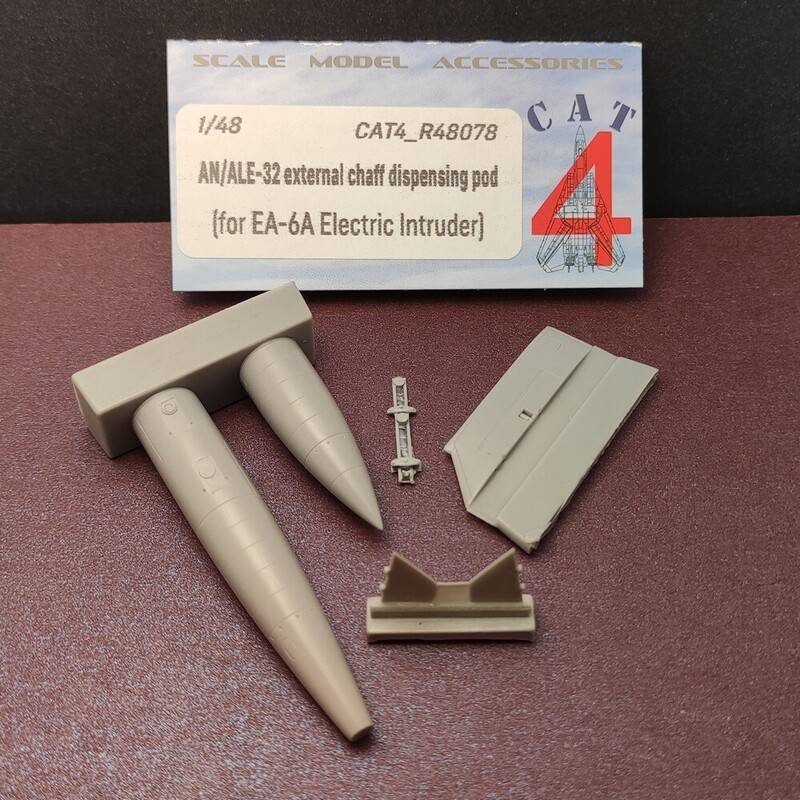
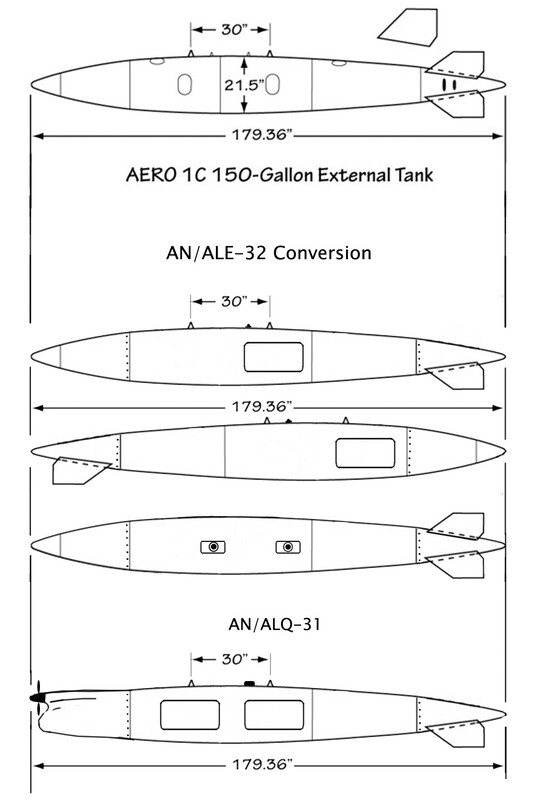
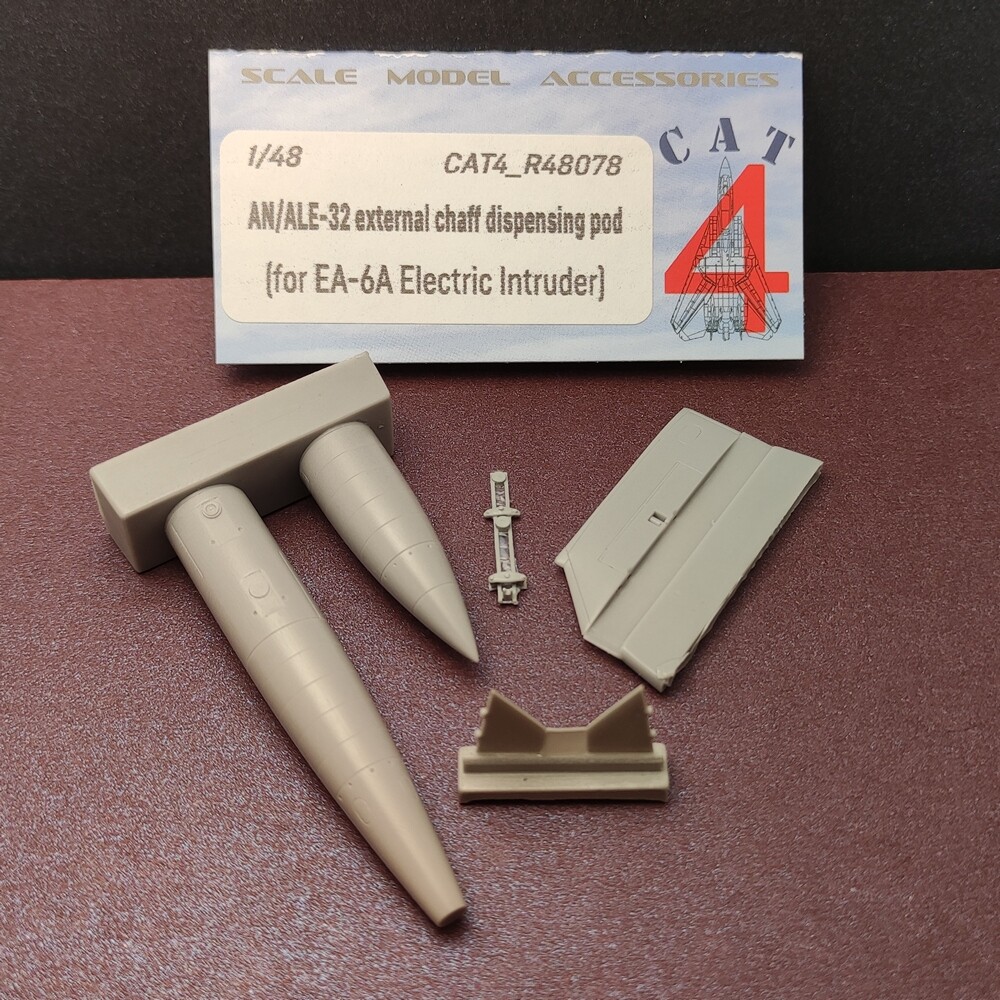
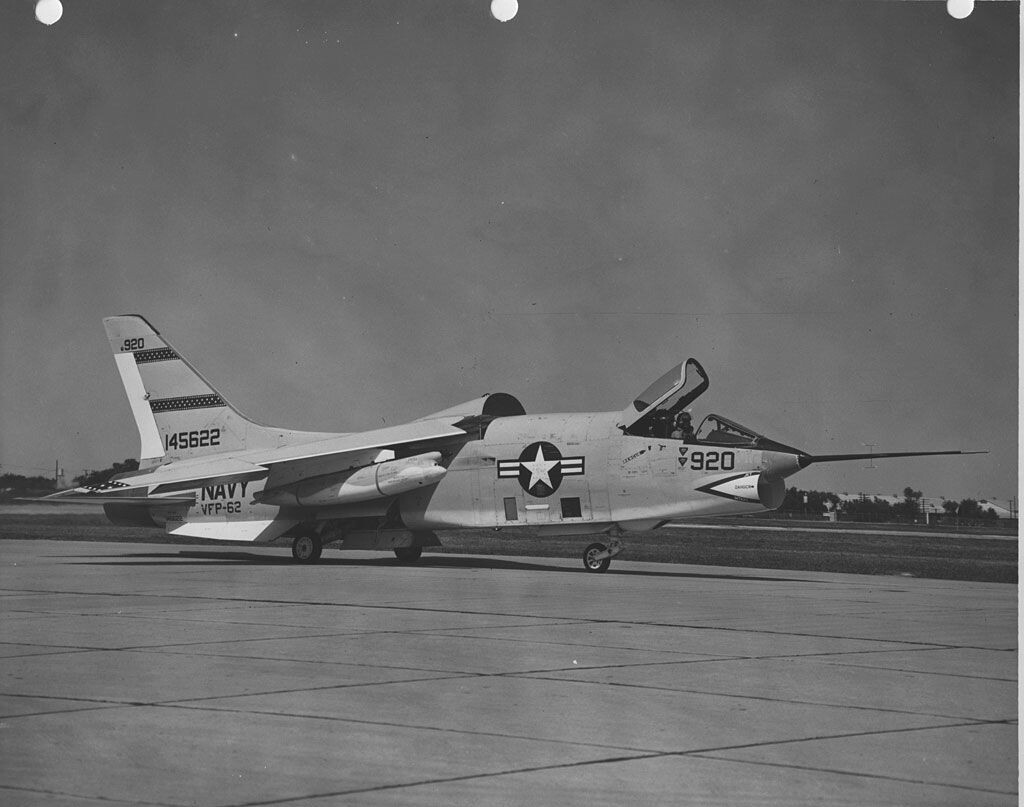
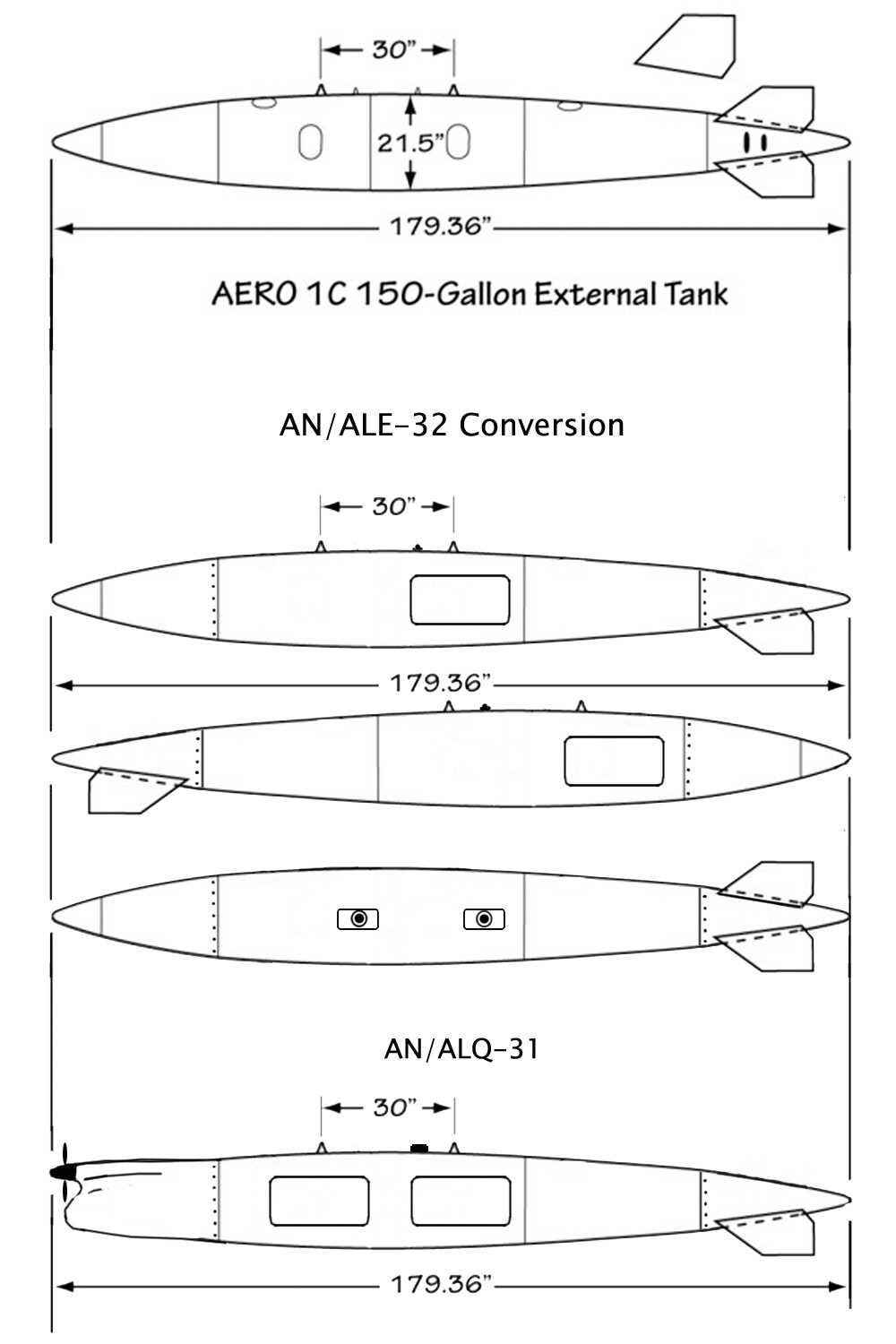
AN/ALE-32 Chaff Dispenser; manufactured by Lundy. adapted from the Aero-1C 150 gal. "streamline" series Drop Tank with AN/ALE-2 system.
EF-10B, EA-6A Pod Mounted.
AN/ALR-3 E/J-Band ECM Receiver EF-10B.
AN/APR-9 D- through I-Band Radar Intercept Receiver; manufactured by AIL, Collins EF-10B
AN/ALQ-53 Surveillance System; manufactured by Loral; used in EA-6A; replaced by AN/ALQ-86 In Tail Fairring.
Pod varient carried on wings prior to ALQ-31 arrival.
(Note to Ravenclaw_007: You've made this Pod. Thanks!)
AN/ALQ-86 Surveillance System (modified AN/ALQ-53); manufactured by Bunker-Ramo; used in EA-6A/B Tail Fairring.
AN/ALQ-31 ECM Jammer Pod; manufactured by North American; AN/ALQ-31A used two AN/ALT-6B's. Used on EA-6A,EF-10B,EKA-3B Aircraft.
AN/ALT-6B Multi-Band Jammer; manufactured by General Electric (with plugins for L/S/X Bands by Magnetron) used with AN/ALR-18
L Band 40 to 60 GHz. S Band 2 to 4 GHz. X Band 7.0–11.2 GHz.
AN/ALR-18 Threat Detection Receiver; manufactured by General Electric; part of AN/ALQ-27
AN/ALQ-27 Multiband Automatic Jamming and Deception System; manufactured by Sperry
-
AN/ALQ-76 Electronic countermeasure jamming pod operating in the 2–8 GHz (14.99–3.75 cm) range
E/F-Band Noise Deception Jamming Pod (related to QRC-494); manufactured by Raytheon,used with EA-6A Pod Mounted.
AN/ALQ-126 Interfaced with the aircraft's radar warning receiver (RWR),the ALQ-126 is capable of receiving
and processing radio frequency (RF) signals in the 2–18 GHz (15.0–1.7 cm) range. RF-4B.
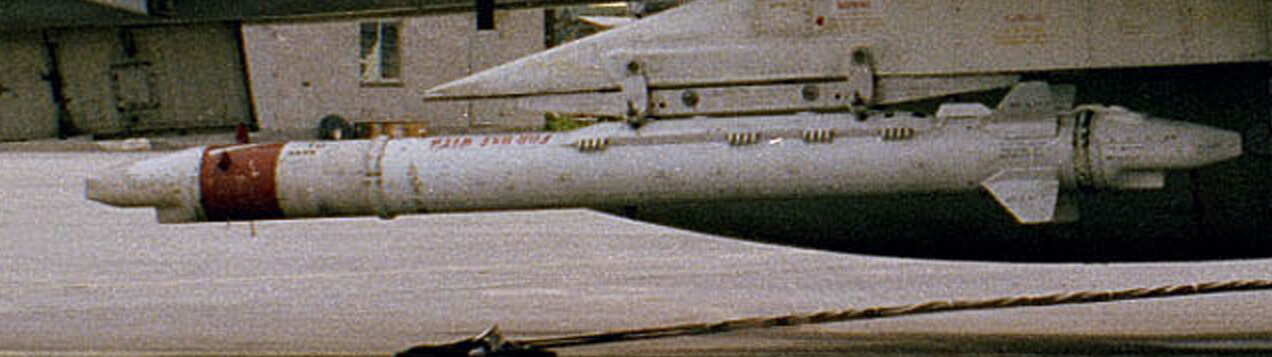
AN/ALQ-81 S/C-Band Pod-Mounted Track-Breaker; manufactured by Sanders; used with AN/ALQ-83 S Band 2 to 4 gigahertz (GHz) RF-4B.
AN/ALQ-83 Pod-Mounted Track-Breaker; manufactured by Sanders; used with AN/ALQ-81 S Band 2 to 4 gigahertz (GHz) RF-4B.
(Note; Ravenclaw_007 Length and Dia. same as ALQ-167 the UK uses.)
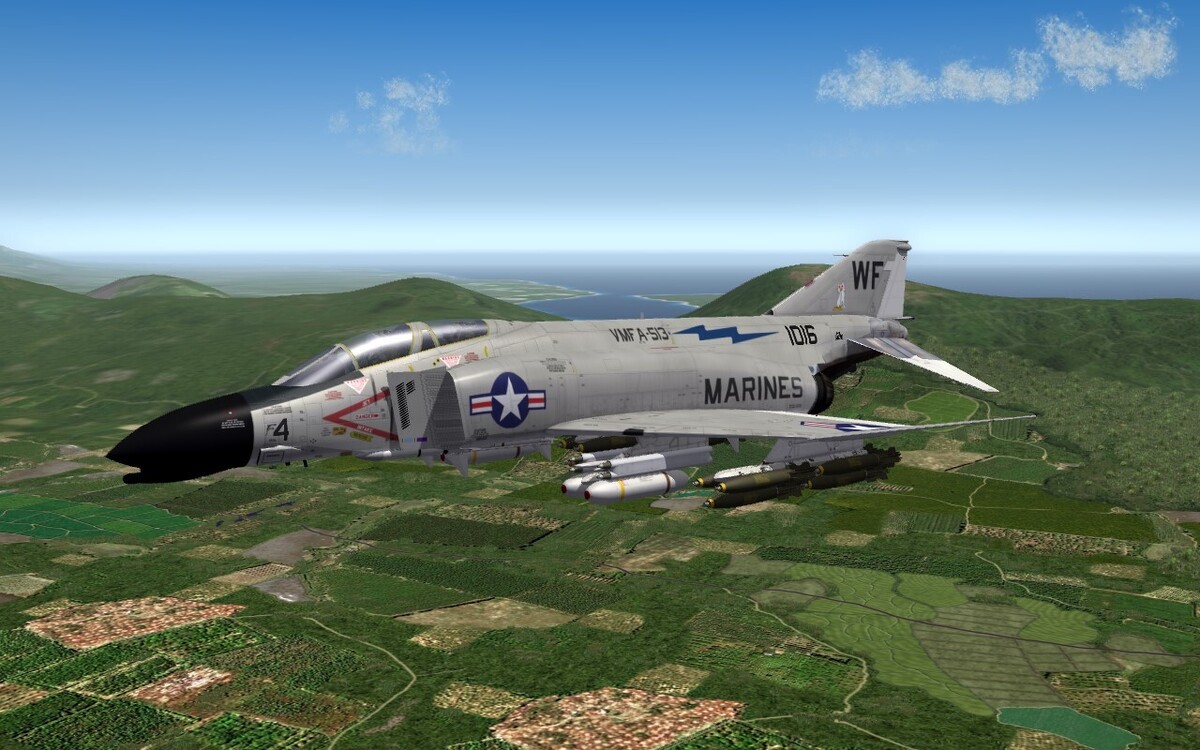
From the mid-1950s the Marines’ reconnaissance and Electronic Warfare (EW) capability was found in three Composite squadrons, VMCJ-1, VMCJ-2 and VMCJ-3.
One was assigned to each Marine Aircraft Wing and, at the start of the Vietnam War, they were equipped with a mix of photo (RF-8A Crusader)
and EW (EF-10B Skyknight) aircraft.
In April 17,1965, VMCJ-1 Deployed to Da Nang AB, RVN. with a Det of 6 EF-10B and 6 RF-8A. October 1966 EA-6A and RF-4B started being rotated in Country.
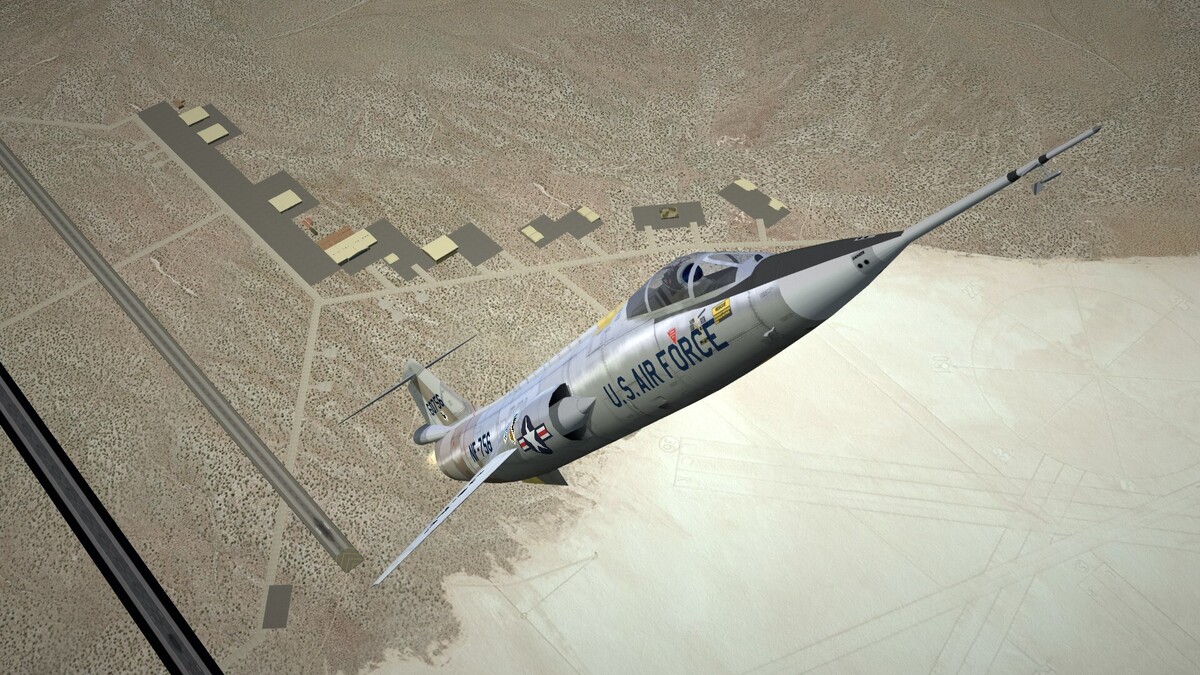
From the start, The EF-10B's had sucess. But there were limitations. They weren't Omni-directional. So, they had to point their Aircraft at Ground
Radars, then become Chaff bombers blinding Enemy GCR's and also, The EF-10B's still retained the "Whales" Guns. The others were the fact that the
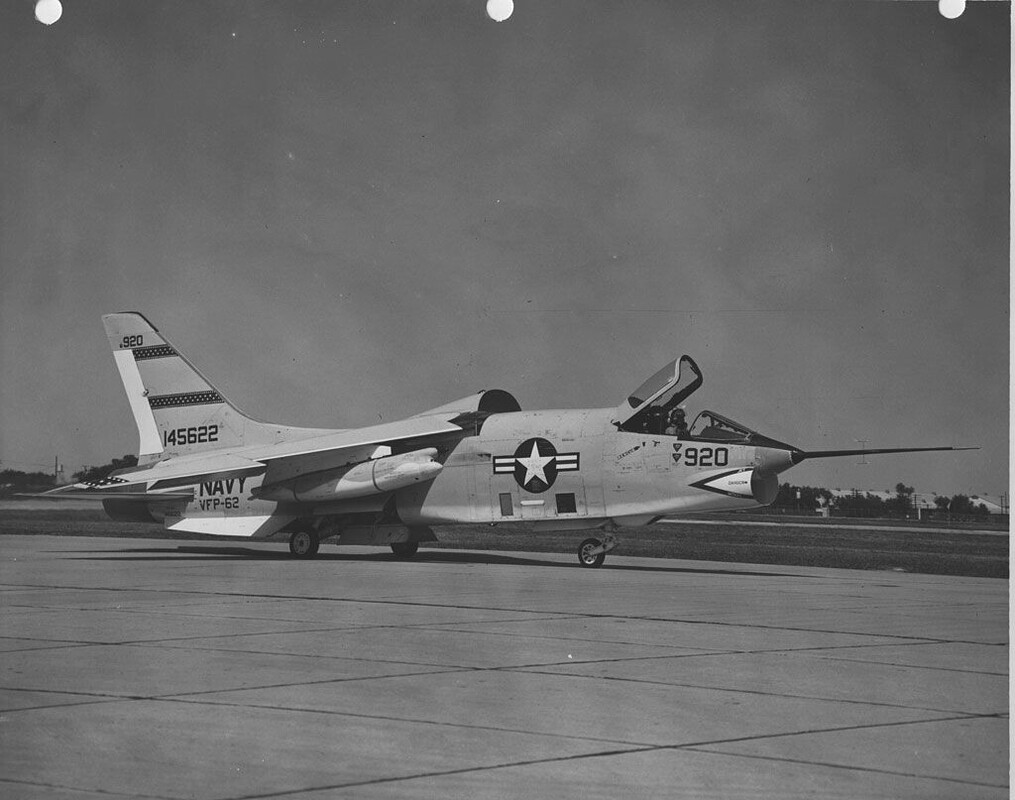
EF-10's didn't have IFR capability. Most all missions were flown with a Drop Tank and a ALE-32 Pod. Age played a factor. The EF-10 wings could
only handle so many G's in Turns. among others.
In 1967 a number of EF-10Bs beginning with Buno 124620 underwent a modification program at North Island under AFC 199 that upgraded the communications suite
and added a wideband fire control threat receiver and defensive ECM equipment. The first of these aircraft nicknamed “Super Whales” were deployed to VMCJ-1
at Danang in February 1968.
The last EF-10B departed Danang for CONUS in October 1969 and all the remaining aircraft were retired to the desert storage facility at
Davis Monthan AFB in 1970.
EF-10B BUNOS.
-------------
124663
125786 2nd Prototype. Lost in VN 24 Mar 67 (Capt Murphy/2Lt Albright)
125793* Lost in VN 19 July 68 (1/Lt Ariel Cross/Capt Lionel Parra)
125806* Lost in VN 31 July 65 (1/Lt McNulty/CWO-2 Small)
125809 Early 60s Cuba service with VMCJ-2
125810 1 of first 3 Super Whales, arr J-1 Feb 68 serving till 3 Oct 69.
125814 Crashed 12 Mar 60 at Holiman AFB, (1/Lt.Pope/Gysgt Beresford rcvrd)
125818 Mickey Conroy survived 2 Mishaps, 8/19/ 63 El Toro, 69 Danang!
125828
125831* Lost in VN 16 Jan 68 (Capt Moreland/1/Lt Gee)
125833 Crashed J-3 Yuma 10/21/68. Cable slap.(1/Lts Acker & Werner rcvrd)
125839* Crashed Japan 1/16/60, J-1 (Pilot Eads lost, ECMO Bo Boyett rcvrd)
125846* 2ND Super Whale, delivered to J-1 Danang 26 Feb 68.
125849 1 of 4 supporting 1st SAM Strike in NVN 27 Jul 65. (CWO-2 Steinken)
125850* At Edwards AFB Museum (J-1 prewar & J-3 service)
125869 1/Lts Sublett & Whitten flew fragged photo msn over NVN Aug 66
127034 Departed J-1 Danang on 3 Oct. 1969 for J-3.
127041* Lost to SA-2 18 Mar 66 over NVN ( 1/Lt McPherson/ 1/Lt Davis)
127047 One of last 2 acft to Lv J-1 Danang for J-3. (10/25/1969) (J-2 Cuba 62)
127050 Alpha damage FM AAA, Tiger Is 1965, (1/Lt Crouch/CWO-3 Wood)
127051 To PAR after tire exploded inflight Aug 1966 at J-1. (Markwitz/Gazzale)
127060* To PAR after inflight fire departing Danang 03/29/66 (Gering/Whitten)
127066*
127072 Delvrd to J-2 2/58. Struck at 4000 hrs by J-1 Iwakuni 1/8/65.
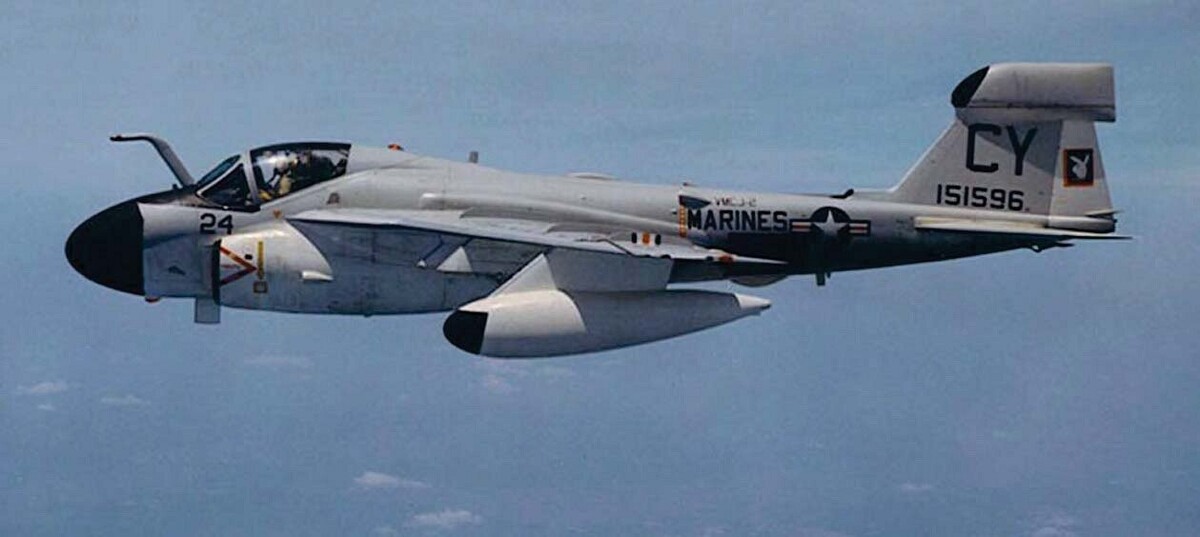
VMCJ-1 introduced the EA-6A to Da Nang in October 1966 and immediately started supplementing its EF-10s, which, due to demand, remained in-theatre until 1969.
With little time to acclimate, the ‘Electric Intruder’ went right into the breech, as operations were quick from the start. On the night of 2/3 December 1966
the squadron put an unprecedented nine jamming aircraft into the air (six EF-10Bs and three EA-6As) to support major U.S. Navy strikes. By January 1967
it had four EA-6As at Da Nang, and they were heavily involved over North Vietnam as the most capable EW platform in-theatre.
Twenty-seven EA-6A's were produced in three lots. The first six beginning with BuNo. 147865 were converted from A-6A fleet bombers.
"Methuselah", BuNo 147865, was one of the longest flying "Electric Intruders". The next six (148615) were converted from A-6A airframes
while on the production line. The final fifteen (156979-993) were built by Grumman as EA-6A's from the keel up.
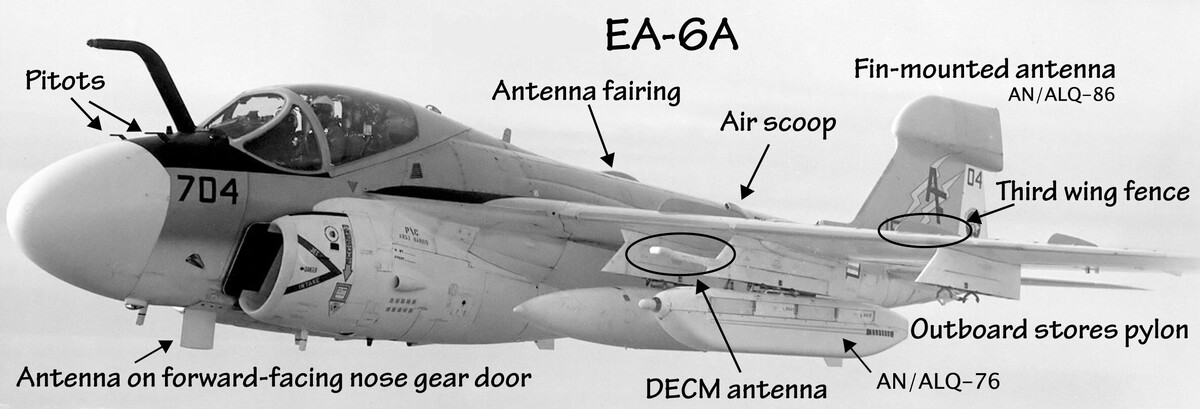
For its weapon system the EA-6A was initially equipped with the ALQ-31 pod, a long, odd-looking contraption that contained a pair of ALT-6B jammers.
It uses a ram air turbine to supply its own power and ALQ-53 in Pods as is housed in it's Tail Farring
This was soon followed by the ALQ-76 pod, which featured a Ram Air Turbine (RAT) that spun in the air stream to provide power for four transmitters,
each of which had an independently steered directional antenna. The system was highly sophisticated for the era, as most jamming systems
(such as those carried by the USAF’s EB-66B) were omni-directional, transmitting their jamming signal in a 360-degree fashion and not focusing it
directionally at the threat radar as the EF-10B's.
This system allowed the EA-6A to potentially carry up to 20 high-powered directional jammers, giving the aircraft the widest frequency coverage
of any electronic attack platform in-theatre. The ALQ-76’s basic design set the standard for the later ALQ-99 system used in the EA-6B.
In practice the aircraft carried three ALQ-76s, a pair of fuel tanks and ALE-32 chaff pods on its outboard wing stations. The EA-6A also used an internal
VHF-band ALQ-55 communications jammer that could complicate and confuse voice links between North Vietnamese fighter pilots and their ground control intercept
(GCI) stations, but only when crews were given permission to use it.
The EA-6A was easily the most capable EW aircraft of the entire war, proving much more capable than the EF-10B it replaced, as well as being much more survivable than the
USAF EB-66 or U.S. Navy EKA-3B jammers. Even when the latter service introduced the EA-6B in 1972, the Marines’ ‘Electric Intruder’ still possessed roughly 30 per cent greater
frequency range than the Standard-version Prowler, although the latter’s developmental plan would take care of that issue in short fashion. The EA-6B’s ALQ-99 jamming pods
were also capable of generating a significantly higher amount of radiated power than the ALQ-76s carried by the A-model.
The AN/ALQ-99 has a maximum power output of 10.8 kW in its older versions and of 6.8 kW in its newer versions. It uses a ram air turbine to supply its own power.
The AN/ALQ-99 is capable of jamming frequencies from 64 MHz (4.68 m) to 20 GHz (1.5 cm). Jamming frequency ranges are set forth in 10 bands:
Band 1: 64–150 MHz (4.68–2.00 m)
Band 2: 150–270 MHz (2.00–1.11 m)
Band 3: 270–500 MHz (1.11–0.60 m)
Band 4: 0.5–1 GHz (59.96–29.98 cm)
Band 5/6: 1–2.5 GHz (29.98–11.99 cm)
Band 7: 2.5–4 GHz (11.99–7.49 cm)
Band 8: 4–7.8 GHz (7.49–3.84 cm)
Band 9: 7.8–11 GHz (3.84–2.73 cm)
Band 10: 11–20 GHz (2.73–1.50 cm)
(Note to Moddlers: If you've built a AN/ALQ-99, You've built a AN/ALQ-76. Solid state vs. Vacuum Tube)
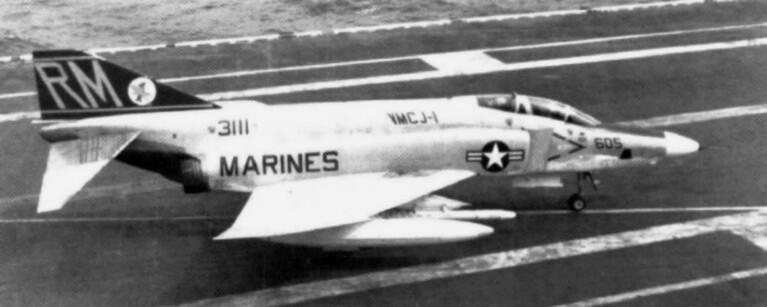
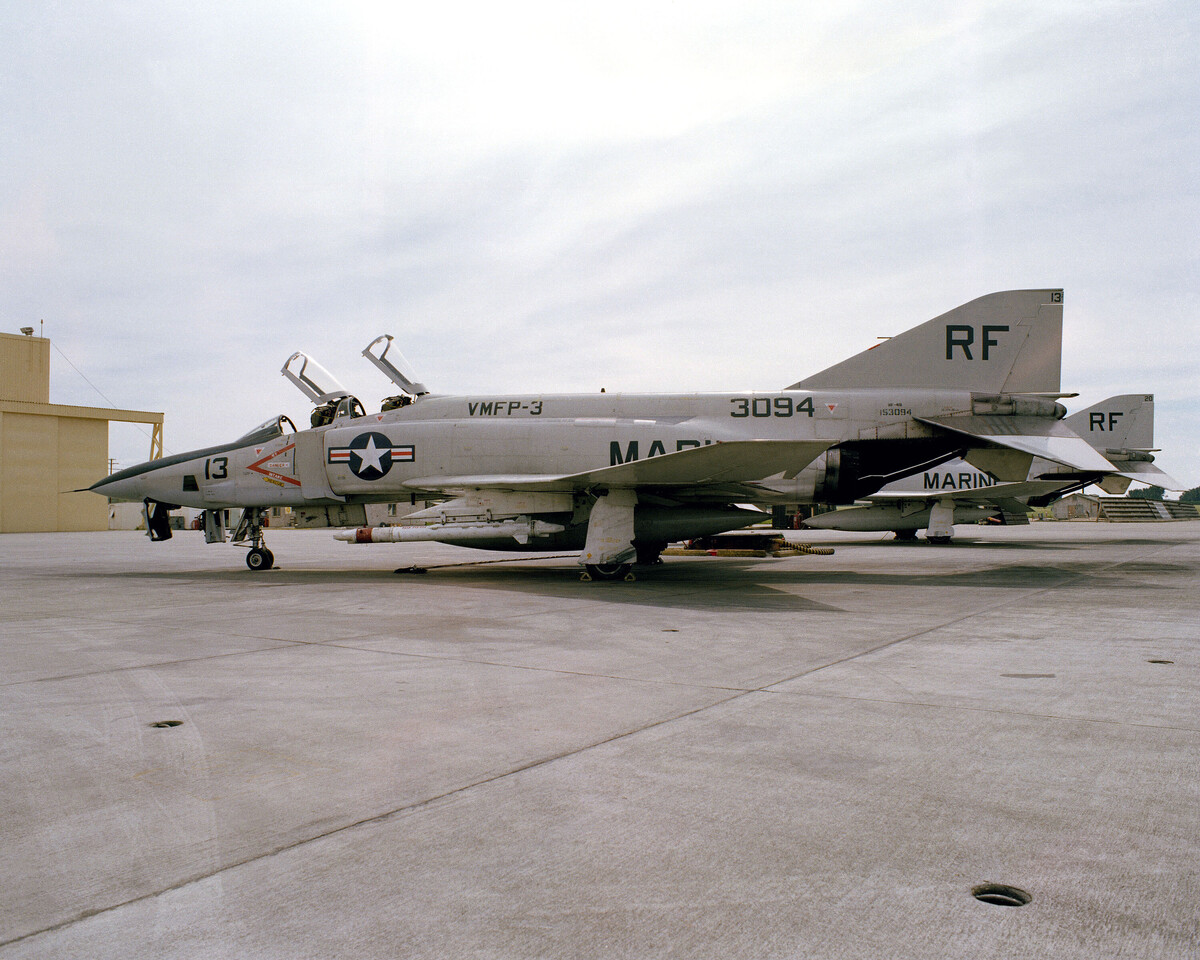
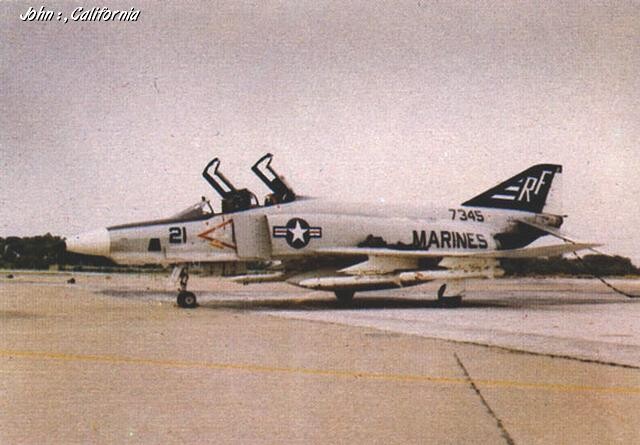
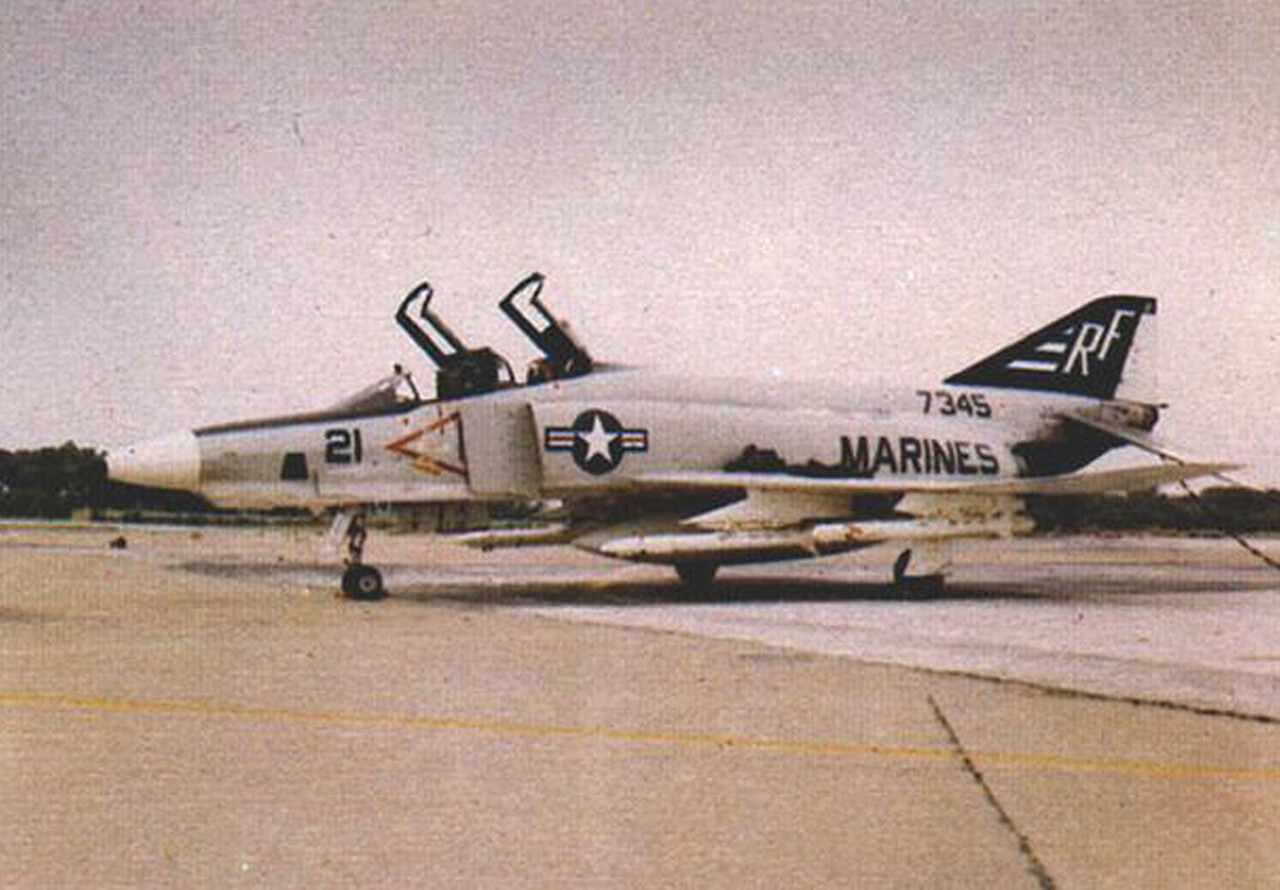
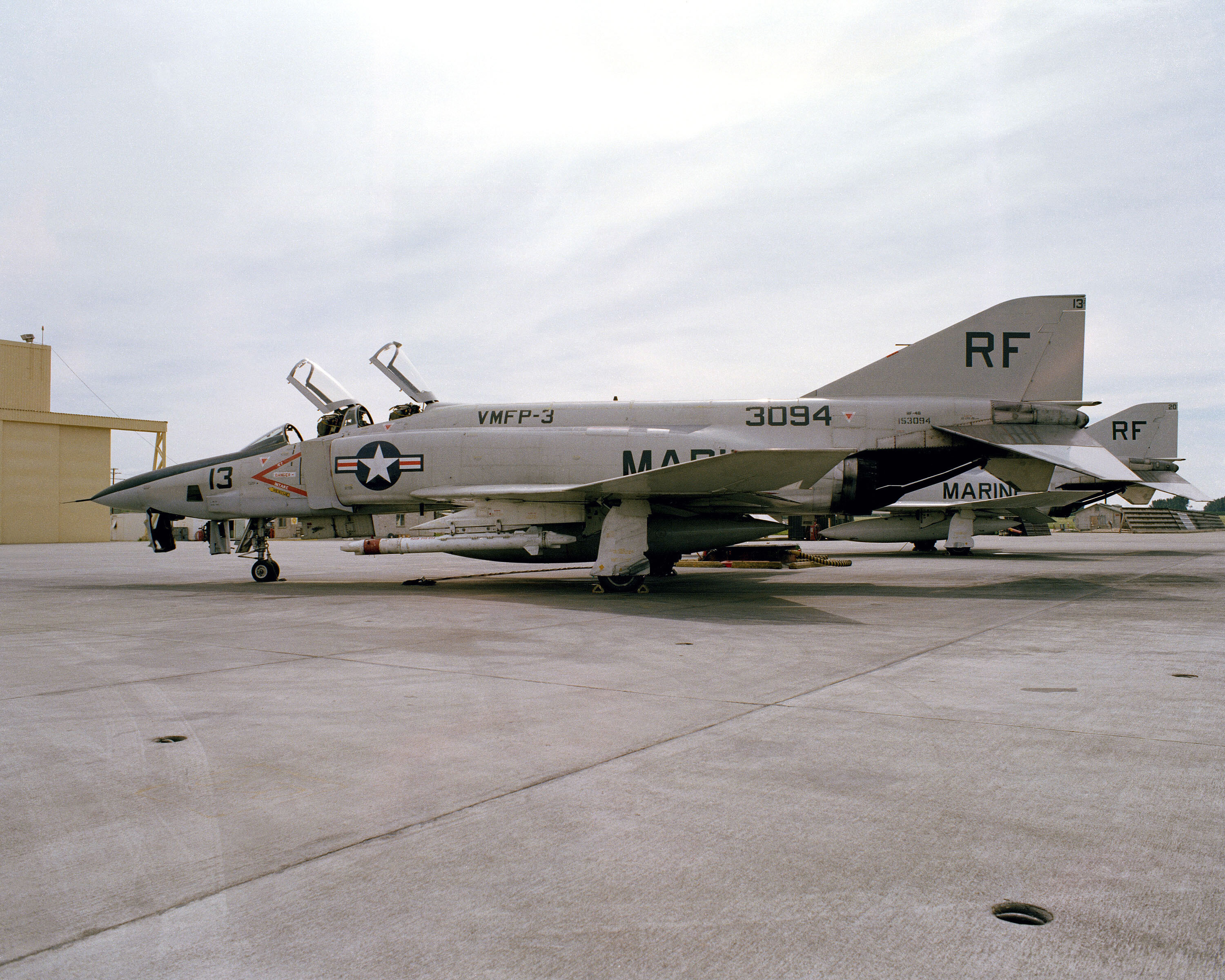
The RF-4B was first delivered to VMCJ-1 at Danang, RVN In October 1966. During the Southeast Asia
conflict, three RF-4Bs were lost to ground fire and one was destroyed in an operational accident.
An ALQ-126 deceptive electronic countermeasures package was installed Internally. and could navigate a
hight threat enviroment alone. But since the on set of 1965, US policy was one photo Bird, One Fighter Escort.
RF-8's, USAF F-101's and RF-4C's and their Escorts wree suffering heavy losses.
From the very beginning of the RF-4B's introduction in Country, The Marine Corps had anticipted this from the RF-8's.
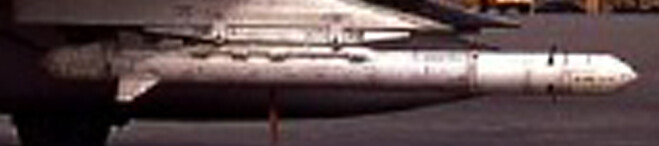
They had teamed up with the Sanders Corp. to develop the AN/ALQ-81-83's. They were S/C-Band Pod-Mounted Track-Breakers
that operated in the S Band 2 to 4 gigahertz (GHz) in the 81. the 83 operated in the S Band 2 to 4 gigahertz (GHz).
Starting in Oct. of 65', VMCJ-1 ran a pair of them. One ALQ-81, One ALQ-83 on the other. Later, on "Low Level"
Photo Runs, they would mount two Pairs. This made no need for Marine RF-4B's to have Escorts. The Bee Line
"SURE" program upgrade of the RF-4B in 1977 ended any need for external Pods for the RF-4B for the rest of it's
service life. The ALQ-81 and 83 were the most "Secretive" Jamming Pods ever used in the Vietnam Conflict.