

pagsab
-
Posts
72 -
Joined
-
Last visited
-
Days Won
1
1 Follower
About pagsab

pagsab's Achievements






-
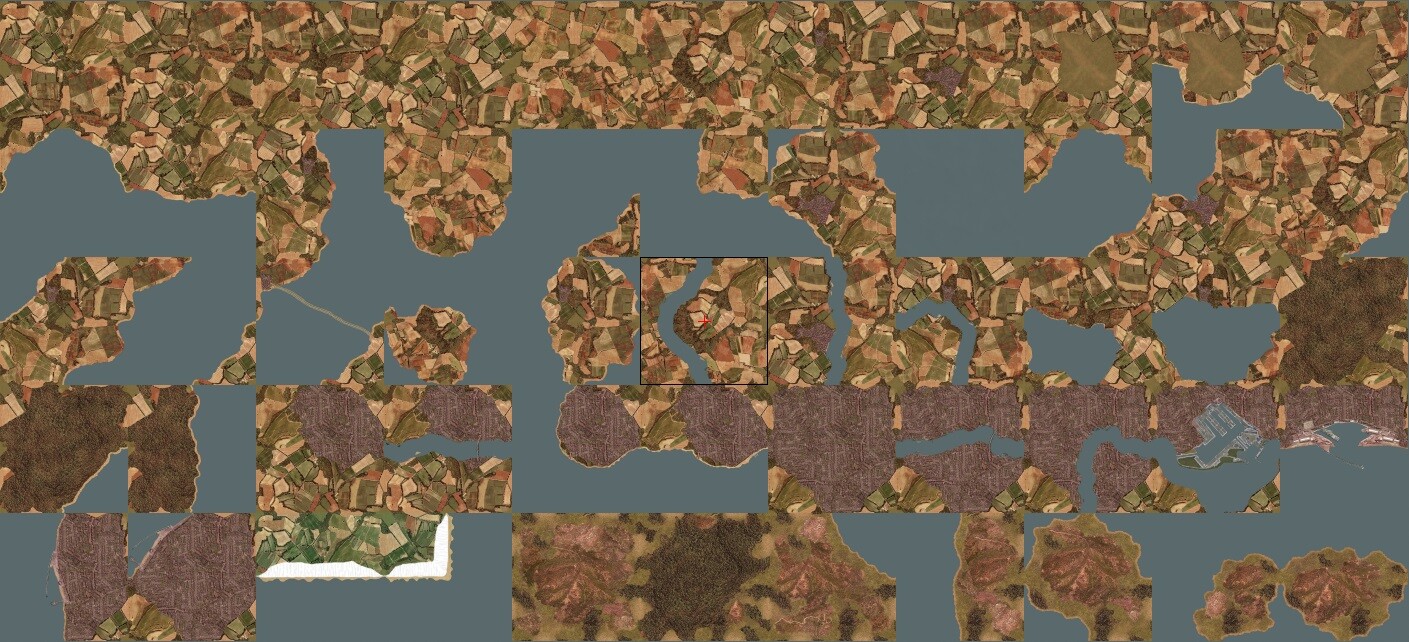
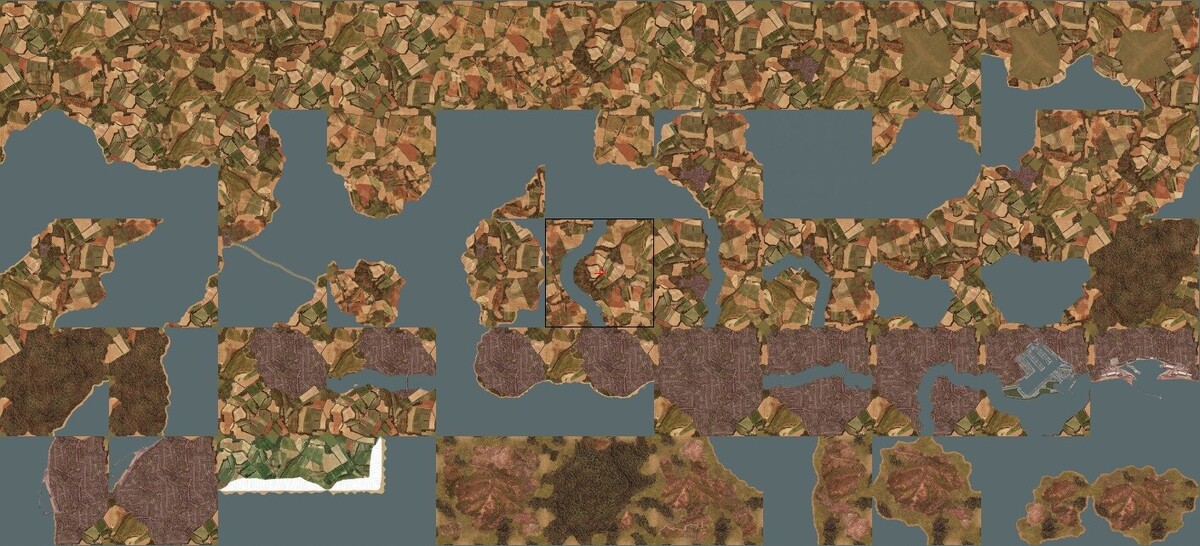
Thanks for that. Your YouTube site has lots of videos which allow comparison of FE2 with other WW1 air sims like WOFF. I too especially like the 'moddability' of FE2 and SF2. The more comfortable one gets with tweaking the sims, the more that they offer a flexible 'sandbox' which one can customise to one's heart's content. Besides discovering my wingman trick, I am particularly pleased with my compact bespoke tileset as shown below, which uses artwork by Gepard and others in a completely new system with just 3 types of tile edges (land, sea or a 50:50 split) to allow much more flexible and detailed hand-tiled terrain than that created automatically using standard tile layouts. See https://combatace.com/forums/topic/101404-spain-and-seaplanes for my latest endeavours with this tile system.
- 6 replies
-
- 1
-

-
- formation
- mission editing
- (and 1 more)
-
This looks great for fans of the Vietnam war, and shows what is available for those who prefer their mods and missions ready made instead of editing files for themselves.
-
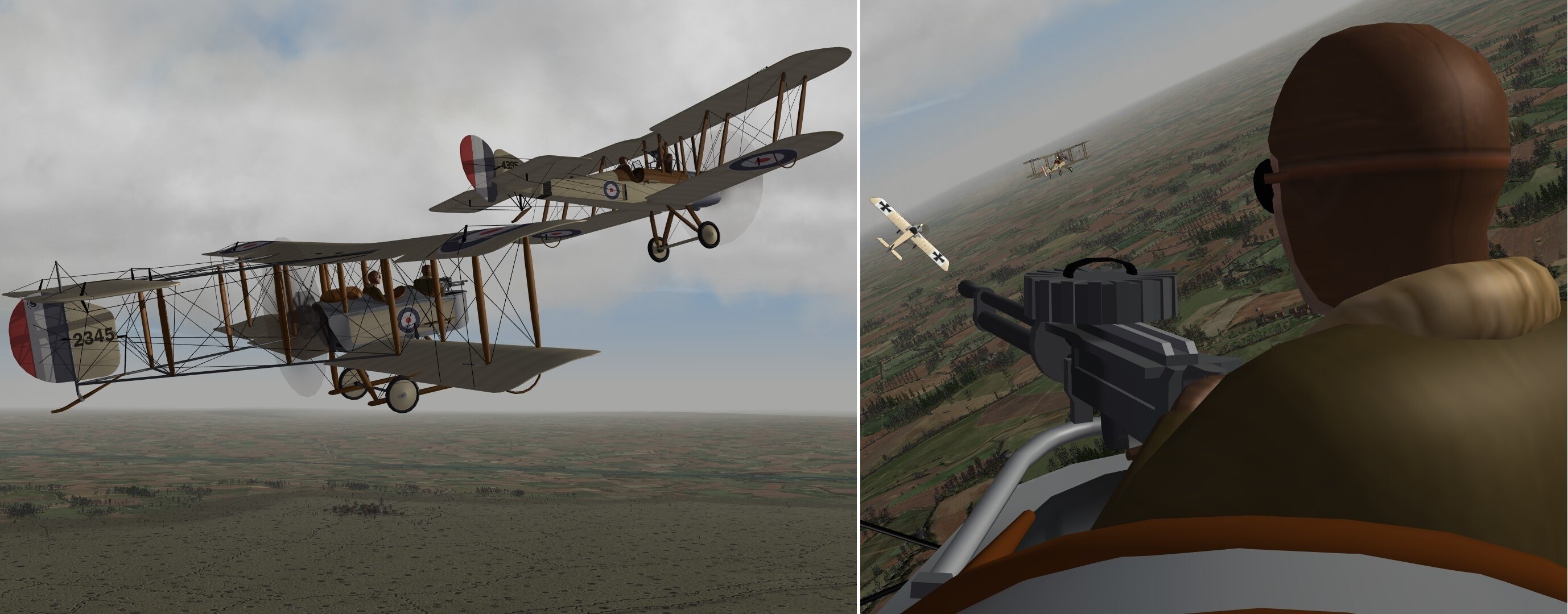
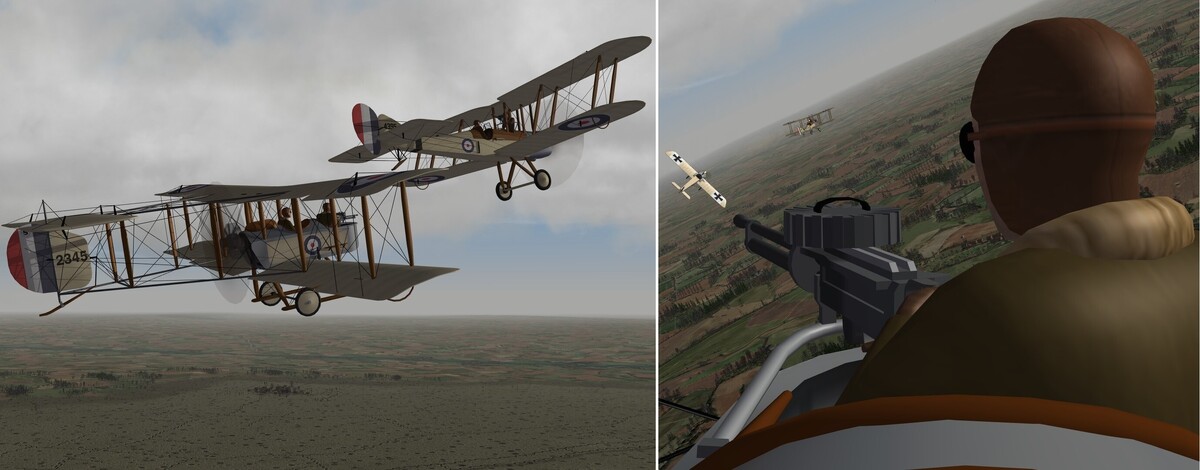
It is easy to use the manual editing techniques I have described to set up missions which involve air combat as well as formation flying. My favourite part of the Western Front air war is the early period, when aircraft often flew singly rather than with others of the same type. The picture below shows a mission I just flew set in late 1915, in which my Vickers Gunbus was tasked to protect an equally torpid BE2c assigned to photograph the Marcoing bridge south of Cambrai. A patrolling Fokker Eindecker tried to attack the BE2 using its interrupter gear, but my gunner and I diverted its attention in a swirling dogfight while our colleagues completed their mission. We eventually shook off the Fokker and gradually caught up with the BE2 thanks to our resumed padlock, accompanying it to a safe landing after an eventful 50 minute flight. I reduce planes' ammo levels in the mission file as a way of making such combats less ahistorically bloody.
- 6 replies
-
- 5
-
-
- formation
- mission editing
- (and 1 more)
-
This all looks gorgeous. What is that light seaplane model shown in your earlier Caporetto pics? It looks like it would be a delight to fly, and it would make a great basis for the Macchi M.41 seaplane fighter as discussed in my Spanish Civil War thread at https://combatace.com/forums/topic/101404-spain-and-seaplanes.
-
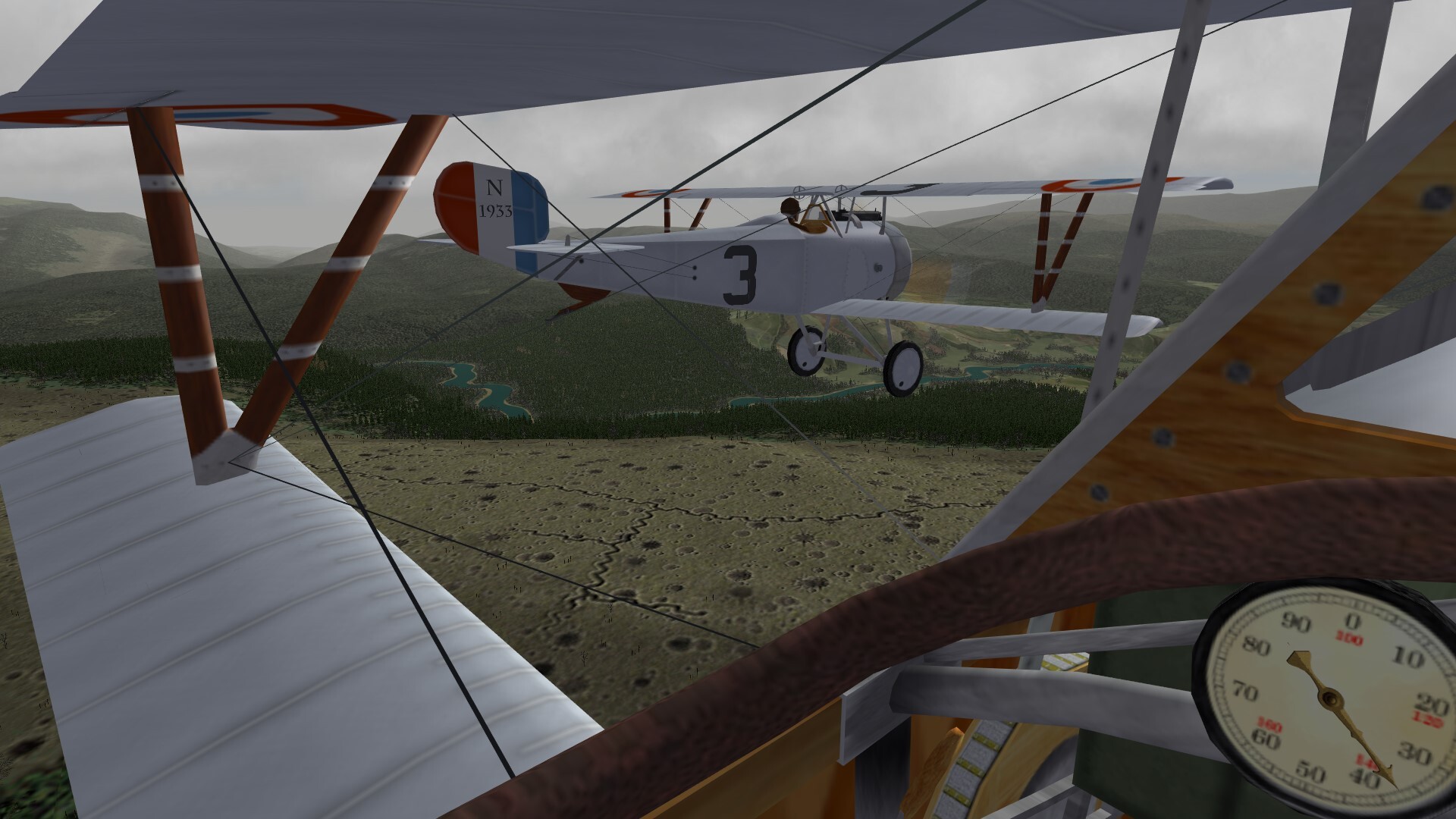
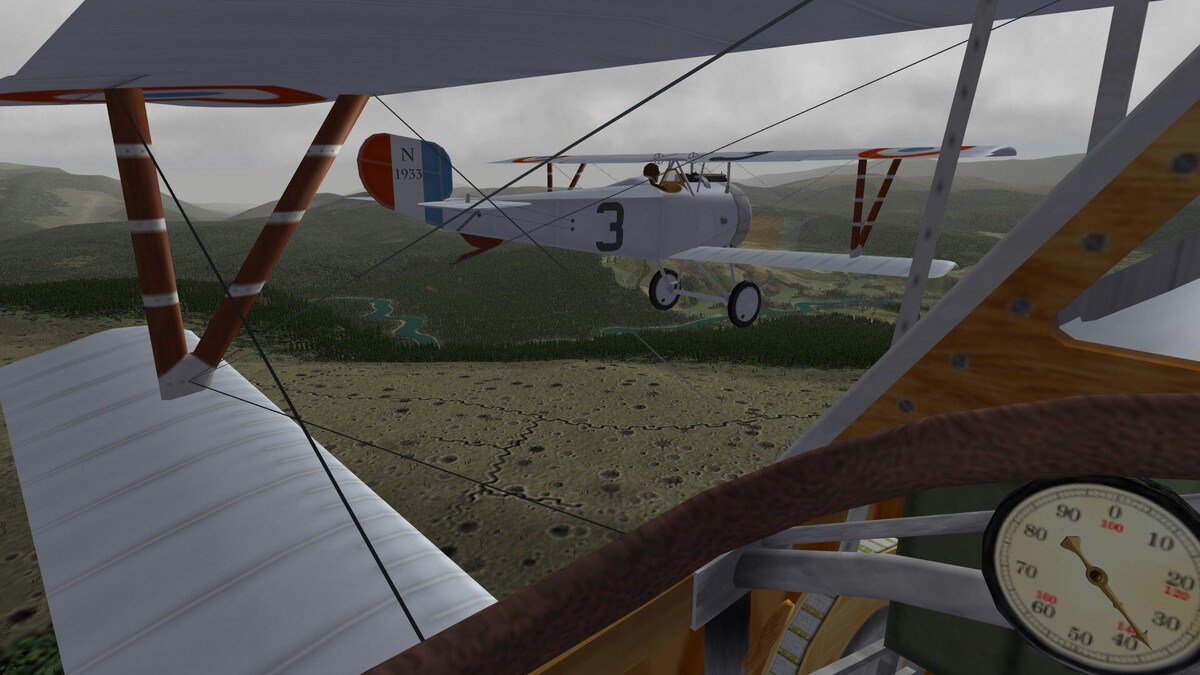
As I explain in my video at https://youtu.be/i4NyOMsilsY, my enjoyment of FE2 and SF2 has been increased enormously over the past year by discovering how to fly as a wingman, just like in the old European Air War. I laid out in https://combatace.com/forums/topic/100072-following-your-leader-through-the-low-european-clouds/ the simple text edits to the mission file needed to allow this in single missions. Jockeying stick and throttle to maintain close formations like those in WW1 makes flying a constant challenge, and gives a perfect marriage between the immersivity of cockpit views and the beauty of close-up external views of the classic planes concerned. FE2 does not have the benefit of the mission editor available in SF2, but by opening the terrain in Gerwin's TFD editor, one can find the coordinates needed to edit saved mission files manually to modify or delete flights and to shift bases and waypoints to whatever one desires. I often set up 'Recon' flights with no opposition except AAA fire, for the sheer pleasure of 40 minutes or so of atmospheric formation flying from takeoff to landing, as shown in the picture below of our pair of closely grouped Nieuport 17s over the mountains in the Vosges 2 terrain. Applying my mission cloning trick in FE2 has the rather disconcerting initial result that your leader starts superimposed with you on the airfield. This is not a problem unless you have Collisions set to Hard, but I now add some simple extra tweaks so that my leader starts flying above me instead, as in SF2. Just ensure that AdjustStartPosition and AdjustBaseWaypoint in the Mission Data section and StartOnGround in your leader's mission entry are all set to FALSE, and then boost his initial height to 50 and speed to 30 and the height of his first waypoint to 100. I boost LOD ranges in planes' ini files to stop details distractingly popping on and off, and I adjust CruiseSpeed in certain planes' data.inis to stop my leader flying too quickly or slowly for comfortable formation keeping. I also finally stopped towns in FE2 shimmering distractingly, by increasing the ExternalClipDistMin value in my planes' cockpit.inis from around 0.04 to 0.15 as diagnosed by Mue a decade ago in https://combatace.com/forums/topic/85970-shimmering-tods-and-target-objects/#comment-692525. These various tweaks have given FE2 a whole new lease of life for me, and allowed me to enjoy the cornucopia of user-created add-ons with renewed vigour.
- 6 replies
-
- 8
-
-

-
- formation
- mission editing
- (and 1 more)
-
Thanks, I was wondering where along the coast you lived. Without radar, the Republicans had a hard job protecting their long exposed coast, especially when the He-59s attacked at low level and at first light to minimise the risk of interception. Strafing seems to have played a big role in this conflict, and on p.140 Salas Larrazabal describes the Spanish He-51s' 'chain' tactics with each plane circling for successive firing passes until its ammo was exhausted. Low level flak seems to have been less of a deterrent than it would become in WW2.
-
As just one example of my last point, I finally managed tonight to resolve the shimmering towns which had annoyed me for so long in First Eagles 2, by increasing the externalclipdistmin value in my planes' cockpit.inis from around 0.04 to 0.15. Were it not for finding Mue's decade-old thread at https://combatace.com/forums/topic/85970-shimmering-tods-and-target-objects, I would not have had the faintest idea that this might offer a solution.
-
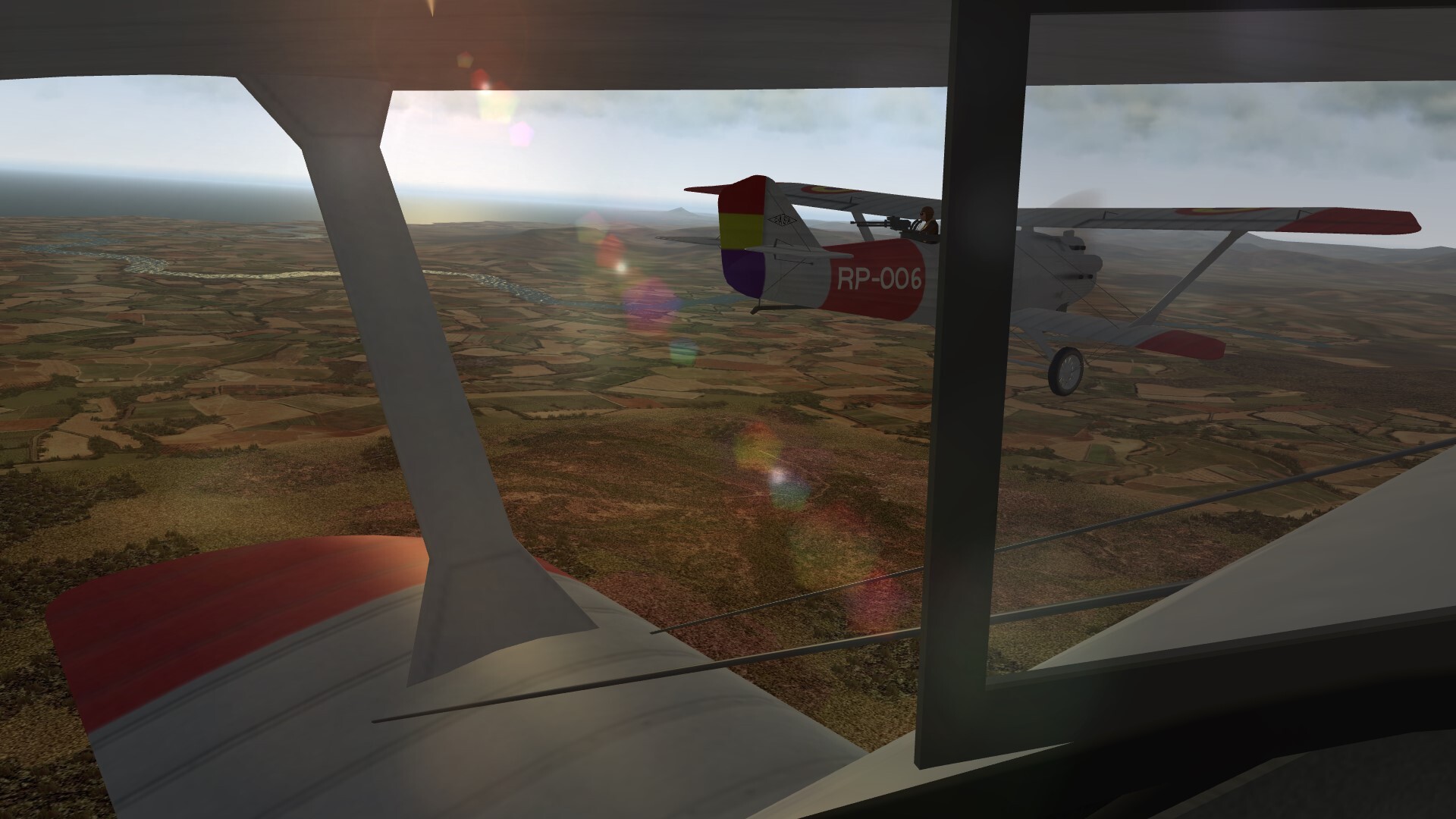
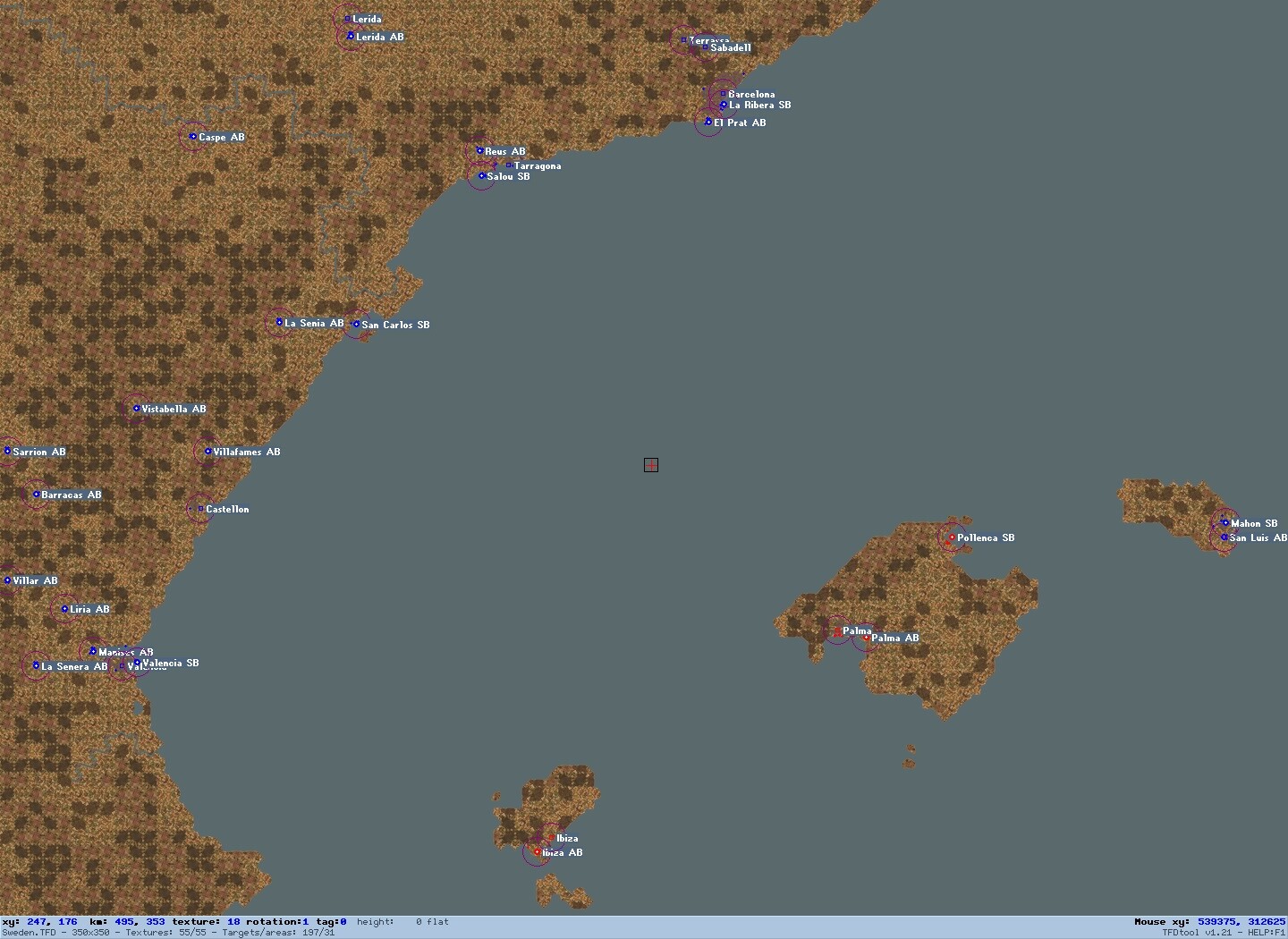
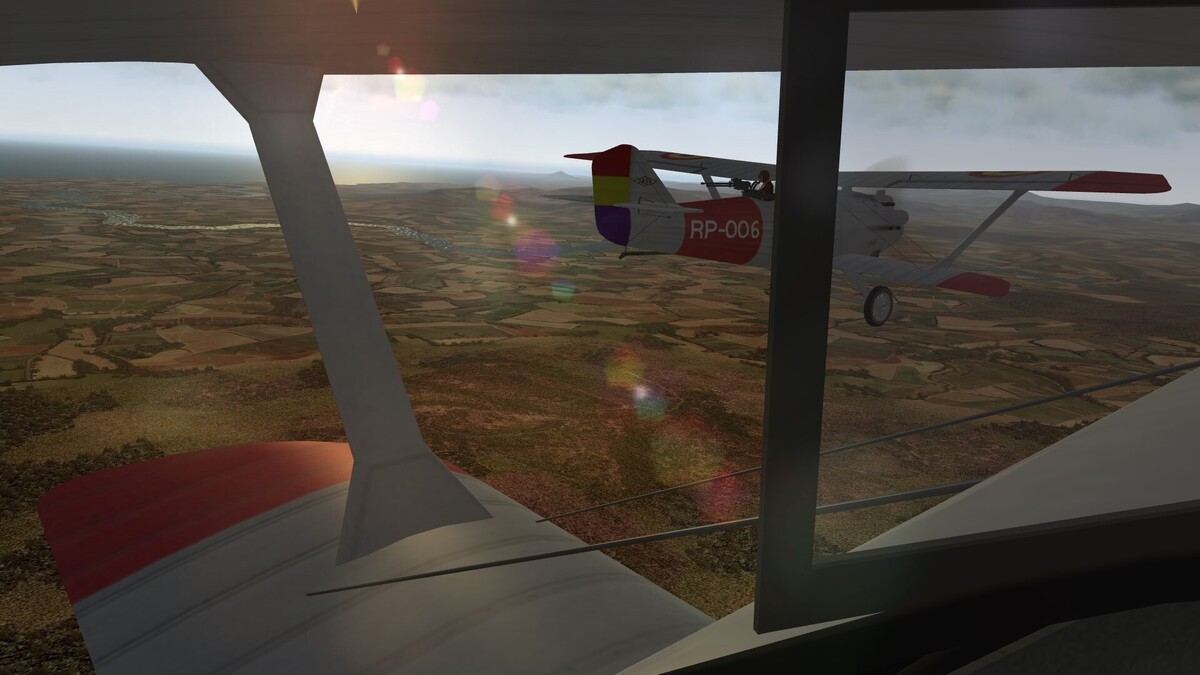
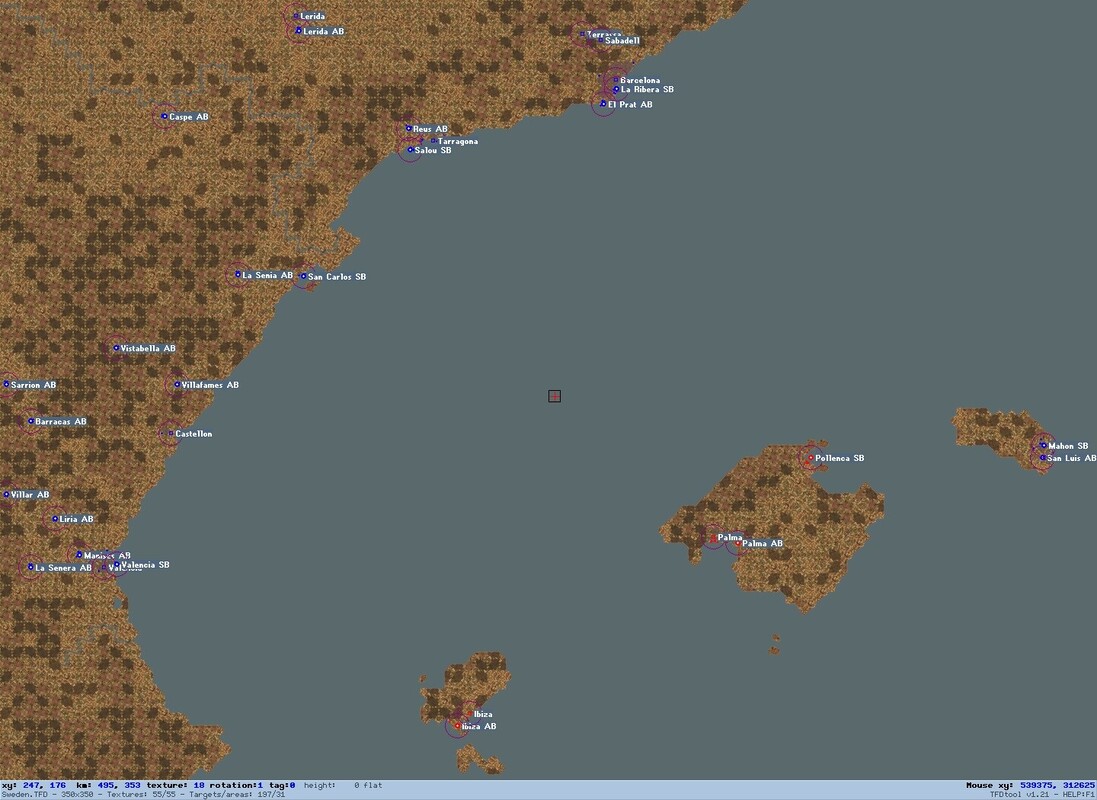
My Spanish terrain modelling has continued to generate insights not obvious from modern maps, such as the case for including the lower course of the Jucar river (as shown below in an early morning flight south from Valencia in our Breguet 19s), since the ill-fated Tous dam had not yet been built. As seen in the foreground, I also used Photoshop to make my moorland tiles look more like variegated Mediterranean scrubland, by pasting in parts of JSF Aggie's lovely high res desert tiles from the SW US terrain and adding 10% of monochromatic Gaussian noise. This greatly improves the 'look' of the many uncultivated areas. However, as my modelling slowly continued north to Castellon and on to the mouth of the Ebro, I became increasingly frustrated by the effort involved in choosing inland terrain tiles. It took forever to cross-reference my HFD view with the Google satellite map at my side, and it was so hard to maintain orientation while zooming in and out to decide whether each individual tile should have fields, forest or scrub that I almost lost the will to continue. Thankfully, I realised at last that there might be a far quicker and easier way to achieve a broadly similar result. I analysed the tile distribution I had created so far by cross-referencing it with the elevation range on the tiles concerned, as indicated conveniently at the bottom of the TFD view in Gerwin's editor. After some trial and error, I settled on a simple rule which gave an acceptable general approximation of the overall effect of my manual efforts, namely that in this terrain, inland tiles should have a random mix of forest and scrub instead of the default field background if they have an elevation range of at least 100 metres. This semi-automatic system proved marvellously simple to apply in Gerwin's editor, after I temporarily changed the TFD.ini to allow random individual distribution of my improved forest and scrub tiles instead of my 8 field variations. Despite some false starts when I forgot to reduce the default 5x5 setting of the editor, it took only 2 hours to re-tile the Mallorca mountains and the entire mainland strip up to the Ebro delta. The mountains had sporadic patches of cultivation just as in my manual efforts, and I could use my satellite map as before to add additional forests and scrubland as appropriate in less steeply inclined areas like the upper Ebro valley. Sooner than I had hoped, I completed my coastal circuit all the way to Barcelona, as shown in the 90 by 64 tile screenshot below. This represents 360 by 256 km of real terrain, but my scale reduction halves the duration of flights and makes my preferred continuous wingman missions just about practical even in the slow craft of this period. The terrain allows complete over-water combat missions by sea and land planes throughout the SCW, and simple reassignment of the central airfields lets it host closer range combat missions in and after the spring of 1938 when the Nationalists in Aragon advanced to the sea from Castellon to the Ebro. I am celebrating my completion of the first full stage of my Spanish project by piloting the wide variety of Golden Era planes used in the SCW either in individual treetop flights to enjoy my undulating high resolution terrain or in as close a formation as my flying skills allow, with the terrain as a backdrop to the beautiful aircraft models themselves. My new techniques of HFD rescaling and semi-automatic tile selection have transformed my hand-tiling endeavours, and for the first time it seems really practical to expand my flexible bespoke tilesets beyond small vignettes into significant portions of the area covered by more conventional SF2 terrains. As I said, my next step in Spain will be to push north-west from the area shown above to cover the entire Aragon front from Teruel through Zaragoza to Huesca, including the Nationalist airfields behind the line. This will position me well to push on in due course to the Biscay coast and to central Spain, giving me a much more extensive overall terrain than the small vignette around Madrid which I envisaged originally. As my projects continue to develop, I am enormously grateful for the resources and insight of so many skilled modders on which my own belated and rather idiosyncratic efforts depend.
- 18 replies
-
- 4
-
-
- hand tiling
- hfd editing
- (and 3 more)
-
Part of the fun of terrain-making is the research it inspires, yielding greater understanding of the reality which our virtual worlds seek to reflect. One of the maps in Lopez’s SCW aviation atlas shows a Republican airbase at La Senyera, 45 km south of Valencia. Sure enough, I found the small hamlet of Senyera and put an airfield on the flat ground there for test flights over my new model of the mountainous cape region. However, maps in Salas Larrazabal’s 1969 history of the SCW air war show the La Senera base only a few km south of Valencia. Google searches to resolve the contradiction eventually revealed that both maps are wrong and that La Senera was the cover name given to an airbase built in late 1936 near Chiva, 30 km west of Valencia. I will now have to delete my phantom base and continue north with my terrain modelling in order to have the mainland airfield I desire!
- 18 replies
-
- 3
-
-
- hand tiling
- hfd editing
- (and 3 more)
-
A key feature of my reduced scale terrains is that my airfields are far smaller than in other SF2 terrains. One can even squeeze seaplane strips into river tiles, as shown below by my remodelled port and seaplane base of Mahon (Mao in Catalan) on Menorca. I have now also modelled Ibiza and Formentera, and I am about to leap further west to the mountainous cape south of Valencia, with a view perhaps to proceeding clockwise around the coast to Barcelona so as to open up this entire maritime arena for seaplane and landplane action by the time that my used copy of Herrera's book finally arrives from Madrid. Thence inland to Teruel and Zaragoza to link up with the land fronts and give me even wider settings for my SCW scenarios.
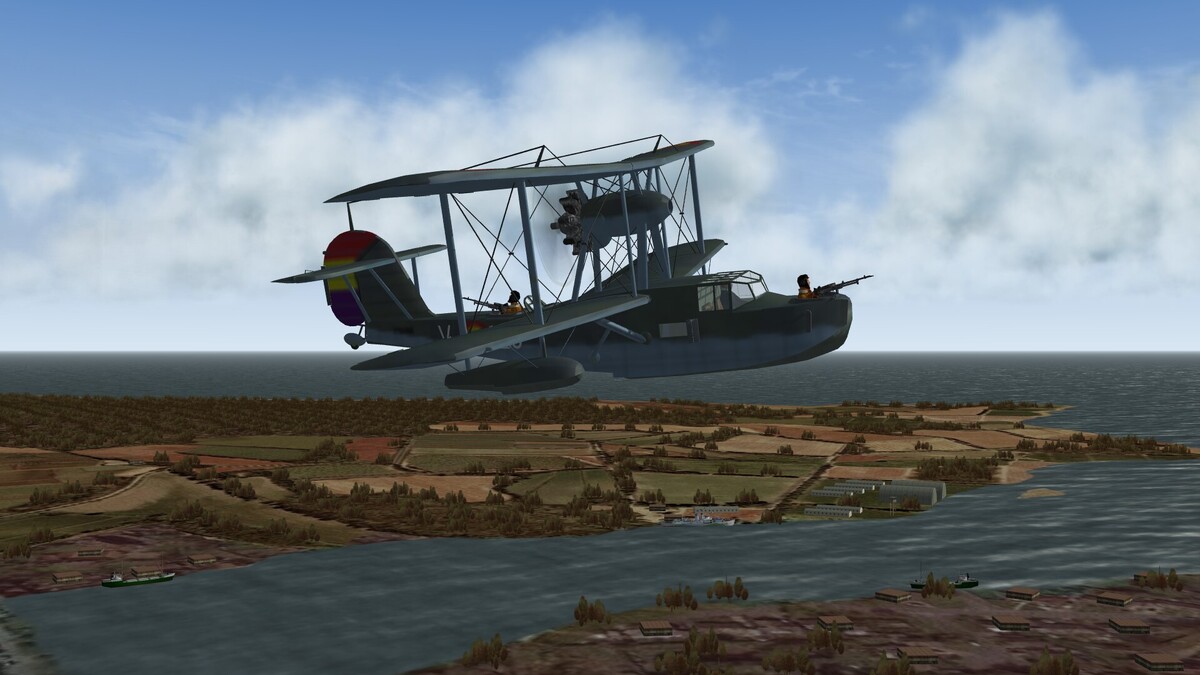
- 18 replies
-
- 3
-
-
- hand tiling
- hfd editing
- (and 3 more)
-
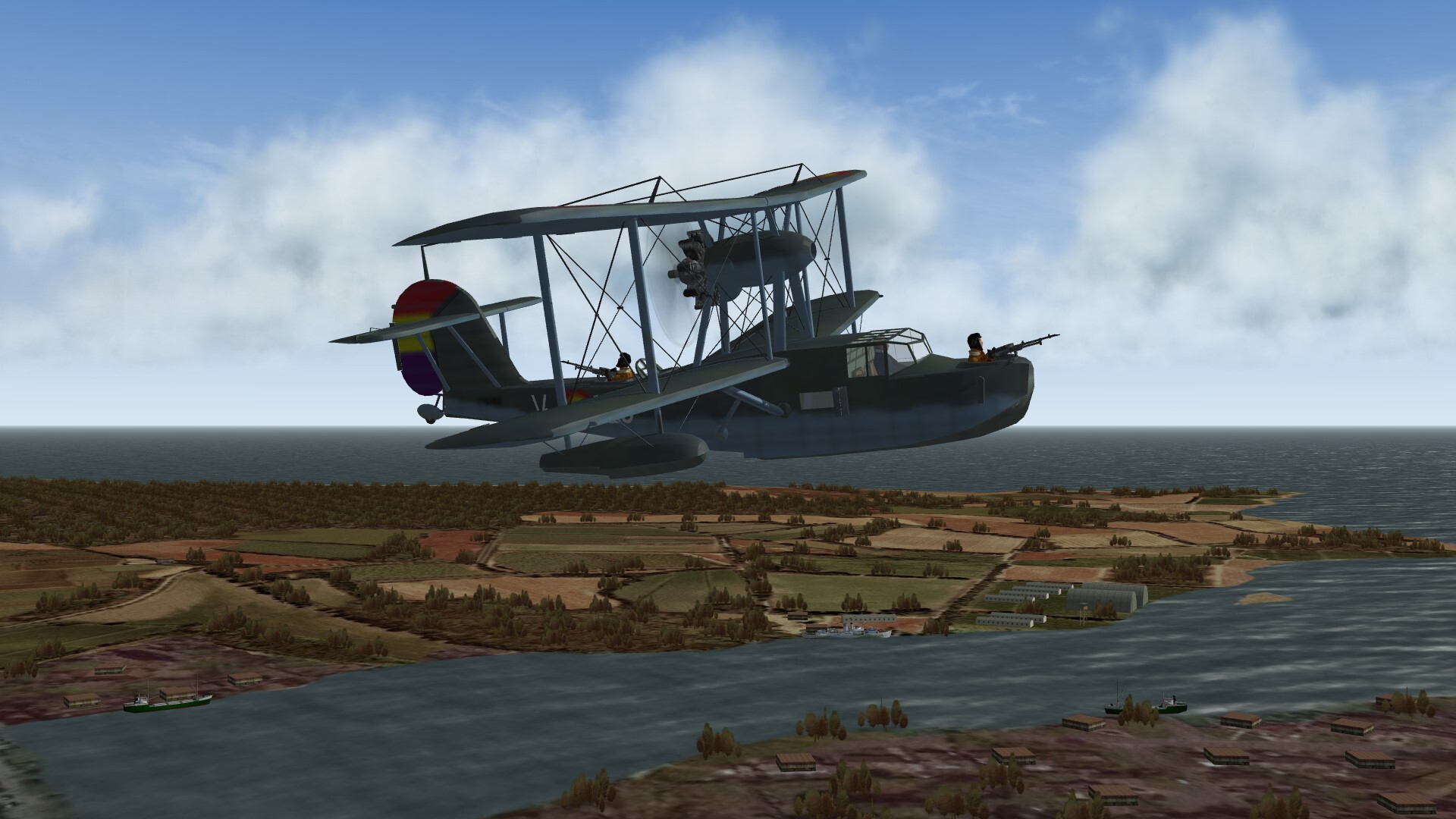
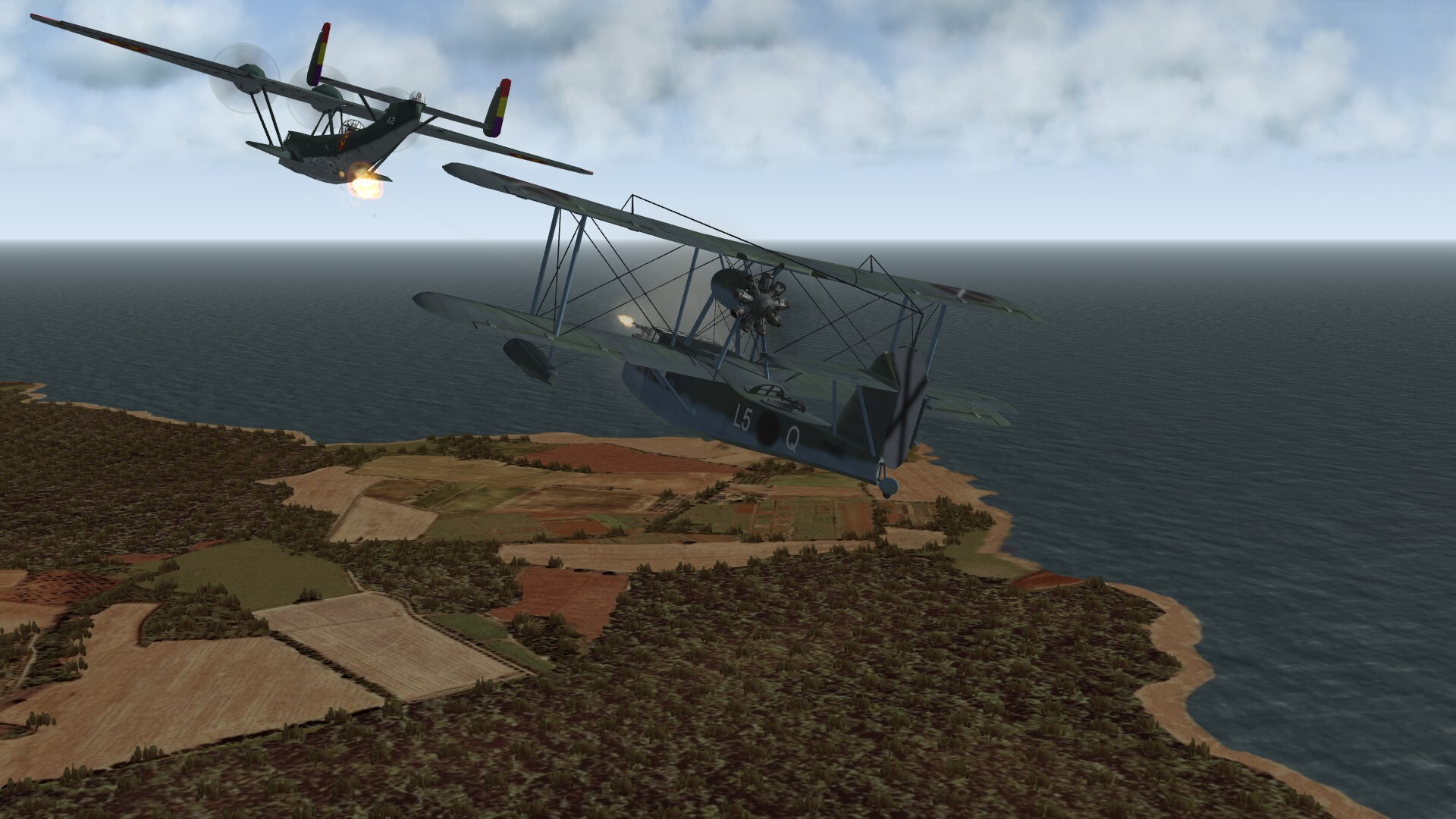
I was pleased to discover that I could rename my stand-ins to match the real aircraft simply by renaming the aircraft folder, the main ini file, and the full and short names at the start of that file, leaving everything else as is. This allowed me to create separate folders for my 'Dornier Wal' and 'CANT Z.501', and hence to amend the data files to make the former plane slower and to remove its tail gun (which on the Z.501 offers a handy stand-in for the real third gunner atop the engine nacelle). I used similar techniques to turn the Walrus not only into the Savoia S.62 but also into the smaller but similar-looking Italian Macchi M.41 single seat naval fighter, a few of which operated from Mallorca early in the war. I increased the Macchi's speed and engine power, removed the gunners, and turned the front gun into a fixed pilot-controlled HMG (instead of the actual 2 LMGs). To test my refinements, I set up a simple interception of a Republican 'Dornier Wal' by my 'Macchi' over the abortive Republican landing site at Portocristo. As the picture below shows, I did my best to apply standard realistic tactics from FE2 and to use the enemy craft's tail assembly to shield me from his dorsal gunner, with much greater success than in my previous dogfight. Having lamented only the other day the lack of models to simulate seaplane missions in the SCW, it is amazing what a little ingenuity and lateral thinking can achieve!
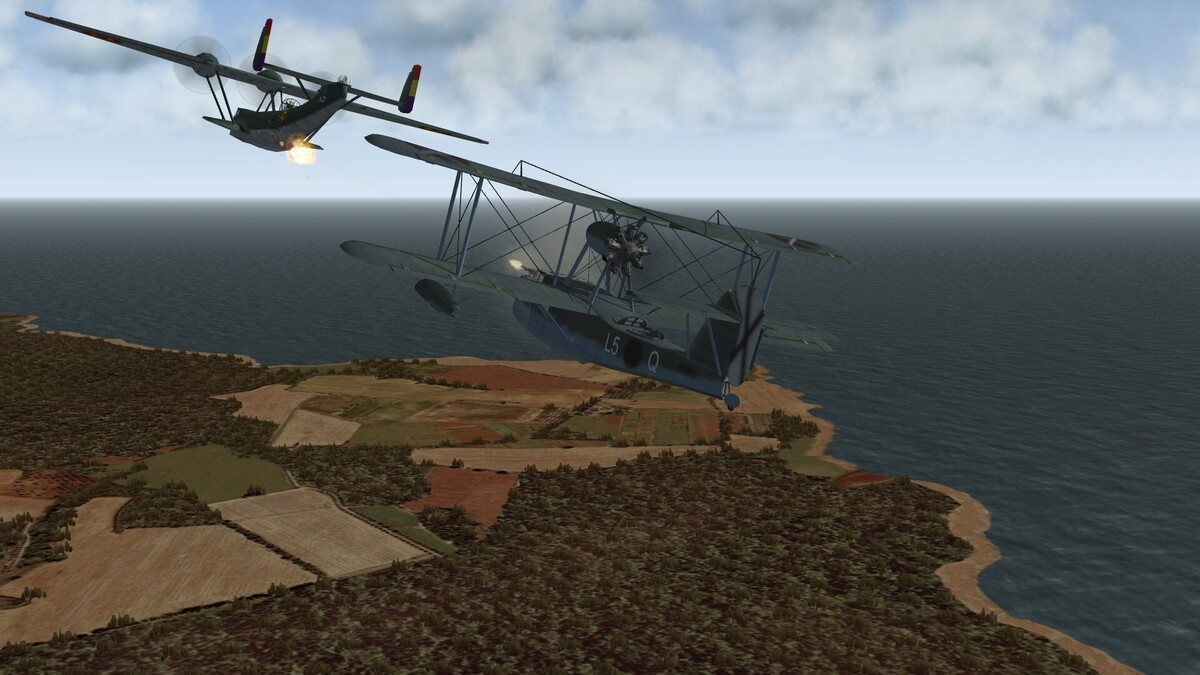
- 18 replies
-
- 1
-
-
- hand tiling
- hfd editing
- (and 3 more)
-
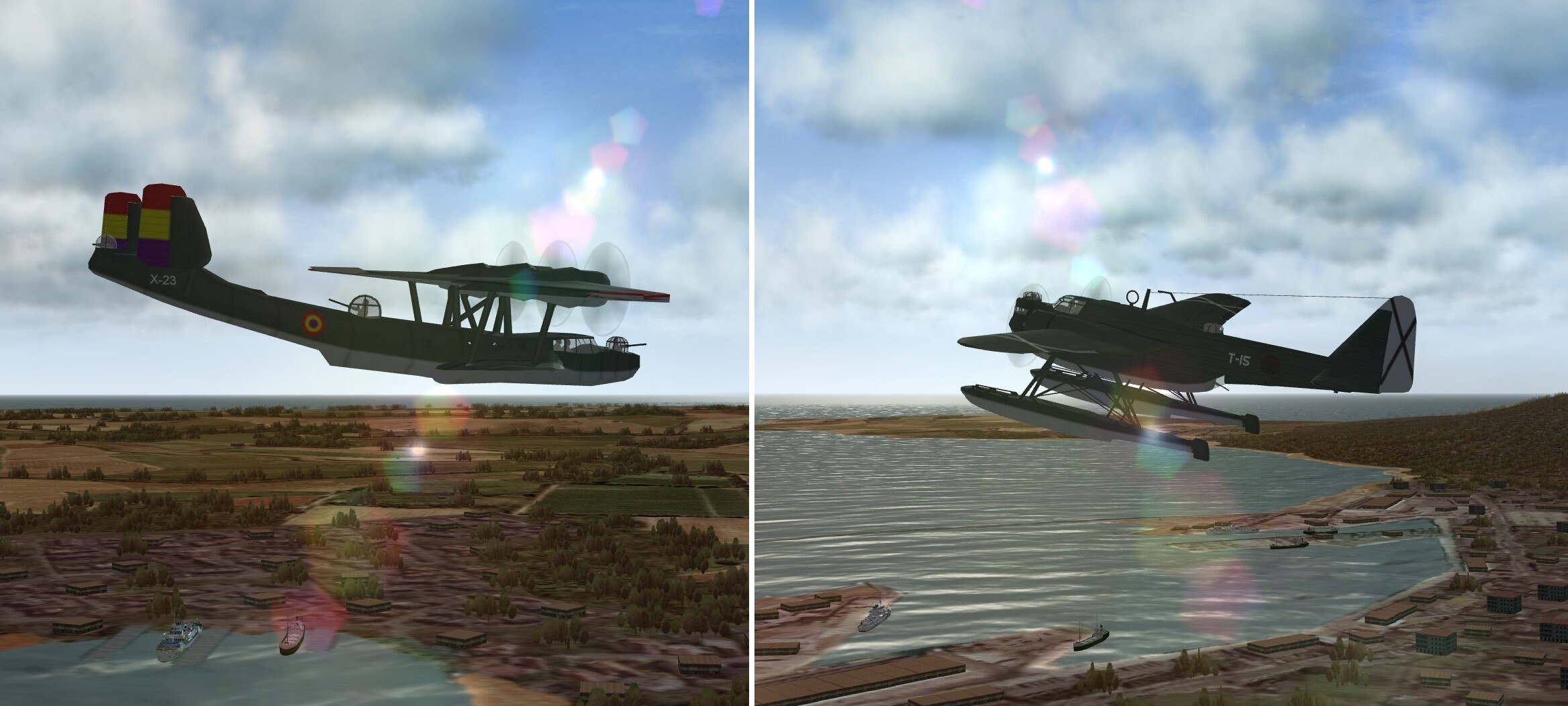
The single engined Walrus makes a good stand-in for the Savoia S.62 biplane flying boats which served both sides in the first year of the conflict, just as the Arado 95 can double up as the similar Heinkel 60 biplane floatplanes which were also trialled by the Condor Legion. However, as shown in Stratos's pictures above, other SCW seaplanes were significantly bigger, so I decided to look for available models which reflect this. The big parasol-winged Dornier 24 flying boat can stand in both for the earlier Dornier Wal and for Italy's CANT Z.501s which served for much longer than the Z.506. I could not find a big biplane floatplane to stand in for the Heinkel 59s, but the twin engined Fokker T.IV monoplane floatplane serves as a fair substitute in all other respects. I dropped the speeds of these stand-ins to accord better with the performance of the real aircraft, and I increased the vertical ContactPoints of the Do 24's landing gear from 0.9 to 1.1 to allow safe takeoffs and landings. The picture below shows a Republican 'Dornier Wal' over the small port of Mao, and a German 'He 59' over Palma harbour. These various substitutes allow me to me recreate flights by every significant SCW seaplane.
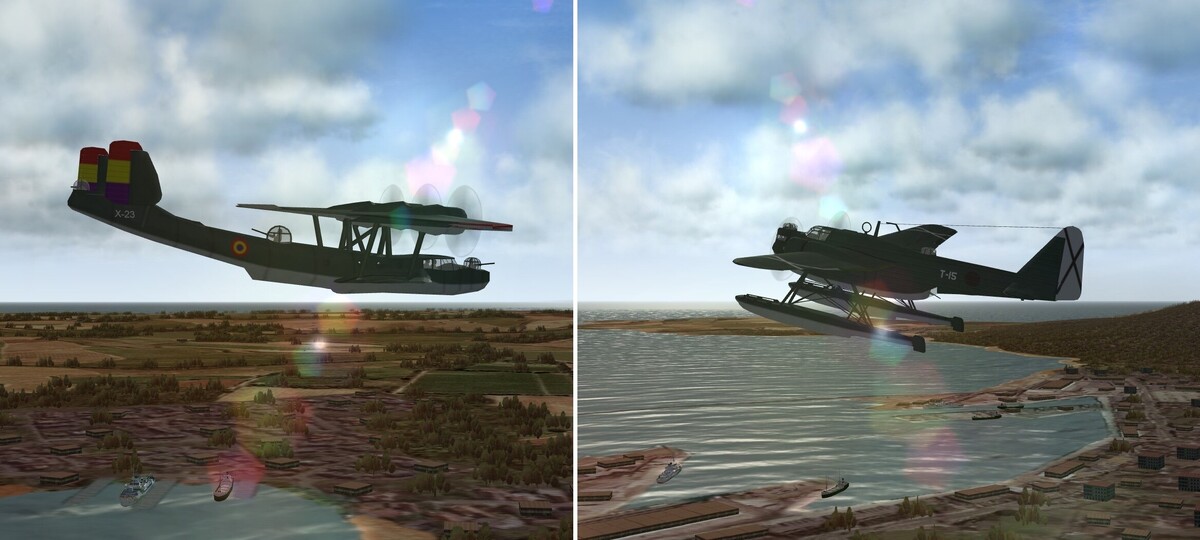
- 18 replies
-
- 4
-
-
- hand tiling
- hfd editing
- (and 3 more)
-
I already tried using your own very nice Espana map, which covers more of North Africa, but I decided in the end to go with the other HFD which does not suffer from longitudinal distortion and could be exactly halved to make rescaling less disruptive. I also considered basing my SCW games on FE2 rather than SF2 so as to have more detailed terrain (at the expense of harder mission editing), but the FE2 Golden Era section here on CA contains only some of the SCW planes, and I ran into difficulties importing more from SF2 models. I was pleased to find it easier to import FE2 planes to SF2, so the Golden Era models can hopefully bolster my evolving SF2 SCW playset if required. The bottom line is that, the more resources that are available from the incredible modding effort which has taken place over the past 2 decades, the easier it is for non-experts like me to 'stand on the shoulders of giants' and benefit from the incredible potential and flexibility of this wonderfully accessible sim. My dogfight illustrated above was exciting, but my complete sortie from leaving the water to crashing fatally back into it after the crippling damage to my tail assembly lasted only a few minutes. That is why I tend to prefer longer and less ahistorically bloody missions using my simple tweak to allow me to enjoy formation flying along the way. The picture below comes from an hour long mission which I just played recreating one of the many recce flights from Pollenca to monitor airfield construction at San Luis on Menorca. The field was too vulnerable to bombing to serve as anything more than a diversionary strip for damaged planes, but along with the nearby port of Mao it had significant AAA defences, as described in the article I referenced. My leader fell foul of these, and the picture shows me inspecting his damaged left wing and missing left elevator as we prepared to descend back down to Pollenca in the evening sunshine. Thankfully, both he and I landed safely after an atmospheric and enjoyable hour of virtual flight with just a taste of vicarious peril.
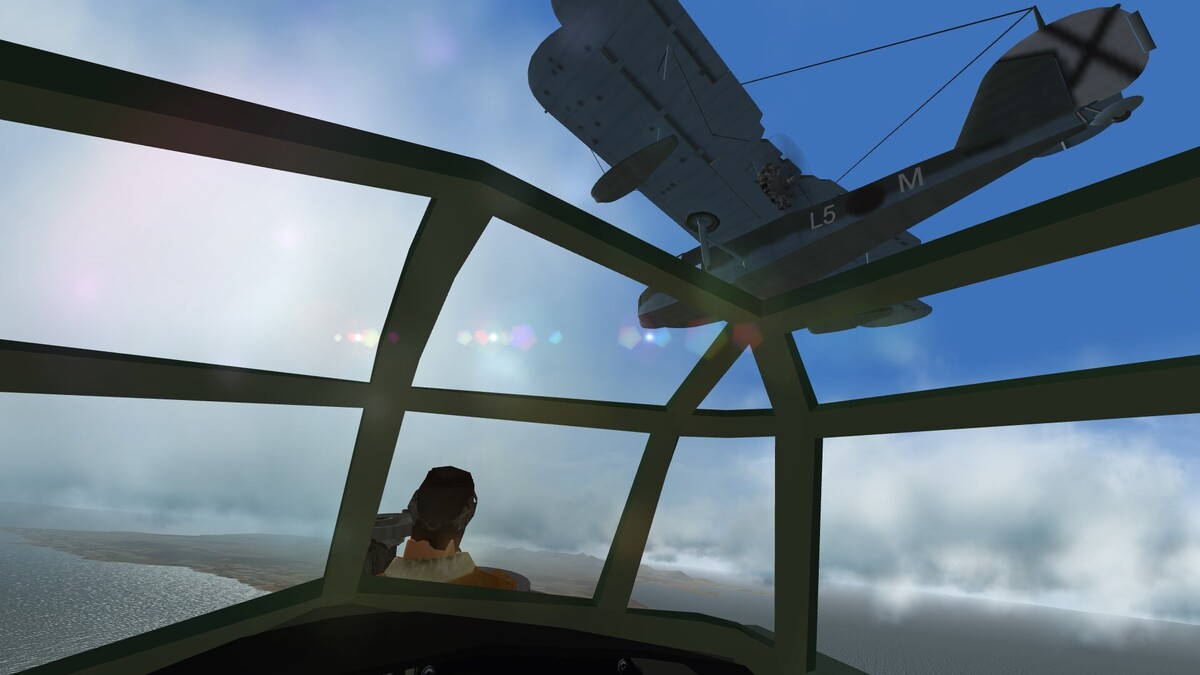
- 18 replies
-
- 1
-
-
- hand tiling
- hfd editing
- (and 3 more)
-
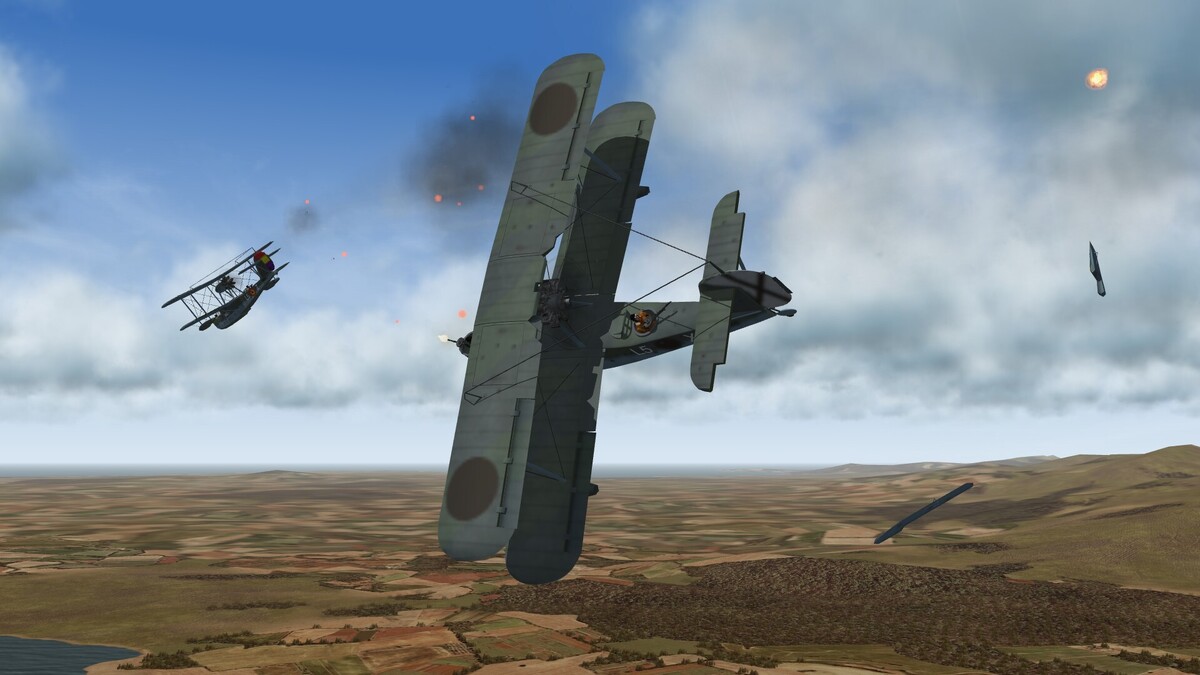
The CANT Z.506 and Arado 95 which are the only seaplanes included in the SCW conversion played only marginal roles in the real conflict. As a quick and dirty way of modelling more typical craft, I painted Nationalist and Republican markings on the Supermarine Walrus. The photo below shows my Italian plane coming a cropper in an exciting seaplane duel among the flak bursts over Pollenca bay. It took only a moment to create this clash in the SF2 mission editor and to exit the sim briefly to adjust the Republican plane's takeoff time so it would arrive just after my scramble from the base. Having to depend on my gunners rather than pilot-controlled weapons made for a novel and interesting dogfight experience.
- 18 replies
-
- 4
-
-
- hand tiling
- hfd editing
- (and 3 more)
-
Drool.... Though it would only make me sadder at having so few models available to simulate the clashes. It is wonderful how much information is now available freely on the web. I just found this detailed 2024 article about the aerial dimension of the SCW in Menorca: https://revistes.uab.cat/rubrica/article/view/v14-n29-de-salort-lopez/414-pdf-ca.
- 18 replies
-
- 1
-
-
- hand tiling
- hfd editing
- (and 3 more)