

pagsab
-
Posts
104 -
Joined
-
Last visited
-
Days Won
2
Content Type
Profiles
Forums
Gallery
Downloads
Store
Everything posted by pagsab
-
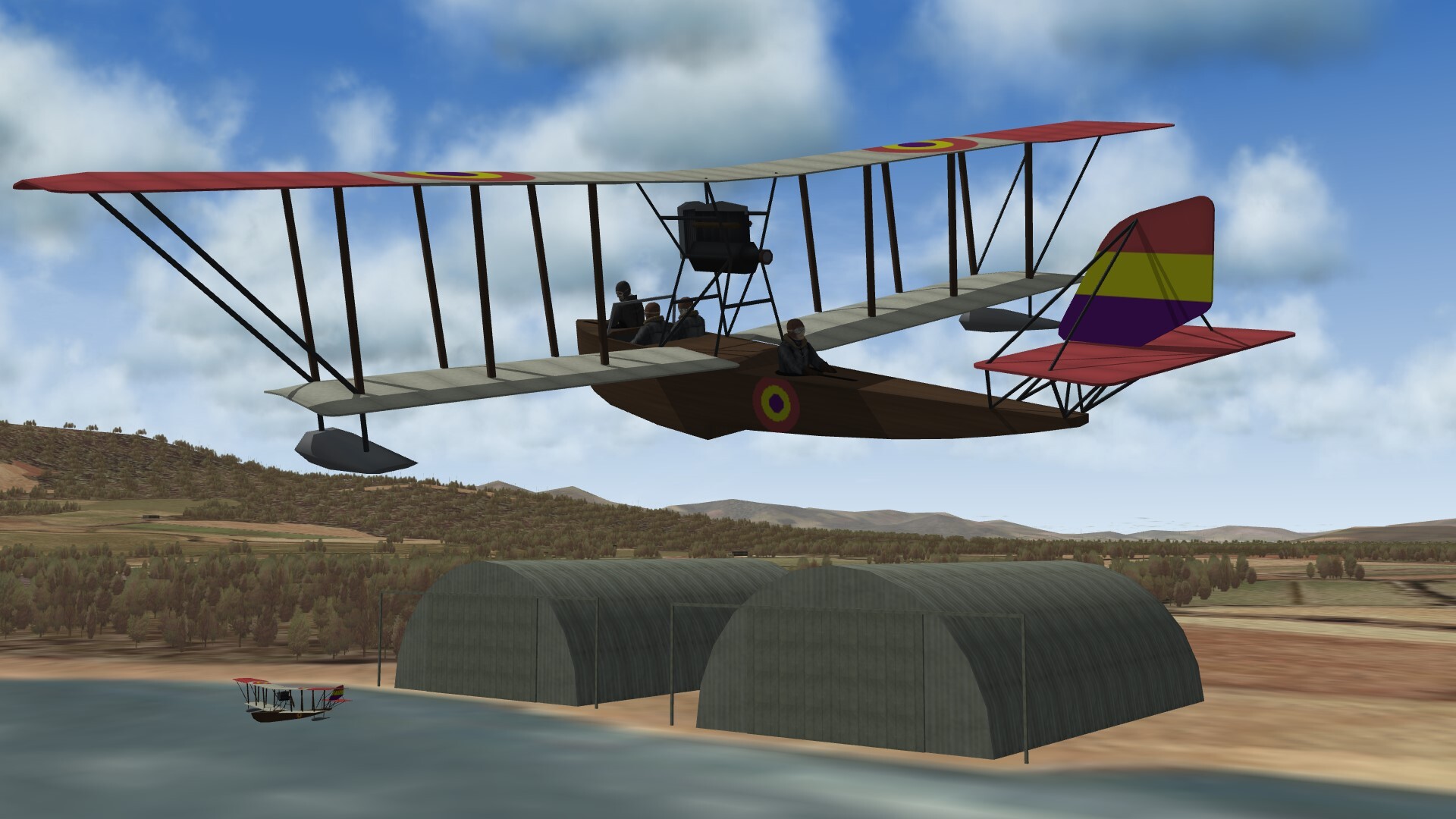
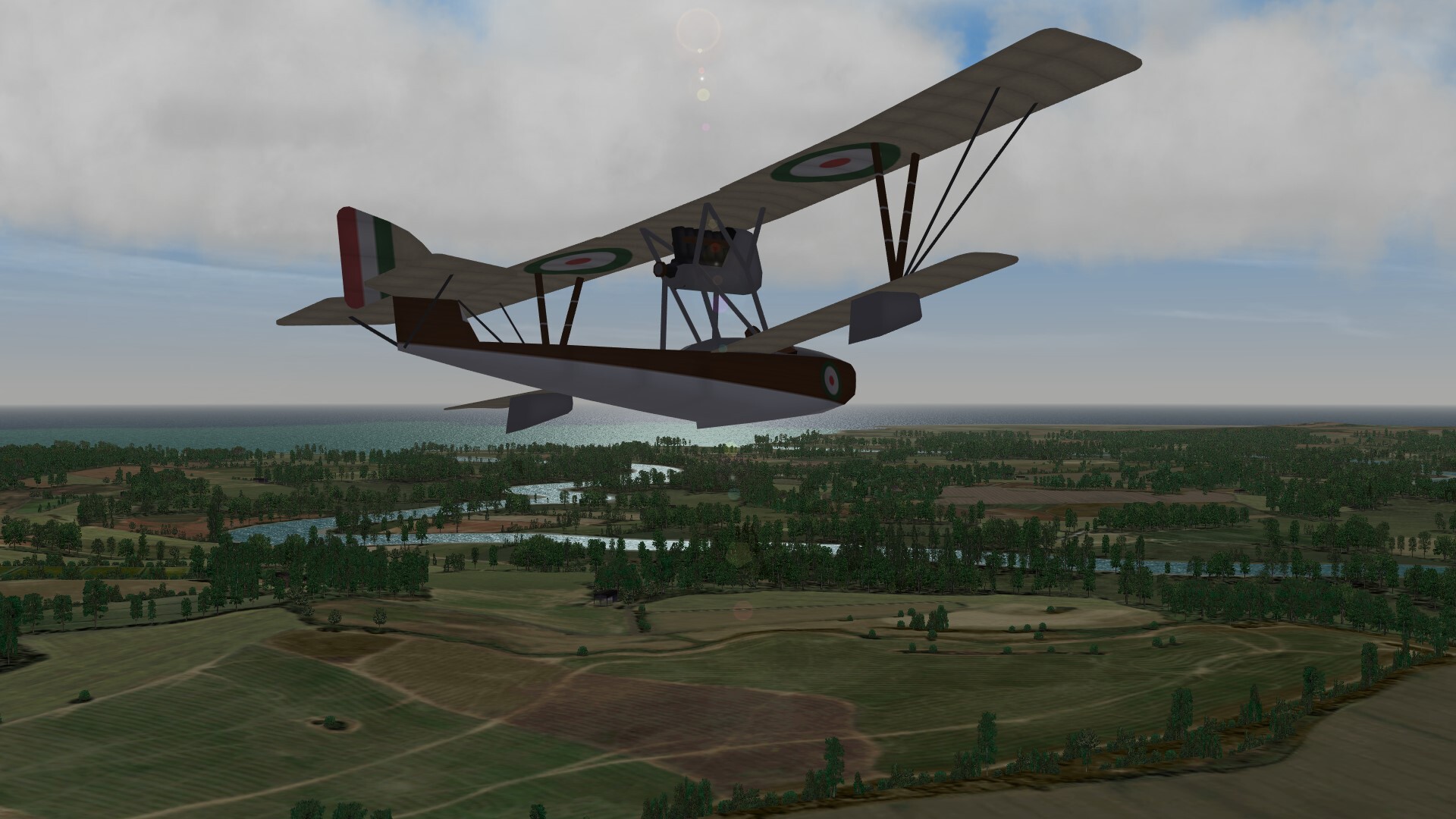
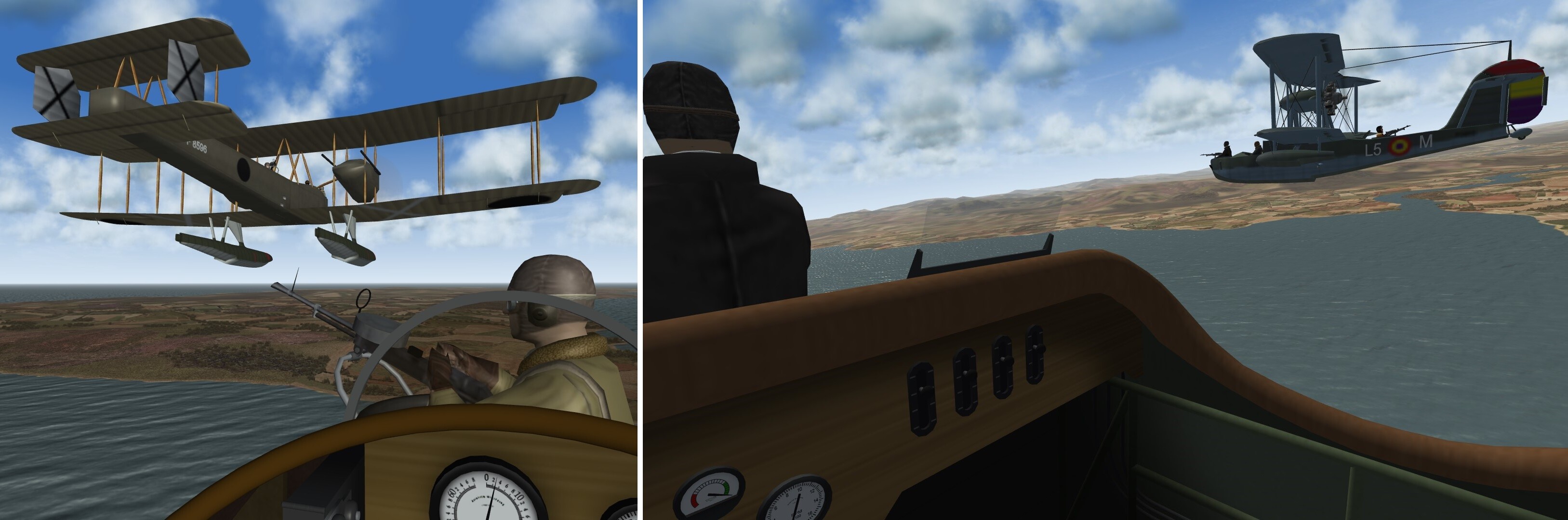
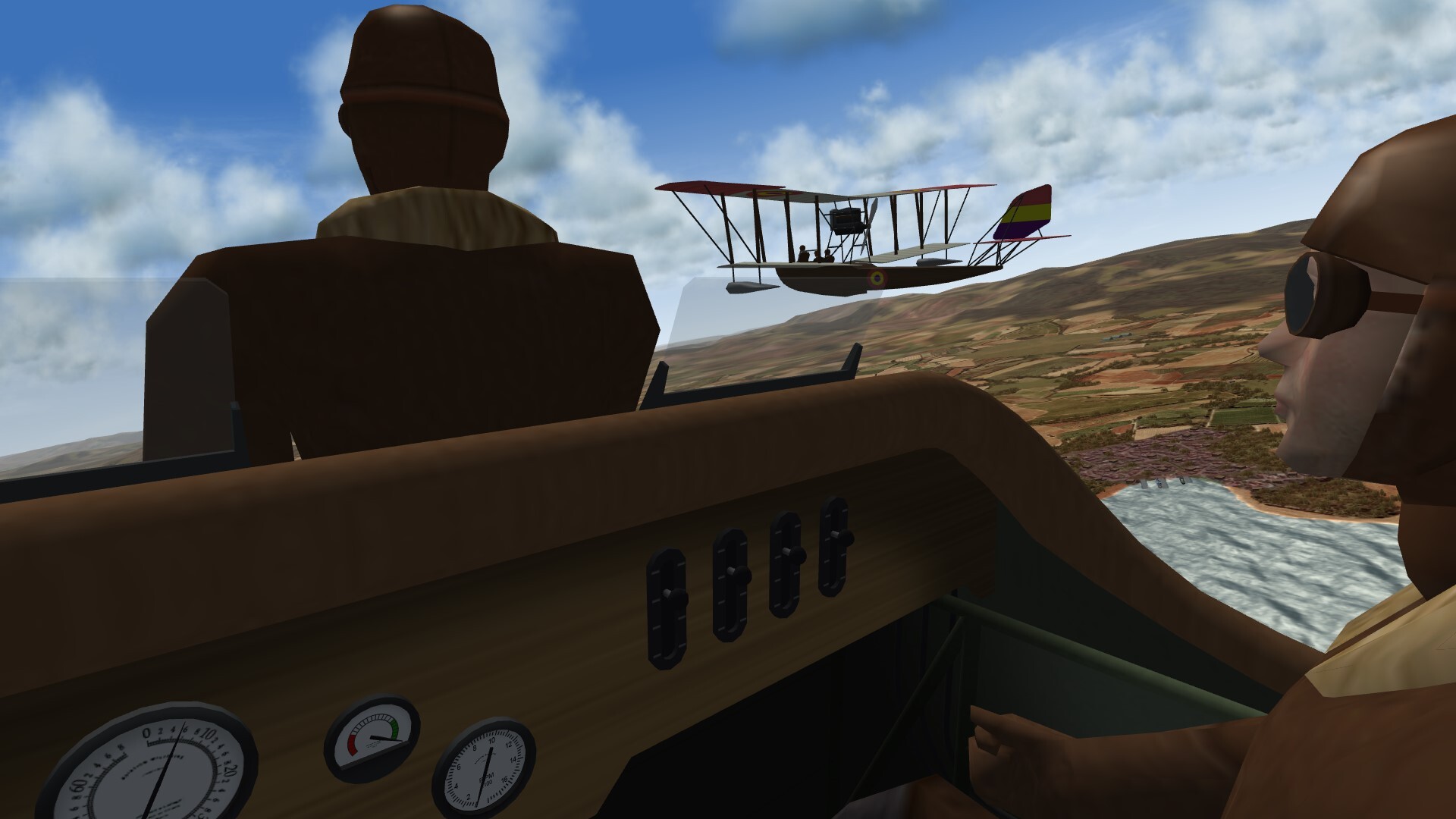
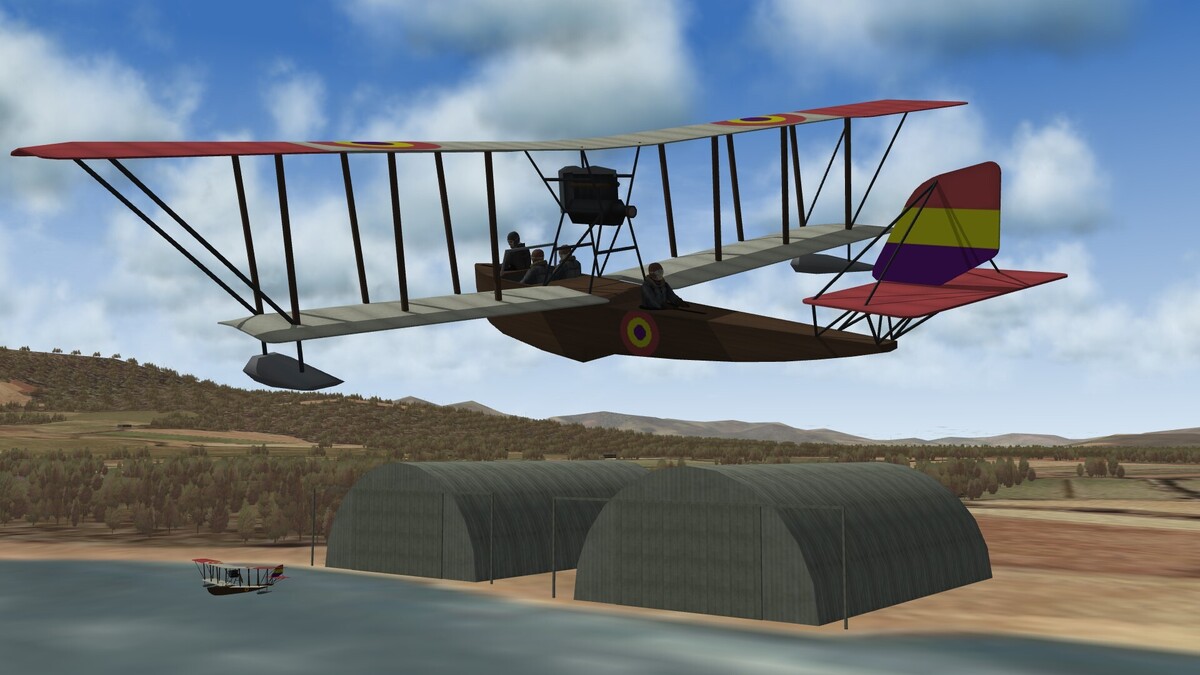
My SCW and MTO projects have reinforced the importance of combining online and specialist hard copy research sources – neither alone is sufficient to provide the nuanced details one needs. I am increasingly concerned that my used copy of Herrera's SCW seaplane book has still not arrived from Madrid, but Howson's big 1990 Putnam reference work on 'Aircraft of the Spanish Civil War' did just get to me in Chile at last after a 2 month journey. Eagerly browsing its seaplane entries, I realised that my static Lohner conversion is wasted portraying the old Macchi M.18, which performed only liaison and training duties during the SCW. I hence souped up my M.18 conversion as shown below by boosting its speed and engine power and adding a rear gunner using the PilotBalkans2B figure. The resulting model looks much more like the Savoia-Marchetti S.62 than did my earlier stand-in of the Supermarine Walrus, despite sacrificing 3D guns, a spinning prop and visible damage. The sturdier Walrus will make a better stand-in for the Curtiss and Felixstowe flying boats in my planned WW1 North Sea project. I am meanwhile enjoying exploring the Sicilian coast in my favourite seaplane of all – the Regia Marina's single seat Macchi M.41 which I brought to life from Stephen1918's other static model. It is a shame that this 'Riva Aquarama of the skies' was replaced in 1938 by the ugly and fatally flawed IMAM Ro.44 floatplane. Howson's book also details how three Savoia S.55s (the type famous from Italo Balbo's mass long distance flights) played a minor role in the opening months of the SCW, but finding a stand-in for a big twin hull flying boat is asking too much even for me!
-
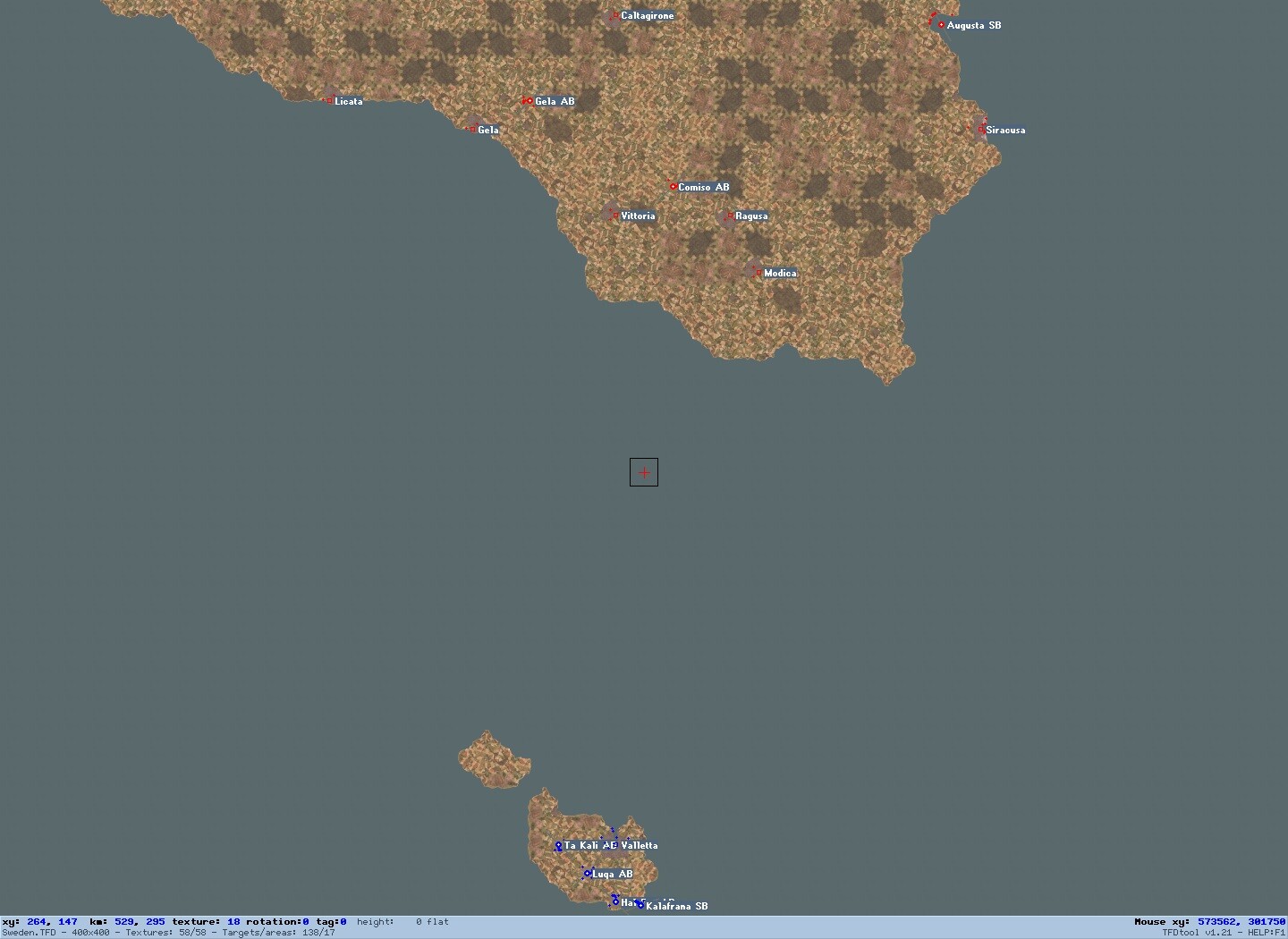
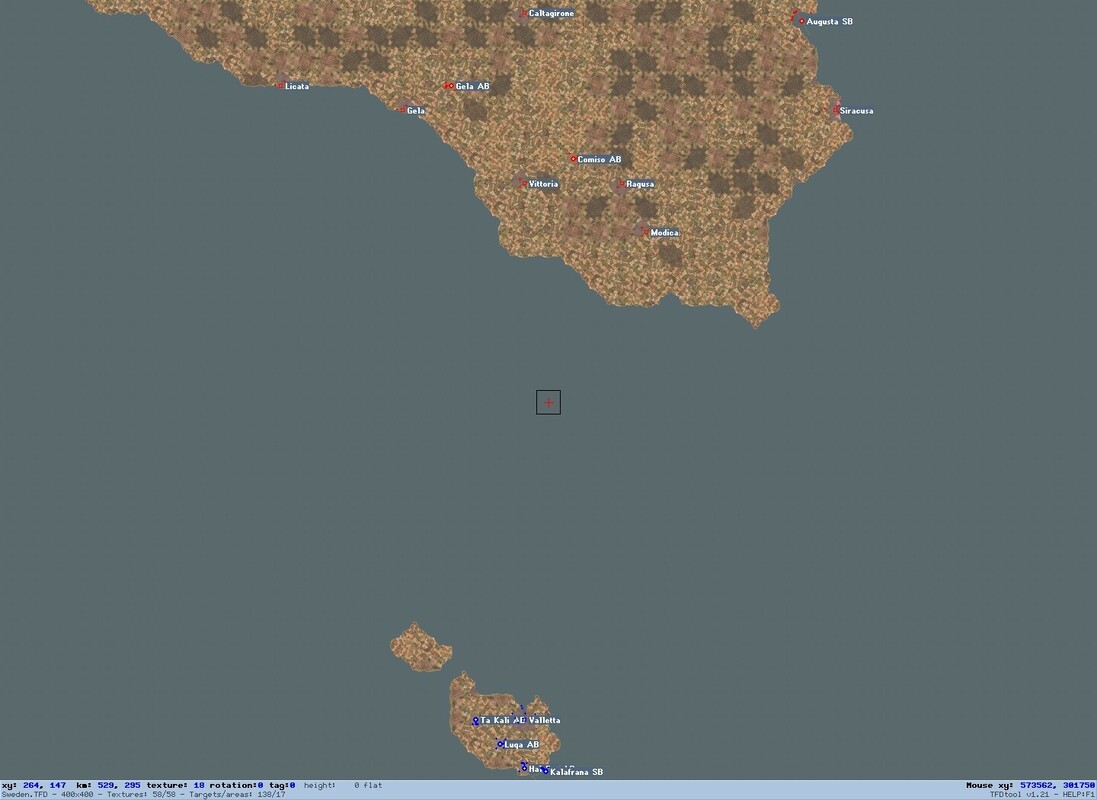
I just finished making the MTO equivalent of my reduced scale Straits of Dover terrain as showcased in https://combatace.com/forums/topic/101179-european-air-war-reborn/. As seen below, my latest effort has the same 45 by 32 tile layout, though it portrays a larger area of real terrain since each tile represents 5.1 km instead of the 3.3 km scale which I use in crowded NW Europe. Both terrains saw constant air combat across the straits from June 1940, with the Allies gradually gaining the upper hand until they finally ended the stand-off by amphibious invasion 3 or 4 years later. I used the same tiles and modelling techniques as in my SCW terrain, though with forests and scrubland generated only on tiles with an elevation range of 120 metres or more. The towns and cities represent all those with 30,000 or more inhabitants in the 1936 census (as shown in Wikimedia historical population data). Using rescaled HFDs and procedural tile selection made the process much quicker than my initial entirely manual efforts, and I have already begun retro-fitting these techniques to my NW Europe project. I can now fly complete Allied and Axis combat missions in both theatres, and an obvious next step is to expand my modelled areas to London and Catania respectively to give a broader range of bases and targets. With my SCW terrain also crying out for expansion, and with my current reading of White's gripping 1986 book on 'The Gotha Summer' constantly tempting me to create a WW1 variant of my evolving North Sea terrain, I am spoilt for choice as to which avenue to pursue first!
- 52 replies
-
- 2
-

-
- hand tiling
- hfd editing
- (and 3 more)
-
Yes, I noticed the famous forts from the classic siege described in Ernle Bradford's book. SF2 terrain making is always a balance between the desire for accuracy through bespoke tiles and TOD objects for individual features and the wish to keep tile and TOD variants as few and manageable as possible. I lean towards the latter priority, to the perhaps ridiculous extent of using just one tree clump model and two building models across my entire tileset! I keep these small to enhance the sense of speed when flying, since I find that some otherwise beautiful terrains have trees so big that low-flying planes seem to be moving in slow motion. Realistically sized troops and vehicles are very difficult to see in time to line up for a strafing run, but contrast helps a lot. One trick that I just discovered is to darken the texture file of vehicles to stop the camouflage working so well that they blend in completely with the ground. I limit shadows to maintain frame rates and avoid distracting shadow 'popping', so darkening target objects offers a useful substitute. Conversely, it is important to keep the contrast between TOD terrain objects and the tile background as low as possible so that one notices less when the objects pop into or out of viewing range.
-
Yes, you said you were working on your own MTO project. Your version of Valletta is significantly more detailed than my own, which is confined to a single re-purposed city river bend tile due to my scale reduction and my more flexible tile borders. I look forward to seeing more when your project is ready.
- 52 replies
-
- 2
-
-
- hand tiling
- hfd editing
- (and 3 more)
-
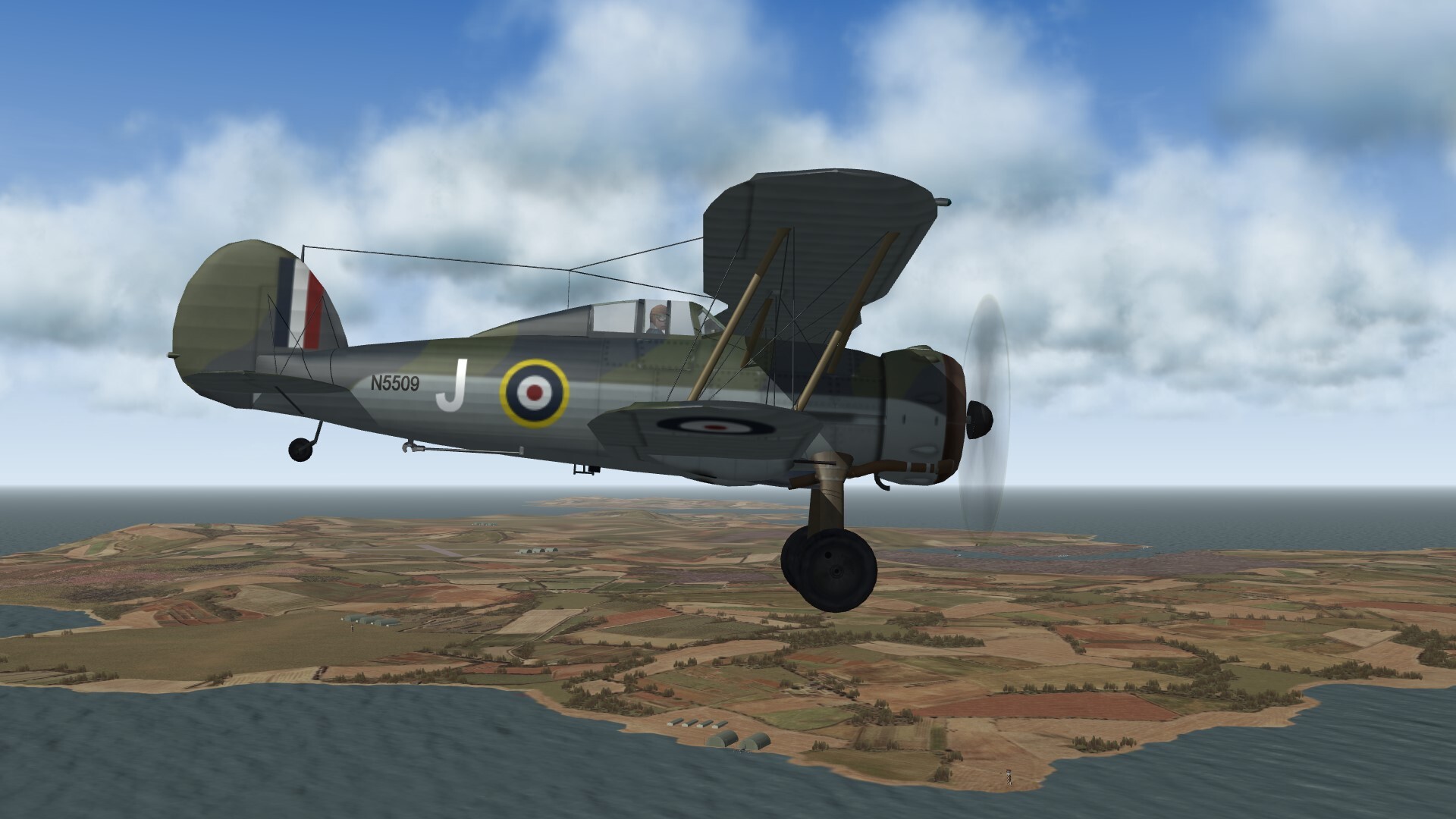
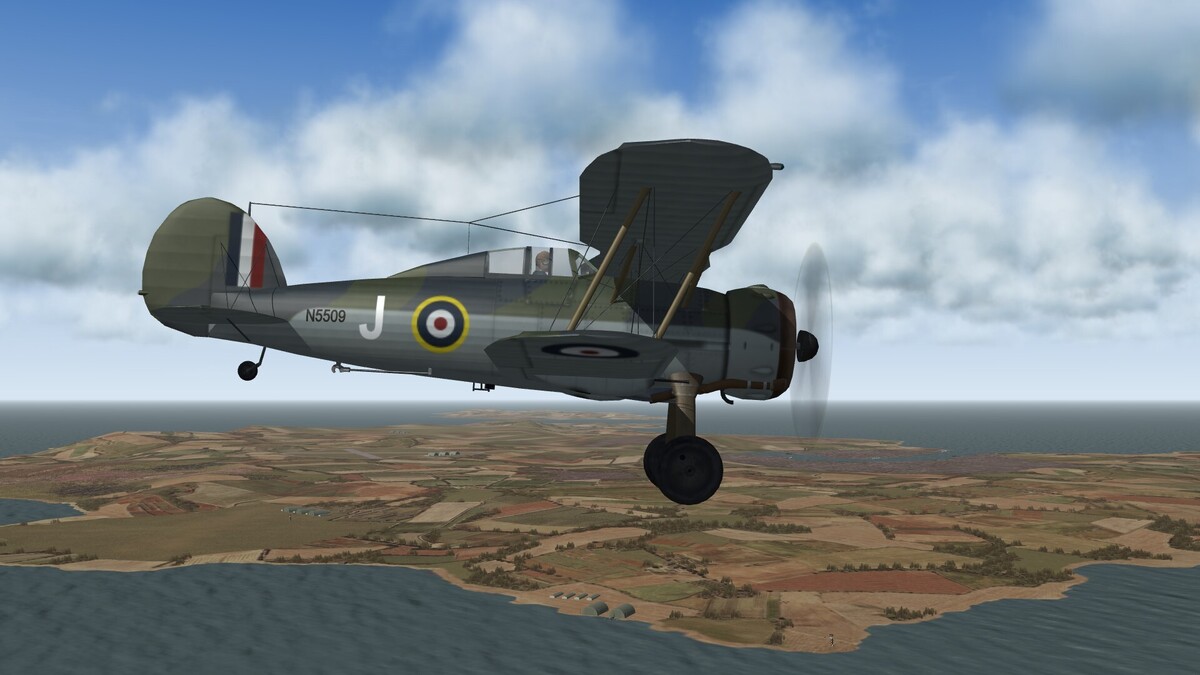
The WW2 Mediterranean conversions available for SF2 at 'another place' have similar full scale terrains to that in the SCW conversion, making my preferred complete sorties uncomfortably long. I hence decided to create a reduced scale hand-tiled terrain as for my Spanish playset, by shrinking the posted HFDs using Gimp and the Third Wire terrain editor. I applied differential rescaling in order to remove longitudinal distortion and to match the scale of my Spanish terrain, with each of my tiles representing just over 5 km instead of the nominal 2 km. As usual, I began with islands, and after using just 10 tiles to model mountainous Pantelleria, I used 28 tiles to simulate the most significant small island in air war history, namely Malta. The picture below shows an iconic Sea Gladiator over the Hal Far airfield and Kalafrana seaplane base. In the middle distance are Valletta's Grand Harbour and RAF Luqa with its concrete runways and taxiways painted directly onto the tile, while the Ta Kali airfield and the smaller island of Gozo may be glimpsed in the background. Even before going on to model Sicily, Tunisia or the Italian mainland, I can simulate a variety of real Allied combat sorties from 1940 to 1943 (including interception of Italian or German bombing raids and strikes against Italian maritime convoys) using just Malta and the surrounding sea. This step by step approach makes my increasingly proficient hand-tiling technique an entirely practical alternative to traditional SF2 terrains, especially now that my adaptation of existing HFDs makes distant mountains visible on the horizon from the outset.
- 52 replies
-
- 1
-
-
- hand tiling
- hfd editing
- (and 3 more)
-
Posting what I have made would contravene the rules of the sites where I found the various mods which I have so shamelessly re-purposed. I only hope that some of the tweaks I have found or re-discovered may help others create their own niche counterparts of 'SSP1' as they enjoy the Third Wire sandbox in their own individual ways.
- 52 replies
-
- 2
-
-
- hand tiling
- hfd editing
- (and 3 more)
-
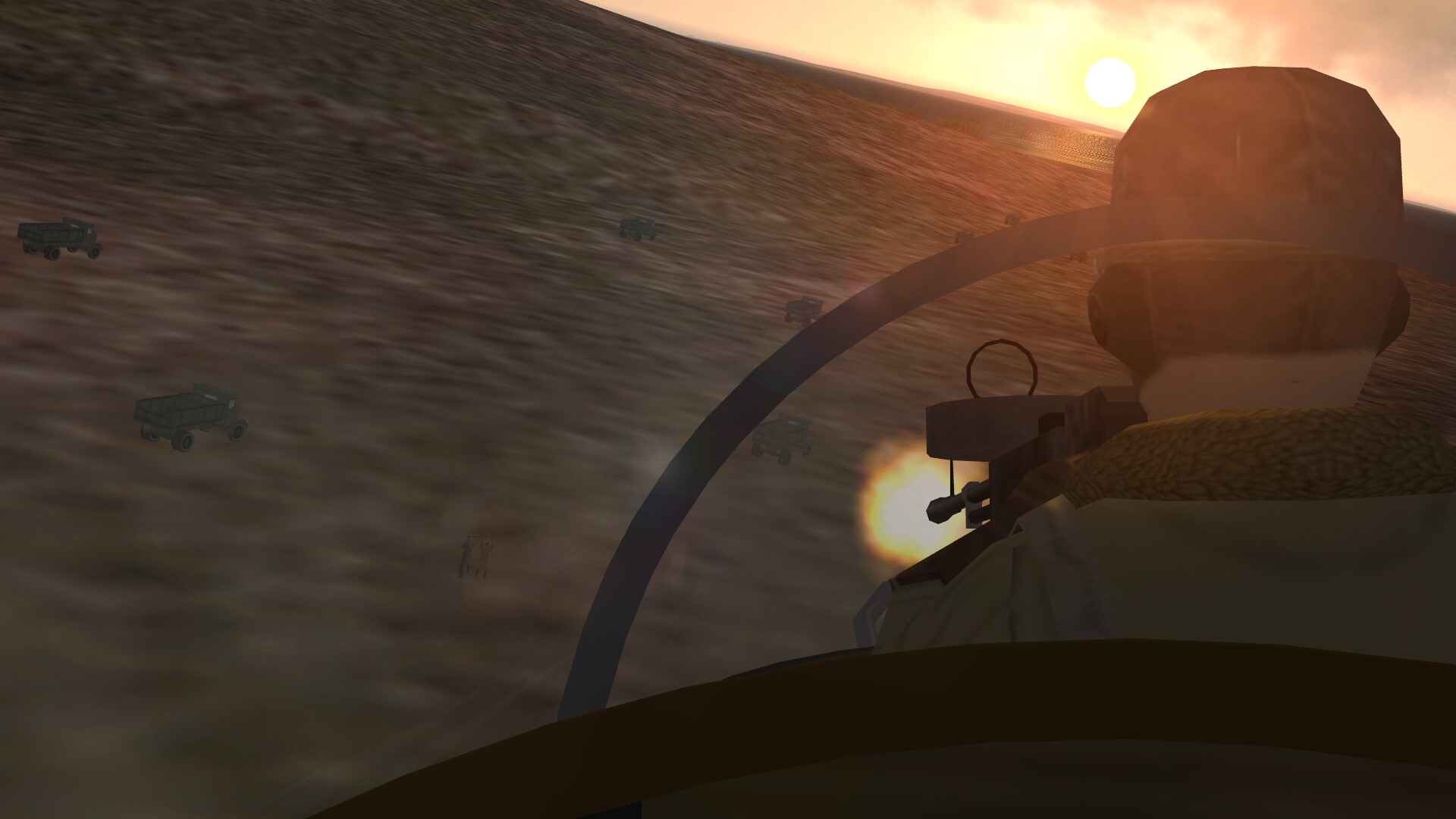
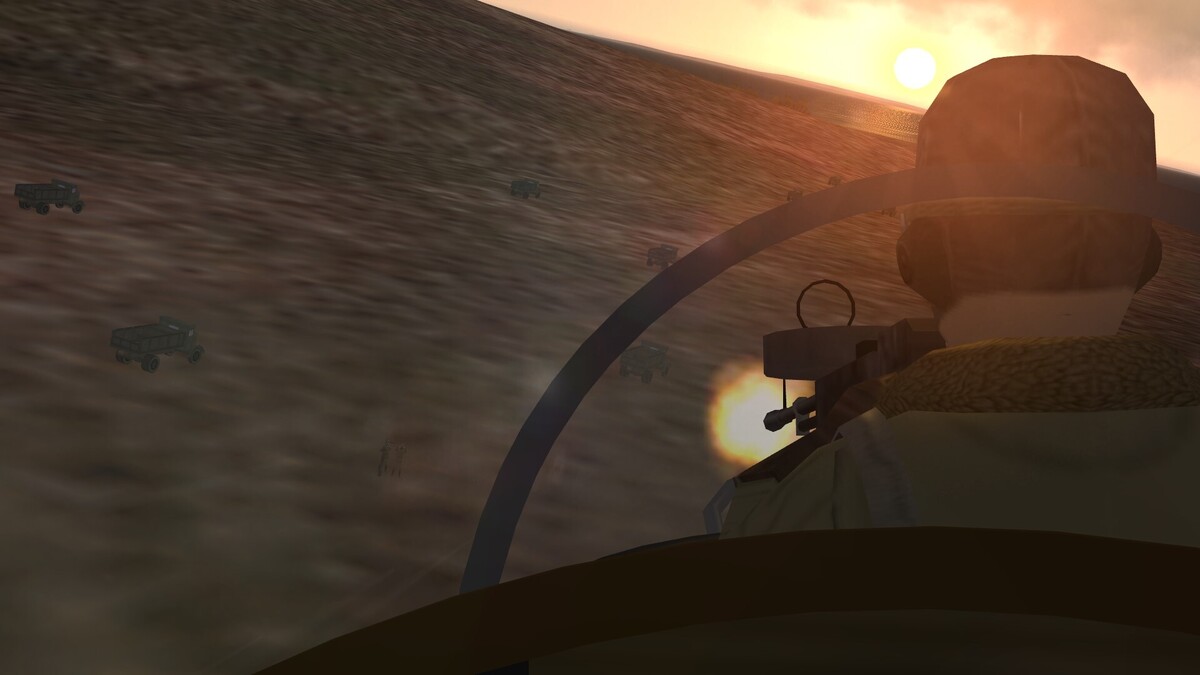
I decided to use puny Hotchkiss AA positions in my strafing missions, to reflect Stratos's point about the limited nature of the flak defences guarding the Republican coast. However, I still fell foul of the fearsome impact of close range automatic flak in the Third Wire sims. Even after cutting the LMGs' rate of fire by 80% while adding 'TracerLoading=1' to the GunBarrel section of the Hotchkiss's object data.ini to make every remaining round a tracer bullet, the machine guns routinely stopped my He 59's engines on my first or second pass. Cutting the Hotchkiss's Accuracy in its gun data.ini seemed to have no effect, while slashing its AmmoWt did the trick only at the unacceptable expense of making the tracer bullets so anaemic that they petered out almost at once. However, when I cut AmmoWt all the way to 0, something interesting occurred. The tracers returned in full force and their repeated impacts soon made my plane look like Swiss cheese, but even after taking a few hundred hits as the trial LMG gradually expended all of its 1000 rounds, my sacrificially circling Heinkel suffered no further ill effects. I eventually decided to accept this imperfect solution and to treat the constant hit sound effects as instead representing the crack of bullets passing close by. To stop me ignoring the enemy MGs now I knew that they were actually toothless, I resolved not to attack my mission targets until I had strafed and destroyed any defending MGs first. In my initial practice flight on the range, it took me all of my ammo just to take out the 2 tiny Hotchkiss teams as shown below, but soon my performance improved and I went on to blow up multiple trucks as before, even when flying at dawn to simulate the poor light over the real target as we sought to evade enemy fighter interception. We then flew a real dawn mission against enemy supply trucks east of Tarragona. When we reached the target area, it took me only 3 minutes to find and kill both LMG teams thanks to their tell-tale tracers, but then I became disoriented in the gloom and lost 2 minutes trying to relocate the trucks which I had seen clearly at the outset. Once one truck was finally burning, it provided a beacon which let me find and destroy 6 more before time and ammo ran out. I rejoined my circling leader as before despite long range heavy flak fire from Tarragona, and we eventually rounded the Tramuntana mountains and turned east past Palma to fly safely back across the island to Pollenca. Our complete sortie again took 80 minutes, but the techniques which I developed can also be used for much shorter strafing missions by He 51s and the like. I made my own MGs fully reliable so that mission failures will occur only due to my own lack of skill rather than through an unlucky gun jam or enemy MG hit. A striking and highly realistic aspect of these missions is the importance of practising on the range beforehand, to hone one's skills for the 'real thing'.
- 52 replies
-
- 1
-
-
- hand tiling
- hfd editing
- (and 3 more)
-
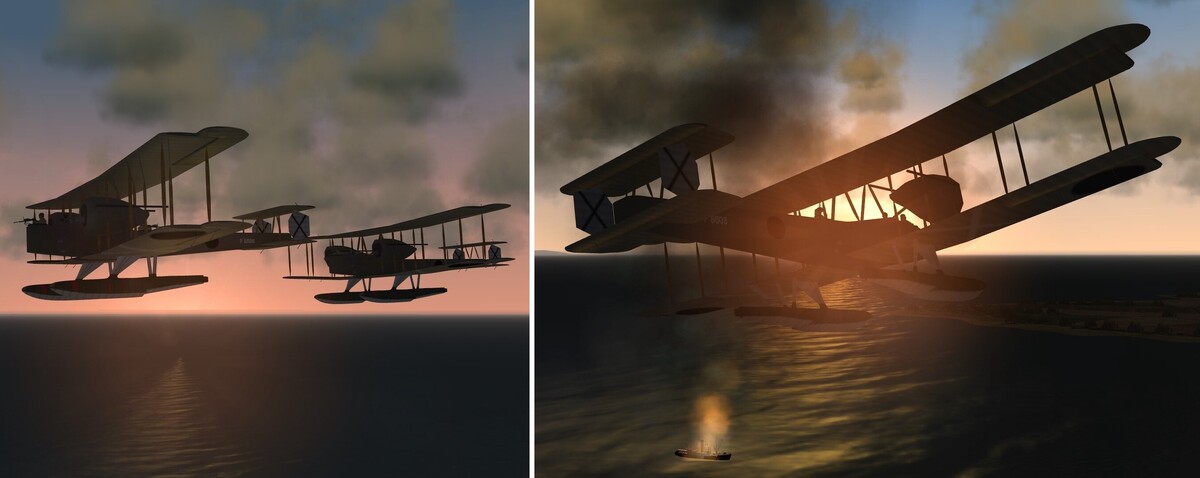
Our first long range He 59 combat mission from Pollenca targeted shipping in the Ebro estuary. We took off before dawn, and arrived when it was just light enough to see an enemy vessel. Thanks to our practice flights back at base, my nose gunner and I got 70% of our rounds on target while avoiding the twin perils of jamming the gun through too long a burst or getting too close to any explosion. We still had to fire 424 of our 485 rounds in repeated passes before the ship finally caught fire. I headed triumphantly east into the rising sun, rejoining my leader's plane just before he stopped circling and headed for home. The complete round trip took 80 minutes – longer than I prefer, but only half the time this mission would have taken on the original full scale Spanish terrain. The changing views were stunning as the sun gradually rose, and my flying skill and marksmanship were tested throughout. Overall, the mission vindicated my extensive preparations over the past few months, and I look forward to many more such immersive combat sorties as my Spanish project proceeds.
- 52 replies
-
- 2
-
-
- hand tiling
- hfd editing
- (and 3 more)
-
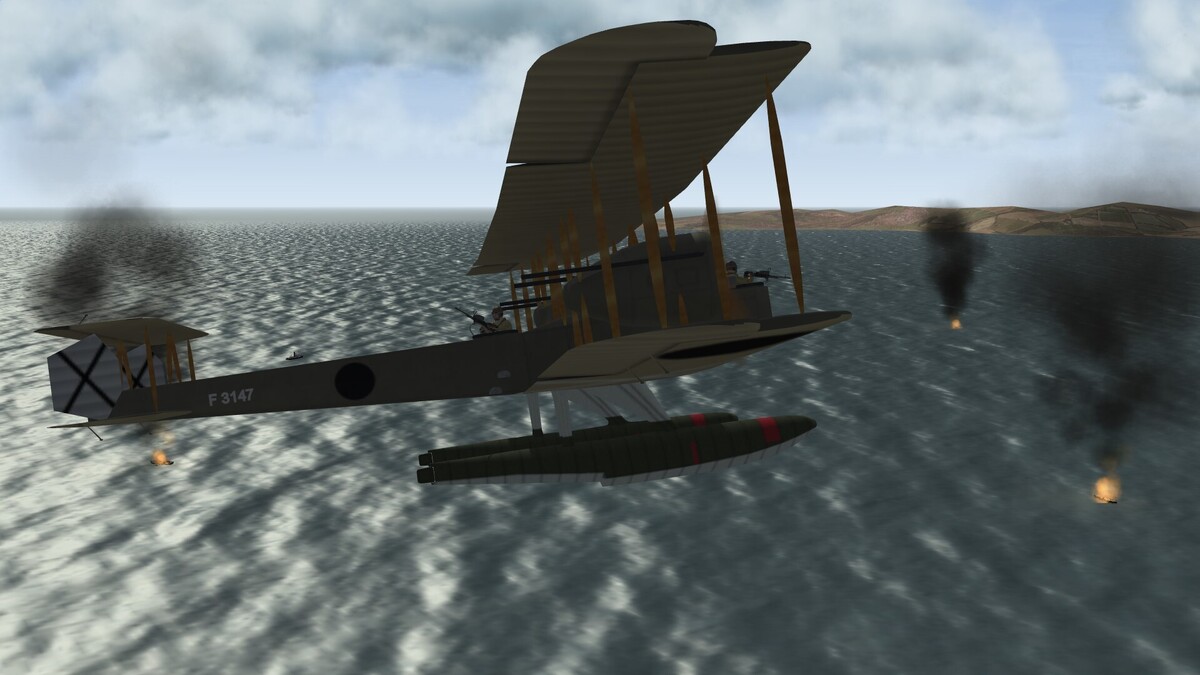
Hitting the bigger target of ships as in Wrench's film clip is easier still, and it is possible to get over half of one's rounds on target, but even the small trawlers and torpedoboote which I have imported from the Caporetto terrain need truly drastic cuts to their damage points if they are to be destroyed by strafing alone as shown below. Being able to choose the resilience (and damage graphics) one prefers is yet another illustration of the marvellous flexibility of the Third Wire sandbox.
- 52 replies
-
- 2
-
-
- hand tiling
- hfd editing
- (and 3 more)
-
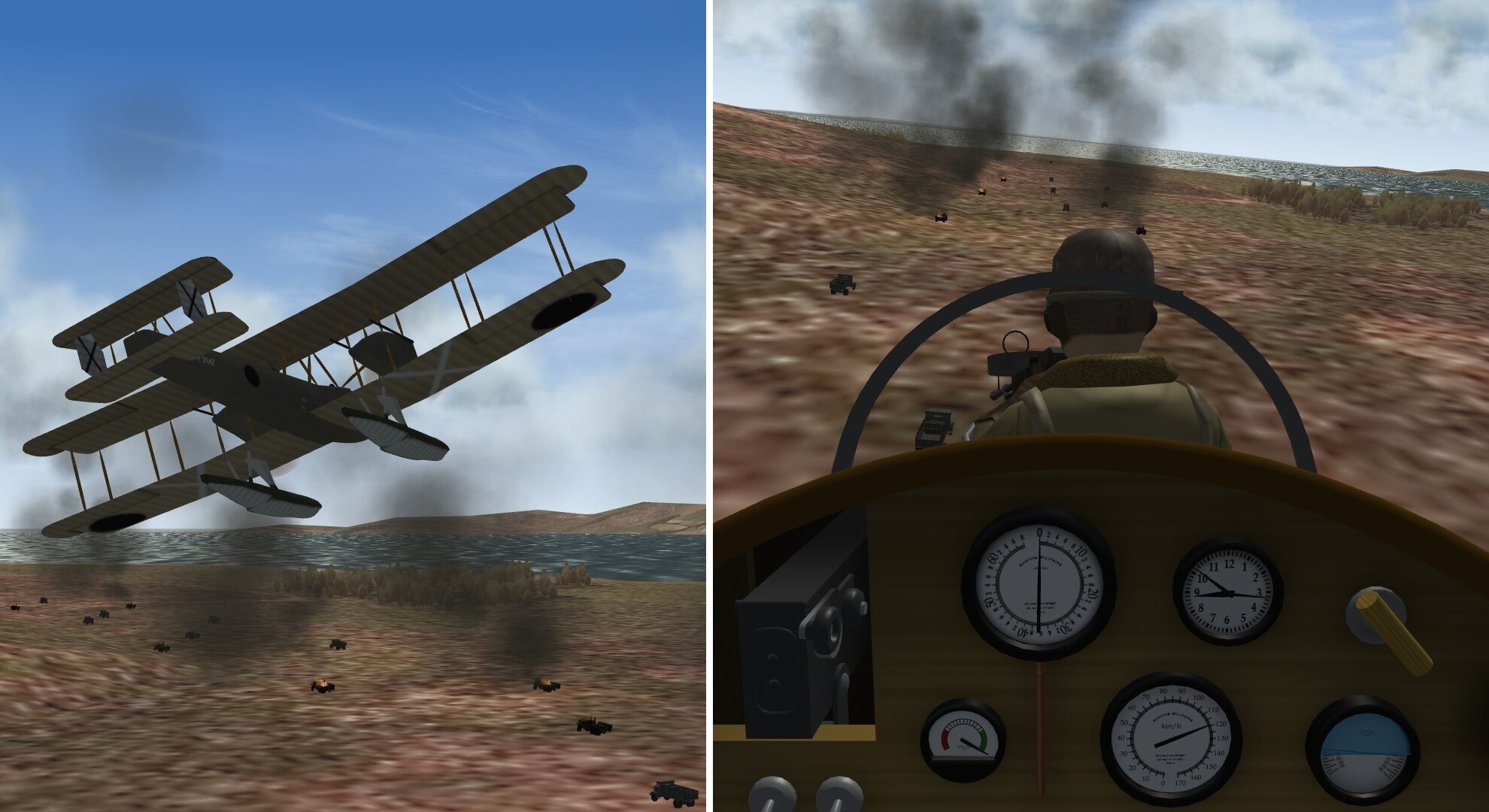
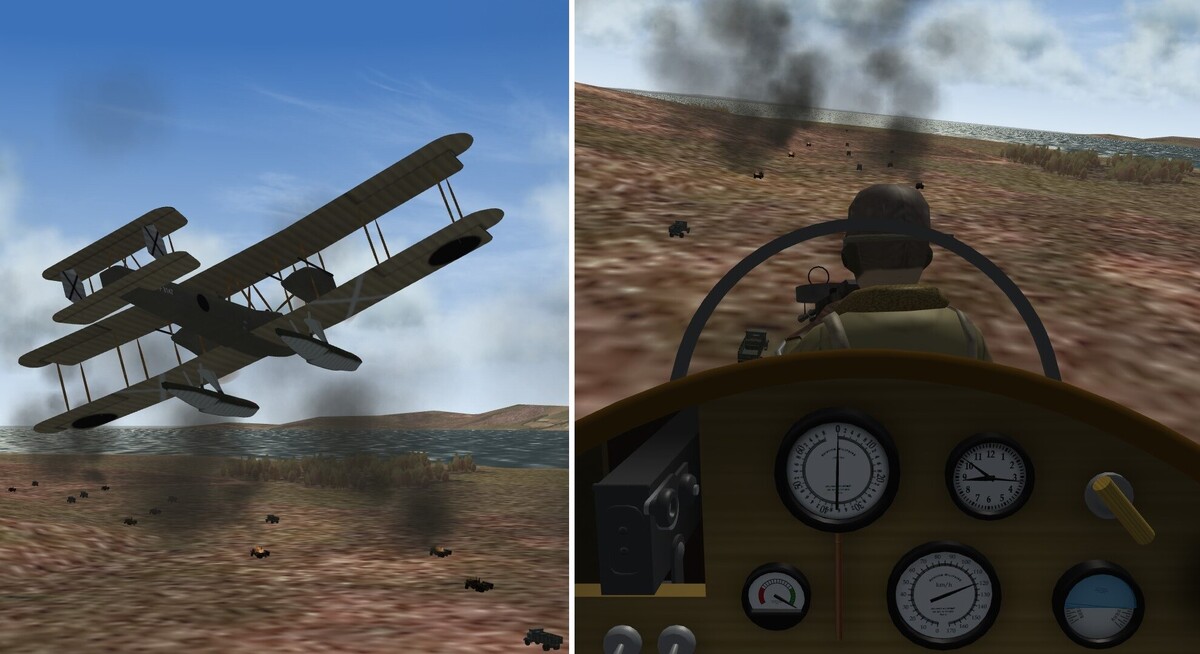
As we discussed earlier in this thread, strafing was a key aerial contribution during the SCW. I set up a range on the southern peninsula of the Pollenca base, so as to practise this activity with my seaplanes. However, my gunners remained frustratingly inactive, even when presented with multiple nearby surface targets. I may eventually solve this problem, but in the meantime, I have devised a very satisfying workaround which lets me control pilot and nose gunner as a team. After backing up the plane's data.ini, I created a special variant in which I changed the nose gun to a fixed gun controlled by the joystick trigger. I then imitated the 'Schräge Musik' data from a Bf 110G by adding the line 'AimAngles=-15.0,-10.0,0.0', and I shifted the muzzle and light positions slightly by trial and error to accord with this tweaked angle. I then condensed the fire arcs in the nose gunner's entry to allow only this single angle of fire. As shown below, this let me fly my He 59 to achieve very effective strafing, with the gunner not blocking my view and with the downward tilt of the gun letting me 'walk' my bullets over the target without risking a crash as in single seaters. After very little practice, I destroyed 8 trucks in a single sortie before my ammo ran out. Using this technique, I should be able to simulate a complete dawn raid on the Republican coast by a pair of He 59s, with light flak to add to the challenge and with my leader given recon orders and programmed to loiter for a while so that I may rejoin him for the flight back to Pollenca.
- 52 replies
-
- 3
-
-
- hand tiling
- hfd editing
- (and 3 more)
-
Tweaking the Third Wire sims is not for the faint hearted, but the incredible work done by others over the years offers an irresistible foundation, and those precious moments when all one's own hard-learned tweaks eventually come together as shown in the photo below make everything worthwhile.
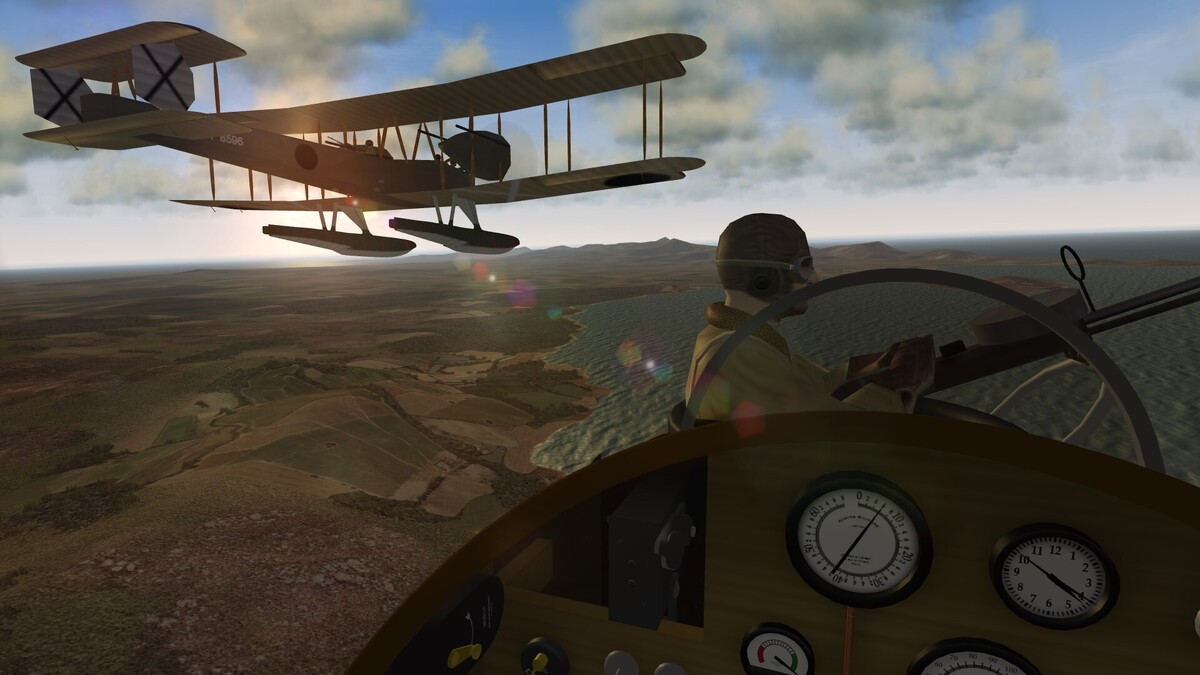
- 52 replies
-
- 3
-
-
- hand tiling
- hfd editing
- (and 3 more)
-
A limitation of my flyable versions of Stephen1918's static seaplanes has been my inability to animate the propellers – the best I have managed hitherto has been to repaint them in light grey to make them less conspicuous. However, to my delight, I have just discovered a simple way to make the props vanish after all. As shown in the picture below of a Macchi M.5 over the sparkling river delta west of Lignano, the result is almost as good as replacing the static props with the transparent prop animations from standard plane models. The technique also lets components of other aircraft be rendered invisible if the LOD hierarchy permits, allowing guns to be removed or wheels replaced with floats – a big help in redressing the shortage of seaplane models. For details, see https://combatace.com/forums/topic/101404-spain-and-seaplanes/.
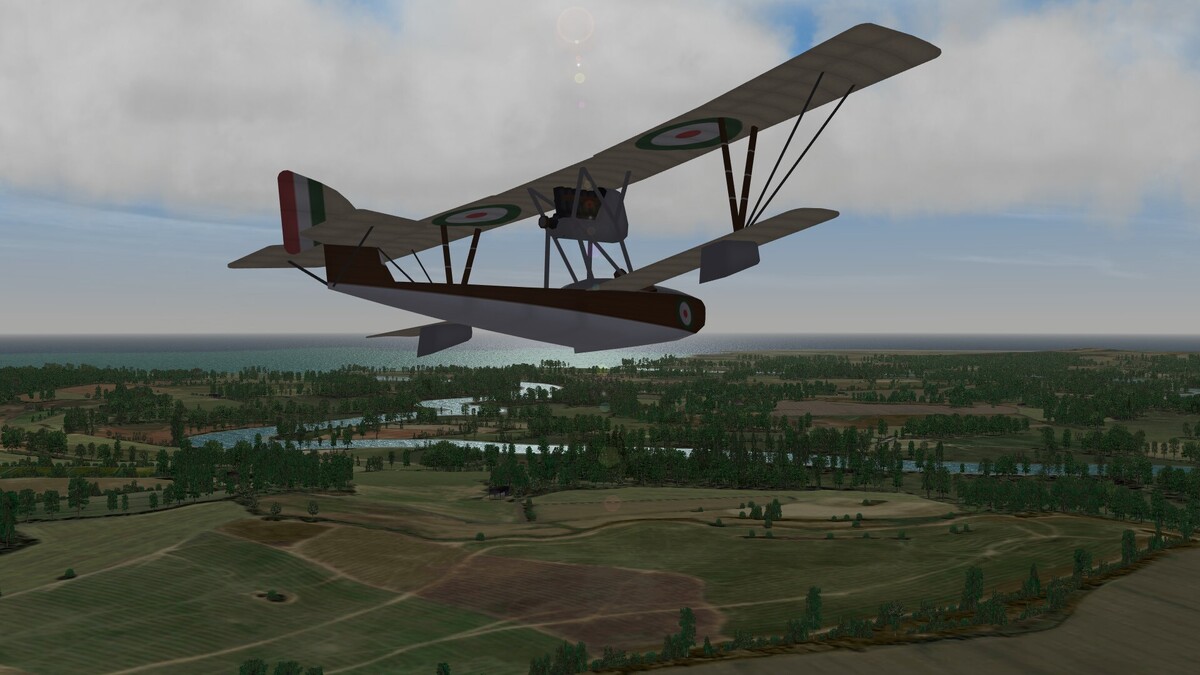
-
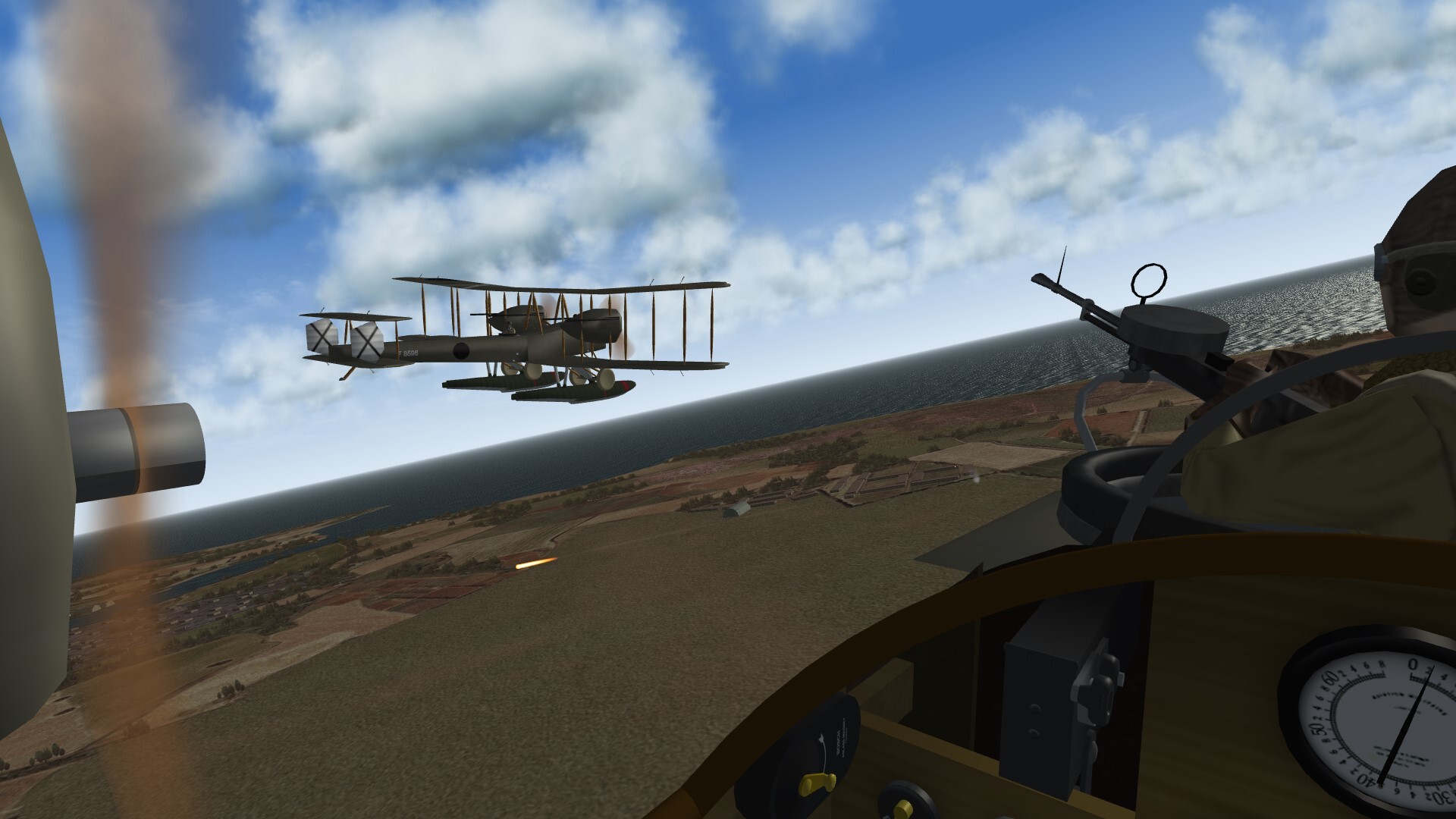
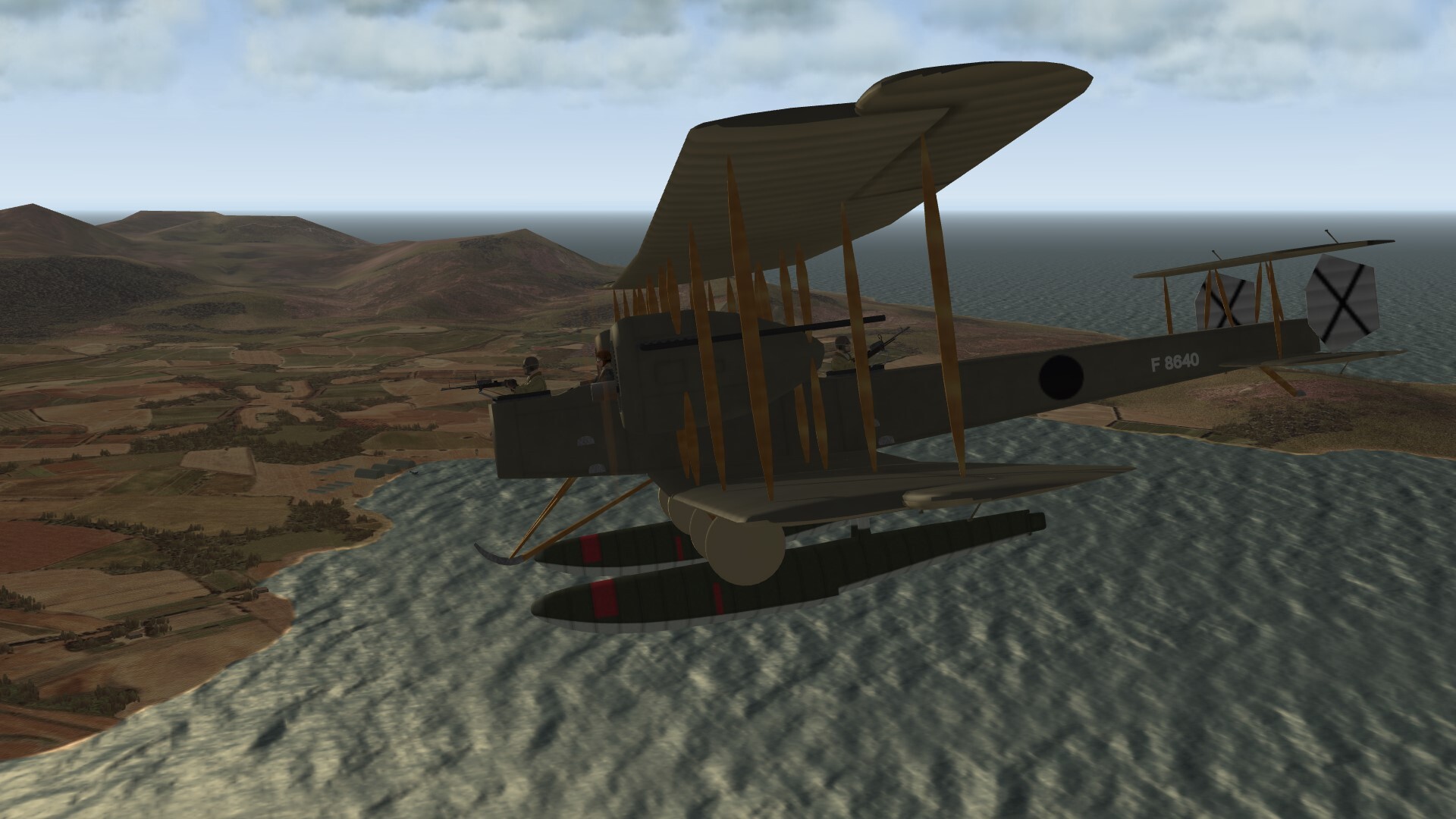
My various attempts to hide the propellers of Stephen1918's static seaplanes had been frustratingly unsuccessful, but while browsing aircraft data.inis in search of possible solutions, I came across the following code used in the SM-79 to remove an unwanted pylon: [RemoveBit1] ModelNodename=Empty DestroyedNodeName=Pylon_L DetachWhenDestroyed=TRUE HasAeroCoefficients=FALSE With little hope of success, I added 'RemoveBit1' as a new final Component in the AircraftData section of my Macchi M.41's data.ini (cloned from the Fiat CR32), and pasted the above code into the file, replacing 'Pylon_L' with 'Prop'. I then fired up the sim, and to my delight the Macchi's static prop had vanished at long last – not quite as good as having it replaced by the transparent prop animations from other aircraft, but far better than the static light grey blades which is all I had managed hitherto. The same process worked in the Lohner L for FE2, but not for the Macchi M.5 or M.18. Mue's LOD viewer confirmed my suspicion that the parent craft which I had used for these Macchis also happened to use the name 'Prop' in their own superseded LODs. Fortunately, I knew from my Cockpit view experiments that one could change node names in the data.ini without obvious ill effects, so I altered the StaticPropNodeName in the Engine section of the data.inis from 'Prop' to 'Prop01'. To my great satisfaction, not only were the Macchis' static props now also invisible but the planes flew unaffected, using their arbitrarily renamed props which as far as the system knew were still very much intact. It was wonderful to do away with the visible propellers in my conversions of static seaplanes, but my eyes were already on bigger game. After using the LOD viewer to examine the Vimy LOD used by my He 59, I added 4 successive 'RemoveBit' entries to its data.ini, one each for 'Gear_F', 'Gear_R', 'Gear_L' and 'TailSkid'. I then appended '01' to the matching ModelNodeNames in the Landing Gears section of the data.ini, so that the gear would continue in virtual existence despite my destruction of their visible counterparts from the LOD file. As seen below, my change transformed my He 59 model from an obvious lash-up into an atmospheric approximation of the real 'Big Shoes' biplane floatplane as shown in Wrench's film clip. I used a similar process to remove the canopy from the Supermarine Walrus, making it a better stand-in for the open cockpit Savoia S.62 (especially when given more detailed crew figures and a less restrictive AI roll limit). Discovering this way to excise component graphics is a big help in my efforts to overcome the dearth of professionally made seaplane models.
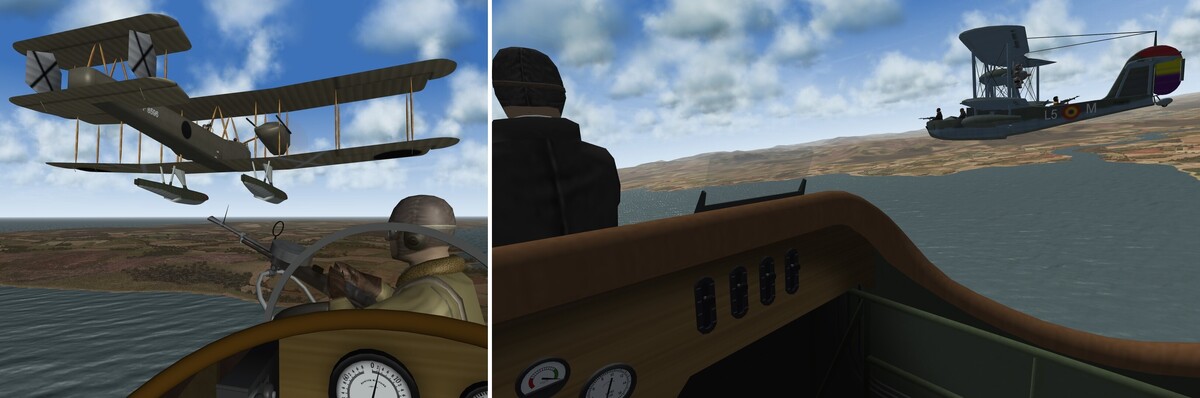
- 52 replies
-
- 2
-
-
- hand tiling
- hfd editing
- (and 3 more)
-
That's a great clip. He 59s were also used for air-sea rescue work, and 12 of them landed troops on the Maas to take the main bridge at Rotterdam in 1940. It is a shame we don't have a better SF2 model than the lash-up which is all that I have been able to make. While searching the net just now, I came across a 12 year old video showing complete anti-shipping missions flown by Savoia S-62s using the Ultraspain mod for IL2. These look very like my own formation flights, except that they are multiplayer affairs rather than the offline single player experiences I enjoy myself. The video is here:
- 52 replies
-
- 1
-
-
- hand tiling
- hfd editing
- (and 3 more)
-
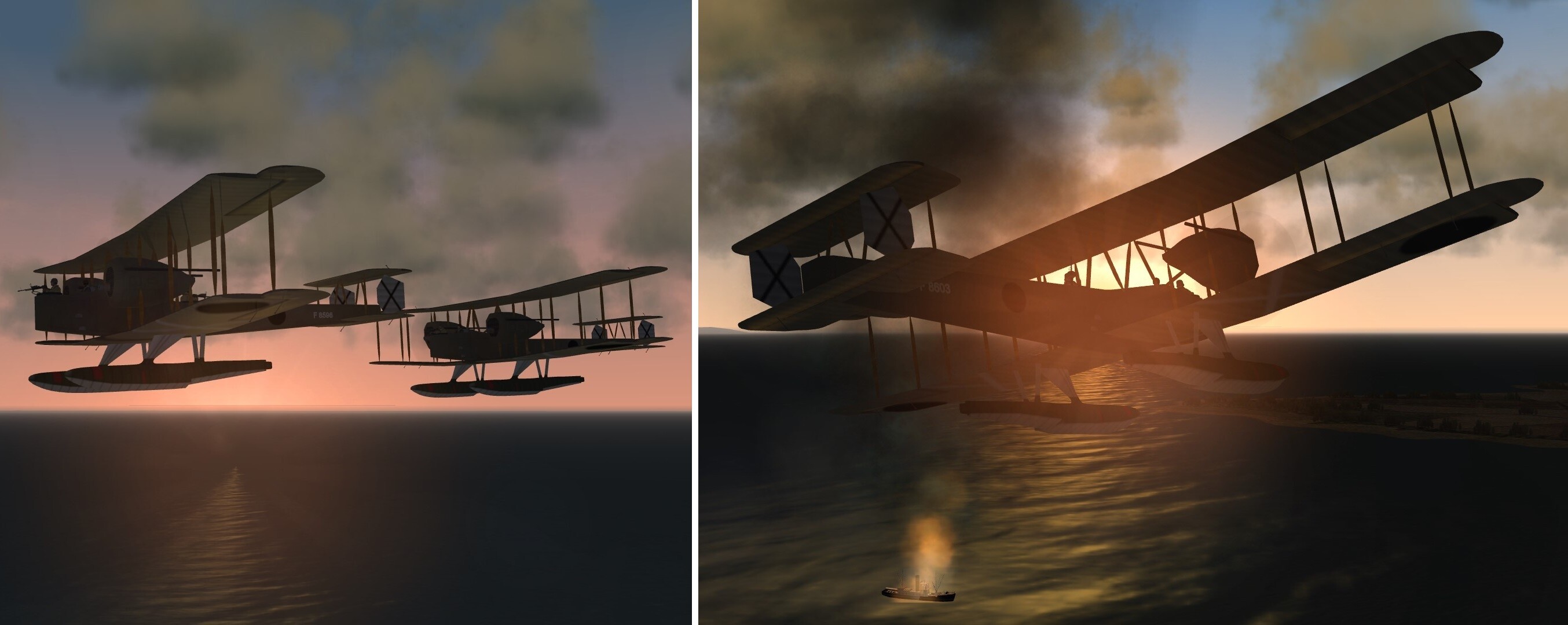
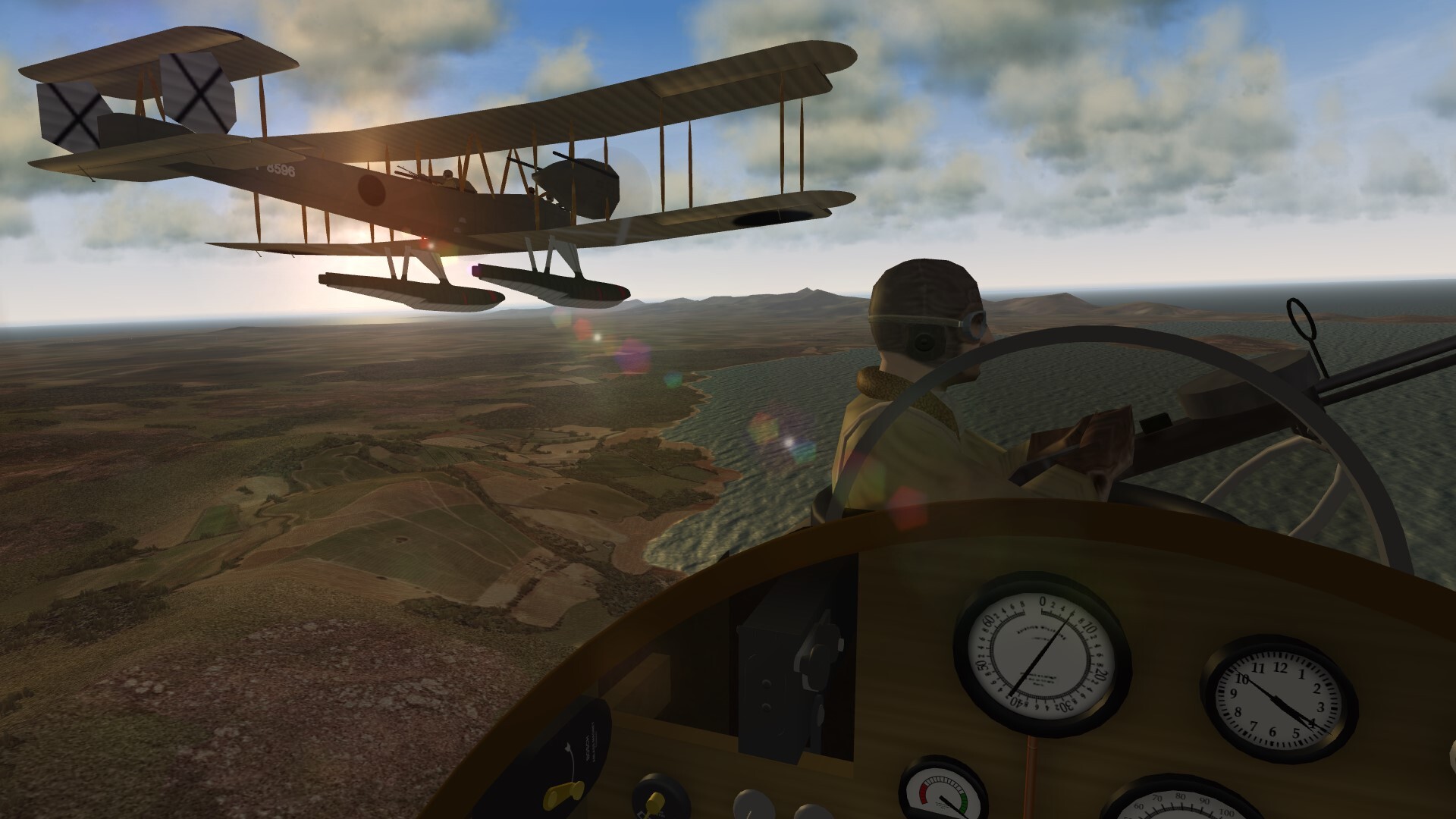
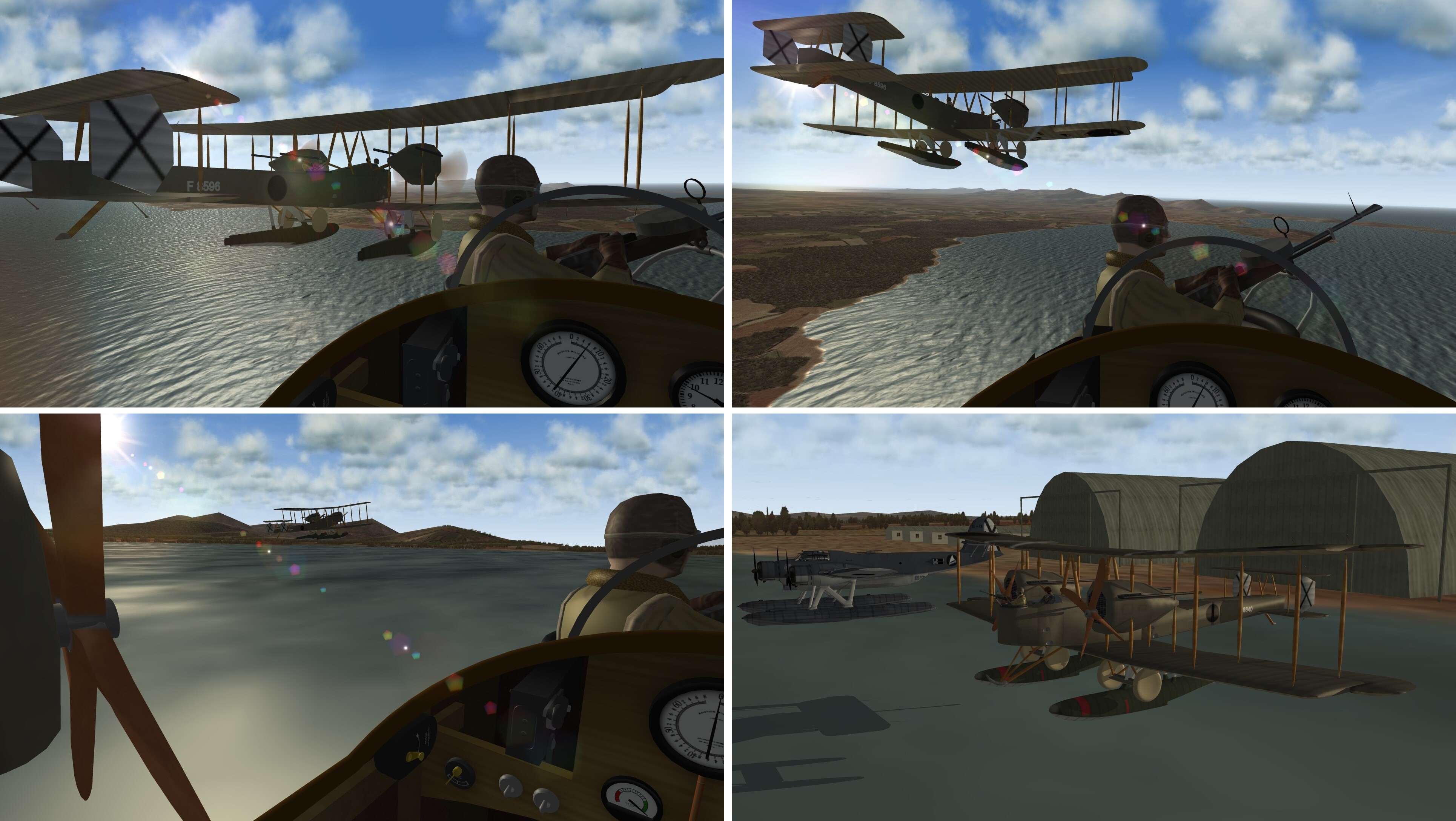
The montage below showing our return to Pollenca after a late afternoon version of the Menorca mission illustrates how my various tweaks complement the cornucopia of user add-ons for SF2 and FE2 to create exactly the flight experience I prefer. My ideal sortie involves the thrill of takeoff, half an hour or so of challenging close formation flying in one of many types of classic warplanes, an atmospheric backdrop of clouds, sunlight and high res terrain, just enough virtual peril to cause minor damage like that visible on my leader’s right wing, and a safe formation landing and short taxi to park alongside the static planes. This may not be as exciting as the usual succession of brief disembodied dogfights, but it is more representative of typical pilot experiences and lets me lose myself for a while in a complete virtual sortie from the days when combat flying involved aircrew rather than drones.
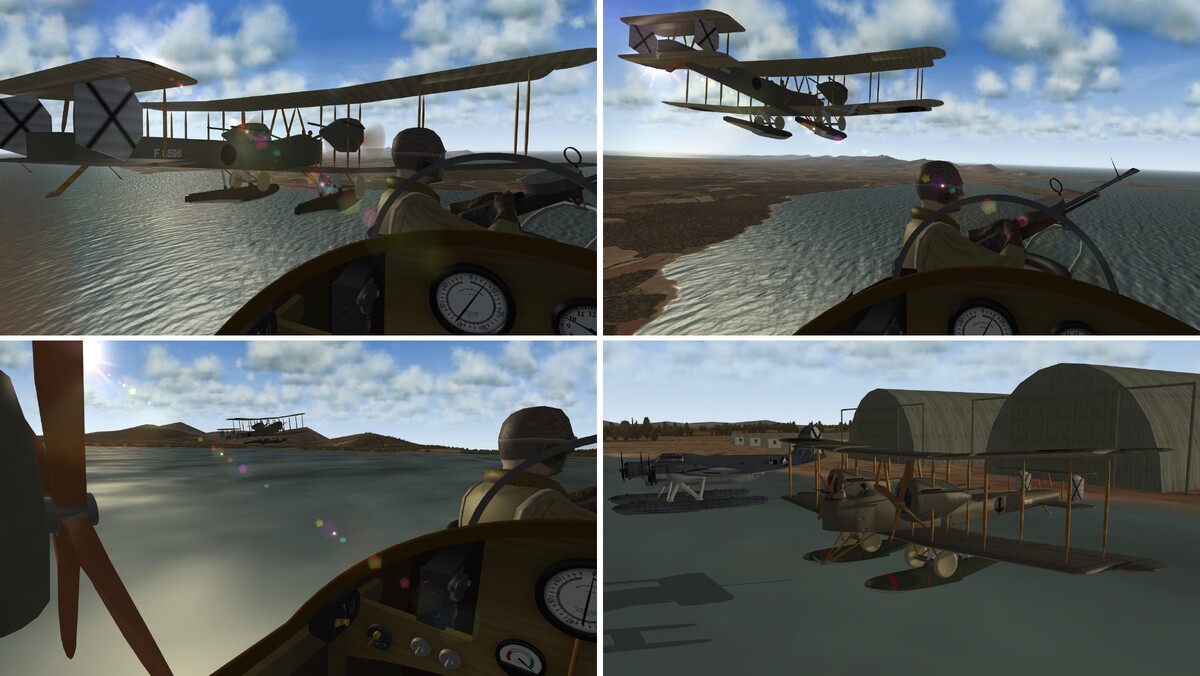
- 52 replies
-
- 2
-
-
- hand tiling
- hfd editing
- (and 3 more)
-
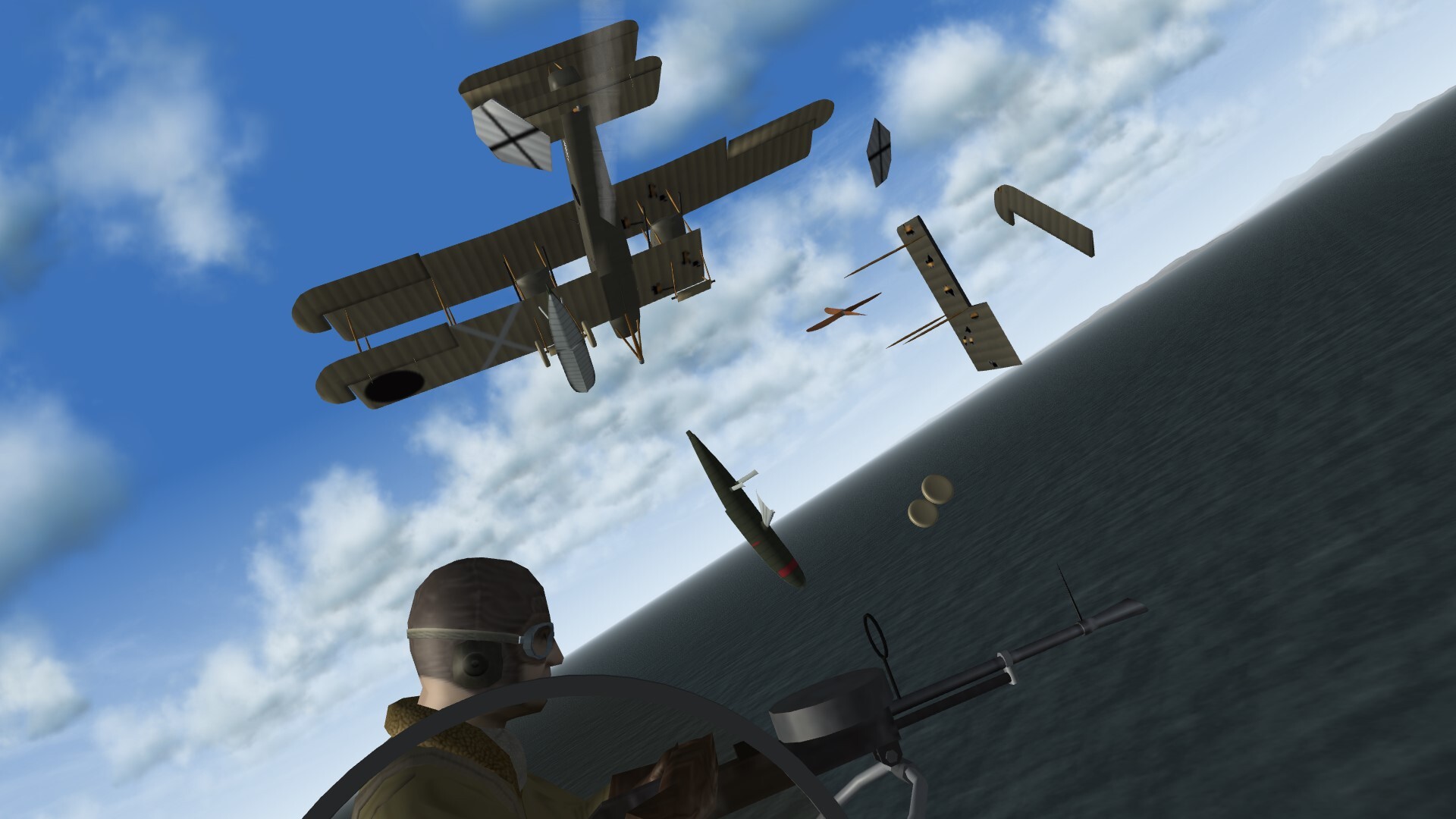
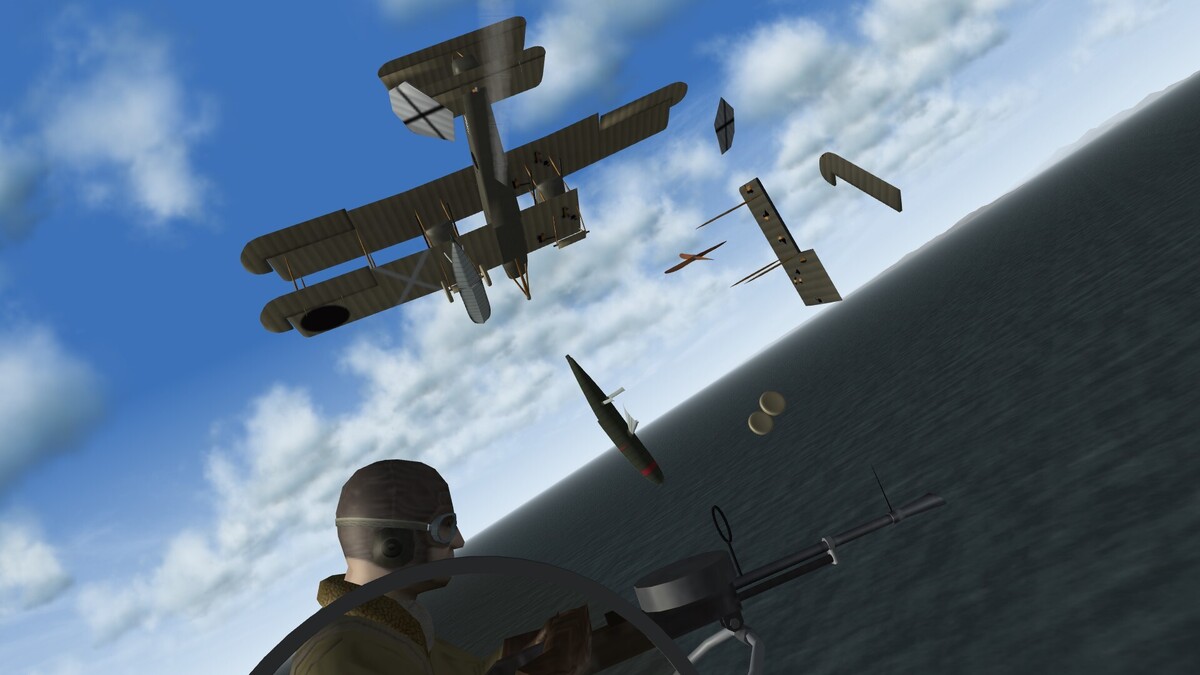
I use generic rather than random flak in my SF2 terrains, so that I may tweak its settings to give my missions just the right level of danger. Automatic flak seems most effective when you fly right over it at close range, as my ill-fated leader did in the photo above. I am currently trialling a reduction of the guns' speed of traverse in pitch and yaw, so that fast-crossing planes are not as vulnerable. Longer ranged heavy flak guns by contrast tend to be much less successful, and I have boosted the effect radius of their bursts to stop them being entirely toothless. They still rarely hit, but when they do, the results can be catastrophic, as seen in the picture below when we had left Menorca and were heading back across the sea to Pollenca. An advantage of my wingman view is that I get to see terrible things happen to my colleagues without my own virtual flight coming to a sticky and premature end.
- 52 replies
-
- 1
-
-
- hand tiling
- hfd editing
- (and 3 more)
-
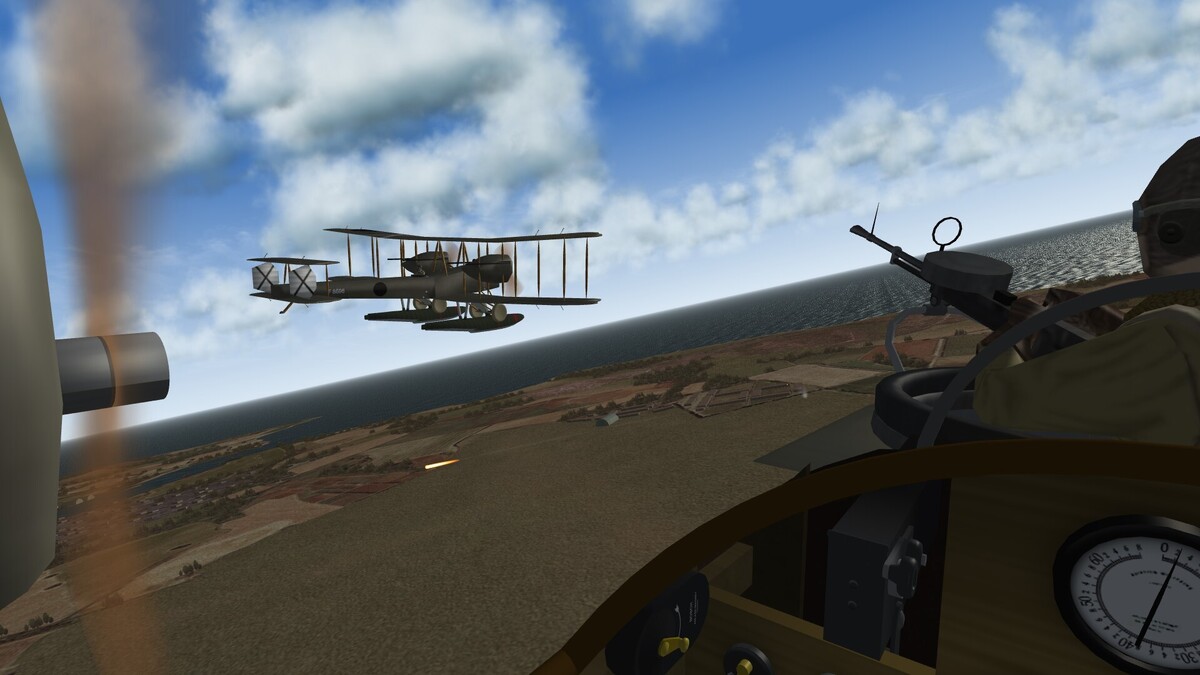
I blooded my new He 59 models in a low level 1937 recce over the nascent San Luis airfield on Menorca, as seen below with the enemy port and seaplane base of Mahon in the background. The flight proved ill-advised, since flak caused my leader to explode outright a couple of seconds after this picture was taken, leaving me to return to Pollenca alone with my shocked crew.
- 52 replies
-
- 3
-
-
- hand tiling
- hfd editing
- (and 3 more)
-
Despite my success with the FE2 water, my efforts to reshape the distorted Flanders terrain to open a North Sea arena proved problematic. I also realised that, even with each tile representing a kilometre rather than the nominal 500 metres, there were far too many for manual retiling to be practical. I have hence decided that my eventual WW1 North Sea arena will use SF2 instead, based on a tweaked variant of my reduced scale WW2 NW Europe terrain as described at https://combatace.com/forums/topic/101179-european-air-war-reborn/, in which each high res tile represents around 3.3 kilometres. My decision has been reinforced by my recent success in creating an improved stand-in for the Condor Legion's He 59 seaplane, by adding floats to a Vickers Vimy model from FE2 as described in my latest post at https://combatace.com/forums/topic/101404-spain-and-seaplanes/. I can use the same procedure to model craft like the Gotha WD 14 torpedo seaplane, which raided Channel shipping in summer 1917 at the same time as its G.IV cousins conducted daylight attacks on London and closer English towns. As Wrench said, FE2 and SF2 are two sides of the same coin, and mixing and matching resources from the two sims (like the very useful Supermarine Walrus flying boat) allows an even greater range of possibilities than are achievable using either sim in isolation.
-
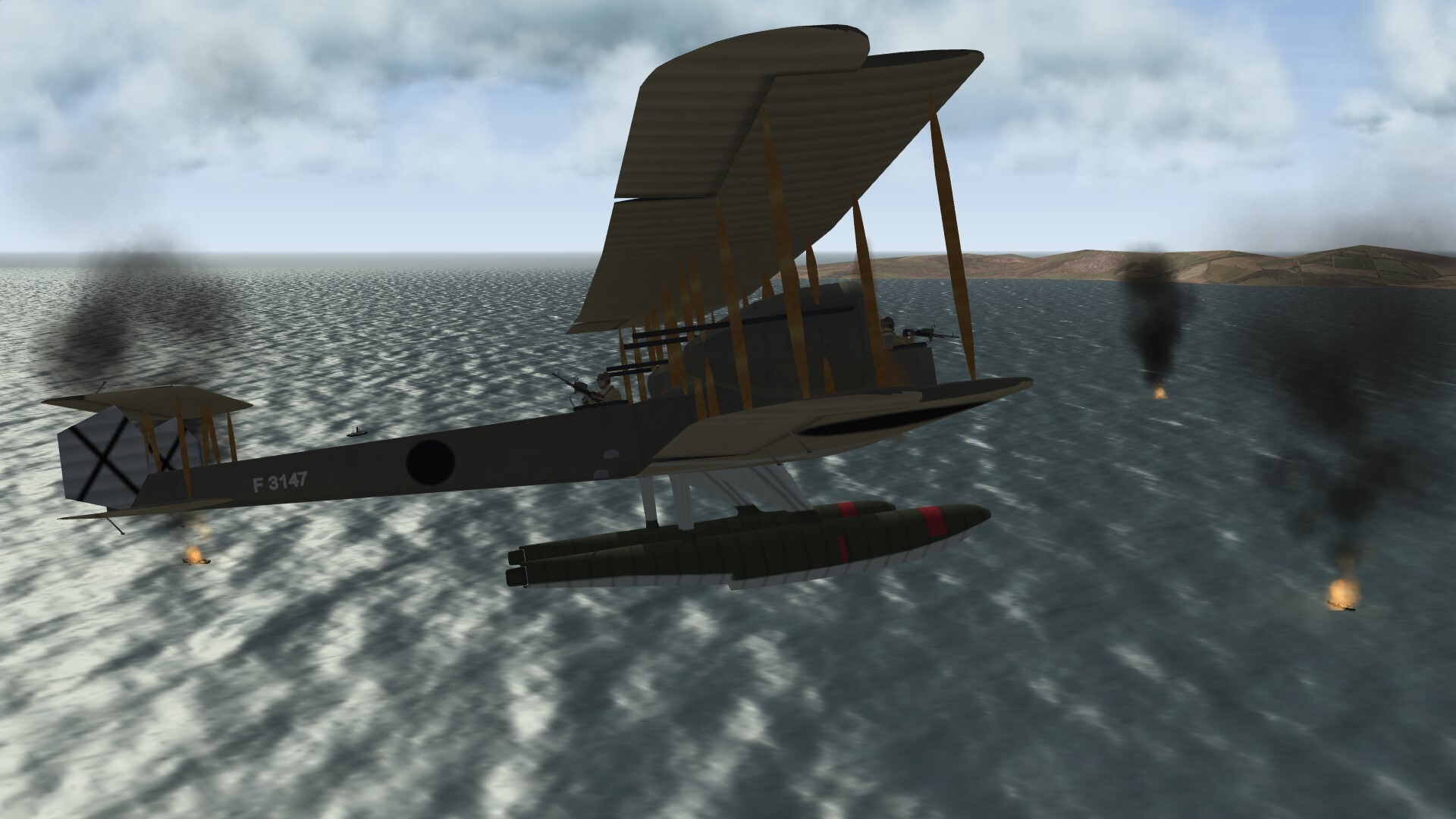
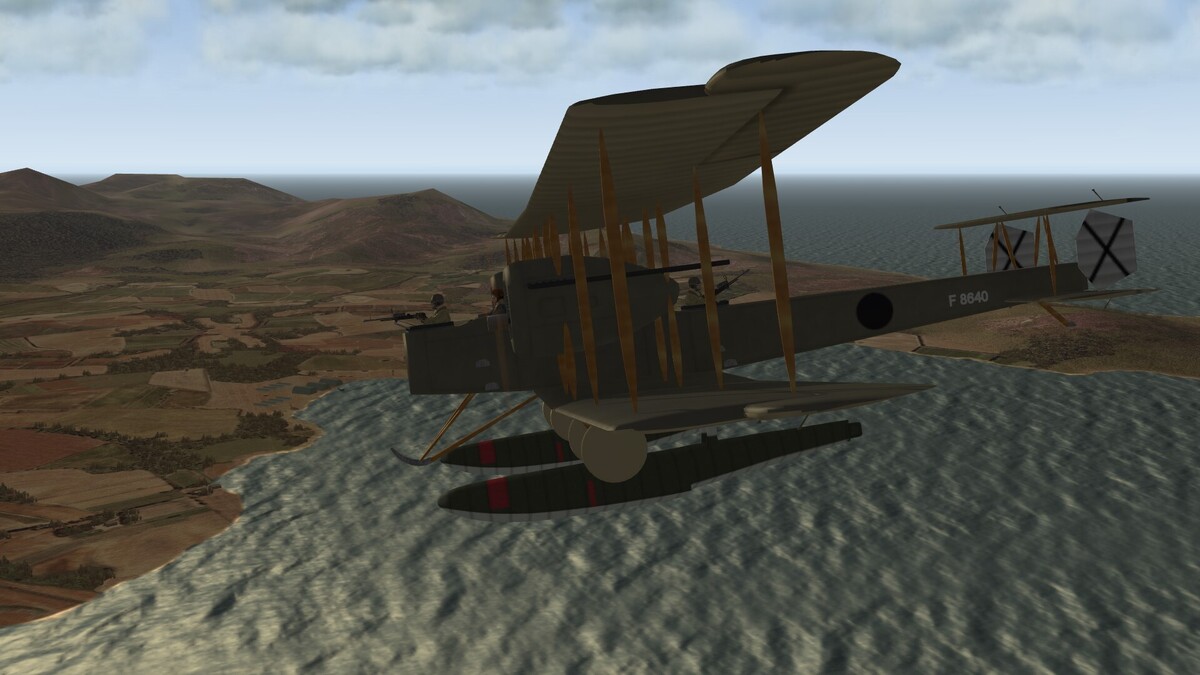
The seaplane stand-in with which I was least satisfied was the Fokker T.IV, since it failed to mirror the biplane structure and open cockpits so characteristic of the Heinkel He 59 as shown in Stratos's picture at the start of this thread. Thankfully, I finally managed to create an alternative stand-in by successfully adding the separate Jake_Floats from an E13A1 model to a Vickers Vimy model from FE2. By trial and error I adjusted the new generic weapon stations to the required positions in the Vimy's data.ini, and heightened the contact points of the plane's landing gear until it could land and take off safely. I used the cockpit from the Halberstadt CLII, switching its ASI to MPH to accommodate my considerable increase in engine thrust and max speed. While repainting the markings, I changed the now redundant wheels to the same neutral colour as the plane's under-surfaces. As seen in the picture below over Pollenca bay, the resulting hybrid stand-in is far from ideal (and lacks the ventral gun present in the Fokker), but it gives a much better feel for these antiquated biplane floatplanes, thereby improving seaplane simulation in my SCW playset even further. All I need now is for my copy of Herrera's book to arrive safely at long last to provide scenarios for me to refly...
- 52 replies
-
- 2
-
-
- hand tiling
- hfd editing
- (and 3 more)
-
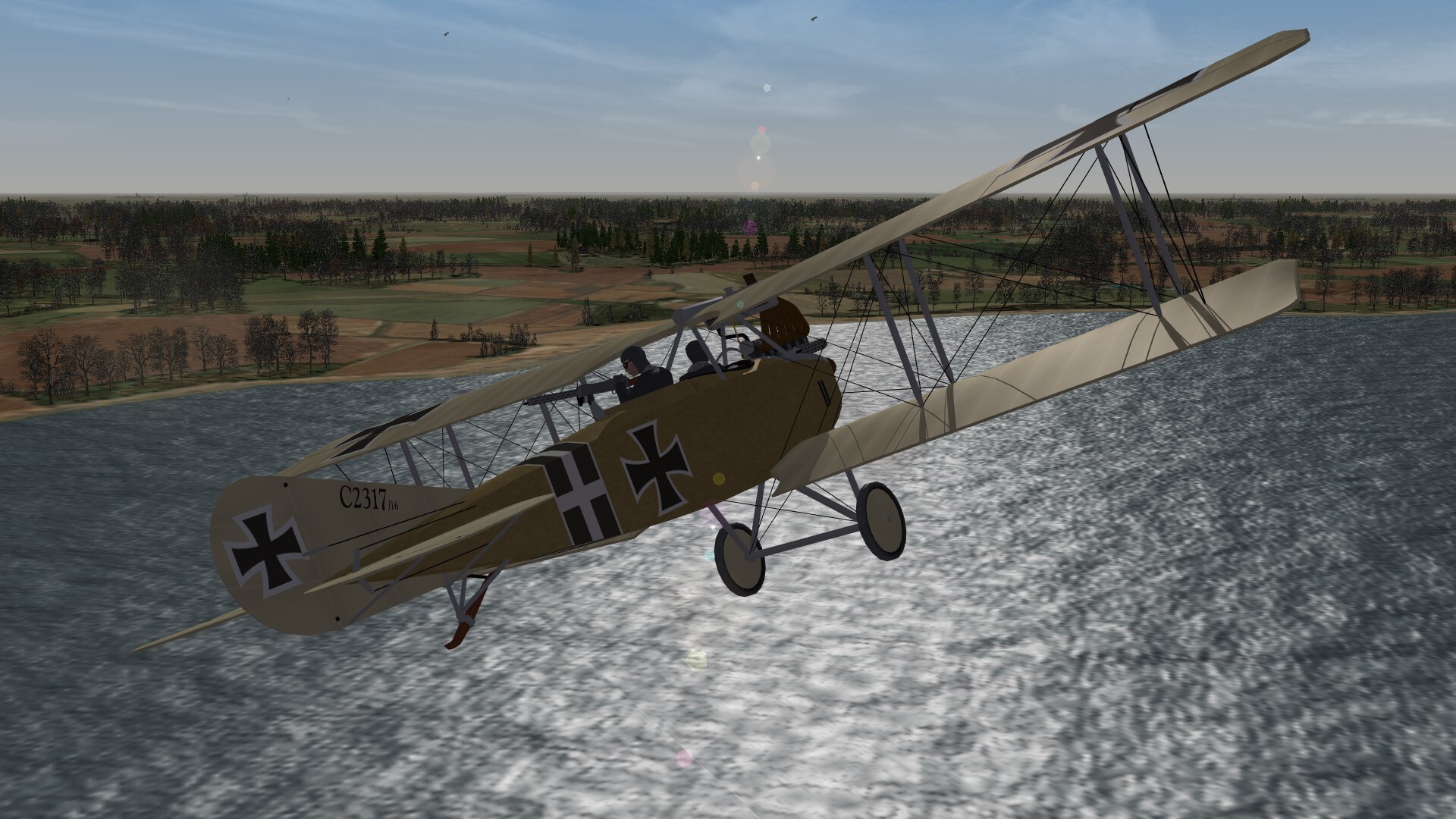
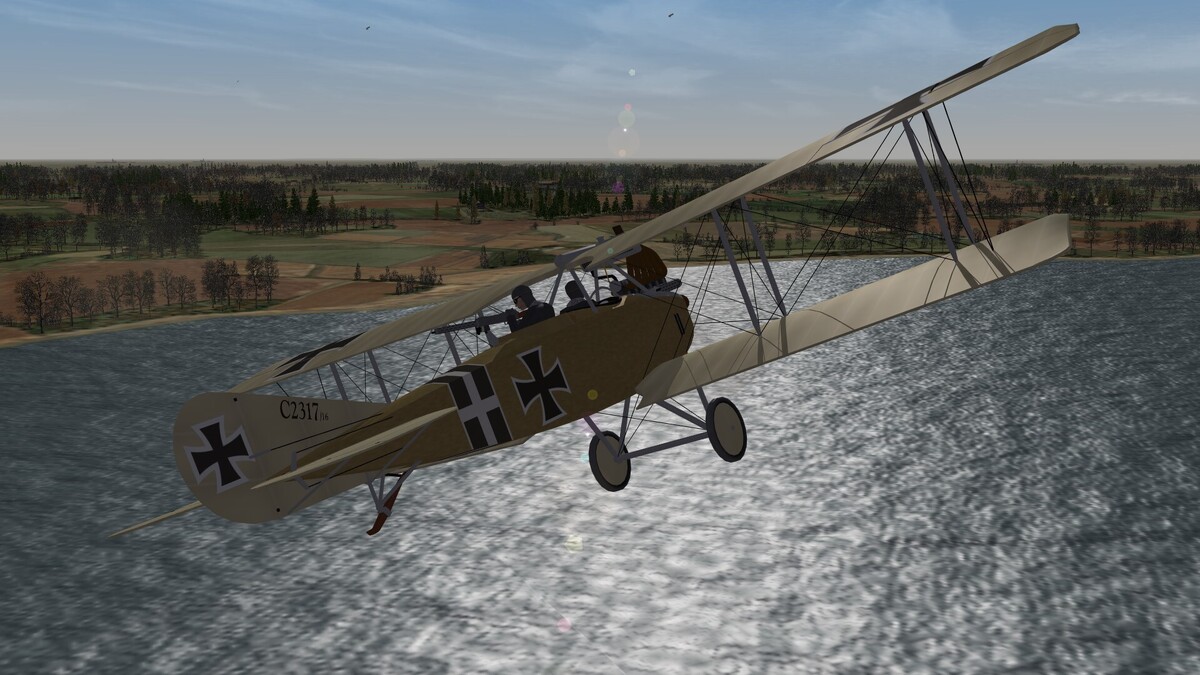
This is where my ignorance may actually be blissful. I am sure you are right about the many complexities of the issue, but if a simple tweak does the trick (at least for me), I tend to count my blessings and leave it at that. I was pleased to discover that the Western Front water is much easier to lighten, since it uses a single colour unlike the beautiful blended shades in the Caporetto terrain. Hence, instead of needing the selection tool, all I had to do in Photoshop was to bucket fill the water with the same shade of blue which I use in my own manual terrain tilesets. The picture below illustrates the results as seen from an Albatros C.III off the Flanders coast on a November afternoon. I have also tweaked the seasonal tilesets to make snow less ahistorically common in these lowland areas. My commonest winter scene has bare trees but no snow cover, as shown.
-
Wrench was right as usual – Mue's LOD viewer is indeed a great asset. I discovered this when making flyable versions of Stephen1918's static seaplanes for use in the Caporetto FE2 terrain itself, as reported in https://combatace.com/forums/topic/101534-opening-the-adriatic/. To my surprise, the Lohner's lower wings appeared at the edge of my cockpit view, and I eventually realised that this was because the node name in his static model must have coincidentally matched that employed in the Vickers Gunbus model which I was using as a chassis for this painfully slow seaplane. All I needed to do was to use the LOD viewer to discover Stephen's other node names, substitute these into the ModelNodeName lines of my parent data.inis, and re-expand my contracted arcs of cockpit vision now that the seaplanes' wings were visible in all their glory. My chimeras are a nightmare of inconsistency, but getting them to work at all despite my modelling ignorance gives a wonderful sense of achievement.
- 52 replies
-
- 1
-
-
- hand tiling
- hfd editing
- (and 3 more)
-
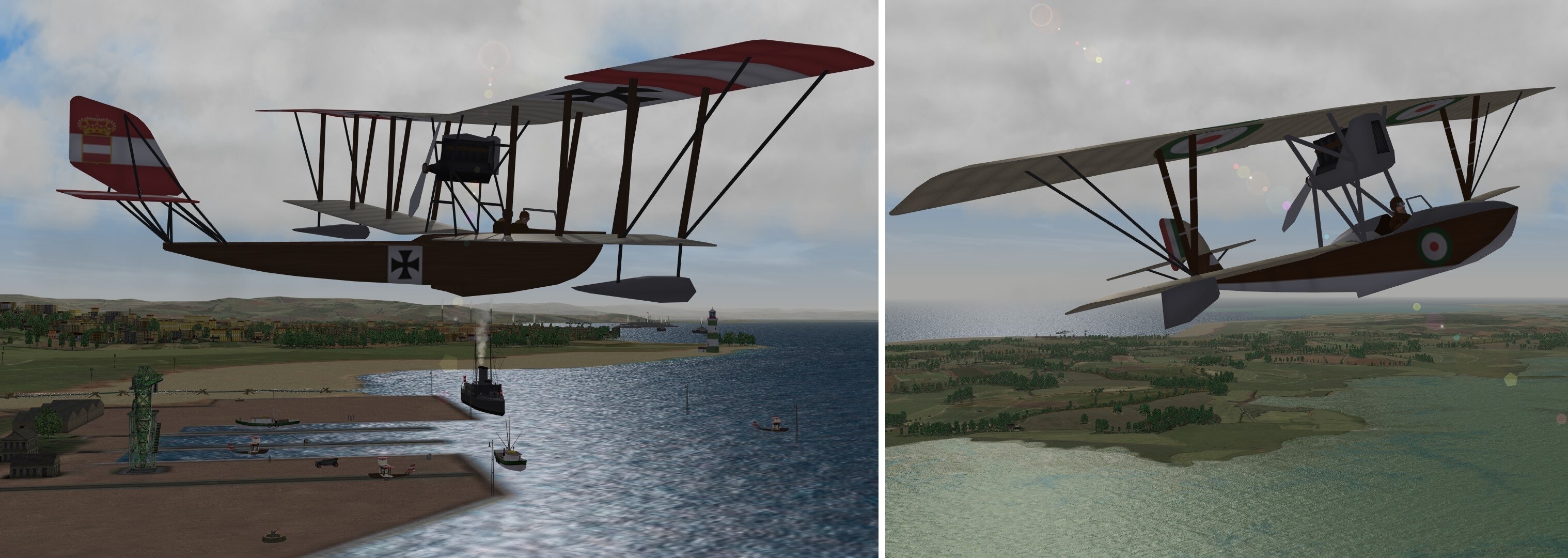
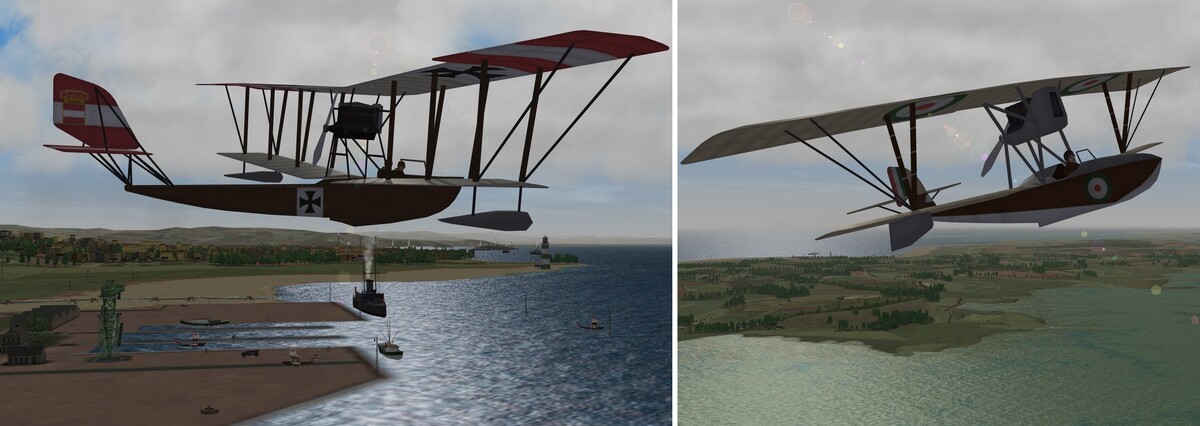
My only reservation about the stunning Caporetto terrain is that, like other FE2 terrains, it uses dark, non-reflective water, making the sea look more like outer space than the sparkling ocean which I enjoy so much in SF2. I saw from screenshots that some users had managed to awaken the dormant reflections, and I was delighted to find that simply replacing the entire WaterTextureMaterial section in the data.inis of FE2 terrains with that from one of my SF2 terrains did the trick in my own case, even without needing to supply the different shader file. Seeing rivers shining in the sunlight adds greatly to the feeling of immersion even in land-locked terrains. I also found that the 'wall' in FE2 is not hard coded as it is now in SF2, and that one can extract the FlightEngine file from the FlightData cat and push back the Border in the WorldSettings section from 25000 to 15000 without crashing the sim. This gives useful extra elbow room for flights over the Adriatic, though sadly not enough to reach Venice itself. Lightening the water required greater effort, but I bit the bullet and edited the many TGA tiles in the Caporetto terrain using my old copy of Photoshop Elements. The Quick Selection Tool with its facility to add or subtract areas at the margins let me highlight the water, and then I used Enhance – Adjust Color – Color Variations to lighten it by 3 clicks. This makes the tramlines of tile edges more apparent from altitude, but I consider this a worthwhile price to pay to see the sea churning and to be able to fly just above the surface by gauging the proximity of the waves. I changed the rather lurid 'Isonzo' tiles to the same sky blue as other rivers, and darkened the 'Mesto' files significantly to make town buildings less jarringly bright. Making the water lighter and bluer in my Western Front terrains will take even more effort because of all the different seasonal tiles, but eventually I hope to use my new abilities in HFD rescaling to add a less distorted and smaller scale model of south east England to the NW quadrant of the Flanders terrain, thereby allowing me to simulate the many missions flown across the North Sea by landplanes, seaplanes and airships. I can then use my wingman trick to experience a marathon daylight round trip from Ghent to London and back with a flock of Gothas in summer 1917, braving flak and fighters along the way! As discussed in https://combatace.com/forums/topic/101404-spain-and-seaplanes/, Stephen1918's tantalising static models of biplane flying boats at Trieste and Lignano inspired me to convert them into flyable representations of the later Macchi M.18 and M.41 seaplanes for my Spanish Civil War project in SF2. An obvious follow-up was to use the same techniques to make the original seaplanes flyable as well. The picture below shows a Lohner L over its base north of Trieste, and a Macchi M.5 over the lagoon north of its own base, which is just visible in the distance. I used the Vickers Gunbus and Pfalz D.IIIa as the basis for these visual conversions, with cockpits from the AEG GIV and SAML S2 respectively. (See my Spain thread for more details of my techniques.) I can now simply repaint the markings to create stand-ins for Austrian Brandenburg seaplane fighters and Italian copies of the Lohner, thereby obtaining everything I need to refight the Adriatic naval air war in miniature in the small and accessible bay between Trieste and Lignano. My new planes and better-looking water make the Caporetto terrain an even more enticing venue for my FE2 gaming, and show what users can achieve by experimenting with similar modifications of their own.
-
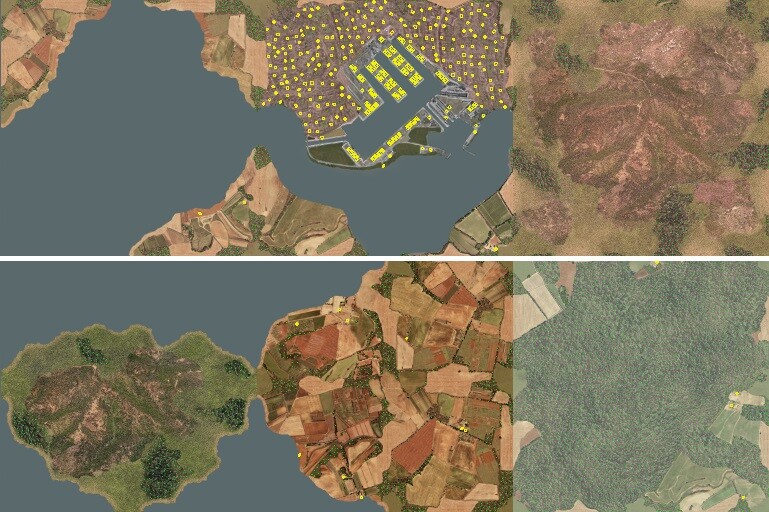
I am still much more comfortable editing terrain than planes. As I said earlier, my manual tileset benefits from having only 3 different types of tile edges (land, sea or a 50:50 split), giving enormous flexibility in tile placement compared to standard tilesets in which woods, towns, mountains and grassland must all be matched up across multiple tiles. Some of my land and sea tile edges do have central channels or isthmuses respectively, but although these may link to similar features on neighbouring tiles, they may instead be cut off at the tile edge as shown below, without looking too conspicuous. After further experiments with Photoshop, I decided to give my Mediterranean tiles a more sun-bleached appearance by lightening them and their accompanying TOD elements by 15% using Enhance - Adjust Color - Adjust Hue/Saturation. As shown on the top row below, the result complements my earlier reddening of the tiles and distances them further from their northern European origins in Gepard's high resolution Battle of Britain terrain. Photoshop lets TGA tiles be edited despite their alpha channels, and the Quick Selection tool lets one confine one's changes to the land without affecting the adjacent water. The experience I have gained adjusting the tiles to portray Spain will allow me to add some basic seasonal variations when I return to my NW Europe terrain in due course. My original tiles will suffice for spring and summer, but I can redden the tiles and trees for the rich colours of autumn and lighten them and the buildings by 30% to portray the bleak and frosty landscape of winter, as shown on the bottom row below. (Persistent snow was much less frequent in the NW European lowlands than most seasonal SF2 and FE2 tilesets tend to suggest.) A great advantage of using just 55 tile variants and 2 TOD bitmaps is that such tweaks are easy to apply, and I love the way that one can transform entire landscapes with just a few hours of effort.
- 52 replies
-
- 2
-
-
- hand tiling
- hfd editing
- (and 3 more)
-
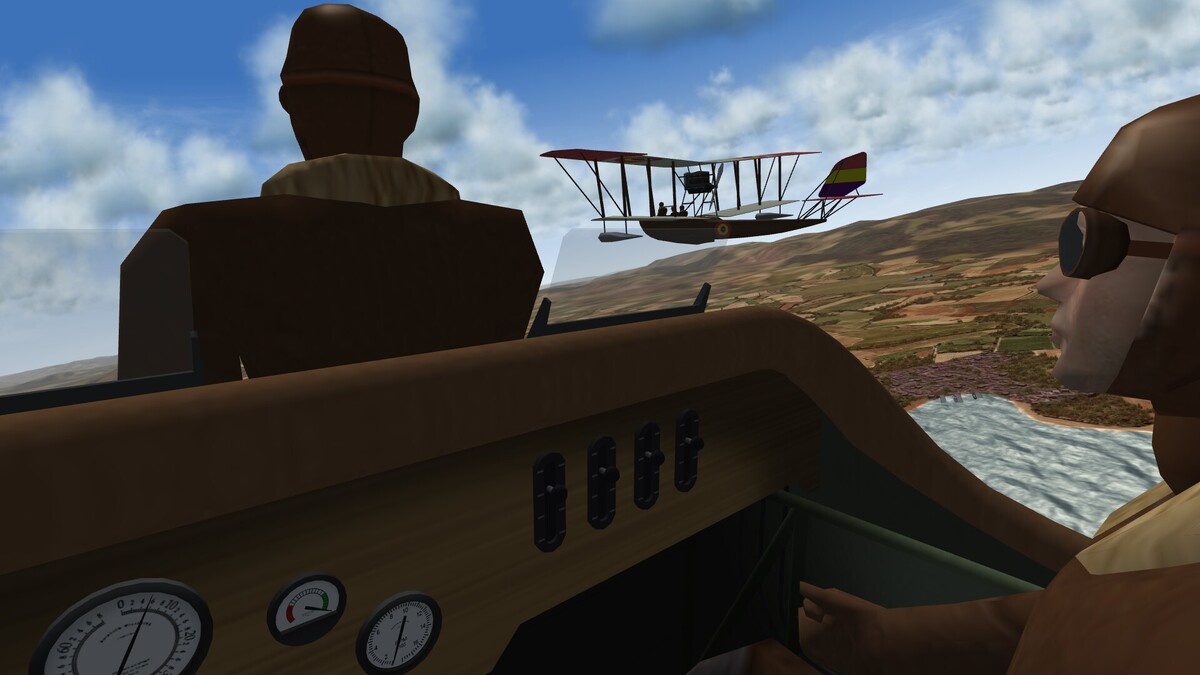
Stephen1918's generic open bomber cockpit based on the AEG GIV cockpit makes a great accompaniment to his re-purposed static Lohner seaplane, as seen in the photo below of our Macchi M.18s during a routine patrol from La Ribera along the coast to San Carlos. Tarragona harbour is visible on our right, with the Reus airfield beyond for less flexible aircraft than our own!
- 52 replies
-
- 5
-
-
- hand tiling
- hfd editing
- (and 3 more)
-
In an early experiment to see whether using the static seaplane models would work at all, I tried putting them into a cloned Fokker Eindecker folder in FE2 itself. The result was that the entire engine block span disconcertingly around the vertical axis, clearly due to the rotary engine code in the Fokker files. After that, it was a relief when my SF2 conversions showed up with just a static prop. The only similar glitch I have encountered is that the Macchi M.41 tail fin pivots up and down like a railway signal when the rudder is used, but this is far less of a problem. If I can get the Supermarine Walrus and my reduced scale EuroWW2 terrain to work in FE2 rather than just SF2, a long term hope is to create an enhanced North Sea terrain including the relevant coasts, in which seaplanes, airships, Zeppelins and big biplane bombers can fly to simulate the many maritime and strategic bombing missions which took place across the North Sea in WW1.
- 52 replies
-
- 1
-
-
- hand tiling
- hfd editing
- (and 3 more)