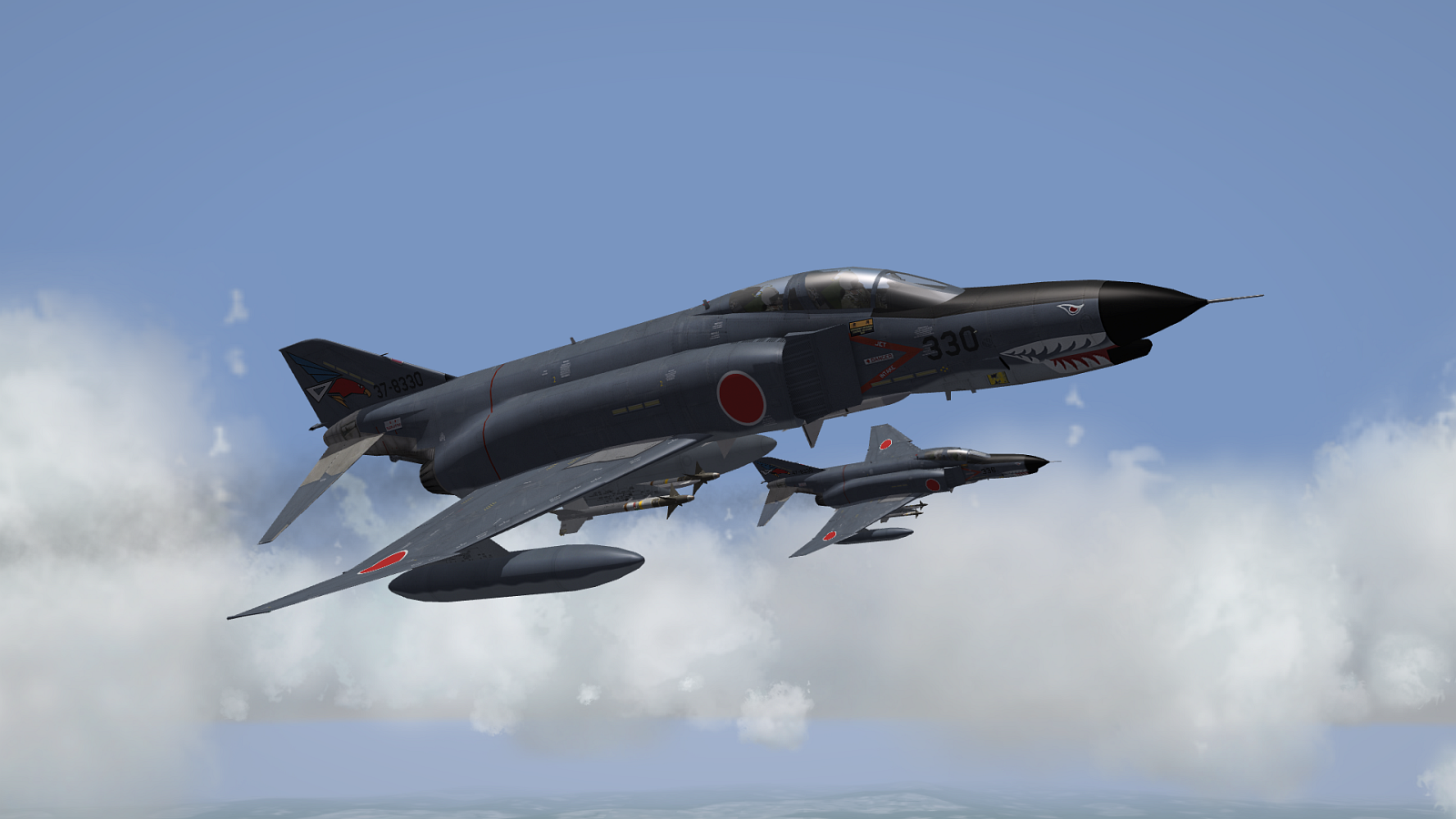


ValAstur
-
Posts
2,617 -
Joined
-
Last visited
-
Days Won
28
Content Type
Profiles
Forums
Gallery
Downloads
Store
Everything posted by ValAstur
-
I was returning home from my apprenticeship job, when a friend called me on the mobile phone. I was listening to a CD in my car, so I didn't hear the breaking news. And when he told me, that a plane crashed into WTC, I thought he was telling me a bad joke. He insisted, that this was real. No matter which broadcasting station I switched on my radio after the call...there it was. By the time I got home, the TV was already running. My mom was nervous, speaking about all the people dead. I don't remember how much time had passed since my arrival, but I saw the second plane crashing into the second tower...live! It was not just a simple terrorist attack. It was an act of war.
-
This is what Gemini said about me: I also asked chatgpt, what he say about me:
-
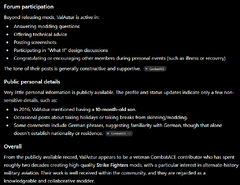
From the album: Screenies
-
-
-
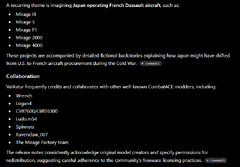
From the album: Screenies
-
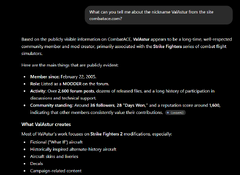
From the album: Screenies
-
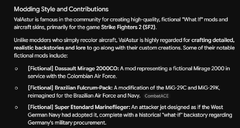
From the album: Screenies
-
From the album: Screenies
-
Best wishes for you and your family, Mohamad. Take care of yourself and take your time.
-
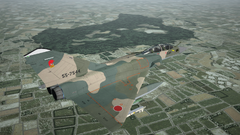
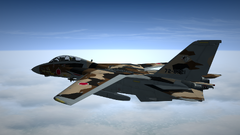
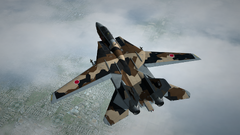
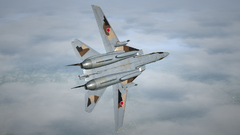
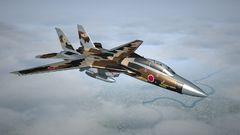
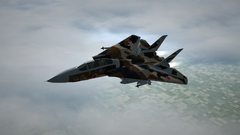
The JASDF reactivated one of the mothballed F-14J for their Aggressor Squadron...
-
-
-
From the album: Fictional Birds
-
From the album: Fictional Birds
-
From the album: Fictional Birds
-
From the album: Fictional Birds
-
From the album: Fictional Birds
-
View File [Fictional] JASDF Cold War Mirage Pack YOU'LL NEED TO HAVE A MERGED INSTALL OF ALL GAMES AND THE MIRAGE IIIOA DLC TO GET ALL THE PLANES WORKING! Pack consisting of six different aircraft representing fictional planes for the japanese air self defense force. The aircraft are the following: - Mirage IIIJ (Mirage IIIC) - Mirage IIIEJ (Mirage IIIOA) - Mirage 5J (Mirage 5F) - Mirage 2000CJ (Mirage 2000-C5) - Mirage 4000J (Mirage 4000) - Mirage 4000DJ (Mirage 4000B) BACKGROUND In the aftermath of the diplomatic crisis with the US during the cuban missile crisis, Japan needed a new provider for weaponry and France was more than happy to step in, allowing the european country to set a foot in the far asian region. As a first part of the signed contract for collaboration, Japan received the first tranche of Mirage IIIC (renamed into Mirage IIIJ) in 1965; directly integrating the aircraft into their fighter squadrons. The first squadrons to receive the model, which was later produced in Japan under license, were the 202nd to 204th. Though the country had an arms use ban imposed from the US government, they were allowed to use up the AIM-9Bs they still had in stock. This aided the JASDF to keep the aircraft on a high combat value, since the Matra Magic was not yet available until the middle 70s. At the end of the 60s, Japan implemented the upgraded version of the aircraft, the Mirage IIIE(J), with better electronics and avionics. The JASDF used this aircraft for CAS, recon and striking missions, entering service in the 305th and 501st Hikotai. But only until the Mirage 5J became available. Being replaced by the more capable aircraft for A/G-missions, the IIIEJs got relocated to fighter squadrons for the interception task. With the appearance of the Mirage 5J in 1972, it became the main aircraft for recon and A/G-tasks, fully replacing the IIIEJ in the 305th and 501st Hikotai. Being fully satisfied with the capabilities of the Mirage planes, the JASDF ordered the F-1 for two squadrons for recon and maritime target destruction. The F-1 entered service in 1982 and kicked the 5J out of the 501st. The now free aircraft got relocated to different squadrons for different purposes (training, technical practices, weapon testing). The IIIJ and IIIEJs, though being very popular among the pilots, were technically not considered not to be on par with current models of other countries in the middle of the 80s. So the administation under Nakasone Kasuhiro placed a contract for 60 aircraft of the current Mirage 2000C model, purchasing 54 single- and 6 double-seaters with the aim of replacing the aged III-models. Apart from the squadrons, that already had the III or IIIEJ, the 302nd Hikotai was also among the squadrons to receive the 2000CJ. Being impressed by the technical possibilities of this model; specially thrust and speed, let the JASDF also introduce the plane into the 8th HIkotai for quick reaction and maritime interception. The 4000 was a special case. Dassault wanted to stop the program because of cost matters and lacking interest among potential costumers. The JASDF showed great interest in this model and bought the license for production in Japan. Problems with frame stability and materials for the fuselage led to a serious delay of the maiden flight of both single- and double-seater. The first lift-off was intended to be at the end of 1996, but it was executed in early 1998. After solving the problems and impressing the leading officers of the JASDF with the potential and capabilities of the plane, Mitsubishi received the order for 36 single-, but only 12 double-seaters (it was initially intended to buy 24 double-seaters). Reasons were the high-costs of procurement and maintenance. The single-seated 4000J entered service in 2000 and replaced the Mirage 5J in the 305th Hikotai and got the prime model for the 6th Hikotai. The double-seated aircraft got allocated primarily to the aggressor squadron Hiko Kyodogun, where 8 of the 12 aircraft found a new home. The remaining four entered service in the 501st, finally taking the remaining 5Js out of service. INSTRUCTIONS 1. Drop the folders into your Mod folder. If asked to overwrite, click yes. 2. The 2000 uses different fuel tanks for the blue camo. If the camo is selected, switch to the ones with "JASDF Blue" in the Name. CREDITS Big thanks to Thirdwire for the superb models. To Spinners for some of the decals I used. To Wrench for allowing me to release the Mirage 2000 as part of this pack. Also thanks to Logan4 for allowing me to release both 4000 and 4000B in this pack. And to Cliff76300 for the edited data.inis for the 4000s. ORIGINAL CREDITS taken from TMF's Mirage 2000 Mirage 2000 Armée de l'Air For all Strike Fighter series fans By The Mirage Factory In memory of Olivier Anguille "BPAo" ORIGINAL CREDITS taken from Logan4's Mirage 4000P & PB This aircraft mod represents Dassault's what-if Mirage 4000P fighter and its trainer PB variant in the Portugese Air Force service. This package comes with 1 skin set for each variant, with decals for P (14 planes), and for PB (6 planes). Also it is dedicated to our friend Cocas who put his work and time to bring us many of the rare or experimental aircraft in this game series and originally created the base model for this plane. This model is meant for SF2 games only, SF1 variants will be uploaded at the SF1 section. Install is the regular dropping the contents in their respective places. In case you have the prototype or French A and B variants you can skip the overwrite prompt of weapons as those 6 items are identical. Please note: The model can be quite heavy on FPS in large formations on weaker machines, so if required, either resize skin files or use lower lods(_nd,001,002,003) as lod1. The model uses the general french and NATO weapons, either as part of weapon packs or the Mirage 2000 family. Important: The PB variant comes with 2 types of cockpit, the basic setup will use a simple pit that has only the pilots cabin instrumented. The other is a fully modeled front and rear compartment, in which you want to fly you should activate the proper line in the AC's.ini file. CockpitDataFile=Mirage4000PB_Cockpit.ini <---- basic setup ;CockpitDataFile=Mirage4000PB_Cockpit_full1.ini <------ front seat ;CockpitDataFile=Mirage4000PB_Cockpit_full2.ini <------ rear seat Be aware - the piloting seat position can not be changed during/in game, so chose wisely! Make sure to read the manual included with the package. ---------------------- Creators of these Aircraft mods as members of CombatAce site: Original 3D work: Cocas Aircraft 3d update and additional changes: Logan4 Cockpit 3d work: Logan4 Aircraft FM: Cliff7600 Aircraft avionics: Loborojo, Cliff7600, logan4 Skin files and decals: Flogger23, Cliff7600, logan4, loborojo Cockpit files: Logan4, Cliff7600 Thanks to Crusader for additional brochure files Big thanks to members of CombatAce for helping and answering our questions and in sorting out some of the issues we got while creating this mod. Modding and distribution of files are allowed and limited according to the CombatAce Freeware Licensing agreement. In case I forgot anybody please contact me and I fix it ASAP. Happy flying! ValAstur Submitter ValAstur Submitted 05/30/2026 Category What If Hangar
-
- 1
-

-
![More information about "[Fictional] JASDF Cold War Mirage Pack"](https://combatace.com/applications/downloads/interface/legacy/screenshot.php?path=/monthly_2026_05/img00032.thumb.PNG.8545544727da29290f0a90e831feacf0.PNG)
Version 1.0.0
24 downloads
YOU'LL NEED TO HAVE A MERGED INSTALL OF ALL GAMES AND THE MIRAGE IIIOA DLC TO GET ALL THE PLANES WORKING! Pack consisting of six different aircraft representing fictional planes for the japanese air self defense force. The aircraft are the following: - Mirage IIIJ (Mirage IIIC) - Mirage IIIEJ (Mirage IIIOA) - Mirage 5J (Mirage 5F) - Mirage 2000CJ (Mirage 2000-C5) - Mirage 4000J (Mirage 4000) - Mirage 4000DJ (Mirage 4000B) BACKGROUND In the aftermath of the diplomatic crisis with the US during the cuban missile crisis, Japan needed a new provider for weaponry and France was more than happy to step in, allowing the european country to set a foot in the far asian region. As a first part of the signed contract for collaboration, Japan received the first tranche of Mirage IIIC (renamed into Mirage IIIJ) in 1965; directly integrating the aircraft into their fighter squadrons. The first squadrons to receive the model, which was later produced in Japan under license, were the 202nd to 204th. Though the country had an arms use ban imposed from the US government, they were allowed to use up the AIM-9Bs they still had in stock. This aided the JASDF to keep the aircraft on a high combat value, since the Matra Magic was not yet available until the middle 70s. At the end of the 60s, Japan implemented the upgraded version of the aircraft, the Mirage IIIE(J), with better electronics and avionics. The JASDF used this aircraft for CAS, recon and striking missions, entering service in the 305th and 501st Hikotai. But only until the Mirage 5J became available. Being replaced by the more capable aircraft for A/G-missions, the IIIEJs got relocated to fighter squadrons for the interception task. With the appearance of the Mirage 5J in 1972, it became the main aircraft for recon and A/G-tasks, fully replacing the IIIEJ in the 305th and 501st Hikotai. Being fully satisfied with the capabilities of the Mirage planes, the JASDF ordered the F-1 for two squadrons for recon and maritime target destruction. The F-1 entered service in 1982 and kicked the 5J out of the 501st. The now free aircraft got relocated to different squadrons for different purposes (training, technical practices, weapon testing). The IIIJ and IIIEJs, though being very popular among the pilots, were technically not considered not to be on par with current models of other countries in the middle of the 80s. So the administation under Nakasone Kasuhiro placed a contract for 60 aircraft of the current Mirage 2000C model, purchasing 54 single- and 6 double-seaters with the aim of replacing the aged III-models. Apart from the squadrons, that already had the III or IIIEJ, the 302nd Hikotai was also among the squadrons to receive the 2000CJ. Being impressed by the technical possibilities of this model; specially thrust and speed, let the JASDF also introduce the plane into the 8th HIkotai for quick reaction and maritime interception. The 4000 was a special case. Dassault wanted to stop the program because of cost matters and lacking interest among potential costumers. The JASDF showed great interest in this model and bought the license for production in Japan. Problems with frame stability and materials for the fuselage led to a serious delay of the maiden flight of both single- and double-seater. The first lift-off was intended to be at the end of 1996, but it was executed in early 1998. After solving the problems and impressing the leading officers of the JASDF with the potential and capabilities of the plane, Mitsubishi received the order for 36 single-, but only 12 double-seaters (it was initially intended to buy 24 double-seaters). Reasons were the high-costs of procurement and maintenance. The single-seated 4000J entered service in 2000 and replaced the Mirage 5J in the 305th Hikotai and got the prime model for the 6th Hikotai. The double-seated aircraft got allocated primarily to the aggressor squadron Hiko Kyodogun, where 8 of the 12 aircraft found a new home. The remaining four entered service in the 501st, finally taking the remaining 5Js out of service. INSTRUCTIONS 1. Drop the folders into your Mod folder. If asked to overwrite, click yes. 2. The 2000 uses different fuel tanks for the blue camo. If the camo is selected, switch to the ones with "JASDF Blue" in the Name. CREDITS Big thanks to Thirdwire for the superb models. To Spinners for some of the decals I used. To Wrench for allowing me to release the Mirage 2000 as part of this pack. Also thanks to Logan4 for allowing me to release both 4000 and 4000B in this pack. And to Cliff76300 for the edited data.inis for the 4000s. ORIGINAL CREDITS taken from TMF's Mirage 2000 Mirage 2000 Armée de l'Air For all Strike Fighter series fans By The Mirage Factory In memory of Olivier Anguille "BPAo" ORIGINAL CREDITS taken from Logan4's Mirage 4000P & PB This aircraft mod represents Dassault's what-if Mirage 4000P fighter and its trainer PB variant in the Portugese Air Force service. This package comes with 1 skin set for each variant, with decals for P (14 planes), and for PB (6 planes). Also it is dedicated to our friend Cocas who put his work and time to bring us many of the rare or experimental aircraft in this game series and originally created the base model for this plane. This model is meant for SF2 games only, SF1 variants will be uploaded at the SF1 section. Install is the regular dropping the contents in their respective places. In case you have the prototype or French A and B variants you can skip the overwrite prompt of weapons as those 6 items are identical. Please note: The model can be quite heavy on FPS in large formations on weaker machines, so if required, either resize skin files or use lower lods(_nd,001,002,003) as lod1. The model uses the general french and NATO weapons, either as part of weapon packs or the Mirage 2000 family. Important: The PB variant comes with 2 types of cockpit, the basic setup will use a simple pit that has only the pilots cabin instrumented. The other is a fully modeled front and rear compartment, in which you want to fly you should activate the proper line in the AC's.ini file. CockpitDataFile=Mirage4000PB_Cockpit.ini <---- basic setup ;CockpitDataFile=Mirage4000PB_Cockpit_full1.ini <------ front seat ;CockpitDataFile=Mirage4000PB_Cockpit_full2.ini <------ rear seat Be aware - the piloting seat position can not be changed during/in game, so chose wisely! Make sure to read the manual included with the package. ---------------------- Creators of these Aircraft mods as members of CombatAce site: Original 3D work: Cocas Aircraft 3d update and additional changes: Logan4 Cockpit 3d work: Logan4 Aircraft FM: Cliff7600 Aircraft avionics: Loborojo, Cliff7600, logan4 Skin files and decals: Flogger23, Cliff7600, logan4, loborojo Cockpit files: Logan4, Cliff7600 Thanks to Crusader for additional brochure files Big thanks to members of CombatAce for helping and answering our questions and in sorting out some of the issues we got while creating this mod. Modding and distribution of files are allowed and limited according to the CombatAce Freeware Licensing agreement. In case I forgot anybody please contact me and I fix it ASAP. Happy flying! ValAstur -
That's great news, Volker. Take your time. SF can wait. Your health is the most important thing. Wishing you all the best for a quick recovery. Du schaffst das!
-

Dassault's Cold War Deltas in Japan
ValAstur replied to ValAstur's topic in Sci-Fi/Anime/What If Forum
The IIIs and 5s are TW. So no problem on that. @Wrench is it ok to release the 2000s in this complete pack? @logan4 do I also get a go from you for the 4000s? -
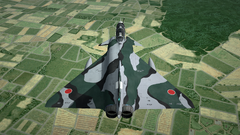
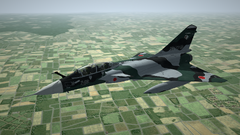
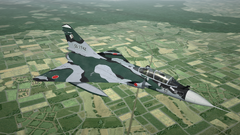
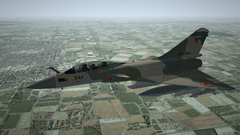
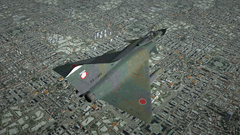
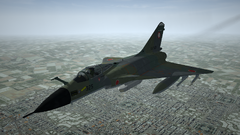
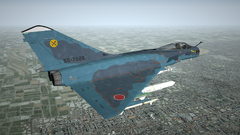
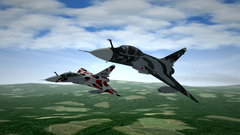
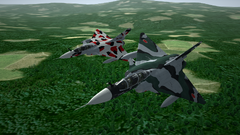
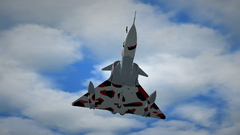
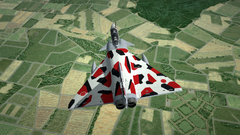
This thread is a follow-up to this one here: https://combatace.com/forums/topic/101086-marcels-needle-nosed-bird-in-nihon/ In the aftermath of the diplomatic crisis with the US during the cuban missile crisis, Japan needed a new provider for weaponry and France was more than happy to step in, allowing the european country to set a foot in the far asian region. As a first part of the signed contract for collaboration, Japan received the first tranche of Mirage IIIC (renamed into Mirage IIIJ) in 1965; directly integrating the aircraft into their fighter squadrons. The first squadrons to receive the model, which was later produced in Japan under license, were the 202nd to 204th. Though the country had an arms use ban imposed from the US government, they were allowed to use up the AIM-9Bs they still had in stock. This aided the JASDF to keep the aircraft on a high combat value, since the Matra Magic was not yet available until the middle 70s. Mirage IIIJ, 202nd Hikotai, 1965 203rd Hikotai 204th HIkotai At the end of the 60s, Japan implemented the upgraded version of the aircraft, the Mirage IIIE(J), with better electronics and avionics. The JASDF used this aircraft for CAS, recon and striking missions, entering service in the 305th and 501st Hikotai. But only until the Mirage 5J became available. Being replaced by the more capable aircraft for A/G-missions, the IIIEJs got relocated to fighter squadrons for the interception task. Mirage IIIEJ, 305th Hikotai, 1969 501st Hikotai With the appearance of the Mirage 5J in 1972, it became the main aircraft for recon and A/G-tasks, fully replacing the IIIEJ in the 305th and 501st Hikotai. Mirage 5J, 305th Hikotai, 1972 501st Hikotai Being fully satisfied with the capabilities of the Mirage planes, the JASDF ordered the F-1 for two squadrons for recon and maritime target destruction. The F-1 entered service in 1982 and kicked the 5J out of the 501st. The now free aircraft got relocated to different squadrons for different purposes (training, technical practices, weapon testing). The IIIJ and IIIEJs, though being very popular among the pilots, were technically not considered not to be on par with current models of other countries in the middle of the 80s. So the administation under Nakasone Kasuhiro placed a contract for 60 aircraft of the current Mirage 2000C model, purchasing 54 single- and 6 double-seaters with the aim of replacing the aged III-models. Apart from the squadrons, that already had the III or IIIEJ, the 302nd Hikotai was also among the squadrons to receive the 2000CJ. Being impressed by the technical possibilities of this model; specially thrust and speed, let the JASDF also introduce the plane into the 8th HIkotai for quick reaction and maritime interception. Mirage 2000CJ, 302nd Hikotai, 1989 8th Hikotai The 4000 was a special case. Dassault wanted to stop the program because of cost matters and lacking interest among potential costumers. The JASDF showed great interest in this model and bought the license for production in Japan. Problems with frame stability and materials for the fuselage led to a serious delay of the maiden flight of both single- and double-seater. The first lift-off was intended to be at the end of 1996, but it was executed in early 1998. After solving the problems and impressing the leading officers of the JASDF with the potential and capabilities of the plane, Mitsubishi received the order for 36 single-, but only 12 double-seaters (it was initially intended to buy 24 double-seaters). Reasons were the high-costs of procurement and maintenance. The single-seated 4000J entered service in 2000 and replaced the Mirage 5J in the 305th Hikotai and got the prime model for the 6th Hikotai. Mirage 4000J, 6th Hikotai, 2000 305th Hikotai Tthe double-seated aircraft got allocated primarily to the aggressor squadron Hiko Kyodogun, where 8 of the 12 aircraft found a new home. The remaining four entered service in the 501st, finally taking the remaining 5Js out of service. Mirage 4000DJ, 501st Hikotai, 2000 Serial 55-7742, Hiko Kyodogun, 2000 Serial 55-7743, Hiko Kyodogun, 2000 "Welcome fellow aviators...this is your captain speaking..."
- 5 replies
-
- 12
-
-
From the album: Fictional Birds
-
From the album: Fictional Birds
-
From the album: Fictional Birds
-
From the album: Fictional Birds