

ndicki
-
Posts
978 -
Joined
-
Last visited
Content Type
Profiles
Forums
Gallery
Downloads
Store
Everything posted by ndicki
-
187 downloads
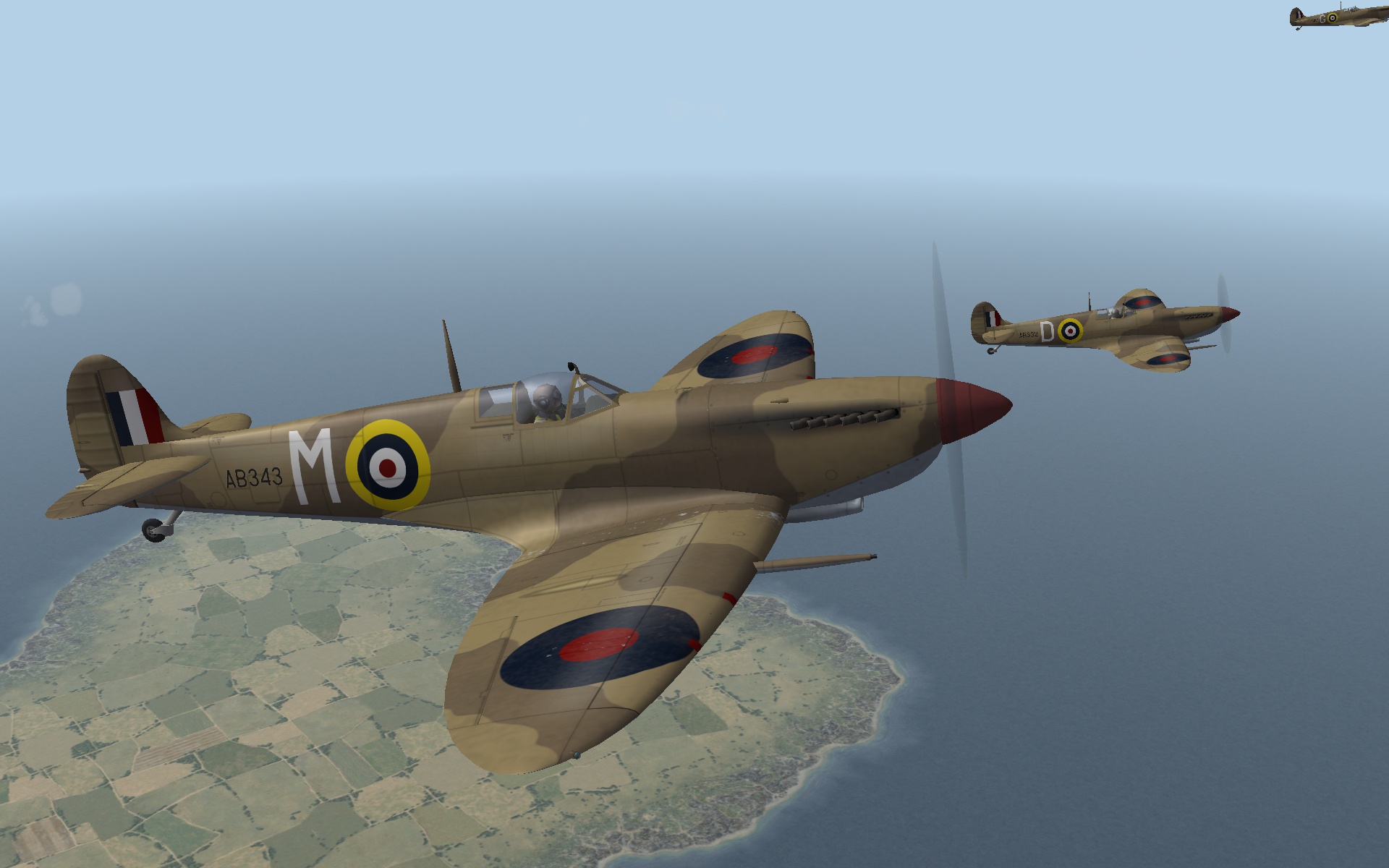
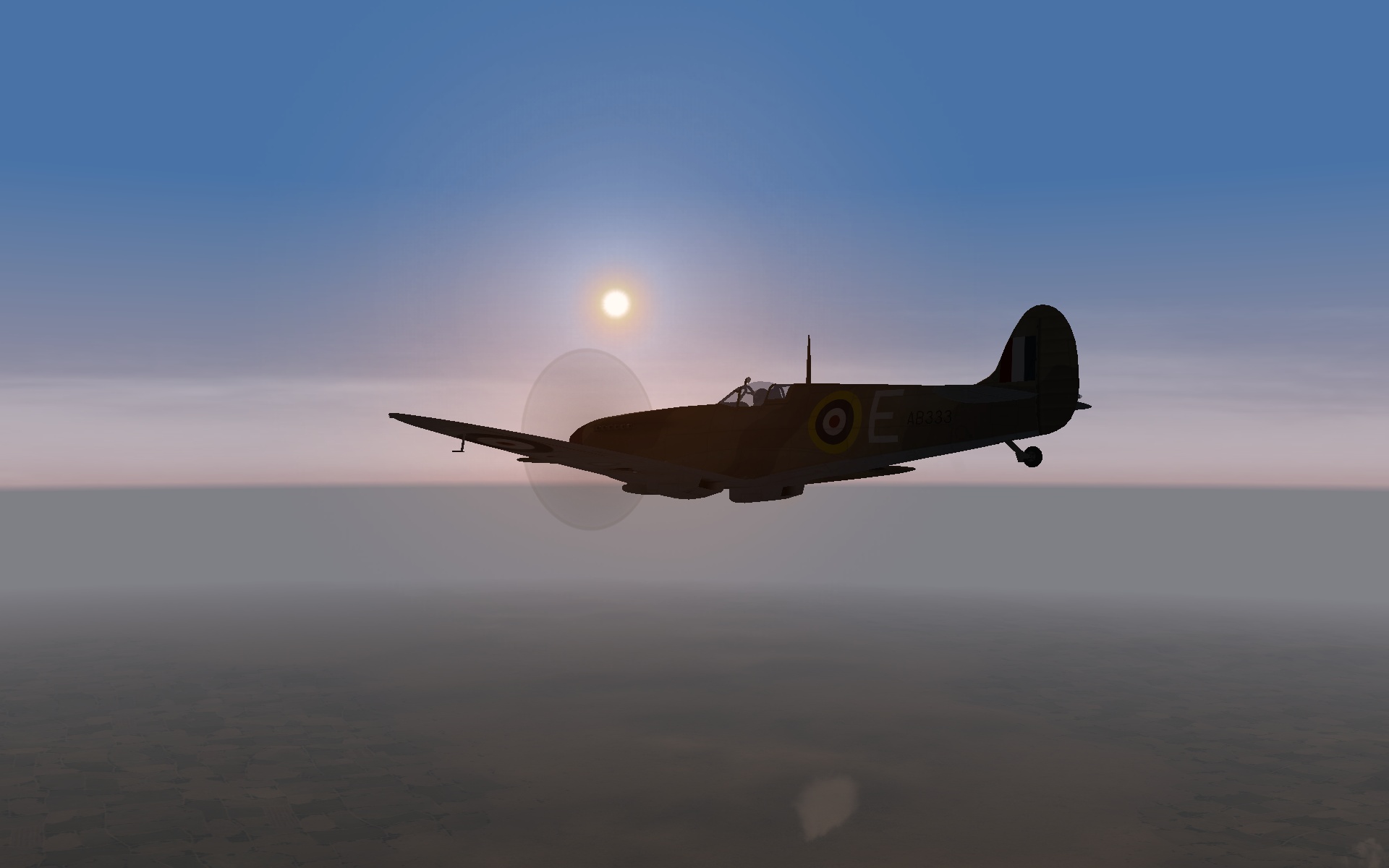
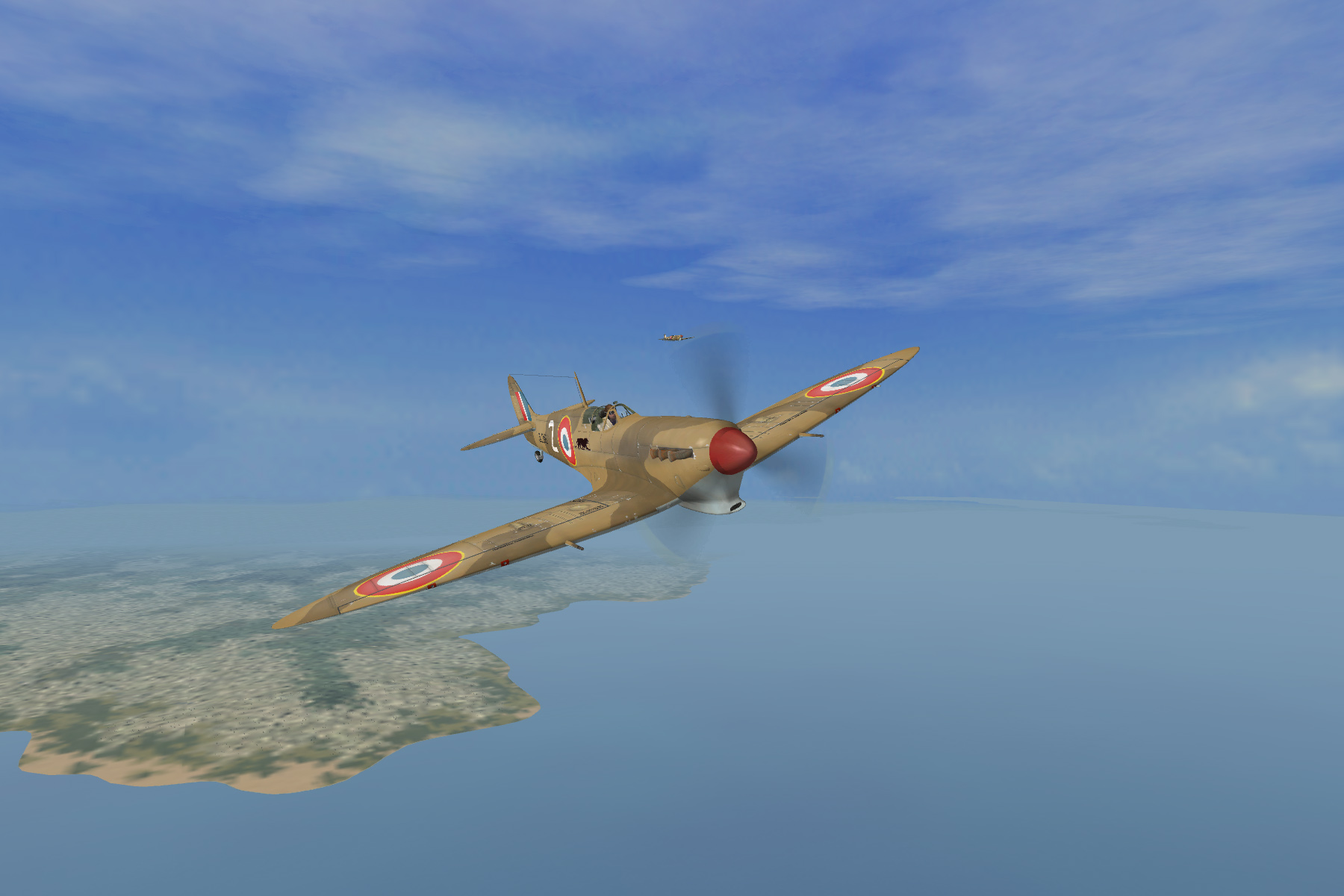
Spitfire MkVb, No.249 Sqn RAF, Takali, Malta, March 1942 Malta stands in a key position in the middle of the Mediterranean, between Sicily and Libya, right on the main supply route for Axis forces in North Africa. For this reason, it came under constant attack from mid-1940 until late 1942 when the Allies took the initiative in North Africa. This is the longest siege in both British and Maltese history, and on 15th April 1942 King George VI awarded the island with the George Cross as a token of respect for its dogged and determined resistance. Initially, Malta was defended only by a handful of worn out Hurricanes which nonetheless gave a good account of themselves, but they were clearly not a match for the latest Bf109F fighters deployed by the Luftwaffe. The choice was simple - supply the island with Spitfires, or lose it. The difficult part of the operation involved actually getting the Spitfires to Malta in the first place. Shipping was being lost at an alarming rate, yet with the limited range of the Spitfire, flying them from Gibraltar was impossible. Finally, an underbelly slipper tank was designed, and a plan began to come together. The aircraft would be carried aboard HMS Eagle to a point off the Algerian coast from which they would be able to reach Malta with their last drops of fuel. The Spitfires were shipped to Gibraltar, assembled and made ready. The Eagle took them aboard and sailed to the fly-off point, dangerously close to a hostile coast... Only to find that the extra fuel tanks would not work owing to an undetected air-lock. The Navy was furious... On the second attempt on 7th March 1942, however, all aircraft bar one with fuel feed trouble took off successfully under the command of S/L Stan Grant, and flew the 660 mile journey to Malta without mishap. The way was open and Malta would survive. By the time the next delivery of a further 9 Spitfires took place two weeks later, only two of this initial batch were still airworthy. Serial numbers in this pack correspond to the aircraft used in Operation Spotter. All 16 were newly-built MkVb(T) aircraft, which explains their consecutive serial numbers. They were delivered in the typical Desert scheme of Midstone, Dark Earth and Azure Blue, and at the time of their epic flight, they did not yet carry individual letters. I have assigned these letters on a purely hypothetical basis as I have not been able to determine if they were in fact carried during service with 249 Sqn or not. For use ONLY with SF2 including the Israel Expansion Pack. This will NOT work if you do not have the stock TW Spitfires installed and working. Includes 2048 and 1024 size skin sheets. Credits: Model by Third Wire Flight Dynamics by ShrikeHawk based on TW Spitfire MkIXc Cockpit by Kesselbrut Skin, decals, data.ini modifications, formations, sounds and assembly by ndicki Guns by AvHistory -
Of course! It's on the list - Further MkVBs and VCs from 126 and 249 Sqns. I'm just doing things more-or-less chronologically. Thanks - didn't know that!
-
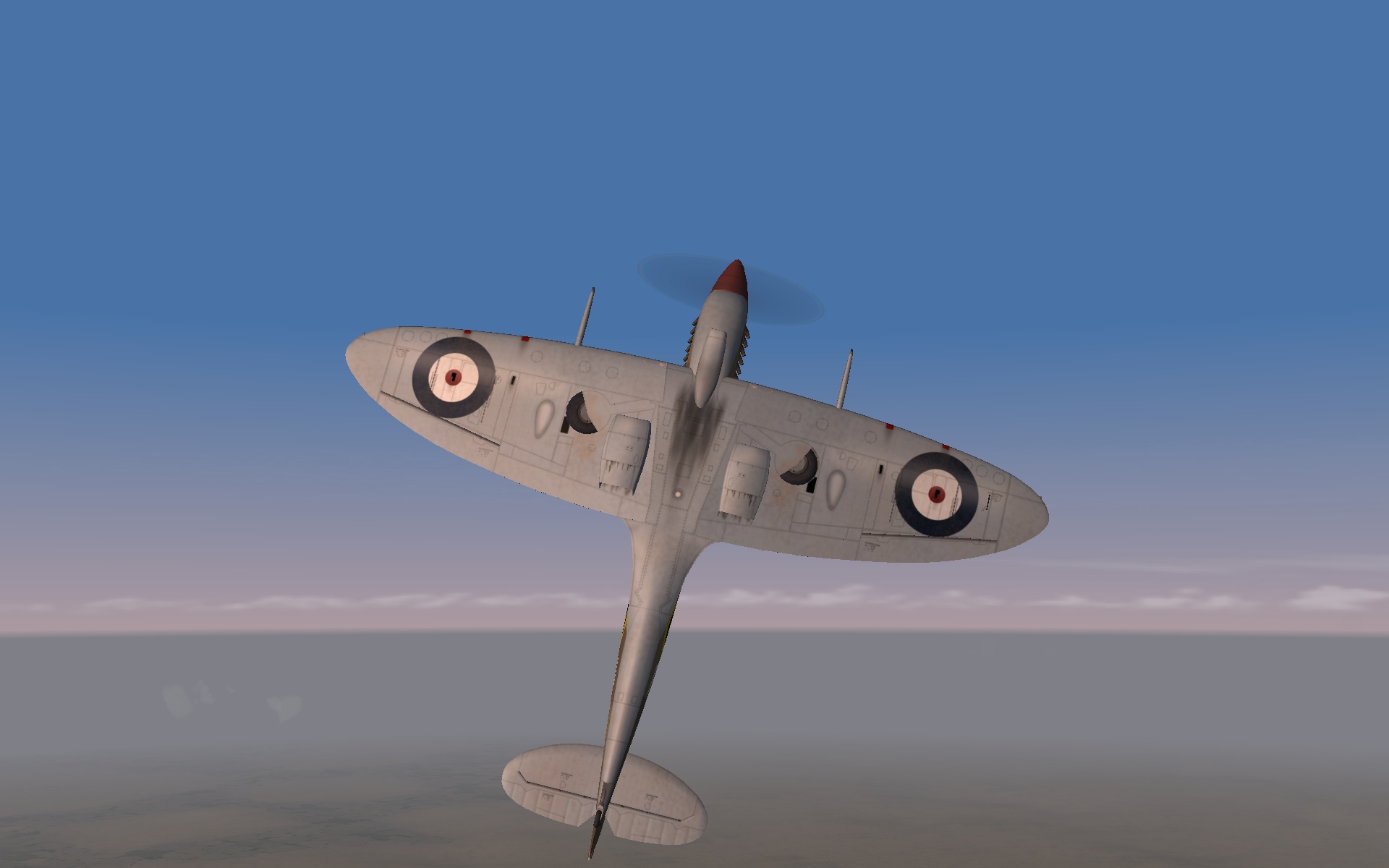
We should have - it was the fighter pilot's paradise, so to speak. These are from the first batch of 16 Spitfires ferried by HMS Eagle during Operation Spotter - 15 aircraft finally took off from the carrier under S/L Stan Grant on 7th March 1942, and all 15 arrived safely in Malta. They were handed over to No.249 Sqn at Takali. Two weeks later when a further 9 aircraft arrived on Operation Picket I, only two of the initial batch were still airworthy. They were all newly-built MkVb aircraft received by No.8 MU and specially ferried to Gibraltar for embarkation on Eagle. It is practically unheard of for a squadron to have aircraft with consecutive serial numbers, but here, one or two gaps aside, it was the case! Now if a MAX-er would build me a fake pylon Vokes filter, it'd look far better...
-
You all have points, but it IS the bullets. I've deliberately chosen the He111 because it does have good LODs - one of the few! - and you can get twenty or so of them before your fps get unreasonable. Heck has been thinking along the same lines as me, but appears to have got further. Are bullets actually modelled? That for each one, there is a tiny LOD file travelling through the air? Because if that is the case, there is very little we can do... Disabling tracer doesn't seem to help much, by the way.
-
So there you are at angels 20 swanning round and enjoying the view, when you catch a glimpse of a swarm of Heinkels pottering along blithely towards the land of hope and glory, clearly intent on all kinds of mischief. "Toaster aircraft, this is Toaster Leader, about twenty bandits at two o'clock low, look like Heinkels. Blue section stay up and cover us - they may have little friends in the area, so keep them well peeled. Red section, going down..." And off you pop to give them a bit of a squirt, throttle back as you dive, eye in the mirror, there's Johnny covering your tail, so in we go... Thumb on the rocker, he'll do, that one at the back looking like he hasn't seen us and...." And your FPS drop to slideshow levels as the Heinkels open fire on you. Rather spoils the immersion, actually. Does anybody have any suggestions? I've tried a few things, but to no avail...
-
This is VERY good news! May I join in on the skinning front at least with the Bf109F and derivatives? (Assuming it happens, that is.) Model builders who don't have a skinner to advise them are capable of doing the funniest things...
-
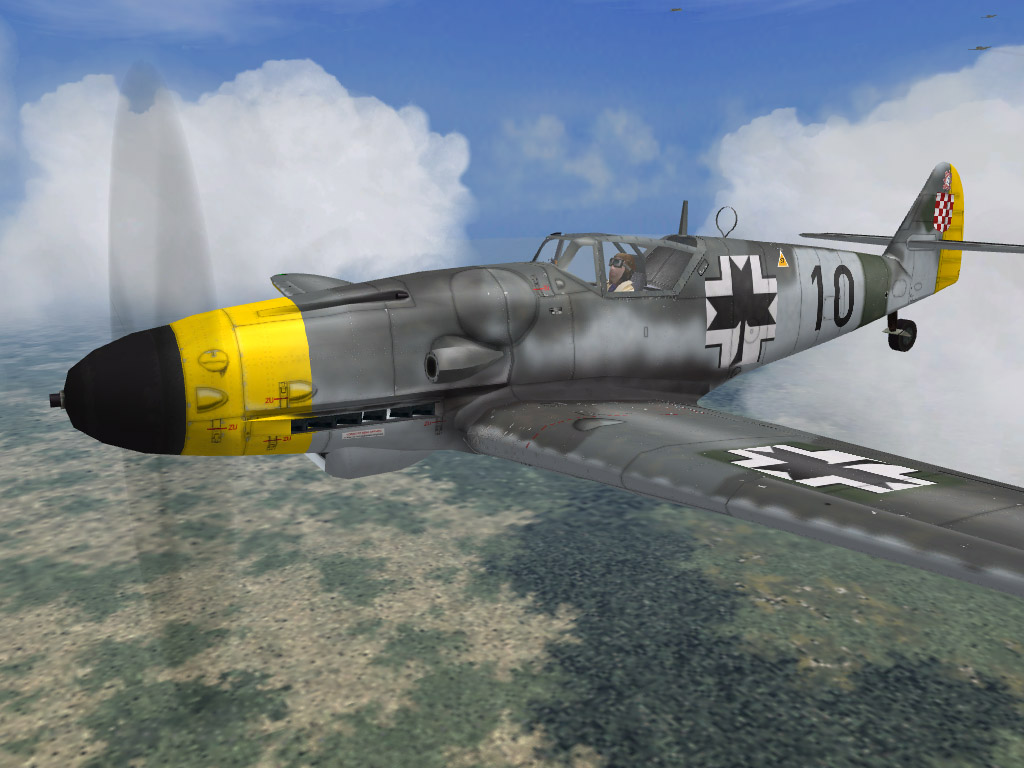
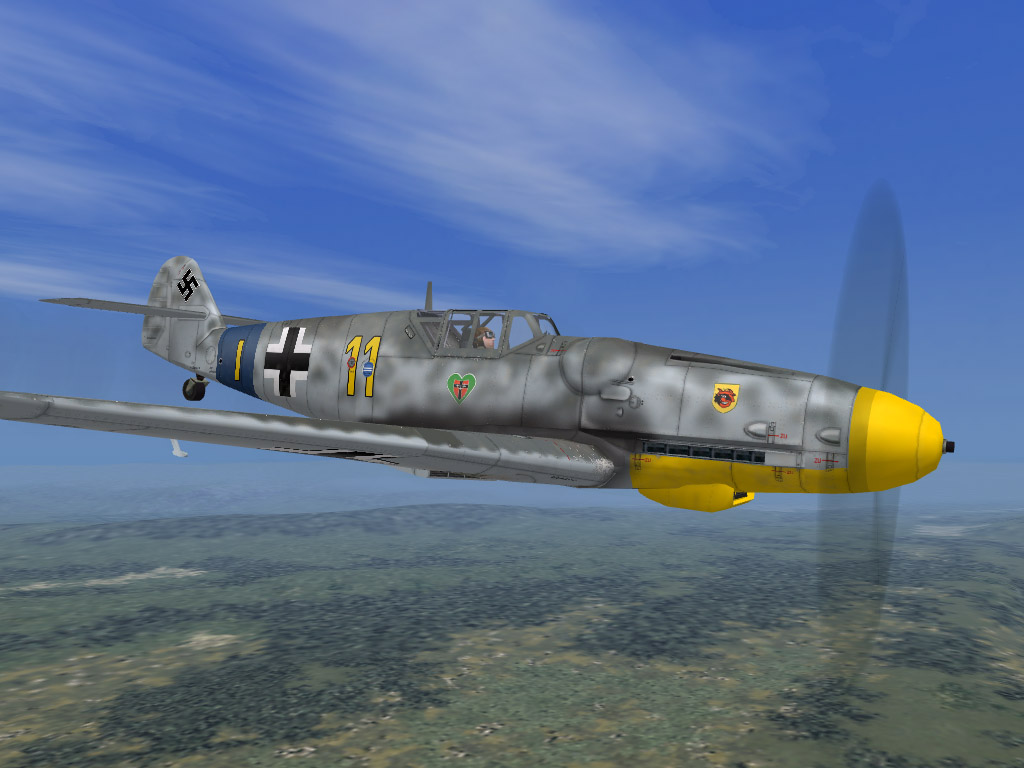
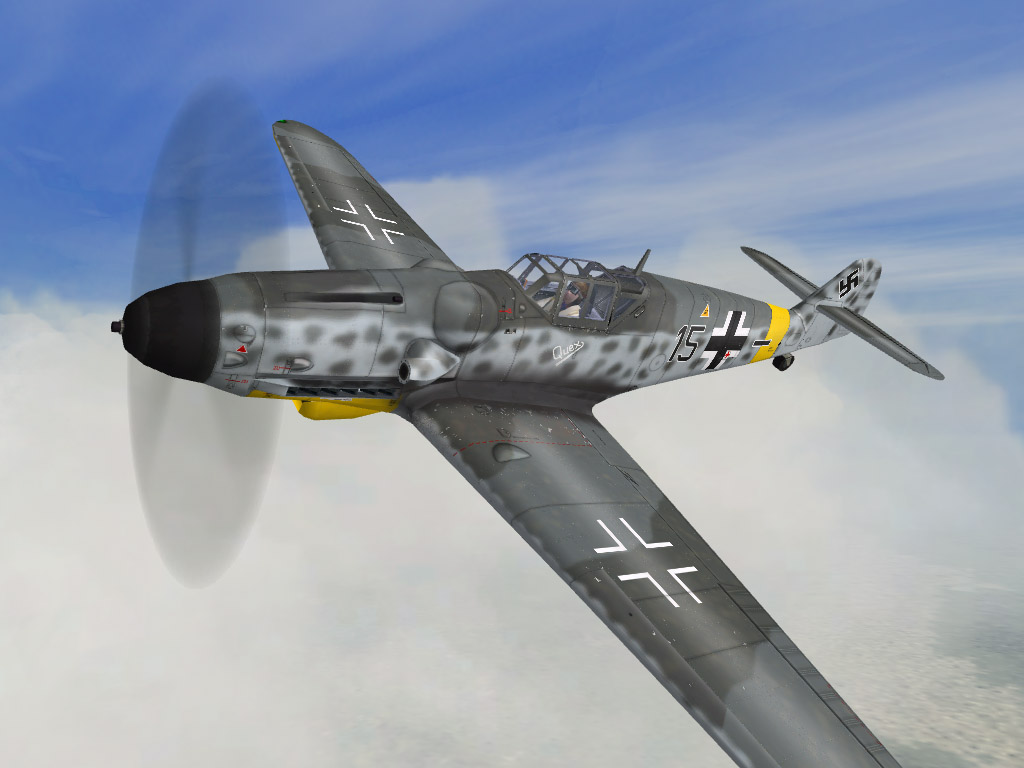
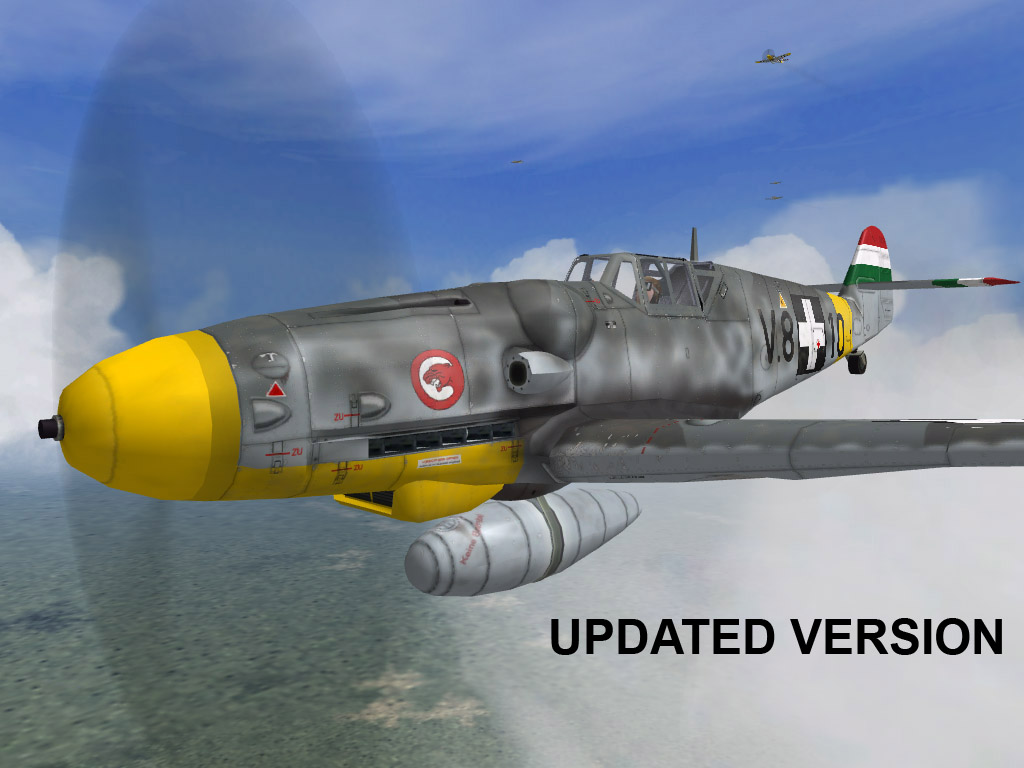
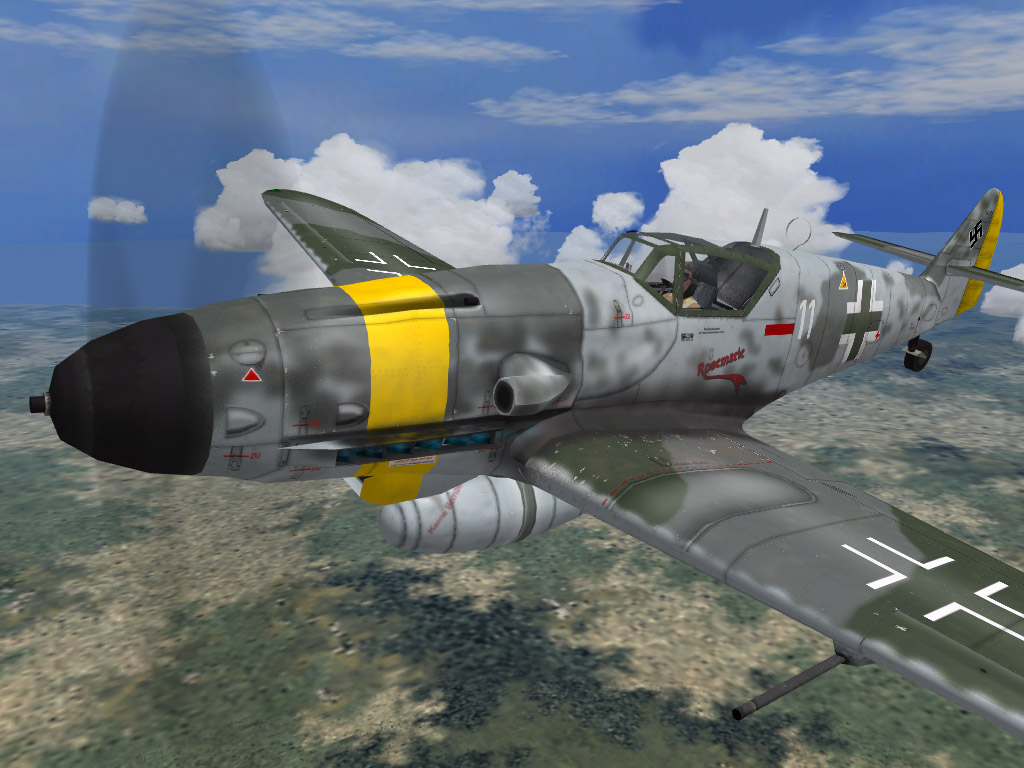
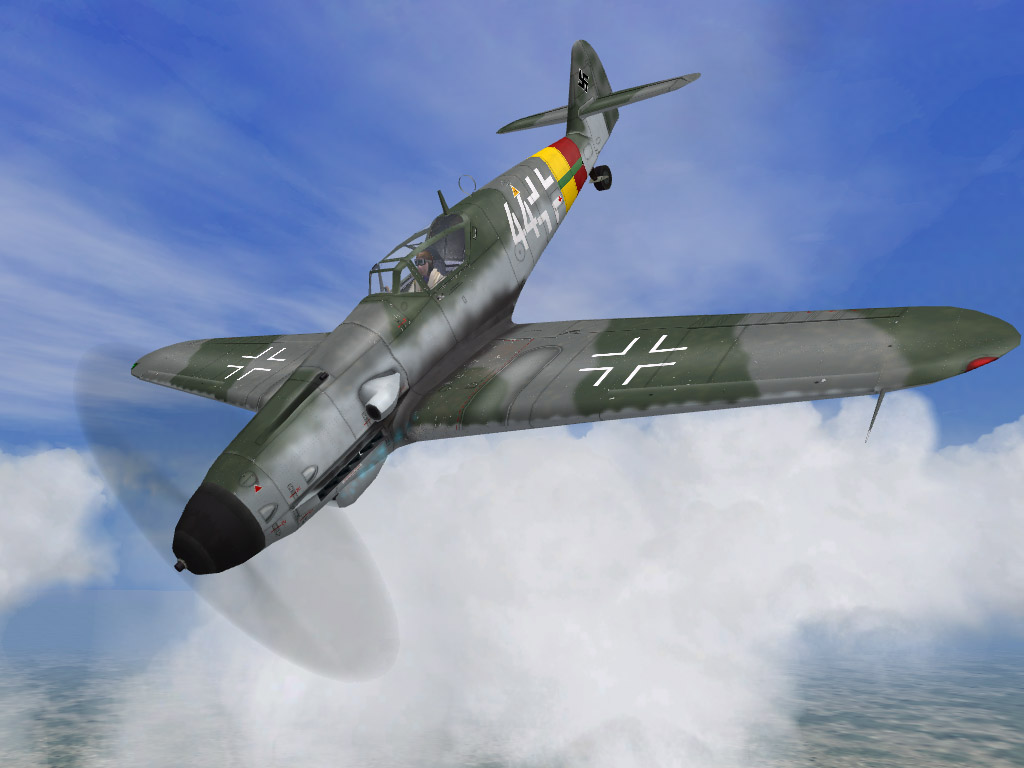
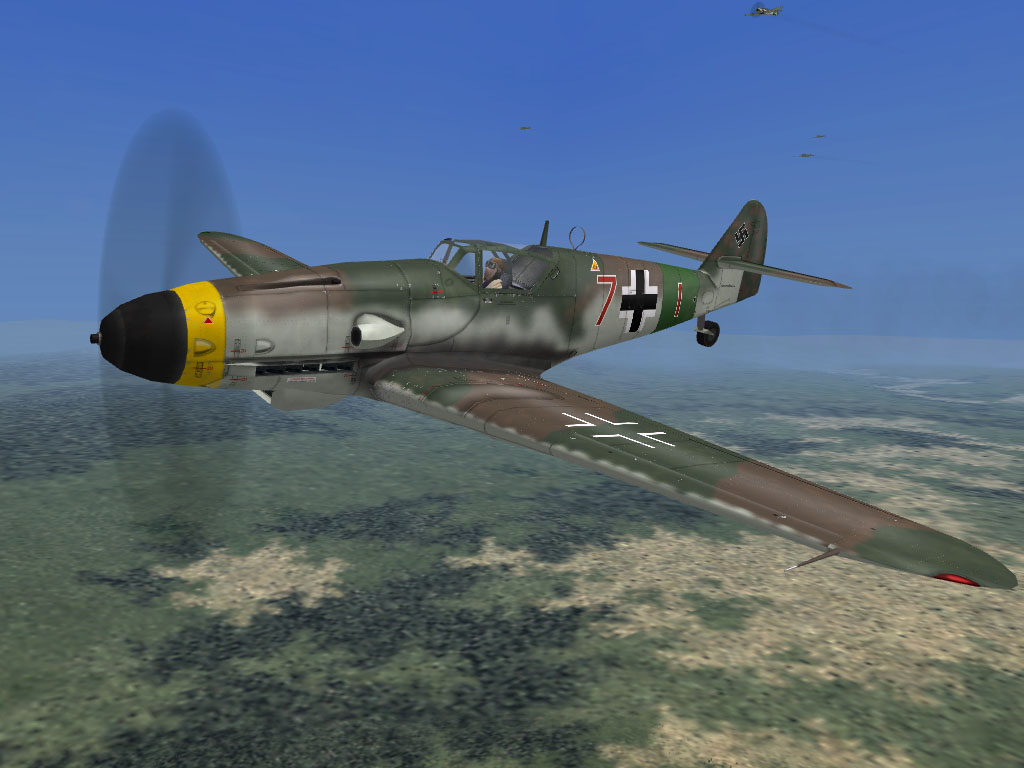
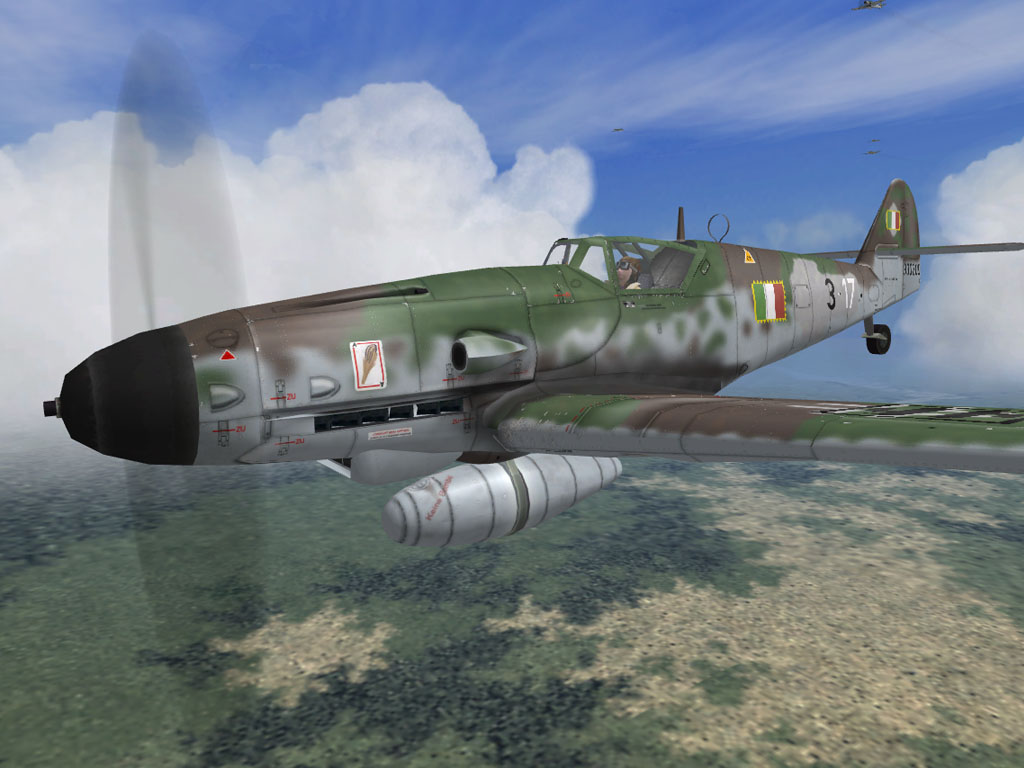
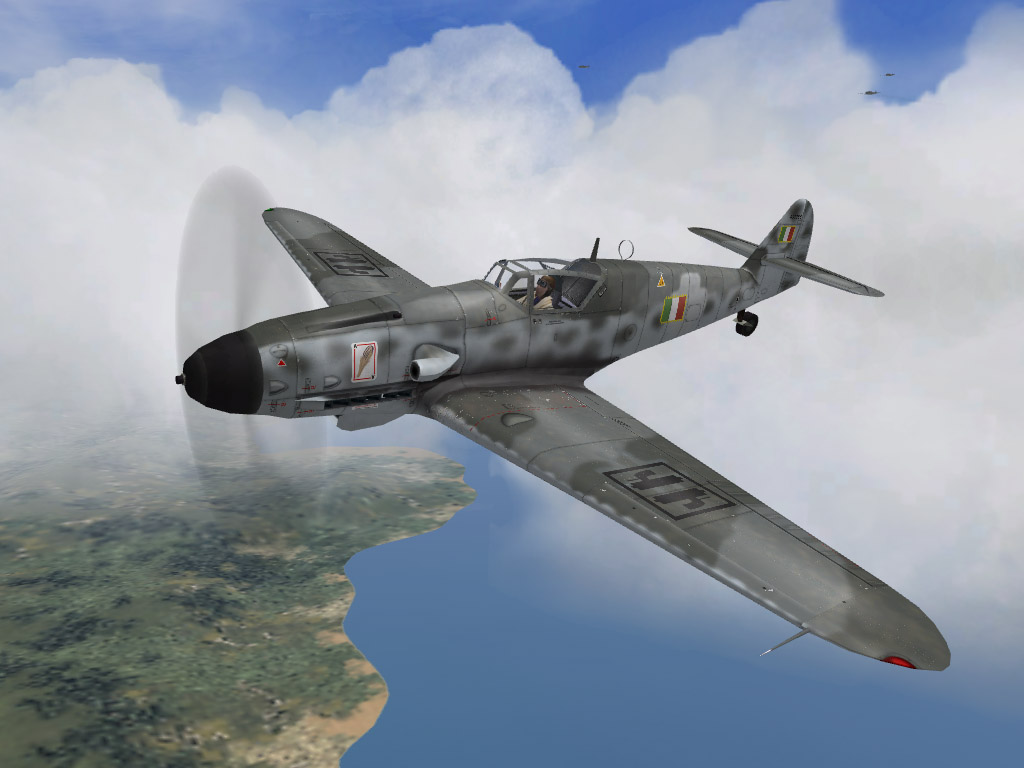
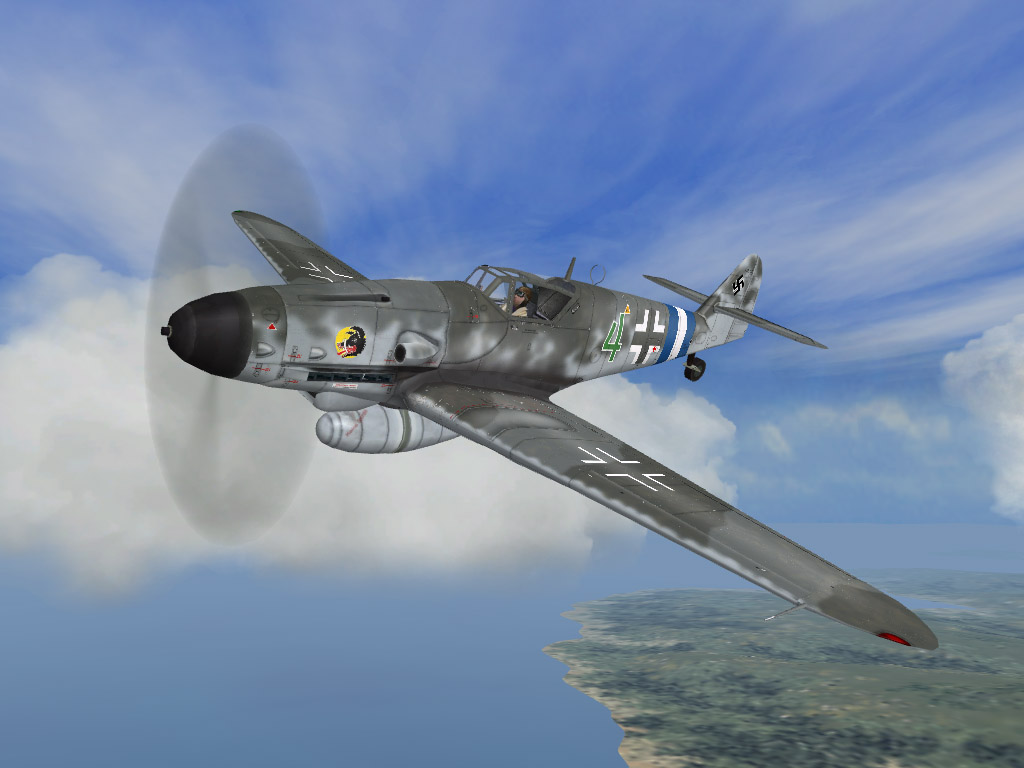
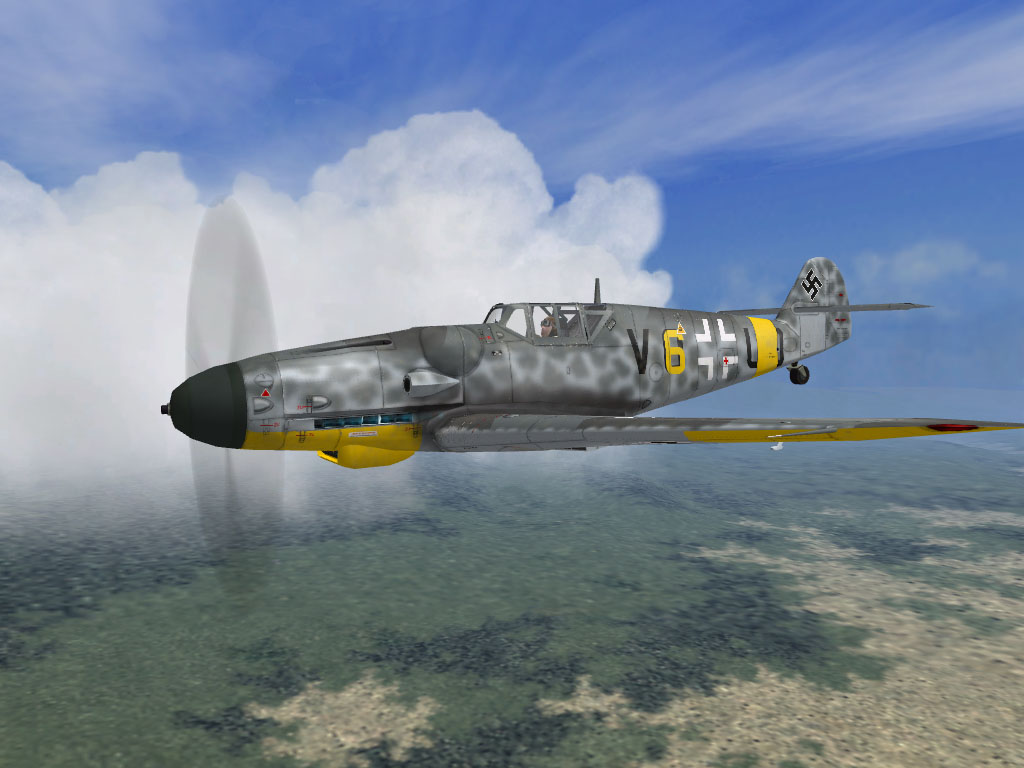
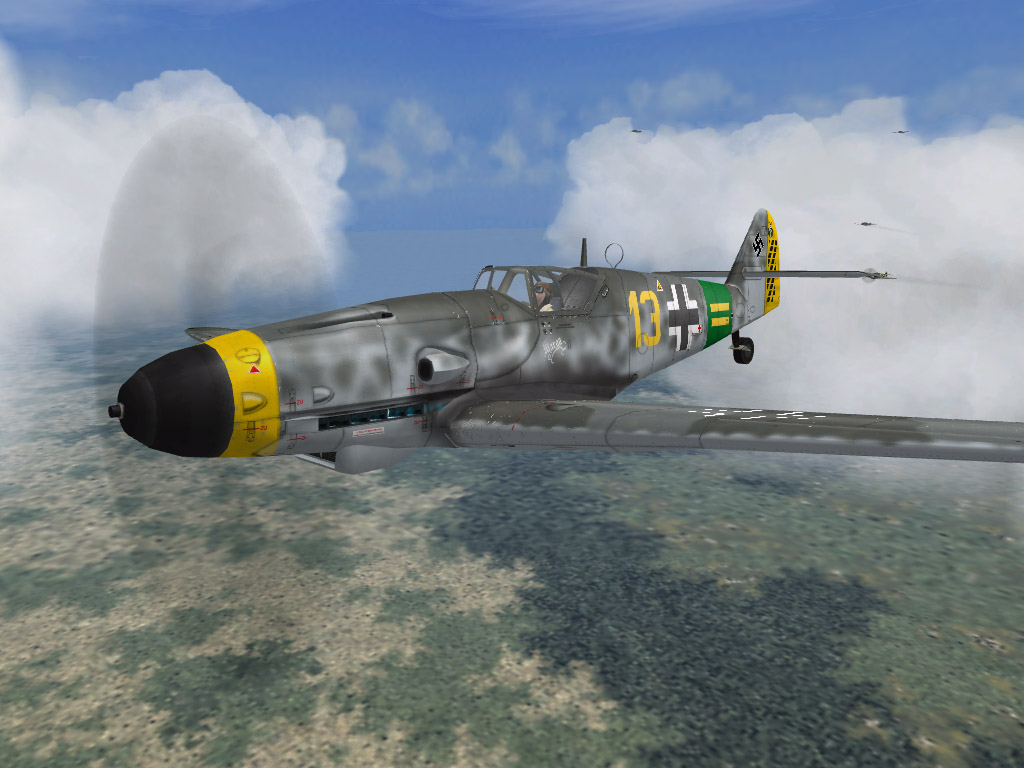
Thanks! Here are a few more then. There may be one in particular you'll like to see... I must remember to finish off the skins I've got for Monty's S-99, as well! (I need more space for photos!)



-
Well, I use pretty well the same techniques for SF as for CFS, although I admit I don't put quite as much detail always into the SF ones as I don't get to see it on my rig at least! Despite having settings on high or unlimited for aircraft. But the problem of chipping is that aluminium is not shiny really - if you pop along to your local warbirds museum and look especially at the propellors of the ones that still fly (they usually keep the rest of the paintwork unrealistically clean, and even use gloss paint in the US - ridiculous...) you'll see what I mean. It's greyish and shines really only when it gets the light. To represent that in CFS is easy - pale to medium greys in the visible layer, and high specularity in the specular layer to make it glint without it being too obvious when the light isn't on it. Without the specular layer, you'd need to use too pale a grey, and that, in my opinion, would just make it look as though it had had a few pigeons sitting on it for a while...
-
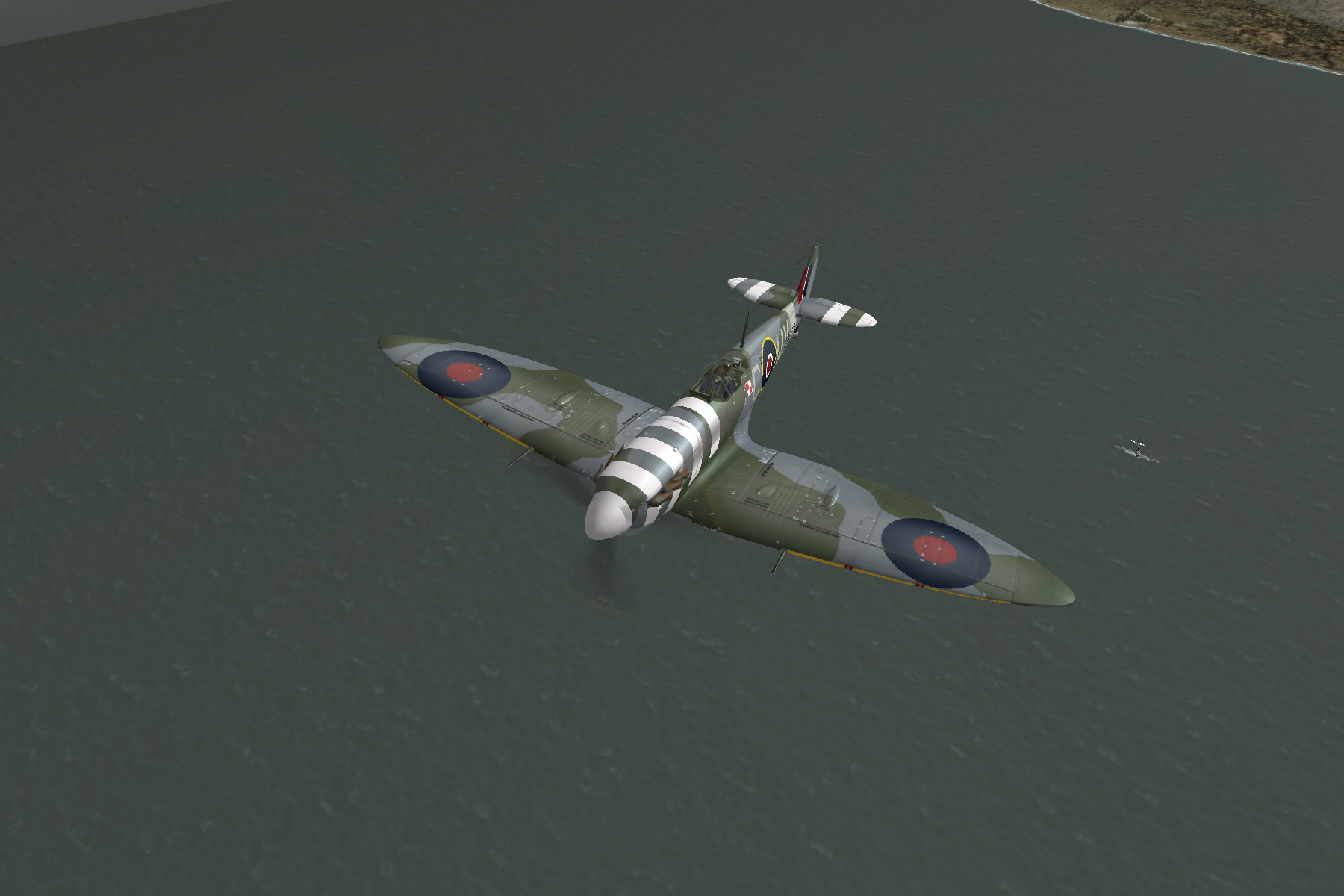
View File Spitfire MkVb, No.401 Sqn RAF, 1942 Spitfire MkVb, No.401 (Canadian) Sqn RAF, Gravesend, May 1942 Originally No.1 Sqn RCAF, the squadron became operational on Hurricane at Northolt in August 1940 after a period of in-theatre training. After the Battle of Britain, in which it was reasonably successful, it was moved to Prestwick in Scotland. Shortly after returning to the South to Digby in February 1941, it was renumbered to No.401 to avoid confusion with No.1 Sqn RAF. Spitfire MkIIs replaced the Hurricanes in September 1941, and were themselves replaced by MkVbs before the end of 1941. These aircraft remained until their replacement, in turn, with the new MkIX in the course of the late summer of 1942, making 401 one of the first squadrons to operate the MkIX. In October 1941, 401 had moved from Digby to Biggin Hill, carrying out offensive sweeps over Northern France. Serial numbers in this pack correspond to MkVb aircraft used by 401 Squadron during 1942, although many of these aircraft were on strength only for some days, for obvious reasons. Where a pilot has been identified as having flown a particular aircraft (The Royal Air Force did not attribute aircraft to particular pilots, although many did tend to have their favourites) that pilot has been listed in the menu. Aircraft of note are Pilot Officer Don Blakeslee's BL753 'H' and Pilot Officer Don Morrison's BM373 'F'. Aircraft appearing in the menu without an asterisk carry the correct individual letter for that aircraft. This Ocean Grey/Dark Green/Medium Sea Grey Day Fighter Scheme was introduced wef August 1941, although its implementation lasted up until at least the end of 1941. This original shade of Ocean grey, not to be confused with the shade standardised in mid-1942, was ordered to be mixed from seven parts Medium Sea Grey to one part Night and applied on-squadron. In practice, while it could vary wildly, it was generally darker than the later, factory-produced shade, and lacked the blueish hue. It is typical of the period running from late 1941 until the autumn or even winter of 1942. For use ONLY with SF2 including the Israel Expansion Pack. This will NOT work if you do not have the stock TW Spitfires installed and working. Includes 2048 and 1024 size skin sheets. Credits: Model by Third Wire Flight Dynamics by ShrikeHawk based on TW Spitfire MkIXc Cockpit by Kesselbrut Skin, decals, data.ini modifications, formations, sounds and assembly by ndicki Guns by AvHistory Submitter ndicki Submitted 06/06/2011 Category Spitfire
-
205 downloads
Spitfire MkVb, No.401 (Canadian) Sqn RAF, Gravesend, May 1942 Originally No.1 Sqn RCAF, the squadron became operational on Hurricane at Northolt in August 1940 after a period of in-theatre training. After the Battle of Britain, in which it was reasonably successful, it was moved to Prestwick in Scotland. Shortly after returning to the South to Digby in February 1941, it was renumbered to No.401 to avoid confusion with No.1 Sqn RAF. Spitfire MkIIs replaced the Hurricanes in September 1941, and were themselves replaced by MkVbs before the end of 1941. These aircraft remained until their replacement, in turn, with the new MkIX in the course of the late summer of 1942, making 401 one of the first squadrons to operate the MkIX. In October 1941, 401 had moved from Digby to Biggin Hill, carrying out offensive sweeps over Northern France. Serial numbers in this pack correspond to MkVb aircraft used by 401 Squadron during 1942, although many of these aircraft were on strength only for some days, for obvious reasons. Where a pilot has been identified as having flown a particular aircraft (The Royal Air Force did not attribute aircraft to particular pilots, although many did tend to have their favourites) that pilot has been listed in the menu. Aircraft of note are Pilot Officer Don Blakeslee's BL753 'H' and Pilot Officer Don Morrison's BM373 'F'. Aircraft appearing in the menu without an asterisk carry the correct individual letter for that aircraft. This Ocean Grey/Dark Green/Medium Sea Grey Day Fighter Scheme was introduced wef August 1941, although its implementation lasted up until at least the end of 1941. This original shade of Ocean grey, not to be confused with the shade standardised in mid-1942, was ordered to be mixed from seven parts Medium Sea Grey to one part Night and applied on-squadron. In practice, while it could vary wildly, it was generally darker than the later, factory-produced shade, and lacked the blueish hue. It is typical of the period running from late 1941 until the autumn or even winter of 1942. For use ONLY with SF2 including the Israel Expansion Pack. This will NOT work if you do not have the stock TW Spitfires installed and working. Includes 2048 and 1024 size skin sheets. Credits: Model by Third Wire Flight Dynamics by ShrikeHawk based on TW Spitfire MkIXc Cockpit by Kesselbrut Skin, decals, data.ini modifications, formations, sounds and assembly by ndicki Guns by AvHistory -
Nice stuff! Lots of imagination!
-
The tgas are cockpit specular files - there are jpg files for external specularity, that go in with the main texture files. The Spits don't get them, being AI-only. The Mustang and Meteor do though. Could be useful if I get bored!
-
Well, the Mustang and the Meteor have tga reflective sheets, but I can't for the life of me see where they go...
-
I'd sort of understood the bump maps in principle, but not the specular layers. I've just spent ALL DAY repairing a corrupt May 11 update... Download the whole series again, etc, etc. I'll take a look. If he's moved on to dds files, it's easy...
-
What specular maps? In SF2? Learning something here - keep talking... I hope you've installed my series of updated Bf109Gs and Ks in CFS3! They do a lot of things the stock ones don't... http://www.sim-outhouse.com/sohforums/local_links.php?catid=10 The British and German stand-alones libraries are largely filled with my efforts... And there are a few American ones, and assorted skins as well.
-
To be frank, my first priority would rather be getting these models sorted out with good descending LODs. I won't be the only one who finds many of them difficult to use in realistic numbers.
-
I admit I removed the "double" static gunsight from the "Spit" cockpit, and recoloured the base textures... A decent late Bf109-style one would be good too, I must say!
-
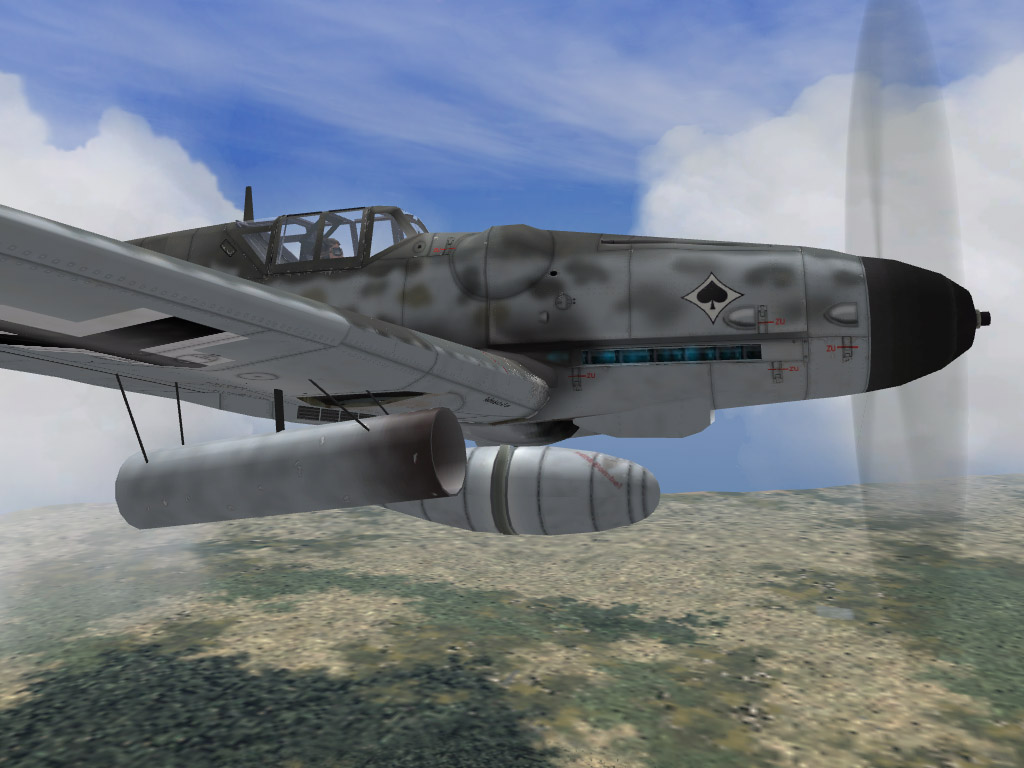
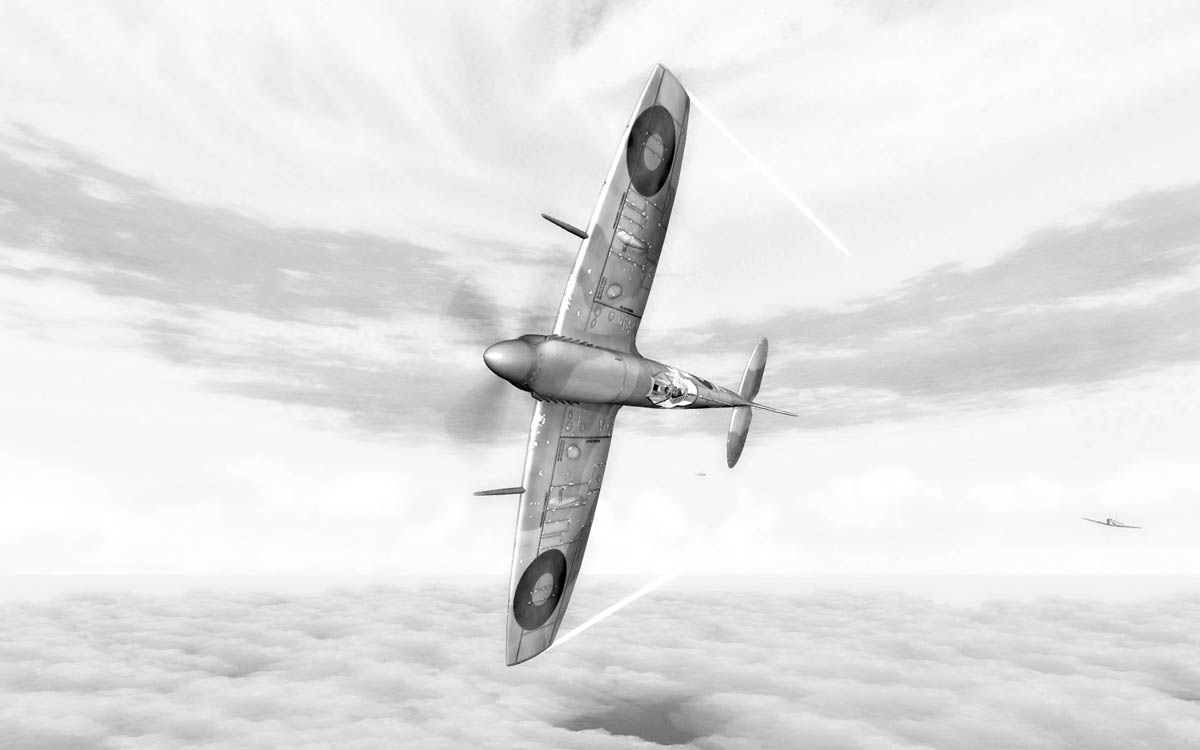
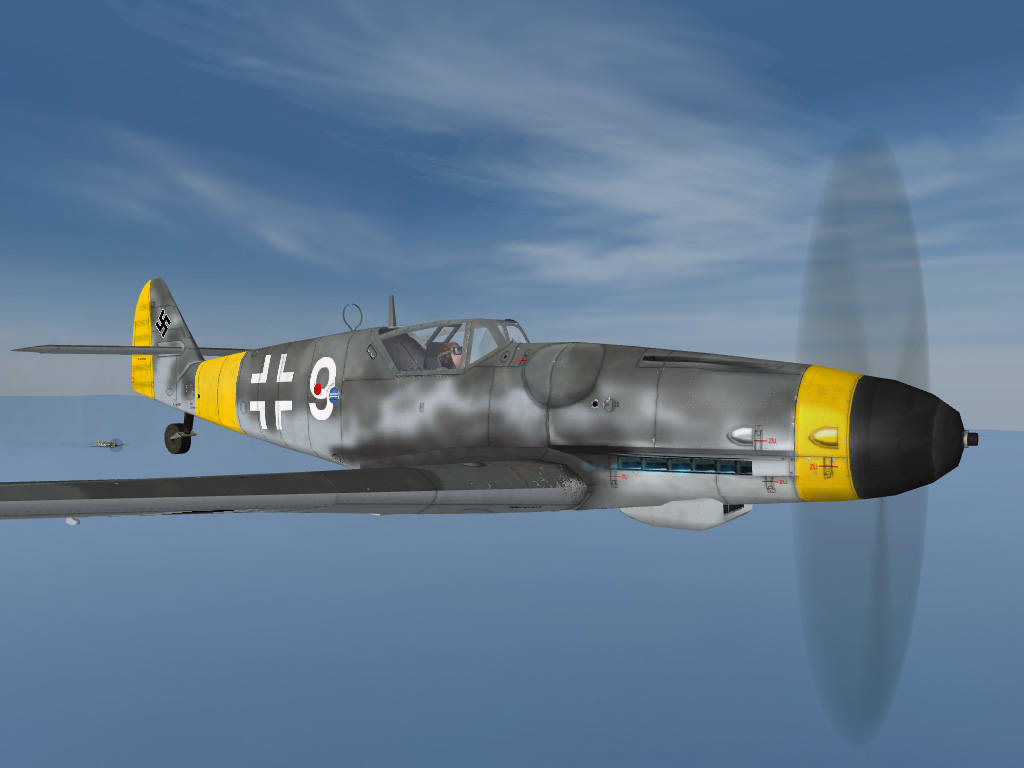
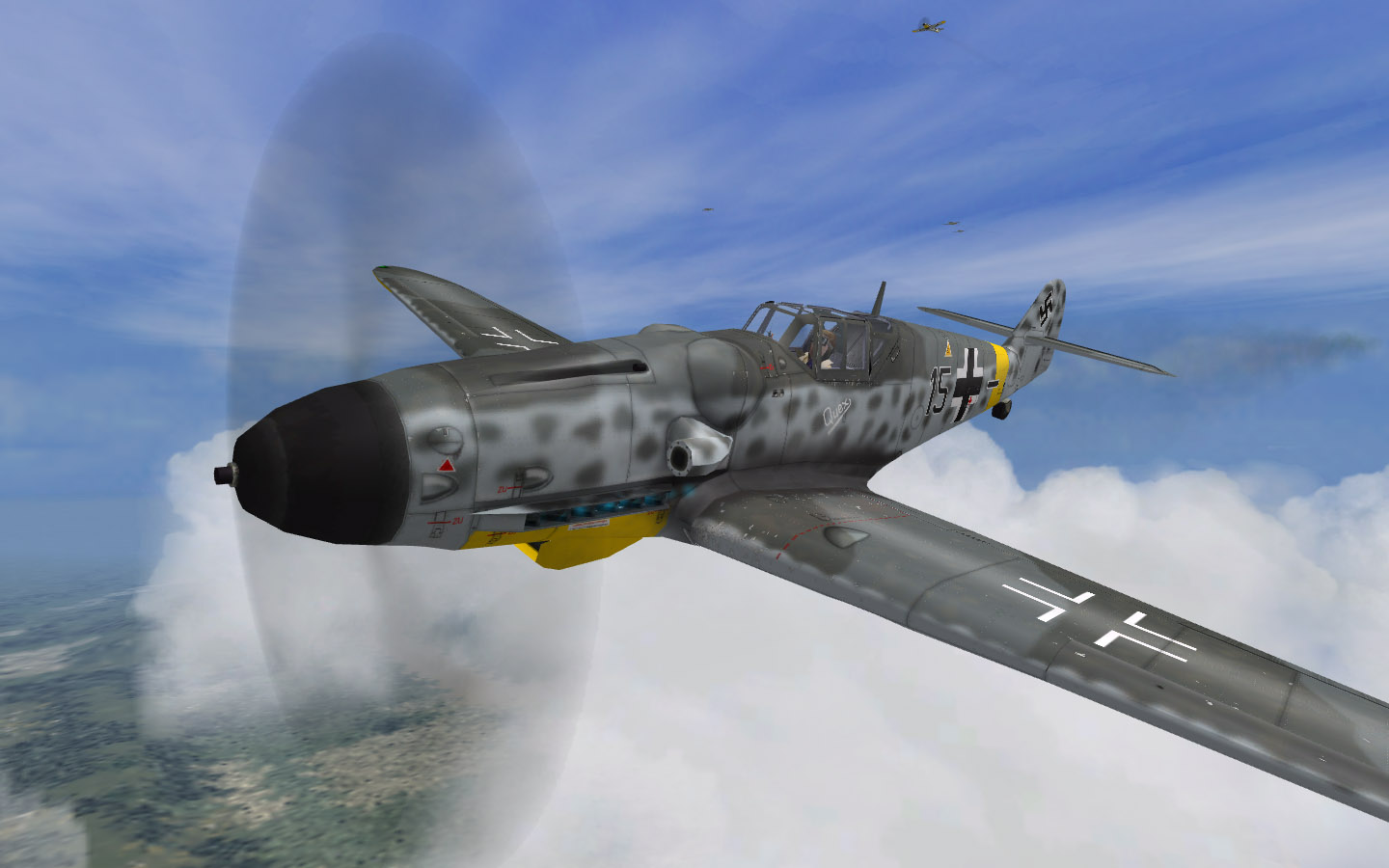
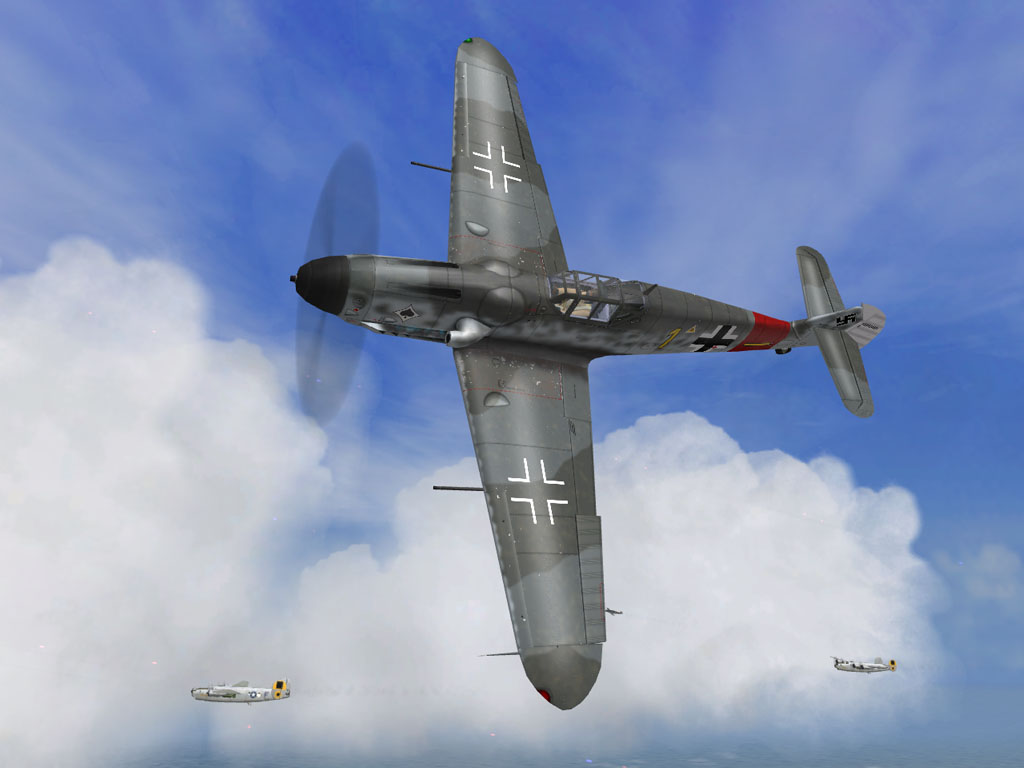
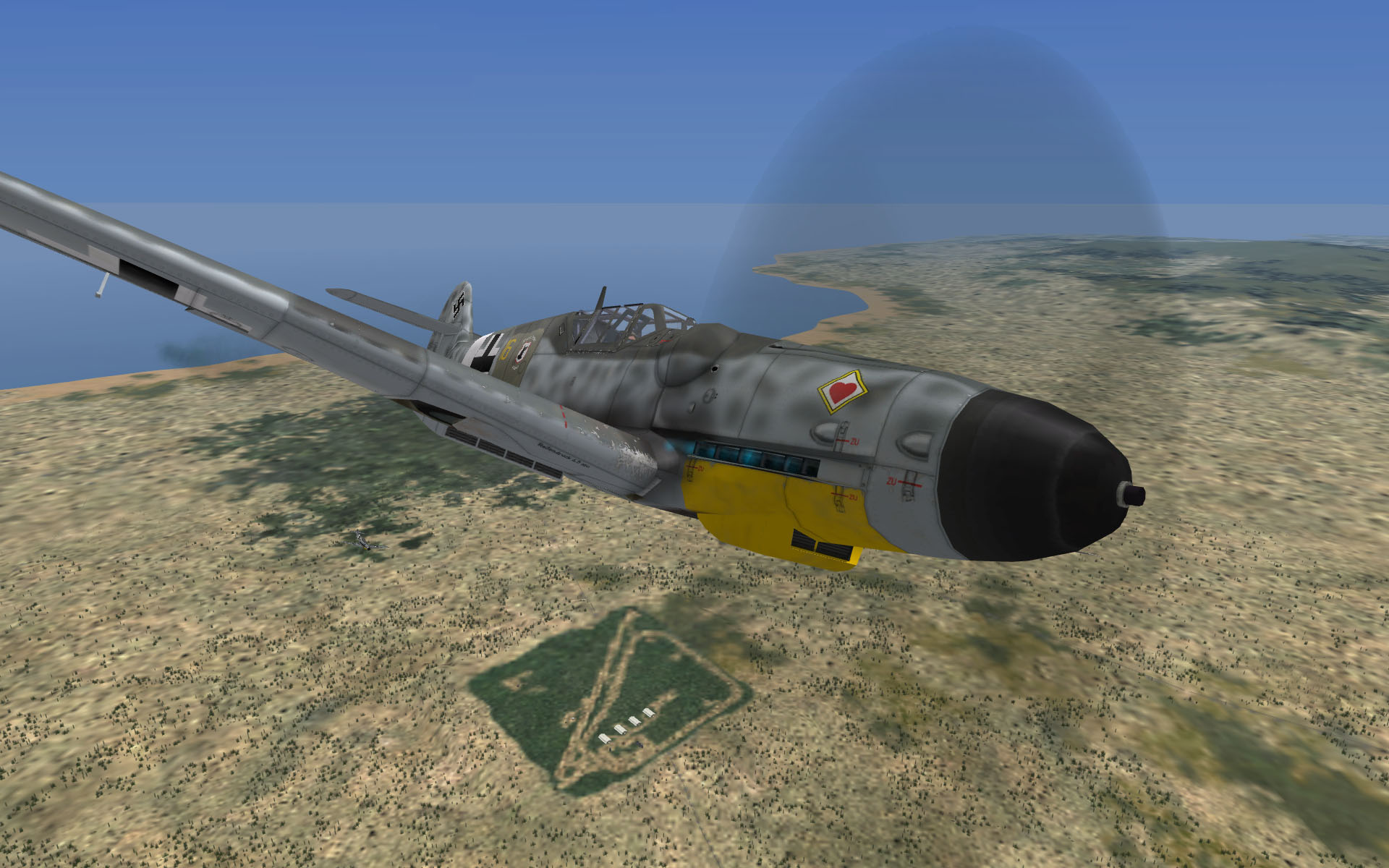
There is a fair amount of paint chipping here and there - nothing extreme, because I never seem to get it just right! - but it doesn't show owing to the limitations of the sim. It's the same with the riveting - it doesn't really show up even though it's all there. By contrast, here are a few from CFS3, which can be made very sharp indeed, and which I use for all my "to-print" screenshots as it looks so good. Well, not from the box, it doesn't, but once you sort a few things out, I mean! OK, I know I'm showing off... But the point is that SF simply doesn't render the detail so well, no matter what settings one uses.

-
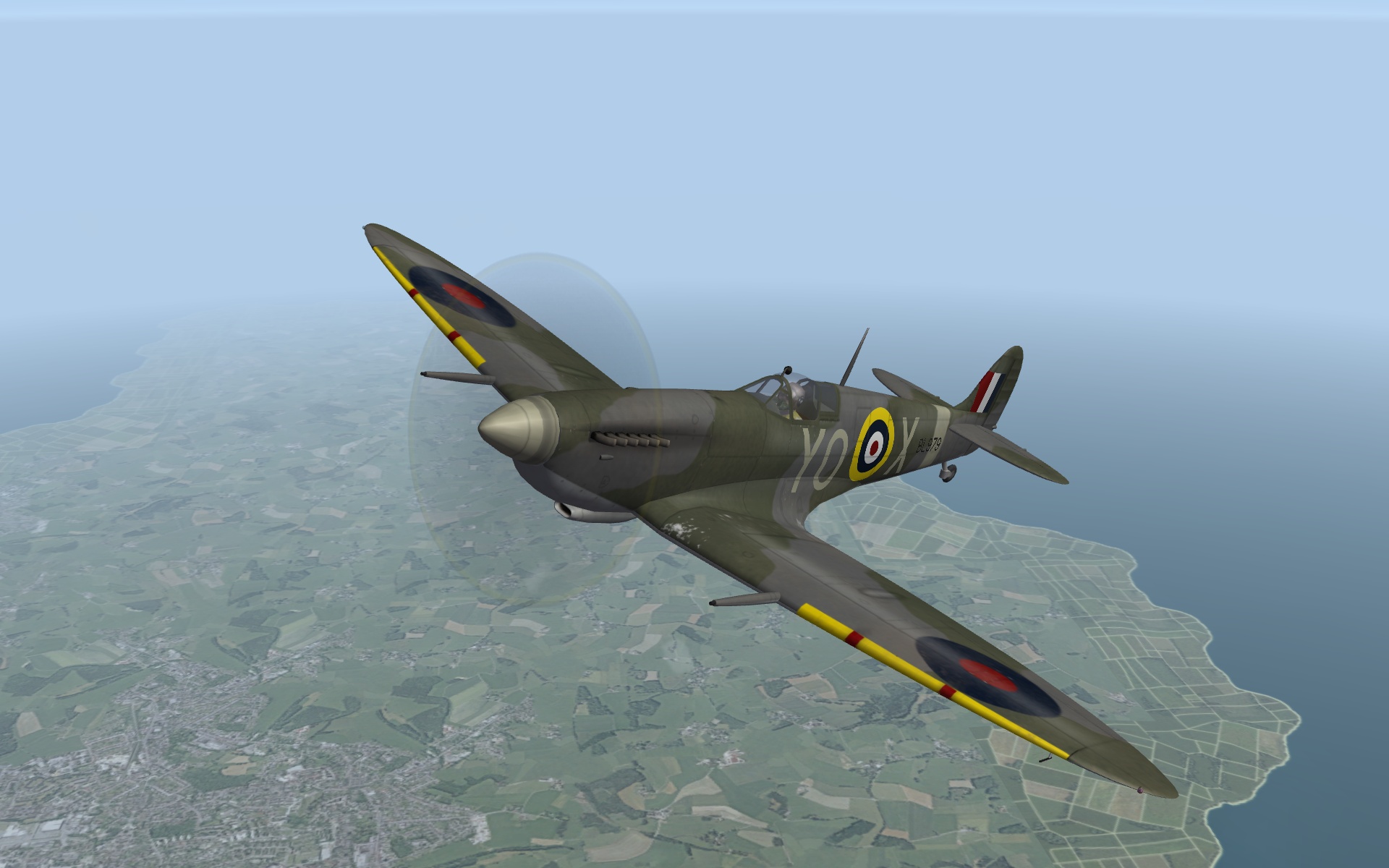
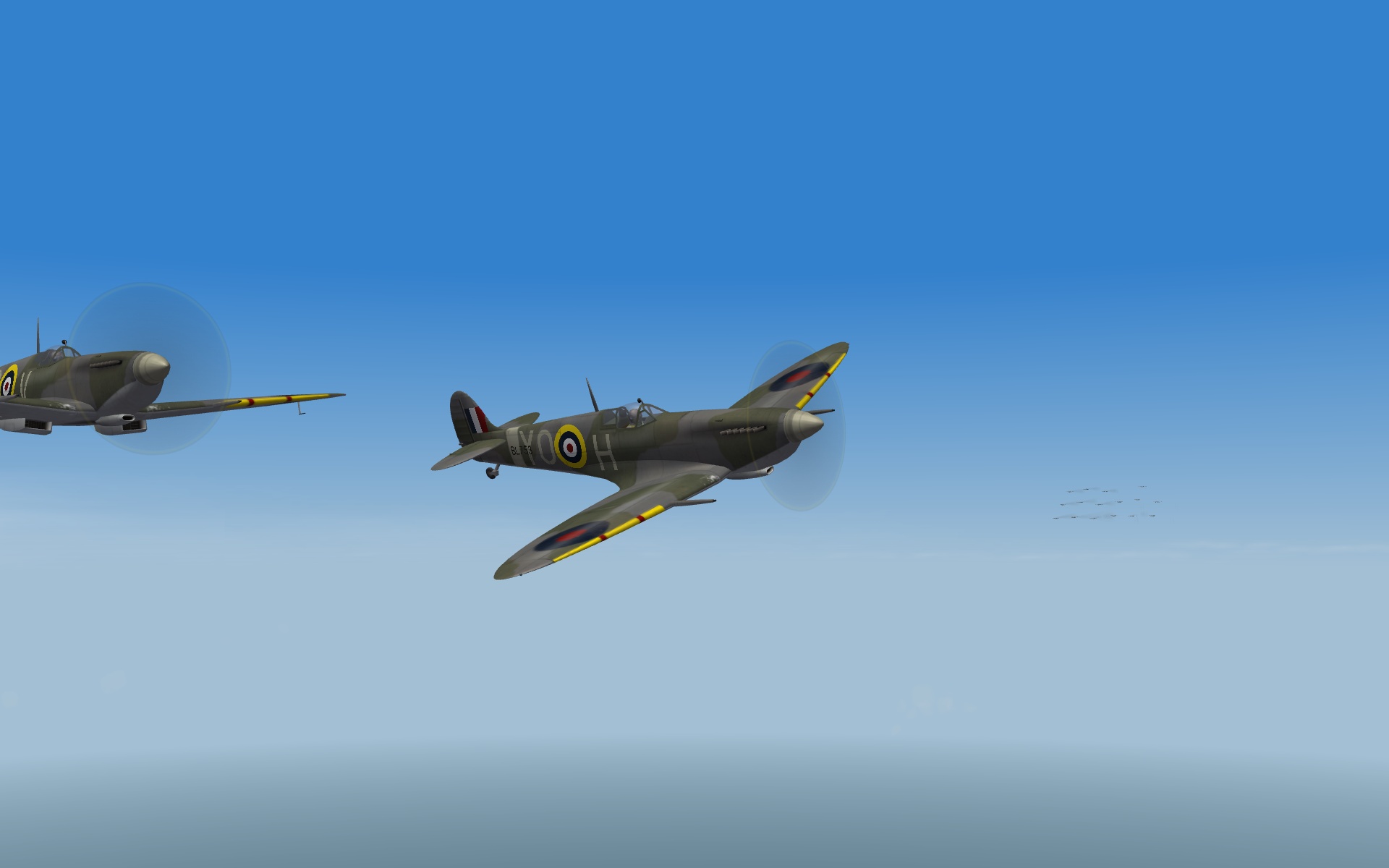
This is the follow-on of the MkVb stand-in - from 15th August 1941, the order went out to overpaint the Dark Earth areas with a new grey shade made up on-station from mixing seven parts of Medium Sea Grey to one part Night. The resulting shade was given the official name of Ocean Grey, but had none of the blueish hue of the definitive shade of (unmixed) Ocean Grey introduced in mid-1942. This theoretically darker, blue-free shade was common up until the end of 1942, and predictably varied immensely in its application, ranging from a dark grey similar to Dark Sea Grey to a paler grey virtually indistinuguishable from the original Medium Sea Grey. These aircraft are from No.401 Sqn RAF - originally No.1 Sqn RCAF, which was renumbered in order to avoid confusion. A certain Pilot Officer Don Blakeslee (BL753 'H') may not be unknown to the Americans on the forum. Again, all serial numbers correspond to aircraft in service with 401 during the spring and summer of 1942, and mnay of the individual letters correspond to the serials. Quite a lot of work, actually...

-
Oh lovely stuff! Looks great!
-
I like read-mes. Mine are very good too!
-
Got it - looking very good. Thanks!
-
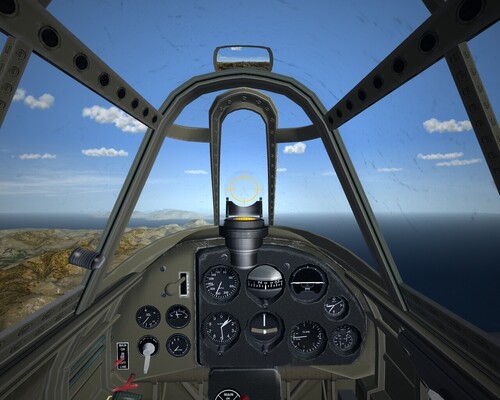 Nice bit of work that really plugs a gap! Recommended. Thanks, Stary!
 -
I think (HOPE!) that'll do the trick... I'm dying to find out what that "Spit" cockpit looks like in mine!
-
I'd suggest a re-upload (yes, I know...) but using one single type of compression. I think 7zip is trying to open the zip files AS WELL as the 7z shell, and it can't.