
Olham
-
Posts
14,636 -
Joined
-
Last visited
-
Days Won
3
Content Type
Profiles
Forums
Gallery
Downloads
Store
Everything posted by Olham
-
Hey, tranquillo old chap - good to see you rejoining service! I hope Wayfarer could help - cause I definitely can't... When you have enough practise, WOFF should be another huge step forwards - aircraft models, FMs, AI behaviour and overall look! The new shader is just a brilliant addition alone!
-
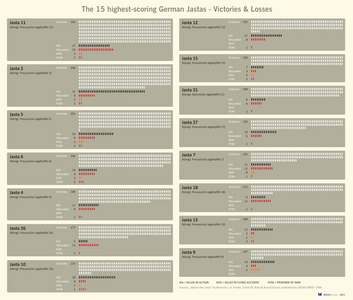
From the album: Charts
A chart with the 15 Jastas with the most victories, plus their losses. -
-
-
 TVAL, or some producer for them, make the corrdect linen and printing of the Lozenge. They entered a kind of semi-industrial production, it seems. http://thevintageaviator.co.nz/projects/albatros-dva/covering-albatros-dva http://thevintageaviator.co.nz/reference/working-irish-linen
 -
Wonderful news, Tony! Congrats to that! Yeah, keep up the training; physical stuff is good for so many processes in our system! Ask him what they pay for this kinda commercials, Tony!
-
They have done it again - after building several Albatros D.V replicas, THE VINTAGE AVIATOR have built an Albatros D.II replica, together with Mayrhofer, if that info is correct. Coloman Mayrhofer had already built a replica of a flyable Albatros D.III OeFFAG before. TVAL seem to have examined the Mercedes D.III engine so deeply, that they are now able to even build new engines for these planes. Here is a website with wonderful photographs of the new old plane. http://www.network54.com/Forum/149674/thread/1385158865/TVAL%27s+Albatros+D.II+reproduction Enjoy the visit.
-
Hey, Tony, great to see you! Yeah, dead here - as Creaghorn said: most people write at SimHQ.
-
Settng Affinities in Windows 7 64
Olham replied to von Baur's topic in WOFF UE/PE - General Discussion
Seems I must select the CPU every time after starting WOFF again, Beard? It doesn't seem to remember my selection. -
It means: "Break your neck and leg"
-
My pleasure, Hauksbee - good luck; Hals- und Beinbruch, as we say in Germany!
-
Funny how this photo makes the two men appear small! They may not have been tall, but als the bench is one of those high ones. There is one of these in a Berliner U-Bahn (underground) station; it must be from around 1900.
-
If you click on the little speaker symbol with the American flag in front of the name, you get it spelled about right. (As right as an American can spell a French name). http://www.dict.cc/?s=Ypres The Belgians also call it "Jepers", which you'd find hard to spell, as you spell "j" as "jay". The "j" in "Jepers" is softer - more like "Ee-apers".
-
The trick might be: do less. You don't have to do anything much. You push te throttle forward; the C.II will roll and gain speed until it will lift off. You don't pull the stick more than just a little bit to make it happen. Only begin to pull, when you feel she wants to lift. Once the craft is airborne, you can try and pull the stick more to make more climb. But always be aware: these aircraft were all underpowered compared to WW2 craft. So do not force anything per stick onto them, which they don't have the power for. For any tighter or vertical combat manoeuvers, the main trick is always to gain more energy than the engine supplies. That can only be done by dives. From shallow, flat-angled dives to rather steep ones, there is a wide range of how to gain energy. For steeper dives you will have to reduce throttle by a quarter or half, to not break the engine. The Roland, by the way, can dive with throttle almost fully on; it will gain a speed of ca. 200 km/h. This should get you away from all Nieuports and Sopwiths - only the SPAD and S.E.5a can follow. Once the additional energy is gained, you can now perform a tight turn, even in a climb. You will feel, how the energy bleeds off quickly, and then you better finish your manoeuver. For more such moves, you need then to gain forward speed=energy again. If you watch Roland C.II or the Airco DH.2 fighting, you will see how agile these craft CAN be, even in incredible vertical manoeuvres! I always learn something more when I watch that. Don't you think now, that I can already perfrom all that - I am still constantly watching and learning more, and pilots like Lanoe Hawker can give me incredible fights.
-
I don't know what you guys are doing - I flew it twice in the "DiD Campaign", and I must say it flies fine, and isn'rt too hard to land. Maybe you should work on your piloting skills? I had a dogfight against a single Sopwith Triplane - and won. Take that, ha!
-
WOFF: Screenshots and Videos
Olham replied to RAF_Louvert's topic in WOFF UE/PE - General Discussion
Only watched the first video yet, and I must say: beau-ti-ful! -
Some good info about a Luftschiff-Hafen in Denmark... http://www.zeppelin-museum.dk/main.php?lang=en
-
With my vertigo, that job would be a total nightmare for me!
-
WOFF: Screenshots and Videos
Olham replied to RAF_Louvert's topic in WOFF UE/PE - General Discussion
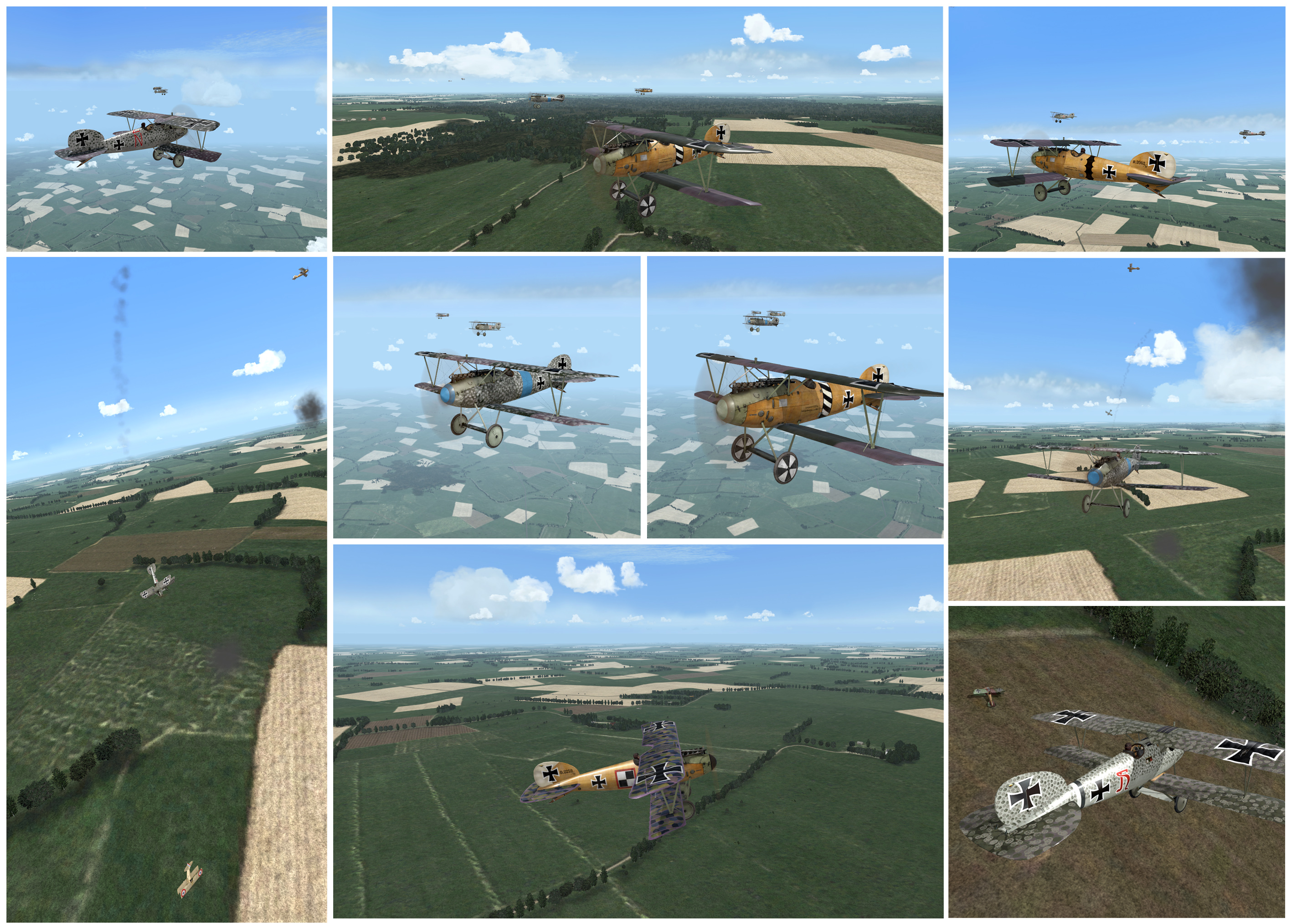
Time for some new screenies - these are still pre-WOFF v2.0, but beautiful, aren't they? A grand afternoon out with Jasta 15 (well, not so grand for a SPAD VII and a Nieuport...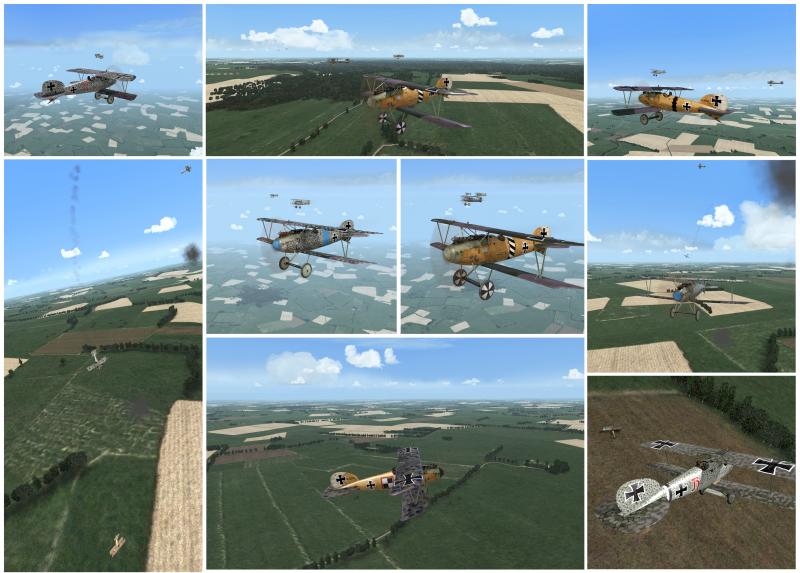
-
"Luisenhof Ferme" - Crash site of Major Lanoe Hawer
Olham replied to Olham's topic in WOFF UE/PE - General Discussion
The first post was edited and completely changed, because Dej/Dezh had posted a link to new trench maps at the McMaster University Archive. And with two of the new maps I was now able to find Luisenhof Ferme. My original guess had been too far north; closer to Bapaume. But now we have the proof - a trench map with the farm in it. -
Great photo, Hauksbee!
-
Quite some time ago this was posted, but maybe some missed it back then. This film was made by Anthony Fokker during a visit at the front. We can see several aces from Jasta 11 - like Eberhard Möhnicke - and also Otto Kissenberth, Adolf Ritter von Tutschek and others. Seeing this document almost gives me goose skin - they appear so lively, so young - close somehow. http://collections.ushmm.org/search/catalog/fv3353
-
Mmuahahahahaaa!!! Only just realised: the tank is an early bomb shape! Craaa - zeee!!!
-
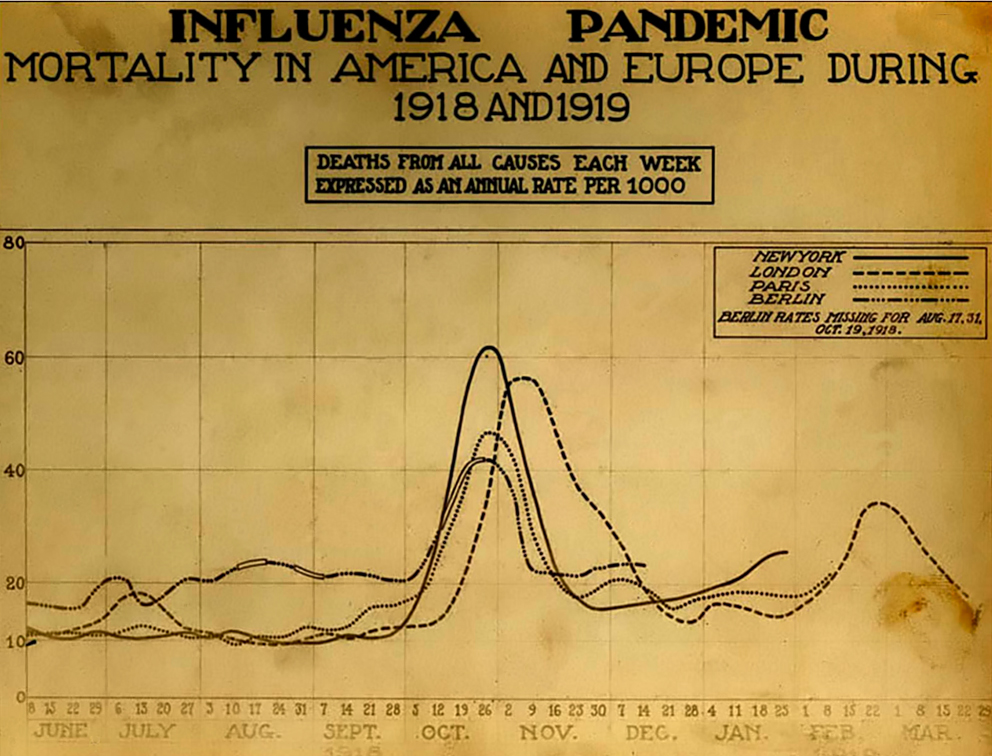
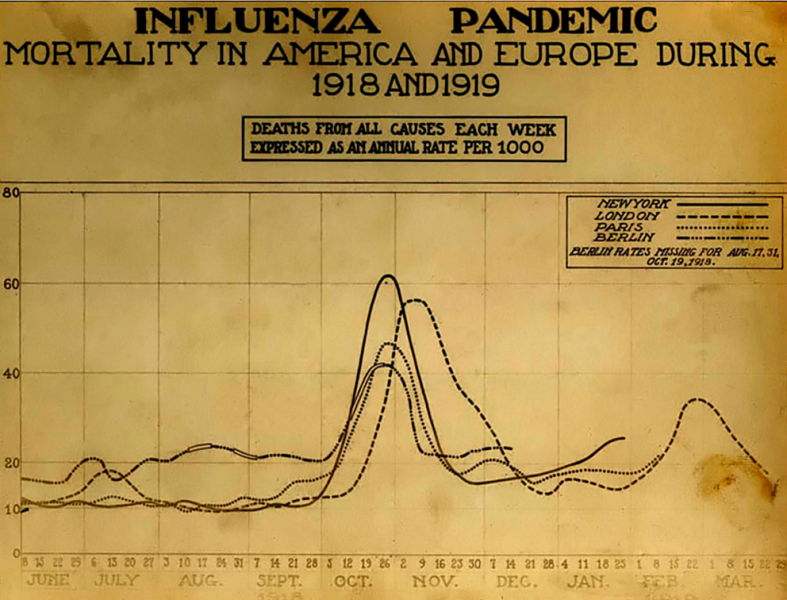
Yes, it must have been a nasty flu. We may be in for another terrible wave sooner rather than later - people consume so much antibiotics, that bacteria and viruses develop more and more immunity against them.
-
THE "SPANISH FLU" (1918 - 1920)" The bitter irony is that 25 - 50 million of European people got killed by the "Spanish Flu" between 1918 and 1920, (which might have balanced the food supply for the others). WW1 cost ca. 10 million lives among the soldiers, plus ca. 7 million casualties among the civilians. The flu may well have charged the double number. http://en.wikipedia.org/wiki/1918_flu_pandemic
-
Map 14: Aircraft [von Richtofen's 80 Victories}
Olham replied to Hauksbee's topic in WOFF UE/PE - General Discussion
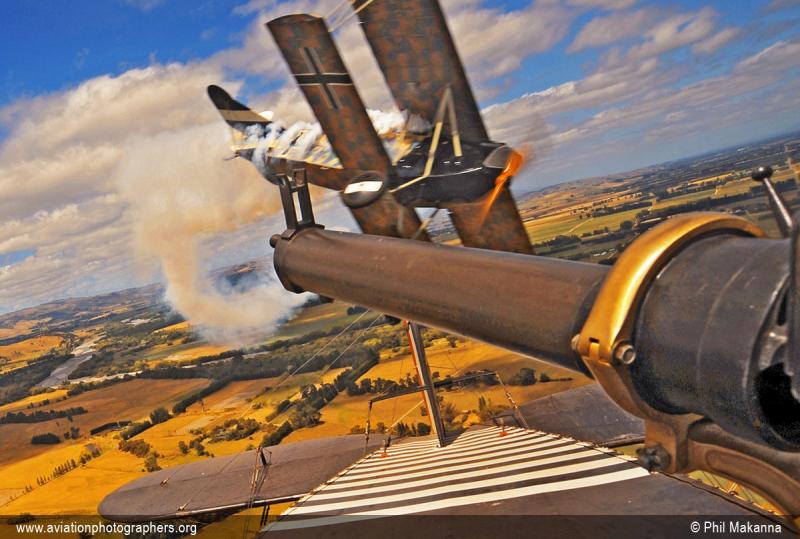
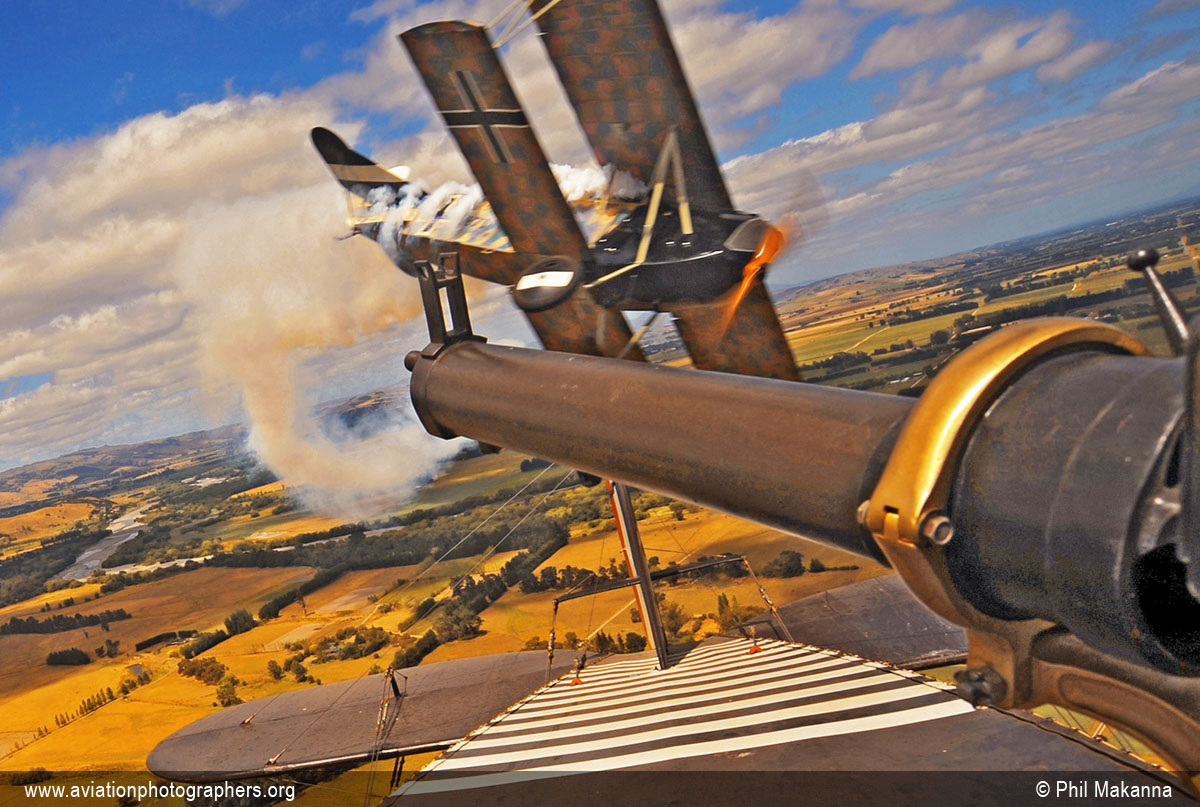
The photos from the "GHOSTS" calendar by Makana also seem to show the observer unbelted. https://www.google.com/search?safe=off&hl=de&site=imghp&tbm=isch&source=hp&biw=1920&bih=955&q=FE.2b+observer&oq=FE.2b+observer&gs_l=img.3...2367.10731.0.10939.14.4.0.10.0.0.129.374.3j1.4.0....0...1ac.1.58.img..11.3.302.MmgLsmxc0Ns#facrc=_&imgdii=MfCVxlcNyYE7uM%3A%3Bw63LLlHhRSkdSM%3BMfCVxlcNyYE7uM%3A&imgrc=MfCVxlcNyYE7uM%253A%3B3B7DCXQJeLMSrM%3Bhttp%253A%252F%252Fthevintageaviator.co.nz%252Ffiles%252Fimages%252Ffe-2b%252Fscreensize%252Ffe2b-8709-airmen.screensize.jpg%3Bhttp%253A%252F%252Friseofflight.com%252Fforum%252Fviewtopic.php%253Ff%253D49%2526t%253D24441%2526start%253D10%3B1200%3B799 Otto Fuchs described how he saw an observer falling from his aircraft in a wild manoeuver, completely with the machine gun he still clung to. But I don't remember which craft it was. Here is a photo from Makana's shots. I like how we can see the smoke spiralling around the Fokker from the prop wind.