.jpg.cb79b9aaa9e57802407b73797e1cc560.jpg)

denissoliveira
-
Posts
583 -
Joined
-
Last visited
-
Days Won
26
Content Type
Profiles
Forums
Gallery
Downloads
Store
Everything posted by denissoliveira
-
Mirage IIIS version 2.0
-
then a question: how to create the SM_ and Bump map textures?
-
 Finally someone?
 -
New cockpit and twoseat ?
-
-
-
Now shines !!!
-
fakepilot included !!!!
-
 included !!!
 -
The strange thing is that the nose appeared ??? I thought it might be something else, but download fakepilot to test
-
make sure the folders are in aircraft/pilots : Israel1, Mk10L, Mk10A, 3DMirageKFIRTC2
-
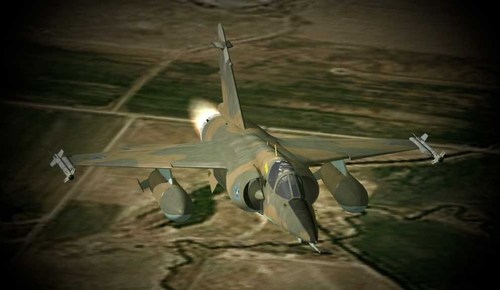 Perfeito !!!!! Incrivel !!! Sou fã de voces !!! Perfect !!!!! Amazing !!! I'm a fan of you !!!
 -
Where is the other models ??? Leave the skins and then, throw the first variations !!!!
-
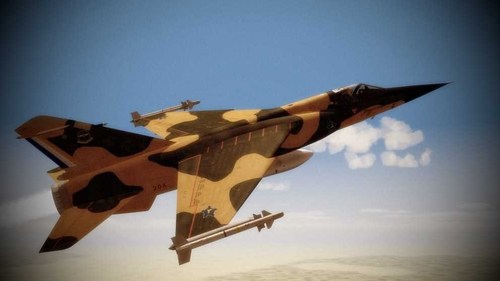 Perfeito !!!!!!!
 -
This taking more to post ...
-
You could share with the community this project!
-
View File Mirage IIIC (SEPR) Mirage IIIC (SEPR) The new fighter design was named the Mirage III. It incorporated the new area ruling concept, where changes to the cross section of an aircraft were made as gradual as possible, resulting in the famous "wasp waist" configuration of many supersonic fighters. Like the Mirage I, the Mirage III had provision for a SEPR rocket engine. The prototype Mirage III flew on 17 November 1956, and attained a speed of Mach 1.52 on its 10th flight. The prototype was then fitted with manually operated intake half-cone shock diffusers, known as souris ("mice"), which were moved forward as speed increased to reduce inlet turbulence. The Mirage III attained a speed of Mach 1.8 in September 1957. The success of the Mirage III prototype resulted in an order for 10 pre-production Mirage IIIA fighters. These were almost two meters longer than the Mirage III prototype, had a wing with 17.3% more area, a chord reduced to 4.5%, and an Atar 09B turbojet with afterburning thrust of 58.9 kN (13,230 lbf). The SEPR rocket engine was retained, and the aircraft were fitted with Thomson-CSF Cyrano Ibis air intercept radar, operational avionics, and a drag chute to shorten landing roll Texture Temp by Ludo.m54 Texture and Data.INI: Coupi 3D mod: Denis Oliveira Submitter denissoliveira Submitted 06/26/2015 Category Mirage 3
-
- 2
-

-
262 downloads
Mirage IIIC (SEPR) The new fighter design was named the Mirage III. It incorporated the new area ruling concept, where changes to the cross section of an aircraft were made as gradual as possible, resulting in the famous "wasp waist" configuration of many supersonic fighters. Like the Mirage I, the Mirage III had provision for a SEPR rocket engine. The prototype Mirage III flew on 17 November 1956, and attained a speed of Mach 1.52 on its 10th flight. The prototype was then fitted with manually operated intake half-cone shock diffusers, known as souris ("mice"), which were moved forward as speed increased to reduce inlet turbulence. The Mirage III attained a speed of Mach 1.8 in September 1957. The success of the Mirage III prototype resulted in an order for 10 pre-production Mirage IIIA fighters. These were almost two meters longer than the Mirage III prototype, had a wing with 17.3% more area, a chord reduced to 4.5%, and an Atar 09B turbojet with afterburning thrust of 58.9 kN (13,230 lbf). The SEPR rocket engine was retained, and the aircraft were fitted with Thomson-CSF Cyrano Ibis air intercept radar, operational avionics, and a drag chute to shorten landing roll Texture Temp by Ludo.m54 Texture and Data.INI: Coupi 3D mod: Denis Oliveira -
View File Kfir C7 Kfir C7 The Israel Aircraft Industries Kfir (Hebrew: ???????,, "Lion Cub") is an Israeli-built all-weather, multirole combat aircraft based on a modified French Dassault Mirage 5 airframe, with Israeli avionics and an Israeli-built version of the General Electric J79 turbojet engine. The Kfir C.7 Vastly modified variant. Most if not all C.2 aircraft were modified to this variant. It included an improved J79-GEJ1E engine that offered more 1,000 lbs of thrust at full afterburner (and as a result increasing the Maximum Take-off Weight by 3,395 lbs), 2 more hardpoints under the air intakes, better avionics such as the Elta EL/M-2021B radar, HOTAS configured cockpit and inflight refueling capability. Texture and Data.INI: Coupi 3D mod: Denis Oliveira Original Panel: MirageFactory Original Texture: TK Submitter denissoliveira Submitted 06/25/2015 Category Israeli Origin
-
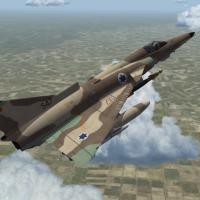
454 downloads
Kfir C7 The Israel Aircraft Industries Kfir (Hebrew: ???????,, "Lion Cub") is an Israeli-built all-weather, multirole combat aircraft based on a modified French Dassault Mirage 5 airframe, with Israeli avionics and an Israeli-built version of the General Electric J79 turbojet engine. The Kfir C.7 Vastly modified variant. Most if not all C.2 aircraft were modified to this variant. It included an improved J79-GEJ1E engine that offered more 1,000 lbs of thrust at full afterburner (and as a result increasing the Maximum Take-off Weight by 3,395 lbs), 2 more hardpoints under the air intakes, better avionics such as the Elta EL/M-2021B radar, HOTAS configured cockpit and inflight refueling capability. Texture and Data.INI: Coupi 3D mod: Denis Oliveira Original Panel: MirageFactory Original Texture: TK -
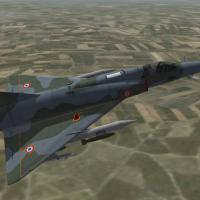
View File Mirage Milan S Mirage Milan S The latest variant of the basic Mirage III/5 family is the Milan (this name does not refer to the Italian city, but to a bird known in English as the "kite"). It is similar to the Mirage IIIE, but is equipped with retractable fore-planes - these being nicknamed "moustaches". This innovation was developed jointly by Dassault and the Federal Aircraft Factory, of Switzerland, and leads to radically improved take-off and low-speed handling characteristics. Each foreplane has a span of 0.8m and features fixed leading-edge slats and slotted trailing-edge flaps. The whole installation is extremely light and only takes up a small amount of space forward of the cockpit. Foreplanes were first tested in a fixed installation on a Mirage III during 1968; then followed a retractable installation on a Mirage IIIR, this aircraft being shown at the Paris Air Show in June 1969. Finally, a definitive prototype, known as the Milan S-01, was converted from a Mirage IIIR and first flown on May 29, 1970. The Milan S is powered by a 7,200kg SNECMA 09K-50 and has a greater external load capacity than the Mirage IIIE. It also has improved avionics, including the navigation/attack system developed for the Anglo-French BAC/Breguet Jaguar. No orders for the Milan had been announced at the time of writing (May 1971) but Dassault has said that deliveries could be started in 1972. Switzerland is being strongly wooed with the type and it is reported that South Africa has been discussing a possible order with the manufacturer. Requirements: DLC Mirage IIIO Texture Temp by Ludo.m54 data.ini - Coupi 3D mod - Denis Oliveira Submitter denissoliveira Submitted 06/23/2015 Category Other
-
417 downloads
Mirage Milan S The latest variant of the basic Mirage III/5 family is the Milan (this name does not refer to the Italian city, but to a bird known in English as the "kite"). It is similar to the Mirage IIIE, but is equipped with retractable fore-planes - these being nicknamed "moustaches". This innovation was developed jointly by Dassault and the Federal Aircraft Factory, of Switzerland, and leads to radically improved take-off and low-speed handling characteristics. Each foreplane has a span of 0.8m and features fixed leading-edge slats and slotted trailing-edge flaps. The whole installation is extremely light and only takes up a small amount of space forward of the cockpit. Foreplanes were first tested in a fixed installation on a Mirage III during 1968; then followed a retractable installation on a Mirage IIIR, this aircraft being shown at the Paris Air Show in June 1969. Finally, a definitive prototype, known as the Milan S-01, was converted from a Mirage IIIR and first flown on May 29, 1970. The Milan S is powered by a 7,200kg SNECMA 09K-50 and has a greater external load capacity than the Mirage IIIE. It also has improved avionics, including the navigation/attack system developed for the Anglo-French BAC/Breguet Jaguar. No orders for the Milan had been announced at the time of writing (May 1971) but Dassault has said that deliveries could be started in 1972. Switzerland is being strongly wooed with the type and it is reported that South Africa has been discussing a possible order with the manufacturer. Requirements: DLC Mirage IIIO Texture Temp by Ludo.m54 data.ini - Coupi 3D mod - Denis Oliveira -
Kfir C-7
-
I thank my friend! Correct folder structure.
-
View File Atlas Cheetah D Atlas Cheetah D The Cheetah C was the ultimate development of the Cheetah series, and was the only fighter aircraft in service with the SAAF until replaced by the Saab JAS 39 Gripen in 2008. Many of the features of the Cheetah aircraft are still classified, and the SAAF is unwilling to reveal too many details. What is known is that in addition to the upgrades described above, the Cheetah C incorporates a more sophisticated avionics and navigation suite and a new pulse-doppler multi-mode radar (ELTA), both of which are regarded as being better than the systems fitted to Block 50 F-16s[citation needed], and one of the most advanced EW systems fitted to a fighter aircraft. The aircraft is also fitted with a data link, though the capabilities of this system are unknown, and it received updated versions of the helmet-mounted sight, HUD and improved HOTAS controls. Other improvements include the fitting of a single-piece wrap-around windshield with an anti-radiation coating in place of the old three-piece version, a new in-flight refuelling probe with less external piping, new undercarriage and suspension, the deletion of the wing fences, an upgraded version of the Atar 9K50 and a new nose to incorporate the more sophisticated electronics and radar. Like the Cheetah D, the Cheetah C is capable of delivering precision-guided munitions (PGMs), ranging from laser-guided bombs (LGBs), to GPS-guided weapons and TV-guided bombs. It also has the capability of using stand-off air-to-ground weapons such as the MUPSOW and TORGOS. In addition, it is able to carry a raft of air-to-air weapons, and the SAAF currently equips its aircraft with the V4 R-Darter, a beyond-visual-range (BVR) radar-guided missile, and the U-Darter, a highly capable short-range infrared (IR)-guided missile. A measure of the capabilities of the Cheetah C is the result of an air-combat maneuvering (ACM) exercise between the Cheetah Cs of 2 Squadron and F-15E Strike Eagles of the 494th Fighter Squadron, United States Air Force at RAF Lakenheath, after which the score tallies for each side were almost exactly equal. Included 3 models: -Cheetah D Early -Cheetah D Late -Cheetah D FAE (ecuator) Requirements: DLC Mirage IIIO Texture Temp by Ludo.m54 Texture - Denis Oliveira 3D mod - Denis Oliveira Decals - Coupi Data ini - Coupi Cockpit and Avioncs ini - Coupi Submitter denissoliveira Submitted 05/22/2015 Category Other Origin