

Fubar512
-
Posts
8,418 -
Joined
-
Last visited
-
Days Won
42
Content Type
Profiles
Forums
Gallery
Downloads
Store
Everything posted by Fubar512
-
Has anyone managed to backport SF2 planes to WoX ?
Fubar512 replied to Gunrunner's topic in Mods/Skinning Discussion
SF2 works fine under XP, Kev, so unicode isn't a "Vista" thing. Unicode's been around for quite some time. Lex, Only SF2 has unicode .lod files. Lods from the Oct2008 patch-series are not in unicode, so that's why you can back-port them to earlier versions of TW games. -
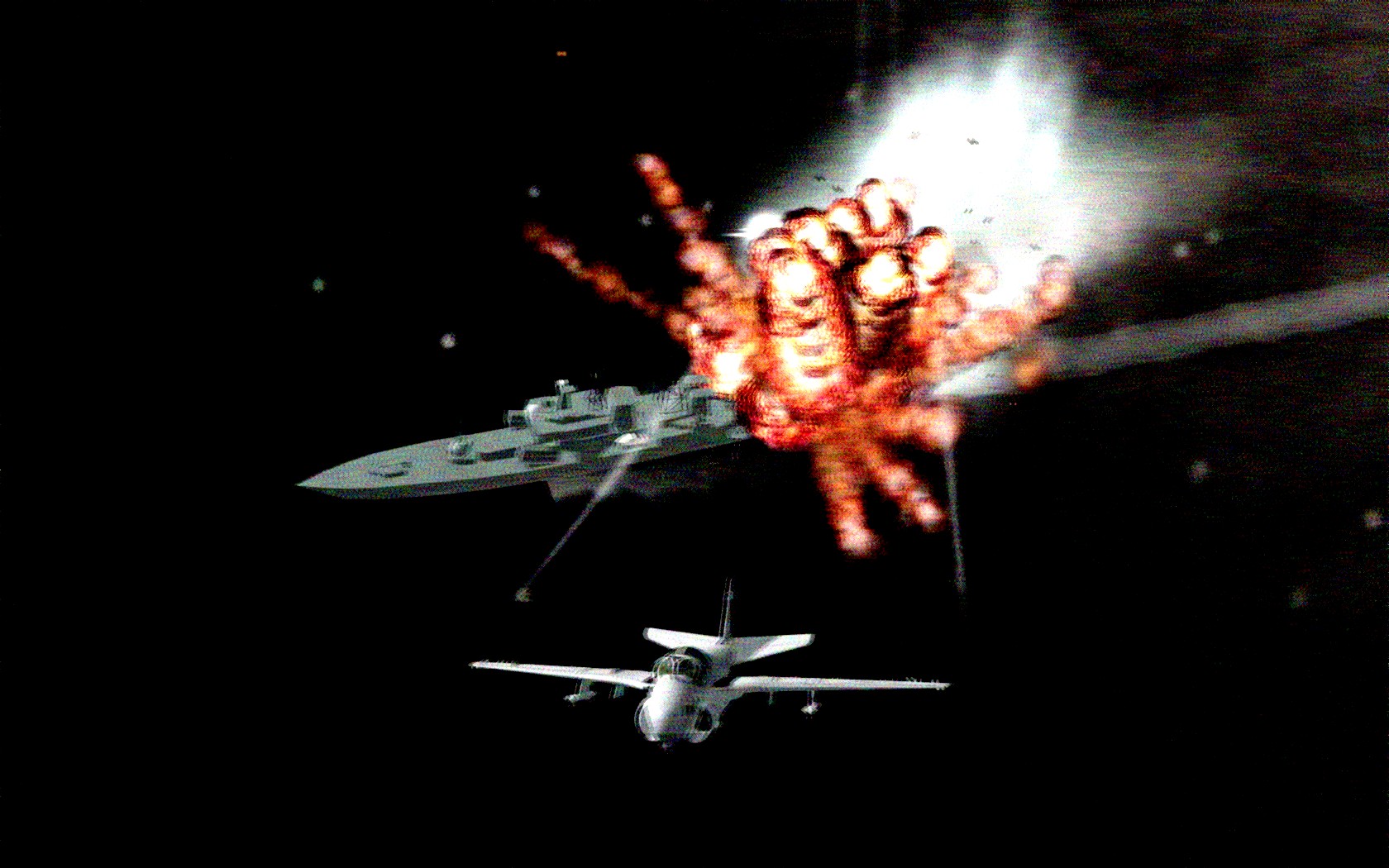
That's what got it in the end. You'll see one land about 200 yards astern, and another nailed the bastige, hitting amidships.
-
4 x 30 mm gatling guns mounted on 2 x 8-tube trainable SAM launchers, another 48 SAMs in a VLS system, topped off a 2-barreled 130mm DP gun mount....a formidable target, indeed. http://forum.combatace.com/uploads/1236375..._43_1805535.wmv
-
Has anyone managed to backport SF2 planes to WoX ?
Fubar512 replied to Gunrunner's topic in Mods/Skinning Discussion
If you're using .lods from the SF2 model, then it won't work. They're compiled in Unicode, which earlier TW titles cannot read. -
Another possibilty is that it's either pilot or seat shadows.
-
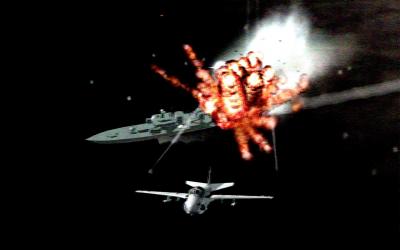
Scratch one Udaloy-class FFG.....
-
Stay low and fast (over 400 knots). Pop up only when you have the opportunity to nail an opponent with a rear quarter shot at knife-fighting range, and then dive for cover again. By staying low, under 300 feet-100 meters, you will be able to avoid most of their radar-guided AAMs.
-
Even we seasoned TW veterans refer to the KB once in a while.
-
I have a suggestion, read the knowledge base. If you had done that first, you'd have known better than to have applied an update onto anything other than a fresh install.
-
Nope. Those are Pulse-Doppler systems. "In 1963 Westinghouse was awarded a US Navy contract for the AN/AWG-10 to provide fire control for guns and Sparrow and Sidewinder air-to-air missiles on the McDonnell Douglas F-4 Phantom. The first radars were delivered in 1966 and became standard equipment. The AWG-10 was claimed to be the first interceptor radar to feature transistorised circuitry. During 1966 the US Navy announced a look-down requirement for its F-4s and the AWG-10 became the first multimode radar with pulse Doppler look-down capabilities and a comprehensive built-in test system. During 1973 Westinghouse was contracted by the US Navy to improve the performance and reliability of the AN/AWG-10. The most significant change affecting reliability was the substitution of a solid-state transmitter using a klystron power amplifier. A digital computer was added for the more effective solution of launch equations, for example target manoeuvring information was included. A servoed optical sight display was also added and these modifications permitted the full range of air-to-ground ordnance to be exploited. Only three of the AWG-10's 29 LRUs remained unmodified; there were six new LRUs and seven units of the AWG-10 system were deleted. The success of the AWG-10A computer led to its procurement by the US Air Force for the APQ-120 radar in the F-4E to provide computer-aided target acquisition. The German Air Force, in a programme known as Peace Rhine, also procured the computer to upgrade its F-4F Phantoms. Status The AWG-10 family has long been out of production, but is still in widespread service. In early 1984 the US Defense Department announced the possibility of flight demonstrating McDonnell Douglas F-4s with new engines and avionics suites, to create a new market for F-4s currently in the US inventory. A fundamental change in the avionics would be the replacement of the AN/AWG-10 with the Westinghouse AN/APG-66 used in the Lockheed F-16 fighter."
-
The unit's ability to jam Continuous Wave Radar, as in the Hawk's CWR unit, that relies on changes in frequency to plot target course & position, via Doppler shift.
-
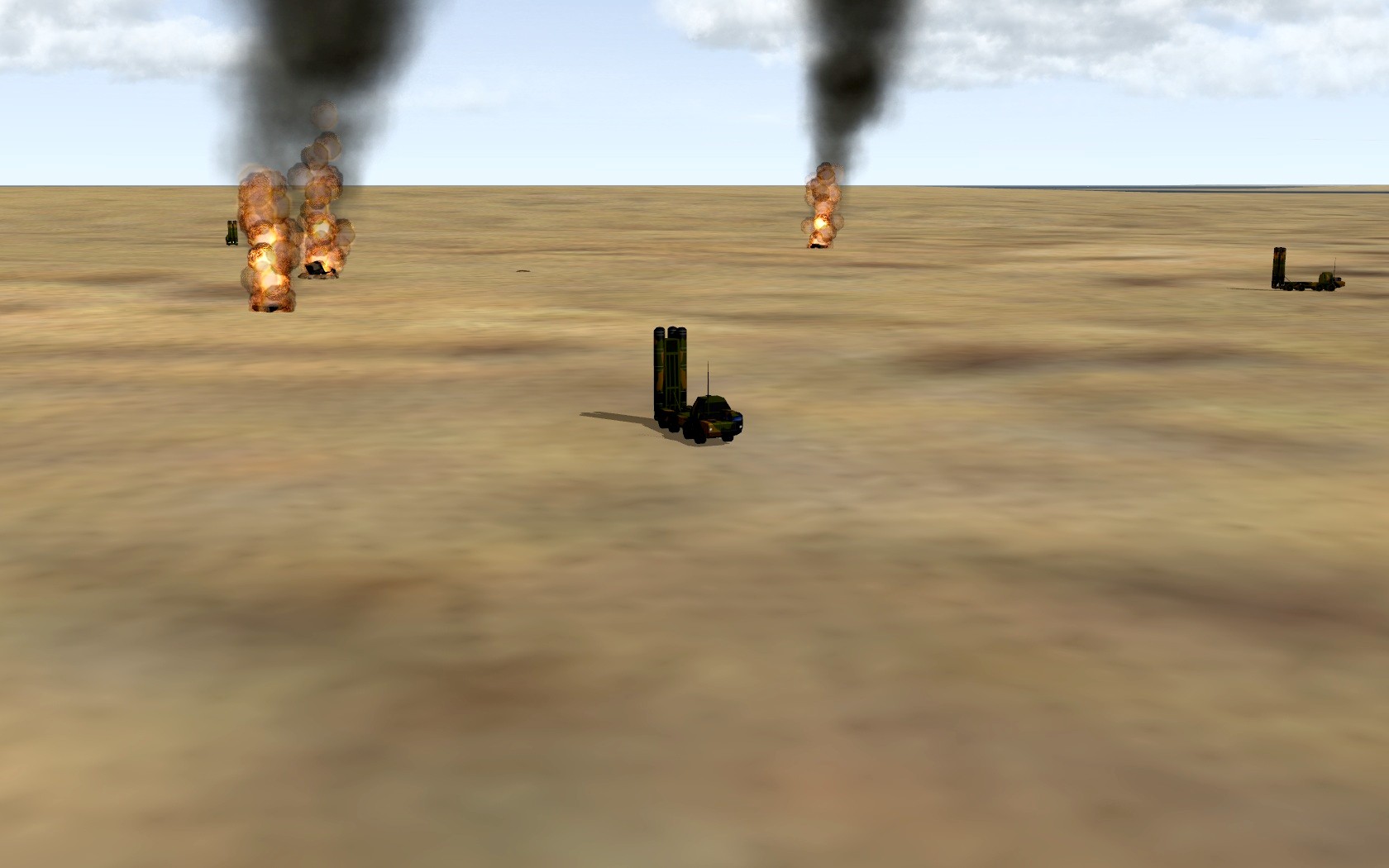
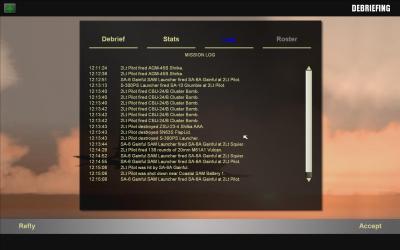
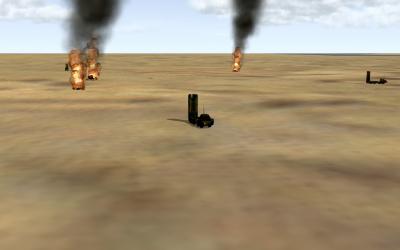
Added a few more weps and ground objects to SF2 for testing, and then flew a SEAD mission against an SA-10 battery, in an F-4 (yes, I equipped it with the appropriate ECM pod). Fired Shrikes at the Flaplid radar, but wound up taking it out with bombs during a low-level pass. Monty CZ's SA-10 battery, or rather, what's left of it Get nailed by an SA-6 while I was egressing, though...
-
One folder per weapon, as the folder name and and the .ini name must match (for example, the AA-8B folder must contain an AA-8B.ini).
-
ANSI is fine.
-
Started, consider it a "perpetual work in progress" http://forum.combatace.com/index.php?showt...t=0#entry253194
-
This should be of some assistance to those who are modeling radar and ecm systems: Military Radar Bands (EU, NATO, US ECM frequency designations) Band Frequency Notes HF 3 - 30 MHz High Frequency VHF 30 - 300 MHz Very High Frequency UHF 300 - 1000 MHz Ultra High Frequency L 1 - 2 GHz S 2 - 4 GHz C 4 - 8 GHz X 8 - 12 GHz Ku 12 - 18 GHz K 18 - 27 GHz Ka 27 - 40 GHz mm 40 - 300 GHz millimeter wavelength ECM Bands (EU, NATO, US ECM frequency designations) Band Frequency A 30 - 250 MHz B 250 - 500 MHz C 500 - 1,000 MHz D 1 - 2 GHz E 2 - 3 GHz F 3 - 4 GHz G 4 - 6 GHz H 6 - 8 GHz I 8 - 10 GHz J 10 - 20 GHz K 20 - 40 GHz L 40 - 60 GHz M 60 - 100 GHz When setting an ECM system, first look up the system type (in this case, we'll use the AN/ALQ-167), and check to see which frequencies or bands that system jams. Looking up the AN/ALQ-167 on GlobalSecurity, yielded the following info: http://www.globalsecurity.org/military/sys.../an-alq-167.htm In theory, an ECM system can jam a radar by emitting only 1/2 the potential energy of that radar, as the radar's beam has to travel twice as far as the ECM's emissions in order to first paint a target, and then receive the reflected signal, whereas the jammer's signal simply has to reach from the host platform (aircraft), to the radar's receiver.
-
That's correct. I'll post a frequency chart when I get a chance, so you'll have some idea as to what to set the values to. Needless to say from here on in, weapons mods for titles based on the SF2 engine will be ridiculously easy to create and to install.
-
FYI, there's also a new jammer type added. In addition to NOISE_JAMMER and DECEPTIVE_JAMMER, there's now a DUALMODE_JAMMER, as well (at least in the aircraftobject.dll).
-
Add a weapons folder to the object folder in your SF2 install (remember, it's in the "My Documents" folder), drop this in, and use the format for guidance: r_60mk.rar
-
Precisely. Otherwise, it might prove awkward to port over hundreds, if not upwards of 1000 weapons, by hand.
-
Yes, but it's no longer necessary to use a weapons editor to modify it (unless you wish to remove or replace existing entries).
-
The same folder structure as a groundobject or aircraft would have, including a main.ini and a data.ini for that weapon. The patch would be "My Documents\ThirdWire\StrikeFighters2\Objects\Weapons, and then the folder for that weapon. Just look at your groundobjects folders for guidance. You'll figure it out
-
Just follow the same format as you would for adding groundobjects and aircraft. Every individual add-on weapon should have its own separate folder, containing all the .lod, .bmp, and .ini files for that weapon, as well as a unique weapondata file of its very own. As Brain32 implied, it's very simple.
-
Read all about the SF2 weapons editor, here: weapons editor infolink It works grrrreat!
-