

Fubar512
-
Posts
8,418 -
Joined
-
Last visited
-
Days Won
42
Content Type
Profiles
Forums
Gallery
Downloads
Store
Everything posted by Fubar512
-
What to do when in a rip? Interesting Story, read here
Fubar512 replied to scouserlad13's topic in The Pub
There is no set procedure, it's all a matter of judgment, based on the conditions. For example, imagine this scenario: You go for a swim at your favorite beach, which is located along a coastline thats oriented North to South. That beach, slopes out perhaps 30-40 meters, where the bottom suddenly drops off, in effect goes from water that's chest deep, to a depth that's well over your head. For the past few days, a storm's been brewing well offshore, in fact, hundreds of miles offshore. You arrive at the strand, to see tall breakers booming ashore, and notice that while there are not too many people swimming around, there's plenty surfers out having a field day. You wade in, and begin paddling out, and suddenly find yourself being tossed ashore in a heap by a breaking wave. Undaunted, you make your way out, determined not to get tossed ashore again. You soon find yourself in water that's chest-deep, except when the occasional breaker comes in, and lifts you several meters off the bottom. Tired of clowning around, you set out to swim back in. After a few minutes of effort, you find yourself tiring, and decide to stand up. That's when you notice that you're no longer in chest deep water, but have been carried out several dozen yards further offshore, by a rip-current. Following some one else's advice, you try swimming parallel to shore, only to find that you're still being carried further and further out. What do you do in this case? This happens every Summer at our beaches in NJ. The tide travels north to south, and when combined with a storm surge (even from a distant Tropical storm), it results in some rather nasty rip tides. -
Column5 (and anyone else who might be interested). You want a good, body-toning and fat-burning workout? Find a GYM with an Olympic-sized pool, and swim free-style for one hour 3x per week. Walk one mile 5x per week at a moderate pace (2.5-3 mph). Depending on your present condition and diet, you will loose about 3-4 lbs per week just from the effort alone, and it will all be low-impact excersize.
-
Both titles must be patched to the same level, in order to allow for interchangability. That means that you must install the October 2008 updates for both titles, as WoI was released a full two years after WoE, and introduced a new flight engine (among other things).
-
Well, the fact that SF2 has DX10 shaders for everything from clouds to sunflare to shadows to stars may have (just a little) something to do with that....
-
Well, a gun must first have an entry in the gundata.ini. If it's a non-standard gun, you must accomplish this with the gun editor. Then, the weapon must be placed on the airframe (in the case of an aircraft), via adding the appropriate entry in the aircraft's data.ini file. I suggest using data from an existing model, to make it easy for your first attempt.
-
Oli, Vectored RWR's aren't part of SP5, neither are separate threat warnings by type, but there is a threat warning light entry in the SP5 aircraftobject.dll.
-
The feature's is there in SP5, whether it's being used or not.
-
The entry for that has been there simce SP4, I don't think it was activated until SP5.
-
New cloud TGAs and environment system entries.
-
Slewing the antenna is not an option with the present avionics code, in this series. And, it would not make a difference as the scan limits which are designated in the aircraft's data file mimic the full range of travel, so, in effect, you are already using the maximum azimuth and elevation possible with that aircraft/radar combination.
-
http://bbs.thirdwire.com/phpBB/viewtopic.p...p;hilit=+shrike
-
If by "the signal in the left side of the plane", you mean the AoA or glide-slope indexer, then the answer is yes. Aircraft modeled after their RL counterparts that sport such aids, will have them (as long as those models use itheir own cockpits). However, there's no working ILS nor are there ILS "cheats" for the series, like the one you posted above. You can, however fly the needles from waypoint to waypoint.
-
Good call, Eric. I posted this one awhile back at TW's site, the norm should find it helpful: http://bbs.thirdwire.com/phpBB/viewtopic.p...p;hilit=+shrike
-
It's an Anti-Radiation missile, and as such, it homes in on radar emissisons. You aim it by taking a bearing towards a (ground based) threat on your RWR, and firing it when you're within its launch parameters.
-
Hmmmmm......someone feels inadequate.......
-
It's because Dave felt inadequate. He also closed a thread in the pub, because, again, he felt......inadequate....
-
I have some old CCI Lawman loads for that ACP. They sport hollow point cavities big enough to allow them to double for a shot glass
-
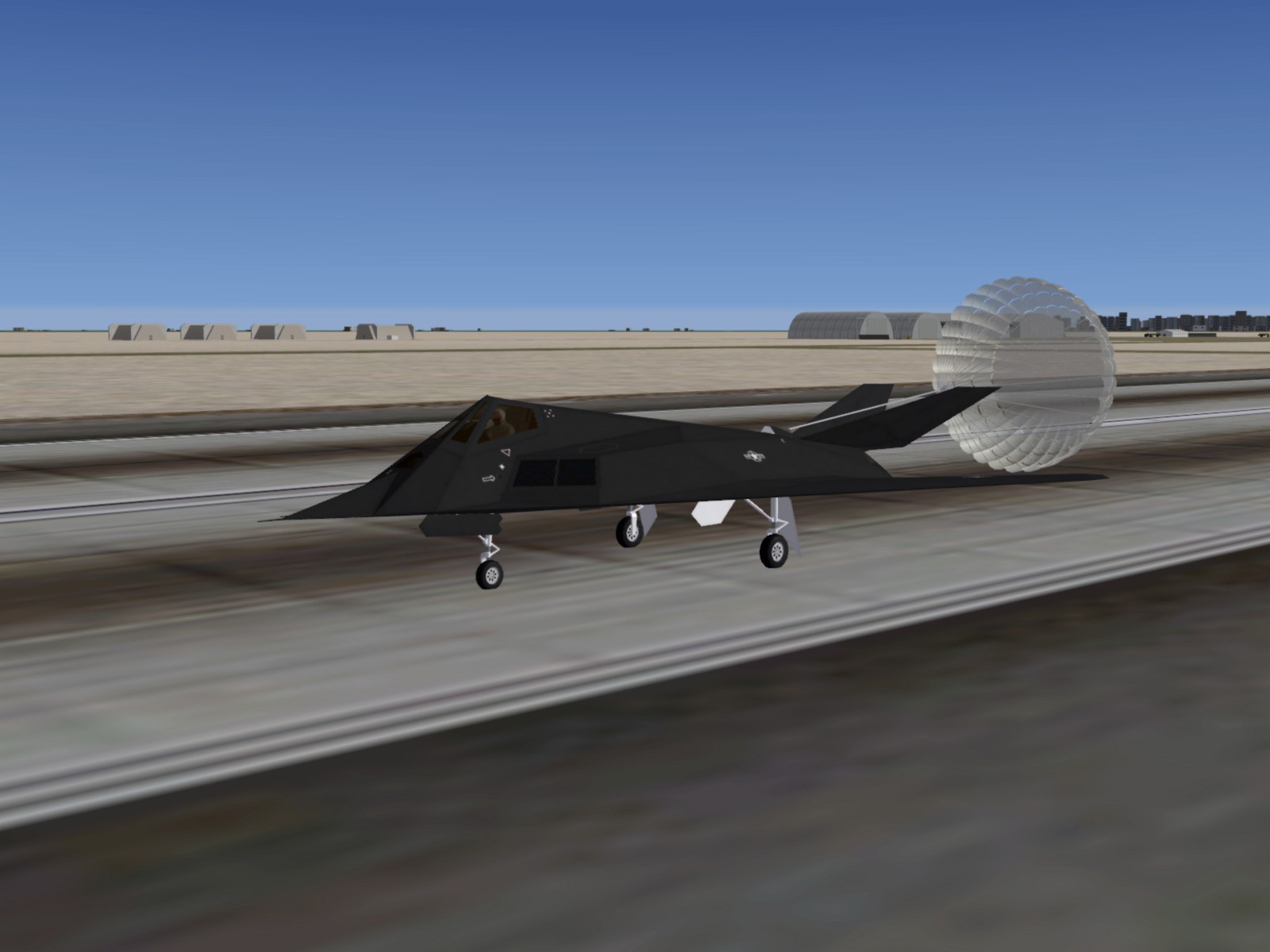
Here's an image of the WIP model.
-
Marcelo penned up a .lod that was equipped with a braking chute (you'll find an entry for it in the data.ini). Being the perfectionist that he is, he will not release it, until the animation is working to his satisfaction.
-
F-117s have neither flaps, nor airbrakes. Landing speed is between 165-175 knots.
-
Here's an alternative loading.wav that I made up just for Dave (and for the ODS mod). He likes it soooo much, that he has it set to constantly loop in the cockpit. Just extract it into your flight folder. loading.rar
-
Actually, I was thinking more along the lines of "Butt Ugly Mo Fo"
-
The face behind the voice..... "Pull up! Pull up! Pull up!!!! http://www.eleinc.com/erica.shtml
-
I suppose it would have been nicknamed the "BUMF".... You can figure that one out, yourselves