VonS
-
Posts
1,027 -
Joined
-
Last visited
-
Days Won
2
Content Type
Profiles
Forums
Gallery
Downloads
Store
Everything posted by VonS
-
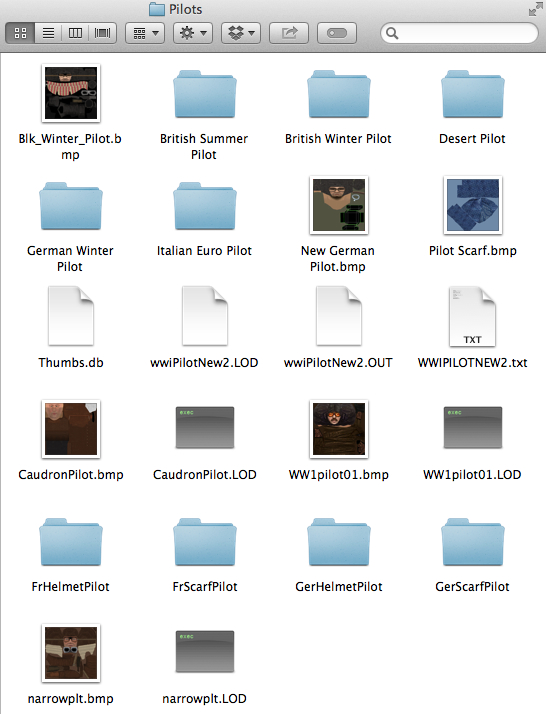
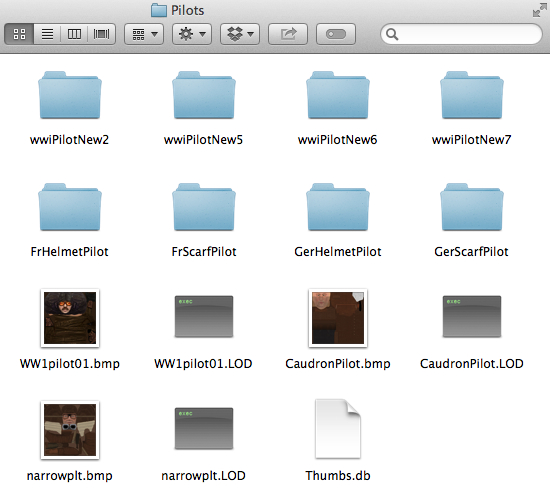
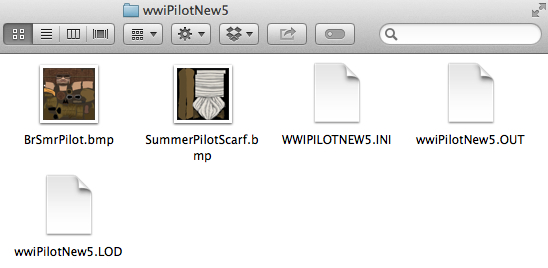
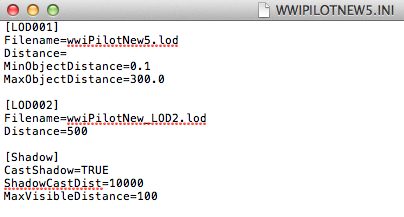
Hi Geezer, yes I've tested it now and the nested folder works for the Euro Pilot too - and it's the 1930s one with the oxygen mask as you indicated - how that ended up in my FE2 folder I have no idea, but I've removed it now since it doesn't fit with WWI. Here's a brief tutorial below for anyone struggling with invisible pilots in FE2, and my data inis. Been tweaking some more and nested folders work well for many of the pilots. A nicely organized Pilots folder should look something like this: The top four folders correspond with the German blue scarf pilot, British summer pilot, British winter pilot, and desert pilot. The next four are Stephen's cork helmet and/or scarf pilots (the order of the folders is not important, I'm simply referring to what's on my pic). The files that are missing inis and outs, such as WWIpilot01, should not be placed in nested folders but left as indicated in the main Pilots folder, otherwise they can't be called up by the data ini files for the planes. Illustrated below is the inside of the British summer pilot folder, now renamed to wwiPilotNew5 Don't forget to edit the corresponding, top LOD entry inside the ini file of the relevant folder, so that the correct LOD file is called, as indicated below (leave the LOD002 stuff alone since any changes to that disable the nested folder from being called up by the plane's data ini file): Relevant toggles in the data inis then become: PilotModelName=WWIpilot (this is the old blocky-head pilot) PilotModelName=wwiPilotNew1 (standard new pilot) PilotModelName=wwiPilotNew2 (German blue scarf pilot) PilotModelName=wwiPilotNew3 (standard new pilot, different colored coat) PilotModelName=wwiPilotNew4 (standard new pilot, different coat color) PilotModelName=wwiPilotNew5 (British summer pilot) PilotModelName=wwiPilotNew6 (British winter pilot) PilotModelName=wwiPilotNew7 (desert pilot) PilotModelName=WW1pilot01 (Ansaldo pilot, fits into other planes but looks like he's 6 foot 8 inches when installed in something like a DH.2) PilotModelName=CaudronPilot (nice generic looking pilot and fits well in other bombers and some planes, not only the Caudrons) PilotModelName=narrowplt (this one is probably best to use in the H-Brandenburg D.I, will require some repositioning of coordinates for other planes) Von S
-
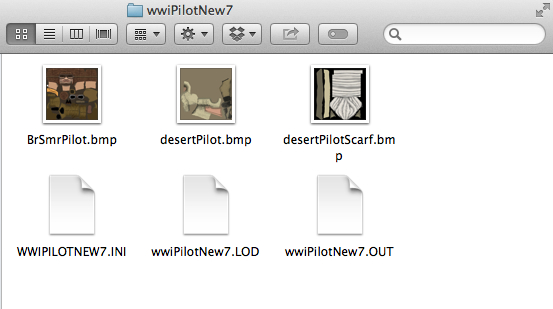
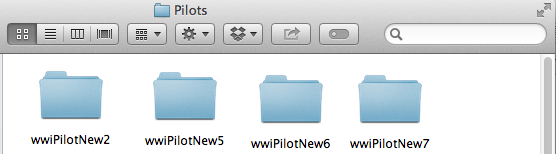
Thank you for the constructive comments. Have now experimented further and success! Nested folders do work within the Pilots folder, providing there are no spaces in the names of the folder and that the names correspond with the ini, out, and lod names of the files located inside...pic below demonstrates what I've now done with the Desert Pilot skin, also changed was the first lod number called up through the ini file, to correspond with the no. 7 now assigned to the lod file, as follows: [LOD001] Filename=wwiPilotNew7.lod Distance= MinObjectDistance=0.1 MaxObjectDistance=300.0 [LOD002] Filename=wwiPilotNew_LOD2.lod Distance=500 (The LOD002 stuff should be left as is since changing ruins the nested folder procedure.) This process also works with the British Summer and Winter Pilots, now renamed and repackaged in folders wwiPilotNew5 and wwiPilotNew6, same thing for the German Winter Pilot - his files and bmps can be thrown into a folder named wwiPilotNew2. The solution is now quite tidy since I can call up folder names from within the pilot toggle entry of the data inis and everything is nice and packaged... Will see if this also works with Italian Euro Pilot and also the Caudron pilot stuff that's missing an out and ini file. Happy flying, Von S
-
Thank you for posting your Pilots folder pic Geezer, I will compare with mine and see what I can do to call up the pilot heads that I can't get visible in game. It's possible that Stephen has made some workaround for the cork helmet pilots since I can call those folders up directly within the Pilots folder, but the ones with spaces in names I can't call up...very interesting. I will try to bring all of the files directly into the main Pilots folder as you've done and will see if this makes any changes. Happy flying, Von S
-
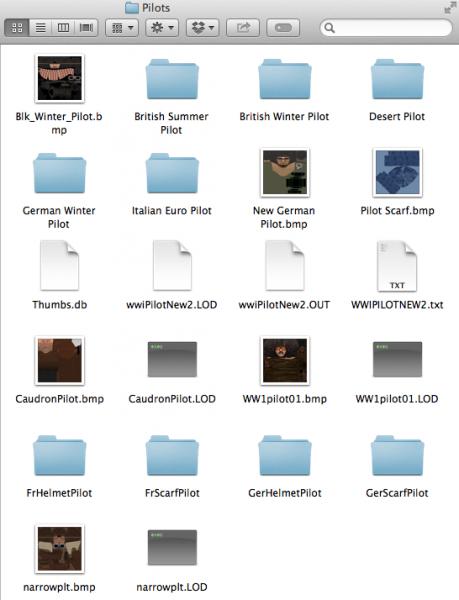
Hi vonOben, I've tested the deselect_target settings further and it makes no difference unfortunately. The only way to deselect is to select another target it seems. I've set up the Default.ini file so that one key selects enemy planes and my "g" key cycles through ground targets and observation balloons. This is the best compromise I've been able to attain but at least it functions well. There should be a pilot in all of the plane cockpits. Some have custom pilots that come with the airplane pack. I think the Ansaldo has a custom Italian pilot that should be installed into the "Pilots" folder, there is also a custom pilot contained in the Hansa-Brandenburg D.I aircraft file available here on the site. I've reset many of the pilots to the newer ones that Stephen1918 made available several months ago for FE2. Those pilot skins are available at: http://combatace.com/files/file/15832-pilots-with-helmets-for-first-eagles/ Simply download, open the file, install into your "Pilots" folder, and the pilots should then show up (the Fokk E.Ia pilot should have a black helmet in my current tweak for the data ini...the E.IIa pilot should have a standard leather helmet, not the thicker one of the Fokk E.Ia pilot....). Pilots can be toggled using the PilotModelName entry in the data ini files. The standard ones that correspond to the pilots pack by Stephen1918 are: PilotModelName=wwiPilotNew1 PilotModelName=wwiPilotNew2 PilotModelName=wwiPilotNew3 PilotModelName=wwiPilotNew4 PilotModelName=FrHelmetPilot PilotModelName=FrScarfPilot PilotModelName=GerHelmetPilot PilotModelName=GerScarfPilot The folders that have spaces in their names such as "British Summer Pilot" are not completed yet from what I've been able to see, and can't be called up using the PilotModelName entry, only the ones I've listed above. For the Brandenburg D.I, the entry should read as: PilotModelName=narrowplt For the Ansaldo, use: PilotModelName=WW1pilot01 For the Caudrons and some other special planes like the Caproni bomber, the old pilots can be changed to: PilotModelName=CaudronPilot This looks much better than the old entries that are by default: PilotModelName=WWIpilot The old entry gives a rougher looking head, I've left it in place in a few of the models for variety, but it can easily be replaced with the newer skins. Here's a pic below of what files should be in your Pilots folder, so that the correct pilot heads install with my data inis. Happy flying, Von S
-
Hi VonOben, hopefully someone will notice your questions who has more experience with that side of FE2, but I want to thank you for posting over on the old INI Tweaks and Changes thread earlier today. For some reason I missed that series of posts but it came in very handy, so handy that I will post a more elegant hud view that I'm now tweaking, with my 8.0 FM updates, for the "Flight" folder. Thank you! (For "deselect target," open the Default.ini file in the "Controls" folder manually and then assign a key to the DESELECT_TARGET entry, I went in there now and noticed that nothing is assigned there by default.) Happy flying, Von S
-
A quick update: flamers seem to be happening more frequently now that I've tweaked the post-damage engine settings in the data inis, as indicated in one of my earlier posts here. Had a very good flamer erupt in a one-on-one with a Nieu 16 and Halb D.5 in the Palestinian theatre while testing my other tweaks today. The Lewis Mk2 is now more potent at 750 rounds/min. A couple of pics of the excellent flamer below... Also had a good flamer going with a Fokk. E.IIa as well, in a battle with a Morane N - I've pushed the engine exhaust (and fire) position forward on the E.IIa since previously it was too far behind the pilot and wings - now it's closer to the engine and small fuel tank behind the engine (there was a bigger tank behind the pilot on later Eindeckers, I think the E.III, but the fire far back on the fuselage just looked strange to me). Some pics of that tweak too...will upload with the version 8.0 FM update... Happy flying, Von S
-
Can now confirm that the corrections work in FE2. I've now incorporated the node name changes into the Halb. D.5 data ini and will upload with the next FM update. Don't forget to change the name of the "fuse_HOLES" and "wings_HOLES" files in your Halb. D.5 aircraft folder to "Halb D5 Fuselage_HOLES" and "Halb DV Wings_HOLES" for this to work properly (note the DV in the Wings tga, not D5 as in the Fuselage tga...that one confused me until I found out the minor difference...now the wings show damage too). Pic follows... Happy flying, Von S
-
Excellent, thank you for the quick corrections Stephen. I will incorporate the model node name changes into the Halb D.5 data ini and will upload with a version 8.0 FM update. Happy flying, Von S Yes, the Halb. is a great ride in the Palestinian theatre, especially good against the RFC Nieuport 16. Von S
-
I was able to get the holes visible on the fuselage using the advice in this thread, but nothing for the wings. I'm assuming that some skin files or lod files are missing for the Halb D.5 that would make this damage modelling possible - I doubt that the improvements can be implemented directly from within the data ini file. I look forward to new discoveries regarding this. Happy flying, Von S
-
Great stuff, this is a beautiful looking, single-seater, "hybrid" dogfighter. Adjusting the FM for bomb weight should be easy enough in FE2 as I discovered with Geezer's Martinsydes that also had a dual-role (although those are not very effective as dogfighters). The trick is to test the aircraft first in something like "offensive" mode that doesn't give it bombs, tweak the FM to correct stats., and then to plug it into bombing mode or army coop - the top speed automatically goes down because of the addition of bombs. I look forward to tinkering with the FM once the project is released. Happy flying, Von S
-
These are excellent ideas 'gents. I've been contemplating the idea of a "single mission linker"-type application for FE2 for several weeks but this would probably require some fancy coding...will look further into this, to see if it is feasible. The idea is that you would start in a single mission in a theatre of your choice (let's say Palestine, Sept. 1915, flying as a Fokker. E.IIa pilot for the Ottomans - and then you would automatically after completing the mission be "randomly" thrown into another, perhaps a month or two later, either of the same type, for example, offensive, or randomly, another type doing a balloon busting mission or army coop....this would require of course code to "randomize" things...also to switch between "light" and "heavy" air activity depending on the theatre and period of war). The Palestinian theatre would have only light and moderate air activity, something like the Western front would shift to heave air activity by early 1918...other variations would be implemented for the Eastern and Italian theatres. This would then allow a kind of "linear" approximation of the campaign modes, but flying in "interlinked" single mission mode. Lots of ideas to think about. Happy flying, Von S
-
Thank you for the kind words. The .dll files are easy enough to extract from the game on the OS X side, in WineSkin...I think the magic one is the FlightEngine.dll...but it's useless to me since I'm not a coder and don't understand what to do with the file. Opening it in a simple text program gives me confusing machine code that would have to be translated over into something readable using another program of some kind...the only thing I've been able to learn is that FE2 is probably written in C++ computer language. Perhaps FE2 flyers who are also software developers or code experts and are running the game in WineSkin will extract the FlightEngine.dll file for themselves and have a look at what's inside...I'm sure that the code for engine controls is somewhere in there - but that is way beyond my tweaking abilities. Another problem would be how to re-integrate a modded FlightEngine.dll back into the core FE2 game itself on the Windows side...in WineSkin it's easy enough since from the UNIX/OS X side of things I can just dump in the new dll and replace the old one - and then fly in FE2. I have no idea how this kind of re-integration would work in Windows. Happy flying, Von S
-
Hello Crawford, results are very good in several areas (increased realism in FE2 with historical ammo. loads, gun jams, also improved gun sounds) - I have had some success with engine tweaking but this only affects them once they're damaged - still no way to get arbitrary engine failure going without damage. My full post on latest developments can be found here.... http://combatace.com/topic/88786-fe2-observations-and-musings/page-2?do=findComment&comment=719218 Happy flying, Von S
-
Tinkering further with the max. firing angles, I'm pleased that now the novices and "green" pilots are sometimes taking shots at me from 90 degree angles, peppering my fuselage in the process. The moves are reminiscent of the famous Verner Voss fight with perpendicular hits being taken and whatnot. I will incorporate the extended firing angles into a ver. 8.0 update of the general aircraftaidata ini file. Further testing has revealed that it is not possible (for now) to generate arbitrary engine failure in the game. I was rummaging through the data ini for the P-47 Thunderbolt to see if any WEP settings could be manipulated into the WWI data inis, to over-rev engines in dives for example, but from what I've seen there is no magic ingredient in the SF2 data inis that can be "retrofitted" into the FE2 data inis for arbitrary engine damage. However, post-hit engine damage seems to work well, with variety, by tweaking the settings for DamageTempDelta and OverheatDamageRate. The other entries mentioned in my previous posts for temp. rate change are best left untouched, also the overheating point of 100 degrees. The OverheatDamageRate, from further testing, seems to go from 0.0 to 1.0, whereas the DamageTempDelta is a percentage value. A good variation that works... Two-row Rotaries DamageTempDelta=20 OverheatDamageRate=0.3 Single-row Rotaries and also Radials DamageTempDelta=30 OverheatDamageRate=0.4 Early Inlines DamageTempDelta=60 OverheatDamageRate=0.7 Later Inlines DamageTempDelta=50 OverheatDamageRate=0.5 The logic is that rotaries, like radials in WW2, are a bit tougher to damage than inlines where things can get hosed quickly. I am slowly applying these changes and will upload in an 8.0 release. It seems to have improved chances for engine fires after damage, as far as I've been able to test. Some pics below...an engagement between German-flown Nieu17bis types and RAF Camels in the Mesopotamian front. Also being applied slowly are historical gun-belt lengths (number of rounds) per plane per theatre, more realistic unjamming times (more waiting), and ejection of bullets in all cases except for observers (with cartridge bags) and on some pusher types like the DH.2 that also carry bags (danger of cartridges hitting the prop in the back). Reading some of the big names on TheAerodrome, I've learned that empty cartridges were ejected through chutes even on the Nieuports, the empty gun-belts would be rewound and reused, but cartridges were always ejected on those types supposedly. Also revised were rates of fire for several of the guns, and new gun folders have been installed - this wil take a while now to "link up" the data inis with the changes. Revised now are the following types and rates of fire: Hotchkiss - 450 rounds (these were usually detuned to such values in the field, from the theoretical max. of about 750) Lewis - 750 rounds Vickers1 - 400 rounds Vickers2 - 600 rounds Vickers2muzzleboost - 850 rounds Parabellum - 550 rounds synchronized / 900 unsynchronized Spandau early - 350 rounds Spandau mid - 450 rounds Spandau late - 550 rounds Schwarzlose early - 350 rounds Schwarzlose late - 500 rounds Also tweaked was gun reliability and accuracy where necessary Also included are new sounds for the Lewis, Hotchkiss, Vickers types, and Spandau types - tempo was changed on the original files to slow or speed up the sound of the rate of fire. Two late Spandaus on the Alby. types sure can make quick lunch of the flimsy Nieuports now, as tested with Alb. D.3 and Nieu. 16 types in the Mesopotamian theatre. Also tested was a left muzzle-boosted Vickers Mk.2 and right Mk.2 (as was typical) on the Camels. The faster rofs are now deadlier, also noticeable is that you - and the AI - run out of ammo much more quickly now - which is a good improvement towards realism. I quickly became a pepper-pot for these new guns on the Camels while testing the Nieu17bis against them, although I could have climbed away and escaped - but it was too much fun. Pics below... Will upload the revisions as one big update (8.0) once it's all done - it's a slow process - instead of uploading the fixed theatres in parts. Happy flying, Von S
-
Hi vonOben, The main settings I've found that help increase frame rates are ground detail, also the terrain effects and objects on the ground - those when set to "medium" have helped me with reasonable frame rates. Also, I usually keep the water detail at "medium." Haven't experimented too much with the other settings to see how much they help. Here are my graphics settings from the Options.ini file: [GraphicsOptions] DisplayDeviceID=0 DisplayWidth=1600 DisplayHeight=900 DisplayDepth=32 AspectRatio=1.777778 AntiAliasing=4 UseAdvancedShaders=0 ForceDX9=FALSE ForceVSyncOff=FALSE LensFlare=2 DetailLevel=4 ObjectDetail=1 ObjectTexture=1 CockpitTexture=1 CockpitMirrors=0 CockpitReflection=0 EffectsDetail=1 TerrainDetail=1 TerrainTexture=1 HorizonDistance=0 GroundObjectDensity=1 WaterDetail=1 CloudsDetail=2 Shadow=0 They give me good frame rates but you might have to tinker with them further for your particular graphics card (I have the HD 4000, the integrated one from Intel, in a quad-core i7 Mac Mini). Alternate in-flight maps are probably what you are thinking of (if you don't like the stock ones with text). Here are a couple of variations on in-flight maps (I haven't tried the alternate ones out so I don't know how well they work): http://combatace.com/files/file/11899-new-fe2-in-flight-map/ http://combatace.com/files/file/14555-planing-maps/ Your installation of the terrain z-buffer shader alteration is correct (it goes into the relevant terrain folder under the "terrains" folder). I would assume that 30% utilization of the second processor core is acceptable variation. It's possible that FE2 is programmed to use one core and then "some" of the other core for an extra multi-processing boost. It's way beyond my technical knowledge whether programs can be coded to take advantage of only part or a fraction of a core, rather than the whole core - I see no reason why this wouldn't be possible (to offset some tasks from the game, but not all of them, to a second core). Those with degrees in software design might want to pitch in with some of their thoughts here. Thank you for the post regarding the FM tweaks (have responded over there to those). Happy flying, Von S
-
Here's some more interesting info. on rate of fire in WWI, from what I've been able to observe in the excellent thread on the subject over at TheAerodrome. Dave Watts writes: "This would look more logical on a graph chart. The point is the rate of fire for the LMG goes up and down according to the motor rpm and not at a constant rate. You can have the full rate of fire of 440 at 220 rpm and then at 221 the rate drops to 221. Note that the gun remains constant at 440 for motor rpms of 660 to 880. You have a drop again and then the rate is pretty constant from 1100 to 1319." (Some of this correlates with my post above, that max theoretical rof would be achieved at cruising rpms of about 1000 rpm and higher.) Also, it seems that the twin Spandau setups had rate of fire set to about 400-450 on one gun, while the other was set anywhere from between 300 to 500 - this still averages to about 450 or so. The Spandaus could not be set to higher than 700/min, but usually nothing beyond about 550 was attempted. The Lewis had an average rof of between 700 and 800 - although this is largely a theoretical limit since you have to stop and change drums on it, which reduces your rof/min greatly - because of reload pauses. Vickers were initially doing about 400/min, increased to about 550/min by late '17 approximately. Also interesting is that the Constantinesco synchronization gear probably contributed to this increase in rof for the Vickers since it was coming into use by the summer of '17. Muzzle boosters were also often added to Vickers by 1918, further increasing the rof to about 800/min - the usual procedure was to have a muzzle booster on only one Vickers in a double-Vickers setup, giving one gun a rof of about 800, and the other would still be at abut 550. The theory on TheAerodrome is that, by 1918, rof on a twin-Vickers setup would then be better than with twin Spandaus on German aircraft. It's also likely that muzzle boosters were avoided on single-Vickers setups - they increased the likelihood of gun jams - leaving you with no gun effectively if you only have one Vickers and it jams. Also I noticed that the Germans were improving their synchronization gears especially by the time the twin-gunned Albatros came out - planes prior to the Albatros D.I had earlier (Fokker) interruptor gears, the D.I and D.II featured a mid-war type, the D.III featured a newer type, and there were further improvements from the D.V onwards. The transitional period for the Entente seems to have been sometime in '17, when the Alkan-Hamy gear was still prevalent (particularly on mid-war types like the Nieu. 17) - giving way to the Constantinesco particularly on British planes, by 1918. My previous estimate of rof ranging from 400 to about 800 on a good day, at cruising rpms, can then be expanded further, with this historical info, to give us a rough table of static values (since Dave Watts' comment about rof going up or down across the whole rpm arc probably can't be modelled in FE2, so I'll stick with estimates). German planes up to about mid-1916: average rof 350 to 400. German planes from late '16 to about late '17: average rof of 450. German planes from early '18 onwards: average rof of 500 to 550. Entente/Vickers planes up to about early '17: average rof of 350 to 400. Entente/Vickers from mid '17 to early '18: average rof of 550 for Spads and Se5a and Camels, around 400 for Tripes, Pups, and Nieuports type 17, 23, 24, up to about 550 again for Nieuports 27 and 28. Entente/Vickers from mid-18 onwards: average for twin-gun setup with one muzzle booster becomes about 700/min. I will do some digging into the gun data inis in the "Guns" folder for FE2 (user game folder) to see how close the rof is in those files to what I've listed here - more tweaking and testing ahead. One interesting exception is the Parabellum mounted sometimes on early Fokker Eindeckers and given to observers on German planes - its rof is high, about 800 to 1000/min. With an interruptor gear in place, it's anybody's guess what the rof would drop down too, I'm thinking something like 450 is a good estimate, still making it about 100 rounds faster/min than early Spandau setups on the Eindeckers. Von S
-
Yes, this would be wonderful if arbitrary engine failure could be incorporated - will test further and post results should anything successful happen. Getting the engines to over-rev and overheat would be key to having this happen, or at least some code that "cuts out" the engine when we don't expect it. Von S
-
Excellent question. I'm assuming that since it shares code with SF2, there might be "latent" settings for wep mode available, to incorporate from SF2 into FE2 - this might do the trick to "bust" engines arbitrarily. Historically, there was no wep mode in WWI since superchargers were not used on engines until after the war (experimented with in late '18 but never used in combat) - there were altitude-compensating carburators, also sam "ram air" modifications on the Oberursels I think (rarely), and later use of aluminum instead of iron pistons, to save weight and increase engine HP. But no one would "know" that the supercharger/wep code is busting the engines in FE2 when engaged - since from the pilot's end all you see is an engine that has arbitrarily failed or caught fire....this is a very interesting possibility. Having the wep mode be engaged "automatically" in a dive that over-revs and engine would then produce the appropriate historical results in FE2. Sort of like putting the engine into "110%" power in a dive only - this would be a great compromise. The mystery is figuring out what code in SF2, under Engine settings in the data inis, is responsible for wep power - and then tinkering with that code in FE2. Happy flying, Von S
-
Hi Geezer, yes this is an obscure area of WWI history that I find very interesting. It was treated in some detail on the Aerodrome forums a few years ago but with no clear conclusions. There were some overall assumptions given, that for four-bladed props being driven by reduction-gear Hispanos - where the total rpms of the engine might be as high as 2300, guns would be interrupted twice in a prop's full revolution so that they fired on every second gap rather than every gap of the four blades - and considering that the prop is rotating more slowly because of the reduction gear anyway - this gives an overall rate of fire similar to that for two-bladed props. Perhaps such modifications were possible for two-bladed props as well, to have a shot fired on every full revolution (not shooting on one of the gaps) rather than half revolution - to reduce rate of fire where engine rpms were too high and no reduction gears were being used. The counter-rotating Siemens-Halske engine solved this problem by rotating at around 900 rpms in one direction, with the prop and shaft rotating 900 rpms in the other direction - I think they carried this theory further with their two-row rotaries, having them turning in opposite directions. Then again, considering that a propeller has at least two blades - let's say fixed to a LeRhone rotary running at between 1100 and 1300 rpms full power - that set up should have a max rate of fire for a machine gun of about 600 under ideal conditions - since the prop is fixed to the engine and rotates at the same rpm. This would be the same theory for direct-gear inline engines like the 6-cylinder Mercedes. Rpms on the Mercedes, depending on what type, would run anywhere from about 1100 to 1300 thereabouts at cruising speeds (similar to the rpms for most rotaries) - considering that it was not recommended to push the Mercedes inline much beyond let's say about 1500 rpms for risk of damage. This should then be the "theoretical" rate of fire approximately for Entente and Central powers rotaries and the often-used Mercedes inline engine - maybe a bit higher for the direct-gear Hissos that have cruising rpms of about 1400 to 1600, top rpms of about 1800 to 2100, depending on what HP variant of the Hisso we're talking about (150, 180, 200, 220, 235 HP). If we then factor in a liberal estimate of rpm variation for engines and props of as high as 300 or 400 at a constant setting, to account for over-revving of engines in dives, also to account for sometimes imperfect performance, defects, flawed fuel/air mixtures...we get, to use the LeRhone as an example, running as slowly as maybe 900 rpms under poor conditions, maybe going as close as 1400 rpms in a dive (anything higher would of course destroy a rotary). This then gives a +/- variation of about 150 or 200 in the rate of fire, half of the variation approximately of the engine/prop rpm variation. The "theoretical" rate of fire of 600/min then ranges anywhere from 400 to 800/min - and this is on a good day and at a constant, "cruising" rpm setting. Might be even worse if other physics of engine, interruptor gear, gun belt problems, are taken into account, and obviously lower-band/mid-power rpms somewhere in the range of 600 to 1000 rpms. The rotaries would of course conk out somewhere below about 400 or 500 rpms if they were well-tuned, maybe already below 600/700 rpm after daily wear and tear. inlines could be throttled back to about 200 or 300 rpms, as low as 100/150 or so in later-war variants - and then there's the prop "windmilling" that also becomes a factor in dives, even with engine at idle or in the case of rotaries "blipped" off - although the smarter thing would be to shut the fuel valve on the rotary and then reopen it again to give the engine life. Lots of fun factors to consider. I'm being very crude with the math here but it gives a general plan for further revisions of the data inis. Von S
-
Hi Do335, thanks for the info. I was testing all sorts of variations today for those entries under the "Engine" section of the data inis and I think you're right that it affects the speed at which an engine is damaged or stops working once it's hit - it doesn't however affect what happens with engines that are working well from what I've been able to observe. Oh well, the good news is that I can focus more now on tweaking ammo loads, rate of fire, also unjam/jam settings. It's possible that a separate application would have to be made that "plugs into" the FE2 code and handles engine failure rates - sort of like ReLoad does for RB3D - this of course goes way beyond my computer skills. Happy flying, Von S
-
Thank you for the link to the relevant discussion on Aerodrome, Nick. Will read those discussions soon. I'm pleased to read that you were able to get more firing of ammo in the game with the wider fireangles. Aces are very stingy with the ammo in my current aircraftaidata ini setting - will test further using your suggestions and incorporate the modifications into a version 5.0 of that file. Your results look very realistic, with most novices emptying their ammo during fights. I'm currently tinkering with some of the obscure settings under "Engine" in the individual data ini files - my concern are these entries: GasTempChangeRate=0.1 OverheatTemp=100 DamageTempDelta=20 OverheatDamageRate= Have tried testing with different values here, including for OverheatDamageRate, but there is no arbitrary engine failure showing up. Now I'm thinking that perhaps a mystery "DamageChance," "FailureChance," or "FireChance" entry needs to be included here, or perhaps something like "DamageDelta" - to actually make arbitrary engine failure possible. Will test further with this mystery entry for failiure or some kind of failure or damage delta settings and will post results soon. Von S
-
This is all fascinating info., I hope that I can incorporate some of it into further FM tweaks. Can't remember the exact post now on TheAerodrome, but a few years ago there was a big debate over there regarding average rate of fire for guns firing through propeller blades, considering that most props would rev exactly as much as the engine, with the exception of some of the sub-types of Hispano-Suiza that had reduction gears and the four-bladed propeller, later replaced with fixed gears once again. This of course is probably too much for the FE2 code to handle, to have faster rate of fire in a dive with engines revved, and to have slower rate of fire with engines cutting out or not giving full power - but I will see if some kind of "educated estimates" can be brought into the data files, to account for best and worst rate of fire. Von S
-
Thanks Geezer for this info. I'll look into the Vickers on the Nieports too, can't remember now if those ejected cartridges as well, or collected them in a box...that's another great point that I will attempt to address in a version 8.0 update. I'm thinking that the five factors to address, for more historical realism, are: (1) ejection or storage of empty cartridges (2) length of cartridge belts (depending on period in the war used) (3) gun jams and speed of unjamming (to simulate cloth or steel belts, also length of cartridge belts, shorter being better in terms of less jamming) (4) rate of fire of synchronized guns (also of unsynchronized ones too, I remember reading that the Hotchkiss had an average rate of fire of something like 700 rounds/min but this was usually detuned to about 400 or 450 to minimize jamming) (5) arbitrary chance of engine failure and/or fire (I'm thinking along the lines of fuel temp., overheating, things like that, not so much oil pressure loss since tampering with the oil settings under "Engine" in the data inis might lead to permanently poor engine performance during a flight, instead of the chance of problems arising...there is a +/- setting in the ReLoad program used with Red Baron 3D that helps regulate "air flow" to rotary engines, but such dynamic tampering might not be possible to that great an extent in FE2...) Happy flying, Von S
-
This is great stuff Geezer, thanks for posting. I remember reading somewhere that the Germans continued using cloth belts well into 1918 but had ironed out some problems with the system, while the Entente was running away from the cloth belts because of all the problems. Maybe the Germans were trying to save weight on the planes by continuing with cloth instead of going with steel belts? An interesting theory that I'll think about for the 8.0 update of the FMs...maybe something along the lines of greater frequency of gun jams, and longer wait times to unjam would approximate these problems in FE2, especially with earlier planes. More jams with cloth fed ammo, fewer jams with the steel belts...but also to have shorter jams with steel fed ammo later in the war. I'll think about this in terms of smaller ammo loads and also the version of gun being used on the plane types (Vickers 1, 1.1, 2) since the rate of fire becomes faster later on....this will make it more exciting overall, with greater realism. Coupled with arbitrary engine failure, it looks very promising. Happy flying, Von S
-
Try tinkering with these settings located under the "Engine" section of the aircraft data inis: GasTempChangeRate=0.1 OverheatTemp=100 DamageTempDelta=20 OverheatDamageRate= I haven't dug into those yet but they look promising...increasing the overheatdamagerate, maybe also lowering the overheattemp slightly, and increasing the gastempchangerate might do the trick. Try something like this for starters, to see if there's a difference: GasTempChangeRate=0.2 OverheatTemp=80 DamageTempDelta=20 OverheatDamageRate=30 I will experiment with this too - interesting find. ReLoad for RB3D has random engine failure settings, it sure would be nice to get an effect like that into FE2. Von S