
Erik
-
Posts
7,244 -
Joined
-
Days Won
42
Content Type
Profiles
Forums
Gallery
Downloads
Store
Everything posted by Erik
-
Congratulations Soulfreak! If you want to give your subscription to someone you can. Because you're a modder you won't be able to use a subscription on your account. Let me know. Erik
-

downloads freeze with subscription
Erik replied to luckyluca's topic in Site Support / Bug Reports / Suggestions
Hi - I checked the files you mentioned and they are fine. Subscriptions don't change the actual download process. Once you're at the point where the file transfer has initiated it's a matter of connectivity between the server and your local machine. Since you mentioned that you're getting some of the file then you are getting past the point the subscription could be an issue. Can you run a tracert and ping to our domain and post the results? From a command prompt type the following: tracert combatace.com + [Enter] ping combatace.com -n 30 + [Enter] I suspect that your connection is dropping or something on your local end is shutting down the open file request like security software. Let me know. Erik -
CombatACE Facebook Contest Winner Week 4 - Carlo Vecchi The Randomizer selected #10 this week and on our Facebook list that is Carlo Vecchi. Congratulations! Week 1 - Ivan Adamek Week 2 - Shaun Griffies Week 3 - Matthew Mckee Carlo post on our Facebook page what your CA username is, then send us a PM here so we know you posted. Once we have that information we'll get your free download subscription added to your account. See you again next week for our latest winner. If you haven't added us to your Facebook likes we can't draw your name.

-
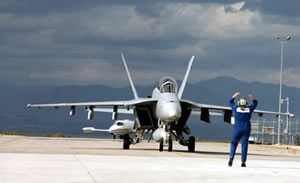
The Australian -- By Cameron Stewart The air force is about to reverse a decade of decline with a string of new aircraft. The balance of power in Asia is changing faster than the new Gillard government would like. China is flexing its muscles, making its near neighbours nervous with its ambitious naval expansion. The US has taken note and is quietly shoring up its alliances in the region, reassuring all that it will remain the pre-eminent power in the Pacific. These big-picture trends are causing debate, but in Australia there is a more subtle military shift under way that will also help redefine the balance of power in our immediate region for years to come. The Royal Australian Air Force is about to reverse a decade of decline in its strength relative to other regional air forces. Within two months, the second batch of Super Hornets will arrive from the Boeing plant in St Louis, creating the first operational squadron of the RAAF's new jet fighter. At the end of this year, these initial 12 Super Hornets -- the first of 24 -- will take over from the grand old dame of warplanes, the F-111 strike bombers. The mothballing of the F-111 and the arrival of the Super Hornets, along with the new Wedgetail airborne early warning and control aircraft and new air-to-air refuellers, marks a long-awaited turnaround in Australia's air power capabilities. "In terms of hardware, the air force has begun a period of transition in which most of its front-line fleet will be replaced by 2020 or shortly thereafter," says Andrew Davies of the Australian Strategic Policy Institute. "The delivery of Wedgetail and the Super Hornet represents the arrest of a slow decline in the RAAF's long-held regional qualitative lead in air combat capability." Chief of Air Force Mark Binskin admits this is a pivotal moment in the history of the RAAF. "It's one of those generational changes," the air marshal tells Inquirer. "The F-111 has been around for a long time and is seen as the strategic strike weapon for Australia so I think there is a lot of emotion and it will be quite a time in December when the last F-111 flies . . . but it is time for a change. "The Super Hornets coming in and the [advance capabilities] it will bring in combination with the upgraded [classic F/A 18] Hornets really does reset the relative combat power that we have." While other countries in the region have been investing in advanced fighter jets such as Russian Sukhoi fighters, US F-15s and F-16s, Australia's fighter stocks have been in relative decline during the past decade. Until recently, the RAAF's 70 F/A-18s have struggled to reach full operating capacity because of the need for progressive upgrades to keep them flying until their planned retirement date in 2018. The 15-strong F-111 fleet has been largely ceremonial for the past decade; modern air defences have made it too risky to send the much loved "Pig" into a hot war without heavy aerial support. With their long range and their ability to fly low and blindingly fast, the F-111s were the pre-eminent strike bomber of their era, reaching their target before defence radars could spot them. But since the 1980s the development of new radars, such as the F/A-18's pulse-Doppler APG-65 radar, made the F-111 vulnerable because they could pick out fast-moving, low-flying targets. "More and more air forces were re-equipping with modern Western and Russian fighters and ground-based air defence systems built around such radars," defence expert Gregor Ferguson says. "Suddenly the F-111 wasn't invincible any more. There was nothing it could do that can't be done now by a different combination of aircraft and weapons which can also fill other roles and deliver wider operational benefits." While the F-111 will be a sentimental loss, the arrival of the Super Hornet represents a sharp lift in actual combat capability. Used by the US Navy, they are the first new RAAF front-line fighters since 1985. A recent ASPI report on RAAF capability states: "Compared to the classic Hornets, they carry more powerful radar, electronic warfare and networking capabilities and can carry greater weapons load over a longer range. They also have a degree of low observability built in. The Super Hornets will give RAAF a capability on par with the US Navy." Davies says the combination of the Super Hornets and the standard F/A-18s should ensure that Australia retains a capability edge in air power in the region ahead of the arrival of the F-35. "The number and capability of Australia's air combat aircraft will overmatch the piecemeal and less well supported fleets of nearby nations [except Singapore]. As well, in any defence of Australia scenario, the RAAF should be able to establish local air superiority and conduct sea denial operations even against a major power." Davies tells Inquirer: "What we will get with the Super Hornet is the ability to hit targets [that] have modern air defence systems. "What we lose is a bit of range. We have to work harder to get a range anything like the F-111." Twelve of the 24 Super Hornets will be configured so they can be potentially transformed into a specialised electronic warfare version of the Super Hornet known as the Growler. "This is a dedicated electronic warfare aircraft and that is a significant capability that we have never had before," says Davies. Because Super Hornets are already in use in the US Navy, they will arrive in Australia almost ready to fly. Late last month, five Super Hornets and about 100 aircrew and maintenance personnel from No 1 Squadron at RAAF Amberley, Queensland, began the first live weapons trial in Australia, testing air-to-ground weapons firing at Woomera in the South Australian desert. There are 11 Super Hornets in Australia and a new group of three planes is set to arrive in November. All 24 aircraft are expected here by the end of next year. Their arrival coincides with the planned arrival by early next year of all six Wedgetail AWACs. The Wedgetails are four years late and the program has been deeply troubled by technical hitches and cost overruns. But when introduced into service next year the planes -- in theory -- should be able to scan the airspace above Australia's maritime approaches to detect an air or sea attack and direct planes and ships to defeat that threat. "From a cruising altitude of 30,000 feet, the MESA radar mounted on the upper fuselage of the Wedgetail aircraft is designed to detect targets more than 400km away in all directions [including] hard-to-see targets such as cruise missiles," Ferguson says. The Super Hornets are a bridging fighter to fill the gap between the retirement of the F-111s and the arrival from 2014 of the new F-35 Joint Strike Fighters. Former defence minister Brendan Nelson was widely criticised in 2007 when he announced the $6 billion Super Hornet purchase, but setbacks and delays in the F-35 project have justified the decision in hindsight. Australia plans to buy 100 F-35s but the project has been bedevilled by technical problems, cost blowouts and schedule slippages. Its original delivery date to Australia of 2012 has blown out and the first squadron of F-35s is not expected to become operational until 2018. Despite this, the Australian government has never wavered from its commitment to the new warplane and still argues that it is the best and most cost-effective solution for the RAAF's future front-line fleet. The troubled project also received a rare bit of good news recently. Its flight testing program, which has been well behind schedule, has gained some momentum and the full-year goal of 394 flights is likely to be met. The Australian
-
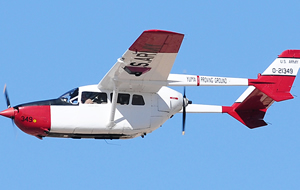
Yuma Sun -- By James Gilbert -- October 12, 2010 YUMA PROVING GROUND — Employees working at various test sites throughout Yuma Proving Ground will no longer hear the familiar sounds of either of the two O-2 Skymaster the installation has soaring high overhead. Originally built in 1967, the legendary plane forged a reputation as a hardy and dependable aircraft for forward observation missions during the Vietnam War. Although the model is now more than 40 years old, they are the only two of this model in the military inventory that still carry out active-duty missions, used at YPG to support test mission. As of Oct. 1, however, YPG's two Skymasters, the last two in the Department of Defense's inventory, were officially retired and bound for museums. “They are getting old and difficult to maintain,” said civilian pilot Ralph Arnold, who has flown the planes the past six years. “It is sad. We probably just don't use them enough anymore to justify having them anymore.” The plane, with Lt. Col. Steve Milton, commander of the Yuma Test Center, onboard, took to the skies above YPG for the last time Tuesday morning. Milton said it was unfortunate that his first-ever flight in the plane also happened to be its last. “I'm glad to have the opportunity,” Milton said of his flight moments before taking off. “It's taking a seat in history.” Milton said from a historical perspective, it is amazing to think about all the different types of missions the iconic planes have flown on over the years, where they have been and how many different branches of the military have owned them. About 510 of the O-2 aircraft were built between 1967 and 1970. The aircraft is unique in its design in a couple of ways. First, its propellers counter-rotate, balancing out the effects of the torque and the p-factor, or aerodynamics. It's “high-wing” design also proved useful for a clear observation of what was below and behind the aircraft. The second feature of this aircraft that makes it stand out is the placement of its two engines. Instead of on its wings, its engines are mounted in the nose and rear of its pod-style fuselage, which creates a “push-pull” effect. During the Vietnam War, the aircraft was used as a forward spotter to observe where the artillery was hitting the ground and then call in the ground support jets to complete the missions. It had fixed hard points to deliver rockets, flares and other ordnance for self-defense and to designated targets for air strikes. Arnold said both of the 0-2 Skymasters at YPG have 10,000 hours of flight time, which he estimates is equivalent to flying about 1.5 million air miles. “It is a fun plane to fly,” Arnold said. “It also sounds really cool going down the runway.” YPG got the planes from Arizona's Fort Huachuca in 1998 when the program in which they were flown was closed. Arnold said Huachuca was going to dispose of them, but YPG said they could use the planes. Prior to going to Fort Huachuca, the planes were owned by the U.S. Navy, which got them from the Air National Guard, where they wound up following the war. Arnold said one of the planes will remain at YPG as an exhibit for the installation's Heritage Center museum. The other plane has been offered to the Air Force's museum at Wright-Patterson Air Force Base in Ohio. “They haven't said yet whether they want it,” Arnold said. “If they don't, (the plane) will be disposed of.” Milton said the loss of the Skymasters does not mean YPG is losing the capability to support a test mission with a fixed-wing aircraft. In its place, he said, the installation is using a Cessna, which is faster and can carry more. With 10 pilots who can fly both fixed-wing and rotor aircraft, the loss of the Skymaster means there is one less plane for the pilots to have to fly on a regular basis to maintain their rating. “At any given time, the pilots will fly a fixed-wing aircraft in the morning and a rotor aircraft in the afternoon, or vice versa,” Milton said. While the need for supporting test missions with a fixed-wing aircraft has decreased, Milton said, test missions that can be supported with rotor aircraft have actually increased. Yuma Sun
-
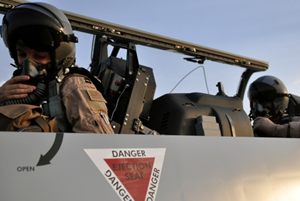
Stars and Stripes -- By Heath Druzin -- October 12, 2010 CONTINGENCY OPERATING STATION SPEICHER, Iraq — On a sweltering summer day here recently, 49 young Iraqi cadets sprinted off a C-130 cargo plane to start a three-year journey that Iraqi officials hope will be an important step toward military self-sufficiency. The men were the first students at Iraq’s new Air Force College, a collection of drab, boxlike buildings that match the seemingly endless desert that surrounds Speicher. Eventually, the cadets are expected to help Iraq do what it is years away from: defend its own air space. “Any country without an Air Force cannot defend their country ... especially in our region,” said Gen. Ali Hasan, the commander of the college. “Now, we cannot protect our airspace.” As U.S. forces have concentrated on building up Iraq’s Army and Federal Police, the Air Force has been largely left behind. After the invasion, Iraq was left with virtually no military aircraft, and the U.S. military had to start from scratch in rebuilding the Air Force. Now, with less than 15 months until all U.S. troops are supposed to leave Iraq, the first crop of prospective Iraqi pilot instructors is still training with their American counterparts, months away from being able to teach on their own. Lt. Col. Jeff “Jelly” Myer, who is flying with the Iraqi instructors-to-be in single propeller T-6 training planes, said building up the Air Force will take time. “We’re starting over again, and you can’t just jump into a fighter,” he said. The Iraqi Air Force is about five years into a 10- to 15-year project to get Air Force fully functional, including training mechanics, ground crews and air traffic controllers, said Brig. Gen. Scott Hanson, who is in charge of the U.S. mission to train the Iraqi Air Force. By the end of next year the Iraqis will have the ability to spot an airborne threat and track it, but not shoot it down, Hanson said. A group of 10 Iraqi pilots applied for visas to the United States in August to attend an introductory course for prospective F-16 pilots. The earliest the pilots would be ready to fly solo would be 2013, Hanson said. That’s the same year Iraq hopes to receive 18 F-16s that they are negotiating to buy from the United States. “The technological nature of aviation doesn’t lend itself to quick learning,” Hanson said. “And the complexity of employing air power, not only with other aircraft, but with ground forces, also requires a sophisticated level of training.” Being in the neighborhood it is, with much more powerful air forces next door, Iraq is likely to be tested often. Just last spring, the U.S. Air Force shot down an Iranian drone that got as far as Balad Air Base, a major U.S. military hub about 20 miles from the Iranian border. Stars and Stripes
-
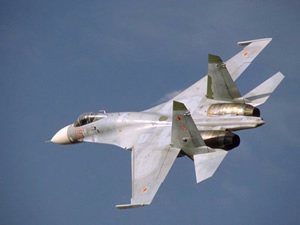
World Tribune -- Tuesday, October 12, 2010 ANKARA — Iran has joined Turkey in military cooperation with China. Turkish sources said Teheran enabled Chinese fighter-jets to refuel in Iranian air space in September. They said the four Chinese Air Force Su-27 combat aircraft had been on their way to Turkey to participate in the NATO-aligned Anatolian Eagle air exercise. "Four drill-bound Chinese Su-27 warplanes that took off from bases in China refueled in Iran — the first time the Islamic republic has ever allowed foreign warplanes to refuel at its air bases," the Turkish daily Hurriyet said. In a report on Oct. 11, Hurriyet reported that the Iranian support for Chinese warplane refueling took place in September. The Turkish newspaper said the Chinese participation in Anatolian Eagle has alarmed the United States. "Official letters were sent to the two countries prior to the military exercise requesting the use of air space and passage and refueling privileges," Hurriyet said. "The warplanes refueled a second time in Iran on their return to China." Turkish sources said Iran and Turkey have joined to expand military cooperation with China. They said the Turkish cooperation with Beijing would include military training, exercises and technology development. Hurriyet said Chinese participation in Anatolian Eagle came after two years of negotiations with Beijing. The report said Turkey has sought to enhance cooperation with China in defense and energy. The United States tried to stop Turkey from allowing China to participate in Anatolian Eagle, the sources said. They said Washington demanded that the Turkish Air Force ground its F-16 multi-role fighter fleet during maneuvers with the Chinese Su-27. "We expect you to honor the agreement article that requires the exercise of caution regarding the transfer of technology to third countries," a U.S. message to Ankara, quoted by Hurriyet, read. In the end, the Turkish Air Force flew its older U.S.-origin F-4 fighter-jets with the Chinese aircraft during Anatolian Eagle. Israel, which has been banned from the exercise since 2009, modernized Turkey's F-4 fleet in the late 1990s. World Tribune
-
We're proud to release the new CA Dark Blue Skin Theme based an original retro Biohaz Bohegeha Skin taking us back to the day. Now complete the new skin is available for everyone to use. As pictured above, locate the skin and language selection tools on the bottom left of all our pages. Select the new CA Dark Blue to use the new skin theme or switch to any other skin that is available there. We hope you enjoy a fresh new look with more to come soon.


-
No harm no foul. It's just easier to keep things rated for a general audience in public than explain why it's not. Thanks for understanding.
-
Funny but a little much for the Pub. There's a bigger World looking in than just those of us who appreciate the humor.
-
Your account is fixed. Subscriptions happen immediately unless you're part of a protected group like "Military Veteran" then I have to hand do them. When we upgraded the forum software last some things were broke one of the things is permissions and masks where secondary masks are used and giving them the proper permissions. It's a complicated mess but the solution is on its way and until then it's a manual process for protected groups only. All other members upgrade instantly with no problems. E
-
CleanCut Skin Theme Released We're proud to release the new CleanCut Skin Theme based on the original CleanCut Skin modified to work with and fit our site's needs. No small task to complete the new skin is now available for everyone to use. As pictured above, locate the skin and language selection tools on the bottom left of all our pages. Select the new CA_CleanCut to use the new skin theme or switch to any other skin that is available there. We hope you enjoy a fresh new look with more to come soon.


-
Got it. Thanks! Will get this added in a few moments. Congrats!
-
CombatACE Facebook Contest Winner Week 3 - Matthew Mckee The Randomizer selected #73 this week and on our Facebook list that is Matthew Mckee. Congratulations! Week 1 - Ivan Adamek Week 2 - Shaun Griffies Matthew post on your/our Facebook page what your CA username is, then send us a PM here so we know you posted. Once we have that information we'll get your free download subscription added to your account. See you again next week for our latest winner. If you haven't added us to your Facebook likes we can't draw your number.

-
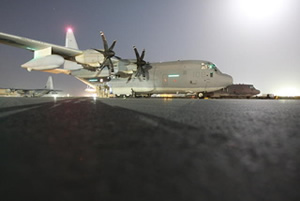
Hose falls from Marine plane onto home No one injured in incident at San Diego air show At the Miramar Air Show held last weekend in the San Diego area an air refueling hose from a KC-130J fell to a rooftop with no reported injuries. WIVB posted this about the incident. "SAN DIEGO (AP) - A 75-foot refueling hose fell from a large cargo plane that was part of an air show Saturday and landed on a house in a San Diego County neighborhood, according to military officials. No one was injured. Investigators were trying to determine how the heavy-duty retractable rubber hose became detached from a C-130J Hercules, Maj. Jay Delarosa of Marine Corps Air Station Miramar said. The house in Carmel Mountain just north of the Marine base sustained roof damage. Retired navy nurse Cashmere Monroe was in the garage when the hose hit her home, and her 14-year-old daughter was in the house. "When I heard the noise, I thought the garage door had hit something," Monroe told the San Diego Union-Tribune. Monroe went inside and a neighbor knocked on her door and told her to look at the roof. She told the newspaper she immediately smelled fuel fumes when she opened the door. Fire officials evacuated both Monroe's house and a neighbor's house. There was likely a small amount of jet fuel in the hose, according to Delarosa. The San Diego Fire-Rescue Department said no fires were reported. Hazardous material crews and Marine Corps recovery teams were at the suburban home about 20 miles north of downtown San Diego early Saturday afternoon. Fire officials estimated the damage at $10,000. Delarosa didn't know if the four-engine C-130J was in the process of refueling another aircraft when the hose fell. The mishap occurred as the annual Miramar Air Show attracted tens of thousands of people to the Miramar base. The incident did not affect the air show, Delarosa said. The C-130J is a four-engine turboprop aircraft manufactured by Lockheed Martin. The transport planes are a military workhorse used around the world for more than 50 years, although the Marines fly newer versions of them." The full article can be viewed here: WIVB
-
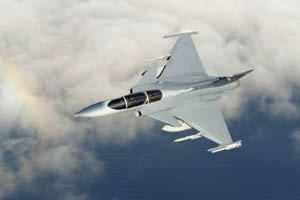
Brazil says Project F-X2 Will Resume in November Defence Talk — By Brazilian Ministry of Defence on October 8, 2010 BRASILIA: Defense Minister Nelson Jobim predicted that the process of choosing a vendor for the new fighter of the Brazilian Air Force (F-X2 program) will be resumed in November, after the conclusion of the presidential elections. According to Jobim, the President expressed his interest in discussing the case with his successor. This information was given by the minister at a press conference after the opening of a symposium on the Modernization of the Armed Forces, sponsored by the Federation of Industries of São Paulo (FIESP). Jobim reiterated that no decision had yet been taken, and said that the recommendation that the Defense Ministry will submit to the President will give priority to the transfer of technology by the vendor, and that this transfer must be guaranteed by the government of the vendor’s country of origin. "What we want is national capacity, we do not (just) want a plane," he argued. The choice of supplier will open a new phase of contract negotiations to define commercial and financial aspects, which can take several months. In the case of submarines, negotiations took nearly a year after the supplier was selected. The first units of the new fighter aircraft will arrive in Brazil in 2016, according to the Air Force Commander, Lieutenant General Juniti Saito. Jobim said that plans to equip the armed forces, tailored to meet future needs, are still under development and will have a 20-year horizon. Project F-X2 will be part of this plan, together with Pro-sub (submarine construction), the Guarani armored vehicle, which will replace the Urutrus; the 50 transport helicopters being built in Helibras, and the KC-390 military cargo aircraft being developed by Embraer. Also included are the Integrated Border Monitoring (SISFRON) and the Blue Amazon Management System (SisGAAz), both based on satellites. The minister explained that there are no defined budgets for the plan. "The number is the result of requirements," he said, pointing out that there are several ways that may supplement budget revenues: premium collection from banks that pay military salaries, and revenue from a property fund controlling non-operational real estate assets of the armed forces, among others. Jobim mentioned the KC-390 project to businessmen in the audience as a paradigm to be followed: it occupies a niche in the international market because it could replace the Hercules around the world that will retire in coming years, and it has foreign partners for its production. Agreements for production have already been concluded with Chile, Colombia, Portugal and the Czech Republic. Defence Talk
-
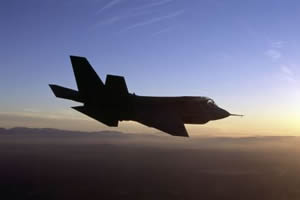
Israel to buy 20 F-35 fighter jets in deal with US Defence Talk — By Agence France-Presse on October 8, 2010 WASHINGTON: Israel has signed a contract with the United States to buy 20 F-35 fighter jets, officials said after Washington offered "incentives" for the Jewish state to help sputtering peace talks. The sale of the US-made Joint Strike Fighter will arm Israel with a more sophisticated combat aircraft than any nation in the Middle East, amid rising tensions with Iran and after a major US arms sale to Saudi Arabia. "The most advanced fighter jet in the world today, the F-35 will enhance Israel?s ability to defend itself, by itself, against any threat or combination of threats, from anywhere within the Middle East," Michael Oren, Israel?s ambassador to the United States, said in a statement. Oren called the contract "an event of great strategic and historic significance" and that it would serve the common interests of the United States and Israel. It was unclear whether the sale, reportedly valued at 2.75 billion dollars, was intended as an inducement to Israel to extend a freeze on settlements to keep the Palestinians in peace talks, or whether Israel agreed to such a trade off. But Oren earlier told the Washington Post that the US administration had come up with "a number of suggestions, incentives if you would, to the Israelis that would enable the government to maybe pass a limited extension of two or three months." The White House last week denied reports that Obama had sent a letter to Prime Minister Benjamin Netanyahu offering Israel diplomatic, military and security incentives in exchange for a 60-day extension of the moratorium. The F-35 agreement was signed on Thursday in New York, with US Air Force officials and Israeli defense officials attending. "This agreement is for Israel's first operational squadron and the aircraft are scheduled to be built between 2015 and 2017," a US Air Force official said on condition of anonymity. "This agreement is part of the United States commitment to ensure that Israel has the most advanced weapons for its national defense." Each F-35 jet costs about 100 million dollars, and Oren said the deal illustrated how his country's purchase of US arms generated "thousands of more jobs, both here and Israel." Israel spends an estimated 2.25 billion dollars on US defense contracts, he said. The announcement came less than a month after Washington unveiled plans to sell Saudi Arabia 60 billion dollars' worth of weapons and hardware, including 84 F-15 fighters. The F-15s are less advanced than the new F-35 aircraft, which are still under development. US officials had described the vast arms sale to the Saudis as a counter to the threat posed by Iran, citing Tehran's missile arsenal and its disputed nuclear program. Israeli and US officials have refused to rule out possible military action to stop Iran from securing nuclear weapons. Tehran has denied it is pursuing a clandestine drive to build atomic weapons. Manufactured by aerospace giant Lockheed Martin and its partners, the F-35 is billed as a "fifth-generation" fighter for the United States and its allies, with stealth technology that would allow it to dominate other planes in air-to-air combat while also backing up ground forces. Defence Talk
-
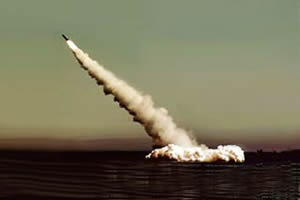
Russia successfully test fires long-range missile Defence Talk — By Agence France-Presse on October 8, 2010 Moscow: Russia on Thursday successfully tested its new nuclear-capable Bulava intercontinental missile, the defence ministry said, its first successful firing for months after a series of embarrassing failures. The missile was fired from the Dmitry Donskoi submarine in the White Sea in North European Russia and hit its target in the Kura firing area on the Kamchatka peninsula on the Pacific Ocean some 6,000 kilometres (3,730 miles) away, it said. "The parameters of the trajectory worked out as planned and the warheads successfully landed at the Kura firing area," said a defence ministry statement quoted by Russian news agencies. The last firing of the Bulava in December ended in one of the military's worst embarrassments in recent years when the missile disintegrated early in its flight, producing a spectacular plume of light visible over Norway. Russian news agencies said the firing was the 13th test of the Bulava. Of the last 12 test firings, only five have been deemed to be fully or partially successful. The Bulava, which can be equipped with up to 10 individually targeted nuclear warheads, has a maximum range of 8,000 kilometres (5,000 miles). "This weapon will guarantee the security of Russia in the next 30-40 years," Russian defence expert Igor Korchenko, who advises the defence ministry, told the RIA Novosti news agency. Its incorporation into the armed forces is part of a wide-ranging military reform aimed at updating the armed forces' Soviet-era structures and equipment to bring them in line with the demands of modern warfare. December's failed launch of the Bulava caused spectacular images in the sky above the Norwegian city of Tromso, prompting initial speculations they were caused by a meteor, the northern lights or even a UFO. According to Russian news reports, the defence ministry has ploughed a large proportion of its procurement budget into ensuring the missile becomes the key element of its rocket forces. A high-ranking source in the Russian chief of staff told the Interfax news agency that the missile could now be taken into the armed forces as early as the middle of 2011. "Two more tests are planned by the end of the year and if they are successful then the question can be posed about a completion of the testing," said the source, who was not named. The missile is designed for use with Russia's new Borei class of nuclear submarines like the Yury Dolgoruky and Alexander Nevsky. Analysts have said the vessels risk being worthless unless the Bulava works. The successful launch of the Bulava is a major boost for the armed forces and came on the same day India announced it intended to buy up to 300 advanced stealth fighter jets from Russia. Defence Minister Anatoly Serdyukov had earlier this week given a withering assessment of the Russian defence industry, saying the country was looking to buy abroad rather than buying Russian models that failed to meet the required standards. Russia last month announced plans to triple its defence spending to 19 trillion rubles (613 billion dollars, 454 billion euros) over the next decade as part of its military modernisation drive. Defence Talk
-
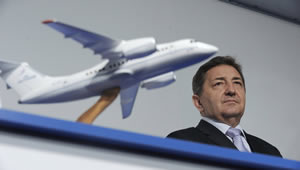
Ukraine's Antonov aircraft producer to compete for multi-billion U.S. tanker tender RIA Novosti. Grigoriy Sisoev -- 04/10/2010 Ukraine's state-run Antonov aircraft producer will compete with U.S. aerospace giant Boeing and Europe's EADS in a multi-billion tender to supply almost 180 airborne refueling tankers to the United States Air Force (USAF), Antonov's President and General Designer Dmitry Kiva said on Monday. "We have not managed to officially register our participation, but the terms were prolonged following our request, and we will take part in the tender," Kiva said in Kiev. The tender, with an estimated value between $25 billion and $50 billion, was launched in January 2007. The U.S. Air Force intends to replace its obsolete Boeing KC-135 refueling tankers, which have been in service since the 1950s. EADS and U.S. aerospace and defense firm Northrop Grumman were initially competing in the tender, which was then cancelled and restarted following a protest by rival Boeing in 2008. In July this year, Antonov and aerospace and defense contractor U.S. Aerospace Inc. filed a joint application to participate in the tender. The companies intend to supply up to three aircraft types to the USAF, such as the four-engined Antonov An-124, a twin-engined variant of the aircraft, the Antonov An-122, and the An-112, a twin-engine modification of the Antonov An-70 propfan. KIEV, October 4 RIA Novosti
-
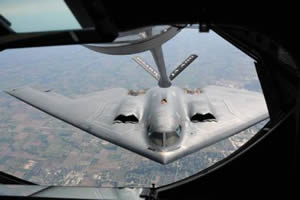
Global Strike command reaches full operational capability Defence Talk -- By Air Force News Agency on October 4, 2010 BARKSDALE AIR FORCE BASE, La.: Officials declared Air Force Global Strike Command to be at full operational capability Sept. 30, on schedule, and less than 14 months after its initial activation as a command. To reach that milestone, the command accomplished more than 700 action items identified by the secretary and chief of staff of the Air Force in 2009, when they chartered Global Strike Command to strengthen the nuclear enterprise by aligning all Air Force long-range nuclear-capable forces under a single command. Lt. Gen. Frank G. Klotz, the Global Strike Command commander, reported full operational capability status in a memorandum to the secretary and the chief of staff of the Air Force today. Full operational capability status is the final step in any military unit's stand up. Air Force Global Strike Command is the first completely new major command the Air Force has activated in more than 27 years. "Our successful stand up was possible because of the commitment, innovative spirit, and sheer hard work of Global Strike Command Airmen," General Klotz said. "This talented team of professionals put in place all the functions of a major command while simultaneously executing those functions," he said. "This unique challenge was a lot like building an aircraft while actually flying it." Prior to activation as a major command, what was then Air Force Global Strike Command, Provisional was launched in January 2009, at Bolling Air Force Base, Washington D.C., under the leadership of then-Brig. Gen. James M. Kowalski, now a two-star general and the command's vice commander. General Kowalski has been nominated by the president, and confirmed by the Senate, for a third star and to become the next AFGSC commander when General Klotz retires next year. The command was formally activated at Barksdale AFB on Aug. 7 2009, on the premise that no mission is more important than operating, maintaining, securing and supporting the nuclear enterprise, officials said. Since then, according to General Klotz's official memo, the command has established and manned a fully-functional headquarters. It also assumed responsibility for all units of both 20th Air Force, headquartered at F.E. Warren AFB, Wyo., and 8th Air Force, headquartered at Barksdale AFB. The command is fully engaged in long-range planning for the nuclear deterrence and global strike mission, now having in place a strategic master plan that aligns AFGSC with the larger Air Force strategic plan. Global Strike Command assumes full responsibility for planning, programming and financial management activities Oct. 1, and will be lead for both sustainment and modernization of the Minuteman III intercontinental ballistic missiles operated out of F.E. Warren AFB; Minot AFB, N.D.; and Malmstrom AFB, Mont.; the B-52 Stratofortress nuclear-capable bombers here and at Minot AFB; and the B-2 Spirit nuclear-capable bombers at Whiteman AFB, Mo.; as well as UH-1N Huey helicopters. The command has also established an inspector general function and has already conducted at least one major inspection at each of the command's six operational wings, the general said. Additionally, the command formed a crisis action team, as well as a response task force to deal with emergency situations and potential incidents. Other command missions include targeting analysis at the 625th Strategic Operations Squadron at Offutt AFB, Neb., and the ICBM test launch operations of the 576th Flight Test Squadron at Vandenberg AFB, Calif. (Courtesy of Air Force Global Strike Command Public Affairs) Defence Talk
-
Stuxnet in China The Diplomat -- October 4, 2010 A computer worm that has been dubbed by some analysts the world’s first cyber super weapon has reportedly made its way to China. Stuxnet, which was first discovered in June this year and is reportedly the first worm known to have been used to target critical infrastructure, is said to have already infected millions of personal computers in China. The worm gained worldwide notoriety last month when international media began reporting that it had made its way into Iran’s industrial complexes, including nuclear facilities, prompting speculation that it was being used as a weapon by Israel or the United States to cripple the country’s nuclear programme. Stuxnet is said to be different from previous malware in two ways. First and untypically, it’s delivered through a USB port, meaning systems don’t have to be connected to the Internet to become infected. But perhaps more interestingly—and uniquely—it seizes control of a targeted facility’s supervisory control and data acquisition system (SCDA) and is therefore able to disable it. Now, official Chinese media is reporting that the worm has already infected 6 million PCs and about 1000 corporate computers. The official Xinhua News Agency on Friday quoted Wang Zhantao, an engineer at the Beijing-based Rising International Software Co. Ltd., as saying that Stuxnet ‘can break into computers and steal private information, especially from industrial firms, sending it back to a server in the United States.’ He’s also quoted as saying that the virus exploited a bug in Siemens auto-control systems used in industrial manufacturing to skip the security check. ‘Hackers may take control of a company's machinery run under computers infected by Stuxnet, and give dangerous orders causing serious damage,’ he’s reported as saying. So, did the attack really originate in the United States, as has been stated in some reports? I asked Marcus Sachs, executive director for National Security and Cyber Policy at Verizon in Washington, D.C. and a former member of the White House Office of Cyberspace Security, how easy attribution of such attacks is. ‘Attribution in cyberspace is always very hard. There are too many ways to be anonymous and too many ways to spoof another person or system,’ he told me. ‘The basic protocols of the Internet don’t allow for positive attribution, which is great for free speech, but makes things hard for law enforcement.’ Sachs, who is also director of the SANS Internet Storm Center, said much of the talk about Stuxnet being a cyber super weapon is hyperbole, but admitted that the malware is complicated and will pose China and others problems. ‘It will be interesting to see how they respond, and how transparent they are in reporting on it,’ he said. ‘What's different for them is being able to publicly discuss the impact of these tools on their systems and what they are doing to mitigate it. Here in the USA anybody can blog, speak, or publish whatever they please. That doesn't mean that what comes from us is truthful. But it's definitely hard to figure out what to believe in terms of statements coming from China.’ The issues of who is responsible for Stuxnet and why China may have been targeted also raise the interesting question of whether China itself is capable of such an attack. There’s periodic speculation in the media about Chinese cyber capabilities and how involved the government is in any attacks that take place on foreign entities, be they governments or companies. This year alone has seen numerous reports on China’s supposed cyber war intentions, including in March, when the Times of London reported NATO and the European Union had issued urgent warnings that intelligence materials needed to be protected from a surge in cyber attacks originating in China. The paper quoted one US analyst of saying that ‘neither the US nor any of its Western allies had formed an effective response to the Chinese threat…The West’s own cyber offensives have so far been directed largely at terrorists rather than nation states, giving China virtually free rein to penetrate Western systems with its own world-class hackers and increasingly popular Chinese-made components.’ I asked Sachs how much evidence there was of a centrally-co-ordinated effort from China. ‘There’s most likely a "formal" government or military coordinated capability, as there is in most developed countries—think about our new Cyber Command,’ he said. ‘But there's also the millions of Chinese citizens online, and a very large population of young, technically educated, and inquisitive users. ‘Most of the threats we see coming from China are not from the government or military, but from hacking groups and clubs, and from organized crime. There's a lot of misconceptions about China and often here in the USA we are quick to make them into the boogie man of cyberspace.’ And, he made sure to point out, it all goes back to the problem of attribution. ‘It's very easy to make it look like an attack is coming from China when the actual human on the keyboard might be sitting in Moscow or Memphis.’ The Diplomat

-
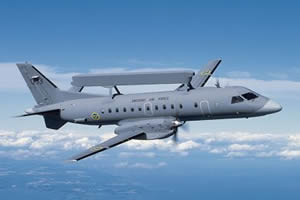
Saab Receives Order for an Airborne Surveillance System Defence Talk -- By Saab on October 5, 2010 Defence and security company Saab has received an order for an airborne surveillance system. The contract amounts to more than 4.5 billion SEK. The order concerns delivery of the Saab 2000 AEW&C (Airborne Early Warning & Control) system, which comprises of a Saab 2000 aircraft equipped with the advanced Erieye radar system. The contract also includes ground equipment as well as logistics and support services. The surveillance system in combination with the ground equipment provide a detailed picture of a situation which can be used in connection with, for example, border surveillance, rescue operations as well as in combating terrorism and organised crime. "This contract can be seen as a further confirmation of our strong position in the world regarding not only the area of airborne surveillance but in systems integration and data fusion as well, says Håkan Buskhe," CEO, Saab. "This surveillance system will provide the customer with improved solutions for defence and civil security." Saab's Erieye radar system has been well received by the market. The initial system was provided in a Saab 340 aircraft to the Swedish Air Force. The Saab 340 system was also purchased by Thailand and the United Arab Emirates. The radar has been installed in the Embraer 145 as well, which was delivered to Brazil, Mexico and Greece. The latest platform is the Saab 2000 with which the system is being supplied also to Pakistan. Upon customer's request, no further information regarding the customer will be announced. The industry's nature is such that this type of information can not always be published. Defence Talk
-
Because of the abuse of free email accounts we've removed some of the most widely abused domains. Yahoo, Hotmail, and Gmail were the first to go with the next round to be sometime this month. In this process I'm also identifying accounts that have multiple accounts here, like yours, and combining them. It's probably not a perfect solution but it beats some of the alternatives I've been toying with. Erik
-
CombatACE Facebook Contest Winner Week 2 - Shaun Griffies The Randomizer selected #138 this week and on our Facebook list that is Shaun Griffies. Congratulations! Week 1 - Ivan Adamek Shaun post on your/our Facebook page what your CA username is, then send us a PM here so we know you posted. Once we have that information we'll get your free download subscription added to your account. See you again next week for our latest winner. If you haven't added us to your Facebook likes we can't draw your number.

-
Refurbished Dutch F-16s bound for Chilean air force UPI -- 28/09/2010 SANTIAGO, Chile -- Chile is starting to take delivery of Dutch F-16 fighter bombers, that old workhorse of the Cold War years, as part of a deal that will see the Chilean air force making more use of the refurbished jets. This week, 18 of the refurbished F-16s are to be delivered to Chile at the Leeuwarden Air Base in the Netherlands and more are due for transfer to the Latin American country at a later stage. Chilean officials said the final number of F-16s in the air force could total 44 by 2011. The total price tag on the refurbishment, appropriately called the Mid-Life Upgrade, wasn't discussed. Figures in excess of $270 million were mentioned but not confirmed. Other than technological advancement, including change of software and battle-readiness of the aircraft, the F-16s will undergo change of colors and symbols before they land in Chile. The Dutch air force decided to sell the F-16s as surplus to its need. Dutch instructors are training Chilean military personnel, including maintenance engineers on the upkeep of the fighter bombers once they enter the Chilean air force service. Chile pursued the purchase for several years before the initial deal became known in April 2009. Industry analysts said the upgrade of the F-16s bound for Chile was likely to be to standard configuration, which makes them capable of performing all kinds of missions. Whether the upgrade includes the whole range of operating software or some has been withheld isn't known. Analysts said it was unlikely that the full range of U.S. software would be made available for transfer to Chile. Industry sources said the Chilean F-16s could likely be equipped with Israeli Python 4 and Derby missiles. The F-16 entered service in 1979 as a General Dynamics innovation specifically for the U.S. Air Force. In 1993, General Dynamics sold its aircraft manufacturing business to the Lockheed Corp., which in turn became part of Lockheed Martin after a 1995 merger with Martin Marietta. The F-16 "Fighting Falcon" -- nicknamed "Viper" by pilots because of its nose -- was expected to be replaced by a successor in 1999. Due to several reasons, both economic and political, the F-16 wasn't replaced. Instead, in an effort to maintain the same level of operational capabilities and operational effectiveness of existing aircraft over the next 10 to 20 years amid ever increasing technology, the manufacturers put in place an extensive modernization program. It became known as the Mid-Life Update. The Netherlands air force initially bought a total of 213 F-16A/B, one of four European participating air forces and one of five countries to build the F-16 locally. Later the Dutch reduced their inventory to 108 aircraft but upgraded all of them to MLU standard. Some surplus Dutch F-16s were sold to Jordan. UPI