


streakeagle
-
Posts
2,721 -
Joined
-
Last visited
-
Days Won
8
Content Type
Profiles
Forums
Gallery
Downloads
Store
Everything posted by streakeagle
-
 It may only be coincidental, but after changing on ini option in the enb series ini, I am able to quit without crashing: AllowAntialias=1 I always use antialiasing, so when I was poking around the ini looking for something that might help out with the CTDs, I saw this one and toggled it from 0 to 1.
-
Anyone interested in an SFP1/WoX series dogfight server?
streakeagle replied to streakeagle's topic in General Discussion
It has been quite a few years and things have changed. SFP1/WoX 2008b patch runs on Windows 10 with a little help and I have successfully used multiplayer on my home LAN between a pair of Windows 10 PCs. If anyone is interested, I am willing to try hosting a dogfight server and if that works ok, then I will host some co-op missions if anyone wants to try that. This is a capability that SF2 lost. It has a lot of limitations compared to multiplayer in other combat flight sims. But if you enjoy flying SFP1/WoX era aircraft and would like to try flying with other people, it can work and when it does, it can be a whole lot of fun. -
I think VorpX patched away the compatibiity. It worked well for me quite some time, now I can't use VorpX with SF2 not matter what I do. I tried going back to an old video driver that used to work, but it seems VorpX is the problem. I have tried with my Rift S and my Reverb G2 with nothing but crashes to desktop when I try to fly. I can navigate the menus, I just can't get to the flying part any more.
-
So, I have demonstrated Wov 2008b multiplayer on my home LAN using two Windows 10 PCs. I was able to host on one PC and join with another. But, I still crash to desktop more often than not when exiting the game. The next step is to see if I can host/join over the internet.
-
I supported SFP1/WoX multiplayer as much as I could, including leaving a server host up 24/7 for quite some time over the years. At its most popular, there were a handful of regulars and a few more intermittent players. Most people that tried it were turned off by the multiplayer mission limitations: everyone for themselves dogfight or a very simple co-op / PvP mission that starts in the air with a very sterile environment to keep the CPU and internet traffic to a minimum while trying to keep players synced. A lot of people were also turned off by the difficulties caused by using Microsoft's simple DirectPlay interface, which didn't mix too well with routers and firewalls. The only way to make it easy for people to join and reliable enough to be fun was to use a free VPN host, like Hamachi (now long gone). I used to host on Hyperlobby, but advertise how to use Hamachi. The VPN not only made connecting easier and more reliable, but helped the anti-cheat file checker system work more correctly. Sometimes, even with a clean install, the file checker wouldn't let someone join and there was no way to disable it. You can have a maximum of 16 players, with the co-op having a maximum of 8 players per side. You can't script missions, you can't start on the ground, and you can't have aircraft carriers. Adding mods also causes problems, because anyone who wants to join has to have the same mods. The solution was to provide a complete mod package. But even with that, every time a new person comes and tries to join, they have to figure out where to download the mod and how to install it correctly. My solution after trying to deal with all of that was pretty simple: the host server should be a clean install of the most popular version of the game. Typically I hosted either Wings Over Vietnam or Wings Over Europe, as those were the most popular games. I would have preferred hosting a merged WOV/WOE install, but most people didn't have a merged install. Despite all of the limitations, I loved flying all those great airplanes in a player vs player environment. One night, 12 people were briefly flying on my server at the same time. That was a big deal for a server that was lucky to have 3 or 4 people on at the same time on an given night.
-
I just played around with this last night. I had two WoV installs: 1. 080306 patch level and YAP2 installed. 2. 2008b patch level. The first one was unstable. The second one worked so well, I suspect I can get multiplayer working since Windows 10 does support DirectPlay at this point and I have that option enabled in my optional Windows Features. I was able to start a multiplayer session and fly around. I just need to install it on a 2nd PC so I can verify that the session can be seen and used by another Windows 10 PC.
-
Don't bring SFP1/WoX series up to 2008 standard and the negative fuel flow is still allowed. The last time I checked, the base downloads started at the long time stable standard (083006 patch level I believe?). But to get that one feature you give up on a whole bunch of improvements that came with the release of Wings Over Israel (which brought the 2008 patch level). To get the final, patched to the max version of the SFP1/WoX, you have to use Wings Over Israel and buy the Wings Over Israel Expansion Pack. That one install, WoI w/XP1, is just one step below SF2, including support for early SF2 3d models (external and cockpits) while retaining the original basic SFP1 multiplayer support.
-
Electrical connections are not the only concern. You need seeker cooling on more advanced variants and the coolant is carried/plumbed through the pylon. This alone made Naval AIM-9 variants more difficult to adapt to other aircraft. But as the Israelis used Naval AIM-9s on their USAF F-4Es, clearly the modification isn't that difficult.
-
It worked better than I thought it would with my new Reverb G2, but the frame rates are really low and the visual quality settings are such that I watch ground objects like buildings and trees pop up into view like a stock SF2 installation. It does look pretty good. DCS World still runs far better for me and has aircraft I prefer and combat, so MSFS2020 will mostly sit idle on my PC like FSX, X-Plane, and P3d before it. Aerofly FS2 remains my best civil sim for sight seeing in VR with a great aircraft selection out of the box and outstanding performance with visual settings maxed out. I hope that when I build a new PC that MSFS2020 will run faster, but comments I have seen show that it doesn't improve much when you go to the most modern and powerful hardware you can get right now. It is easy to see why: the core of the code under the hood is really still FSX despite the 64-bit update and the new world graphics. I don't have P3dV5 yet, but up to P3dV4, I see the same thing: very low performance due to the long existing FSX core code. X-Plane seems to be about halfway between MSFS/P3d and Aerofly FS2 for performance vs quality. Hopefully, MSFS2020 continues to be updated/optimized to run much better at higher quality settings in VR. I also hope TacPack is added since it makes military aircraft so much better with functional systems and weapons. TacPack doesn't even support P3dV5 yet, so I am still running P3dV4.
-
The camera angles may make it seem a little larger than it is. But I think the lead actress is either really small, or that ball turret is a lot bigger than I remember. I think she was the cute little killer girl in the Kick-Ass movies.
-
Aside from the monster, more like Die Hard in a B-17 with a female lead.
-
It comes and goes. This is maybe the third time TK has offered it.
-
Not exactly the best resolution, but it is hard to find many photos of the real throttle, especially with an angle that shows the cursor control.
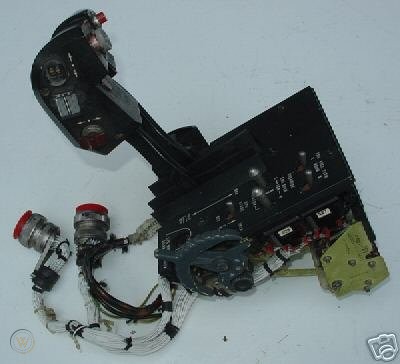
-
It has been 3 years since I posted this? It feels like yesterday. I wiped my hard drive to do a clean install of Windows 10 to try to solve some USB 3.0 driver issues that cropped up when I got my original Oculus Rift. I didn't bother to save my KAW install. It would be a lot of work to tweak it back to the way I had it, so I haven't had flown KAW in quite a while. I enjoy flying the F-86 and MiG-15 in DCS World, but I really miss the F2H-2.
-
The real one has pretty much the same thing, just a much higher quality: https://thumbs.worthpoint.com/zoom/images1/1/0807/24/throttle-quadrant-a-10-warthog-fighter-aircraft_1_c6ab54baf2526f106344073467754b4d.jpg
-
Looking for hi res, large versions of these old phantom pics
streakeagle replied to Chugster's topic in Digital Recon
No RWR on the top of the fin. No visible antennas sticking up on the spine. -
One additional consideration about SF2 F-4 Phantom flight models: when I learned SF2 had new, higher resolution data tables, I got out my old F-4B data and compared it to TK's latest revision. What I found is that the main flaw in TK's SFP1 version was the CD0 (zero lift drag) was too low, so the F-4 had a little extra power. On Third Wire's forums, I had posted an image of the SF2 CD0 table data graphed on top of my FM and the data from a NASA document. The SF2 data didn't have as high a resolution as I preferred, but it was very close to my data and the NASA curve. TK's flight models were never meant to be 100% accurate. They had some "give" in them to make the aircraft a little easier/more fun to fly. But they were intended to show the relative differences: i.e. an early MiG-21 could turn a little better than an early F-4 and and an early F-4 could climb and accelerate a little better than an early MiG-21. In SFP1, the relative differences were mostly there, but the F-4 flew more like an F-16 compared to real data. SF2 brought the flight models of the core flyable aircraft into a reasonable line. The F-4 had more drag. It also couldn't pull 12g at speeds the real F-4 could only manage 7 or 8. SF2 was a huge improvement across the board. It was sad to see SF2 development crash to a halt after watching the original SFP1 Walmart edition go through so much growth and improvement.
-
Regarding my old Aircraft Ini Data Editor: TK kept issuing patches refining the flight model, so I had to keep editing my application to account for the new features. At some point, I introduced a bug that broke the functionality of saving/opening multiple documents (a memory leak? or a problem with the serialization routines for opening/closing documents?). I had already lost the previous working version of the source code and didn't have the time or energy to figure out what was broken. So, I abandoned further development quite some time ago. SF2 data ini files have similar, but larger more detailed tables. If my program was set up correctly, it would automatically handle the larger tables. But TK may have added more features or changed how the data was being used by the game engine. As programmed, it would throw away any data it didn't recognize and only process the variables it was programmed to read. I would use debug mode to try to verify my lift and drag equations. But that was so many years ago. What AIDE did was read in all of the pertinent flight model information and solve for specific aerodynamic values to produce tables similar to those found in flight manuals. So, you could tweak a flight model parameters in the data ini files and see how it affected performance. It could not take performance tables and turn them into ini data tables. So, you had to have some insight into how all of the variables interacted to make useful changes. With a re-iterative trial and error process, you could build a flight model that would reasonably replicate flight manual performance tables. In particular, you could strive to replicate specific excess power, instantaneous turn performance, and sustained turn performance. This also meant realistic stall speeds and climb rates. If you could get NASA data on some of the drag or lift parameters, you could build a flight model superior to what most sims offered at that time. Some people look down on using lookup tables for flight model data, but the fact is if the tables have high enough resolution and have accurate numbers, there is no more realistic or faster way to model flight. I would love to make a new version of AIDE that leverage modern hardware for better performance and was 100% compatible with SF2 without any bugs/memory leaks. But it has been a long time since I programmed at that level and I don't have the time or energy it takes to get such a project done in any reasonable time. After all the work I did on it, the only thing I ever produced was an F-4B flight model tailored to the flight model engine as of SFP1 SP2a patch level, and that was partially broken after the release of Wings Over Vietnam. I have learned to accept that PC flight sims are never going to be as realistic as I would like them to be and I would rather spend my time flying in sims than reverse engineering and attempting to improve them. SFP1/WoX/SF2 had one principal competitor, LOMAC. LOMAC had some awesome terrain graphics quality compared to SFP1/SF2, particularly the water. But its flight models were horrible. Its modern evolution, DCS World, now has flight models that are extremely complex and detailed as well as being among the most realistic/accurate you can get on a PC today. I no longer chart data from the game and perform calculations to compare the results with flight manual tables. As long as the aircraft flies reasonably close to the descriptions in the flight manuals, I am pretty happy. The problem with DCS World is that it takes a lot of time and money to produce accurate flight and systems models, so there will never be as many flyable aircraft types/variants compared to SFP1/SF2.
-
Interview with Commander 'Sharkey Ward' - Sea Harrier
streakeagle replied to Crusader's topic in Pilot Stories and Adventures
As I much prefer air-to-air over flying air-to-ground, I love the Sea Harrier :) Until the AV-8B got upgraded with a multimode radar and AMRAAM, the Sea Harrier was by far the best variant for air-to-air. The late model AV-8B with a radar and missiles comparable to the F/A-18C Hornet was a first rate aircraft. The F-35B more or less gives you an AV-8B+ with even better sensors/avionics and a supersonic capability. I still like the Harrier's engine setup better than the F-35's lift fan. But the F-35 approach retains the V/STOL capability while providing the afterburning supersonic performance the Harrier lacked. However, there was an afterburning supersonic Harrier approach that might have worked had it been funded, it just wouldn't have had the F-35's stealth. -
Interview with Commander 'Sharkey Ward' - Sea Harrier
streakeagle replied to Crusader's topic in Pilot Stories and Adventures
The Sea Harrier did a lot better than it should have, but that was a result of two factors: Outstanding pilots and the AIM-9s the US supplied. Great pilots combined with a solid performing weapon can do a lot to make up for aircraft limitations. To be fair, the Argentinian aircraft sank some ships despite being behind overall in technology. The Mirages/Daggers were faster, but otherwise not that much superior to the Harrier in air-to-air. The Skyhawks were essentially in the same performance class as the Harrier with lower thrust to weight. So the lop sided air-to-air victories of the UK were firmly the result of their pilots leveraging their situational awareness from their various GCI/AWACS sources, great tactical skills, and a bit of luck. The AIM-9's simply performed reliably enough to not get in the way of good pilot decisions, unlike AIM-9B/E/J performance in Vietnam. The AIM-9L was really just the mature evolution of the AIM-9D/G/H that actually had a great record in combat compared to the B/E/J variants. The all-aspect capability didn't really have an effect. The kills were generally stern chase situations and the AIM-9L proved that in the absence of countermeasures like flares in a cold weather environment, it was an outstanding weapon. -
Having just played and replayed both the F-4J vs MiG-17 and MiG-19 1v1 missions repeatedly, I have rapidly regained hard wing Phantom proficiency. The MiG-17's only advantage is turn rate, so he can be beat fairly easily by making him try to climb to you. If you are aggressive and good at lag rolling, you can make him overshoot and kill him with your weapon of choice. The MiG-19 is by far the most difficult opponent. He will almost match your power in a climb and can turn better, too. If you try to fight in the horizontal, the MiG-19 will eventually gain on your tail. If you try to fight in the vertical, you will at best stay in a neutral position if you manage your energy well while trying to turn into him. So the MiG-19 requires flawless barrel/lag rolling skill while he is close on your tail to avoid getting shot and forcing him to overshoot. Once he overshoots, you can engage him at will like the MiG-17 with careful speed management. But until then, the MiG-19 will by spraying rounds all over you while you try to roll around his shots. In the original SFP1 series, multiplayer was available and the MiG-17 and MiG-19 were the planes to beat. A player proficient with either of those aircraft was very hard to beat. When Wings Over Vietnam came out, the flight models had changed a bit. The MiG-19 lost unbeatable "UFO" status only to be replaced by the F-8 Crusader, whose original flight model made it a Phantom killer just as the MiG-19 had been. There is reality and there is the game. When you fly in the game, you have to learn two aspects: 1) How the in-game flight models compare (which can be very different between complex/realistic flight model for the player and the simpler flight model used by the AI). 2) AI behavior under various circumstances. The AI in the Strike Fighters series is very different from the AI in DCS World. The AI in the Strike Fighters series varied greatly over the years from the original Walmart version of SFP1 all they way to the final patches releases for SF2 North Atlantic before SF2 development was abandoned. The AI has weaknesses. Learn them and exploit them or be punished for trying to use real world tactics in a game that cannot and does not totally reflect real world physics and pilot abilities.
-
Many vs Many tactics are different. An aircraft ultimately doesn't maneuver much harder than his target in gun combat. So, go for MiGs that are tailing friends. They can set up good gun shots. AIM-9 shots are dangerous because you may hit your friend, but if you know what your doing, that won't happen too often. AIM-7/Skyflash shots can be very difficult in short range turning environment. But you won't hit your friend very often lobbing radar homing missiles. If you learn their limitations, the AIM-7 family can work really well in Strike Fighters games.
-
I just played the F-4J vs MiG-17F 1vs1, which I haven't done for a long time. Unlike a hard fight against a MiG-21, you don't win by spiraling down to the deck in a turn fight. If you try that, the MiG-17 will match your speed, turn on to your tail, and gun you down. So, you have to climb way above him so that his speed stays below 150 knots, which keeps him from flying circles around you. Your speed needs to be high enough to keep turning with him while keeping 5,000 feet or more above him. As long has you have altitude separation, you can afford to drop down to 300-350 knots, but I would try to keep 400+ knots. If you maintain this vertical fight, you will end up at 25 to 30 thousand feet while he flops around at 15 to 20 thousand feet. If you are lucky, you can trade that altitude for a gun or missile pass on his tail, but if his speed comes up as you dive on him, he will out maneuver early AIM-9s. You may get off a snap shot with a gun pod. In 1 vs 1, it is a game of patience. At some point, he will turn tail and run. Then you can hit him with your choice of missile or dare to close for a gun shot. If you study the classic F-4J vs MiG-17 fight of Randy Cunningham in Vietnam, he could not get off a shot and took some gunfire until his opponent retreated. 1 vs 1 in close against a MiG-17 is otherwise close to impossible if the AI is engaging you in a turn fight. The best bet is to shoot the MiG-17 in the face with an AIM-7 or Skyflash before getting into gun range :) Otherwise you will be in a boring vertical fight trying to stall him out.
-
The stock game has missions: F-4J vs MiG-xx 1v1. Play those missions over and over to learn how to dogfight with the F-4. Of course, you can edit and save them to use your preferred Phantom FGR2. The MiG-21 and the unslatted Phantoms are almost a dead even match. If you maintain your speed above 450 knots close to sea level, you can equal or even out turn the MiG-21. The sweet spot for turning well seems to be somewhere between 450 and 500 knots. It takes a light touch on the stick to hit maximum turn performance and/or control your speed. If you dump your speed below 400 knots, you will be in trouble. But as you get comfortable with avoiding the stalling point, you can fight all the way down to insanely low speeds, which may be necessary against the MiG-17 and MiG-19 to get a shot off. 1 vs 1 against agile MiGs like the 17 and the 19 is absolutely the hardest fight for the Phantom. Horizontal turning will not beat the MiG-17 and the MiG-19 has the power to fight in the vertical, so it is the toughest fight of all. So: 1) Learn to fly at the edge of an accelerated stall. 2) Learn to control your speed while turning. 3) Learn to fight in the vertical to separate from and reverse on agile opponents who don't have as much power as the Phantom (MiG-17!). 4) Hope the MiG-19 is being flown by an inferior pilot because he can match or beat the Phantom in turn and climb performance, it takes real skill to beat a well flown MiG-19. 5) Try the F-4E and F-4F if you want an aircraft that looks like an F-4 but is much better at close-in stall fighting.
-
The FGR2 lacks the AoA indicator that is so important to flying the F-4 to its limits, but Strike Fighters provides an audio indication of stall warning, so you can live without it. Get your Indicated Air Speed up to 450 knots, if you are down at sea level, this will also be your True Air Speed, which is also indicated in the FGR2. Roll to a 90 degree bank. Engage full afterburner power. Carefully pull back on the stick while watching your speed indication. About the time you start hearing a wind stall/buffeting sound, you will notice the speed really start unwinding. Repeat the same procedure, but hold your angle of attack/pitch to the highest angle you can while maintaining 450 knots, then take a glance at your g-load indicator. Repeat this procedure at 350 knots, 400 knots, 500 knots, and 600 knots. At 500 knots or greater, you should be able to pull 5g or more without bleeding speed, the faster you go the easier it is to pull a lot of g. Below 500 knots, you should find even pulling 5 or 6 g will start dropping your speed and if you exceed the stall angle of attack, it is like popping a drag chute: no additional g, but an extreme loss of speed. I like to fly by the AoA indicator, but since for some reason the FGR2 lacks that indicator, learn to listen to the stall buffet warning. By watching the gauges as you approach that angle of attack, you should learn how much pitch you can pull before killing your speed. You may find you need to stay away from hearing that sound at all or that you don't mind just barely triggering that sound. Just a matter of learning the cost of stalling and learning to fly close to the limit or just past that limit as it suits your needs. Unslatted Phantoms don't like high AoA, but if you try the F-4E and F-4F, you won't ever want to fly a "hard wing" Phantom. They don't solve the problem of bleeding speed in a turn, but they let you pull a decent amount of AoA with resulting increased g and turn rate before dropping the speed so badly. But I love the challenge of flying hard wing F-4B/C/D/J/K/M Phantoms against much more agile MiGs. If you keep your speed up and only bleed it at the "right" time, you can win in hard wing Phantoms just like real pilots did in Vietnam.