

streakeagle
-
Posts
2,713 -
Joined
-
Last visited
-
Days Won
8
Content Type
Profiles
Forums
Gallery
Downloads
Store
Everything posted by streakeagle
-
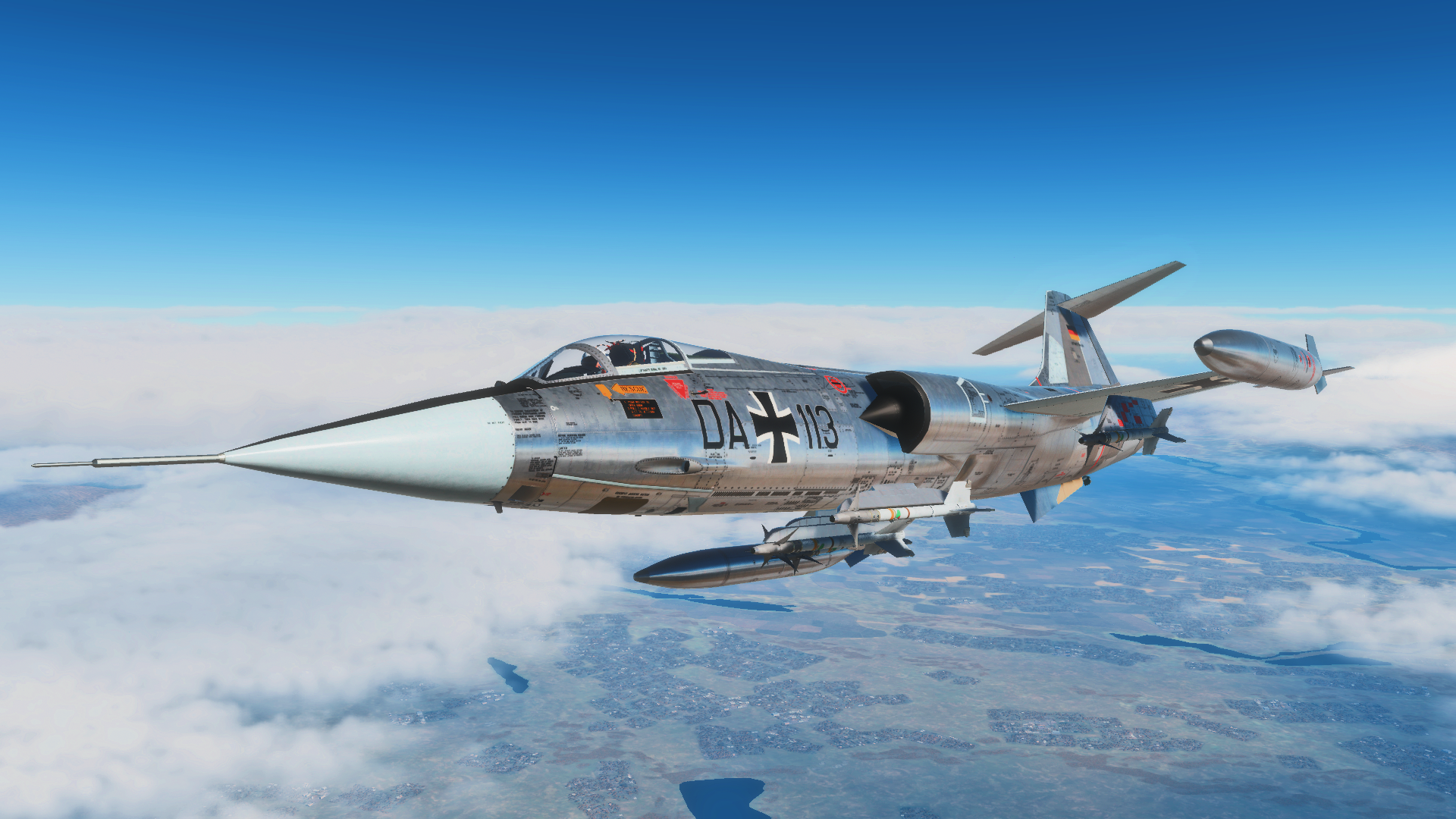
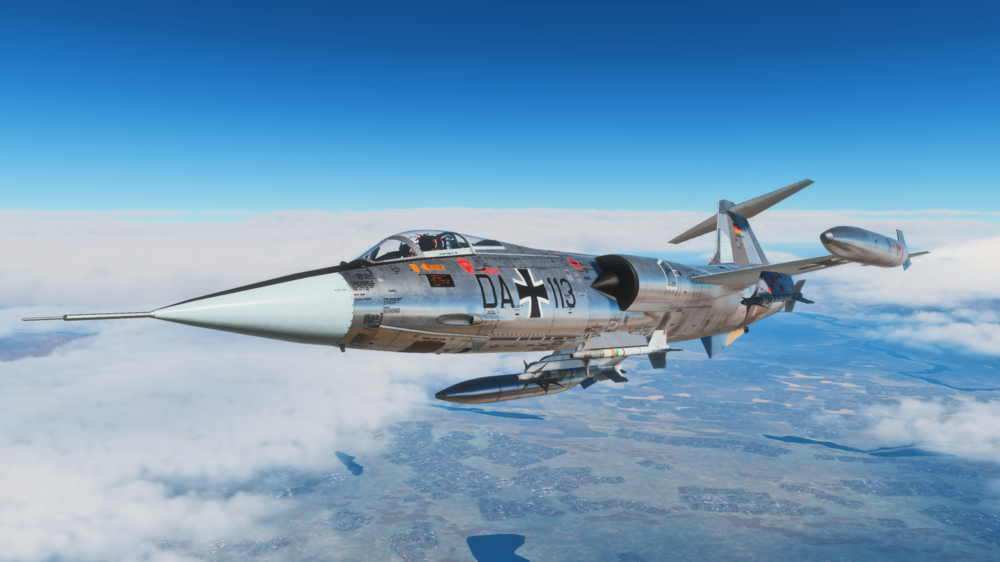
While the avionics are still based on FC3 aircraft, the new F-104 mod has a dedicated (presently non-clickable) 3d cockpit and a high fidelity EFM (external flight model). It is a work in progress, but it is already very impressive despite some known bugs/limitations. This is a further development of the VSN F-104G that previously used an SFM (simple flight model) and the F-15C cockpit (it still uses the F-15C avionics). To fly it, you need the F-15C or Flaming Cliffs 3 module. I think there are ground attack versions that use the Su-25T, which means you could fly it for 100% no cost. Get it here: Ordner: VSN F-104G FC3 EFM - filehorst.de Release Notes (changes to previous SFM Version and PreRelease-Version): 3d-Model: -Some minor changes (working leading edge flaps) and some changes regarding special sub-variants (CF-104 e.g.) -changed suspension and hitbox of front wheel 3d-Cockpit: - integration of a 3d-cockpit (non clickable at the moment), licensed from Tolis (HellasPilot) -widened front-window -functionality of all aerodynamic instruments in the cockpit (frontal instrument panel) except: pressure (hydraulic and oil), ground-speed-error-indicator, stand-alone bank-indicator, radar-altimeter, oxygen supply, -no functionality of right- and left side-console -passiv functionality of pylon-lights, gun-switch, light-switch, gear-lever, flap-lever, throttle, flap-indicator, stick and rudder-pedals -working red-flood lights -working drag-chute-handle -functionality of warning/indicator box (right hand side, bottom) -HUD functionality via FC3 (F15C/Su25T) -Radar/"T-Pod" functionality via FC3 (F15C/Su25T) -working mirrors -slightly elevated seat-position to match real pilot positioning -revised and major overhaul of cockpit textures by GlobalHawk/VB6 EFM: -EFM integrated with thanks to JNelson, TheRealHarold and A4-Team -Database NASA CR-2144 known EFM shortcomings: -acceleration SL to 10kft at about 30% to fast, above 10kft acceleration at about 60% to fast -TopSpeeds about 3-10% off depending on altitude -drag- and thrust-profile clean/TipTanks/full load-out not 100% accurate Liveries: New Liveries by Jocko417 and Soulfreak Theme: New main-menu, loading-screen, briefing-screen and sign By Yogi.
- 1 reply
-
- 4
-

-
Here is a detailed article. It involves Windows 11 not supporting a key performance feature on AMD cpus: recognition and use of its "preferred core" selection feature. Apparently, AMD is working with Microsoft to resolve the issue. Windows 11 To Slow Down Performance Of AMD | Nasdaq
-
YouTube hardware guys. The performance drop can be significant, especially for games. Improves intel products? Degrades AMD products? Coincidence? My very old Core i5 4690K is apparently too old to support Windows 11, even though it still scores very well on performance benchmarks. The key factor is the security functionality. Newer motherboard chipsets and cpus are needed to be "secure". I am not excited about Windows 11 at all. The switch to Windows 10 wasn't too painful since I waited for it to mature a bit. I still think Windows 7 was better aside from modern hardware support.
-
Based on what I have heard, Windows 11 increases the performance of the newest intel CPUs but reduces performance of AMD Ryzen cpus. As I just built a Ryzen PC, I don't think I will be trying Windows 11 anytime soon.
-

Combatace access issues.
streakeagle replied to whiteknight06604's topic in Site Support / Bug Reports / Suggestions
The problem spread to Edge in both PCs, but I finally cleared the cached files/cookies and now both PCs can use edge to browse combatace.com again. -
Combatace access issues.
streakeagle replied to whiteknight06604's topic in Site Support / Bug Reports / Suggestions
I have two nearly identical PCs. One of them started having this problem with Edge, but still works with Chrome. The other has no problem at all. I haven't tried deleting cookies yet. -
A perfect, realistic aircraft is not promised. An individual, unique aircraft no longer dependent on the SFM or FC3 cockpits is what is promised. I suspect it will be released in a state not unlike ED Early Access: useable but with known bugs still being worked on and planned improvements over time. This is a big step forward for the VSN crew. I hope they ultimately end up producing A-4E-C quality mods, but I won't get my expectations up. I can only hope that I am pleasantly surprised by the quality of this upcoming F-104 release.
-
As for my source: it is the VSN Flyable Mods thread at the official DCS forums:
-
New trailer with some details:
-
The rumor is that this is going to have its own dedicated cockpit and an external flight model. If the rumor is true and it eventually reaches the quality of the A-4E-C presently available, it will be a big deal. But with the exception of the T-45 and MB-339, no other mods have even come close to the quality and fidelity of the A-4E-C. So, I am not holding my breath hoping that this will be a top-notch mod.
-
When Thunder Rolled and Winds of Change - September 2021
streakeagle replied to MigBuster's topic in News
It will be to the advantage of WTR if TK can release his Win 10 compatibility version of SF2 fairly soon and it doesn't break any of the work that has been done while possibly improving performance. As the YAP owner/manager died, can it still be purchased and delivered, or did YAP die with John Shelton? I wouldn't build WTR around any YAP limitations, as it best it was only supported by WOV and was partially broken by the final WOV patch level, necessitating YAP 3. At one time, I was a play tester for this project. I didn't have the time and the progress was incredibly slow. But if it is ever finished and released, I have no problems supporting it. I have in the past and continue to wish the WTR team the best of luck, but having watched many flight sim projects come and go without ever being finished, I have low expectations, but love to be surprised by brilliant success. Prove my lack of optimism is wrong and provide a product that takes my money. -
I found this photo of a model of the original lift-engine variant. The intakes were moved to the side to fit in the radar, just as was done on the Su-9/11 and the Chinese MiG-21s. WofRussia04_Mig_23-01.jpg (464×349) (impdb.org) This is the prototype in flight: mig23pd-1.jpg (600×296) (bp.blogspot.com) Early MiG-23 development concepts were based on the Ye-8, which was the MiG-21 with the intake under the nose and a small canard. The Ye-8 variants progressed into the 23-01 variants, which were barely flying before they were canceled in favor of the swing wing redesign that became the MiG-23. So, they didn't start with a blank sheet of paper and build a design around the idea of the swing wing and F-4 style intakes... they started with a MiG-21 variant and kept making changes until they got an acceptable design. The time frame was about: 1963-64 for Ye-8 with lift engine concepts, 1966 for the flying 23-01 prototype, and then about 1969 for several flying MiG-23 prototypes. They spent so much time figuring out what wouldn't work that they were left with almost completely different airplane than the starting point. That is what you can see in the development of the F-105 and F-17 (F/A-18) as well. But that doesn't alter the fact that the design started from an existing aircraft and gradually evolved over time. The Super Hornet is one more case to consider: while it looks very similar to the legacy F/A-18A/C Hornets, it is essentially a new aircraft, yet the first thing the Wiki entry says about it is that it is ultimately a derivative of the F-5.
-
The MiG-23 was an evolution of ongoing V/STOL work done on the MiG-21. I have the really big MiG-23 book that details the evolution of the MIG-21 that led to the MiG-23 that entered service. I won't waste my time scanning in the photos, but the MiG-23 is a derivative of the MiG-21 just as much as the F/A-18 is a derivative of the F-5. MiG spent many man-hours testing/changing the design to get the final form. Another example is the Su-15: it looks different, but it was an evolution of the Su-9/11. Another example of evolution that included a size change was: F-84F -> RF-84F -> F-105.
-
Soviet development often worked in parallel. The Su-17 was a swing wing variation of the Su-7 while the MiG-23/MiG-27 was a swing wing version of the MiG-21. The Su-7 did not do well as a fighter and proved to be almost as bad as a bomber, so the Su-17/22 series evolved to make it into a good fighter-bomber. The MiG-21 was a far superior fighter to the Su-7 and even the Su-9/11 (which were aerodynamically upscaled equivalents to the MiG-21). It is quite accidental that the MiG-23/27 evolved into the same size/weight class as the Su-17. The attempt to turn the MiG-21 into a multi-role/radar-interceptor comparable to the F-4 led to the MiG-23, but to make the MiG-23 good at the fighter-bomber role, it was "dumbed" back down to the MiG-27. If there were any differences in their doctrinal roles in Soviet/Warsaw Pact service, it would have been an arbitrary bureaucratic decision. On paper and most likely in reality, the two aircraft are nearly identical in functionality. I am sure the ground and air crews could cite important differences from a maintenance and operational perspective despite the overall similarity in specifications. The MiG-27 shares commonality with the MiG-23, which would be beneficial from a supply/maintenance standpoint. But the MiG-23 had its fair share of problems and the attempts to make it effective at ground attack ultimately required so many changes that it became the MiG-27. Interestingly enough, despite slightly less power, the Su-17 is slightly faster at sea level. Rivalries and political interests of various factions such as the design bureaus, the Communist party, air force (VVS), and national air defense (PVO) determined the sometimes chaotic development and production paths of the USSR, not unlike the bizarre and wasteful military-industrial complex in the USA. So it is no surprise to me that the Su-17 and MiG-27 ended up functionally being the same aircraft. The F-16 and F/A-18 represents a very similar situation with tremendous overlap in capabilities other than the Hornet being twin-engined, a little heavier, and adapted to operate from aircraft carriers. The YF-17 and YF-16 were literally designed to the same spec with the F/A-18 being a navalized (larger and heavier) variant of the YF-17. If you study the development of the Su-7/9/11/15 series, there is a pattern of struggling for decades to overcome major design flaws to make an effective fighter/interceptor. By the time Su had hammered out a decent interceptor in the form of the Su-15TM (Flagon-F), the US had developed the "teen" fighters. The response to the new US fighters, the Su-27, finally gave Sukhoi a real design win over Mikoyan-Gurevich. Prior to that, the Su-17/22 was unique in being the only Su jet that was comparable if not better than the competing MiG design. Production numbers might give a clue as to which one was actually liked better: 2,867 Su-17 vs 1,075 MiG-27. But that doesn't include MiG-23B/BN variants.
-
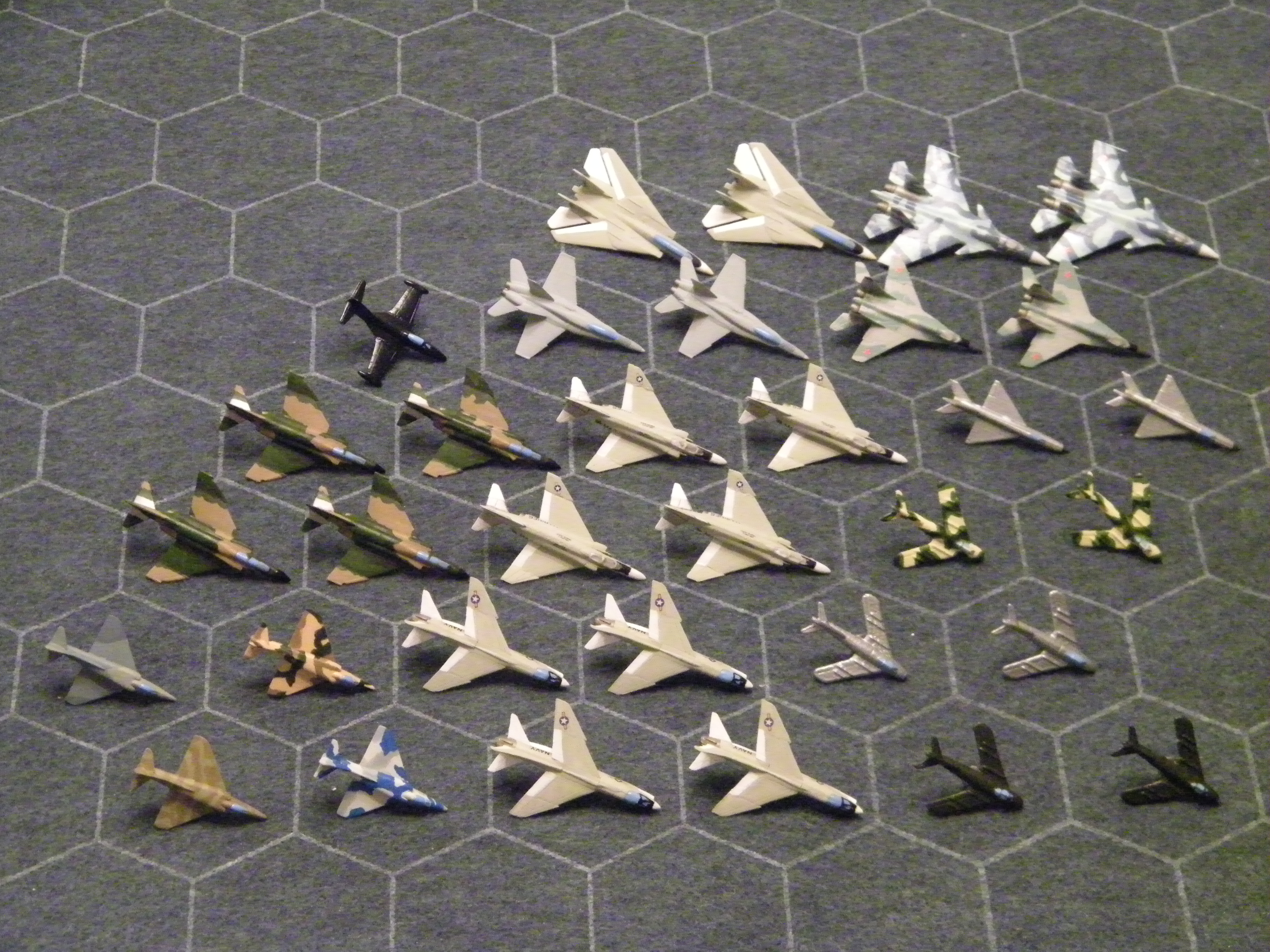
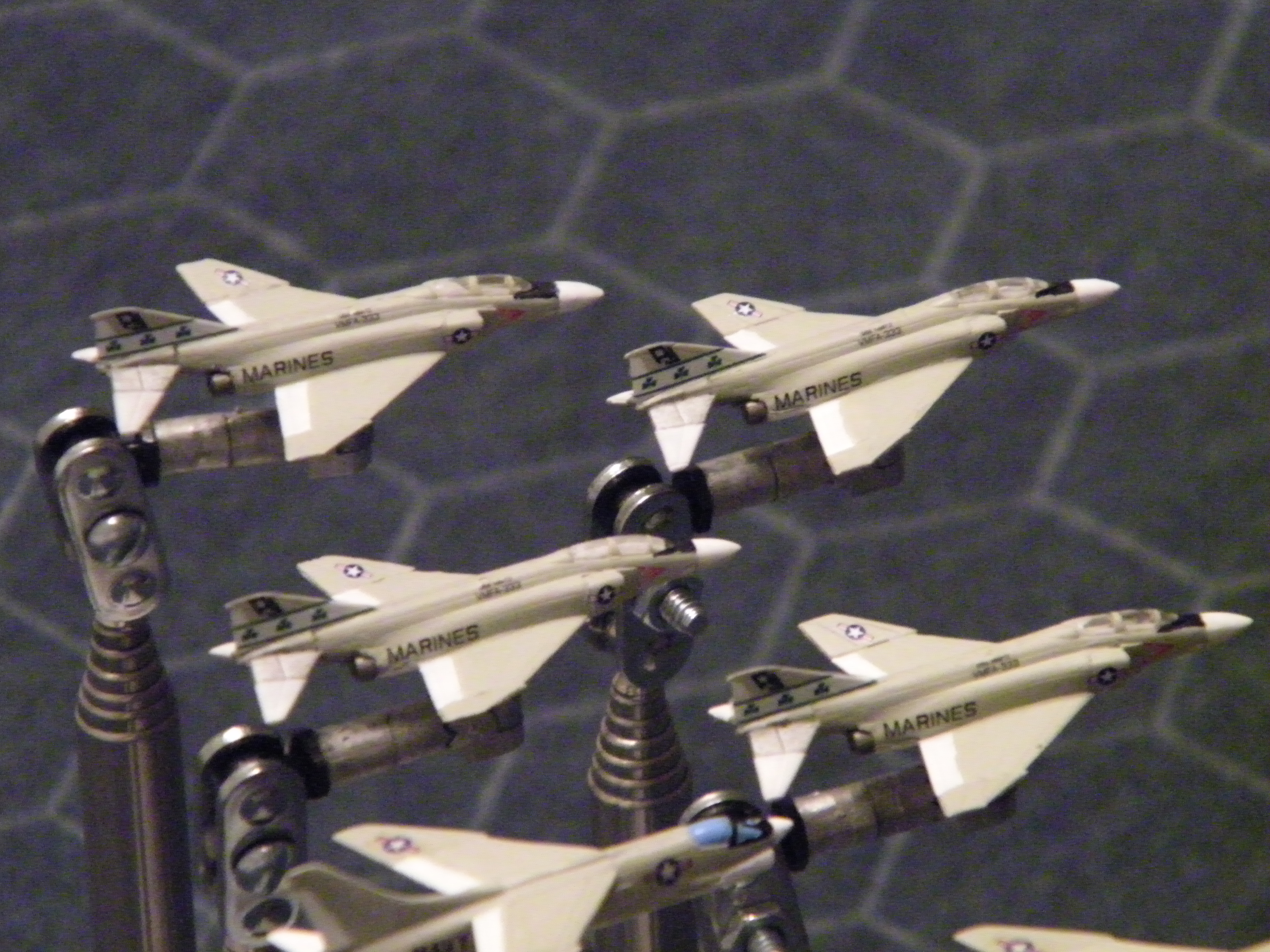
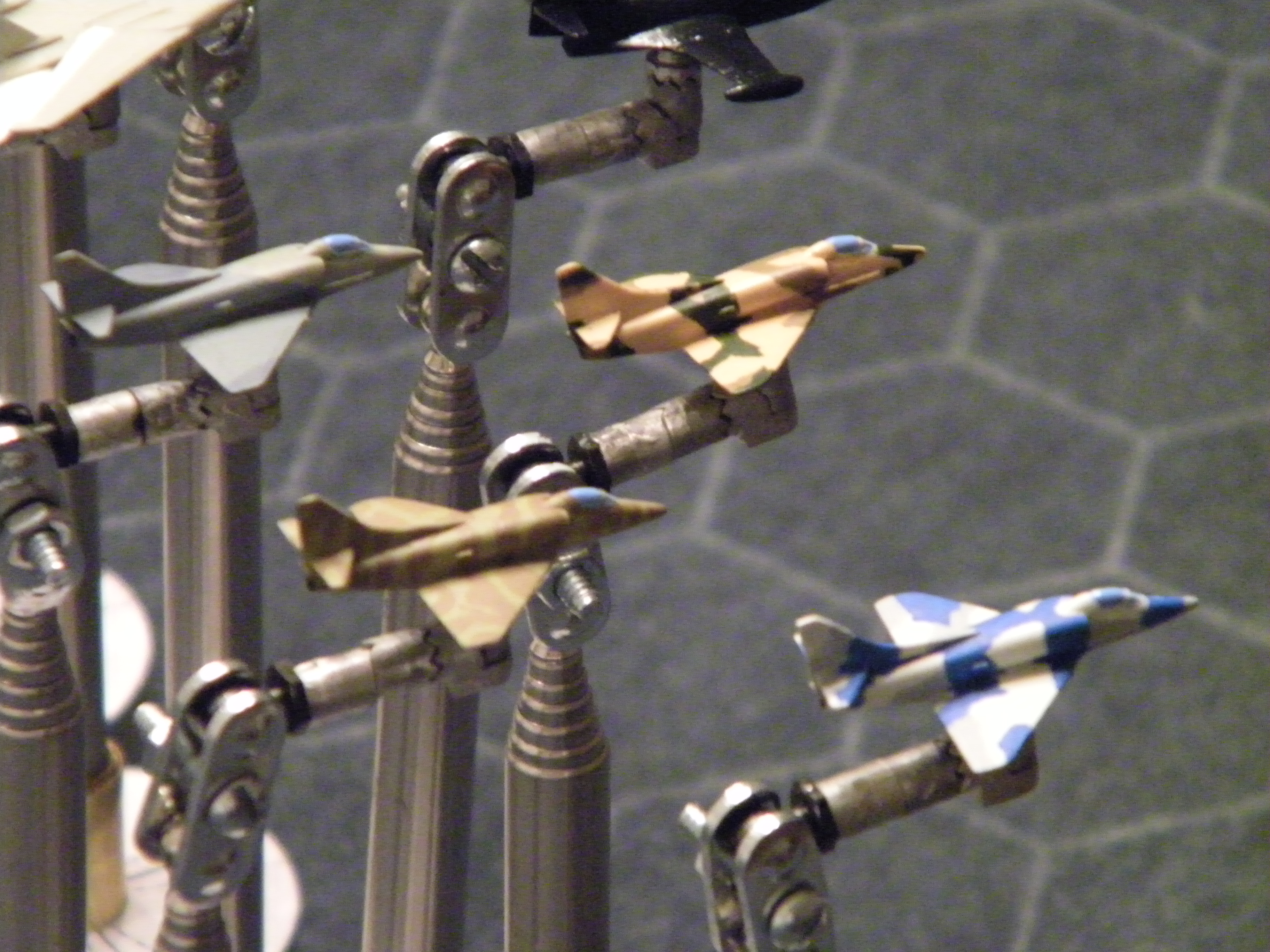
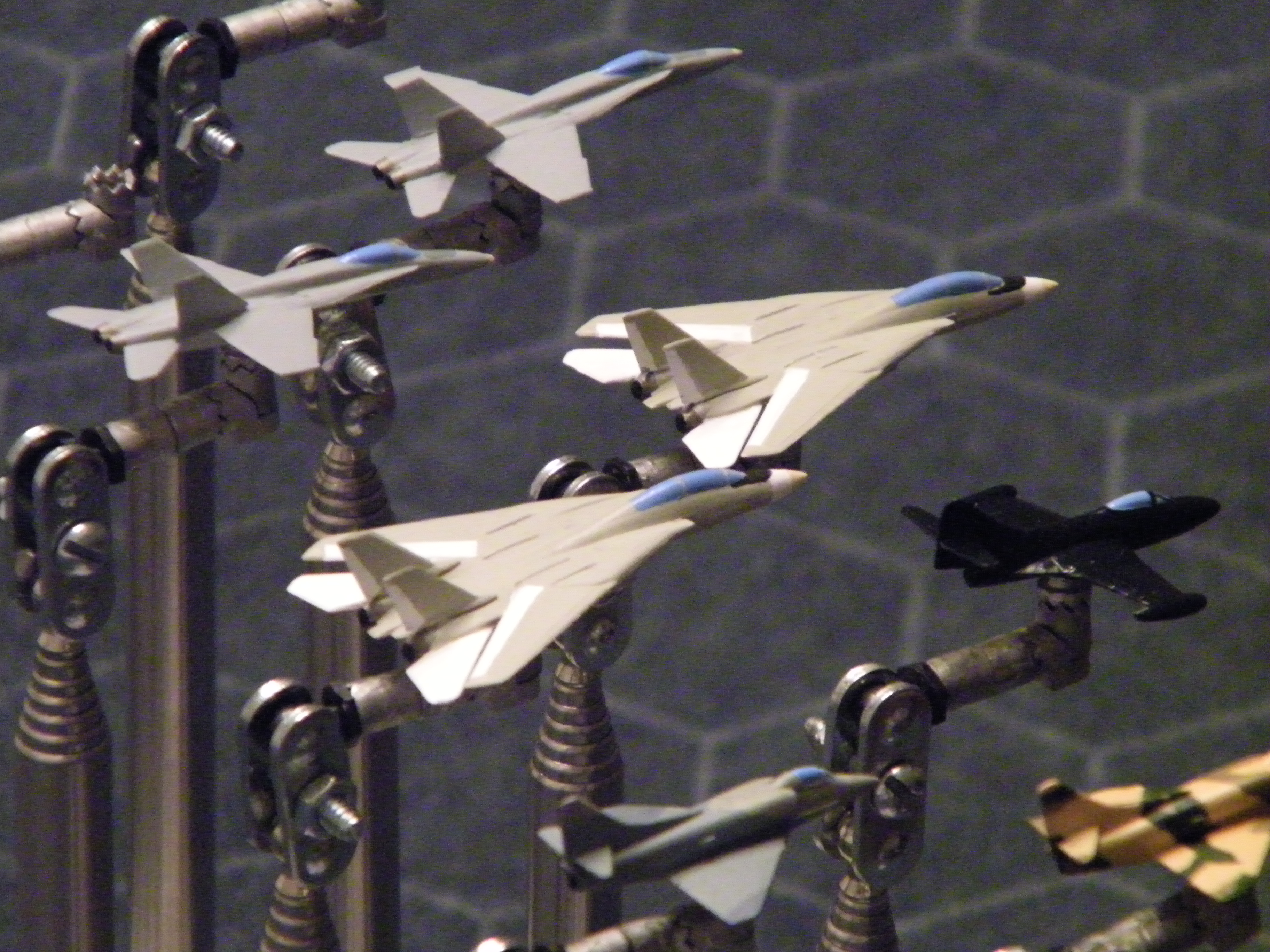
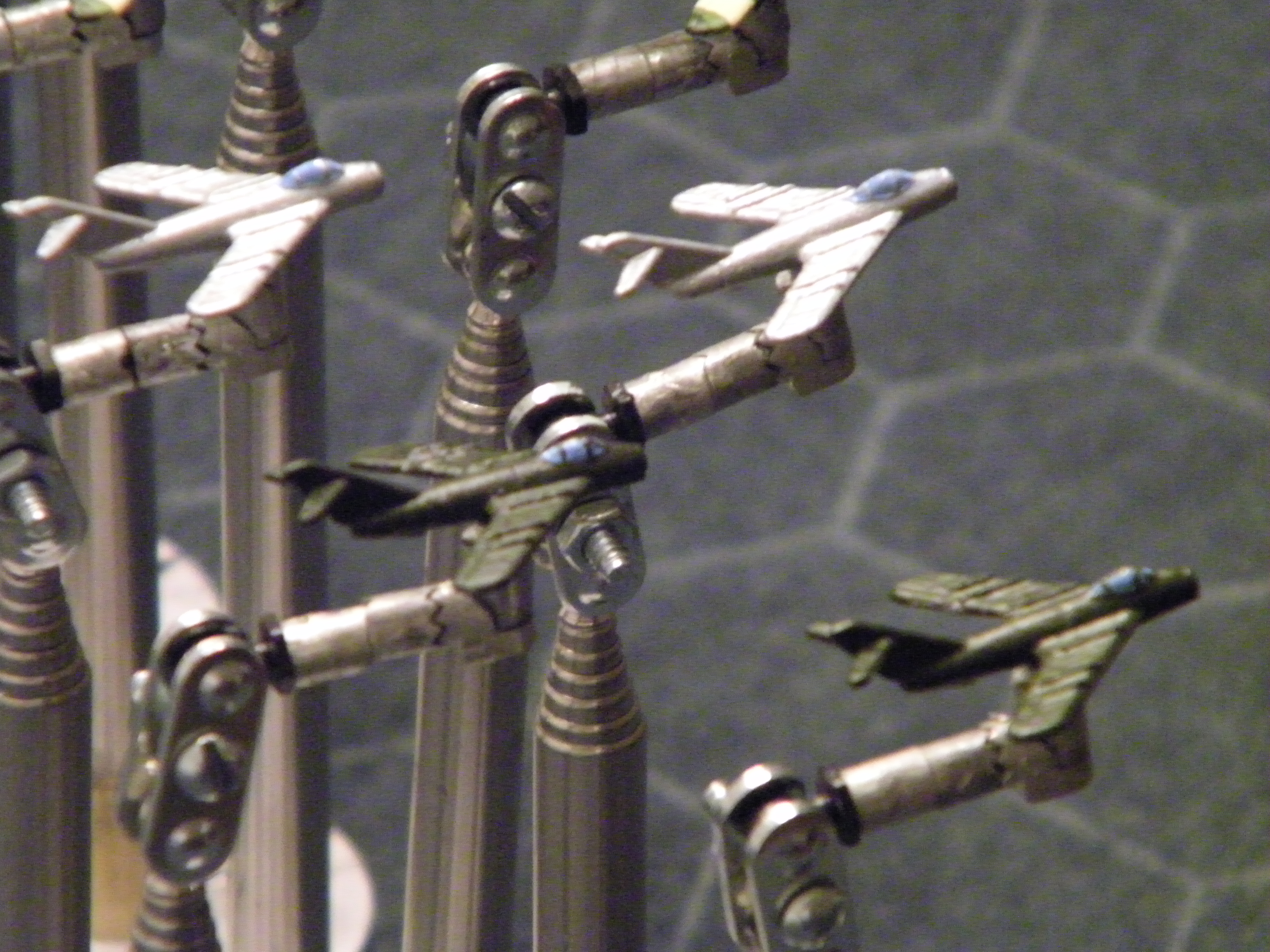
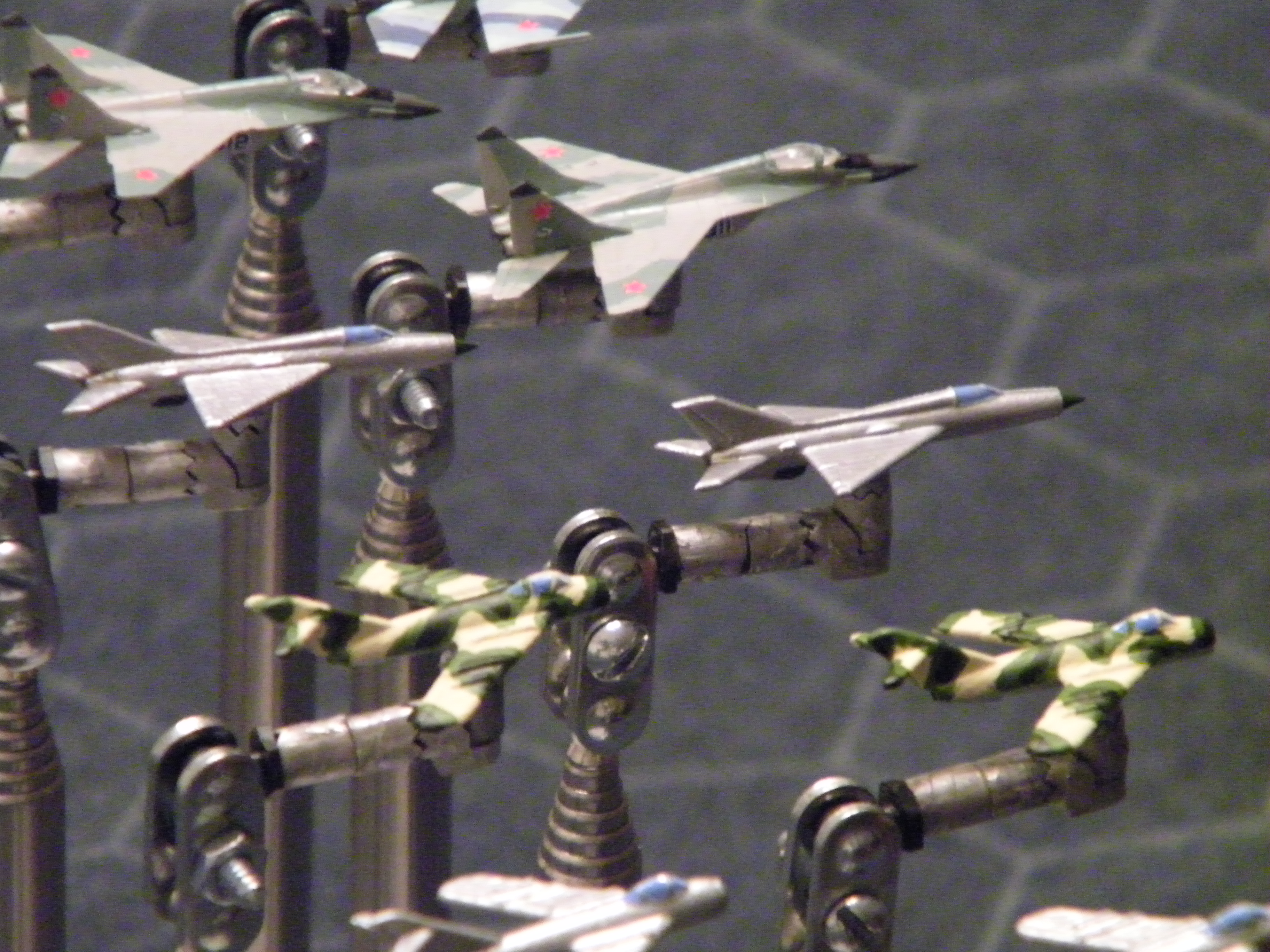
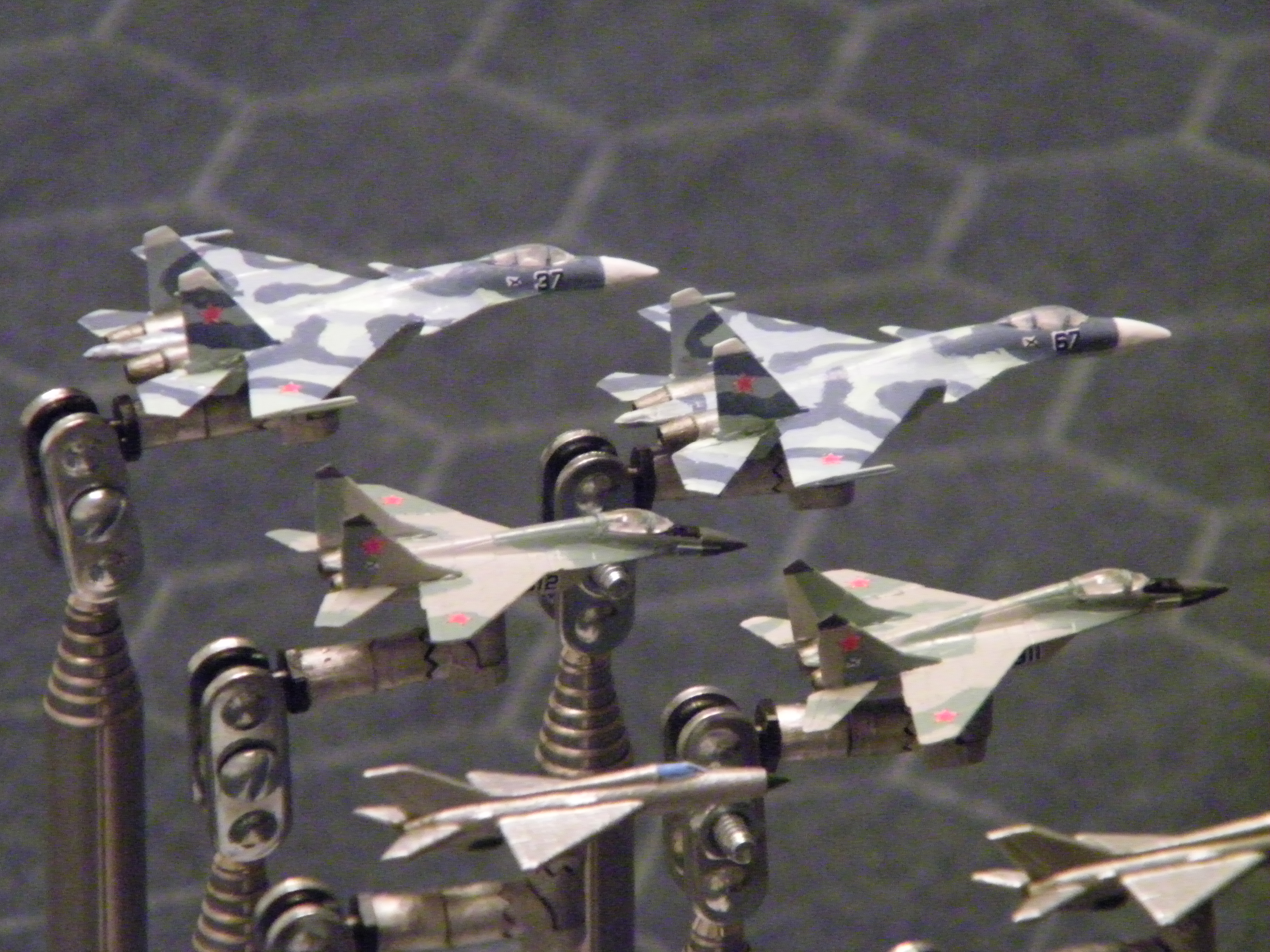
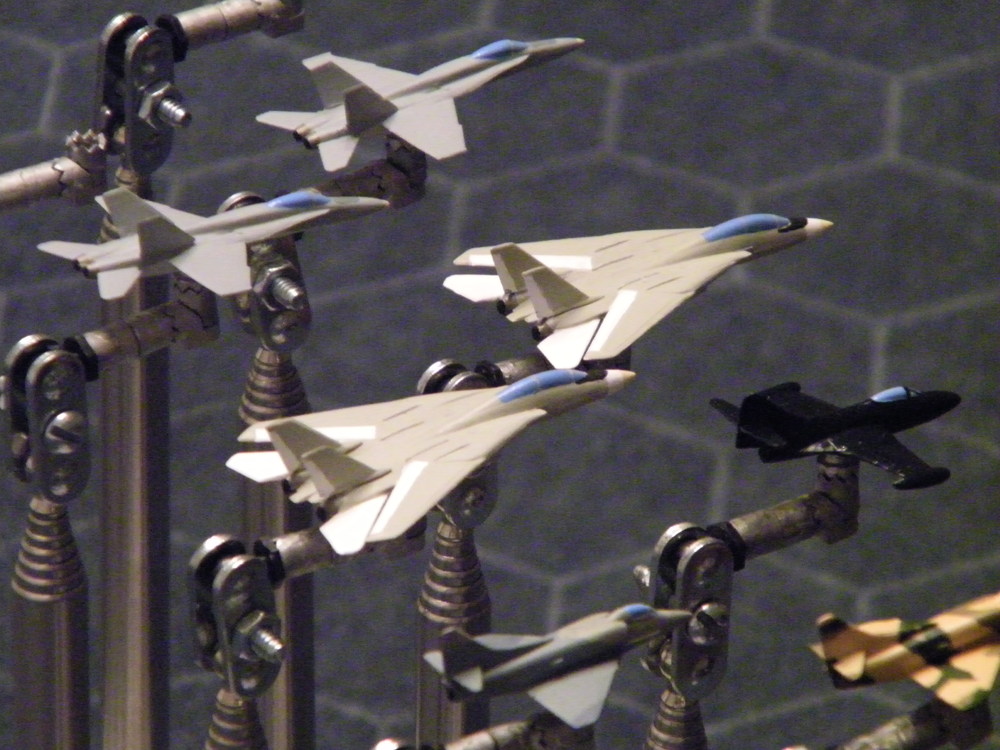
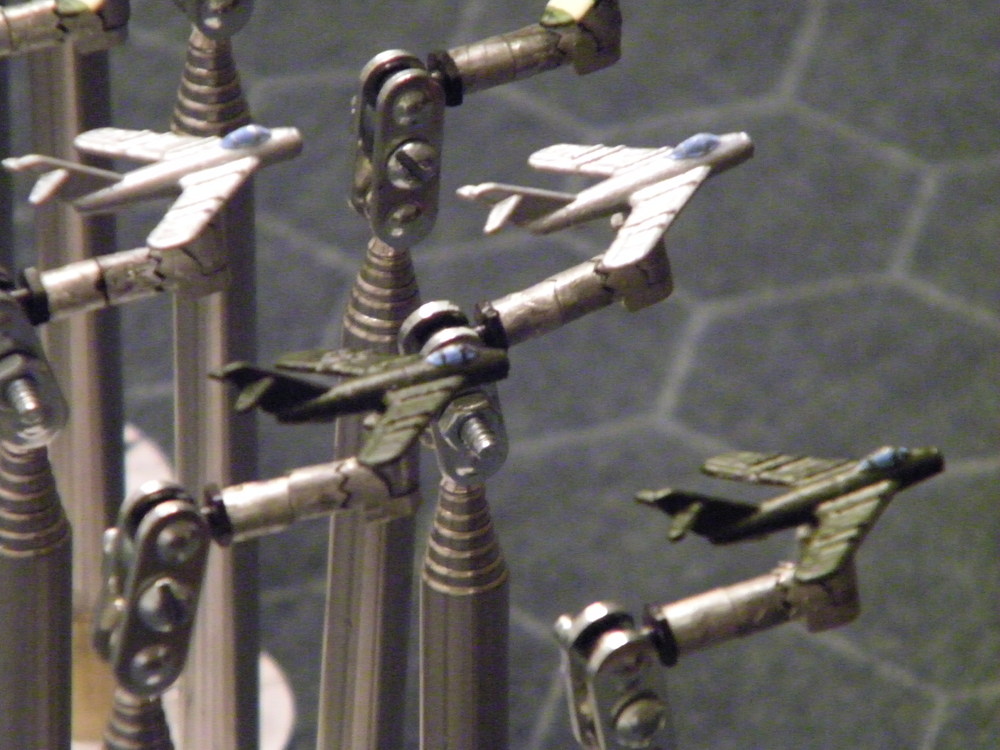
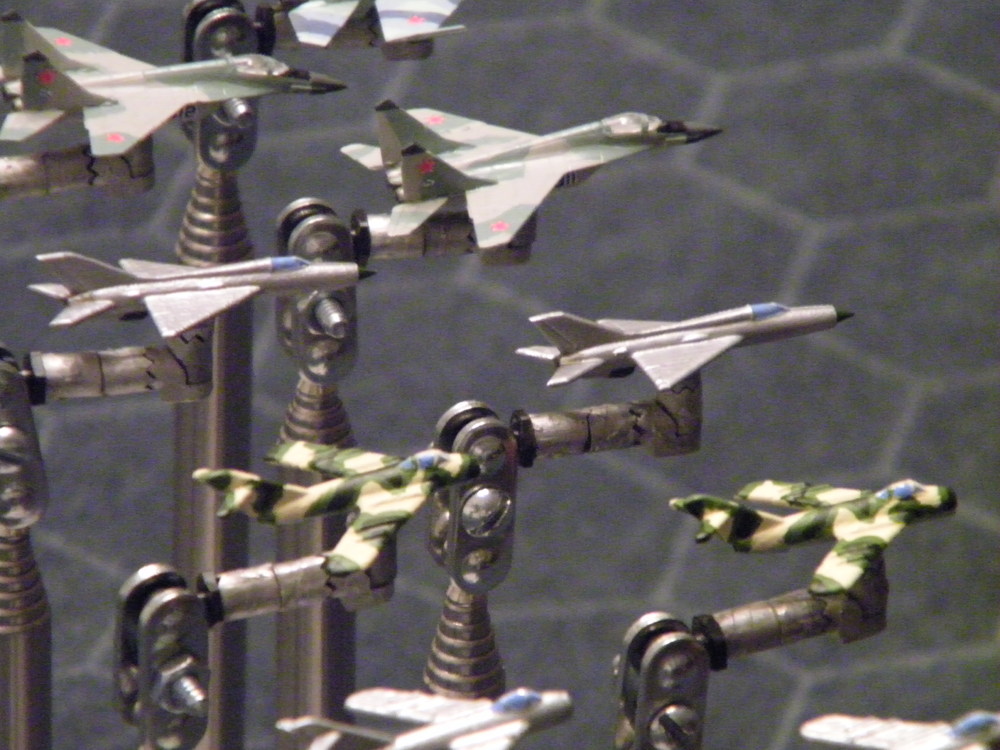
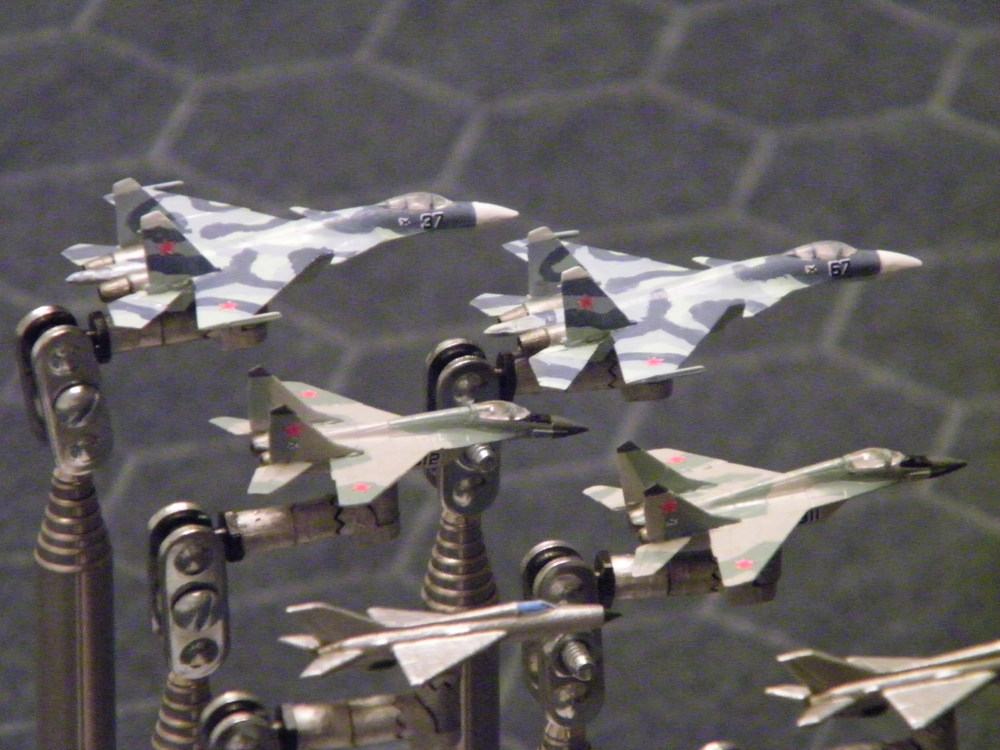
As for the cost of my fleet of 1/350 aircraft: most are old style plastic injection molded aircraft. Tamiya has some nice 1/350 aircraft sets intended for their 1/350 CVA-65 Enterprise. My F-4's that have glass canopies, the Su-33s, and MiG-29s are Trumpeter's 1/350 naval jets for carrier models. The F9Fs, A-4s, and F-8s are from Corsair Armada. The Shapeways models aren't cheap, but they aren't expensive either. Pricing in standard materials is almost the same as Trumpeter kits. I always buy them in the best material to get the best quality, so that doubles the price. The MiG-21s and MiG-17s are Shapeways.
-
The old B-17 solitaire game had a really good feel to it. It was more like a role playing game than a tactical board game. I was always attached to each of the crew members and rooted for the gunners to become aces. As in reality, it felt like a tragedy when any of my crew died and especially when the whole airplane was lost. I got Hornet Leader when it originally came out so many years ago, it is amazing that it is not only still being sold, but expanded into several similar games centered on other aircraft, such as Phantom Leader. But I didn't enjoy playing it. I didn't feel like I was flying. I felt like I was just setting up dominoes and then watching them fall at the whims of the cards and the dice. Two player games that alternated turns (i.e. no secret plotted moves) and that had fast/easy game mechanics are what I preferred for solitaire. I had some 1/285 GHQ miniatures covering 1980s armor (M60A3, M1A1, M2/M3, M113, T-80, BMP-2, and a whole bunch of tiny infantry). I used the modern "Combined Arms" development of the Command Decision WW2 miniatures rules to play it. It was fast playing and fun even by myself. I also had the complete GDW Assault series, which was essentially the same game but with hex maps and counters. I hardly played Assault. I find the adaptation to miniatures made it both visually more pleasing and played faster/easier. I didn't even have terrain to play on, just an open floor. When I threw away all of my games, I threw away my 1/285 miniatures. GHQ is still in business and I have been tempted to buy them again, but I know they will just sit in a case and collect dust. I already own and store more stuff than I want or need between books, model airplanes, old PC games, etc. So I have maintained spending discipline to save my money for things I will actually use.
-
For WW1 games (and just about any other type of game), there are lots of miniatures available on Shapeways: 3D Printing Service in various scales. The models tend to have a bit of a rough texture, but overall the detail and shapes are correct.
-
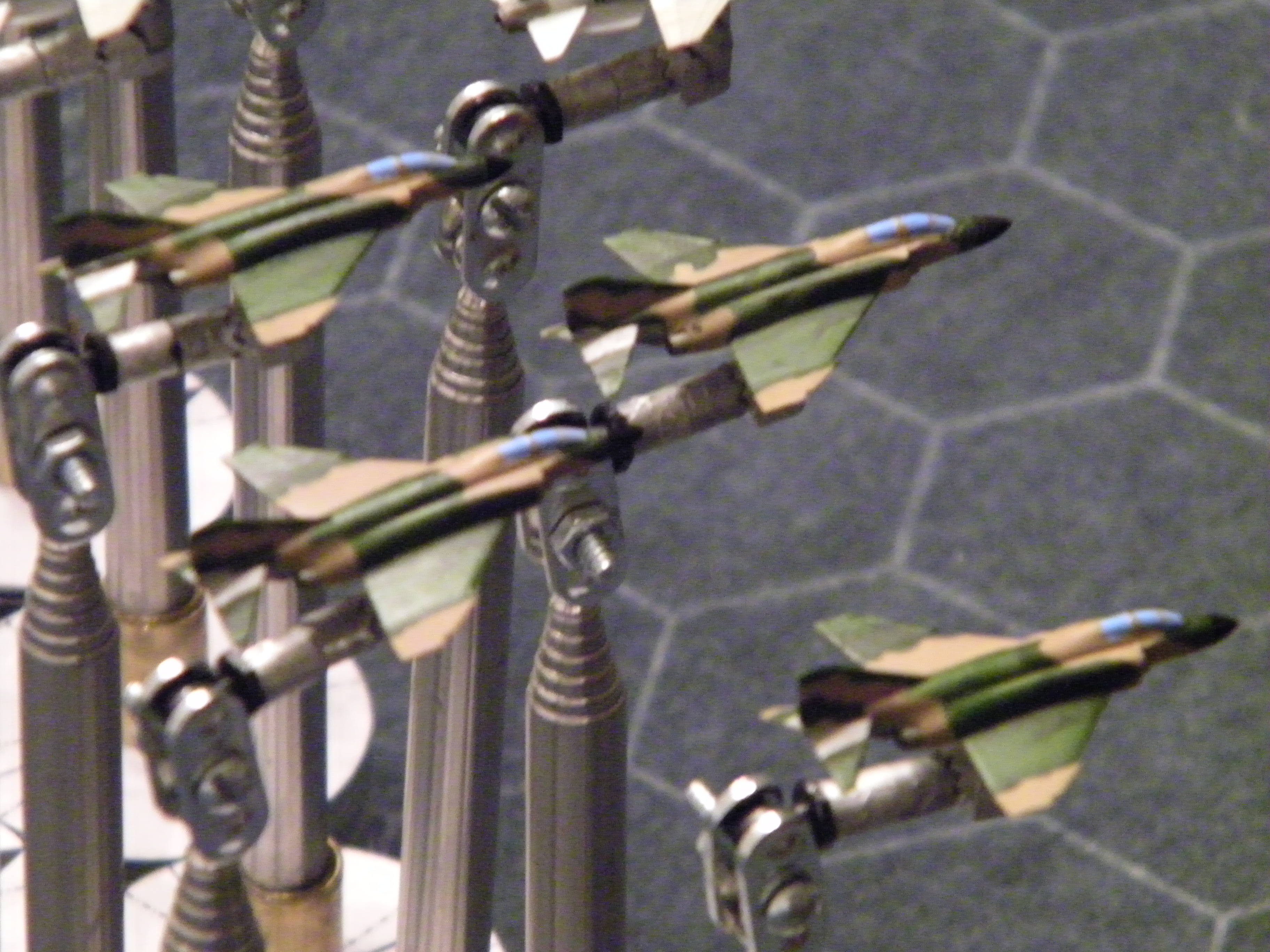
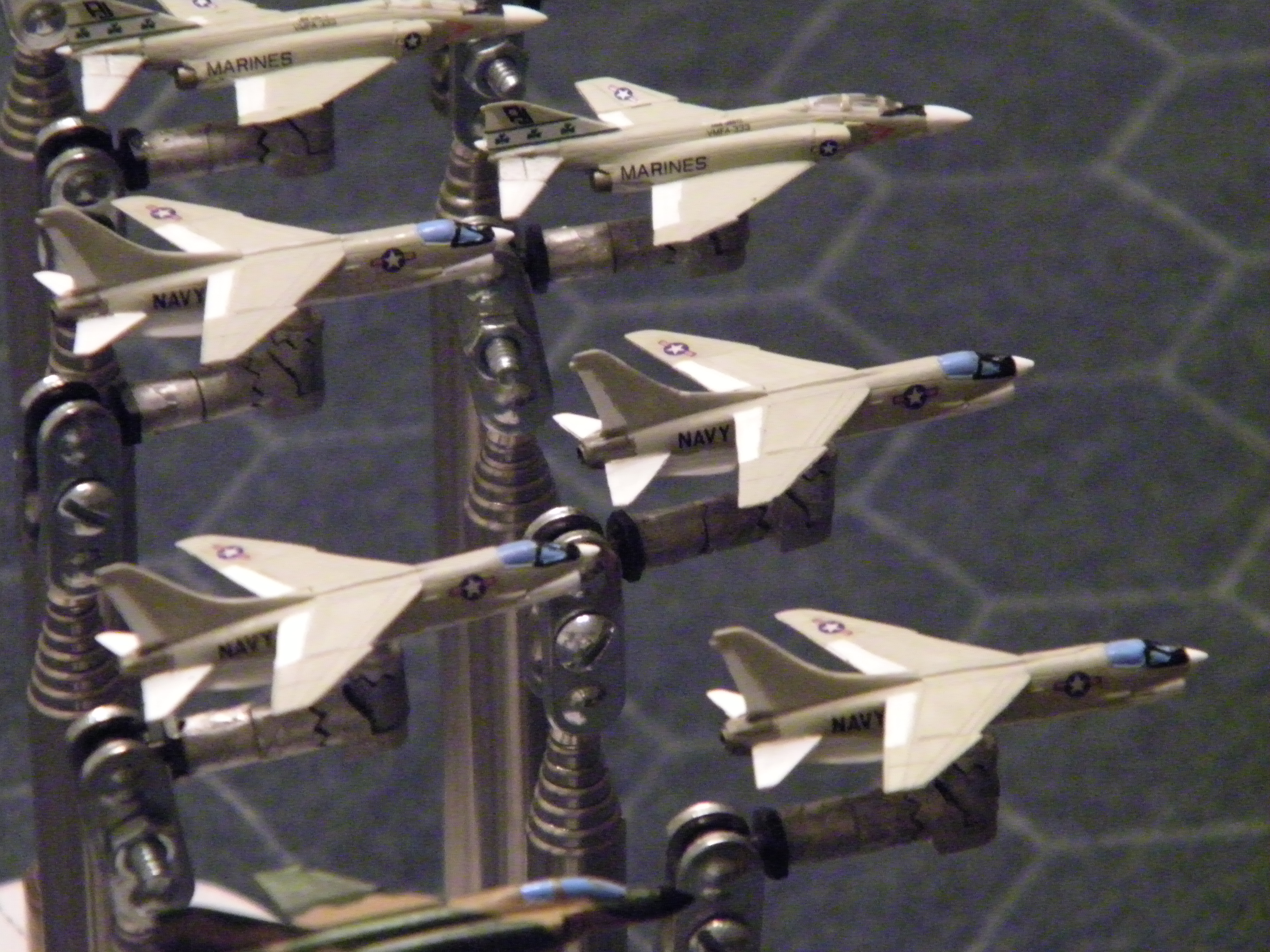
My 1/350 miniatures for Birds of Prey.
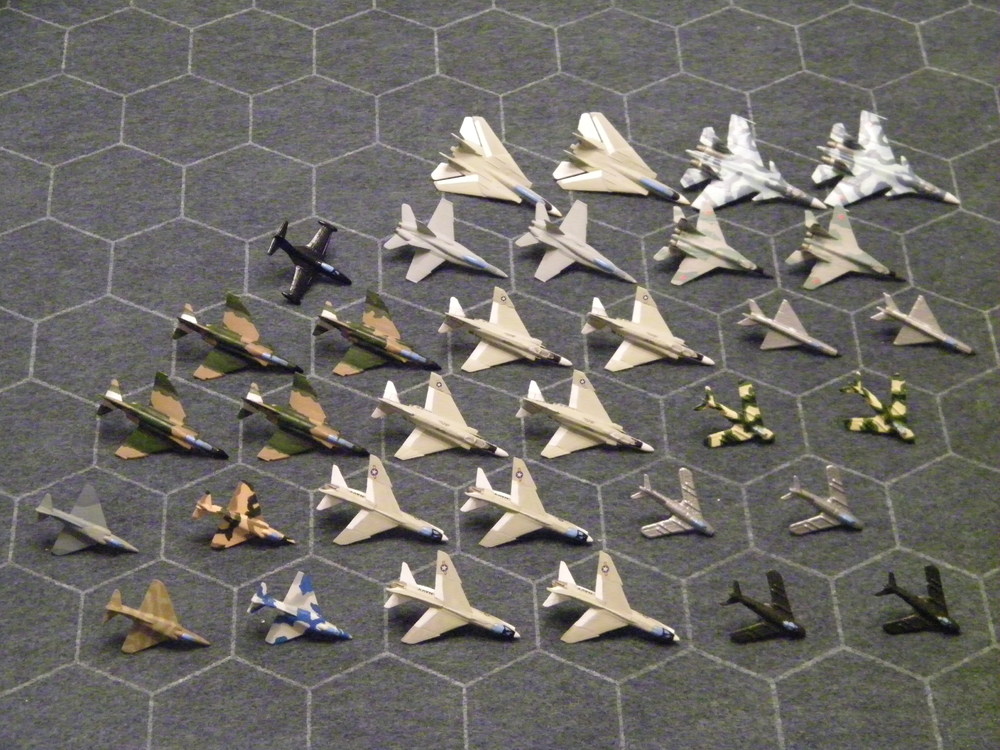
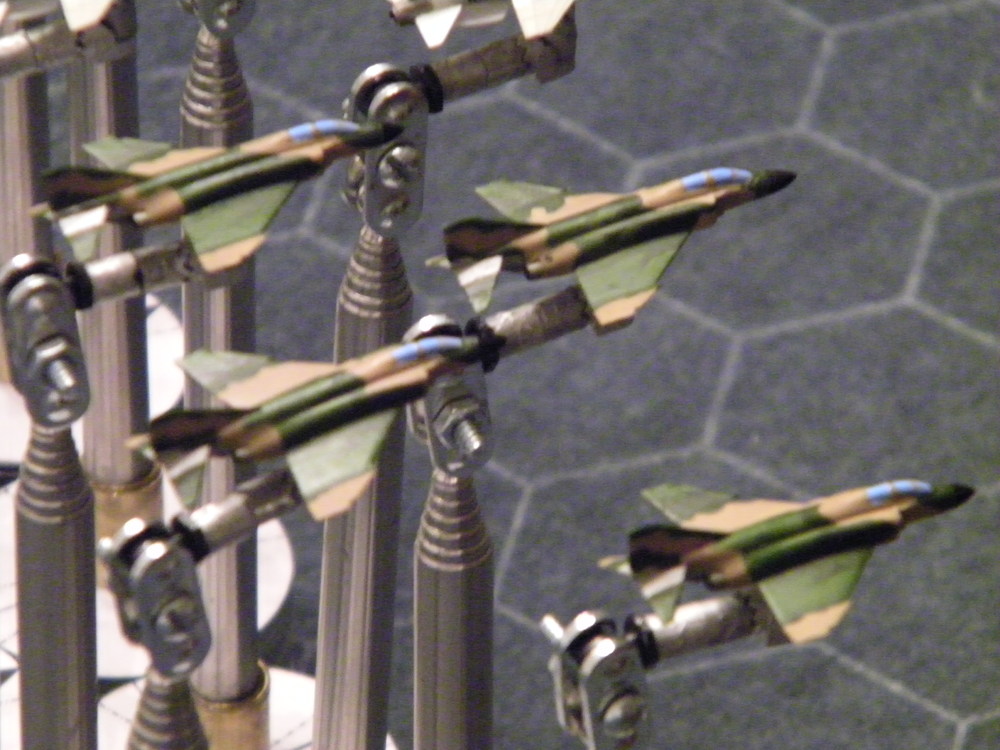
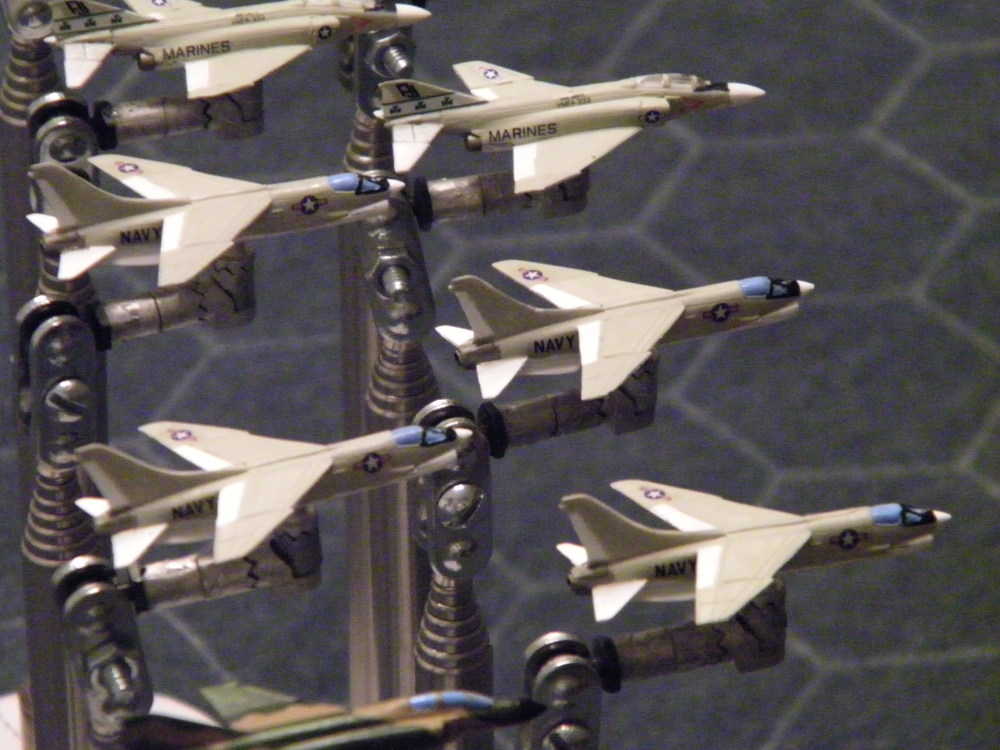
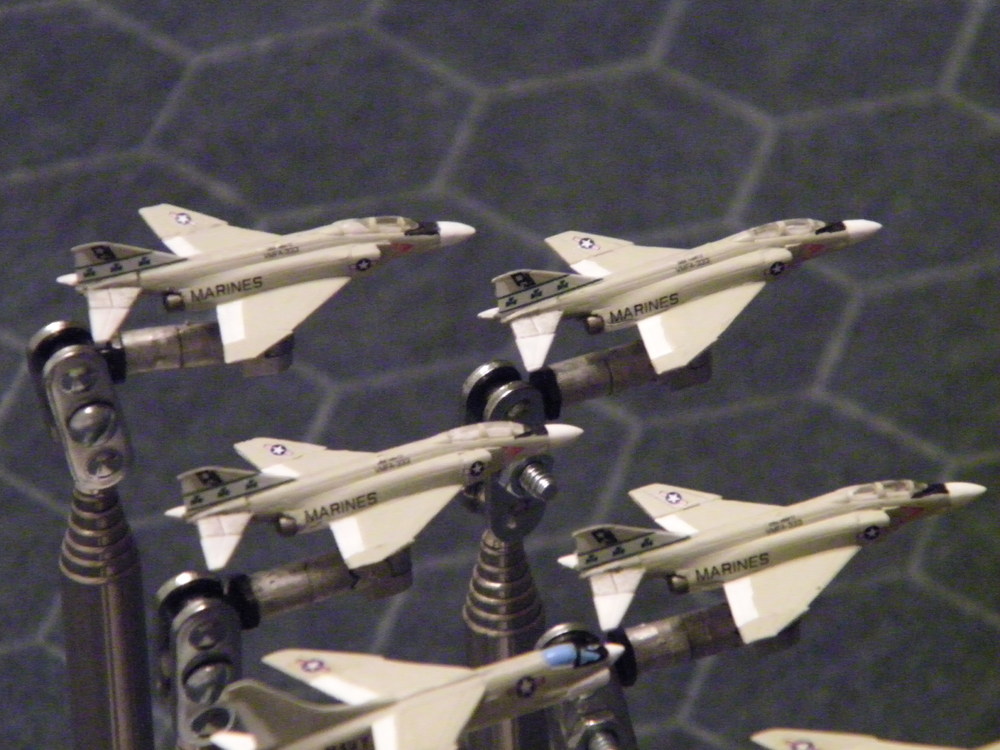

-
The only air combat game I have left is Birds of Prey. I have giant felt hex maps that can be placed on the floor to support using miniatures. I built several stands and a collection of 1/350 miniatures to play, but I have no one to play with. I tried to sit down and re-learn the rules to play solitaire, but it is a time-consuming chore. Without anyone to play it with me, I would rather spend the time flying DCS World.
-
Stock Farmer family FM recommendations?
streakeagle replied to macelena's topic in General Discussion
The problem with MiG-19s is that by the numbers, they were exceptional aircraft. Low drag, high power-to-weight. Then because of the swept wing (rather than a lower aspect ratio delta or trapezoidal used by Mach 2 fighters), it is inherently more agile, too. Compared to the MiG-21, it has only two weaknesses: top speed and stability/control at transonic/supersonic speeds. My question is this: if the MiG-19 was so good, why did the Soviets dump it like a hot potato in favor of the mostly inferior MiG-21? One big issue with the MiG-19 is Soviet service was that it was flat out dangerous. It could explode in mid flight. Pilots hated it. Also, the USSR, like the USA, was bitten by the speed is life bug and also needed to potentially intercept supersonic bombers, so the MiG-21 was the better short range/high altitude interceptor. Consider the fact that China kept the MiG-19 and derivatives of it operational for decades. They worked out the kinks and thought it was a great platform. But look at its combat record in Vietnam. The MiG-19 was only used in small numbers, so you can't draw very good conclusions. But I will say this, despite having fantastic performance, the Vietnamese pilots didn't care for the MiG-19 very much, or more correctly, the Chinese copies they were flying. Some Vietnamese pilots preferred the agility and guns of the MiG-17, others loved the ability to use MiG-21s to engage and disengage at will with quick Atoll shots on unsuspecting and/or overloaded F-4s and F-105s. Like the USSR, the VPAF found the MiG-19 unreliable. But it was MiG-19s that got Major Bob Lodge, who otherwise most likely would have been the first US ace of the war. They got him because of their tactics and his target fixation, not because of the MiG-19's performance. At the same time, the only supersonic gun kill in history was by an F-4 against a MiG-19. If the MiG-19 was such a fantastic fighter, why didn't it make an impact in the Arab-Israeli wars? First: Israel tended to knock out enemy fighters with pre-emptive strikes while they were sitting on the ground. Second: the one time they were caught with their pants down in 1973, SAMs were the star of the show and the first line fighters were MiG-21s. Many would argue that Arab pilots were not skilled, but if you study the records of both sides, you will find that Egypt had decent pilots, but they were hamstrung by Soviet equipment performance limitations (such as incredibly short range/endurance) and doctrine on top of the exceptionally good planning, training, skill, and luck of the IAF. In DCS World, the flight model is theoretically exceptionally accurate. The F-5E in a 1 vs 1 is essentially helpless against a properly flown MiG-19PF. The MiG-19 is able to turn better, climb better, and accelerate better. The MiG-21bis is only competitive with afterburner. But continuous use of afterburner kills the endurance of the MiG-21. As the MiG-19 is not commonly flown on multiplayer servers, people who know how to fly them can be very successful since almost no one knows how exceptional their ACM performance can be. My conclusion about MiG-19 performance is that flight sims do not properly reflect the problems that kept the MiG-19 from being a popular and successful fighter in reality. In flight sims, a MiG-19 with an accurate flight model IS supposed to be a UFO compared to its contemporaries and even much later aircraft until the advent of the US "teen" series fighters. In much the same way the MiG-17 was a problem in Vietnam, the MiG-19 should have been a problem for "teen" fighters until AMRAAM and the AIM-9L/M/X missiles become common. So, maybe China had the right idea to continue using it in parallel with MiG-21 derivatives. But if flight sims modeled the problems that MiG-19s really had and if you only had one life to lose in flight sims, most people wouldn't fly the MiG-19 despite its UFO performance, because no one wants to fly an aircraft that has a better chance of killing you than the enemy. Now, as it applies to Strike Fighters series games: AI don't use the hard flight model. If you plug in the correct performance numbers for the MiG-19, it will still be a UFO, partly because it really was the good and partly because of the way the AI flight model works. I can say that a skilled pilot flying the MiG-19 in SFP1/WoX mutliplayer was essentially unbeatable by any other aircraft until a patch crippled the MiG-19 a little bit and turned the F-8 Crusader into a magic UFO that could beat all other aircraft. One fact to consider is that in flight sims, focused on the player, 1 vs 1 performance is everything. But in reality, the slightly inferior F4F beat the hell out of the A6M Zero once US pilots learned how to fly as a team. In DCS World, a lone F-5E has little chance against an AI MiG-19 with high pilot quality. But with two player flown F-5Es vs two AI MiG-19s, the odds go in favor of the players if they use good tactics... except that the AI flight model and gunnery skill is even worse in DCS World than it is in SF series games, so sometimes you just can't beat them even if you properly execute the correct tactics. Overall, in SF series games, I never found it necessary to mod the AI enemies. I understood how the AI was flying and could generally beat them. It was actually pleasant to see the AI do something unexpected and beat me every now and then. I wouldn't spend a lot of time trying to make the MiG-19 FM better, because the AI doesn't really use the full FM. Learn the vulnerability of the AI's tactics and exploit it, then the FM won't matter as much. SF AI is predominately horizontal turning tactics. Creative use of the vertical, rolling scissors, and "Top Gun" movie style sudden slow down tactics can beat just about any AI no matter how good their flight model is. -
Until I had to move in a hurry and didn't have room to store my games any more, I had nearly every board game/miniature rules set ever sold covering air combat at a 1:1 scale from WW1 to Modern. I didn't have time to give them away or sell them, so I just took them to work and threw them in a dumpster. I didn't have TSR's Dawn Patrol, but I did have their release of Air War (a modern jet game originally published by SPI). I did have several WW1 games/miniatures rules. My favorite WW1 game was the Nova Game Designs' Ace of Aces series. Each player used a book that showed photos or drawings of aircraft from various ranges/angles and the combination of the chosen maneuvers determined which page each player turned to. It was fast and fun, anyone could play with very little training. Yet, it was almost like playing a flight sim because you didn't waste any time plotting moves or take turns on a map. The most complex rivaled Air War in its attempt to model the physics of flight: Avalon Hill's Knights of the Air. The closest I had to Dawn Patrol was GDW's Blue Max. I can't remember the names of the WW1 miniatures rules that I had. The only air combat game I ever got any friends to play on a regular basis was Avalon Hill's Air Force/Dauntless series for WW2 (originally published by Battleline). It was fairly easy to learn to play and used pre-plotted moves. The Avalon Hill version had colorful, attractive aircraft data cards that turned boring tables of numbers into colorful bar charts that were curved to somewhat resemble instruments. Only a handful of people ever tried my more complex jet games, like Air War, GDW's Air Superority/Air Strike series that morphed onto Clash of Arms Speed of Heat series. Avalon Hill's Flight Leader was a much simpler jet combat game that anyone could play like Air Force/Dauntless. Despite its simplicity and speed of play, it was almost as realistic as the other games with combat results comparing well with historical results. If you want the ultimate tactical air combat game, it is Birds of Prey. Tony Valle, a long time Air Superiority fan, also has a PhD and wrote pc simulations. He came up with a nomograph solution for board game flight modeling that allows players to fly the aircraft almost as realistically as a PC flight sim with the game turns taking no longer than the older complex sims and only requiring the ability to add and subtract. It is a jet era game. The time/distance scale doesn't have sufficient resolution to handle WW2 fighters very well and can't even come close to modeling ultra slow WW1 biplanes. It is an amazing achievement and represents what I was hoping to find when I bought all of those other games and miniatures rules. Unfortunately, there aren't many people who actually own and play it. I have no interest in playing online/by email and I don't know anyone who will play face to face. As it stands, in the time it took for someone to develop the best possible game mechanics for dogfighting, PC simulations became the best way to get that kind of experience and with the advent of VR, I have little interest in studying and applying board game rules when I can feel like I am really flying inside any kind of airplane I choose from WW1 to the present. But if someone near Orlando, FL was actually interested in playing tabletop air combat games face-to-face, I would be interested in doing so.
-
In the cockpit ini file, there will be items that move the cockpit around based on pulling g loads. If it is commented, they should be easy to find, if not you will have to learn to read the ini file to understand which blocks are part of actual instrumentation and which ones are causing head movement. Make a backup of the ini, delete what you believe to be the code causing the problem, then run a test flight. To delete it properly, you have to delete the entire block and delete the reference calling for that block. But just deleting the code inside the block will get the job done.
-
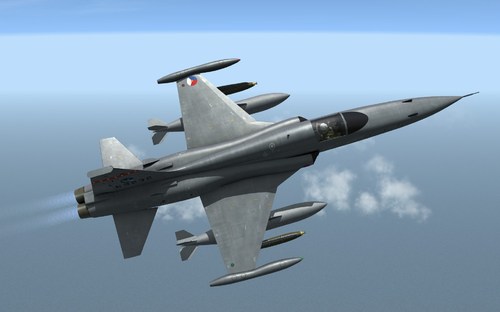 Great work! Glad to see you are still working on the F-5 series for SF2.
 -
VorpX is what keeps changing. Now I can use Starry's Strike Fighters 2 DirectX 10 profile that I uploaded to the VorpX Cloud profiles without any issues again. OpenXR/Windows Mixed Reality was recently added so that I can now use my Reverb G2 natively (as in no longer needing SteamVR). I have the graphics set to unlimited at 4K resolution and it looks fantastic in VR with framerates locked at 90 fps (native frame rate for my G2). There are some limitations with this setup, but overall it looks and works great. I have installed SF2 Vietnam Air & Ground War and SF2 Wings Over Korea. If only it had multiplayer functionality comparable to DCS World, though I would settle for the original multiplayer in SFP1/WoX.
-
I can't wait for the Crusader, it is inevitable, but the time table is never accurate from Leatherneck. I can't wait to get their F4U-1D Corsair as well, which will be added the Korea server as a stand-in for the F4U-4. DCS keeps me busy enough that I very rarely fire up SF2. Sometimes I just feel like fighting in an F-4 or Century series aircraft. I have gotten VR to kind of work with VorpX, and unlike DCS World, VR runs with the fps maxed out for a fairly decent experience minus the fact that your head isn't really free to move around and the rear cockpit is not modeled. I usually fly DCS for 1 to 4 hours every night and sometimes for most of the weekend except for when I am sleeping, eating, or doing chores. That used to be my SF2 schedule before I had a PC that could run DCS well and the plane set expanded beyond the A-10, Ka-50, and P-51D. It seemed like the Fw190D9, UH-1, MiG-21, F-86, and MiG-15 all came out really close together, which kept me busy for quite some time. The DCS UH-1 experience in VR on the Vietnam server is fantastic. The UH-1 is currently a little too tough. It can sustain quite a few hits from rifles and machine guns. But that allows you to have more fun shooting/blowing things up than would be possible if it was realistic. I will still keep SF2 on my hard drive as long as it remains compatible. I hope TK is able to maintain compatibility over the years even if he never makes any other patches or content for the game.