

Olham
-
Posts
14,636 -
Joined
-
Last visited
-
Days Won
3
Content Type
Profiles
Forums
Gallery
Downloads
Store
Everything posted by Olham
-
After two photos from the website "Forgotten Airfields" I have made this graphic with a modern Google Satelite View; showing where the former airfield of MFJ-1 near Koolkerke was situated. MFJ-1 is the short for Marine-Feldjagdstaffel 1. The squadron was formed on 1 February 1917. They were based at Coolkerke/Koolkerke from 10 September 1917 to 11 November 1918. The task of the Marine (Navy) units was the protection of Naval facilities and harbours. Well known aces of the unit were Gotthard Sachsenberg, Bertram Heinrich and Theo Osterkamp. Here is the link to the interesting site: http://www.forgotten...lkerke-s74.html I just remembered I had already made a thread about Koolkerke - well, anyway - here is the plan from there again:
-
Another Identification puzzle for you.
Olham replied to rjw's topic in WOFF UE/PE - General Discussion
Truth seems to underly the Relativity Theory - it is not straight nor static - it bends and deforms under the influence of stronger forces (like politicians for example). -
rjw, the rate of fire would be better/faster, if you throttled down a bit, because more shots could go inbetween the rotating two blades. The MG had to be interrupted only at two points of the complete prop rotation. While the prop turned slower, the MG was firing with the same frequency. To shoot at an opponent, they actually did throttle down a bit to become more effective. German tests had been made with similar steel deflectors as the French used. But the German steel mantle rounds proved to be too destructive for this method. The interrupter gear was possibly invented by several people. Fokker's product was not developed by himself, but by one of his engineers, Heinrich Lübbe. Swiss inventor Franz Schneider had a patent for an interrupter gear. He sued Fokker after the war for stealing his patent idea. But it was proved, that Schneider's idea would not have worked.
-
Short film "The Jockstrap Raiders"
Olham replied to Deadhead's topic in WOFF UE/PE - General Discussion
Mmuahahahahaaaa!!!!! Mmuahahahahahahahahaaaaa!!!!!! Der Britisch hav found zeir beszt weapon against uss - zey make all zese killink jokes! Mmuahahahahaaaaa!!!! Arghhhh... my belly aches! .... (Thud!) -
Another Identification puzzle for you.
Olham replied to rjw's topic in WOFF UE/PE - General Discussion
I stand corrected - seems it saw more of the war than many more prominent fighters. Thank you for all the detail and the great big photos, Jim! -
Which actor should portray Werner Voss?
Olham replied to Hauksbee's topic in WOFF UE/PE - General Discussion
Bang goes another illusion... -
Another Identification puzzle for you.
Olham replied to rjw's topic in WOFF UE/PE - General Discussion
Well, I know some fine British designs too. The Spitfire, the Mosquito and the Hawker Typhoon and Tempest, the Rolls Royce Merlin and Griffon engines, the Folland Gnat and the Hawker Harrier VTOL jets; the Triumph and Norton motorcycle classics, the Jaguar and the Aston Martin - and the Cobra, which became famous as the Shelby Cobra from America, but was originally an English design too. And have you ever tasted scones with cool clotted cream and raspberry jam? Hmmmmmmm.... (Not to speak of the fine ales, beer and stouts - oh, the memories! ...) -
Another Identification puzzle for you.
Olham replied to rjw's topic in WOFF UE/PE - General Discussion
Good - now where did I put the sixpack with "Warsteiner Pilsener"? Ah...! -
I don't know the building number in Schlesische Strasse, but my picture shows the bank there from the other side of the river Spree. The Schlesische Strasse is not very long; the buildings you see in my picture are all there are in that street. But in the picture of the Sablatnig tripe-seaplane it looks different. I guess it was changed in the 20s or 30s. It's hard to get a good Google Streetview of the buildings at the right, near the Oberbaum Bridge, as the bridge has a gothic-arched pedestrian walkway shelter. Funny thing is: we had our first rehearsal room in the right factory building in the pic - I played my first drum kit there in the 70s.
-
Guys, I guess they (and Jim) meant the position between the left and right wing. While the pilot sit aft of the wings, the gunner stands between the two wings and therefor has no downward view nor field of fire.
-
Another Identification puzzle for you.
Olham replied to rjw's topic in WOFF UE/PE - General Discussion
No problem, Robert, I don't want to argue either. But there are so many other aircraft missing yet, which were used widely in WW1 - - Hasse Wind would storm this thread shouting "French two-seaters!", and he'd be right - that any such demand for more rare planes might delay the release of WOFF to "Sankt Nimmerleinstag" as we say in German (until the cows come home). And I guess we both wouldn't want that? -
Another Identification puzzle for you.
Olham replied to rjw's topic in WOFF UE/PE - General Discussion
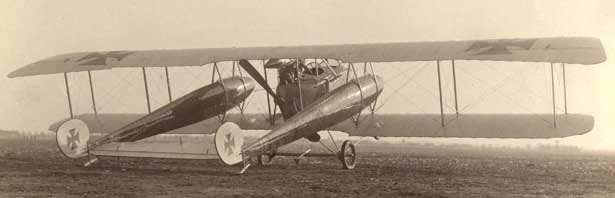
Guys, don't argue with JFM about aircraft, he's doing historical research since quite some time. I too found it under "C.I" at "Rosebud's". But the link lines at "Rosebud's" say someting different than the JPEG-names do - quite confusing. However, there seem to be a two-seater (C.I ?) and a single seat craft (C.II ?) - here are the pics. PS: these aircraft don't belong into WOFF - even if it would be fun - cause they played no role in the war. .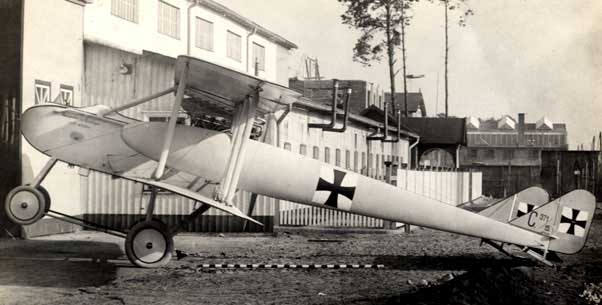
-
Thank you, rjw. After your post I also did some research and found Sablatnig Flugzeugbau GmbH had been in a factory building in Schlesische Strasse, Berlin, located directly by the river Spree. They also seem to have had a place in Swinemünde, but I don't know when.
-
Yes, Sablatnig SF 7 - elephant nailed it first. Great photos, Jim! Does anyone know where Sablatnig was building these planes? Looks very much like Berlin to me???
-
That's what I thought too, Jim.
-
Nope, it isn't.
-
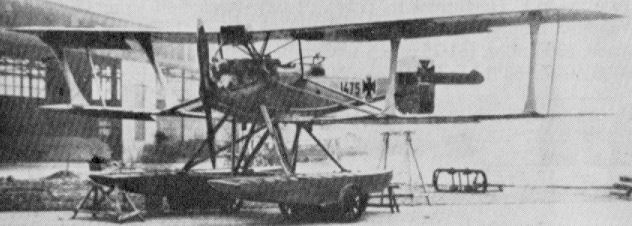
Just found this Big Beauty - who knows this sea plane?
-
Mmuahahahahaaa!!!!!
-
Which actor should portray Werner Voss?
Olham replied to Hauksbee's topic in WOFF UE/PE - General Discussion
Welcome over Flanders fields, UnsoloCor! Are you flying OFF already? -
Which actor should portray Werner Voss?
Olham replied to Hauksbee's topic in WOFF UE/PE - General Discussion
Mmuahahahahahaaaa!!!!! -
Which actor should portray Werner Voss?
Olham replied to Hauksbee's topic in WOFF UE/PE - General Discussion
John Cussack is a good choice IMHO. Nicholas Cage had the right eyes - but he is definitely beyond the age of a fighter pilot. I like Robert Downey jr. - I guess he could play him. Or the German Jan Henrik Stahlberg? -
According to "Their Flying Machines" and "Wings Palette" it is a Zeppelin Lindau (Dornier) CS.1 http://flyingmachine.../Craft30303.htm http://wp.scn.ru/ Beautiful plane and model, by the way.
-
Yeah, they were only yet finding out how to do it. Ridiculous the romanticised painting - how long could you fly like that and keep the red kepi on your head?
-
The Man who taught the world to fly...
Olham replied to Slartibartfast's topic in WOFF UE/PE - General Discussion
Very interesting info, thank you for sharing, Slarti! -
New Photos again at "Buddecke" Website
Olham replied to Olham's topic in WOFF UE/PE - General Discussion
Yep, colours and markings research are a tricky terrain, as many photos do not show the serial numbers of the planes. We must not forget that some pilots may have flown several Albatros D.III, and later more than just one Albatros D.V - and they may have varied some of their markings from one plane to the next. So it would be imaginable after this photo, that one of Goering's planes had not only a white nose, but a completely white engine hood. More evidence would be great to find.