

MigBuster
-
Posts
9,165 -
Joined
-
Last visited
-
Days Won
27
Content Type
Profiles
Forums
Gallery
Downloads
Store
Everything posted by MigBuster
-
Wow Spectacular sights! - you didn't see any J-31s then? Do you speak any Chinese or is it all sign language?
-
MiG-25 is WIP There should be some in ODS or Nato Fighters for SF2
-
The cost thing is a bit muddy because most costs you see don't say what's included - $230 - 250 million you say (what do you get for that? - A free F-35 T shirt?) The US might be getting them cheaper: Latest F-35 Deal Targets Unit Cost Below $100 Million http://www.aviationweek.com/Article.aspx?id=/article-xml/awx_07_30_2013_p0-602401.xml&p=1 Problem is production run F-22 = 187 F-35 = ~2500 (projected) Even though the F-35 has a superior avionics capability (and probably range in internal Fuel) - I would be surprised if the unit cost didn't fall significantly for all buyers with those numbers.
-
Nice first post - welcome The one thing I would disagree there is that the switchology also becomes a big part of fighting - especially in say the P-51 where it not only has a throttle, but prop speed, and if you want to change something you have to look down into the cockpit to find it and click on it (as you would in reality ) in the middle of the fight. Even with a HOTAS in an F-16 there is a lot to think about in the fight - so although its a major PITA learning what everything does I find that gives you more realism for having to do functions the real pilot would - and once you get to know things they often give you more flexibility. Sims like SF2 are great because they get you into the fight with minimal training - you still need to invest time practicing dive bombing and dog-fighting - but doing this is a lot more fun than reading up about the EGI etc FC3 with its 6DOF pits, 3D models and AFMs looks to be a perfect compromise and a Jet handling the way it should is a great thing - but with that quality comes massive amounts of time to create them.
-
In SF2NA the carrier genrally goes down after a certain amount of cruise missile hits
-
http://www.yankeeairpirate.net/FlightSchool.html If you have WOV patched to 2008 this could be for you. I cant view the vid but am guessing its over Deuces 2004 terrain again.
-
http://www.cbsnews.com/video/watch/?id=50156409n Most Americans know what happened during America's first battle against al Qaeda 20 years ago thanks to the Oscar-winning film, "Black Hawk Down." Now for the first time, they can see how the actual battle unfolded in never-before-seen footage obtained by 60 Minutes and from eyewitnesses. Lara Logan reports on Sunday, Oct. 6 at 7:30 p.m. ET/PT.
-
http://www.youtube.com/watch?feature=player_embedded&v=WOVEy1tC7nk
-
The new Terrain looks amazing so wont be disappointed there. I expect the FMs and pits to be the same level as the P-51 and they say they are doing the ground objects for that era then it should all go well. The low level ground detail is something else for a flight sim
-
Numbers can make a difference agree there. The MiG-21 is a viable threat against a radar significant target only in the situation you have described - otherwise not sure what you think they are being directed onto. Actually I would say the F-35 and F-16 are far more survivable against AAA than the A-10 on account of speed. The A-10 flying low and slow will get hit and can soak up some small arms fire - but its no match against a 23mm Shilka. The A-10 is the best for CAS in insurgency type wars - but in that regards its almost become a modern day Stuka
-
US special forces have carried out a raid on a senior leader of the al-Shabab Islamist group in Somalia, US officials say. The unnamed officials said a US Navy Seals team had targeted the man after approaching a villa in the southern town of Barawe by sea. There are conflicting reports about whether the raid was successful. It was said to have been prompted by last month's deadly attack on the Westgate shopping centre in Kenya. http://www.bbc.co.uk/news/world-africa-24417099
-
The Ministry of Defence is to examine a US review into a Taliban attack on Camp Bastion in Afghanistan which criticises the British military for the way it handled security at the base. Two US marines were killed and over $200m (£124m) worth of aircraft destroyed in the September 2012 attack. This week, two US generals were forced to retire after an investigation. http://www.bbc.co.uk/news/uk-24415371
-
<30 mins left and over the stretch goal of 150k http://www.kickstarter.com/projects/508681281/dcs-wwii-europe-1944
-
http://www.youtube.com/watch?v=hs_9s31Je7Y One of the benefits of Mark Anderson’s home security camera feed was that he could check to see if a package he had been waiting for was delivered while he was at work. It was delivered all right, but just how it was dropped off had the LaGrange, Ga., man flabbergasted. Anderson told TheBlaze Friday he installed the security cameras more to keep an eye on his disabled mother while the family was away during the day, rather than actual security issues (he has four Great Danes that he said good security assurance for that). Once back at his desk at work this week after a meeting, wanting to see if he received the package, he took at look at his private YouTube feed with his front door camera footage.... http://www.theblaze.com/stories/2013/10/04/its-almost-unbelievable-what-one-homeowners-security-camera-caught-a-u-s-postal-worker-doing/
-
You have to judge for your self - the first gen stuff is long gone from my HD There is a list of changes here is you are interested http://combatace.com/topic/56091-whats-new-in-the-sf2-series/ SF2NA is the biggest change regarding actual game play. It runs better on multicore hardware I would say and there are some good mods for it on here. Did you not even have a copy of the receipt so you can redownload from TW?
-
http://www.kickstarter.com/projects/508681281/dcs-wwii-europe-1944/posts/618787 Our First Backers-Only Development Update: WIP Bf.109 Cockpit Good morning backers! Let's try this out. With 24 hours to go on this kickstarter, we have a combined total of $139,871 + $3,317.82 = $143,188.82 That's less than 7K to go in the last 24 hours. I think we can do it! One very important point. First off, PayPal witholds about 5% of the total. Secondly, the amount shown is pledges, not charges. Backers' credit cards do not get charged until after the campaign ends, and there are always some backers whose pledges do not go through for one reason or another. That can be a few more % shaved off the total. We are taking the KS fee into account. That won't derail anything. However, we are not taking the uncharged credit cards into consideration because they're impossible to estimate. One or two $500+ level backers whose charges do not go would have some impact on the project, but again, we will recover and we will find a way to do the Me.262 even if say 5% of the backers' cards do not go through. Why am I saying all that? Another thing that a lot of kickstarter campaigns go through in their last hours is many backers decreasing or canceling their pledges because they see that the total's been reached. Say we're at $151,250 two hours before the campaign ends, and a couple of $100 backers figure, oh, we're there anyway, I might as well go down to $40. That might have a avalanche effect - people follow the leader - and end up pulling us down below 150K. And, in conjunction with some of the credit cards that do not go through, that will have even more of an impact on the total the team eventually receives. So, if your only reason for doing so would be "we've reached the goal anyway, my pledge is not needed" - please don't decrease or cancel it. It IS needed. And very much appreciated. Thank you everyone who put your faith in this project. Today we'll show you some WIP images of the Bf.109 cockpit. We'll do regular updates after the campaign ends. We'll probably find some sort of a regular schedule by type of update. Say, landscape updates on Tuesdays, 3D updates on Fridays, something like that. I have a HUGE task on my hands with setting up the infrastructure for the closed forum with invitations to KS and PP backers, the form that allows you to select your matrix-style rewards, etc. It will take a little while to get ready, so I'll provide updates on that as well. Anyone who has selected a DCS World P-51 reward should be receiving their license keys via email next week. If you suddenly decide you do not want it, please change your reward selection before this campaign ends! Anyway, until we have a closed forum, the only option for posting backer-only images is right here on kickstarter. Where images get shrunk down to 560 pixels. My only option right now for posting full-size versions is somewhere open to the public, so that kind of defeats the purpose. So I'll post the screenshots as is, shrunk down, and then take a few close-up crops of the same shots showing more detail in better resolution. Hope you guys like it! The pit is about 50% complete at this point. About six weeks left.
-
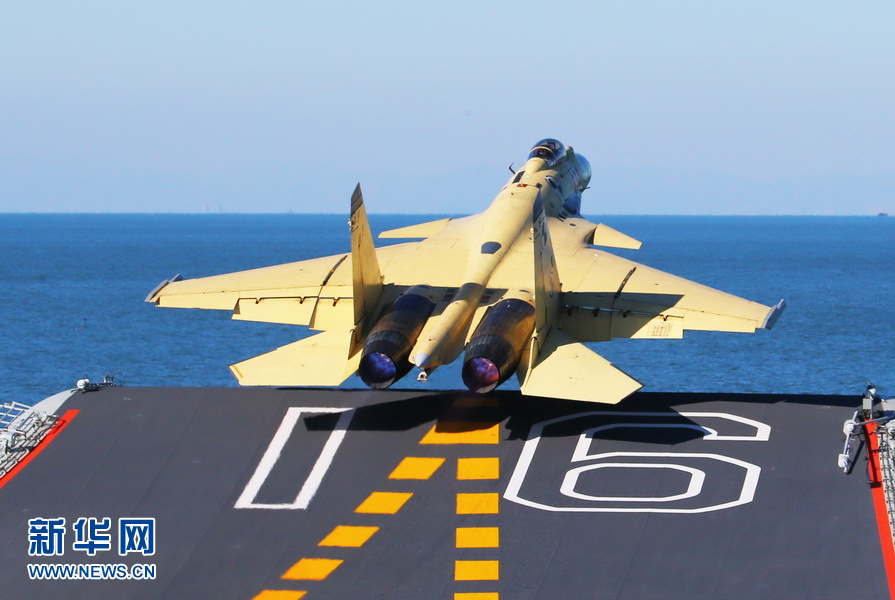
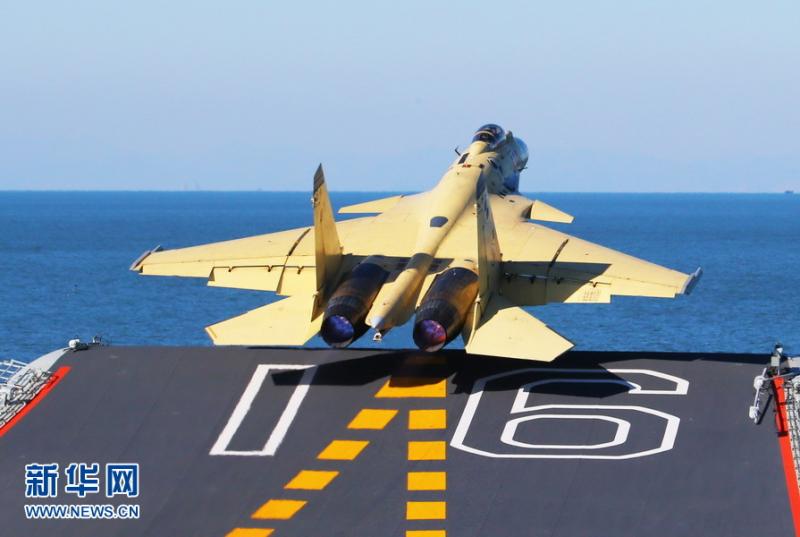
Could the Chinese media be as clueless as everyone else's per chance! Even if some analysts compared it to the F/A-18 Hornet, the Shenyang J-15 “Flying Shark” may not be the powerful and deadly threat to the U.S. Navy Air Power in the Pacific. Indeed, in spite of the recent claims that it had succesfully achieved full-load take off and landing on the Liaoning aircraft carrier, the China’s embarked plane may not be able to operate from Beijing’s first supercarrier. According to the Sina Military Network, that has (weirdly) criticized the Flyng Shark calling it a “flopping fish”, the recent tests with heavy weapons have limited the attack range of the J-15 to a distance of 120 kilometers from the carrier: whilst it is said to be capable to carry 12 tons of weapons, when the aircraft is fully loaded with fuel, it can’t carry more than 2 tons of missiles and munitions, meaning that only two YJ-83K anti-ship missiles and two PL-8 air-to-air missiles could be carried (in an anti-ship configuration). People’s Liberation Army Navy’s next generation carriers will have electromagnetic catapults that will safely launch heavy J-15s. The problem is the ski-jump ramp of the current, only PLA Navy aircraft carrier, that makes take off of aircraft exceeding 26 tons of total weight extremely difficult unless you have a more powerful aircraft, as the Mig-29K. That’s why a lone Soviet aircraft carrier with ski-jump is no match for a U.S. flattop. And a J-15 carrying only handful of medium and short range air-to-air missiles in air defense configuration to be able to launch for Liaoning would probably be no match for U.S. carrier-based F/A-18E/F Hornet. http://theaviationist.com/2013/09/30/j-15-critics/
-
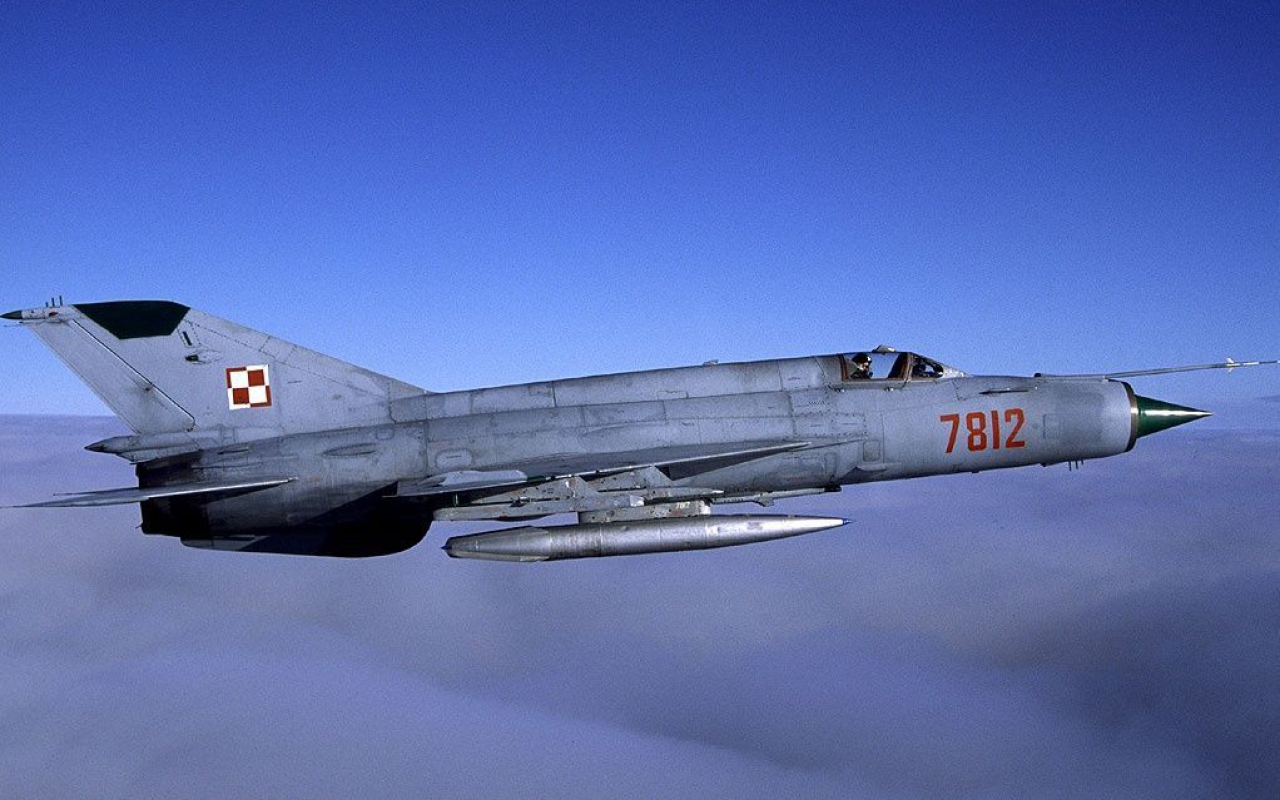
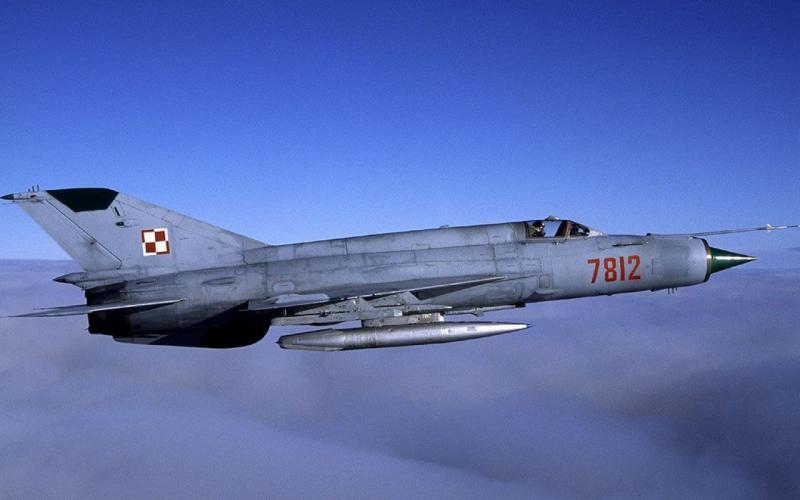
According to Draken International the supply of MiG-21s from Poland has already started. The 25 aircraft will be refurbished and then will be used to extend the offer of Draken International, a company which offers threat simulation during various exercises in North America, both in the U.S. and Canada, as well as research and development and adversary support to various entities within the U.S. Military and defense industry. Draken International “owns and operates a fleet of more than 50 tactical jet aircraft. This includes the multi-role APG-66 radar equipped A-4K Skyhawks, the CAS/JTAC optimized AerMacchi MB-339CB and the supersonic and Jaybird radar-equipped Mikoyan Mig-21BIS.” Indeed, the company has bought MiG-21 Bis and MiG-21UM trainer versions of the Fishbeds that once served in the Polish Air Force. The interesting thing is that the ex-Polish MiGs will be flying over Florida, not far from the F-35s based at the international training center for the Lightning II at Eglin Air Force Base. Since 1961 and throughout the Cold War, MiG-21 was the main Polish interceptor. The aircraft’s nickname was “pencil“, because of its distinctive shape and short wings. The first “21s” with the Polish Air Force were the MiG-21 F-13 with a single cannon and ability to carry air-to-air guided missiles. Then the PF version came into service, with a better engine and a radar. The RP-21 Sapfir radar allowed the PF to operate in an adverse weather conditions and at night. Later, in the 1970s, Poland received MiG-21PFMs that featured a better radar that allowed the aircraft to act more autonomously. This version also featured a new engine and KM-1 ejection seat. What is more, the new engine allowed bleeding air over the trailing-edge flaps to energize airflow over the flaps and thus improve lift. This allowed for lowering of the high landing speed of the Fishbed. Short wings made its aerodynamics similar to the F-104, that required high speeds during the landing approach. The PFM also could carry a greater variety of armament. The modifications of PFM made it able to serve until late 90s / early 2000s. The mods included a new engine – R-25-300 and new radar, along with new navigation and aiming systems. Additionaly the jettisoned fuel tanks were elarged, extending the fighter’s (limited) range. The MiG in the first decade of the 2000s became a sort-of multirole jet, able to attack ground targets as well. Nevertheless in December 2003 the Polish Fishbeds were withdrawn from active service. Some of them can be seen in museums all around Poland with the Cracow Polish Aviation Museum holding the most impressive collection. The Polish MiG-21 can also be spotted on the Interpid Sea, Air and Space Museum in New York Cityaboard an USS Interpid aircraft carrier. The MiG-21 has been replaced in the Polish Air Force during the first decade of the 21st century by the F-16 Block 52+. http://theaviationist.com/2013/10/03/mig-21-eglin/
-
Developed in the late 1960s to protect US Navy Carrier Battle Groups (CVBG) from the raids conducted by the Soviet bombers armed with long-range cruise missiles, the F-14 was the best fleet defender thanks to its weapons system, the AWG-9 radar. This radar featured a large antenna, giving to the radar the possibility to scan huge part of airspace and the ability to track up twenty four targets. Furthermore, the AWG-9 could support six AIM-54 missiles attacking six different targets simultaneously at unmatched distance of one-hundred mile range and each Phoenix included a small onboard radar to guide itself during the last part of the run against the target. No contemporary aircraft, friend or foe, can match Tomcat since all these features gave to the F-14 unprecedented and unparalleled mission capabilities. But to have an edge above its adversaries by using this complex weapon system, the pilot was not sufficient on board the F-14: in fact it requires another skilled crew member in the back seat, called Radar Intercept Officer (RIO). The RIO had the responsibility to chose among four search radar modes, he selected the scan pattern of the radar from a dozen choices and assured the radar antenna search the correct portion of the sky. Once the targets are detected, the RIO advised the pilot where to fly to optimize radar performance and set up for the attack. He could also launch long range missiles pushing the red button in the rear cockpit. In other words a trained RIO would have been essential against a Soviet bomber raid. But the F-14 RIO was also responsible for communication and navigation and he assisted the pilot for the checklists. But also during a dogfight the RIO can make the difference giving its contribution reporting airspeed or fuel state and reporting to the pilot even more important information like the position of the bogey during the air to air combat. “Even though you’re doing the flying, I’m right here with you in the fight”, with these words a real Tomcat RIO, Dave “Bio” Baranek, in his book Topgun Days: Dogfighting, Cheating Death and Hollywood Glory as One of America’s Best Fighter Jocks, describes the crew coordination, the term which became an essential skill for every Tomcat crew. According to Topgun Days, a large fighter like the F-14, thanks to its design could win an engagement also against a smaller and more maneuverable fighter: a result that can be achieved only with an aggressive and trained crew. To help the reader to understand the challenge of flying the F-14 Tomcat, Bio provides inside his book not only the full story of his career as Naval Flight Officer (NFO), but also some short intelligence briefings where you can even find several details about the history of the legendary Fighter Weapons School, the official name for the unit known as Topgun. But the book is not only a detailed source of F-14 technical information since, as the title implies, Topgun Days also covers some never revealed before features about the realization of the most famous aviation movie, Top Gun. So we discover that the first intercept of the MiG-28 (the movie fictional name of the F-5) was filmed over the Pacific from a Learjet 25 belonged to the air-racing legend Clay Lacy on board of which there was film’s director, Tony Scott. After two head-on passes between the F-14s and MiG-28s, during which the two formations had been much closer than the normal 500-foot of separation generally required for safety purposes during training flights, the adrenaline that filled pilots was enough to make unforgettable that kind of experience. But Tony Scott commented on the radio “Can we do it one more time, only a bit closer?” Film’s director request was due to the fact that during the crucial passes between the black-painted bandits and the American Tomcats there was too much space between the aircraft and the two sections could not be fitted in the same frame. For pilots this meant that they had to fly an even closer pass. So, after the Tomcats made their turn, the lead Tomcat’s RIO called the distance every two miles, every twelve seconds and after this third thrilling faceoff at 700 MPH, Tony Scott eventually came up on the radio saying “That’s great gents! Super!” Baranek’s book also includes more secrets about the making of the movie, because “Bio” took part to Top Gun flying in the rear cockpit of the only F-5 in a two seat configuration among those used in the movie and this is perhaps the best feature of Topgun Days: the perspective whose flew with the best trained American fighter pilots. http://theaviationist.com/2013/10/02/top-gun-days/
-
Vo Nguyen Giap, the Vietnamese general who masterminded victories against France and the US, has died aged 102. His defeat of French forces at Dien Bien Phu in 1954 effectively ended French colonial rule in the region. He went on to oversee the Tet Offensive against American forces in 1968, often cited as one of the factors that led to the Americans' withdrawal. Gen Giap also published a number of works on military strategy. He was born into a peasant family in the central Quang Binh province of what was then French Indochina. At the age of 14, he joined a clandestine resistance movement. By 1938 he was a member of Ho Chi Minh's Indochinese Communist party and fled to China with Ho, ahead of the Japanese invasion of Vietnam. Gen Giap organised an army from his Chinese exile and returned to Indochina to wage guerrilla war against the occupying Japanese. While he was out of Vietnam, his first wife was arrested and died in a French prison. He later remarried and had three daughters and two sons. After his role in the war against the French, Gen Giap is also remembered for the 1968 Tet Offensive against US forces, when his troops attacked more than 40 provincial capitals and entered Saigon, then the capital of South Vietnam, briefly capturing the US embassy. After the war, Gen Giap retained his position as defence minister and was appointed deputy prime minister in 1976. However, he found himself sidelined by the regime and retired from government six years later. http://www.bbc.co.uk/news/world-asia-24402278
-
TrackIR should work as default - you may have to mod if you want a bit more head movement but should be fine
-
Id agree the video lacks credibility because I have a copy of that RAND report - and despite having RANDs name on it appears to show amateurish comparisons and a total lack of understanding - even goes as far as showing the F-105 as having better wing loading.(hmmmkay) btw if that EODAS thing works you wont want to be dogfighting against the F-35 in anything - and its touted as having FA-18 handling anyway so I'm really not seeing why people think its going to be bad close in.
-
The B-1R stars in Dogfights of the Future (History Channel ) in a hypothetical scenario launching loads of AIM-120s as you say Never mind the B-1 can still be used to carry the rather large missile with 100s miles range.
-
Having watched the video - well I might have just put my foot down if I was in that Range Rover also Surrounded by how many bikers - then one of them intentionally slows down so you have to stop or hit them - The guy had his family in that car didn't he - yet that article runs a sob story for the biker. Don't know what was said but it spiraled out of control - and luckily one of the morons had a go pro on his purple helmet.
-
Never played this........Im sure so many people cant be wrong http://www.youtube.com/watch?v=wpk2el7e2EE&feature=player_embedded#t=152
- 1 reply
-
- 2
-