


Fubar512
-
Posts
8,418 -
Joined
-
Last visited
-
Days Won
42
Content Type
Profiles
Forums
Gallery
Downloads
Store
Everything posted by Fubar512
-
You've killed the Bride's Father! "I did?" You've run your sword right through his head! "Oh dear, is he alright?"
-
Carriers in WoE? IT cannot be done! "Oh no, there is that word the Knights of Ni must never hear....!"
-
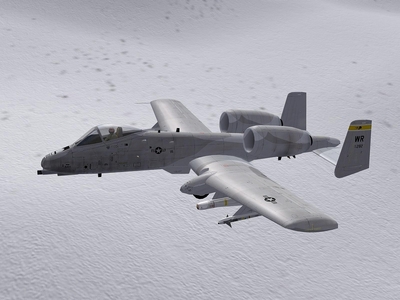
Looks good when flying over the America NW "Winter" terrain, too....
-
You mean like these?
-
Read here: http://forum.combatace.com/index.php?showtopic=12230
-
Would you like your Flanker Toasted or Fried?
-
Third Wire is well aware of that issue. Unfortunately, it cannot be rectified by any end-user mods, as it's in one of the core (dll) files.
-
The Flanker is nearing completion. It is a collaboration between MarcFighters and the Mirage Factory, so one can safely say that it's bound to be "twice as good". It will absolutely blow your socks off, as it's a truely complete model.
-
More than likely, the gun is either named wrong, or, it's a weapon that's not currently in your gundata.ini, and must be added.
-
Great work, Kout IRBMs will work after a fashion. If you recall, we made a sub-launched IRBM proof of concept video for SF almost two years ago, just before the initial release of OTC. Guidance is an issue, but there are a few work-arounds that one might employ.
-
To the best of my knowledge, F-4 Phantoms in all three US services were not equipped with chaff or flares during the Vietnam war, although a few USAF Phantoms were set up as "Chaff Bombers", during the latter days of that conflict.
-
Marcelo's Su-27 will have its own pit. He's posted WIP images of both. As for the MiG-29's pit, well, you're may have to wait a bit, but trust me, good things come to those who wait
-
The NR23 was already in SF, WoV, and WoE, as it is one of he default weapons for the MiG-17 series (and the add-on MiG-15, as well). If what you're seeking is an external 3D model, well, then you would have to create one. The question is, why? If it's for an existing aircraft, all you need to do is to line up the muzzle flash location with the position of the gun ports or muzzle tips of whatever model you are adding it to.
-
Just in case any of you were wondering about ThirdWire and TK, here's a nice, informative article about the man who is the driving force behind SF, WoV, WoE, and FE: Flying under the radar In a crowded gaming market, tiny Austin company makes its mark with niche flight simulator games. By Lilly Rockwell AMERICAN-STATESMAN STAFF Monday, December 25, 2006 Tsuyoshi Kawahito's bookshelf in his small West Lake Hills office tells his story. Books on game design and computer programming sit next to books on aviation history. Military strategy books rest near white binders filled with pilot manuals. And near the bottom sits the telltale yellow of "Small Business for Dummies." Kawahito, 38, runs Third Wire Productions, a one-man game development studio in Austin that makes flight simulator combat games. His latest game, released this month and available online, is called "First Eagles: The Great Air War 1918." Tsuyoshi Kawahito spends months at libraries, in museums and on the Internet researching the planes he uses in his flight simulator games, such as these from his newest creation, 'First Eagles: The Great Air War 1918,' a World War I game. "That is a niche market within a niche market," said Chris Sherman, who used to run the annual Austin Game Conference. "It's very tough." Third Wire typifies the under-the-radar game development businesses that flourish in gaming cities. Kawahito is unusual for surviving this long on his own in an industry that is tough for newcomes to crack. In Austin, there are about 50 computer and video game development companies. It is a shaky industry; game studios frequently shut down because of lack of funding. Given the odds, Third Wire stands out for being able to establish a solid revenue stream. Kawahito's games may sound obscure, but they have a devoted audience. Played by aviation enthusiasts and history buffs, his main clients are 25- to 40-year-old males, older than most computer gamers. He once got an e-mail from a 62-year-old asking to be a beta tester for his game. But he has never had a true hit. His most popular games sold about 100,000 copies worldwide. He's a gamer more than a businessman, and he is shy about promoting himself. He doesn't disclose revenue, but his games sell for about $30. Flight simulation games bring in about $22.3 million each year, according to consumer market researcher NPD Group. Microsoft Corp.'s "Flight Simulator" is by far the most popular, consistently ranking in the top 20 of best-selling computer games. The overall PC games market is a $1 billion market. About $11 billion are spent each year on video and portable games. A following of flight fanatics Kawahito's games are available through online stores and retail outlets such as Gamestop and Best Buy. His latest game is using a new online distribution model, which allows Kawahito to tap into a much larger worldwide market. He is more concerned about making fun games than ones that make him a lot of money. The company recently became profitable after years of being in the red. "If I make a game that is fun to play, then I am happy," Kawahito said. Called TK by his friends, Kawahito has a cadre of devoted fans, including one influential computer gaming guru: Alex Aguila. Aguila is one of the founders of Miami-based Alienware Corp., which manufacturers high-end gaming computers that cost $800 to $6,000. Alienware was recently bought by Round Rock-based Dell Inc. for an undisclosed sum. Aguila helped fund "First Eagles" because he wanted to play a flight simulation game based on World War I. It is designed to emulate the air battles over France. He gushes about Kawahito, saying he has revolutionized the flight simulation market. He said Kawahito builds games that allow players to add on to them. Players can create their own planes, maps and missions. "TK is a genius," Aguila said. "He is one of the most important developers in flight sim history." Other gamers say they appreciate the simplicity of Kawahito's games. "There aren't many bells and whistles and everything," said 47-year-old Rusty Casteele, a truck driver from Virginia, "just really good graphics that cater to the Average Joe." Casteele is a huge fan of Kawahito's games. For years he has tracked every game Kawahito has made, buying each one. "I loved 'Wings Over Vietnam.' I grew up in that era," Casteele said. "So when I put in that game, I can fly the F-4 Phantom that I watched on TV growing up. I can fly the F-15 Eagle that I watched on the news shows when Desert Storm was going on. I can fly those missions you saw on TV or heard about." Interests to industry guru Kawahito was born in Japan and moved to Los Angeles when he was 12. For a long time, he wanted to become a pilot, but his bad vision got in the way of that. "I knew I liked things that moved," Kawahito said. "Trains, cars, spaceships." In college, he planned on being an aircraft designer, so he majored in aerospace engineering and got his master's degree in the same subject from the University of Texas in 1996. Like many college students, he wanted to stay in Austin. His first job out of college was at Origin Systems, a groundbreaking Austin gaming company. "I sent them my résumé and told them I thought I would be good at this," Kawahito said. "I know games; I played them all throughout college. And I know aircraft." At the time, Austin-based Origin was working on several different flight simulator games. After working there a year, he moved to another studio in Baltimore to work on a different flight simulation game. That was when the genre started losing its popularity and many game publishers pulled their projects. "Everyone was getting out of the business, but I saw an opportunity," Kawahito said. "It was a niche market I thought I could capture and cater to." He moved back to Austin and started his own business in 1999. High productivity, low budget It wasn't easy at first. He dug into his savings to start Third Wire, funding his own game, "Strike Fighters," which took him three years to release. After two years, Kawahito's savings dwindled, and he subsisted on ramen noodles and McDonald's 99-cent hamburgers and by skipping oil changes for his 1998 Toyota Celica. "I think that is why my car broke down," Kawahito said. "I didn't have enough money for an oil change, and then it stopped working. I started riding the bus." But that phase didn't last long after his first games found a following. Publishers started funding his next projects, and Kawahito got a cut of the sales of each game. He's not rolling in dough, however. He rents an apartment in town. He replaced his Toyota Celica with a Toyota 4Runner. His office is bare-bones, with three small rooms and a reception area with no receptionist, only a twinkling Christmas tree to greet visitors. This month, his office is empty as he plans his next project. He let all of his temporary workers go because he didn't need them anymore. Kawahito is able to survive by churning out games faster than most developers do. He puts out a new game about every six months. "What he was able to do with such little funding is unbelievable," Aguila said. "Most developers would charge millions of dollars. He did it on a very small budget." Kawahito said his secret is creating a main engine that he uses to program his games. That way, he doesn't have to re-create an engine every time. He does months of research in libraries, museums and online, digging for history books and photos of old aircraft, and tries to re-create them as accurately as possible. Thanks to his degrees in aerospace engineering, he understands how to build an aircraft. He occasionally asks for outside help from pilots but gets most of his data for his games from his research. When he's ready to start creating a game, Kawahito hires a temporary team of three game developers. Six months later, they have a game. He doesn't think much about his business beyond his next project. But he has dreams of expanding beyond flight simulation games, maybe developing a war strategy game. Or perhaps even space combat. "Or if I continue to just do this, that would be great," he said. Source: http://www.statesman.com/business/content/...5thirdwire.html
-
Just in case any of you were wondering about ThirdWire and TK, here's a nice, informative article about the driving force behind SF, WoV, WoE, and FE: Flying under the radar In a crowded gaming market, tiny Austin company makes its mark with niche flight simulator games. By Lilly Rockwell AMERICAN-STATESMAN STAFF Monday, December 25, 2006 Source: http://www.statesman.com/business/content/...5thirdwire.html
-
Who can give it's name and location
Fubar512 replied to Loren Mash's topic in Mods/Skinning Discussion
Unfortunately, there is no sonic boom sound file in this series, nor is there a sonic boom event to link one to. What you're hearing is the compressing of the "up" doppler in-game, which almost sounds like a faint sonic boom. -
Perhaps he had a yearning for Colonel Sanders finest, and really meant "KFC".
-
Lexx is quite correct. I've set the max visible distance of the Tu-16 Badger to 40000 meters, and have seen AI-controlled F-14s engage them at or near that distance with AIM-54s.
-
Choppers aren't really supported as such in SF.
-
There really is no tutorial available for FMs, and writing one would require only a bit less work than writing a novel! CL0, CLa, CD0 and their respective tables determine lift at zero alpha, lift as determined by alpha angle (AoA), and drag at zero alpha. The former can be calculated by a rather involved set of formulae (Luckily, we have a few labor saving apps & spreadsheets that help us to maintain an acceptable brain cell count during and after the process ) The latter can likewise be (roughly) calculated by taking frontal surface area as it relates to the shape of the surface. Not an easy task, and one that I freely admit to have taken liberties with in order to arrive at "probable" values. The illustration below should give you an idea, as well as supply you with the actual formula: My suggestion is that you perform a search at Third Wire's site on the following topics: "Aero Values", "Stall Values", "Inertia Values". I hope this has been of some help to you.
-
Wpnssgt is currently taking a hiatus away from SF. That model was the first one he made, back in late 2002/early 2003, so the chances that he'll take it any further are pretty slim, at best.
-
-
There's no need to reinstall the entire game, nor, most of the time, the weapons pack. Simply deleting the weapondata.dat, and recreating one by validating the weapondata.ini with the weapon editor will usually fix this issue.
-
To any and all modelers who want to accept the challenge: We could use a North American B-45 Tornado. Reasons: 1) It was a contemporary of the IL-28, and a good match for it in many ways 2) It's not too common in the sim world 3) Lexx Luther will name you in his will (if you also create the RB-45 variant) 4) We can make good use of it in a few upcoming projects 5) Most importantly, It's just so kickazz cool! Update & Edit: Reason No. 6) Important Factoid: It was flown by Sony Tuckson in one of his adventures!!!
-
As promised on the FE forum at SimHQ, here's an alternative EnvironmentSystem.ini file that features a somwhat "bluer" sky color, increased sunlight and ambient light levels for a "warmer' appearance, and a correction in the file's latitude (the default has an incorrect value). To install and use: First, download and install Cellinsky's cloud mod, here: http://forum.combatace.com/index.php?autom...p;showfile=2723 Then, download the attached zip file, "FE ENVIRONMENTSYSTEM.ZIP" to your desktop, and extract the file contained within to the Program Files\ThirdWire\WWI\Flight folder, overwriting any existing environmentsystem.ini file when and if prompted. And that's all!