


Spinners
-
Posts
9,300 -
Joined
-
Last visited
-
Days Won
497
Content Type
Profiles
Forums
Gallery
Downloads
Store
Everything posted by Spinners
-
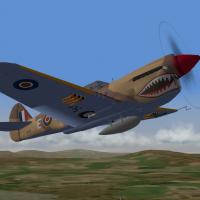
Curtiss Kittyhawk 1A - No.19 Squadron, Royal Air Force, 1938 Inspired by the classic Spitfire picture below my 'what if' needs Curtiss to have got the XP-40 into the air a lot earlier...
-
Phantom Phrenzy!
-
On borrowed time
-
Defender of the Faith
-
Snow Patrol
-
I thought that came in much, much earlier.
-
Canadian Tourist
-
BAC Thunderstrike Mk.56 - No.1 Squadron, Belgian Air Force, 1974 (Stock Third Wire Mirage Serial Numbers are used).
-
Saab J32 Lansen - HävLLv 31, Ilmavoimat, 1963
-
Trial and error. You'll get quicker with experience.
-
When I saw the title I thought you'd joined DCS... and how lonely must that be?
-
Valmet Aviation VLH-1 'Taifuuna' - Ilmavoimat, 1949 In the immediate aftermath of World War 2 the Finnish Ministry of Defence (Puolustusministeri) embarked upon a bold programme to build two indigenous fighter aircraft for service with the Ilmavoimat with Hävittäjä-A being planned to be an interim piston-engined fighter aircraft to enter service in 1948 whilst the more ambitious Hävittäjä-B was planned to be a jet propelled fighter aircraft to enter service in 1950. To facilitate the indigenous production of these fighter aircraft the Parliament of Finland quickly created the state-owned Valtion Lentokonetehdas aircraft company as part of their new Valtion Metallitehtaat conglomerate. By early 1946 the Hävittäjä-A project had become the VLH-1 (with a design heavily influenced by the North American P-51 Mustang but powered by a Rolls-Royce Griffon 73 engine rated at 2,250hp with fuel injection) whilst the more advanced Hävittäjä-B (VLH-2) project resembled the contemporary Saab 29. However, the VLH-2 was cancelled in October 1946 due to strong Soviet objections voiced during the Paris Peace Conference which had a major impact on the future size and shape of the Ilmavoimat. With all resources now focused on just one project development moved smoothly during 1947 with the VLH-1 prototype taking to the air on August 15th, 1947 from the small Valtion Lentokonetehdas company airfield alongside the Tampere production line. Entering service as the 'Taifuuna' (Typhoon) in 1948 a total of 60 VLH-1's were produced serving with three Ilmavoimat squadrons until they were replaced by Supermarine Swifts during the mid-1950's.
-
Runs smoothly for me and without stuttering.
-
Finnish Fishpot
-
Down to Earth
-
Supermarine Spitfire F.22's - No.2 Leinster Squadron, Irish Air Corps, 1948 aka 'The Battle of Three Rock Mountain, Dublin Bay'
-
- 5
-

-
Peace in the Valley?
-
YAY! The download area is looking awesome!
Spinners replied to mysonsaysaudi's topic in General Discussion
Amen to that bro!! -
Up at 04.00hrs to visit our head office and about 400 miles under my wheels so coming home to this is sheer bliss!!! Downloading now - see you in a Spitfire 22 sometime - smoke me a kipper I'll be back for breakfast - tally ho!
-
Wings Over Europe (Catchy title that)
-
The sharp end...
-
 Chapeau! I love this sex plane!
-
Fast and Furious!
-
 Cheers mate - this is delightful!!