

Fubar512
-
Posts
8,418 -
Joined
-
Last visited
-
Days Won
42
Content Type
Profiles
Forums
Gallery
Downloads
Store
Everything posted by Fubar512
-
canopy animations
Fubar512 replied to zmatt's topic in Thirdwire: Strike Fighters 1 Series - Mods/Skinning Discussion
Did you in any way say that the canopy was open, in your original post? You simply asked which lines to change, without detailing the whys and the hows. There are over 500 add-on models. Not all of them have opening canopies. My reply was based on the the question that you asked. -
canopy animations
Fubar512 replied to zmatt's topic in Thirdwire: Strike Fighters 1 Series - Mods/Skinning Discussion
I'll bet that you don't have a system entry for the canopy under its parent model node, whereas the data.ini that you downloaded, does. -
canopy animations
Fubar512 replied to zmatt's topic in Thirdwire: Strike Fighters 1 Series - Mods/Skinning Discussion
In some aircraft, the canopy is set as a "highlift device" and opens below a set airspeed. In others, the model's FM creator may have not included an opening canopy in the data.ini, and one must find the proper node by perusing the model's .lod file, using a suitable hex-editor. And, in some cases, one's simply SOL, as the model may not have an opening canopy. -
I highly doubt that the RCS was better than a '117's...look at that tall, flat vertical stab. No stealth design has one. Also, by the early 1980s, low observable technology had progressed away from faceted surfaces to the conformal designs that one sees in the B-2, F-22, and the F-23.
-
All the End years (or, even the start years, if you're into that).
-
LOL....it's hiding in plain sight.
-
In the title's main folder.
-
Poor FPS
Fubar512 replied to DamonSchumi's topic in Thirdwire: Strike Fighters 1 Series - General Discussion
The Willamette Core and its associated chipset were optimized for RAMBUS, and RAMBUS boards were available throughout it's service life, Oct 2000 - December 2001. The Northwood Core was released in January of 2002, the year that you stated that the P4 Willamette was introduced. -
Poor FPS
Fubar512 replied to DamonSchumi's topic in Thirdwire: Strike Fighters 1 Series - General Discussion
Actually, the P4 was intro'd in late 2000. And, it supported SSE2. And, it was designed for RAMBUS, not SDRAM, which was the entry level, "el cheapo" solution to placate those who found RAMBUS memory a bit dear. And, by 2002, the P4 platforms had already made the move to DDR. And, there is no way that the sort of computations necessary to simulate a complex, large-scale virtual world (one spanning several thousand square kilometers), can simply be offloaded to the GPU, with today's technology. While I agree that it would be nice to have a multi-threading in the series, it's something that's unlikely to happen soon, as ThirdWire is essentially an "Army of One". -
Poor FPS
Fubar512 replied to DamonSchumi's topic in Thirdwire: Strike Fighters 1 Series - General Discussion
IIRC, The only flight sims that are scripted for multithreading are F4 and FSX. -
Poor FPS
Fubar512 replied to DamonSchumi's topic in Thirdwire: Strike Fighters 1 Series - General Discussion
Horizon Distance = Calculated by CPU. Mirrors = Reflections calculated by CPU. Shadows = Position calculated by CPU. Transform & Lighting (clouds, fire, smoke trails) = GPU. Shaders = GPU. Complex bitmaps (object skins, terrain tiles) = GPU. Any more questions? -
Poor FPS
Fubar512 replied to DamonSchumi's topic in Thirdwire: Strike Fighters 1 Series - General Discussion
Are you serious? Far more complex? A game like Crisis is GPU-dependant, any decent flight sim is CPU dependant. That's also the reason why you don't see any serious flight sims on gaming consoles. -
Nike Ajax/Hercules?
Fubar512 replied to a topic in Thirdwire: Strike Fighters 1 Series - Mods/Skinning Discussion
http://forum.combatace.com/index.php?autoc...p;showfile=7684 -
The Roland (like the SA-8), is a small radar-guided SAM. Therefore, its launch platform can detect, track, and engage targets at a greater range than one that's equipped with IR-SAMs
-
Nike Ajax/Hercules?
Fubar512 replied to a topic in Thirdwire: Strike Fighters 1 Series - Mods/Skinning Discussion
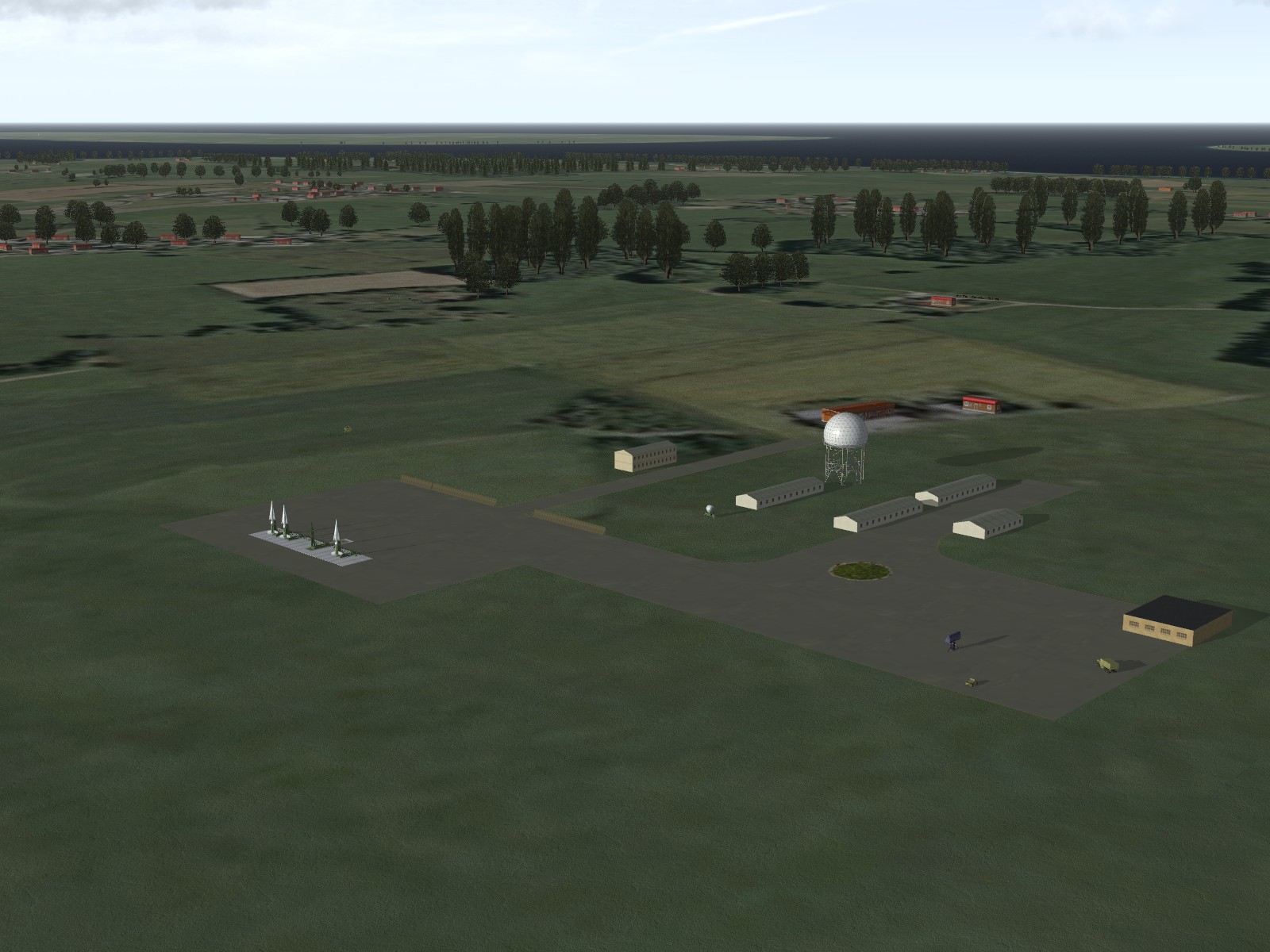
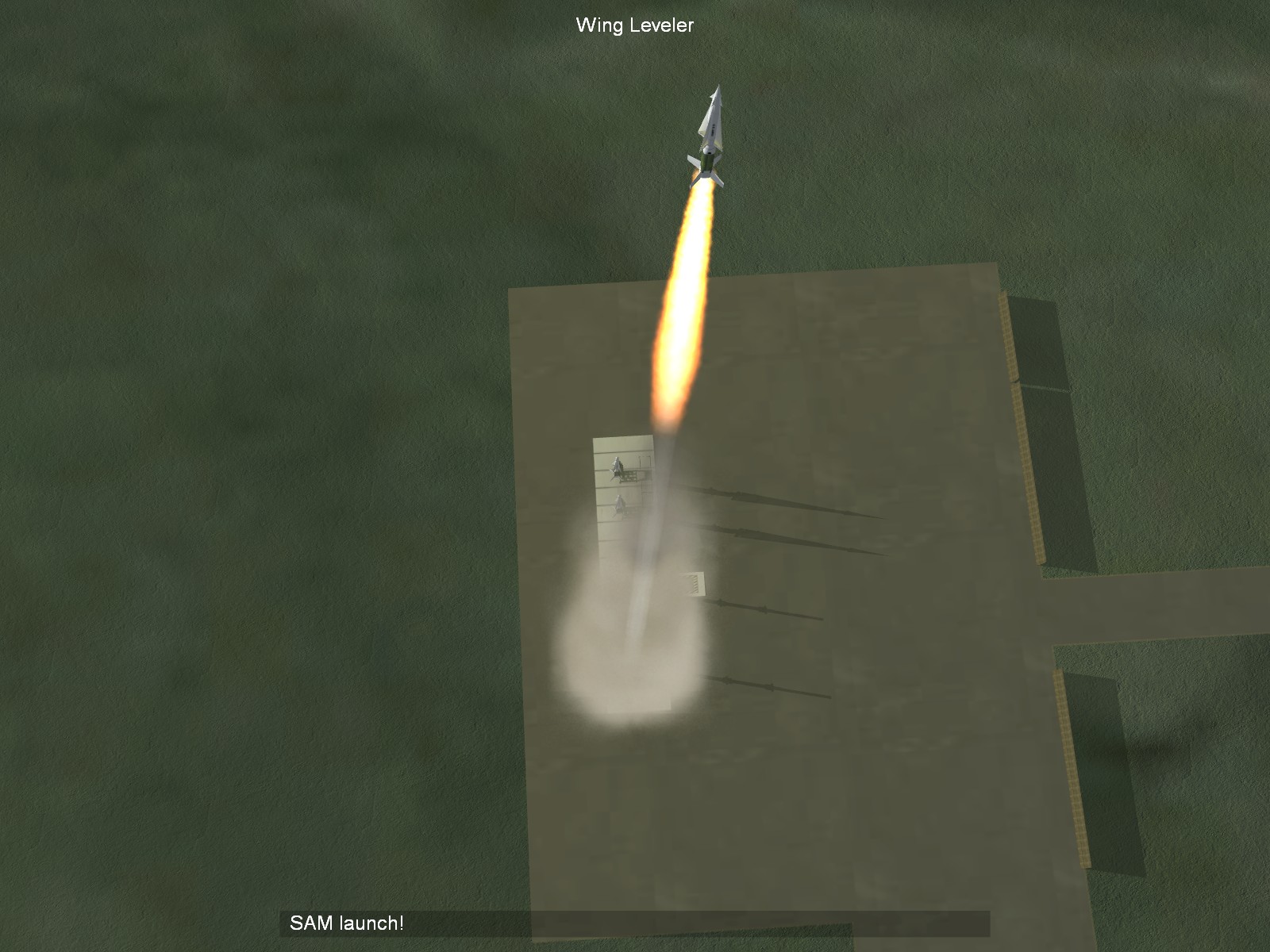
And it's a nice layout, indeed
-
Poor FPS
Fubar512 replied to DamonSchumi's topic in Thirdwire: Strike Fighters 1 Series - General Discussion
First off, this is a flight sim, not a first person shooter. A frame rate in the mid-20's to mid-30's with all the eye candy turned on is quite playable and completely acceptable. Back in 1997, a popular flight sim was Hornet Korea, by Graphsim . It was locked at 20 FPS by the developer, and unless you ran a frame counter, you'd never know the difference. -
That's why you're better off NOT altering the water mesh height. The correct fix is to change the Z-buffer level.
-
Prop FM
Fubar512 replied to zmatt's topic in Thirdwire: Strike Fighters 1 Series - General Discussion
Working on the issue: http://forum.combatace.com/uploads/1229741...54_12436257.wmv -
Chapter 8: The Vega's Demise By the time spring had rolled around, I’d managed to put an additional 1,000 miles on the Vega’s odometer, quite a feat for a full time student who lived a scant two city blocks from school. Leaded premium fuel sold for 60 cents, and the Vega’s postage stamp-sized fuel tank (IIRC it was listed as being just over 11-gallons) never seemed to be able to take more than $6.00 to fill, even when the needle was on “E”. The result of this was, that even on my supermarket clerk’s take home salary of $25 per week, I was able to go cruising almost every night. And, as I mentioned before, the Vega was, by the standards of the day, astonishingly frugal for a V8-powered car. Oh man, those were the days…. Muscle cars abounded, and it was all that I could do not to get into an impromptu drag race at every other stop light. Of course, all that hot-shoeing around was starting to take its toll on the Vega’s driveline. In the ensuing month since I first drove the little red beast out of Mr. Taylor’s garage, the differential had begun to develop a bit of slack, which announced itself with a noticeable clunk whenever the transmission was placed in gear. So, I drove it over to his garage, hoping that it was something easily repairable, like a universal joint. Mr. Taylor took one look at the balding right-rear tire, and shook his head in disappointment. “Well, what did you expect? Looks like you’ve been jumping on it every single chance you get.” He then took hold of the right rear wheel, and attempted to shake it. The entire axle appeared to move a fraction of an inch, and a faint metallic clunk was heard emanating from the area of the rear-end’s “banjo”. “It’s not a U-joint, and your ‘diff sounds like it’s not too long for this world. If I were you, I’d start looking around for a replacement in the boneyard.” Now, Vegas were all too common in junkyards, so getting a rear-end for one wasn’t a problem, but if I had to shell out my hard-earned cash for a used rear, I wanted one that had at least half a chance of holding up. And that meant one from the Vega’s V-8 powered cousin, the Chevrolet Monza. There was one problem; Monzas were practically non-existent in scrap yards back then, as that car had only been introduced during the previous model year. So, the Vega and I soldiered on with a wounded differential, turning down all challenges, knowing that the next burnout might be the last one. Spring break fell on the second week in April that year, just in time for a week long record-setting heat wave in the NY Metro area. Daytime highs reached the mid-90s (about 20-25 degrees above normal for that time of year), and provided a true test of the Vega’s cooling system, which came through with flying colors, thanks to the Motion Performance radiator, Flexalite fan, and Monza water pump. On the last Saturday of our break, and coincidently, the last day of the heat wave, my friend Mike and I decided to drive up to northwest ‘Jersey and put in a day of trout fishing. I remember picking Mike up at his parent’s house just after 4 AM, and listened to him whine about his needing a coffee and buttered-roll before hitting the road. We pulled into the parking lot of an all night diner, and went inside. We'd no sooner made it through the door, when we heard a loud crash….and I just knew it wasn’t good. I ran outside just in time to see the back of a delivery truck jammed up against the Vega’s left side. Closer inspection revealed the driver’s door to be caved in so severely, that its inner panel was jammed against, and had deformed, the steering wheel. But that wasn’t the worst of it. The roof of the car was actually bent upwards right at the driver’s door, and the windshield now had a crack running from the cowl to the top molding. The car was totaled. It took four weeks for the trucking firm’s insurance company to settle on a figure, and I was expecting the worst. After all, it was just a Vega. When the official-looking envelope finally arrived, I was pleasantly surprised to find a check for almost $800 inside. That, coupled with another $450 that I managed to get for what was left of the car (the car’s small block V-8, swap kit, and radiator were all items that were “in demand’), allowed me to finally buy my first Muscle car, a black on black 1968 Chevelle SS396. But, that‘s another story
-
Here's what's essentially a clone of my old Vega, but with a 350 in place of the 283. By the looks of the wheels (four-bolt hubs), its still using the stock 6.5" differential ...not a good thing with a 350 on the other end! http://classiccars.com/59504.car
-
SF2 and Directx 10
Fubar512 replied to Piecemeal's topic in Thirdwire: Strike Fighters 1 Series - General Discussion
Just update to the latest DirectX: http://www.microsoft.com/downloads/details...;displaylang=en -
Snoopy's Gone......
Fubar512 replied to 542Tiger's topic in Thirdwire: Strike Fighters 1 Series - General Discussion
What is REFFED? Kicked out of the game by a referee? I'm sure you meant RIF'd (Reduction In Force). -
Unfortunately, There are no sub-routines to add. There are no magic declarations or values you to add to either an aircraft's data.ini, nor to the aircraftobject.ini. No amount of fiddling will result in a virtual Robin Olds or Randy Cunningham stepping into your wingman's F-4. The AI is scripted to either engage BVR, head on in a merge, or in tail chase mode. The aircraft type and its capabilities as defined within its data.ini (I'm not even going to go into that, sorry), and determine the speed at which an AI aircraft can fight and maneuver. There are global parameters that one can mess with in the aircraftobject.ini, but after 6 years of tweaking (both by the developer and by yours truly), I can state with confidence that the current AI and default aircraftobject values are about the best I've seen to date. There are a few exceptions, and those mostly deal with weapons delivery.
-
PART 7 To put things in their proper context, lets look at some figures. The Vega now weighed 2650 lbs, according to a scale at a nearby truck stop (Dagger knows which one ). Its 1966 vintage 283 cubic inch small block, had zero emission controls, a 9.0:1 compression ratio, and in stock form was rated at 195 gross HP. With the addition of headers, and the four barrel manifold and carb, I'd say that figure would have been bumped by at least 50 horses, to around 245 BHP. Re-rated to SAE net values, I'd say that it was good for a conservative 200 SAE net HP. Just to give you an idea how light the Vega was, in 1982, I purchased a brand new Mustang GT. On the same scales, it registered just over 3000 lbs, and with it's 160 HP 5 liter V8, it was considered the quickest domestic car produced that model year! The Vega would have eaten its lunch. A typical "performance" car, circa 1975 or 76, would have been either a Camaro RS with am emissions control-choked 350 (165 SAE net HP, in a 3600 lb chassis), or a Firebird Trans Am with a wheezing 7.8:1 CR 400 cube mill (185 SAE HP, in a 3700 lb chassis). Both cars would have had a very lazy rear end ratio (2.73 or 2.56), that combined with their 27.5-inch tall tires, did little to enhance torque multiplication off the line. Now the Vega was about 1000 lbs (half a ton) lighter, had slightly more HP, and despite it's 2.53 axle ratio, it's short, 22.5" tall tires effectively gave it 17% gear multiplication advantage over the two aforementioned F-bodies. I usually creamed either of them, quite badly. However, older muscle and pony cars were another story. I soon learned to avoid pre-1972 340-powered Dusters, Darts, Barracudas, and Challengers. I likewise stayed away from any pre-1972 small-block Chevrolet Novas or Camaro SSs. Mustang Mach 1s, however, were usually pushovers, with the exception of the occasional 70-71 351 Cleveland-powered cars, and/or any big block "Stangs. I learned to never challenge anyone from a full stop, as the Vega's lack of traction made it pointless. I'd get them to run me from a 10 MPH roll, and usually sand-bagged them quite handily.
-
And a happy, healthy, and safe New Year to you and yours, Mannie