

Fubar512
-
Posts
8,418 -
Joined
-
Last visited
-
Days Won
42
Content Type
Profiles
Forums
Gallery
Downloads
Store
Everything posted by Fubar512
-
PART 6 The next two to three weeks went by a blur, as I worked on the Vega every day, getting the new oil pan, new oil pump, and pick up mounted on the 283. Speaking of which, the 283’s original flex plate had to be replaced, as it would not work with the Turbo 350 trans. Luckily, Mr. Taylor had a suitable replacement, donated from a 350 cube small block, that he laying around. Much to his displeasure, though, I elected to save money on the torque-converter, by reusing the Vega’s stock 10.5” unit, with its rather high (for a stock unit) 2200 RPM stall speed. I also saved more than a few dollars lot by retaining the Vega’s acorn-sized 6.75” non-positraction differential (for the time-being), a move that led Mr. Taylor to declare the whole project a “ticking time-bomb”. Motion offered a beefy, narrowed, 12-bolt postraction rear that was a direct bolt in, but the $895 that they were asking for that unit was a bit too steep for my pocket book. Mr. Taylor then surprised me by topping off the 283 with the cast-iron intake and Rochester Quadrajet carburetor that had been the original setup on his 1969 Corvette (he’d replaced it with an Edelbrock aluminum manifold and Holley carb soon after acquiring that car). I had to spring for a carburetor rebuild kit, but found the process of going through the “QJ” fascinating, all the more so due to Mr. Taylor’s hand’s on style. We crowned the whole mess with a 14x2” Cal-Custom chromed, open element air filter. Next on the agenda, was replacing the 283’s umbrella valve stem seals, to ensure minimal oil consumption. Then came a distributor rebuild; in went a fresh set of ignition points and condenser, topped off with lighter (quicker) Mr. gasket advance weights and springs. The engine was finally assembled, painted, and dropped into the chassis, on a weekend in early February of ’76. All that was left was to install the radiator, fuel and transmission cooling lines, throttle and transmission kick down linkages, and the exhaust system. Speaking of which, we discovered that the Vega had scant room for a traditional exhaust system. Mr. Taylor welded up a nice compromise, using the tubing we’d purchased, with 45-degree angles aft of the Corvette mufflers, exiting just ahead of the rear wheels, “zoomy pipe” style. The Vega was finally declared road-worthy by the third week in February, just in time for a break in the weather. I recall leaving my job at the supermarket early that balmy (for late winter’s night in NJ) evening, trying to get to Mr. Taylor’s shop before ten. I made it with a few minutes to spare, and found that Mr. Taylor had already started the Vega, and had it pointing out the door. “I thought that I’d try her out, but I didn't’t want to spoil your fun. Take it easy, we still don’t know how she’s going to behave.” I found his fears to be unfounded, as the Vega ran, stopped, and even handled, just fine. Of course, I couldn't resist giving the throttle a quick stab, just to hear the moan of air rushing into the open element air cleaner, and the snarl of the exhaust blatting out of the dual exhausts…which everyone heard, all the way back at the shop, on that quiet, late winter’s night. I pulled back into the garage, with what must have been an ear-to-ear grin. Later, Mr. Taylor admitted that he had taken her out just after dinner, found that the throttle and transmission kick down cables needed an adjustment, and that one of the mufflers was striking the underside of the unibody. He performed the necessary tweaks, and had her ready almost an hour before my arrival. For the next week or so, I exercised remarkable restraint for a 17 year-old, driving the 2650 lb. V-8 Vega like an old lady, while keeping track of its fuel and oil consumption. I found the former to be remarkably similar to the four-banger’s (18-19 MPG average), and the latter, to be non-existent. This period of restraint didn't’t last long, however. I soon found myself throwing caution to the wind, tempting the durability of the acorn-sized differential with a few hole shots, and discovered that traction was a pipe dream with that combination. It was all but impossible to keep the diminutive B70-13s (175/70-13 by today’s P-Metric rating) from melting into oblivion under hard acceleration, below 15 MPH. Even when traveling as fast as 45 MPH, stabbing the throttle and invoking a sudden kick down into a lower gear would often result in a screech from the right rear tire. Punching the throttle from a standing start would result in the right rear spinning out of control, with the transmission actually shifting through all three gears before the tires would stop spinning, usually at or around 25 MPH. At that point the tires would finally gain traction, forcing the transmission to snap back down into second gear. I’m sure that did wonders for the unit’s longevity. With all that in mind, I set out to hunt for the Vega’s first victim, and in those halcyon days, it wasn't too hard to find one. I pulled up alongside a 1975 Trans Am that was stopped for a traffic light on a nearby highway. The two occupants paid the Vega scant attention, until I took it out of gear and revved the engine. The V-8 rumble and exhaust vapor pluming up from the twin tail pipes quickly caught their interest, and they responded by following suit. When the light turned green, the Trans Am took off hard, with nary a screech from its wide-oval tires, instantly jumping several car lengths ahead. I tried to ‘walk” the Vega off the line, but it was all in vain, as the right rear tire churned away in a cloud of rubber smoke. I did, however, manage to contain the wheel spin to first gear, only. When I pushed the lever into second, the tires bit, and the Vega started pulling like mad, the lion-hearted small block moaning through the wide open secondaries of the QJ, and roaring through the Corvette mufflers. By the time I had reached 75 MPH, the Vega had blown past the Trans Am, and was starting to put distance between us. All too soon, I found myself braking for a red light. The occupants of the T/A jumped out and surrounded me, demanding to know what the Vega had under the hood… Eight cylinders, all mine! All right, Hold tight, I’m a highway star! Nobody’s gonna take my car I’m gonna race it to the ground Nobody’s gonna beat my car It’s gonna break the speed of sound Oooh, it’s a killing machine, It’s got everything Like a driving power, Big fat tires and everything.. I love it! I need it! I bleed it! Yeah, it’s a wild hurricane! All right, Hold tight, I’m a highway star! - Highway Star, Deep Purple, 1973
-
PART 5 At about this time, I realized that my part-time, after school job at the local supermarket just wasn't going to cut it. Even though I’d recently received a 25-cent raise (bringing my hourly wage up to a whopping two dollars), the 16-18 hours per week that I was putting in was not going to cover the bills. I again approached Mr. Taylor with my dilemma, confessing that the project was going to run beyond the 1st of the year because of my finances. He immediately came up with a solution. A former classmate of his was a foreman at a local trucking company, and was looking for someone reliable and mechanically inclined to perform odd-jobs in and around the yard. He could offer me a little more money, and more importantly, a steady 24-32 hours per week. Although that meant that I would have less time to work on the Vega, the added wages would allow me to purchase the parts I needed to finish the project within a more reasonable time frame. I agreed, and Mr. Taylor contacted his friend. I walked the mile or so to the trucking company, and met with Mr. Taylor’s friend, a fast-talking no-nonsense type, by the name of Tony. Tony gruffly explained to me, that due to NJ labor laws (and because of the “hazardous” nature of working in and around the yard), he could only hire me if I was 18 years of age or older. So, I did the time-honored thing, something that one cannot get away with in this day and age of computers; I lied on my application. Tony put me to work almost immediately, drawing what seemed to be a prince’s salary at the time, $3 per hour. Hooray!!!! It was just my luck that the winter of 1975-76 was the coldest on record. It seemed that the mercury never rose above 10 degrees Fahrenheit (-12 C) during the entire month of January. Trust me, you really don’t want to know what it feels like to work outside in that weather, with diesel fuel-soaked gloves, and nasty a sub-zero wind chill factor. But, I was raking in almost a much in a week, as I was making in a month’s time at my old supermarket job. And, I started dumping money into the project. A pair of Corvette mufflers, assorted lengths of 2.5” exhaust pipe, exhaust hangers, 2.5” header reducers and gaskets, a full gasket set for the 283, a new fuel pump, a set of Gabriel Strider adjustable shocks, and other assorted odds and ends. Yes, it was a happy time…until it ended abruptly. After less than three months on the job, I was called into the office, to fill out some insurance forms. When the secretary sent them in, the insurance company (after running my Social Security number), notified them that I was not yet 18. Out the door I went! But luckily, I’d managed to save an additional $600 or so.
-
PART 4 It was early November by the time we rolled the Vega into Mr. Taylor’s shop. And, yes, I meant Rolled. The Vega’s 2.3 had been burning about a quart of oil every 100 miles or so when the project began, and its oil consumption seemed to be getting worse with each passing day. It was in fact so bad by then, that I was afraid I would be pulled over and fined for violating NJ’s emission laws, as the Vega was now constantly emitting a chocking blue-gray cloud, even at idle. The first order of business, was draining the engine of fluids, and removing it from the vehicle. Just before we did so, Mr. Taylor carefully measured the Vega’s ride height. “The 283’s going to scale quite a bit more.” He explained. “We need to weigh both engines, and then, measure the stock ride height, so we can make sure that it stays about the same, using the replacement springs that came with the swap kit.” As I recall, we only needed a bathroom scale to weigh the original Vega mill, as it tipped the scales to just under 300 lbs. The 283 was another story, altogether. We took friendly bets as to its weight, and Mr. Taylor won that one (of course), as the small block Chevy pulled the needle down to the 540 lb mark, fully dressed. The next afternoon, when I arrived at the shop after school, Mr. Taylor had a brush, a bucket of water, and a can of Engine Brite waiting for me. “OK, cleanup time.” He said. “I want that engine compartment spotless, and then you can do the same for the 283.” As I recall, it took almost two afternoons of scrubbing until both were cleaned to his satisfaction. To this day, every time I catch a whiff of Gunk or Engine Brite, my mind drifts back to that long ago week, in November of 1975. Now came the “good” part, spending my hard-earned cash. In the ensuing month since the project began, I had managed to scrape up an additional $75 from my paltry wages, giving me a total of $575 to invest into the project. And it went fast. $225 for the swap kit (motor mounts, headers, and front coil springs). A bargain basement $155 for a custom radiator from the same source. And another $195 for a brand new, Chevy Monza V-8 oil pan & pickup, “shorty” style V-8 water pump, and V-8 throttle & transmission kick down cables, from our not-so-friendly local Chevrolet dealer. To put these “low” prices into perspective, $575 in 1975 dollars equates to $2,418.95 in today’s currency! It was a sobering experience. And I still needed to part with more….
-
F-4N Phantom II
Fubar512 replied to pappychksix's topic in Thirdwire: Strike Fighters 1 Series - Mods/Skinning Discussion
No, and Randy Cunningham even went as far as eschewing anything more than a solitary centerline drop tank, preferring maneuverability over added weight. -
PART 3 The previous year, I’d taken an elective auto-shop course, to fill out my required curriculum. The auto-shop instructor back then, was a gentleman, whom I’ll refer to as “Mr. Taylor” (not his real name). Mr. Taylor was, as least to my 17-year old way of thinking, a study in contrasts. He often drove to school in his ’69 350/350 Corvette, yet he seemed rather dowdy for his age. He did not smoke, did not use profanity, and was rather soft-spoken, yet, he had absolutely no tolerance for what he referred to as “punk” behavior. By that, he meant being obnoxious and loud-mouthed, or driving recklessly. He would help anyone out, unless he found out that they’d broken either of those cardinal rules. He was also firm believer in teaching by “the hands on method”, insisting that anyone can accomplish just about anything they set out to do, if they put their minds to it. Most importantly, though, Mr. Taylor also had a nice 4-bay shop, located a scant few blocks from school, that he often used for pet projects as well as for whatever side work he could drum up, to help pay the bills. I approached him regarding the possibility of renting space at his garage for my project, and the first question he asked me, was “How much do you have to spend?” “Uh, well, I have $500 dollars, and the basic swap kit costs $225.” He seemed to mull this over for a moment, and confessed that he’d read about the swap I wanted to perform, and explained that I would also need an oil pan, a new radiator (the stock Vega unit was not sufficient to cool a V-8), an exhaust system, throttle and transmission kick-down cables, a new engine fan, a short water pump from a Corvette, new transmission cooler lines, etc., etc. etc. In short, he said that I’d probably need close to $750, in parts alone, and that was just for starters! I was devastated, as it would take me several months just to save the additional $250 from the meager wages that I earned at my minimum-wage, after school job. “Well, I don’t see any harm in rolling it in to see just what we’re getting ourselves into. Swing by after class, and help me make some room. In fact, I’ll tell you what, If you sweep up, organize my tool boxes, and help keep the shop clean for the duration of your stay there, I won’t charge you for it.” Wow! The first car in was the donor car, the Malibu wagon. Under Mr. Taylor’s tutelage, my friends Mike, “Fetch”, and myself had the engine drained of fluids, out of the car and onto an engine stand, in less than two days. Mr. Taylor then took an acetylene torch to the Malibu’s roof, cutting a hole in it from the passenger compartment, clear back to the tailgate. I looked on, puzzled as to what he was up to, when he motioned me over to a pile of scrap metal. “Toss it in, all of it….”. In went dozens of brake drums, brake rotors, manifolds, cylinder heads, steel rims, starter motors, alternators, control arms, old mufflers and exhaust pipes, etc. We essentially emptied the shop (and its attached lot) into that one car. At one point, Mr. Taylor pumped the Malibu’s tires to 45 PSI, to keep them being flattened by the added weight! Just when we thought that we were done, he pointed to a pile of differentials, and had us throw them in as well. To top it off, he had us push the lumbering wagon under the same chain hoist that we’d use to remove its engine, and used that to throw in a couple of scrap engine blocks! There was a method to his madness; The next day, a tow truck operator who owed him a favor, dragged the laden Malibu to the scrap yard, where it was now found to weigh in excess of 8,000 lbs, and where it fetched a king’s ransom in scrap value…a cool $100!
-
PART 2 At that time, an uncle of mine had a well-worn, 1966 Malibu station wagon powered by an otherwise, good-running 283-cubic inch (4.6 liter) Chevrolet small block V-8. He’d used the car almost every day, to drive the five miles to and from his longshoreman's job, in Port Newark. While the wagon had less than 50,000 miles on its odometer, the body had rusted away to almost nothing, both due to the aggressive use of salt on NJ roads during the winter, and his preference for parking the car pier side, at his job. He was trying to sell it as basic transportation for a mere $100, but had no takers, as it looked really bad (he’d actually had to screw a slab of wood onto the floor boards in front of the driver’s seat, as the sheet metal floor pan had rusted completely away!). I offered him $50, and he refused the cash, offering to give me the car for free! One problem solved….now I just needed a place to work on it. Not that I knew the first thing about performing an engine swap, mind you…
-
The rear drums on those H-bodies had a self-adjuster mechanism that my auto-shop teacher likened to that on a 1940's Ford Also, the trick with changing the last two driver's side plugs on 75-79 Monza 262/305 V-8s, was to remove the left front tire, and get to them through the wheel well. As you'll read later on (as soon as I get off my lazy butt and finish writing this), I had to buy a few Monza V-8 parts to finish my swap...putting me well over my budget.
-
Recently, while going through an old box full of documents, I found a receipt from Motion Performance, in Baldwin, NY, for a basic “Super Vega” kit (motor mounts and headers), that I had purchased in the fall of 1975. That brought a smile to my face, as the memories of my first project car flooded back. I had reached legal driving age in NJ, in late August of 1975, and was busy thumbing through the classified section of my local newspaper, looking for a suitable car for myself. Something that I could afford on my $500 budget. There were loads of cars in that price range, 8-10 year old compacts and intermediates, but I yearned for a true muscle car. I dreamed of GTOs, big-block Chevelles, Charger R/Ts, and Mustang Mach 1s, but found that the majority of them were selling for $1,000 and up, a bit beyond my reach. My older brother offered me a short term solution. He’d give me his then four year old Vega GT, as it was essentially worthless on the used car market, and was slow enough to keep me out of trouble. The Chevrolet Vega was GM’s answer to the wave of foreign cars from Japan and Europe that were starting to make inroads on the domestic market, during the late 1960s and early 1970s. In typical GM-fashion, the car had been rushed to the market, with a crappy long-stroke, SOHC 2.3 liter, aluminum block four cylinder, that was topped by a non-cross flow cast iron head. That engine was notorious for over-heating, blowing head gaskets, and wearing out its aluminum cylinder bores within a few thousand miles. To illustrate this, my brother’s car, at a measly 36,000 miles, had already had one engine replaced on warranty, and the second one was starting to go through lube oil almost as fast as one could replenish it. The rest of the car wasn't too bad, as it was probably the most attractive of the three domestic sub-compacts on the market at the time (the other two were the Ford Pinto, and the AMC Gremlin). The Vega my brother had offered me, was painted "Mille Miglia" red, and was equipped with the GT package, which endowed the car with an upscale interior, full instrumentation, front and rear sway-bars, and 70-series radials on attractive (albeit minuscule) 13x5” styled steel rims. With an almost 50/50 front-rear weight distribution, the car handled well. In fact, so well, that under hard cornering, it would often send what little oil remained in the unbaffled sump up the side of the block, resulting in zero oil pressure! The rest of the car was unremarkable, with the aforementioned 85 HP, 2.3 liter mill, turning a Turbo Hydramatic 350 automatic transmission (rather overkill for that setup), and spinning a 2.53:1 ring and pinion. It was no rocket, as I timed it in a 0-60 MPH dash using a stopwatch, at just a tick under 15 seconds. In other words, paint drying speed. By the end of September, the engine was smoking badly, and there was no way that I could have it overhauled on my budget. But, just as I was ready to give up on it, a solution presented itself…. I had been reading about an outfit in Long Island, named Motion Performance, that was shoehorning Chevrolet V-8s into Vega engine compartments. They even offered a kit, for the DIY crowd. Now, all I needed was a Chevrolet V-8, and a place to work on it. I soon learned that the old adage “Be careful what you wish for” was all too true…. To Be Continued Big Block Motion Super Vega Video
-
Opening canopy of aircraft?
Fubar512 replied to Madprof's topic in Thirdwire: Strike Fighters 1 Series - General Discussion
CanopyAnimationID=3 For all the TW F-4 models. -
Ha ha.....fooled you!!!!!! You were looking for evidence of eels in the cockpit, and overlooked the one "hiding" in plain sight, pretending to be a refueling probe.....
-
Su-24? Never heard of it........
-
ECM vs Gainful...
Fubar512 replied to Lt. James Cater's topic in Thirdwire: Strike Fighters 1 Series - General Discussion
In real life, stealth only applies to high-frequency (giga-Hertz) acquisition radars. Low frequency (search) radars can "see" a stealthy aircraft, albeit at a somewhat diminished range. Also, stealth aircraft really do not normally employ jammers (only as a last recourse), as that would render the entire concept of stealth, a moot point. In theory, any jammer can, at some point, be resolved down to a point source, and then you're toast. -
STRIKE FIGHTERS 2
Fubar512 replied to Crusader's topic in Thirdwire: Strike Fighters 1 Series - General Discussion
The only ini parameters in those folders, should be model view distance (.lod entries), texture, and shadow entries. Anything else pertaining to actual weapons parameters should still be contained in a global weapondata file. -
STRIKE FIGHTERS 2
Fubar512 replied to Crusader's topic in Thirdwire: Strike Fighters 1 Series - General Discussion
Only in the sense that each weapon can have its own subfolder within the weapon's folder. Tha's been true since the release of WoI, and has been incorporated into the latest patches for the entire series. Just look at the latest Mirage Factory weapons pack, and you'll see. The issue with SF2 (and its successors), is that it requires a new weaponeditor, and possibly a new gun editor. This is typical, as with every major series update since SP3 or so, TK has supplied a new weapon editor. -
Yes, plug-in and take the free fuel...
-
The Dhimar Conflict
Fubar512 replied to ShinKazama88's topic in Thirdwire: Strike Fighters 1 Series - General Discussion
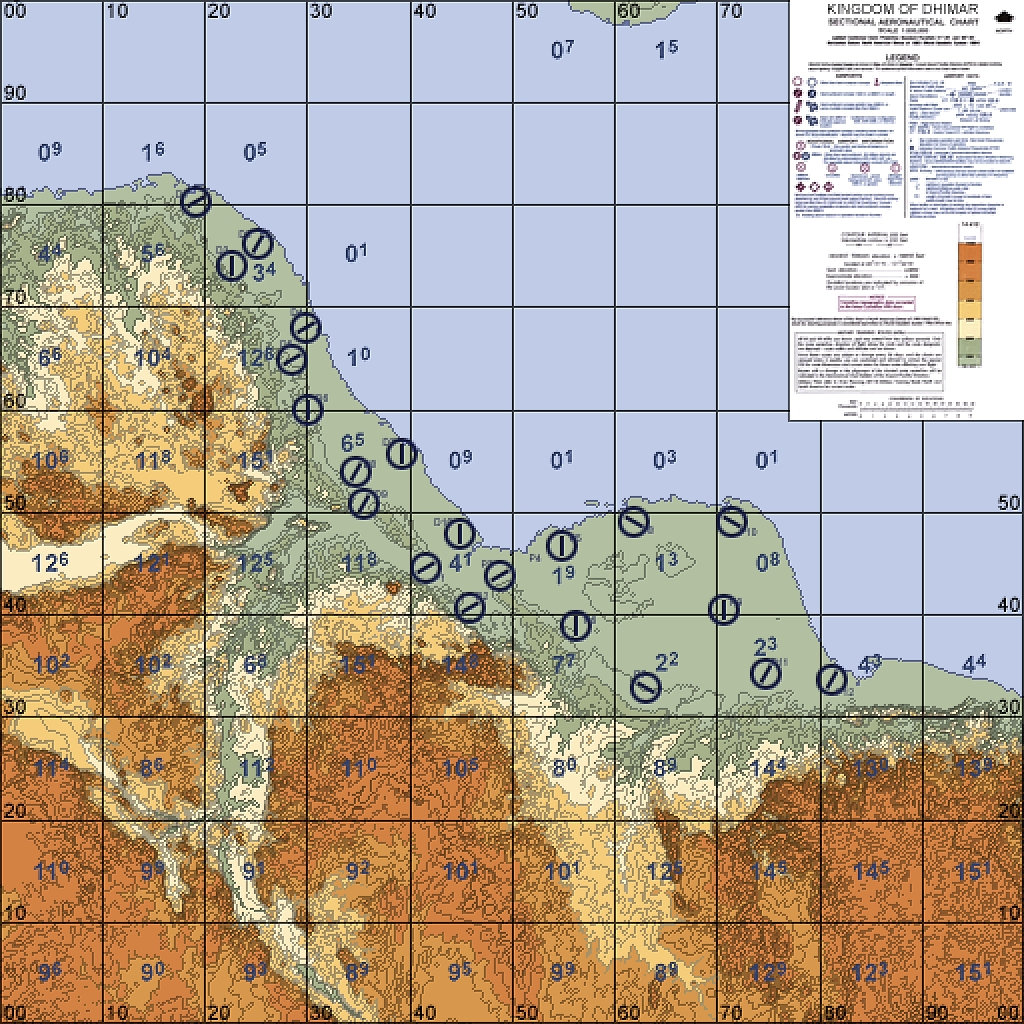
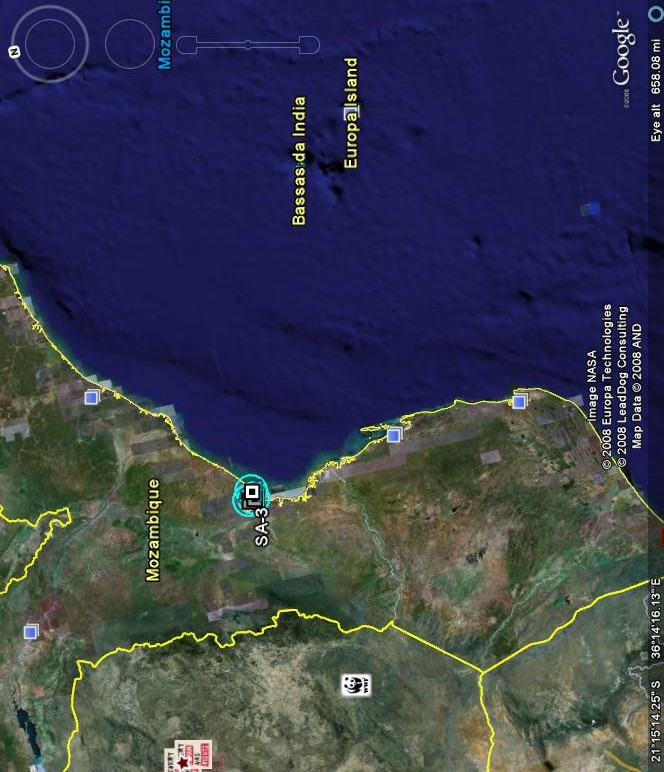
-
The Dhimar Conflict
Fubar512 replied to ShinKazama88's topic in Thirdwire: Strike Fighters 1 Series - General Discussion
Actually, the coastline is a clone of one in East Africa, turned 90 degrees. -
ECM vs Gainful...
Fubar512 replied to Lt. James Cater's topic in Thirdwire: Strike Fighters 1 Series - General Discussion
Not at all. as the SA-2F used HOJ. If you read Dave's interview with EZLead's (which I recommend), you'll see him mention encountering SA-2s with HOJ guidence while flying an EA-6 near Haiphong. The SA-6 proved a tough foe for the Israelis during the Yom Kippur war, as it's H-band acquisition and I-band height finder were all but undetectable to the RWR sets in their Skyhawks and Phantoms. By the end of that conflict, they had modified the RWR sets and jammers to receive and jam on those bands, but even then, they learned that the best tactic was to avoid flying within that missile's 28 mile engagement zone. By 1981, a combination of better ECM and countermeasures, coupled with a generous dose of STARMs and Shrikes, effectively eliminated Syrian SA-6s as a threat. I recall one Israeli general quoted as saying "The best ECM, is a Mark-82 right down the SAM-radar's signal horn" Recommended reading: http://www.pakdef.info/forum/archive/index.php/t-8588.html -
STRIKE FIGHTERS 2
Fubar512 replied to Crusader's topic in Thirdwire: Strike Fighters 1 Series - General Discussion
I would like to see a lot of things....but guess what? No way that a $19.99 title, that's essentially coded by a "team of one" is ever going to achieve that lofty goal. It takes a lot more resources than TK has at his disposal (interpret that as "MONEY"). TK's aim is to survive by doing what he enjoys doing, and updating his wares as and when needed. Don't forget that he's been supplying free updates for titles that he has had no control over (SFP1, SF Gold, WoV, WoE), for almost six years. Has a large company like M$ ever supported the hobbyist to that extent? -
CV in Red Swarm V3
Fubar512 replied to Badair's topic in Thirdwire: Strike Fighters 1 Series - Mods/Skinning Discussion
OK, did you add the carrier to your GermanyCE_types.ini, and did you create a carrier station in the GermanyCE_targets.ini? -
CV in Red Swarm V3
Fubar512 replied to Badair's topic in Thirdwire: Strike Fighters 1 Series - Mods/Skinning Discussion
How did you determine that it's not working? You must create (script) a mission that specifically includes the carrier, as the game engine will not utilize carriers in a system-generated mission. -
There are no data.ini files for individual weapons, as the entries in the weapondata.ini (and by proxy, in the weapondata.dat) eliminate the need for this. Now, if you simply mean the Xmodel.ini file (as in the file that declares texture, shadow, and model.lod entries for each weapon), well then, you're obviously using the stock files in the objectdata.cat.
-
No Sam smoke?
Fubar512 replied to delta6's topic in Thirdwire: Strike Fighters 1 Series - General Discussion
The latest SFP:1 patch is all inclusive. From ThirdWire's website: "This patch brings the game up to the latest version. This patch is a cumulative patch, and it contains all the fixes from previous patches" In my experience, your issue with the patch causing a "crash", is most likely caused by your DirectX (9.0C), not being patched up to the current standard. -
MiG-21MF Flight Model V1208
Fubar512 replied to Fubar512's topic in Thirdwire: Strike Fighters 1 Series - File Announcements
Further reading, Have Doughnut evaluation (MiG-21F13), set up as a web-based presentation. Nose gear rotation speed is listed as 110 KIAS, aircraft was capable of some "maneuvering" down to 114 KIAS. *Note* Low-level Mach limit mentioned in this eval does not apply to '21MF or later variants http://area51specialprojects.com/video/hav...ut_tactical.swf -
MiG-21MF Flight Model V1208
Fubar512 replied to Fubar512's topic in Thirdwire: Strike Fighters 1 Series - File Announcements
The Fishbeds were allegedly dangerous to fly at high AoAs and low air speeds, as they give virtually no warning that they're starting to stall. This is due to its delta wing configuration (though, being a tailed-delta, it was easier to recover from a full-on stall, than say, a Mirage or a 'Deuce) The IAF lost a few birds because of that trait. In short, you have to keep an eye on the AoA guage, when flying a '21. In real life, there's practically no stall buffet, which is why I remarked out the stall sound in the FM. Further reading, go through all the replies, I especially enjoyed the one from a former deuce driver: http://www.usenet.com/newsgroups/sci.aeron...s/msg00002.html