


MigBuster
-
Posts
9,165 -
Joined
-
Last visited
-
Days Won
27
Content Type
Profiles
Forums
Gallery
Downloads
Store
Everything posted by MigBuster
-
Ha ha reminds of the real 172 - with the beige wooden interior (also see 1981 Ford Cortina)
-
Potential Ukrainian Air Force losses
MigBuster replied to MigBuster's topic in Military and General Aviation
There is nothing to go on - you could make up anything.......... No idea what if any systems were on that F-4 - even something like the pilot forgot to switch it on is possible in reality. No idea what type of system knocked it down. Can Ukraine manufacture and modify their own systems or do they depend on Russia? -
It’s hard to say how many aircraft the Ukrainian Air Force has lost. Some reports, especially those on the pro-separatists side seem to be a bit exaggerated but, as Ainonline website reported, on the basis of Ukrainian and British sources, the Ukrainian Air Force has lost 22 aircraft throughout the crisis. Ukrainian military aviation had not been in a very good shape before the hybrid-conflict with the separatists started, and any losses may be considered to be severe. The total loss count includes 9 combat planes, 3 cargo planes and 10 helicopters, most of which have been shot down with MANPADS (Man Portable Air Defense Systems) and, in case of some of the lost helicopters, with rocket propelled grenades. In total, the UAF conducted 740 sorties during the operation, which is dubbed by the Kiev government to have an “anti-terrorist” character. Starting from losses within the group of combat planes, one Su-24 Fencer, six Su-25 Frogfoots and two MiG-29 Fulcrums have been lost, where one of the Fulcrums was reportedly shot down by a Russian MiG-29. The cargo planes which have been lost include single examples of An-26 Curl, An-30 Clank and Il-76 Candid. The Curl was reportedly hit by a Buk missile system; the same type of anti-aircraft system behind the downing of MH17 flight (according to most analysts). The Il-76 mentioned above was shot down in Luhansk, and it was a Candid in a flight of three such planes landing at Luhansk at the time. The first Candid made a safe landing, while the crew of the last one aborted landing. The British sources state that lack of proper flight experience and intelligence data was the main reason for the incurred losses. The ECM systems on the Ukrainian jets have been made in Russia, which means that they were easy to overcome. According to the Polish outlet altair.com.pl, the Western countries were asked to supply new electronic countermeasures, however in fear of these being intercepted by the Russians, they were never delivered. In the light of the analysis of the potential of the Ukrainian Air Force conducted by Dr Sean Wilson, which has been published in the Polish “Lotnictwo” magazine last year, the above losses may be considered to be significant. According to Wilson, Ukraine, back in 1992, inherited 3,600 aircraft, including 850 helicopters, out of which 285 assault choppers and 2,750 aircraft, out of which 1,650 were combat planes. Back in 2013 the estimated data suggested that out of these numbers only 200 combat aircraft were in active service and about 70 were combat capable. At that time, the fleet consisted of 15-20 MiG-29 Fulcrums, 10-12 Su-24M/MR Fencers, 14-18 Su-25 Frogfoots and 16 Su-27 Flankers. 16 MiG-29’s, 4 Su-24’s and 15 Su-25 were to be withdrawn by 2015. Reports claim that 80 Frogfoots remain in active service and at least 14 are combat-capable. Which may be a significant notion, as the number is almost as high as the number of Frogfoots which were to be withdrawn. Ukraine also had 66 examples of Su-27 Flankers, respectively 40 Su-27S Flanker-B’s (which are capable of conducting air-to-ground sorties), and 26 Su-27P Flanker-B’s (interceptor variant) and Su-27UB Flanker-C’s (two-seater). 36 of these were to remain in active service, while 16 were to be fully operational. All of the Flankers are being currently used as interceptors. Modernization of these has been planned, and some examples have been updated before the conflict started. When it comes to cargo planes, Ukrainians inherited 180 Candid-B transport aircraft, however, not many of these remained active. Two examples of An-30 Clanks were said to be still flying within the Open Skies program. About 20 Il-78air tankers have been also a part of the post-Soviet inheritance; nonetheless the refueling equipment on these has been removed and maximally 8 of them remained active back in 2013 in a cargo role. When it comes to the qualitative side of the analysis, the Ukrainian AF undertook several modernization programs for both fighters and attack aircraft. The modernizations included new avionics and navigational systems based on both GPS, as well as on its Russian counterpart – GLONASS. Still, the Ukrainian Air Force suffered considerable losses during such a limited conflict a sign that the weapons in the hands of the separatists have been extremely effective against Kiev’s combat planes and helicopters so far. http://theaviationist.com/2014/12/02/analysis-of-ukrainian-air-force-losses-in-eastern-ukraine-clashes/
-
Iran's F-4 Phantoms have soldiered on through a decades-long embargo on spares and support equipment, with the jets being maintained by the Iranian industry and parts supplied through the black market. It's thought that just a few dozen Iranian F-4D/Es are actually flyable at any given time. If these reports of Iranian F-4s supporting Iraqi forces are true, it would be an incredibly reckless move by the Iranians as the Obama Administration has stated time and time again that there is no formal military cooperation among the two usual foes when it comes to defeating ISIS in Iraq. But that's assuming we can take the Obama Administration's statements at face value. There have been rumblings that back-channel conversations about the ISIS issue have occurred during the recent Iranian nuclear negotiations. With the US and its coalition partners dominating the airspace over Iraq, Iran's precious F-4s would be at risk of being shot down if they even inadvertently approached a US or coalition aircraft. Alternatively, if the these jets are operating freely over Iraq, and not just racing across the border unannounced and back, it would mean that some sort of agreement has been struck between the US. Such an agreement would be unprecedented and would be inherently risky, as Iranian fighters using non-precision bombing methods and their own rules of engagement could result in massive collateral damage. Seeing as Iran is a Shiite-led country, large casualties among Iraq's Sunni population at the hands of Iranian pilots could deepen the ethnic divides that already plague Iraq and greatly complicate an already intricate situation. EXPAND I would bet that the truth lies somewhere in between full-on cooperation and flat-out no cooperation or formal communication, with basic deconfliction of coalition and Iranian air traffic through assigned airspace occurring at the very least. These reports also emerge as other accounts have stated that Iranian commandos are assisting the fledgling Iraqi Army and Shiite militias on the ground and that Iranian aircraft are indeed operating out of Iraqi airfields. So far there has been no substantiation to these claims, with today's image being the first from a decent source that shows direct Iranian involvement in the conflict. This just reminds us that the old adage "the enemy of my enemy is my friend" is really the only guiding light in that troubled region. Still, common ground against even the bitterest of foes should not be wasted, and hopefully, if our militaries are corresponding and working together on some level, that mutual understanding could blossom into a much less volatile relationship down the road. Regardless of the possibility of easing of tensions through military cooperation, if Iran is now truly in the anti-ISIS fighting mix with its air power, things just got a lot more complicated in the skies over Arabian Peninsula. http://foxtrotalpha.jalopnik.com/breaking-iranian-f-4-phantoms-wade-into-the-anti-isis-1665411308
-
US Air Force pilot killed when F-16 crashes in Middle East
MigBuster replied to Dave's topic in Military and General Aviation
RIP -
Wasn't aware of this - might need to save a bit http://www.collingsfoundation.org/tx_f-4dphantom_training.htm
-
Works okay for me Do you run a single exe file? Make a copy of StrikeFighters2 Europe.exe and rename it. - run it and see if any change. If that fails you could try setting ForceDX9=FALSE in the options.ini just to see if it will run at least (should be okay for dx9) If it is graphic driver related set up a profile for SF2 in the NVIDIA control Panel maybe set AA / AF manually for example.
-
Any System specs? (dxdiag.exe) You have a DX10 card yes?
-
Really - were you in disputed airspace? On the other hand you could probably expect to be jumped by the same bort codes in 2014.
-
Inspired by a vid from a few years back - thought it needed to be redone in the premier F-4 sim.
- 7 replies
-
- 12
-

-
- f-4
- phantom ii
- (and 1 more)
-
Too kind here is the elusive original Part 2 for the US if interested (~ 65MB) SF2_Vietnam2.zip
-
All that stuff is already with us tbh - I have a cold so am killing time and also ripping off Beachs SF2 vid a bit - but trying to include as much of the other aircraft as poss. All the other vids you just accept you have 3rd party content - that one is slightly different - someone must like that song more than the others they did.
-
I thought the Stromtroopers were clones of Jango Fett Whos the guy at the beginning - is he off to a fancy dress party?
-
The Original F-100D v IL-28 intercept mission in SF
-
That makes a change........... Ahh they don't want that particular song played in the US Can you see this - by the same band?
-
Croatian air force MiG-21 replacement
MigBuster replied to Stipe's topic in Military and General Aviation
I take it that's the upgraded version? -
Talk about act first, think later - that's unbelievable - one commenter is right - a Tank was probably on its way to blast the cat out.
-
North Korean Leader poses next to a takes shots of Mig female fighter pilots. An always smiling Kim Jong Un visited a North Korean airstrip where he met, congratulated and took pictures of the first two female fighter pilots posing in front of their jets. “I am very satisfied and pleased to see the emergence of excellent female pilots and their brave flight in a matter of just a few months after I gave orders to train them,” North Korea’s Supreme Leader said according to the state agency KCNA. North Korea’s Air Force inducted the first unit for women in 1993 but until today, pilots were not qualified for fighter jets. Indeed, the first Korean People’s Army Air Force’s female pilots must be brave to fly the obsolete Soviet-era Migs with flight gear which looks like the one used in the ’60s or ’70s. Although when and where the images were taken was not unveiled, the airfield may be Sunan International Airport in Pyongyang. http://theaviationist.com/2014/11/28/kim-jong-un-mig-15-female/


-
Well - the footage shows a bunch of retards in what could be better described as looting!! http://www.bbc.co.uk/news/uk-30243092
-
They are in good condition as well and I can tell they are original because I had most of them - battle damaged X Wing was my fave.
-
X Wings and the Falcon!! - sold
-
Happy Christmas - or whatever this is
-
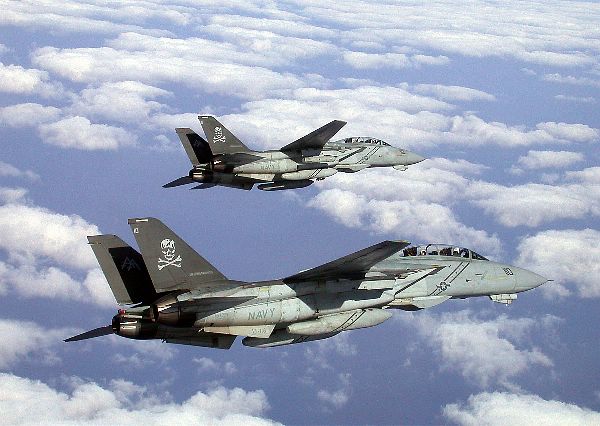
A memorable anti-terrorist operation took place over the Mediterranean Sea in October 1985. On Oct. 7, 1985, four PLF (Palestine Liberation Front) militants hijacked the Achille Lauro cruise ship. With passengers and crew hostage, they directed the vessel to sail to Tartus, Syria, and demanded the release of 50 Palestinians jailed in Israeli prisons. After two days of negotiations (and the killing of an American citizen, Leon Klinghoffer, a Jewish retired businessman who was in a wheelchair) the terrorists agreed to abandon the ship in exchange for safe conduct and were flown towards Tunisia aboard an Egypt Air Boeing 737. Of course something had to be done to intercept the commercial airliner which would have carried the terrorists who had hijacked the Achille Lauro liner off Egypt. A brilliant operation was orchestrated by CVW 17 Commander Air Group (CAG) Robert “Bubba” Brodsky, who explained how the mission took place to Robert L. Lawson in the latter’s book “Carrier Air Group Commanders.” On Oct. 10, after having completed a major NATO exercise in the Central Mediterranean, the USS Saratoga (CV-60), commanded by Capt. Jerry Unruh, received a phone query from Sixth Fleet headquarters in Gaeta, Italy, asking for the exact location of each ship of the battle group. Intelligence had indicated to the National Security Council (NSC) staff that the hijackers were still in Egypt and about to be transported out on an Egypt Air Boeing 737 about to be flown to Tunisia. According to Brodsky the idea to attempt to capture the hijackers came from a Navy captain in the NSC staff who suggested: “Why don’t we pull a Yamamoto on these guys?” referring to the Japanese admiral intercepted by American fighters over the Pacific during WWII. Aboard the Saratoga orders were immediately received from Sixth Fleet to launch the Alert CAP (Combat Air Patrol) and despite the official “Alert 60″ posture, two VF-74 F-14A Tomcats and a VAW-125 E-2C Hawkeye were airborne in just 22 minutes. Within minutes, confirmation of their mission came from Sixth Fleet. Since the exact take-off time, the route and the altitude the hijackers plane would fly were unknown, other VF-103 and VF-74 Tomcats, with tracer ammunition in their 20mm cannons, were launched, while another E-2 alongside with VA-85KA-6D tankers were alerted for a possible launch. But, perhaps, the most difficult problem to solve was how to communicate with the airliner, once intercepted, and how to persuade the crew to divert to the NATO base at Sigonella, Sicily. C3 (Command, Control and Communication) provided by the E-2C was essential to the success of the mission. “CDR Raplh Zia, commanding officer of the E-2 squadron, widely respected for his airborne professionalism, had been kept abreast of unfolding events almost from the beginning. As much as anyone, he had a clear picture of what we were attempting to do. When directed, CDR Zia personally manned the second E-2 and was launched to assume airborne control of the operation. There wasn’t a better man for the job. His ability to quickly assess the situation and ad lib solutions to each hiccup in the evolution was the key to success,” Brodsky explains in “Carrier Air Group Commanders.” Since, as we explained, the takeoff time of the Egypt Air airliner was unknown, the Tomcats assigned to CAP stations south of the Greek island of Crete were vectored by the E-2 to intercept all contacts that fit the profile of an airliner following the airways between Egypt and Tunisia. According to Brodsky, on the fourth intercept of the evening, two F-14s pulled up behind an airliner and when they radioed the markings and tail number-2843- back to Saratoga (the tail number had already been discovered by Israeli intelligence agents as reported by Michael K. Bohn in his book “The Achille Lauro Hijacking: Lessons in the Politics and Prejudice of Terrorism”), the Tomcats were ordered to remain in position, keeping their lights out so the Egyptian crew and their terrorist cargo would have no idea they were under escort. In the meantime, the State Department in Washington asked Tunisia and other friendly littoral Mediterranean nations to deny landing rights to the terrorists. After CDR Zia in “Tigertail 603” listened the landing clearance denials to the Egypt Air pilot, he understood that it was time for the Hawkeye crew to take charge. “2843, this is Tigertail 603, over” CDR Zia radioed. After several more attempts at communications, the Egypt Air pilot finally acknowledged. Zia continued: “Egypt Air 2843, you are being escorted by two F-14s. You are directed proceed to and land immediately at Sigonella, Sicily. Over.” The Egyptian pilot was shocked. “Say again. Who is calling?” Allowing the pilot to believe he was talking with one of the F-14 pilots, Zia repeated, “This is Tigertail 603. I advise, you are directed to land immediately. Proceed immediately to Sigonella, Sicily. You are being escorted by two F-14 interceptor aircraft. Vector 280 Sigonella, Sicily. Over.” The order was repeated once again before the F-14s turned on their external lights. The Tomcat crews watched as the excited Egyptian crew ran to both sides of the airliner to peer out the passenger windows. Zia now had the Egypt Air pilot’s attention. Concerned by the close proximity of the Navy fighters, the nervous Egyptian pilot again came on the radio: “I’m saying you are too close. I’ m following your orders. Don’t be too close. Please.” “Okay, we’ll move away a little bit” Zia responded. Since the Italian air traffic controllers vectored the 737 to land at the civilian field nearby Catania and refused the permission to land in Sigonella, the escorting F-14 commander declared a low fuel emergency and indicated the requirement for an immediate landing. But the presence of four F-14 Tomcats on his wing charged up the Egyptian pilot, who was able to land only after having going around on his first pass. “Everyone breathed easier when he landed successfully on the second pass.” Brodsky says. He also believed that even if the terrorists were taken into Italian custody once the mission ended, that fact did little to diminish the elation aboard the Saratoga: “The real reward, was the knowledge that they had helped bring terrorists and cold-blooded murderers of an American citizen to justice.” http://theaviationist.com/2014/11/28/a-memorable-anti-terrorist-operation-with-u-s-navy-f-14s-and-e-2s-took-place-over-the-mediterranean-sea-in-october-1985/
- 2 replies
-
- 1
-
-
- achille lauro
- f-14
- (and 1 more)
-
- 3 replies
-
- 10
-
