
Snailman
-
Posts
1,418 -
Joined
-
Last visited
-
Days Won
3
Content Type
Profiles
Forums
Gallery
Downloads
Store
Everything posted by Snailman
-
Look quite reasonable.... especially with the Mi-24 Hind DLC for 0.69 EURS )))) That's something even I can afford )))) ... and consider the fact, that Bohemia Interactive created Operation Flashpoint,too which is the most widely modded game ever... I still have some 6GB of addons for it from 2003, which was equivalent of 6 TB today!!
-
I'm working of corrections to these missiles, especially earlier ones. Some were completely useless (0% hit chance). Yes, especially it is about long range IRMs. Reason I told u why, long flight time, more chance for decoys. See the table in previous post. If you use R-8/98, R-40, R-23/24 and especially R-27 series "long range" IRMs. These missiles use semi-active guidance in-real life, until their IR seekers get into range. The game does not support this method, so we had to give 30-60km seeker head ranges to these missiles which is of course not realistic. Which missile, in particular you are using? which year, which plane?
-
Yes, CM resistance is it. Hans in depends on target aircraft. If it has and CM and how it is installed. And also launch circumstances. All aspect can lock on from the front, but a bad angle can still cause it to lose track, or lured by a CM in the worst moment. In case of all aspect, mostly depends on CM resistance, and the number of CM res rolls the missile has to pass till the target. A long range IRM is far less effective with the same CM value. What I learned, the the effectiveness depends on a lot of factors. -First, reliability roll. -Then lock on chance (same of above) -Then the missile booster/sustainer values has to be adequate for the missile to be able reach the target. ---If it slows down in the terminal phase, it will be a lot more easily shaken off. (early AA-2 and Sidewinder) ---If it is too fast, the missile tracking rate or turn rate will be way too low for tracking. Basically the missile cannot scan fast enough, keep track of the target and still turn towards it. -Tracking rate. it is something like how often the missile updates the target - if this is too slow, between two scans, the target can get out of the seeker FOV and lost. If too fast, the missile is unshakeable, follows ever little maneuver you make. You can only shake it if it has low Turn G, or runs out of speed. -Turn G similar to above. if target position between scans have changed, the missile is able turn with this value to correct. I found that this has less effect than track rate. -Jam resistance (ECM) well I have little knowledge on this, although some missiles can more easily lock the sun itself, or fly through the target aircraft -CM resistance, as I said the most important - and problematic value. Repeatedly rolled for the multitude of CM packages inside the seeker FOV. +the hit boxes of target 3D model. If faulty, the warhead will not explode as there is no collision calculated.
-
We all grew up on Final Countdown ))) AND Flight of the Intruder.... I had a hard time to decide between them
-
Huh... really scary. I worked at a propane gas-canister station before. When the truck came filled with 500+ of such bottles (in two levels) the guys unloaded the 12 and 23.5kg canisters throwing one by one from 2-3 meters unto the concrete floor... Actually this guy had a very bad luck, usually gas leakages, and bottles are very hard to blow up like this. When we refueled cars (illegally) from gas canisters, we had accidents... like the tube came off or the compressor's pressure-gap (?) broken off. Pure gas extinguishes cigarette, and even small fires... hi pressure and very cold. Problem comes when it mixes with air 1 to 3... When it has leakage, and tall grass holds it together. Or a room filled with it. In this case, several bottles were broken and something ignited a fire. Very bad luck... Unmixed gas is burning with yellow flames at relative low temperature. If they could have extinguished the fire in a few minutes, there were no explosions at all. But, if they let them cook off and explode... Fireworks.
-
Exactly. And they know what to say or do to people, to make them mad. Everywhere.
-
nah... it might have been the woman.. the cause of overstressed life)))
-
These kind of documentaries I appreciate... from the first hand.. personal interviews. No propaganda, no politics and "TV show style" commentaries.
-
If you have doubts who is paying for the destruction... FSA flag in Kiev... In the meantime... Victory parade in Tartus port, Syria.


-
http://www.paulcraigroberts.org/2014/02/17/us-eu-paying-ukrainian-rioters-protesters-paul-craig-roberts/ is this guy credible? And this is Latvia. Anti-globalist anti-EU march by 12000 people Things are really getting hot here....
-
brain, hrc Do you know about what is happening in Bosnia?? Noone tells nothing... there I have no contact. here the dark side clouds our vision. My friend's father is there (nato duty) but obviously forbidden to talk. Alternative media said it was against corrupt government supported by globalists/EU Dave, The most scary thing, is i had a very disturbing dream, back in 2009. When I was living in Harkov with my gf. I saw an old city (a mixture of many cities I was in, actually) with many people, trams, taxis moving. pre-war cars, horses. I had the grave feeling that something will happen... but I could not talk to people, they did not listen. They did not even see me. Suddenly it turned dark... night or smoke, I don't remember. The city was in flames, turned over buses, horsecarts, trams and dead bodies everywhere by the hundreds. On the black sky there was a huge burning bird symbol from flames with open wings (similar to the crest of Ukraine) ... and that indescribable calm feeling when you are sure that you have already died. ... you can guess everybody said I'm crazy. I almost believed it myself... but now??
-
Most likely provocateurs, snipers. Good old method, to shoot at both sides, then they will be enraged at each other. And start shooting themselves to avenge... Some videos show how they were hit from behind. Watch the impact on the trees http://vk.com/russia_bez_problem?z=video-56182693_167526401%2Ff9bcb9837b4cebdcdd
-

Aviation Cruiser Kiev illuminated deck mod.
Snailman replied to Fubar512's topic in File Announcements
thanks very much!! I will help with data. It is not easy, for sure. -
http://vk.com/album-15957012_185888488
-
I don't know what the hell it is, that's why I ask... it IS in English, the name is not, of course. It's just my bullshit filter has turned on... if it's just a fake stuff. Never heard of IPA before neither my acquaintance in local PD. The other day ex-IDF people were caught, one was shot. Chechens also appeared. Snipers shooting both sides... Syria part Two.
-
http://vk.com/video217940881_167535302?list=7570ff5491ad6aaf5d Please anyone can you identify whether this Police ID is from the US and if so what branch... caught this guy in Kiev Ukraine. at 1:50
-
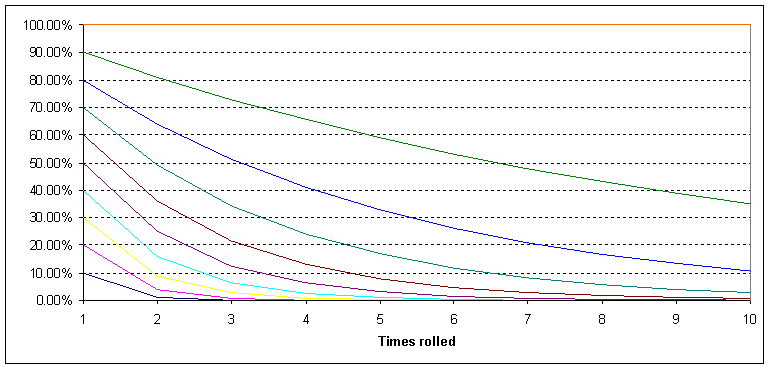
CM and ALSO ECM works cumulatively... A missile has - for example - 50 CM resistance... it means it has 50% against a single piece of flare or a puff of chaff. Very little chance, since most planes drop CM in pairs (already 25%) and considering the number of flares chaff dumped out by AI planes (and scared humans ) it is next to nothing. But if you have a missile with 90 or 95% it will be an exponential increase in efficiency, not linear... Why? umm... roleplaying "colleagues" out there. You know the difference between a single dice or a handful of them. If you roll D10 "dice" 10 times it produces a more average result up to 100, than if you could roll with a special D100 just once. You have to roll the CM resistance again and again till there are CM pieces in front of you. Calculate the final chance for 50% of 50% of 50% of 50%... or 90% of 90% of 90% So, setting CM resistance to 20 means automatic failure against anything equipped with CM. So the minimum and maximum values 0-100 should be squeezed into the 60-95 interval or something similar, calculating with at least 2-3 rolls of CM resistance. At the moment I have no better idea.... The same happens with ECM. If you add several ECMs to a plane, chances add up. For example I have seen a modded aircraft (i think it was a B-52) with a dozen of ECMs in the data ini, each had about 60 or 80 jamming strength. 12x60 = 720 jamming strength. It can be seen with a radar over 800 scan strength or so.... hooooly cow. And I was debugging my radar for two days and it still did not work... until I changed the target plane type.
-
it depends on side... mod... if plane is modded... if the missile is also modded... many things. - Countermeasures are poorly modeled and used.. especially by the AI. - missiles have much stricter launch requirements in RL... we cannot model most of those. - nobody has real picture on missile capabilities. All we have to rely on official data and combat reports to model a missile. That means propaganda/advertisement values and who knows how much altered combat reports. It is natural that no one wants to badmouth their own product or admit real losses. - Due to the problems stated above, modded equipment is modeled to be better and better in values with years passing - but the top limit is 100%. At the same time CM is always the same. The original SF2 game was done till the early 80s - Absence of IRCM devices against IRM on the other hand, and AI pilot almost always spots the incoming missile, even if IRM.. so surprise shots are very rare. That affects mostly Rear60 aspect tail chasing missiles, hence the big gap between those and other IRMs
-
Absolutely agreed, we badly need an AH-64 simulator, as well as another Mi-24 Hind simulator (after the one for DOS and Win95 that time) with today's technology. I'm not sure but it will be a damn long time till we get such from DCS ((((
-
Externally, looks like a modded Op Flashpoint... Fine avionics, however.
-
Guess the Height Contest
Snailman replied to UK_Widowmaker's topic in WOFF UE/PE - General Discussion
Huh. Another thing to save money for... Actually the farther a screen is from your eyes, the more healthier. So it has to be bigger. I have to convince my spiders to develop their social networks elsewhere ))) -
Guess the Height Contest
Snailman replied to UK_Widowmaker's topic in WOFF UE/PE - General Discussion
I was thinking about a projector... a huge TV is too expensive and I never watch tv anyway. Although I'm not sure what resolution of a projector can handle... -
Why do the bees have a queen? Because if they had democracy, there were no honey made.
-
It was plan, a project to improve that part of the country. An excuse to spend that whole lot of money. Anyway would it be better to hold the games in distant places like the Urals or in Kamchatka... ? )))