

MigBuster
-
Posts
9,153 -
Joined
-
Last visited
-
Days Won
27
Content Type
Profiles
Forums
Gallery
Downloads
Store
Everything posted by MigBuster
-
Paris 2015 https://youtu.be/lbqsMXJ8skk
-
- 2
-

-
Had all of these in the day - been so long - remember they were scripted as above. In F-16 there was a really easy way to dodge missiles - mainly because they were picked up on the 360 god scope.
-
Cant vouch for the validity of this - also considering it has been translated from: http://testpilot.ru/review/runway/volga/volga_xvi.htm In the summer of 1976 a disassembled American F-5 fighter jet was delivered to our base at Aktubinsk. To be correct, it was F-5E - the latest variant with increased engines thrust. By the size it was smaller than MiG-21, had two engines installed side-by-side in the fuselage, a sharp swept-down nose and short tapered wings. The war in Vietnam had finished, and the United States Air Forces were leaving this long-suffering country, hastily abandoning several aircraft of this type on one of the airfields. One of them was handed over to the USSR together with its pilot manual. There were no technical descriptions, but our engineers figured everything out, assembled it to the last bolt and made it flyable, bringing not only the foreign hard pieces together, but also tons of electric wiring. A test brigade was formed to conduct special flight tests, and a program was written, which assumed 35-40 test flights. I was one of the test pilots, our lead was Nikolay Stogov. After a proper training I was trusted to perform the first speed run on the runway and then a run with a 3-6 feet jump. These precautions had their reasons in our uncertainty, that all the systems had been assembled and connected correctly. And finally, we were alone. The "Foreigner" hid within. From the manual I knew, that it had had no problems in operation whatsoever. But I also knew that every manufacturer had their own zest in the product. Unlike our fighters in production, the "Foreigner" had brakes on pedals, which we had on heavy aircraft only. The cockpit was not cluttered by various switches and circuit breakers unneeded in flight. They were all concentrated in a single horizontal "stock" away from the working area. I understood that F-5 was a way not the most modern plane and that it was inferior even to MiG-21, but, nonetheless, I liked the cockpit layout. I decided to make the run on the second runway, which was the longest one. "There is never too much runway ahead," I thought, taxiing to the runway. It was the winter of 1976-77. Of course, there was no reason to hide I was proud that the only aircraft of this type available in the USSR was trusted to me. I turned on the extension of the nose strut - the electrohydraulic retractor engaged, and the nose of the aircraft started to "crawl" up. "How about that?" I shook my head surprised. "Couldn't you do without it on this little one?" As for me, not a common way to reduce your takeoff roll. In the USSR, only Myasischev used this on M-3 and M-4 - the heavy long-range bombers with a tandem gear layout, thus with very short nose struts. "Alright," I thought, "we kneeled, so let's run. It is awkward to fool around this way." I increased thrust and released the brakes. The aircraft started to roll. It rolled evenly, reluctantly gaining speed. Aha! That's why they raise the nose strut! The engines are feeble, and the wing is too small. I lifted the nosewheel off the ground and held the airplane from the premature liftoff. Enough for this time. I powered back and lowered the nose. And then... what the heck? The entire nose started to shake and vibrate, then it started to wander left and right so violently, I thought it would just fall the hell off in a moment. Something was screeching and rumbling below. My first thought was about the nosewheel shimmy, but then I realized the nosewheel had been destroyed. I pulled the drag chute handle. "Not the brakes... Main wheels damage is the last thing we need: we don't have spares," the thoughts were rushing in my mind. Gradually reducing the speed, I stopped. I switched everything off, opened the canopy and impatiently jumped down onto the tarmac. I looked and I was puzzled: the wheel was intact. "That's strange! So what were you so unhappy with?" I looked at the "Foreigner" suspiciously. It turned out that he was unhappy with our runway condition: rough grooves and seams were so deep, and the surface of the concrete was decayed, so he just didn't stand it. One bolt was cut off, and the strut together with the wheel was turning around. - "Nice! Ours don't do things like that," I gave his nose a pat and whispered: "Don't worry, we'll find a new bolt for you and you'll gallop around again!" As I got to know the "Foreigner" I grew up in my respect to him both as to the flying machine and as to the fighter jet. Unapt to aggressive maneuvering when in "cruise" configuration (flaps and slats up), he would have changed when the pilot put it into the "maneuvering" configuration (flaps and slats down). Then from a heavy clodhopper he turned into a swallow. Checking out the capabilities of the optical sight, I enjoyed keeping the reticle on the target while attacking with a 6g pull, whereas on MiG-21 it would disappear from the view at 3g. After determining the basic specification we decided to set up for a mock air-to-air combat with MiG-21bis. I would fight on my "native" MiG-21, and Nikolay Stogov - on F-5. The close air combat started head-on in equal positions. Every flight ended with the same result: MiG-21 lost, although he had much higher thrust-to-weight ratio. I laid myself out just to keep the initial position. I took the most out of the aircraft, took all he could give, but the targeting angle grew steadily and in a few minutes the "bandit" was on my tail. Only tactics could save me. What I was stricken by the most is that the result of the mock fights took not only the generals by surprise (one could explain this somehow), but also the military research departments of the Air Force and even the aviation engineers. They would review the data records for thousand times, ask the pilots, especially me. Frankly, I was somewhat confused as well, but when I tried the F-5, I realized that it was not an ordinary one. So, what was happening in flight? At the speeds of 800 km/h (430 kts) and above the fight was on equal terms, nobody had explicit advantages, but the fighting was not literally maneuvering because of the large radii of the maneuvers. We would both stay at the equal maximum allowable g-loads. Whilst at the speeds below 750 km/h (400 kts) one couldn't sustain these g-loads even with the afterburner. And the lower the speed was the faster it decayed, thus lowering the maximum available g-load. It turned out that the aerodynamics was what won the day, not the thrust/weight ratio. But how was I to explain all this to the people above? They wouldn't have patted our backs for this. Then the MiG company representatives suggested: - "Let's set MiG-23M against him." - "But they cannot be compared to one another; they are from different generations." The chief of our research institute objected. The chief of our institute, colonel general I. Gaidayenko had been a fighter-pilot during World War II and a wingman of the very P. Kutakov, who was the supreme commander of the Air Force at the time of our struggle with the F-5. The result of the test flights was supposed to be reported to Kutakov. - "So what? We will kick his ass anyway!" 2nd lead engineer of MiG-23M spoke out, rubbing his hands in expectance of the revenge. Well, the ass was kicked, for sure... but one of our own. The result was the same with the only exception that the agony lasted for 4-5 minutes. You have also to keep in mind that I had been considered a pilot capable of any stall and spin recovery and I had been permitted to break any angle of attack limitations. In the dogfight, I set the optimal wing sweep manually, but all in vain. The foreigner would slowly, but steadily, approach my tail. After these flights all calmed down for some time, all discussions ceased. The chief of the RI ordered to promptly compile a statement on the tests and directed me and Stogov to Moscow, to the Central Research Institution No. 30, which was involved in elaboration of the long-term problems of aviation advancement. Paying a visit to one of its departments we asked, what they could tell us about the MiG-21 advantages over the F-5E. - "Oh!" The military scientists immediately exclaimed. "With pleasure! There is a fray right now between Ethiopia and Somalia, and these very aircraft fight each other there. And we are busy preparing recommendations for the pilots on how to successfully fight the F-5 in aerial combat." - "And what you've got?" I asked with an interest. - "Take a look at the graph of the attack success probability. See? We beat him everywhere." - "Indeed," I droned, looking at the so familiar graph in front of me and feeling somewhat hurt for the "Foreigner". - "And what're the odds?" My friend asked, making a face of a village gull. - "We've got much better thrust-to-weight ratio," the scientist replied in a voice of a mentor, who knew his worth. - "Alright, then could you read this Statement and give us your final conclusion, please? And..." - "And we'll go have a lunch," Nikolay suggested, "You know, on an errand it's like in defense: the meal is the ultimate thing." This was the end of our work on the comparative evaluation of the "Foreigner" and our Soviet fighters. I don't know what kind of discussions were held "up there", but I know for sure, that the recommendations for the Ethiopian pilots were changed. Our "experts" suggested not to engage in a close dogfight, but to use the "hit-and-run" tactics instead. What about MiG-23, everyone preferred to forget about it. You bet! It had been supposed to fight even more advanced aircraft! Our Statement was classified as top secret and removed somewhere away from the eyes. The "Foreigner" was given to the aviation industry specialists with a strict clause: no flying, but to disassemble and study the structural features to use the knowledge in further projects. Some time passed, and the Su-25 close air support aircraft emerged. It had the wheel brakes on the rudder pedals, "maneuvering" wing configuration and a different approach to the cockpit layout. In the terms of the pilot workstation our engineers went even further, and nowadays the cockpit of MiG-29 can serve as an exemplar for similar foreign combat aircraft. The same can be said about the aerodynamics. The aerodynamic capabilities of Su-27 fighter are considered unexcelled so far. It appears that what is clear for one is a revelation for the other. I believe that similar situations arose in the USA as well, as they got our aircraft at times from MiG-21 to MiG-29. We had luck only once.
-
https://www.youtube.com/watch?v=kf_bCOoXK24
-
Had a very interesting life - RIP
-
Their new aircraft needs some wings though I think
-
Against an enemy hell-bent on the destruction of the United States and her western allies, one might think the number of sorties flown by our guys and gals employing ordnance downrange would be a pretty impressive number. For example, the number of sorties flown in the forty-three days of Operation Desert Storm averaged over 1,100 per day. During Operation Iraqi Freedom, that number was in the neighborhood of 800 per day. During Operation Allied Force over Serbia and Kosovo, the number was significantly less, though nothing to sneeze at with 138 missions flown. So how about the ongoing air campaign against ISIS? Any guesses? Fourteen. Yes, you read that correctly. Barely more than a dozen airstrikes on any given day. To make matters even worse, according to U.S. Senator John McCain, 75% of pilots are returning to their deployed locations with a full load of ordnance. So to break that down again, if there are an average of 14 offensive sorties per day, roughly ten of them involve aircraft returning to base without firing a single shot. “There were times I had groups of ISIS fighters in my sights, but I couldn’t get clearance to engage,” a U.S. Navy F/A-18 pilot told Fox News. “They probably killed innocent people and spread evil because of my inability to kill them. It was frustrating.” Words coming back from the community downrange indicate the amount of time between positively identifying a hostile target and being given release authority from the Combined Air Operations Center is about an hour. As you might imagine, variables in combat operations can change in a matter of seconds. So while it is true the fight against ISIS is a very complex endeavor as it applies to target discrimination, you can’t help but shake your head at the notion our pilots are orbiting armed combatants, watching them escape altogether or blend into crowds of unarmed civilians or go into buildings declared off-limits. “As our leaders have said, this is a long-term fight, and we will not alienate civilians, the Iraqi government or our coalition partners by striking targets indiscriminately,” a spokesman from U.S. Air Forces Central Command (AFCENT). As a result, leadership has handed down Rules Of Engagement (ROE) that some say are too restrictive. While we can appreciate the concern for collateral damage and harming non-combatants, pilots are simply fed up with having their hands tied. “We are not taking the fight to these guys,” said one A-10 pilot. “We haven’t targeted their centers of gravity in Raqqa. All the roads between Syria and Iraq are still intact with trucks flowing freely.” “These are excessive procedures that are handing our adversary an advantage,” said retired Lieutenant General David Deptula, a respected weapons officer and senior leader who is also a former director of the CAOC in Afghanistan. “We have been applying airpower like a rain shower or drizzle–for it to be effective, it needs to be applied like a thunderstorm.” That is well said, General. http://fightersweep.com/2385/us-pilots-our-hands-are-tied/

-
Its very good. In my experience people generally have short attention spans - so keeping it short and concise is a must where possible.
-
Glad you liked it SV
-
Says SFM Standard Flight Model (SFM). This has not changed and defines a more data-driven means of achieving flight dynamics, in conjunction with some scripting. SFM was used in the Lock On series and is still used in the Flaming Cliffs 3 Su-33 and MiG-29. However, we do plan to update these at a later time. Was $9.99 in the sale - total bargain
-
Good find! Even without a window behind me I still needed to double the curtain thickness to stop interfering light coming through and reflecting off things. Text from http://forum.aerosoft.com/index.php?/topic/56739-tip-trackir-backlight-problem-solved/ I love my TrackiR, I think it is the next best thing to have in your flight simulators, after a decent joystick or yoke. But, alas, it doesn't like the window behind my back (during the day), or any bright light source. It gets disturbed and erratic. Of course I can close the curtains in the living room, but I prefer to keep my wife from divorcing me. And now I got it solved! First I read a tip on Avsim from a guy who put a film negative (or positive, anyway, blackish) in front of the TrackIR. I searched my house for such a relic of ancient times, but to no avail. Then I tried sun glasses. Did not make a difference. Then I tried a piece of black nylon/pantyhose. I still wonder why that idea popped up in my mind, but much to my own surprise it works very well. Just wrap it around the device tightly, and lo and behold: My TrackIR works all day, windows and sunshine no longer causing a problem. I thought I share this with you...
- 1 reply
-
- 1
-

-
Glad to hear from you FireHawk - and extra glad you have managed to fight off some major life issues! About time for a bit of gaming fun at last
-
One for Hornet fans from Farcebook: https://www.facebook.com/puolustus/videos/o.408372249355283/867334813338844/?type=2&theater
-
Cockpit view of Ukrainian Hind being hit by MANPAD
MigBuster replied to Atreides's topic in Military and General Aviation
RIP to the pilots - very sad :( -
I have Art plates done for the skins but cant post them for copyright reasons The 1968 detachment had no tail codes - just a small USAF with the BU number underneath in black The 428/429/430 were "NA" codes (white) in 1972 till 1973 when they became 347 TFW jets and were recoded "HG". Haven't found NC so far
-
Have fished this from F-111 & EF-111 Units in Combat (2014) 17 Mar 1968 - 19 Nov 1968 Combat Lancer at Takhli RTAFB 6 x F-111As 428TFS / 474TFW ------------------------------------ Constant Guard V from Sept 1972 (inc Linebacker II) at Takhli RTAFB F-111A 428TFS / 474TFW 429TFS / 474TFW 430TFS / 474TFW In March 1973 428TFS took the 430TFS jets and all became the 347TFW which moved to Korat in July 1974 and left SEA finally on 30 June 1975
-
A student driver blindly pulled out in front of a column of British armor that was cruising along a hardened road in the Lippe district of Germany yesterday. A collision ensued and yes, you guessed it, the one ton Toyota Yaris lost the fight to the 60+ ton Battle Tank in a big way. from http://foxtrotalpha.jalopnik.com/tank-teaches-student-driver-in-yaris-a-valuable-driving-1708396324
-
Check out the KC-130 cockpit!
-
USS Ross in the Black Sea: May 30, 2015
-
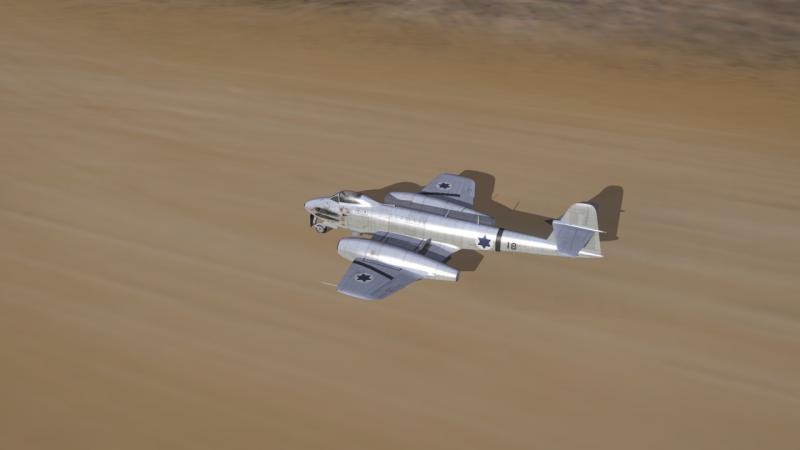
Decals.ini for the skin look for [Decal007] MeshName=splitter_plate_left ............. FilenameFormat=kill <------------ remove
-
Quite a selection http://fightersweep.com/2286/photo-gallery-boeing-f-15e-strike-eagle/
-
First modernized AF-1B jet fighter delivered to the Brazilian Navy Gavião Peixoto, Brazil, May 26, 2015 – Embraer Defense & Security held the delivery ceremony, today, of the first modernized AF-1 (AF-1B) fighter jet to the Brazilian Navy at its industrial plant in Gavião Peixoto, in outstate São Paulo. The ceremony was attended by the Navy Commander, Fleet Admiral Eduardo Bacellar Leal Ferreira, and officers of the High Command of the Brazilian Navy. The AF-1 program (the name given by the Navy to the McDonnell Douglas A-4 Skyhawk) provides for the revitalization and modernization of 12 subsonic jets – nine AF-1 single-seaters and three AF-1A two-seaters. The AF-1 is an intercept and attack airplane operating from an aircraft carrier to provide air defense for the fleet. These modernized Navy jets received new navigation, weapons, power, tactical communications and sensor systems, plus computers and multimode state-of-the art radar. This equipment, along with the structural work that was performed, will make it possible for these jet fighters to continue operating until 2025. Embraer’s modernization program also includes supplying briefing and debriefing stations that are already being used for the training and proficiency of pilots of the VF-1 Falcão Squadron, in order to improve their use, to reduce costs, and to bring greater effectiveness to mission planning and execution. “For the Brazilian Navy, the modernization of the AF-1 aircraft at Embraer is another important step in capacitating base of Brazil’s defense industry, and the results achieved will allow Naval Aviation to operate an aircraft with state-of-the-art sensors and equipment, representing a large forward leap in the Navy’s capacity,” said Fleet Admiral Eduardo Bacellar Leal Ferreira, Navy Commander. “This is the first contract for systems integration that we have signed with the Brazilian Navy and, therefore, is a landmark in our relations,” said Jackson Schneider, President and CEO of Embraer Defense & Security. “The modernization of the AF-1 was a significant technological challenge, since it is a platform that we did not develop. Nevertheless, with the support and competence of the staff of the Brazilian Navy, we were able to deliver a solution that fully meets the operational needs of our client in demonstration of our commitment to the Navy’s projects.” http://www.embraer.com/en-US/ImprensaEventos/Press-releases/noticias/Pages/Embraer-Defesa-e-Seguranca-entrega-primeiro-caca-AF1B-modernizado-para-a-Marinha-do-Brasil.aspx
-
The SA-10 (S-300PT) system was in service from around 1978 and the Soviets could have had up to 100 * SA-10 sites of different versions by 1990. The last new SA-2 was the S-75M4 - accepted into service 1978 (and others were brought up to this standard apparently). The Iraqis used the S-75M2 (SA-2F) - originally a 1968 system in the 1980s v Iran.