

MigBuster
-
Posts
9,165 -
Joined
-
Last visited
-
Days Won
27
Content Type
Profiles
Forums
Gallery
Downloads
Store
Everything posted by MigBuster
-
There are so many figures flying around - and a lot seem to suggest figures are this and that flyaway etc without really knowing what they actually refer to or if they are accurate - or considering other factors like economies of scale, inflation blah - I generally take no notice. The author Picard is a you tube commenter with demonstrably poor subject matter knowledge on most things aviation judging by the posts and blogs I have read.
-
Have been resupplied with pilots going back years but have never seen that ever.............
-
-
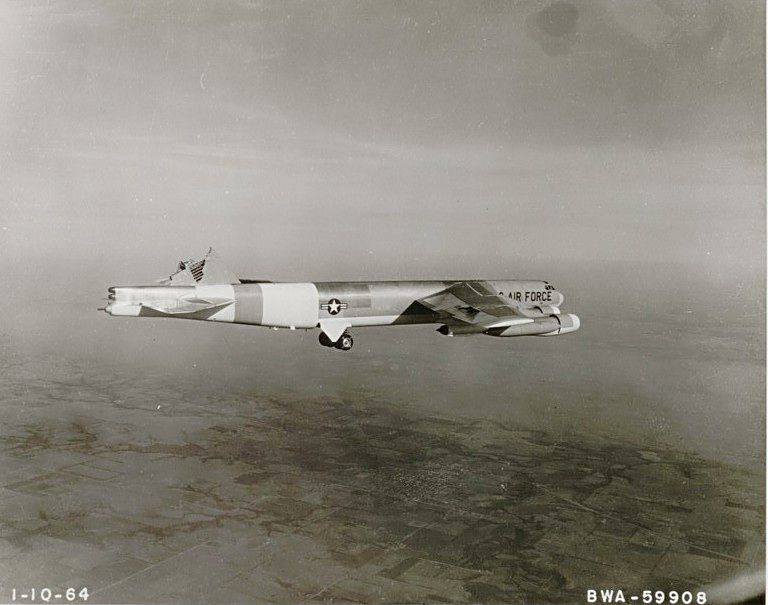
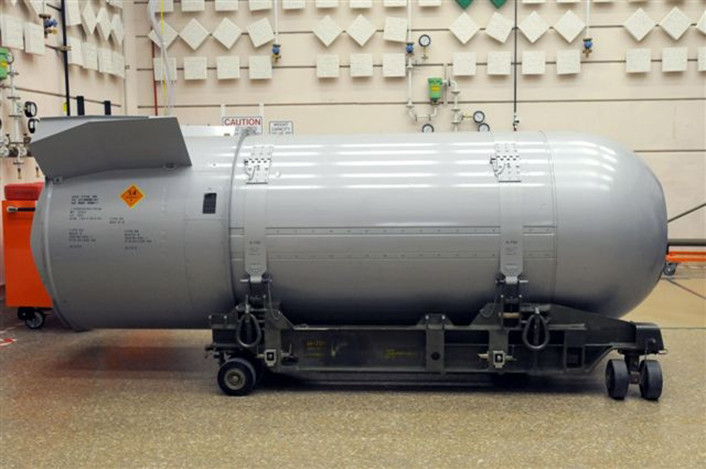
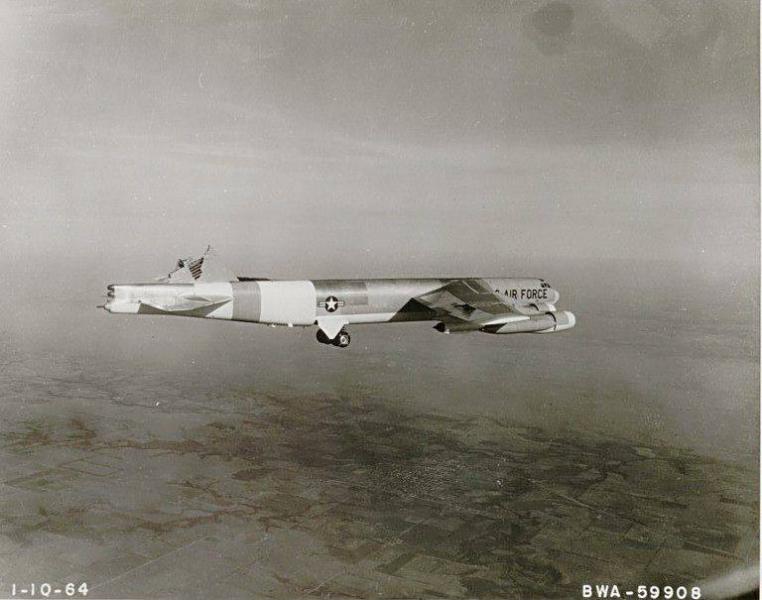
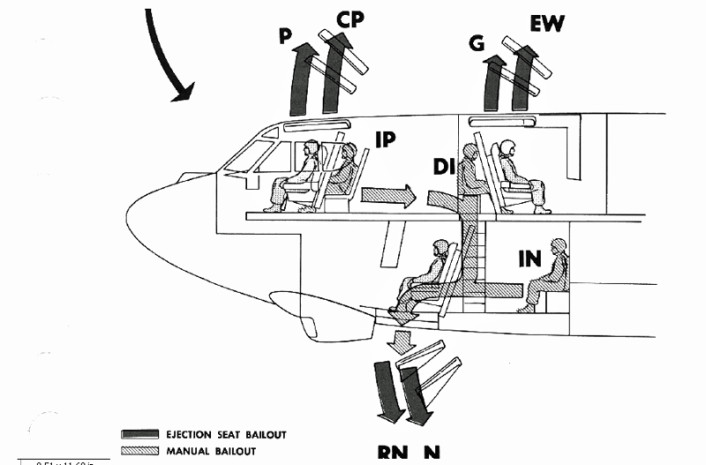
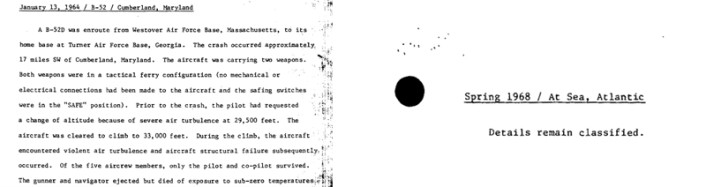
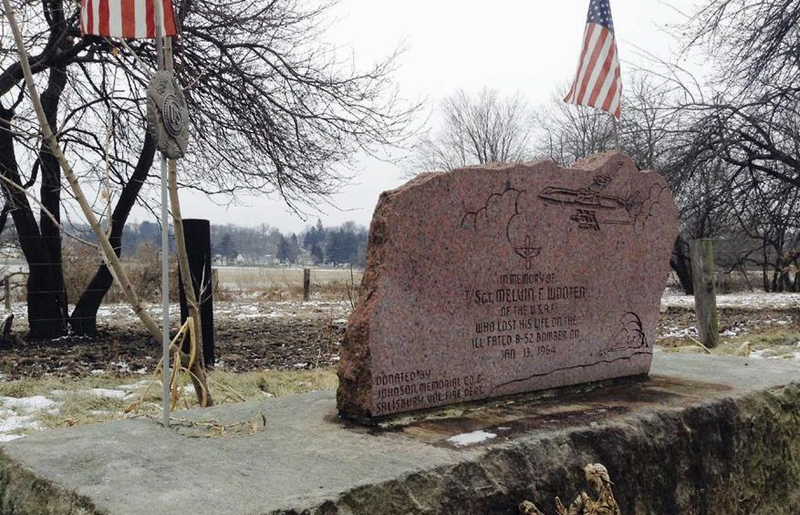
0138 (Local) Romeo Time Zone (UTC-5:00). 13 January, 1964. USAF B-52D Stratofortress Callsign “Buzz 14”, Flight Level 295 over Savage Mountain, Maryland. Major Tom McCormick, USAF, can barely see. Whiteout conditions and buffeting winds at 29,500 feet are so bad he radios Cleveland Air Route Traffic Control Center (ZOB) for clearance to change altitude to flight level 330, or 33,000 feet. He is trying to get his B-52 bomber above the freak winter blizzard. “Cleveland Control, this is Air Force Buzz one-four, request climb to level three-three-zero. Weather, over…” “Roger Buzz one-four, this is Cleveland Control. Ahhh… Please stand by.” As with the tragic crash of the AirAsia Airbus A320 flight QZ8501 over the Java Sea two weeks ago McCormick’s big bomber must find clean, stable air or risk breaking up, stalling and falling out of the sky. But unlike an airliner over turbulent seas McCormick’s two passengers are far more crucial. And deadly. Buzz 14 is carrying two live, 9 mega-ton B53 thermonuclear bombs. They are among the largest nuclear bombs in the U.S. arsenal. This warhead also rides atop the giant Titan II ICBM, a ballistic missile designed for smashing secret Soviet underground installations and wiping out Russian cities. And Buzz 14 is carrying them over the eastern United States. McCormick has another concern. His nuke-bloated bomber was diverted to the place this flight took off from after its original crew reported… a technical problem. The mission started as part of the Chrome Dome nuclear-armed airborne alert patrol but was forced to land at Westover AFB in Massachusetts because of an in-flight emergency, in this case, an engine failure. After the in-flight diversion the nuclear warheads were not off-loaded. Problems with the B-52 are not new. Three days earlier a structural problem with another B-52H, aircraft number 61-0023,resulted in a famous incident when its vertical stabilizer completely fell off. Since the aircraft was able to find relatively calm conditions after the extreme turbulence where the accident happened, it managed to land safely. A famous photo of the plane still in flight with its tail completely gone is one of the most widely viewed of the B-52 bomber. Right now Buzz 14 needs to find relatively calm air too. If it has another engine failure or losses its tail in this blizzard it will not be as lucky as 61-0023 was three days before. And 61-0023 didn’t have live nukes on board. McCormick abandons his experienced, light grip of the Stratofortress control wheel for the authoritative hand of a man trying to tame a machine bucking out of control. The rudder pedals are kicking back; wild swings of the wheel seem to have no affect on the aircraft’s flight attitude. Trying to keep the giant Stratofortress in level flight in the howling frozen sky is like arm wrestling an abominable snowman. Then suddenly… nothing. The pedals go light. The control links to the rudder are severed. The aircraft pivots. Yawing. Snaking wildly, first one side, then skidding back the other way on the frozen air in the blinding snow squall. McCormick and his co-pilot Capt. Parker Peedin are expert bomber pilots. They try to use ailerons to stabilize the giant bomber. But there is no solid purchase in the icy maelstrom outside. The B-52 becomes a giant, nuclear-armed Frisbee, entering a flat spin and departing controlled flight. Five miles above the ground Buzz 14 rolls on its back in the driving blizzard, its last fatal surrender. Ejection seats in the B-52 work when miniature thrusters blow hatches off the aircraft, resulting in rapid decompression of the cockpit and a howl of arctic air at near supersonic speed that is so cold the wind chill is impossible to calculate at 500 M.P.H. The navigator and radar operators’ seats eject downward… when the plane is right side up. But Buzz 14 is upside down now. And losing altitude fast. The B-52 half-rolls again, this time near level attitude. The crewmembers reach for their ejection seat handles. Explosive fasteners in the crew hatches detonate when the pilot orders, “Eject, eject, eject…” over the intercom. The pilot, Maj. Tom McCormick, co-pilot, Capt. Parker Peedin, navigator, Major Robert Lee Payne and tail gunner Tech Sgt. Melvin E. Wooten all managed to actuate their ejection seats and egress the aircraft into the black, freezing sky. Presumably, alive. Major Robert Townley may have been pinned inside the B-52 by G-forces as the crash accelerated out of control and he struggled with his parachute harness, his ejection seat may have malfunctioned or he may have been knocked unconscious in the bone-breaking turbulence. He never got out. His body was discovered days later in the wreckage. But the most critical survivors, at least to national security, are the pair of live B53 nuclear bombs. They ride the plane into the ground. Where two of the deadliest weapons known to man will lie unattended and unguarded. For almost a day. This is where the story could fly off the non-fiction shelf and onto the pages of a Clancy, MacLean or Fleming novel. All three authors started stories like this; Ice Station Zebra, Thunderball, The Sum of All Fears. Ian Fleming’s novel Thunderball was published in 1961, three years before the Buzz 14 crash. The film adaptation of Thunderball was released in 1964, a year after the Buzz 14 incident. Fiction that recounts the horror of a nuclear weapon or critical national security asset lost, something that has actually happened more frequently than you care to imagine. A few have never been recovered. But in this instance the weapons are found. Not entirely safe, but “…relatively intact…” according to the Air Force. It’s a scary sounding moderation to describe radioactive A-bombs lying around in the woods of the Eastern U.S. unattended. The bombs come to rest on the placid Stonewall Green Farm. Pilot Maj. Thomas McCormick survived the ejection and landed in relatively good condition. He reported seeing lights on the ground during his parachute descent and was found by a local resident who drove him to the Tomlinson Inn on National Road near Grantsville where he reported the crash by phone. Co-pilot Capt. Parker Peedin also survived, but went through a 36-hour survival ordeal in the harsh winter conditions before being found. The rest of the crew, radar bombardier Maj. Robert J. Townley; the navigator, Maj. Robert Lee Payne and tail gunner, TSgt. Melvin F. Wooten did not survive. [Read also: On this day in 1968 a B-52 crashed in Greenland with 4 hydrogen bombs] There are some… potentially disturbing… inconsistencies about the reports on the crash of Buzz 14. Buzz 14 pilot in command USAF Major Thomas McCormick would report after the crash that, “I encountered extreme turbulence, the aircraft became uncontrollable and I ordered the crew to bail out,” he said. “I then bailed out myself after I was sure that the other crew members had bailed out.” [emphasis added]. But Major Robert Townley did not get out of Buzz 14. One account even suggests that the aircraft navigator, Major Robert Lee Payne, seated next to Townley in the B-52, may have attempted to assist Townley in refastening his parachute harness after a bathroom break inside the aircraft. If he did, we’ll never know. Major Payne died of “exposure” after the crash. The official Air Force account suggests the B-52 was at 29,500 feet at the time of its first radio call to Cleveland Air Traffic Control and the crew requested a climb to 33,000 feet to get above the bad weather. To most pilots this makes sense. Other news accounts, including The Baltimore Sun newspaper corroborate this flight profile. An account by journalist David Wood of the Newhouse News Service appears to quote actual radio transcripts from the crash. Wood’s report says the B-52 crew requested a descent from 33,000 ft to 29,500 ft. Why? Also, Wood’s account mentions the crew used their Air Force call sign with civilian air traffic control, a seemingly unusual practice for a bomber carrying live nuclear weapons. Today nuclear armed aircraft like B-2 Spirit stealth bombers transiting civilian airspace may use an alias call sign to avoid detection by civilian listeners on ATC radio scanners. Recently a failure to use (alias) civilian call signs resulted in civilians monitoring the flight data of B-2’s on their way to bomb Libya, a serious security breach. A search of ATC contacts for the region surrounding the crash site indicates that, while Cleveland ATC center is repeatedly mentioned as the air traffic control center in contact with Buzz 14, the Washington Air Route Traffic Control Center (ZDC) is actually closer to the area where the crash occurred and listed by several resources as the center controlling air traffic in the region of Buzz 14’s crash. Why was Buzz 14 using Cleveland Center ATC instead? Details about the retrieval of the weapons themselves are sketchy. E. Harland Upole Jr., a retired state parks veteran, told the The Baltimore Sun that he located the crash site and the bombs. Upole’s account said the bombs’ “…insulation was torn off”. Upole went on to report the bombs were “loaded onto a flatbed truck” and driven through the city of Cumberland at 2:30 AM on the way to what is now called the Greater Cumberland Regional Airport. Another report in The Washington Times dated January 14, 2014 says, “A local excavator was authorized by the military to move the bombs two days after the crash. He used a front-end loader, but first lined it with mattresses from a nearby youth camp – to keep the nukes nice and swaddled, just to be on the safe side.” A typical large front-end loader, like a Caterpillar 906H2, has a lifting capacity (according to Caterpillar) of “3,483 pounds”. But a B-53 nuclear weapon weighs 8,850 pounds, or more than twice the capacity of a large bulldozer like the Cat 906H2. How were the two nukes moved if they were relatively intact? And here is another minor wrinkle: The official website for Greater Cumberland Regional says its longest runway is RW 5/23, a 5050-foot long by 150-foot wide grooved asphalt runway. More than one resource says the take-off distance (to clear 50ft.) for a loaded C-130 transport, the most likely aircraft to have retrieved the heavy nuclear bombs from Buzz 14, is 1,573 meters or 5,160 feet. That suggests the main runway at Greater Cumberland Regional is over 100 feet too shortto accommodate a C-130 cargo plane loaded with the two heavy nuclear weapons. The total weight of both bombs would have been over half the maximum weight the C-130 could carry, so presumably a little extra runway may have been nice, especially at night in winter weather. The crash location is mentioned as “Savage Mountain, Garrett County (near Barton, Maryland) at coordinates 39.565278° North and 79.075833° West. Today Google Earth shows that as an empty farm field. Some news accounts said portions of the crash “were buried” at the crash scene, an unusual sounding practice for a crash of great significance and one that involved nuclear materials. Is gathering the lose ends of the threads that unravel at the end of this story and weaving them into a Clancy-esque conspiracy tale a reasonable conclusion? No. And this is the exact place where fiction departs from non-fiction. But there is one axiom that every good fiction writer knows compared to a non-fiction reporter of actual facts: fiction has to be believable. http://theaviationist.com/2015/01/15/savage-mountain-incident/
-
And the M3.5 speed? good luck sorting out the friction issues guys - may as well redo the XF-108 Canada going by themselves to produce a very expensive jet that no one else would likely buy - wont happen.
-
Saw this today - Excellent film - up there with the best of this type IMO.
-
- might make a What If http://www.thestar.com/news/canada/2012/09/10/avro_arrow_takes_flight_again_in_dream_plan_for_new_air_force_fighter.html
-
Saw it was in the Oscar nominations list yesterday - will see it this week I suspect
-
A newsnight report from the carrier during recent operations. http://www.bbc.co.uk/news/world-30825586
-
- 1
-

-
http://theaviationist.com/2015/01/14/baltic-air-policing-photo-session/


-
The Douglas Skyraider has been the last piston engine propelled aircraft to shoot down a jet fighter. The last propeller U.S. Navy attack aircraft to disappear from the decks of the flattops was the Douglas AD Skyraider. This airplane had a unique capability: even when it carried its full internal fuel of 2,280 pounds, a 2,200-lb torpedo, two 2,000-lb bombs, 12,5 inch rockets, two 20 mm guns and 240 pounds of ammunition, the Skyraider was still under its maximum gross weight of 25,000 pounds. Entered in service just in time to take part in the Korean War, the Skyraiders in the improved A-1H version were quite slow; nevertheless in spite of performance not even comparable to those of the other assets in the air wing’s strike group, the propeller-driven attack aircraft managed to shoot down two MiG-17s during the early part of the Vietnam War. In fact, some of the most unusual kills of the conflict did not come from the F-4s, F-105s, or F-8s, but from the Korean War-era piston-engine Skyraiders, thanks to the four M3 20 mm fixed forward-firing cannons capable of firing 800 rounds per minute, that fitted the A-1Hs. The first of these victorious engagements took place on Jun. 20, 1965, when a flight of Skyraiders from the Strike Squadron 25 (VA-25) Fist of the Fleet, took off from the USS Midway (CVA-41) supporting the rescue of a downed USAFpilot in the northwest corner of North Vietnam were attacked by a flight of MiG-17s. The two enemy jets launched missiles and fired with their cannons against the two A-1Hs, but both Skyraiders’ pilots, Lt. Charles W. Hartman III, flying A-1H BuNo 137523, radio callsign “Canasta 573,” and Lt. Clinton B. Johnson, flying A-1H BuNo 139768, callsign “Canasta 577,” evaded them before and maneuvered to shoot down one of the MiGs with their 20 mm cannons. Lt. Johnson described this engagement in Donald J. McCarthy, Jr. book “MiG Killers A Chronology of U.S. Air Victories in Vietnam 1965-1973” as follows: “I fired a short burst at the MiG and missed, but got the MiG pilot’s attention. He turned into us, making a head-on pass. Charlie and I fired simultaneously as he passed so close that Charlie thought I had hit his vertical stabilizer with the tip of my tail hook. Both of us fired all four guns. Charlie’s rounds appeared to go down the intake and into the wing root, and mine along the top of the fuselage and through the canopy. He never returned our fire, rolled, inverted, and hit a small hill, exploding and burning in a farm field.” The subsequent MiG kill of this engagement was shared by both Hartmann III and Johnson. The second victory of the propeller-driven Skyraider against a North Vietnamese MiG-17 jet fighter, took place on Oct. 9, 1966 and involved four A-1Hs launched from the deck of the USS Intrepid (CV-11) in the Gulf of Tonkin flying as “Papoose flight.” The flight was from the Strike Squadron 176 (VA-176) Thunderbolts and it was led by Lt. Cdr. Leo Cook, with Lt. Wiley as wingman, while the second section was led by Lt. Peter Russell with Lt. William T. Patton as wingman. It was during the RESCAP (the REScue Combat Air Patrol, a mission flown to protect the downed pilots from ground threats) flight, that the “Spads” (as the Skyraiders were dubbed by their pilots) were attacked by four MiG-17s. This engagement ended with one Fresco confirmed as being shot down, a second as probably shot down and a third heavily damaged. According to McCarthy, the MiG-17 kill was awarded to “Papoose 409,” the A-1H BuNo 137543, flown by Lt. Patton who, after having gained a position of advantage on one of the MiGs, opened fire with his four guns, hitting the tail section of the enemy jet. Patton followed the MiG which descended through the cloud deck and when Papoose 409 emerged from the clouds he spotted the enemy pilot’s parachute. The U.S. Navy Skyraiders last combat tour took place from July 1967 to 1968 onboard USS Coral Sea (CV-43), but this versatile propeller aircraft continued to fly with the U.S. Air Force and with the Vietnamese Air Force until the end of the conflict thanks to its unparalleled capabilities in close air support. http://theaviationist.com/2015/01/14/the-most-unusual-mig-killer-the-skyraider-air-to-air-victories-on-north-vietnamese-mig-17s/

-
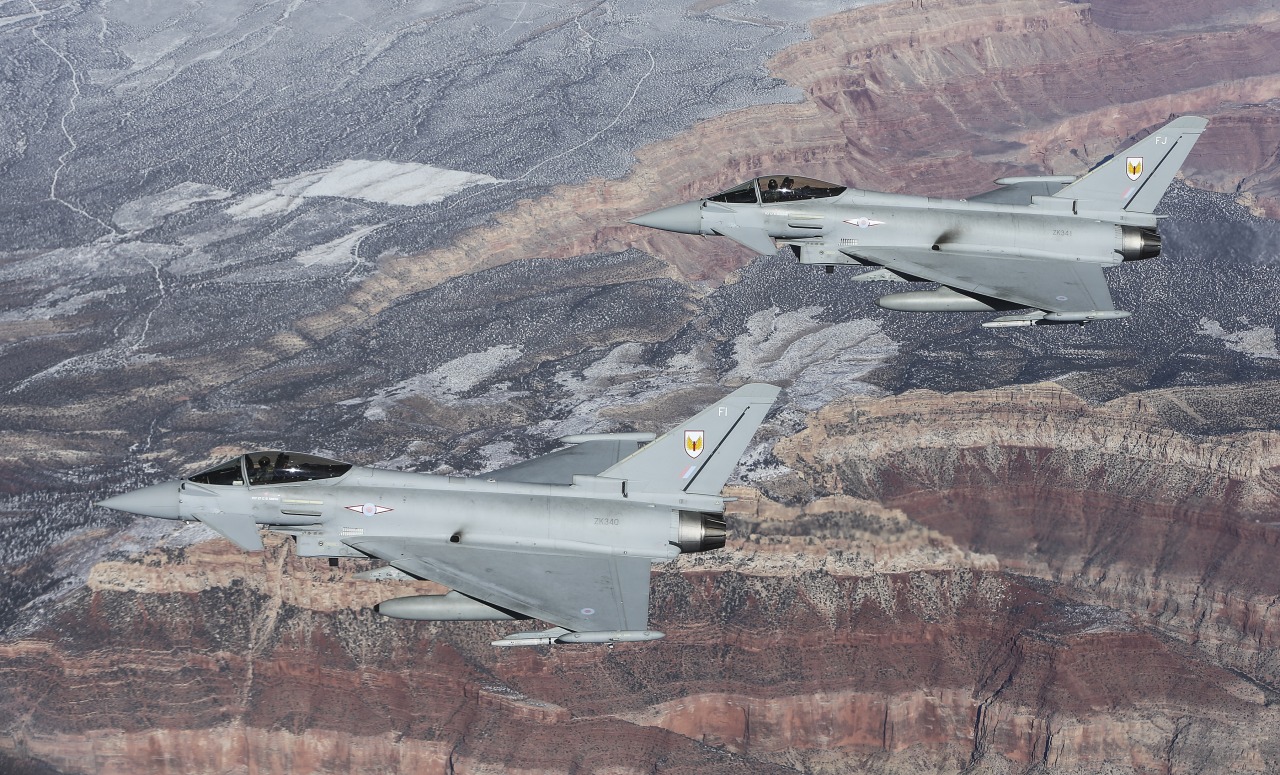
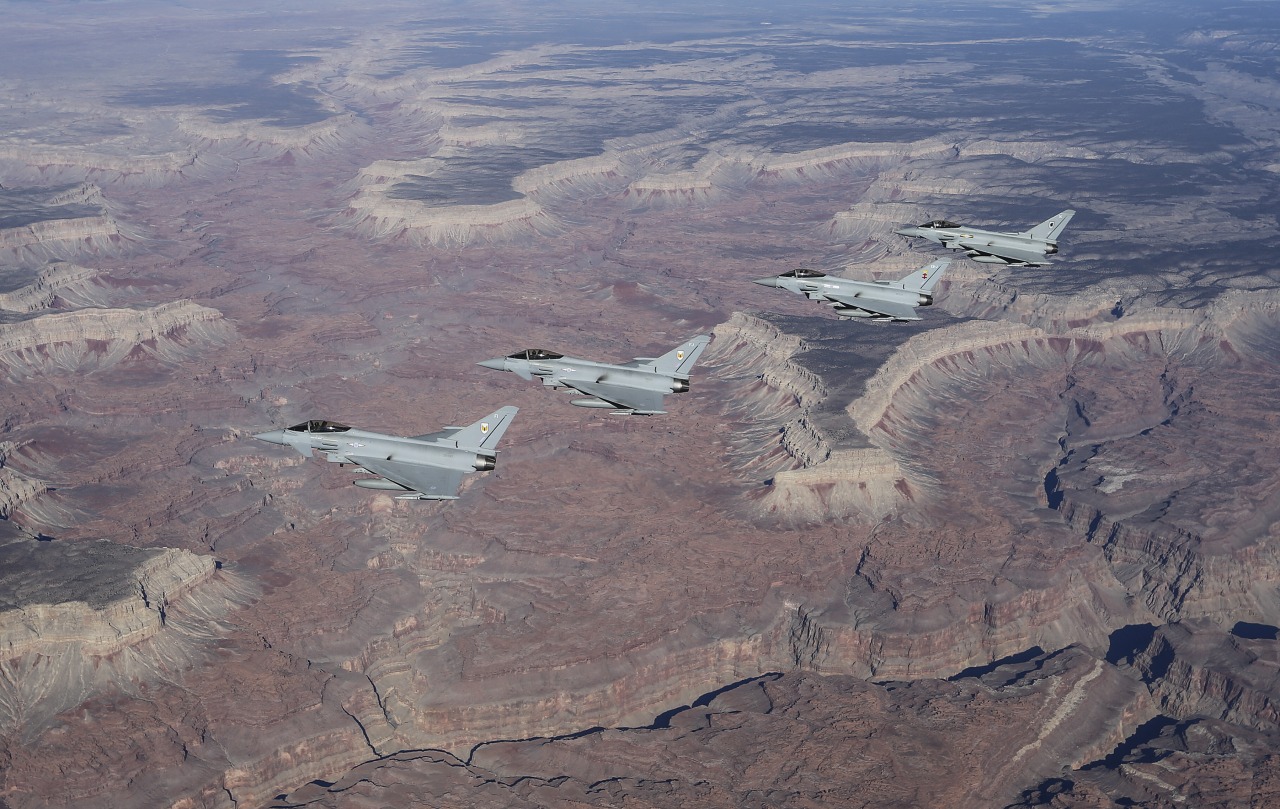
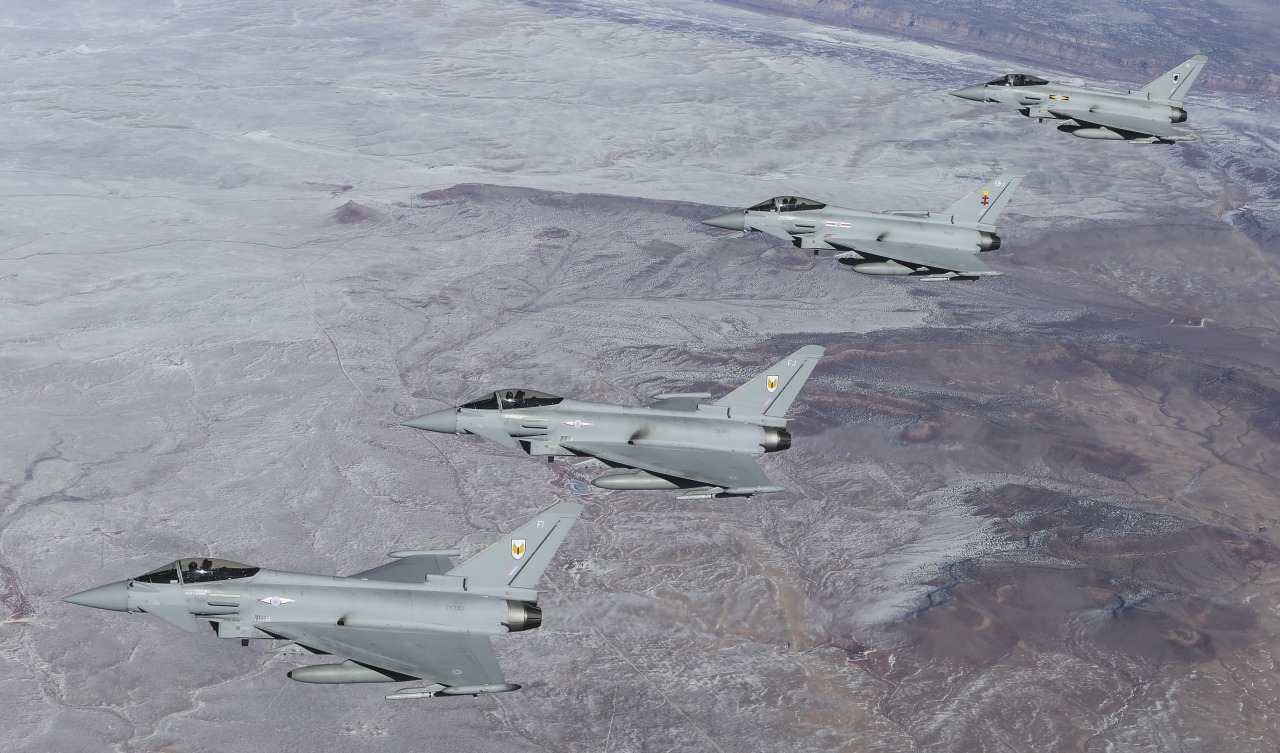
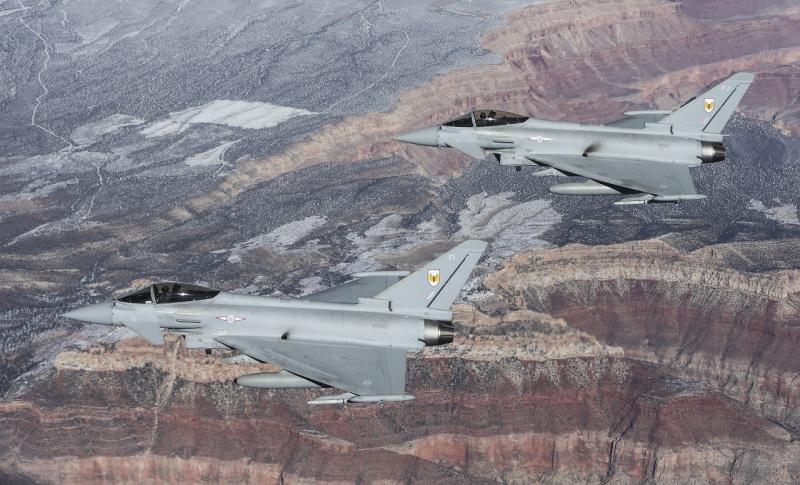
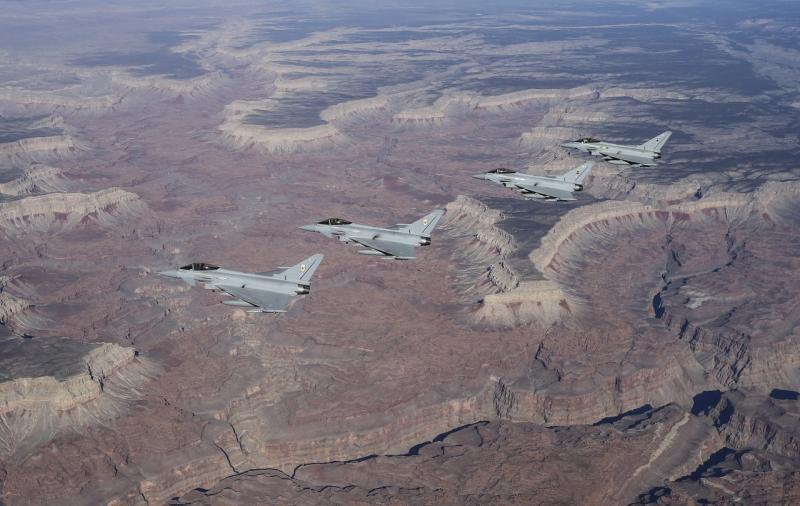
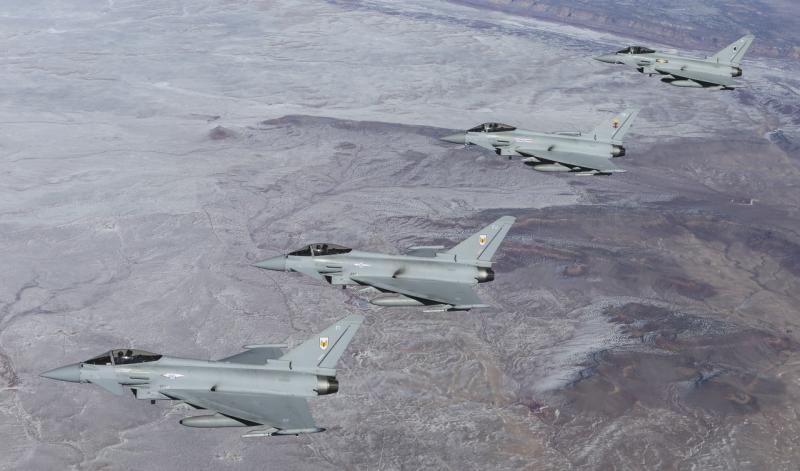
Off to Red Flag http://theaviationist.com/2015/01/12/typhoons-over-grand-canyon/
-
Still get the maintenance message here
-
It goes by Rainbow or Star Wars Canyon, but it's officially known by those who blast through it as the 'Jedi Transition.' http://foxtrotalpha.jalopnik.com/the-jedi-transition-a-canyon-that-fighter-pilots-love-1678453195
-
Tribute video
-
more.............. http://www.codeonemagazine.com/article.html?item_id=151&utm_source=Code+One+Magazine&utm_campaign=13a1cfae31-Code_One_V30N01%281_9_2015%29&utm_medium=email&utm_term=0_a634c22da7-13a1cfae31-154309433


-
- 2
-
-
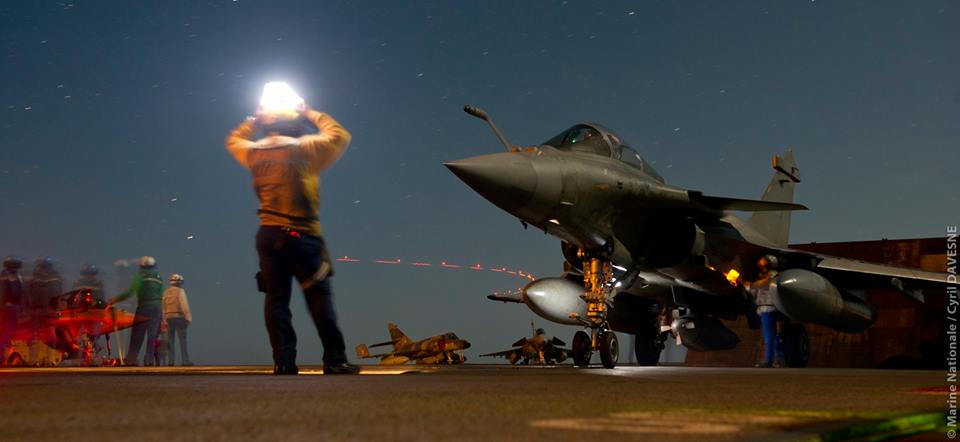
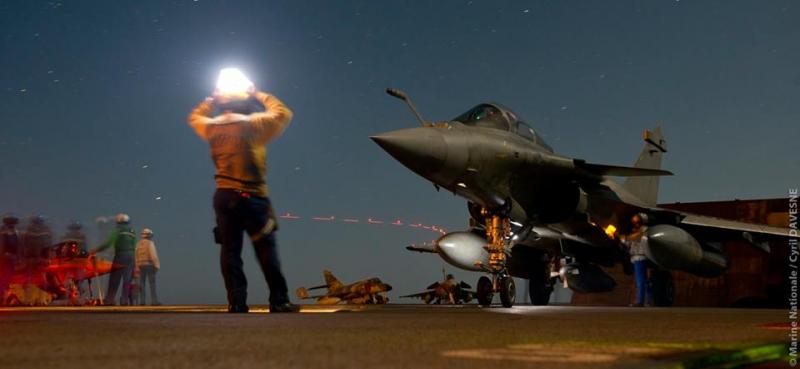
France decided to deploy Charles De Gaulle aircraft carrier before the terrorist attack on French satirical magazine Charlie Hebdo which claimed 12 victims. The Charles De Gaulle aircraft carrier will deploy to the Persian Gulf to strengthen the French contingent already fighting ISIS in the region, Agence France Press news agency reported on Jan. 6. The news that the 38,000-ton nuclear-powered aircraft carrier would be about to join the war on Islamic State widely spread through social media on Jan. 7, after the Paris shooting, but the decision to deploy the battle group was taken well before the deadly attack on Charlie Hebdo. According to the AFP, the aircraft carrier would operate in the Gulf on its way to India, where the French Navy’s flagship is scheduled to take part in drills in mid-April and the deployment is set to be announced by President Francois Hollande on Jan. 14, during the annual New Year’s speech to the armed forces. French Navy Dassault-Breguet Super Étendard, Dassault Rafale M and E‑2C Hawkeye aircraft operating from the Charles De Gaulle would reinforce the current French contingent made of 9 Rafale, 6 Mirage 2000 jets, 1 C-135FR tanker, 1 E-3F Airborne Early Warning aircraft and an Atlantique 2 maritime patrol aircraft already deployed to airbases in UAE and Jordan. http://theaviationist.com/2015/01/08/de-gaulle-joins-isis-war/
-
-
"Su-27 - The Ultimate Argument" Campaign is available! The Fighter Collection and Eagle Dynamics are pleased to announce that first payware DCS campaign: Su-27 - The Ultimate Argument is now available for download via ingame Model Manager and as separate module from the DCS E-Shop “Su-27 - The Ultimate Argument” is the storyline campaign for the Russian Air Force pilot flying the Su-27 aircraft for the Digital Combat Simulator. The campaign is based on a fictional Caucasus conflict scenario, into which border states of the region got involved. Throughout 20 missions you will have to put up intense air combat, to escort and protect your aircraft, combat air patrols, ground strikes, search for enemy in mountains and gorges, fly day and night. Features of the campaign “Su-27 - The Ultimate Argument”: 20 storyline missions for a single player. More than 300 triggers for interactive environment. 126 voice-overs. Briefing’s art with maps. Russian and English localizations. Voice-overs are recorded in Russian. In the English localization the voices are provided with English subtitles. The DCS: Flaming Cliffs 3 or DCS: Su-27 modules are required to be installed and activated into the DCS World for the campaign.
-
http://www.bbc.co.uk/news/uk-england-suffolk-30725366 USAF to pull out of airbases at Mildenhall, Alconbury and Molesworth The United States Air Force (USAF) has confirmed it will pull out of three UK airbases. US Defence Secretary Chuck Hagel said the Americans will leave RAF Mildenhall in Suffolk and RAF Alconbury and RAF Molesworth in Cambridgeshire. The move is part of a programme to save £320m ($500m) a year across Europe. The USAF lease the RAF bases. Mr Hagel said he understood it would mean job losses and thanked those who had supported the US Air Force.
-
B-52s had Chaff and multiple different types of Jammers which were amplified by flying in formations called cells. Apart from that there was possibly standoff jamming from EB-66 / EA-6 types and a lot of tactical jets flying Wild Weasel / Iron Hand.
-
View File Thirdwire F-104A/C Pack 1 Thirdwire F-104A and C pack 1 ---------------------------------------------------------- THIS IS FOR THE THIRDWIRE F-104A/C (DLC28) MODELS ONLY (SF2). Includes new Hi Res skins and revised flight models along with everything needed to fly them. Variants: F-104A (GE-3B engine & Internal Gun) USAF ADC & ANG, Jordan (RJAF), Pakistan (PAF), Taiwan (ROCAF) F-104A (GE-11A engine) Pakistan (PAF) F-104A (GE-19 engine) USAF ADC, Taiwan (ROCAF) Default is the initial high thrust rating - but an alternate data.ini is inluded for the reduced thrust GE-19 version. F-104C (GE-7A engine) USAF TAC (shooting star silver schemes) F-104C 1961 (GE-7A engine) Adds centerline AIM-9 catermaran under Project Grindstone (that was never used.) USAF TAC (Early Vietnam silver scheme) Submitter MigBuster Submitted 01/06/2015 Category F-104
-

Version 1.0
866 downloads
Thirdwire F-104A and C pack 1 ---------------------------------------------------------- THIS IS FOR THE THIRDWIRE F-104A/C (DLC28) MODELS ONLY (SF2). Includes new Hi Res skins and revised flight models along with everything needed to fly them. Variants: F-104A (GE-3B engine & Internal Gun) USAF ADC & ANG, Jordan (RJAF), Pakistan (PAF), Taiwan (ROCAF) F-104A (GE-11A engine) Pakistan (PAF) F-104A (GE-19 engine) USAF ADC, Taiwan (ROCAF) Default is the initial high thrust rating - but an alternate data.ini is inluded for the reduced thrust GE-19 version. F-104C (GE-7A engine) USAF TAC (shooting star silver schemes) F-104C 1961 (GE-7A engine) Adds centerline AIM-9 catermaran under Project Grindstone (that was never used.) USAF TAC (Early Vietnam silver scheme) -
Nice selection of footage - couldn't help but notice Willy Fudd at the start!