

streakeagle
-
Posts
2,713 -
Joined
-
Last visited
-
Days Won
8
Content Type
Profiles
Forums
Gallery
Downloads
Store
Everything posted by streakeagle
-
I don't understand the original question of "how do you turn on the g-meter". In the sim, it is always on. In real life, it will be one of the loads on a circuit breaker switch. The accelerometer always shows you the actual load on the aircraft, so in level flight you will see 1 g. But the 1 g of lift is canceled out by the 1 g of the earth, so you fly level instead of pitching up in a 1 g loop. So if you pull 2 g per the meter, you will start pitching up in a 1 g loop, but as you approach 90 degrees, gravity is aligned with the drag vector and perpendicular to the lift vector. At that point you will be pitching in a 2 g loop if you can still maintain 2 g while climbing vertically. At the top of the loop, if your meter still indicates 2 g, gravity will now add performance, pulling you into a 3 g loop. The 2 g you see through the entire loop is what is indicated on your instrument. Its purpose is to show the load on the wings so that you don't break them. Radial g is the actual acceleration parallel to the lift vector that acts on the radius of the turn or loop. You must use trigonometry to solve determine the radial g taking into account the angle between the lift vector and the pull of gravity. Radial g determines the actual radius of the turn. So, holding constant indicated g through a loop produces the egg in the diagram. You need to hold constant radial g to make a true circle.
-
The input and output forum and its home cockpit sub forums are the places you want to be: https://forums.eagle.ru/forumdisplay.php?f=96
-
To the best of my knowledge, DCS does not inherently recognize any USB gauges. What DCS does do is allow exporting of its parameters so that they can be accessed by other devices including software supporting gauges. To get precise and accurate information on how to integrate external systems with DCS, you need to see the appropriate forum on Eagle Dynamics' home page. There are some serious experts with home cockpit building that can answer just about any question you may have.
-

Number of "Game Loops" slowing the fps in SF2V
streakeagle replied to stingray77's topic in General Discussion
Absolutely. The Game Loops increasing is a response to low fps, not caused by it. The game won't work right if the game loops too slow. It messes up the flight model and AI. So when the fps gets too low or when there is extra cpu processing power available, the game automatically runs its loops faster. -
Number of "Game Loops" slowing the fps in SF2V
streakeagle replied to stingray77's topic in General Discussion
Game loops do not lower fps, on the contrary, when the fps get low and the cpu is underutilized, the game loops more frequently. -
Prior to Wings Over Vietnam, Gephard had released the DRV (Demorcratic Republic of Vietnam) terrain for SFP1. ArmourDave had already released an F-105D for SFP1 was working on releasing a major base... when TK blindsided everyone with the release of Wings Over Vietnam. ArmourDave had invested so much time and effort into making a proper Vietnam expansion for SFP1 that he got very angry at TK for stealing his thunder with this surprise release. ArmourDave, who had done so much for SFP1, completely left the SFP1/WoX community after this happened. WoV's big change beyond the new terrain was adding in carriers and basic carrier operations. But TK's view system with its stock head positions were optimized for allowing the virtual pilot to see the control panel which made carrier landings quite difficult since you couldn't see over the nose with the view position so low if you were on glide slope at the correct AoA and speed. This problem was further complicated by the lack of ILS support for carrier landings. Overall the plane set was outstanding, greatly expanding the number of flyable and AI aircraft compared to SFP1. Besides the F-105, the F-8 was the big win, plus a half finished A-6 could be flown by the player. Unfortunately, like nearly every patch or release in the SFP1/WoV series, the gains were partially canceled out by bugs. The AI pilots went stupid compared to the very lethal SFP1 Service Pack 2a enemy pilots. But the worst problem was issues with the flight engine. Transonic flight behavior was broken bad. So WoV went through some quick patches to get rid of the worst bugs. However, the dumb AI pilots would remain until Wings Over Israel was released years later, a precursor to another surprise release: SF2.
- 18 replies
-
- 1
-

-
- thirdwire
- wings over vietnam
- (and 1 more)
-
Holiday Sale is On! Massive Savings! Dec. 21 - Jan. 4
streakeagle replied to 76.IAP-Blackbird's topic in News
I had none of their games starting with Rise of Flight. But having an Oculus Rift and knowing that BOM/BOS supports VR as well or better than any other flight sim, I bought Deluxe BOM and Deluxe BOS from the website. I almost bought the Steam Version, but only the first game was available as a "Deluxe" package. Up to now, Aces High 3 has been my best VR combat flight sim. But after trying BOM/BOS last night, I would say that BOM/BOS is at least the equal of AH3 in VR implementation and it is a generation or two ahead in graphics. This series is clearly positioning itself to truly replace the original IL-2 series as the dominant WW2 combat flight sim. -
Aces High 3 is free. You can play offline, though you will have to learn how to create offline "staged missions". They recently reinstated free user hosted arenas. Of course the game is really meant to be played in the massive pay-to-play arenas, but at a cost of $0, it is an excellent survey sim with so may different aircraft to fly as well as some tanks. I spend some time flying Aces High 3 as a paid subscriber. It works very well with VR (I have an Oculus Rift). IL-2 Cliffs of Dover was patched up and re-released on steam for about $19 during the winter sale. It is limited to a Battle of Britain plane set, but the graphics looks great. The go-to WW2 sim right now is the IL-2 Battle of Stalingrad / Battle of Moscow series, which happen to be on sale right now ($24.99 each for the base games). This series is shaping up to rival the original IL-2 in covering a vast plane set and has great graphics. I don't own either one for a variety of reasons, but I have heard nothing but good comments about it from people I know and trust. The developers also recently announced that they intend to slowly create a new WWI game around this same series because their existing WWI product, Rise of Flight, has gotten a bit dated. My sim of choice is DCS World. If you try out the free Su-25T and TF-51D and discover it runs good enough on your machine, then consider getting Flaming Cliffs 3 which is on sale right now for $18. It is a great price for the A-10A, Su-25, F-15C, MiG-29, Su-27, and Su-33. Carrier operations with the Su-33 are fun. But DCS World is at its best with the full-blown study sim add-on aircraft. If you like that sort of thing, wait for sales and buy one or two aircraft as time and money permit. I bought into the SimWorks Studios F-4B for FSX, so I also fly some FSX with TacPack. While FSX Steam Edition can be found on sale for very little cost, good addon aircraft aren't cheap and neither is TacPack if you want any kind of air combat functionality in FSX. SF2 is a little dated, but is still a nice upgrade from SFP1 and is fairly cheap if you only buy one of the games. If I were you and my machine specs were good enough, I would get either Il-2 BoS or Il-2 BoM for WW2 flying and DCS World/Flaming Cliffs 3 for jets. Of course Ace High 3 is free, so you should try that one, too.
-
I don't do beta installs, so it may be a week or two before I can fly this. I wasn't going to buy the early release. But I couldn't resist the idea of flying a Harrier with what will probably be the best possible flight model on a PC. I will never fly it as an attack aircraft, just not my cup of tea. I would have preferred an earlier AV-8A for the challenge of the flight model or the AV-8B+ for the air-to-air radar. But this will still be one hell of a fun aircraft to fly. I will of course use it for air-to-air the same way I fly the AJS-37 Viggen. This will be a great aircraft to enjoy VR flying with the Oculus Rift. VR really works well with helos, so it should be great with VSTOL, too. Lately, I have been trying to rotate frequently between every aircraft (I own them all). The Harrier will probably get a few nights of dedicated flying time before I go back to rotating.
-
OT: Dungeon & Dragons table top gaming
streakeagle replied to Hellshade's topic in WOFF UE/PE - General Discussion
Up until a few years ago, I had a fair number of old D&D figures... mostly the original "official" figures made by Grenadier for the original AD&D with some Citadel and Ral Partha figures. When I was moving, I dumped anything I considered to be dead weight, and those figures were among the tabletop game related stuff that was dumped. I still have the original books, though. While I loved the figures, I never had more than grid squares marked up to show walls/doors to use them. Certainly nothing even close to what you posted above. It didn't stop me from enjoying looking at them though. I appreciate the post, both for the quality of your work and the memories those photos bring back to me. -
World War Two female Spitfire pilot dies, aged 94
streakeagle replied to Menrva's topic in Military and General Aviation
94 years is a remarkably long life. I hope she enjoyed most of them. I can only dream of flying a Spitfire or any other fighter plane for that matter, so I envy her for that. -
I hope the pilot doesn't get in any kind of official trouble that goes on his record and affects his career. But in this modern PC world, I suspect there may be some penalties. My private submarine sailor groups on facebook suggest that the pilot will get free drinks at the bar for the rest of his life from any other sailors that know who he is and what he did :)
-
SF1 F9F-5 & 5P Panther Korean War Skins Pak
streakeagle replied to Geary's topic in File Announcements
Whether discussing range or endurance, early jet engines were thirsty and did not provide much power for the amount of fuel consumed. The theoretical range listed on wiki sites is clean and hi-hi-hi... ferry range. In actual experience, the F9Fs had some serious problems with time on target with any useful ordnance load during Korea. The F2Hs were significantly better, but were in short supply in Korea and still vastly inferior to prop aircraft. When you consider the cost of using a Skyraider to using an F9F or F2H, the only thing you lose with the Skyraider is speed. It can carry more than a B-17 and can get there with enough fuel to hang out for awhile waiting for ground support calls. Whether you are talking about an A-1 Skyraider or an A-10 Warthog... you need air superiority and decent SEAD to avoid losses. But if they are properly supported, no fast jets can do a better job. -
SF1 F9F-5 & 5P Panther Korean War Skins Pak
streakeagle replied to Geary's topic in File Announcements
I recently bought and read all of the Osprey books on Skyraiders, F4Us, P-51s, and F9Fs over Korea. The F9F was always short on fuel which degraded range, endurance, and payload. The F2H had much better range in comparison. But the prop aircraft were far superior to these early jets. F9Fs and F2Hs did fly some attack sorties, they mainly provided top cover for F4Us and Skyraiders due to their endurance limitations. -
They have some screenshots on their Facebook page. F-80 model in development. F9F in the air. A bridge target. They already had the carrier/F9F available, so this makes sense. But it is like they never announced that they were shutting down after eightlein said he was leaving the team. I was black listed for disagreeing with 05 on the SimHQ forums before YAP3 was released, so I don't have any YAP products beyond YAP2, and may have missed the last bonus material/patches for YAP2.
-
Over a year later and despite the announcement, YAP not only continues to be available but appears to be developing a Korean War product. So was the announcement an advertising trick to bump up sales? Or did they just change their mind and keep going because the money was still rolling in?
-
The A-4H is essentially an A-4F without the hump and 30mm cannons in place of the 20mm cannons. So the A-4H should be better than the A-4E.
-
Campaign Building Tutorial location
streakeagle replied to alexis99's topic in Mission/Campaign Building Discussion
Bunyap is very public in the DCS World Community. You should be able to contact him via their forums or through commenting on his YouTube posts. -
F-16 weight increased over time with more internal equipment being added with nearly every block. Wing loading affects turn performance in more ways than one. The later up-engine F-16Cs had a dramatic increase in thrust-to-weight, but that doesn't fully compensate for the increased wing loading. So an F-16A would be an angles fighter versus an F-16C, but both would be angles fighters against most opponents.
-
Fuel is proportional to mass air flow. At high altitude the air is less dense (up to 36,000 feet). So the amount of fuel required at max throttle is much less (about 30% of the value used at sea level). The lower air density does reduce drag, but it also reduces thrust and lift. Aircraft that want to be fuel efficient AND fast fly at high altitudes where the indicated airspeed that determines optimum cruise speed remains the same, while the actual ground speed increases thanks to the net changes in air temperature and pressure (density) at altitude.
-
Flight Modeling - How Can We Be Sure it is Accurate?
streakeagle replied to hawker111's topic in General Discussion
I guess I never directly answered the original question: "How Can We Be Sure it is Accurate?" Verifying accuracy is fairly easy. Find a reliable source for extremely detailed/accurate performance of the aircraft in question, then test the sim aircraft under the same conditions. For most aircraft, you can buy a pilot manual online that will include performance charts. Some manuals are better than others. Fly the sim aircraft in the same conditions used to generate the chart data and see how closely they match. The total weight is a critical component. I prefer to investigate clean configurations as it is doubtful that any game will get the drag penalty of various stores loads anywhere near correct. Simple tests are the 1g flight envelopes: i.e. the minimum and maximum speeds for level flight at any given altitude as well as the maximum ceiling. If a game can't get these right, there is no point in going any deeper. SFP1 and SF2 has a debug view that can be enabled in the ini files. This provides data that lets you verify the g-load, lift, drag, etc. If you are good on a stick, you can learn to test instaneous and sustained g-loads. Another easy test is acceleration. The F-4 flight manual has extensive tables on how long it takes to accelerate from one mach number (say 0.5) to another (say 1.2) for a given altitude, weight, and drag configuration. Rate of climb can be harder to measure, but can be done as well. The key is deciding on an accurate source for performance data, replicating the conditions used to generate that data, and then comparing in-game results. But I don't care what PC flight sim you fly, if you dig deep enough, you will be disappointed in the results. Learn to appreciate the look and "feel" of the game rather than the absolute accuracy of the physics and you will be a lot more satisfied. -
Flight Modeling - How Can We Be Sure it is Accurate?
streakeagle replied to hawker111's topic in General Discussion
First: Aerodynamics cannot presently be modeled to 100% accuracy on a PC. I would argue that even the most powerful CFD software (computational fluid dynamics) used by the aerospace industry and/or NASA still must be validated by extensive wind tunnel testing and full-scale development test flights with extensive instrumentation. Within the limits of what a PC is capable of doing, Strike Fighters uses the most practical approach: Interpolated look-up tables. The SFP1 and SF2 flight model engines' look-up tables can be customized to the resolution desired by the person filling in the data. Out of the box, SFP1 lookup tables that were based on Mach number were based on 0.4 Mach intervals: 0.0, 0.4, 0.8, 1.2, 1.6, etc. If I recall correctly, SF2 went to a 0.2 Mach interval. The problem is that around transonic speeds of Mach 0.75 to Mach 1.2, the changes are extreme over a very small interval. So even with a 0.2 Mach interval, you can't show the subtle but significant differences in how aircraft handle in that region. So, if you fly/fight around that Mach number, you will find odd behavior inconsistent with published performance data. Unfortunately, from the F-86/MiG-15 and on, this is exactly where most air combat starts. Out of the box, the flight models generally aren't too bad by the time SF2 was released. TK responded to customer feedback and greatly improved the F-4 and F-105 flight models compared to published performance. He never spent a whole lot of time developing refining flight models for AI aircraft. When you set the game to use "HARD" flight models, the full strength of the game's flight engine is unleashed for player flown aircraft, but all AI aircraft still follow a simplified system that is more like the "NORMAL" flight model. Some of the data needed for accurate "HARD" flight models is simply not available and TK fills in "reasonable estimates", particularly in the area of the stability and inertia coefficients. Over the years, TK constantly tweaked the flight models. Not necessarily to make them more realistic, but to make them "flyable" for the fun "lite" sim quality he aiming to deliver. I am an F-4 Phanatic. While TK greatly improved the drag numbers for the F-4 in the SF2 version of the game (the level flight/zero lift drag was always to low in SFP1/WoX), the unslatted F-4s never displayed the nasty high AoA spin/departure behavior that downed around 200 F-4s in Vietnam and the "lite" approach of the SFP1/SF2 series on handling high AoA flight made it difficult if not impossible to edit the flight model to reflect this problem. But aside from high AoA stall/stability behavior, SF2 flight models can generally be tweaked to almost perfectly replicate real-world performance charts. Even if you had access to all the real-world aerodynamic coefficients tabular data needed to create an SF2 flight model, the tables still aren't extensive enough to replicate what actually happens. For instance, t-tail aircraft like the F-104 and even the F-4 have control/stability issues caused by the wings disturbing the airflow to the horizontal stab/elevator at high AoA. There is no way to model the changes in tail surface effectiveness based on the AoA of the wing. If you "bake" the numbers to reflect high AoA limitations, then the aircraft won't fly correctly at normal level/low AoA conditions. Despite all of limitations, I don't know of another PC flight sim engine that is more capable of replicating real world flight performance than SF2. The out-of-the-box flight models were generally dumbed down a little to make the airplanes easier/more fun to fly. But if you have the time and patience to research real world aerodynamic coefficient tables and port them to SF2, you can end up with flight models that can only be bettered by hand-coded FMs such as the Professional Flight Models of the best DCS World aircraft modules. But even DCS World aircraft have buggy/inaccurate flight models due to insufficient real-world data and/or not enough look-up table data to properly replicate the real world aerodynamics physics of any one particular aircraft. In the end, unless you actually have flown the aircraft in question, all you can really test in flight models are the peak chart numbers: ceiling, max speed for a given altitude, instantaneous g, sustained g, sustained climb rate for a given altitude, etc. For the most part, SF2 is reasonably close to those real numbers, most especially on a relative scale: i.e. the MiG-17 should turn like a bat out of hell compared to the F-4, and it does. So, play the game. If you don't like the way the flight models work for a particular aircraft, try doing some research and tweaking the FMs yourself, or find another game where you do like the flight model for that same particular aircraft. How close the numbers are to the real world is insignificant compared to your own subjective enjoyment of the game. The less you dig into how accurate the numbers are, the happier you will be with any of the flight sims that are available for the PC, because none of them are truly accurate. -
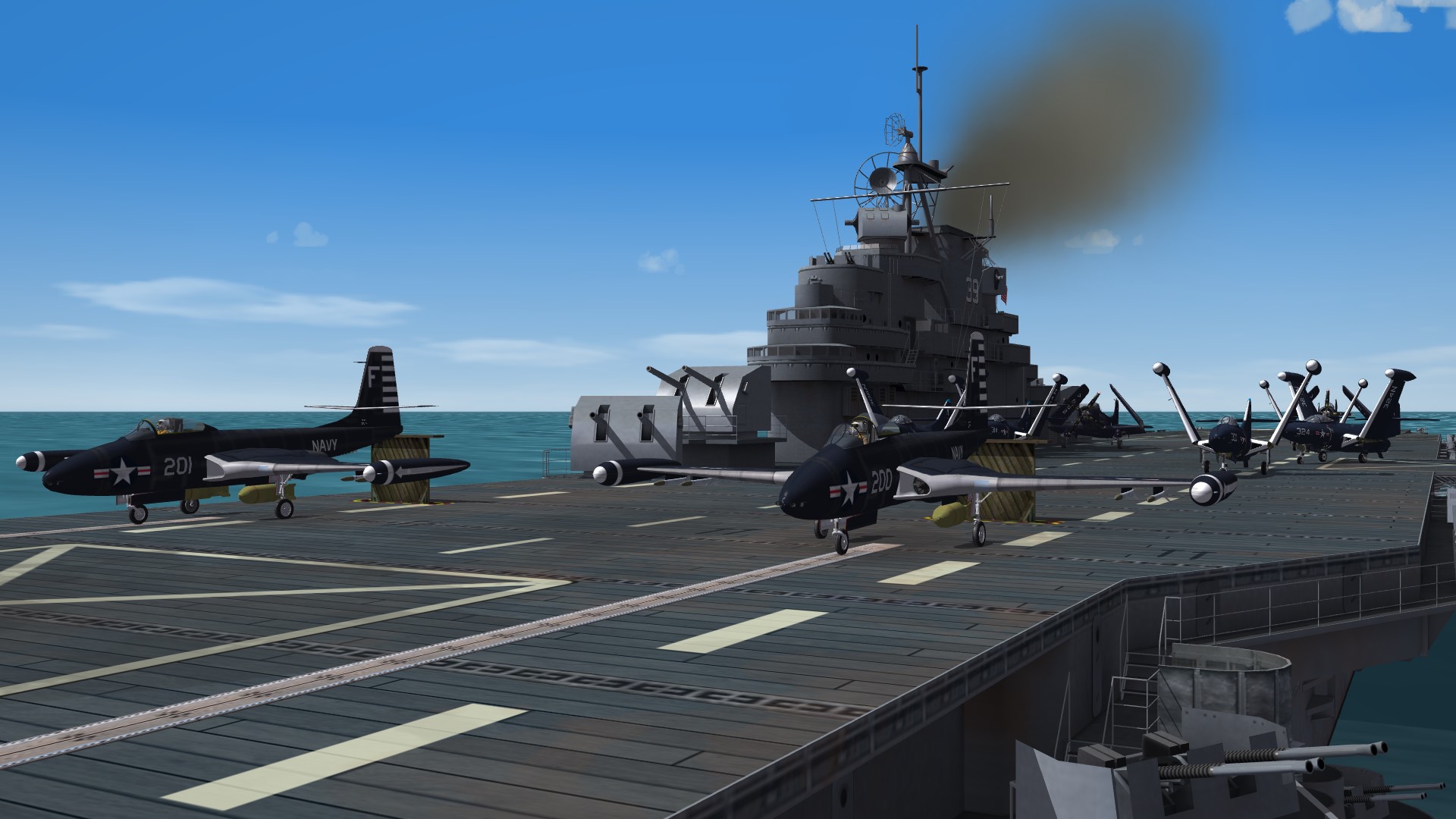
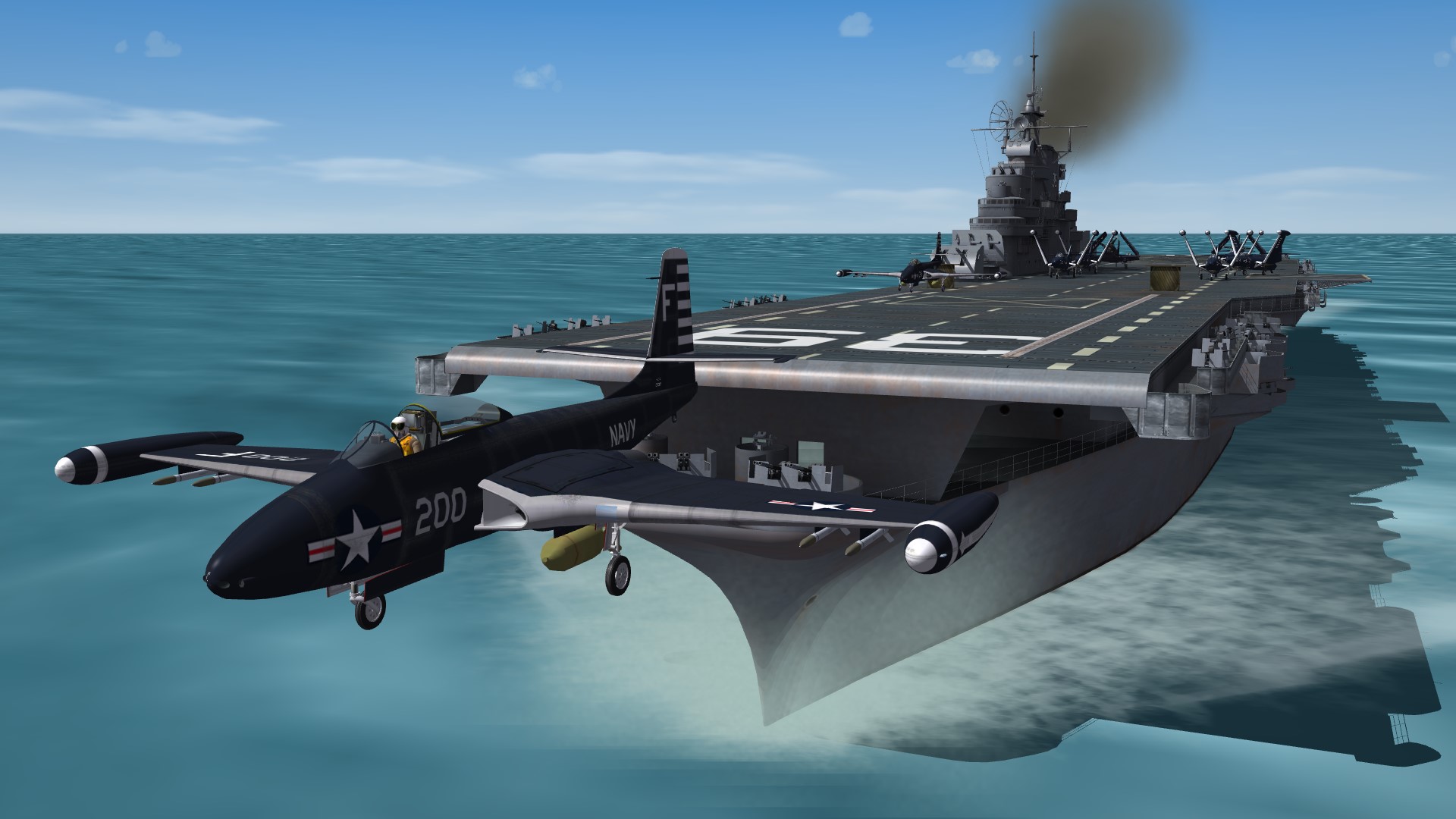
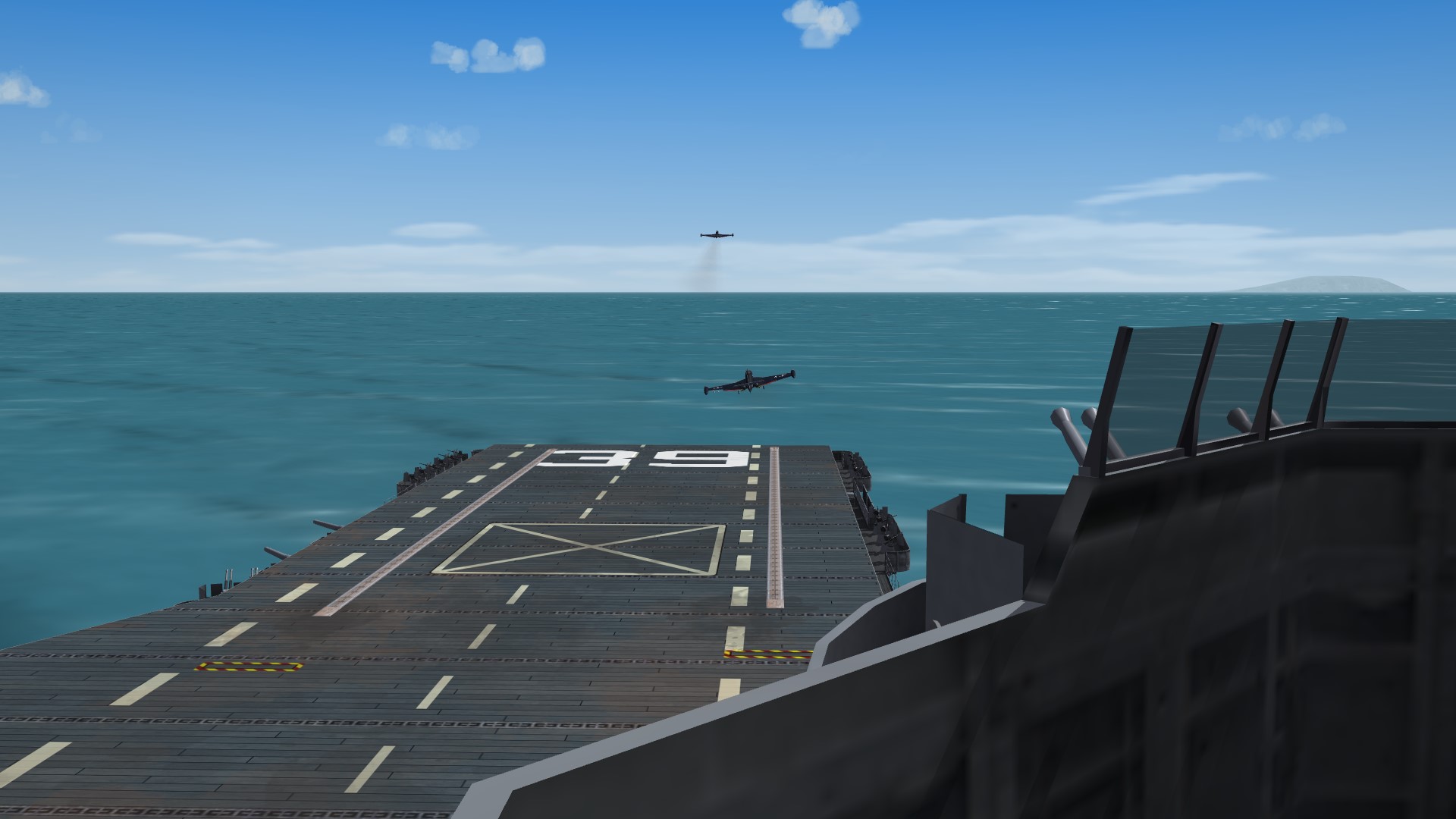
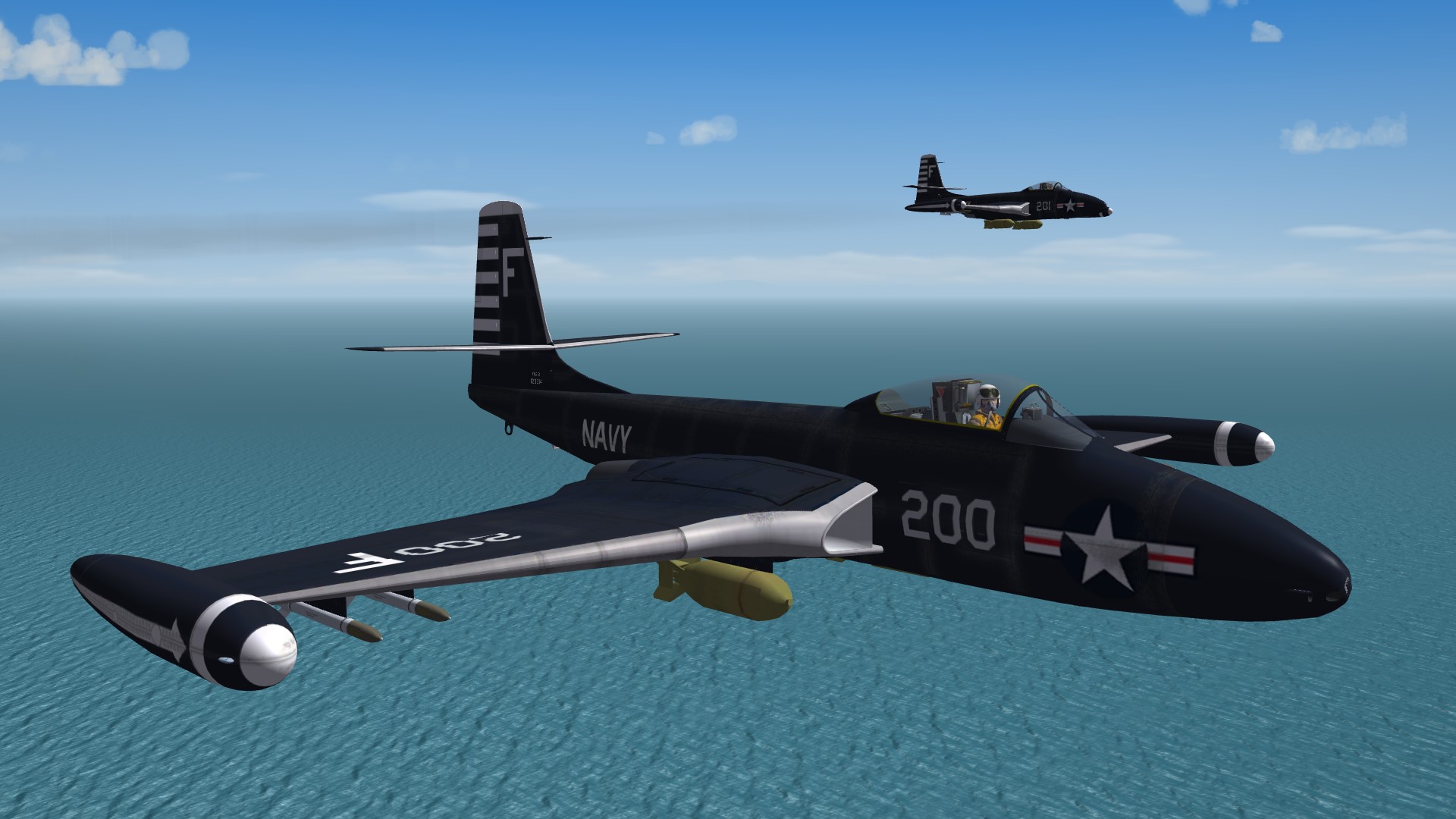
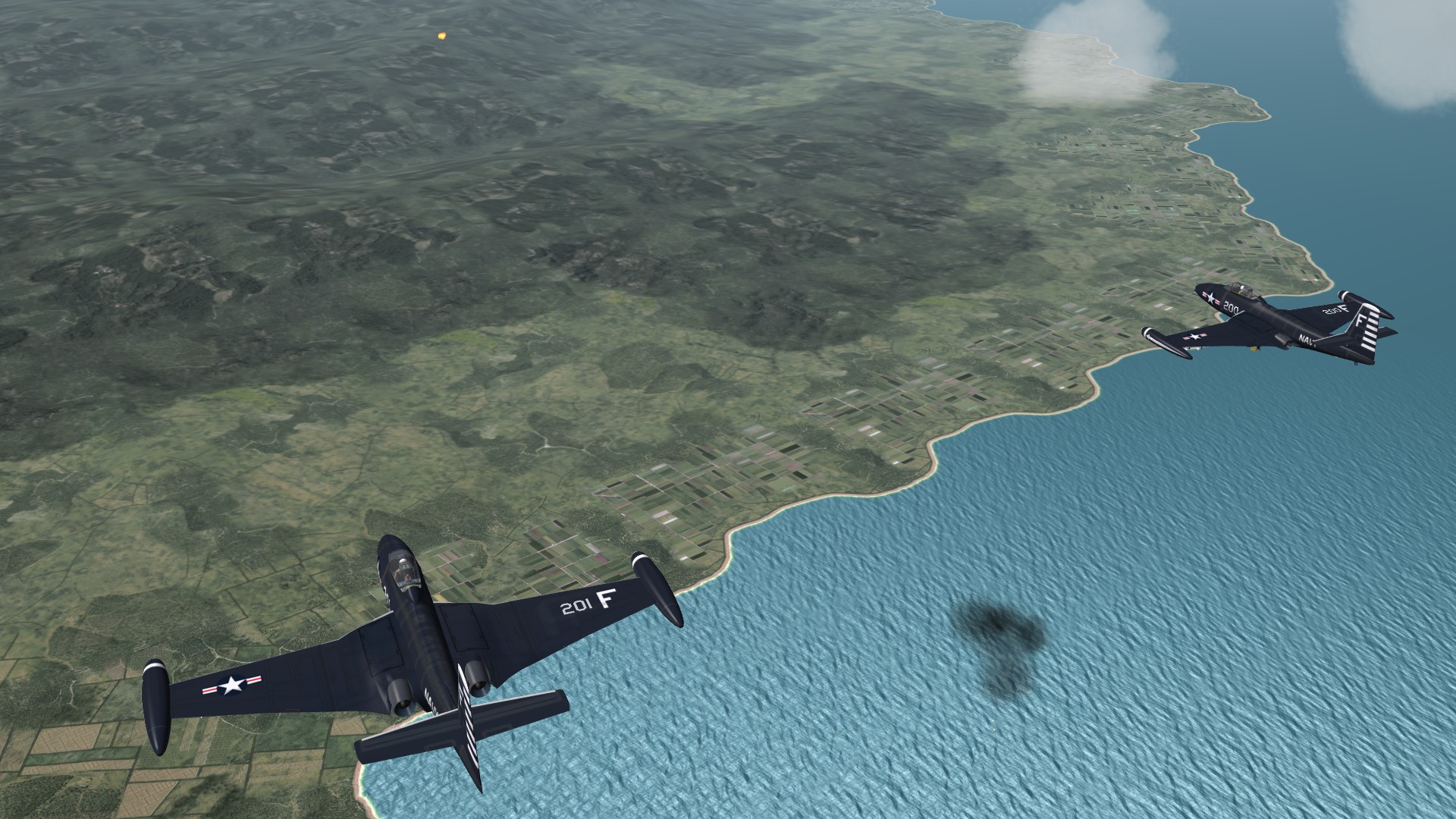
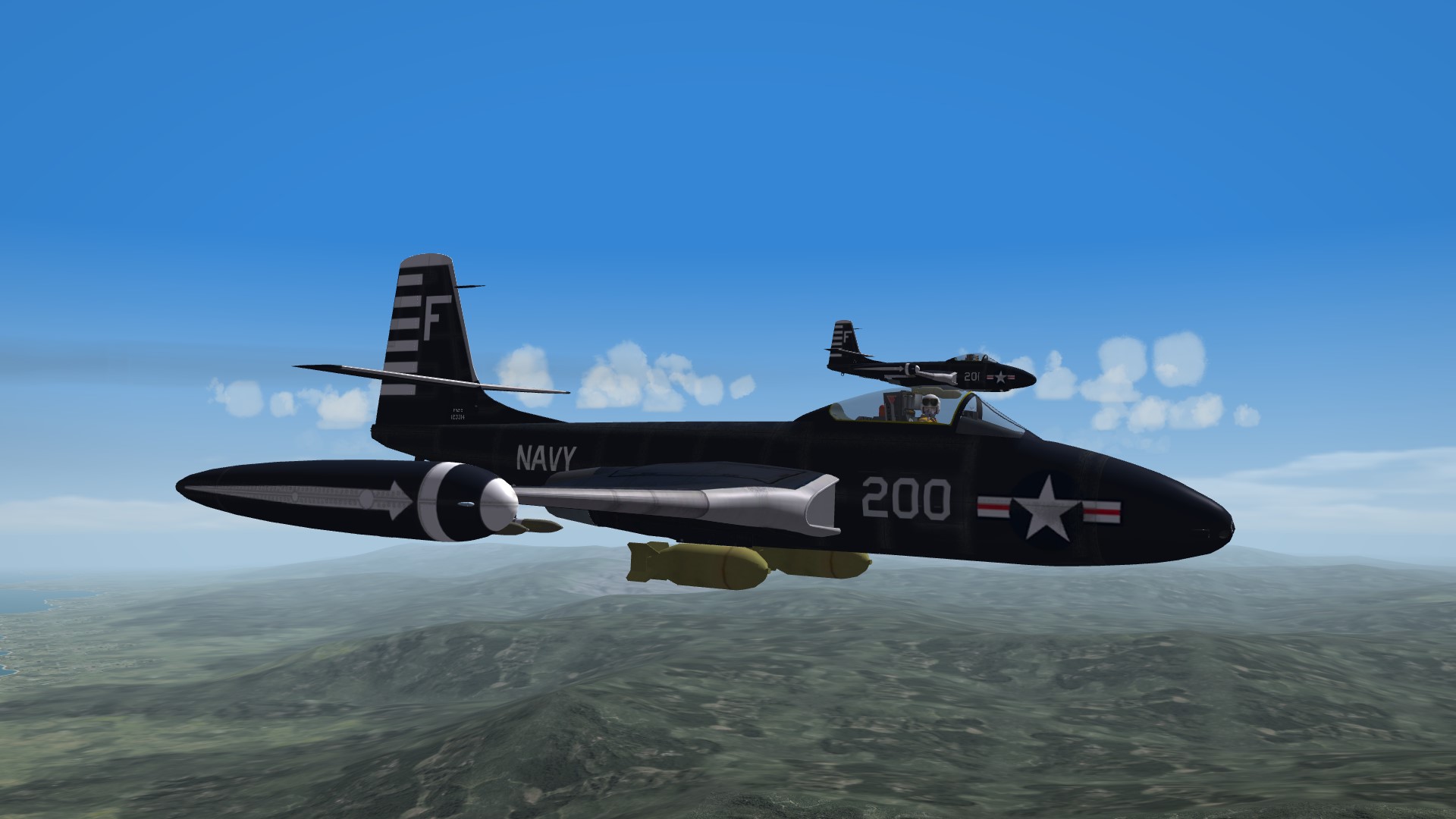
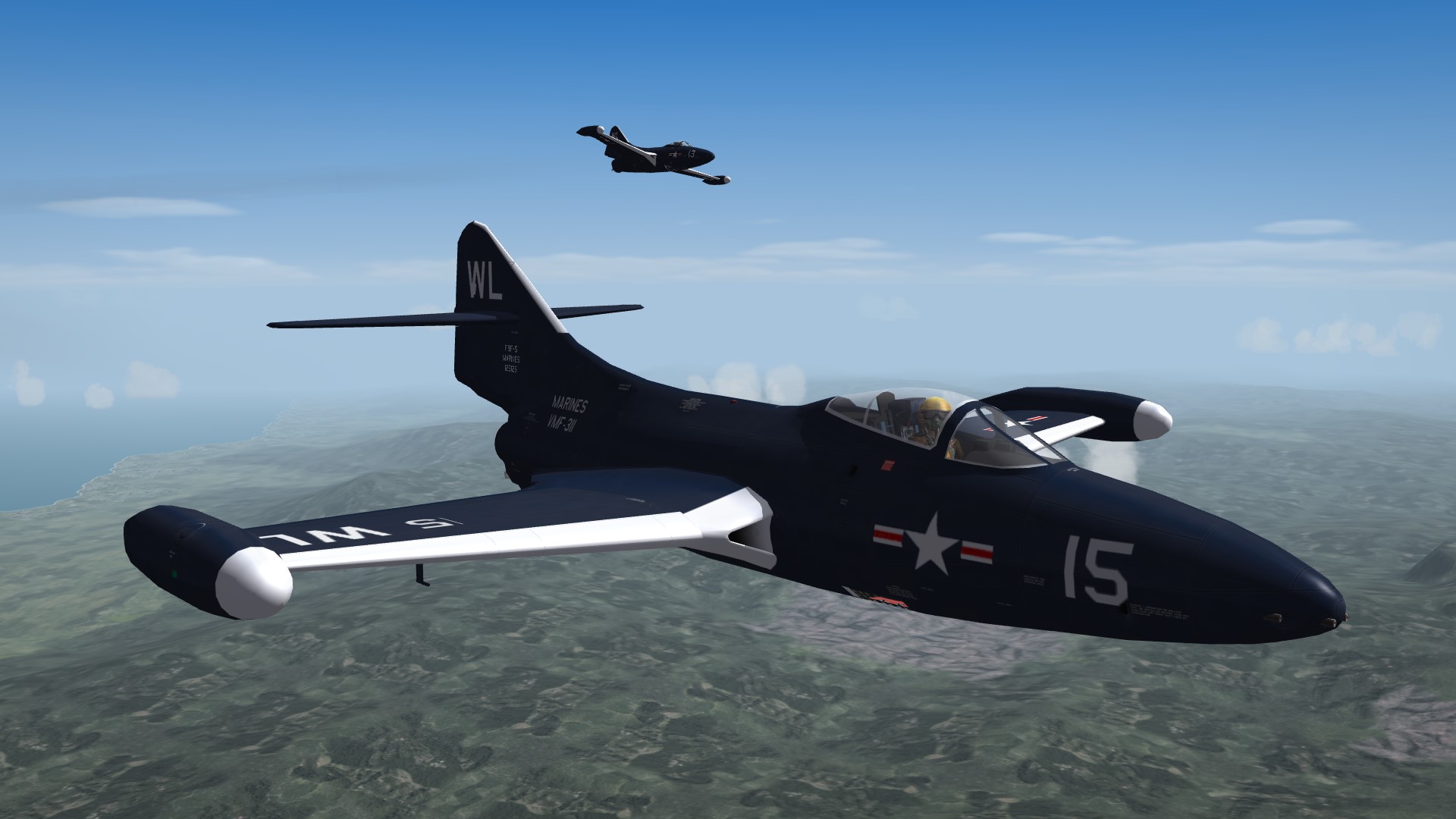
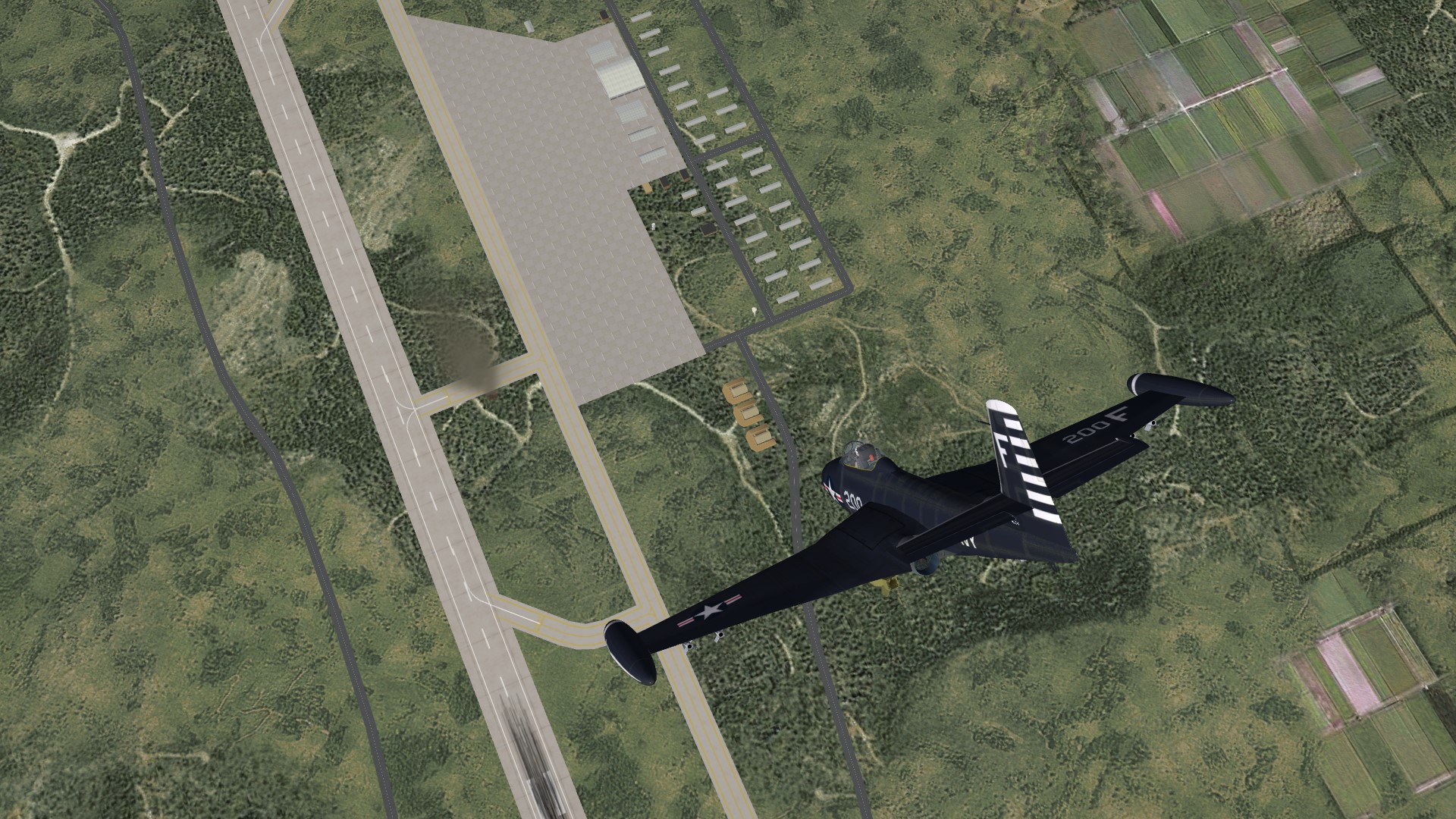
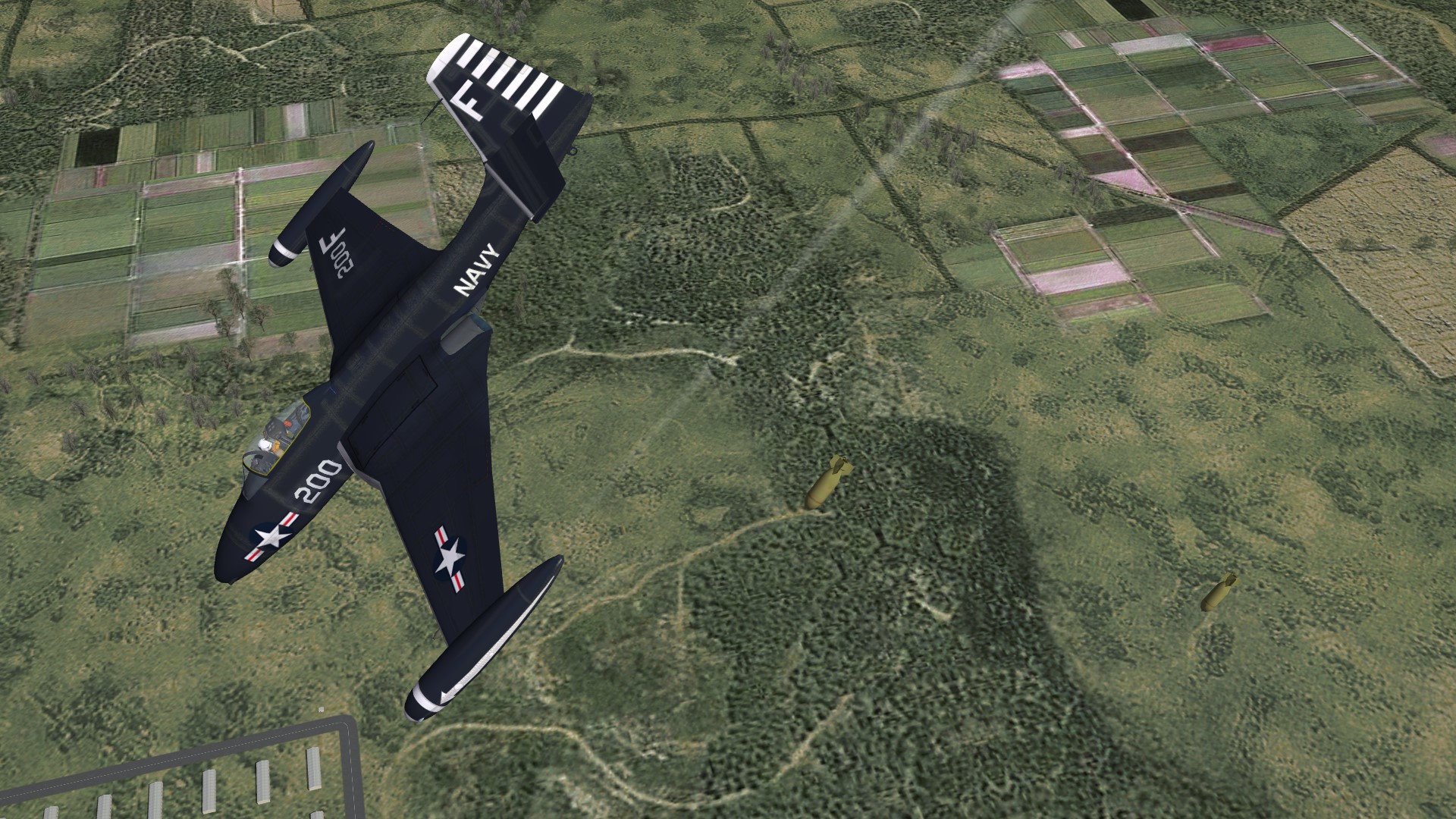
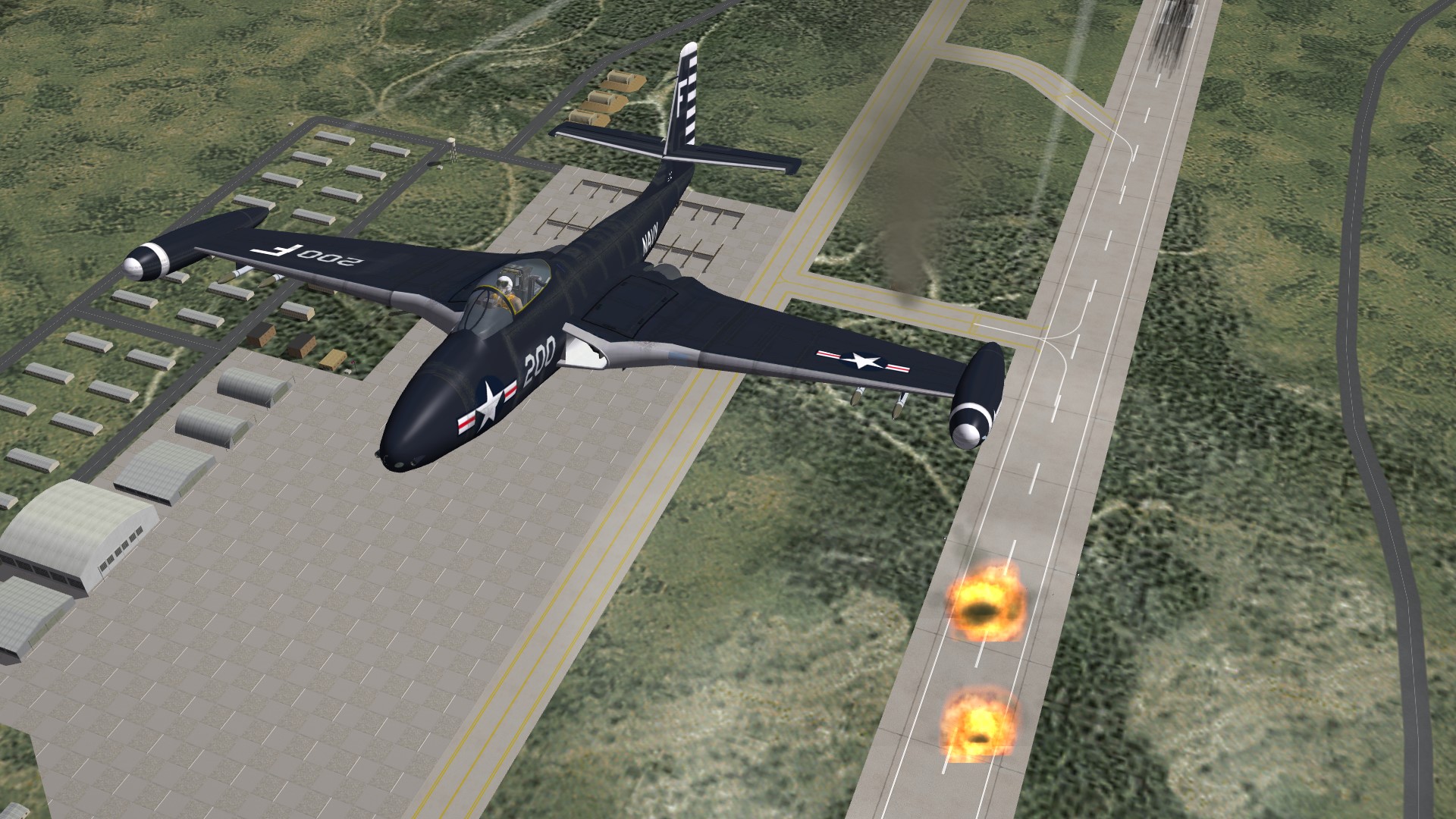
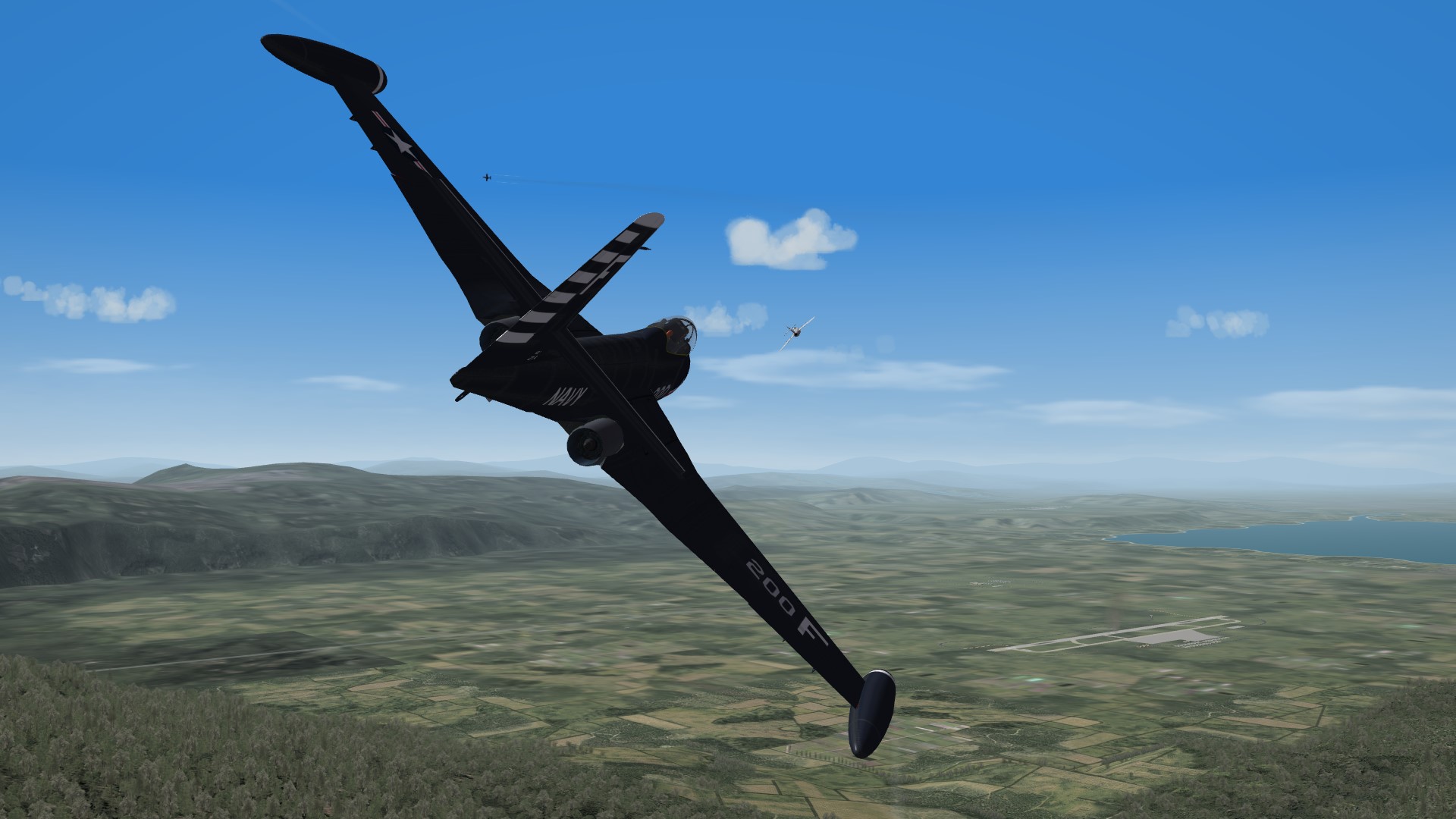
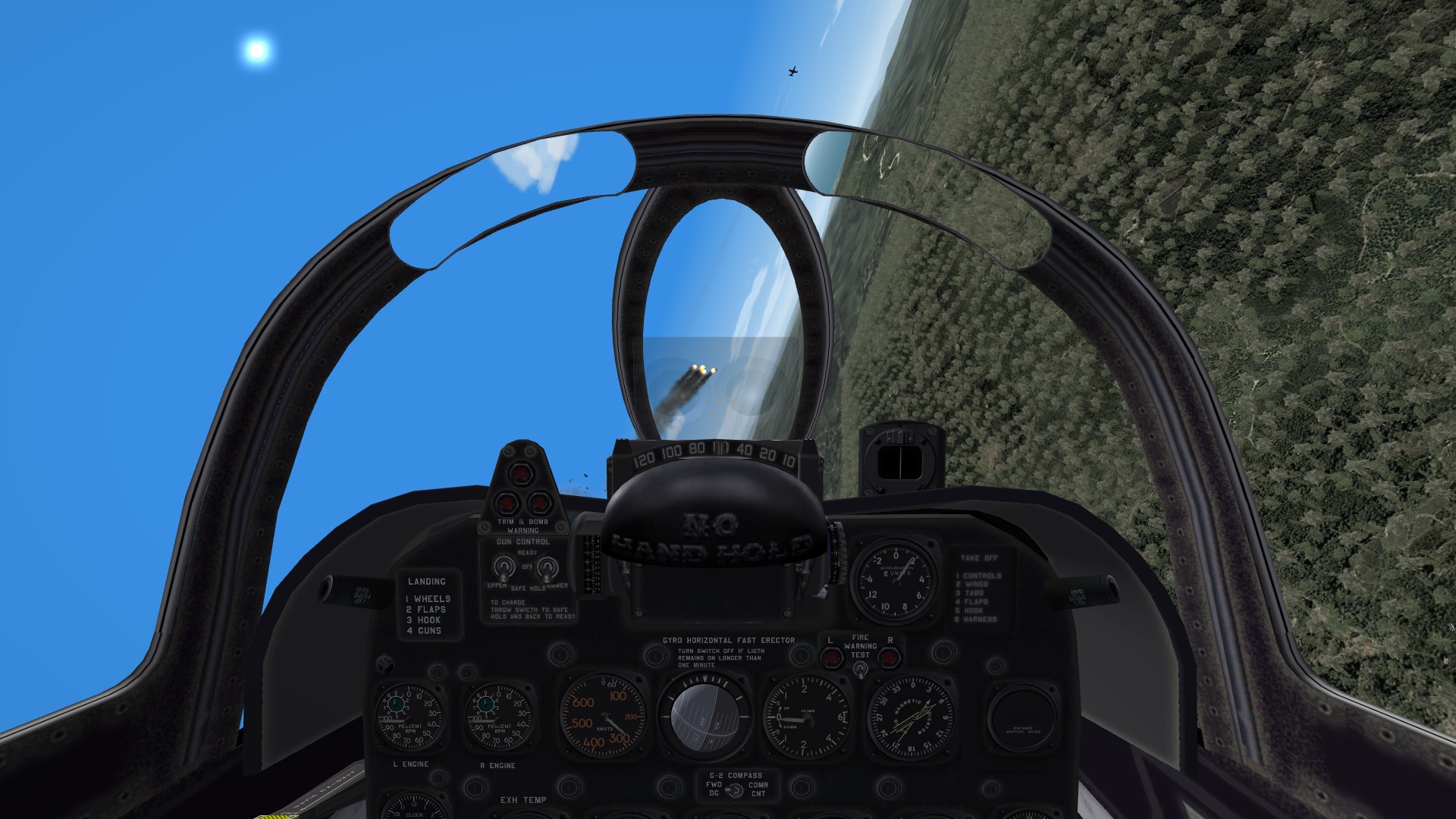
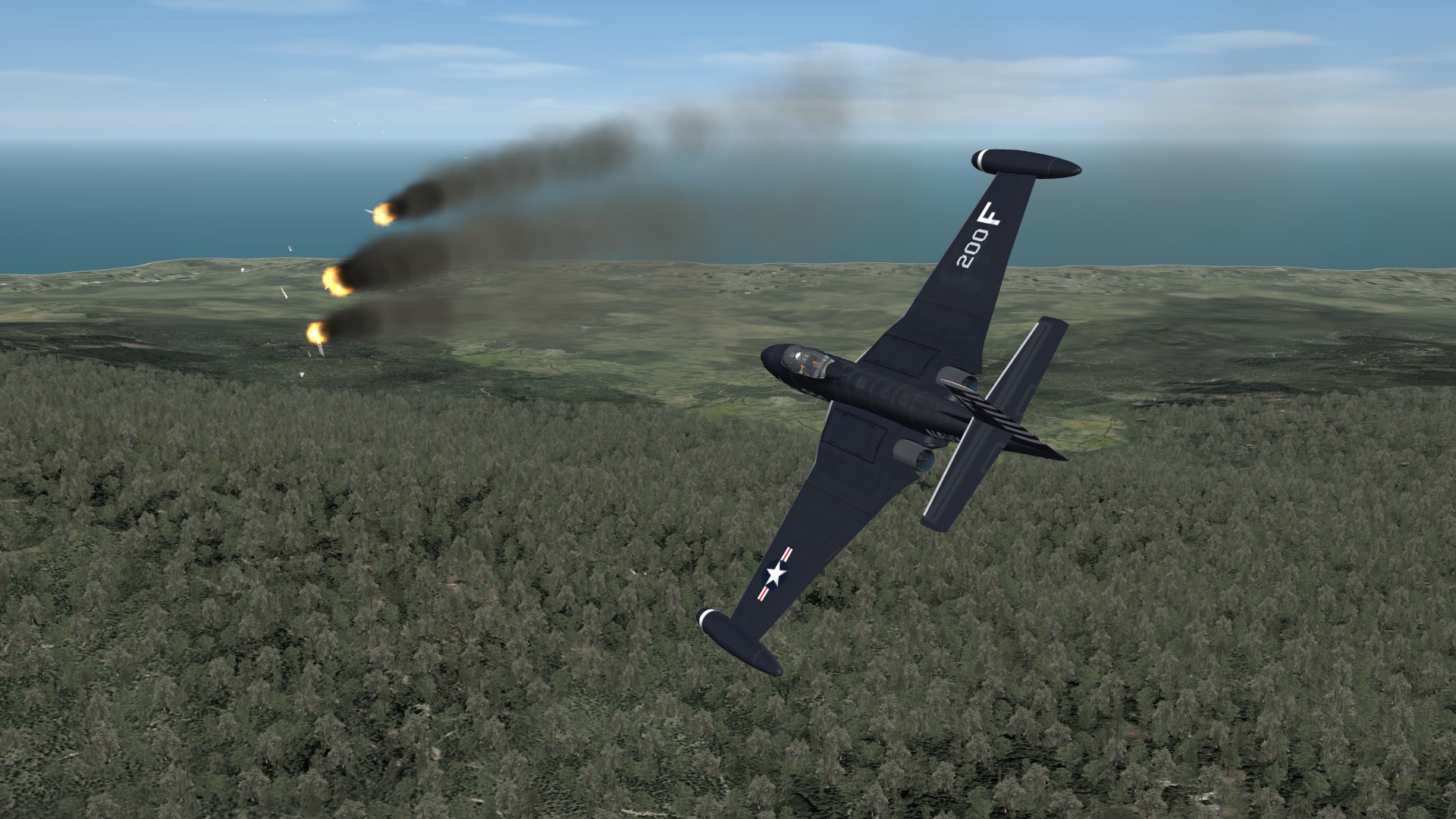
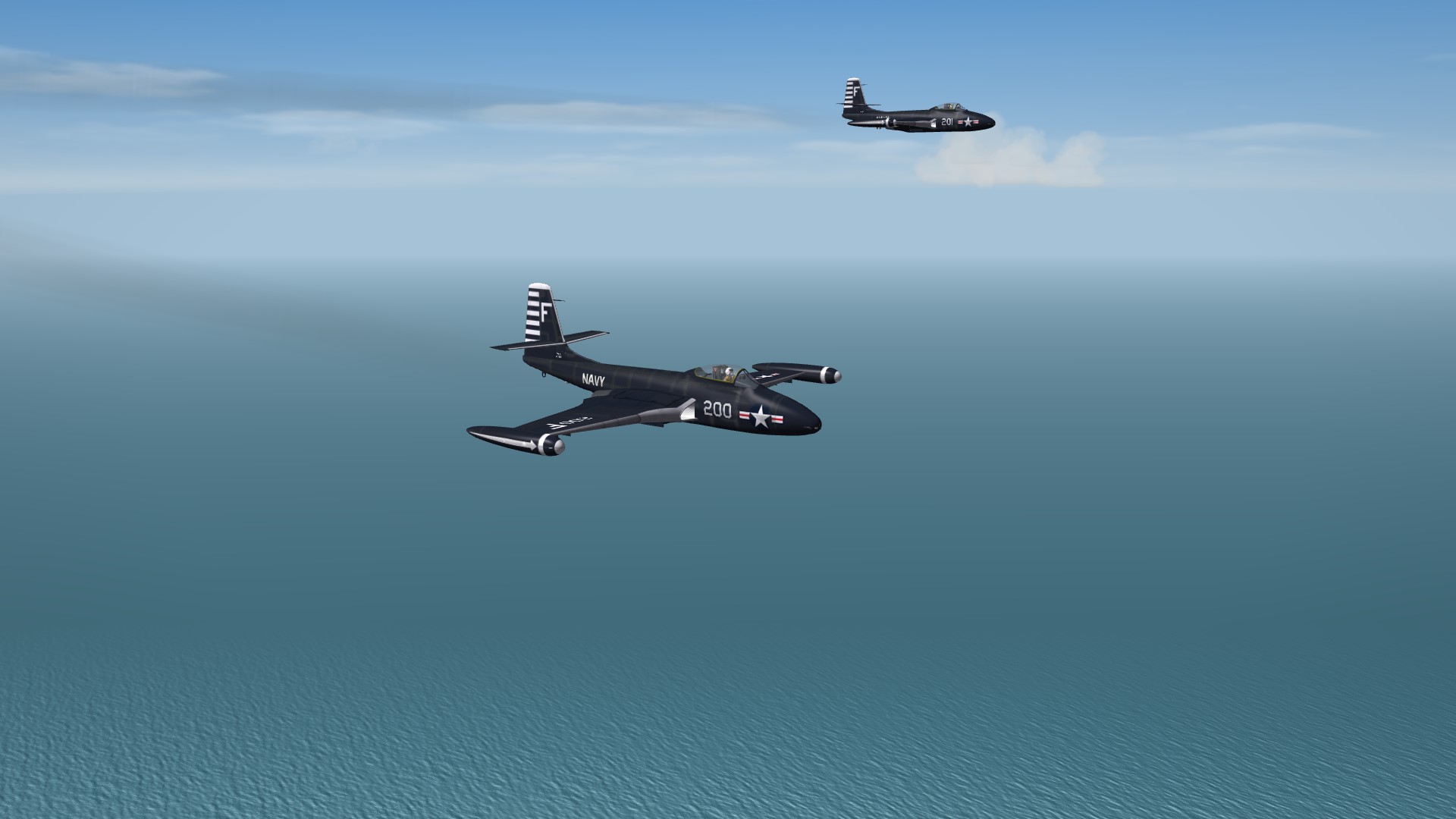
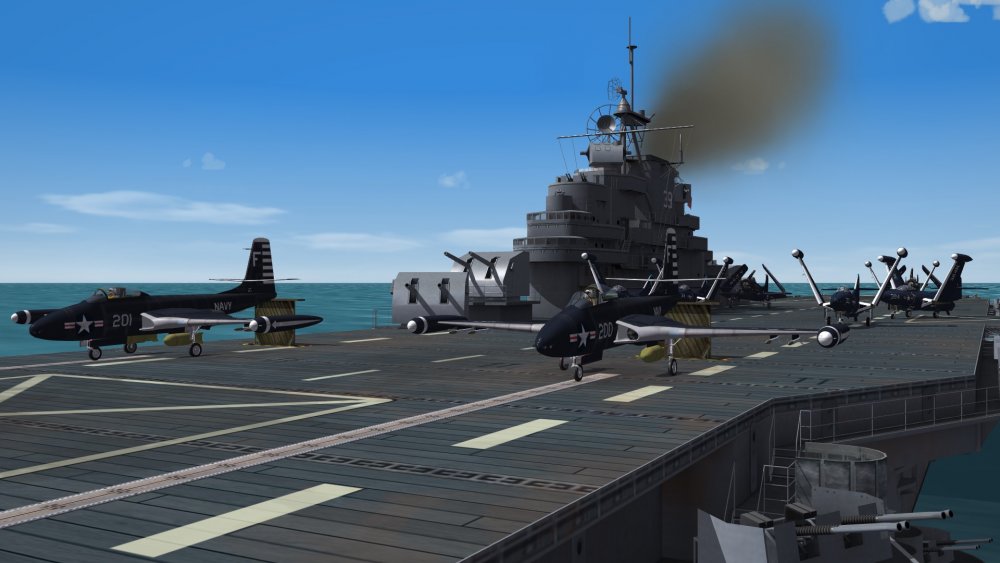
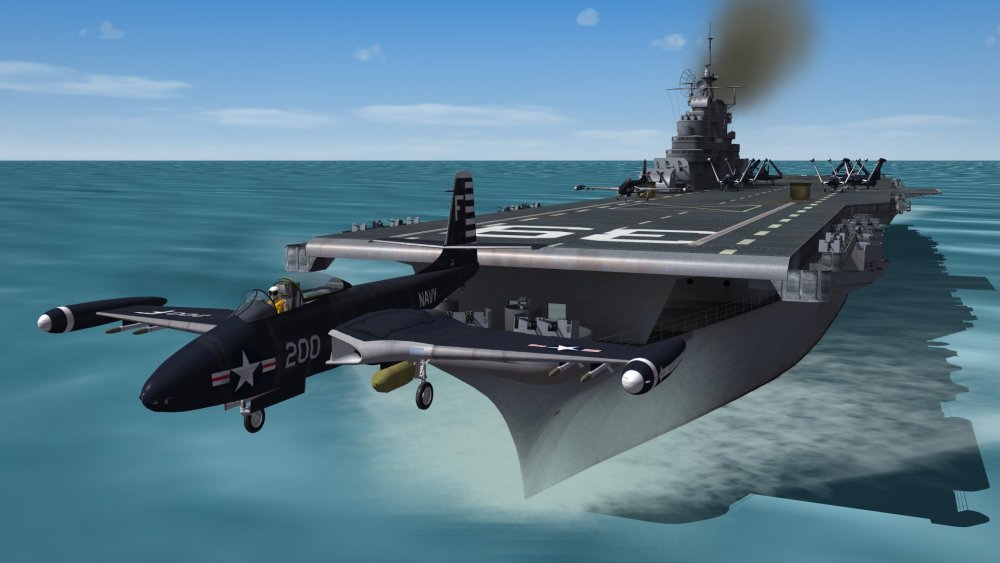
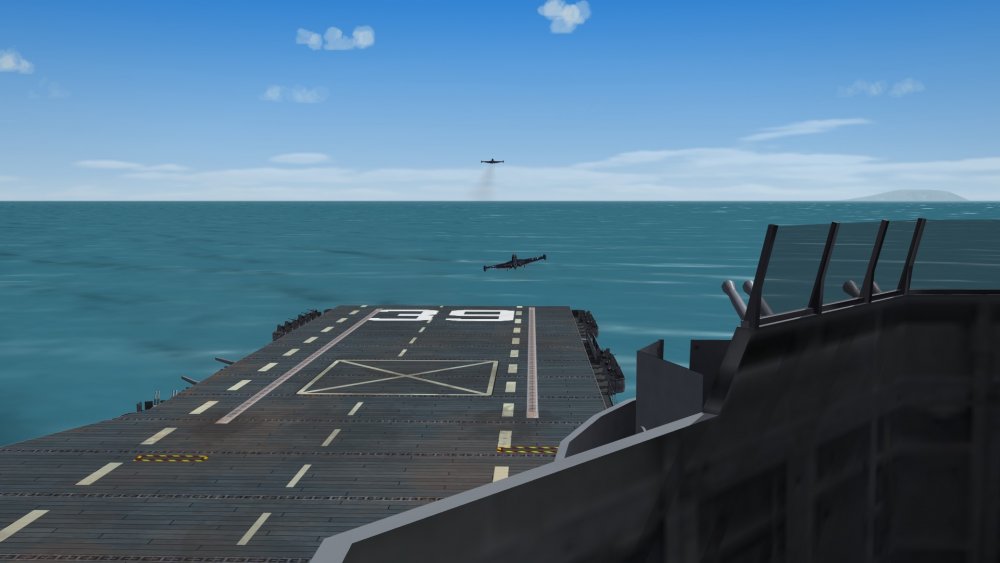
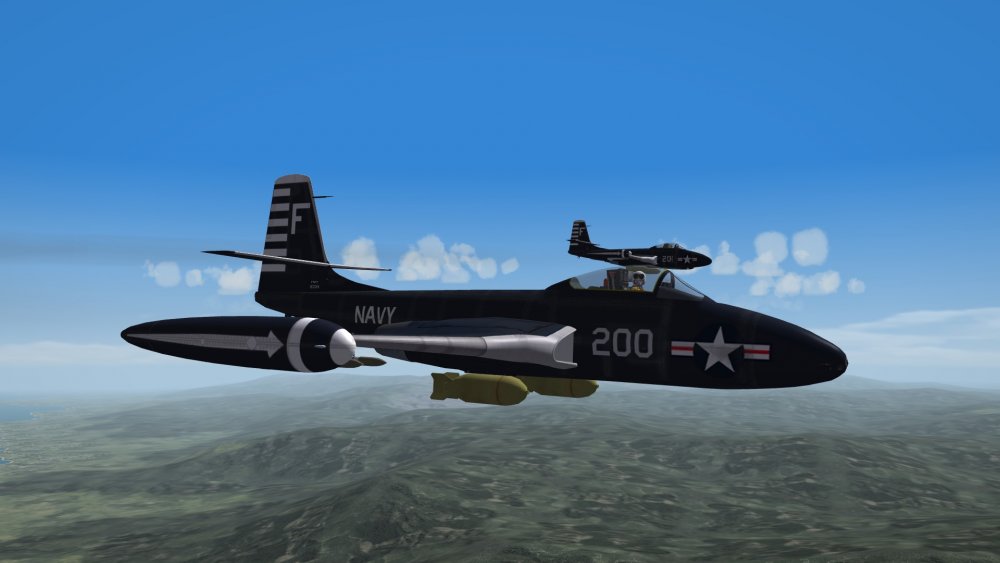
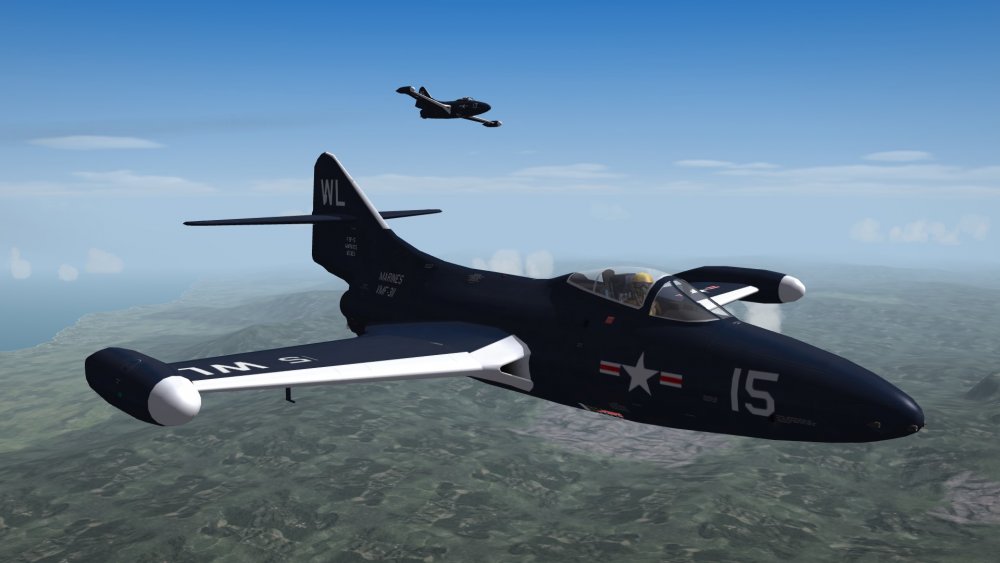
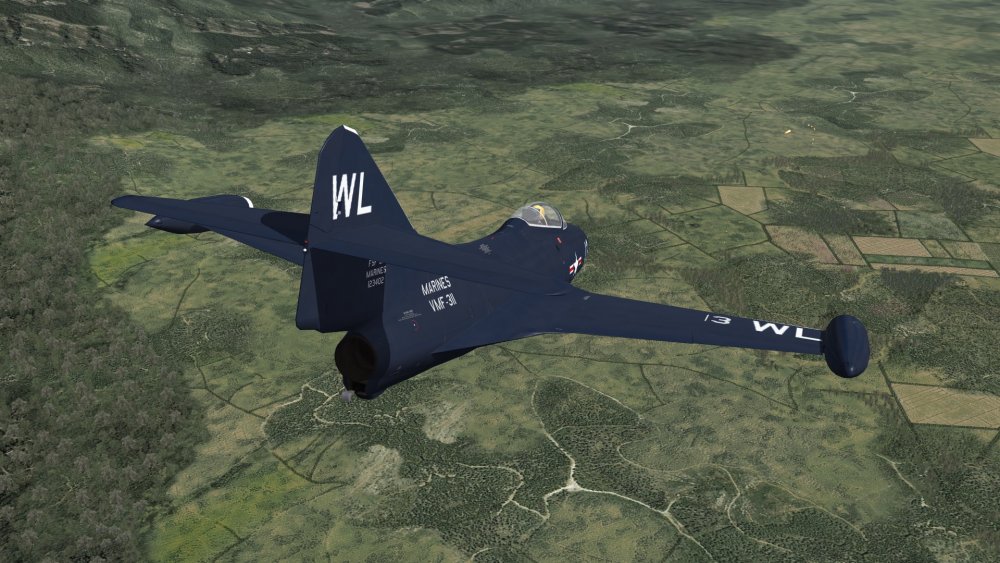
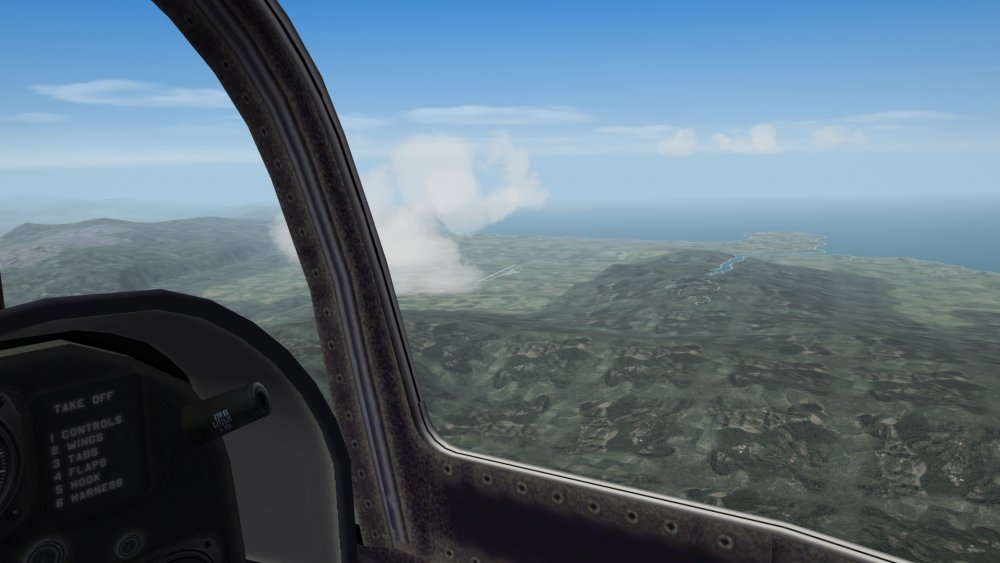
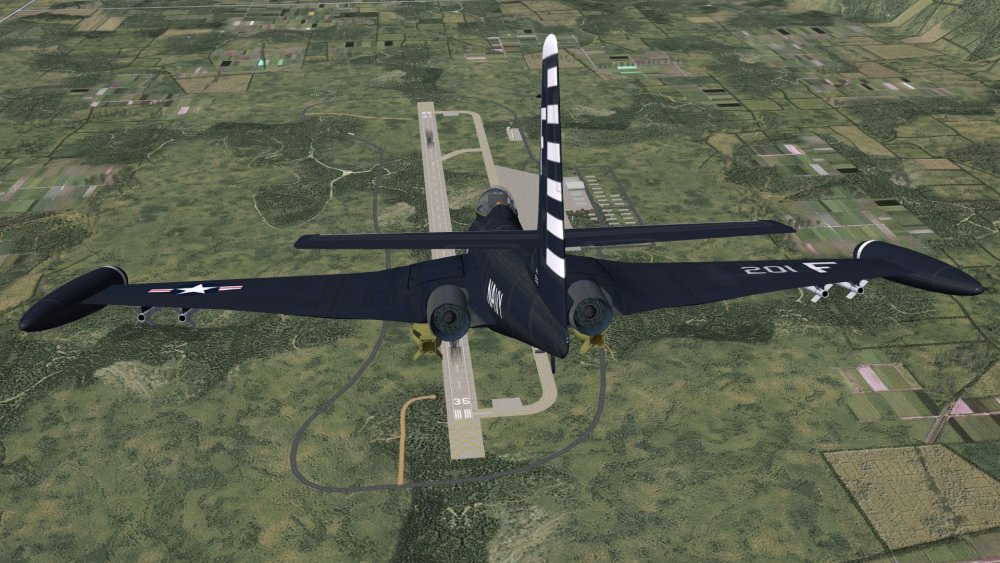
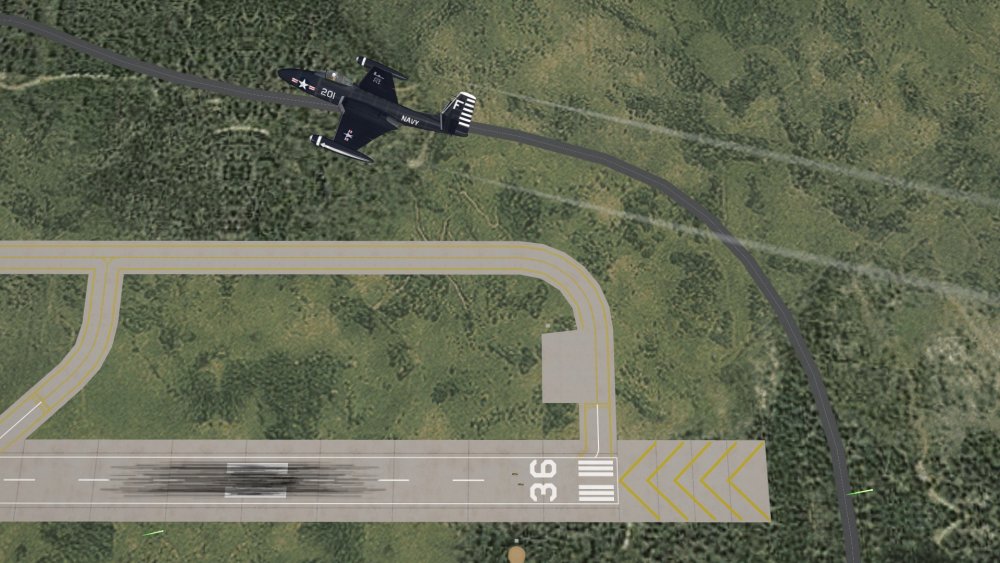
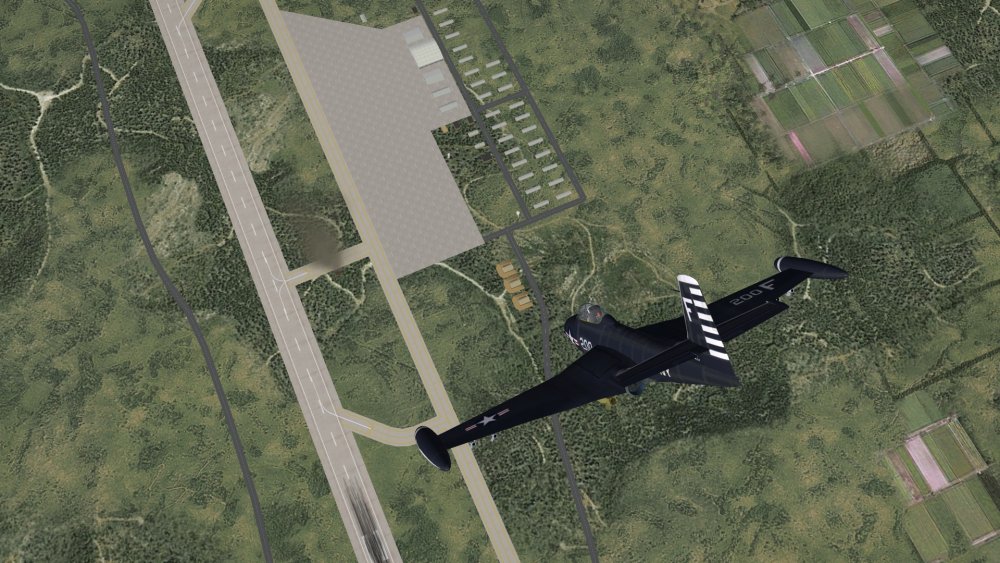
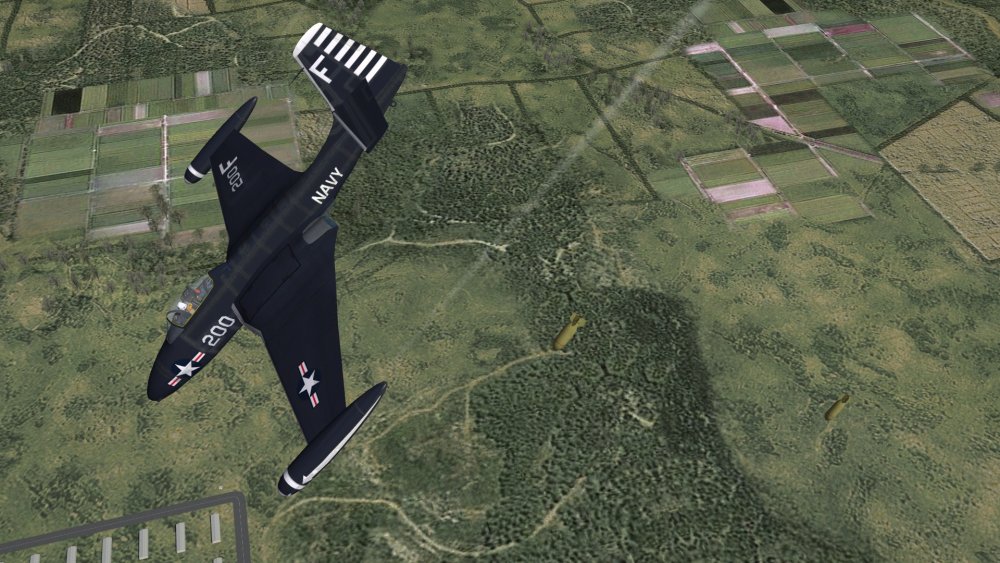
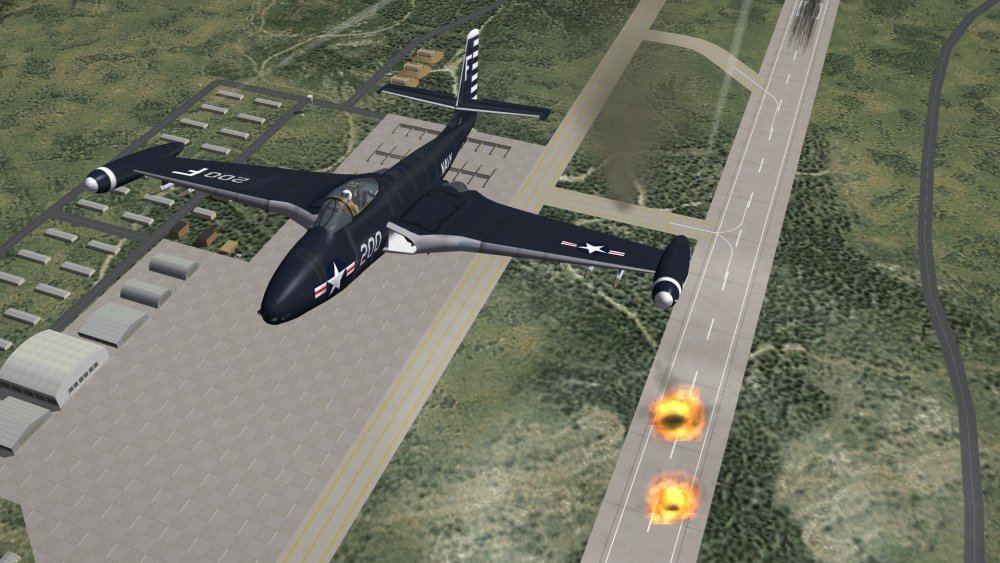
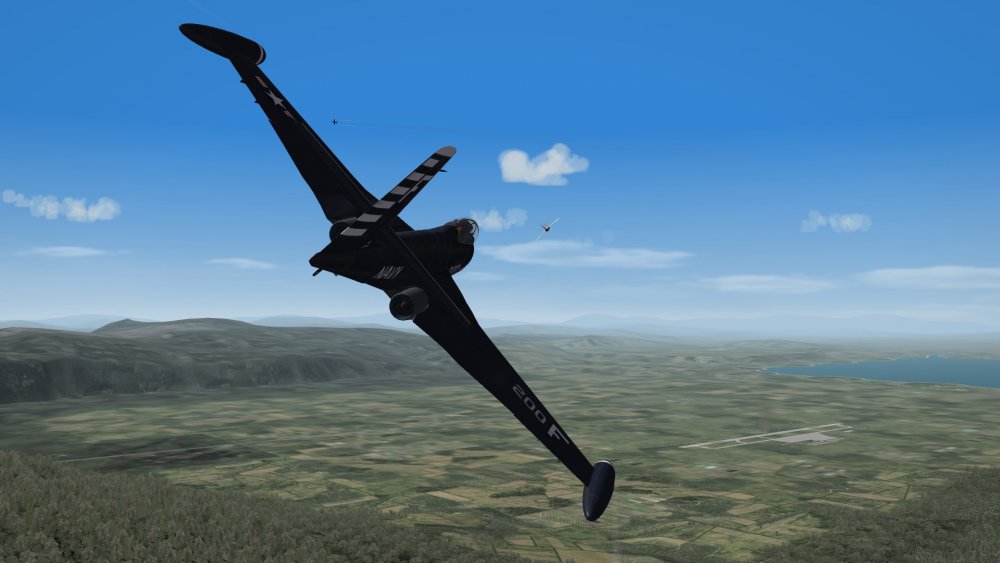
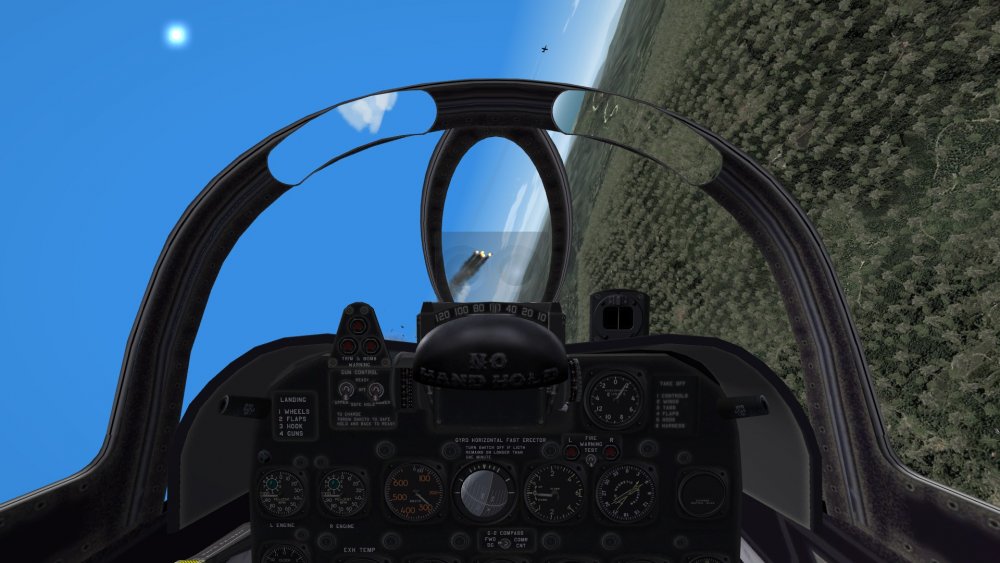
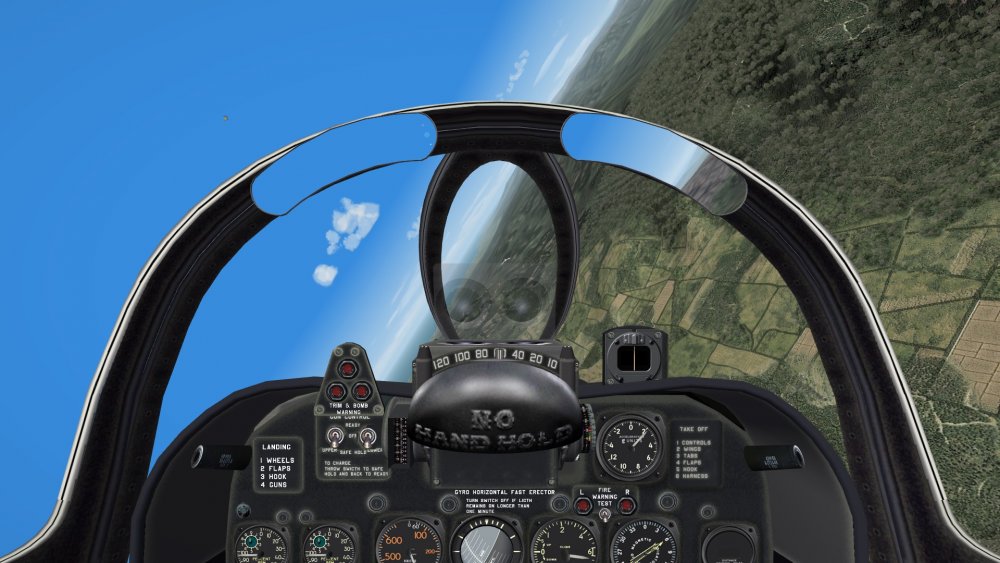
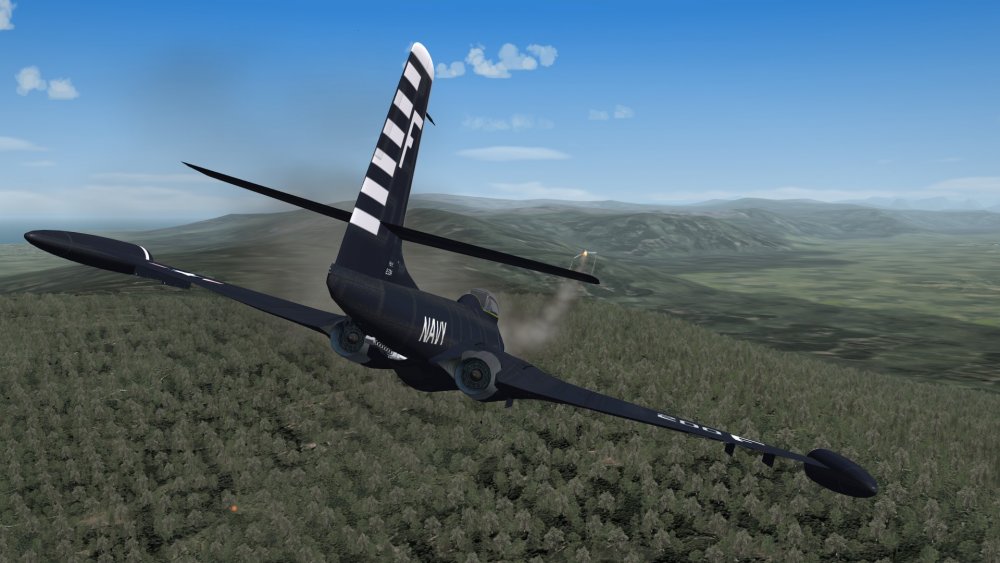
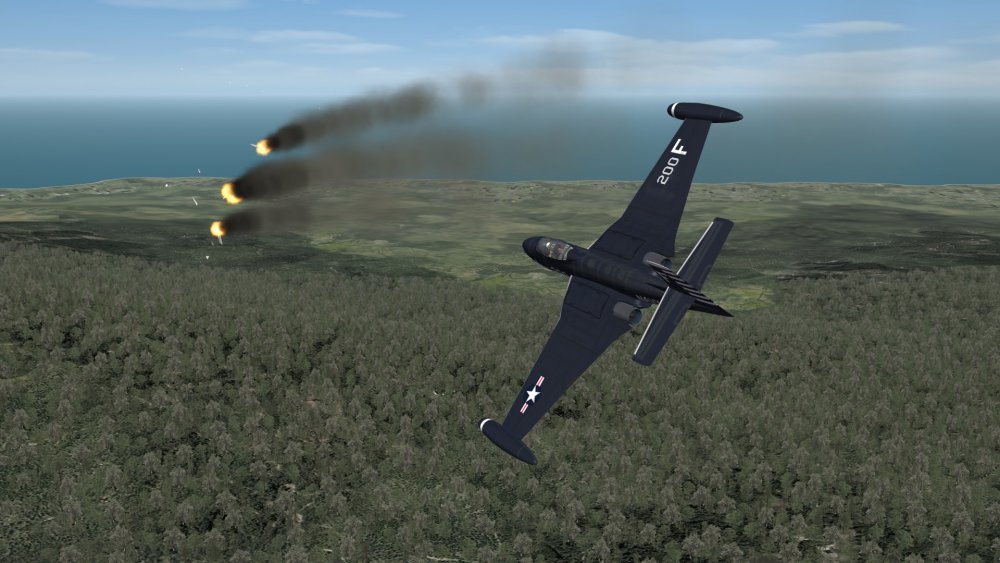
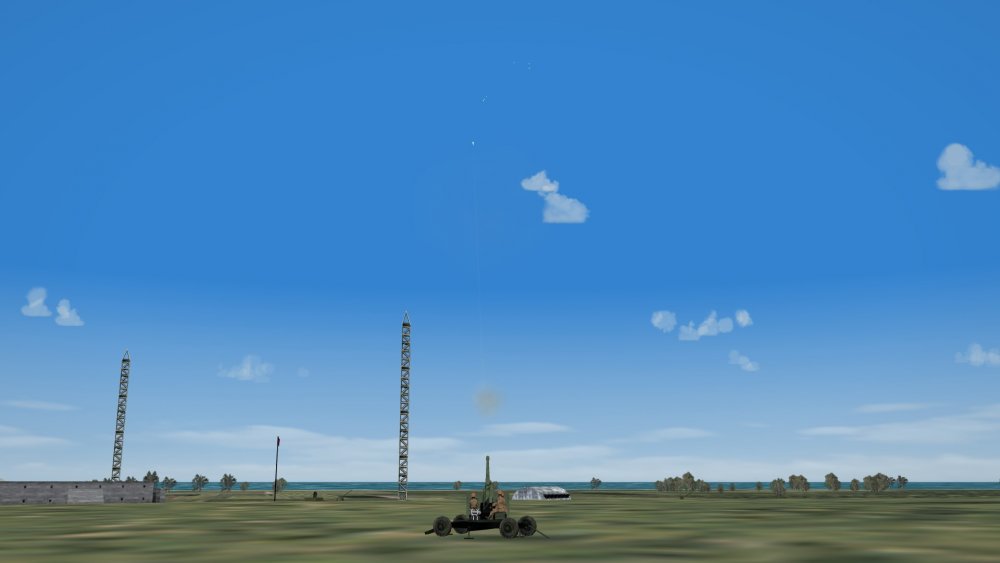
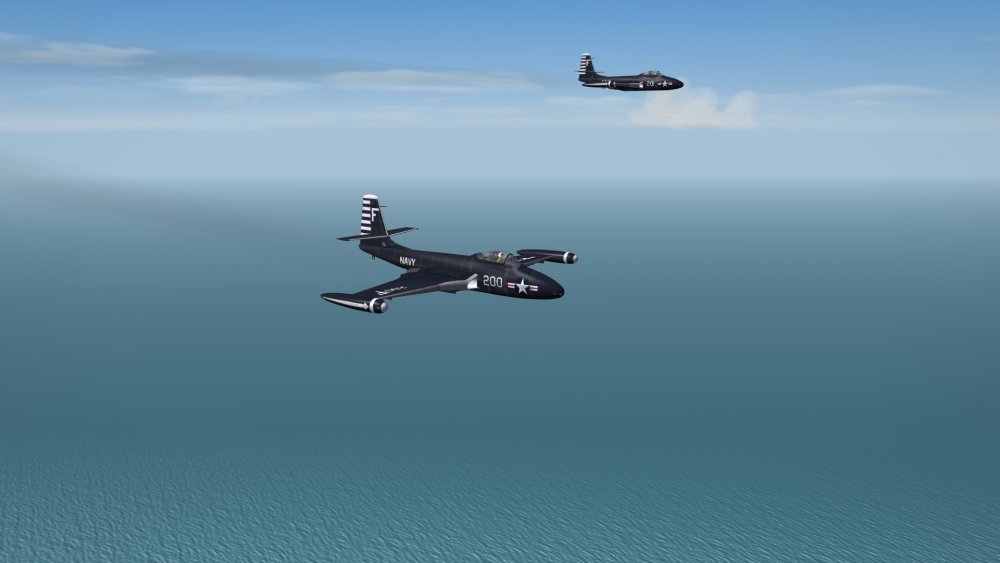
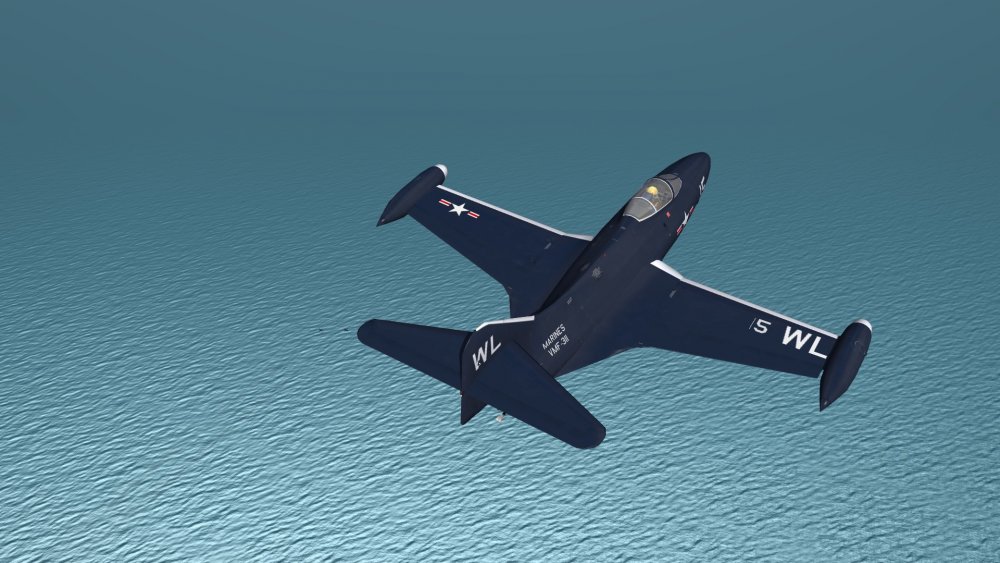
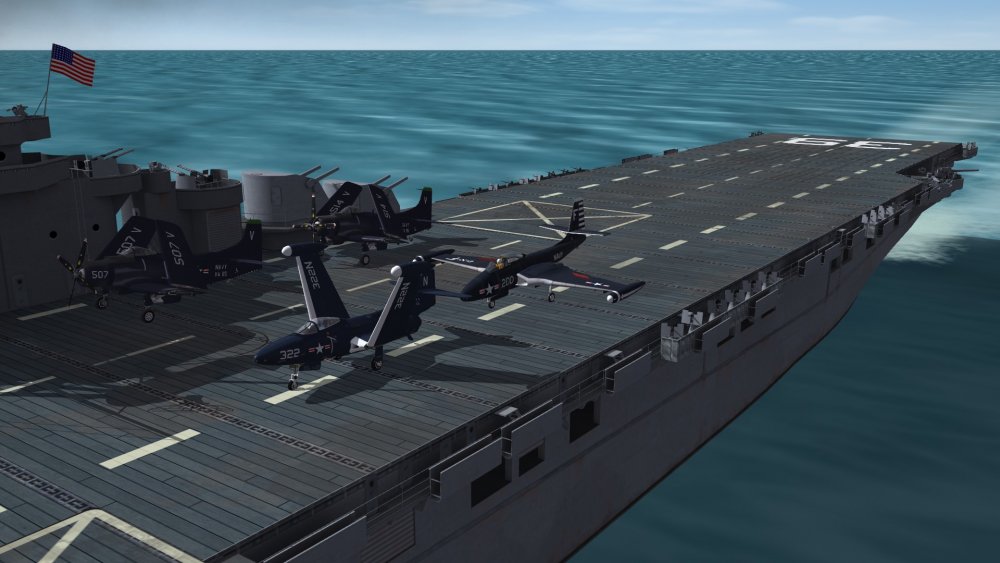
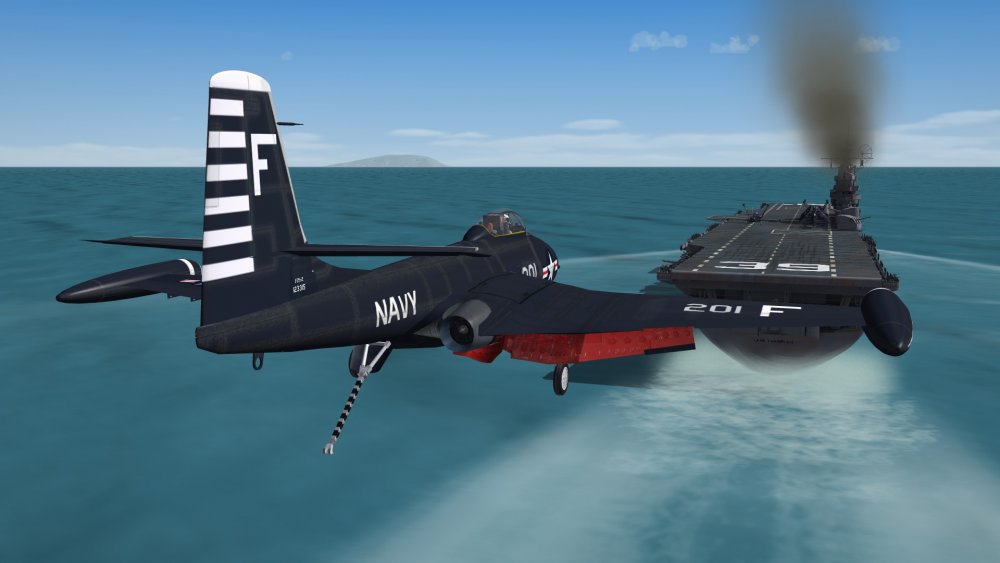
A pair of F2H-2s from CVA-39 Lake Champlain fly a strike mission against an airfield runway with F9F top cover.
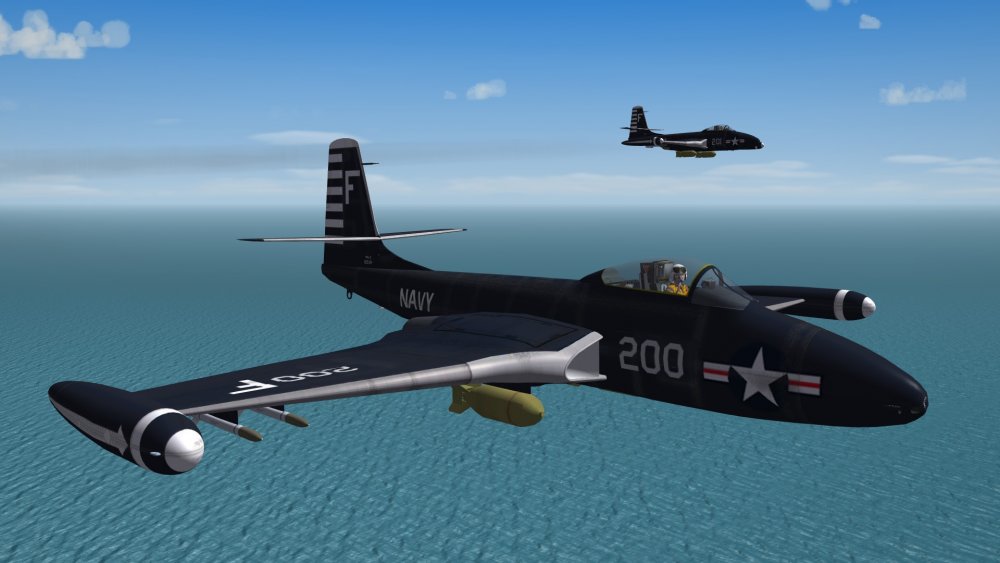
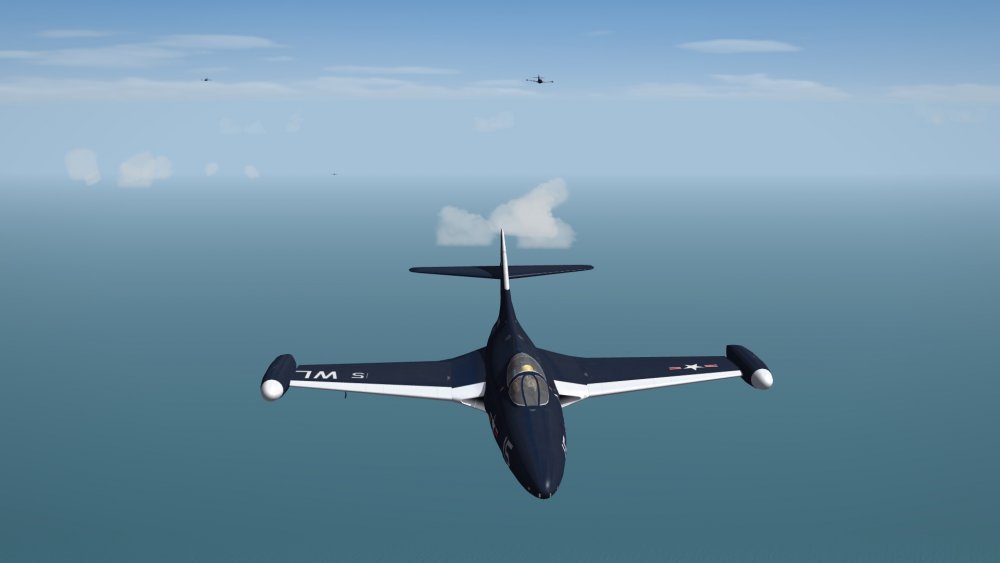
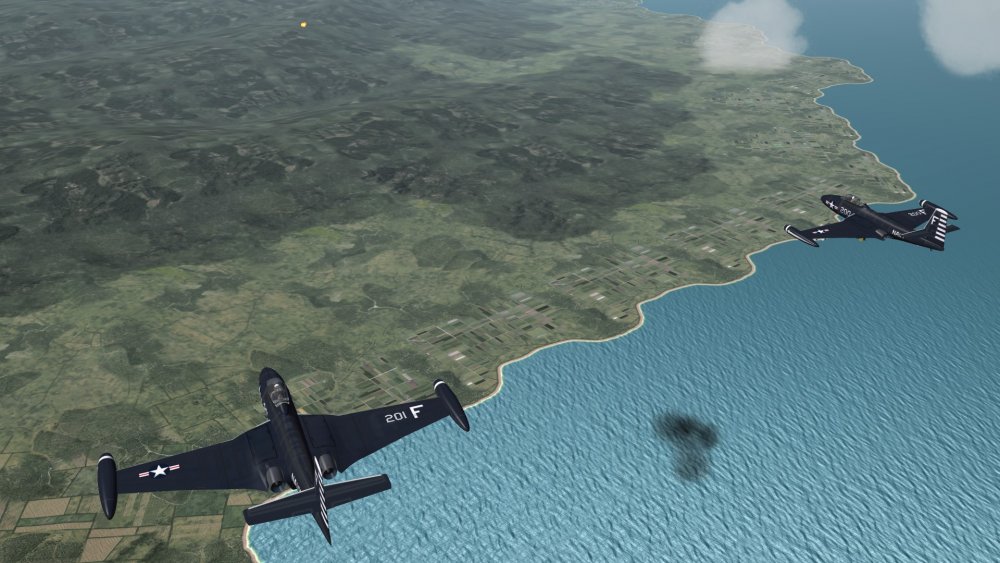
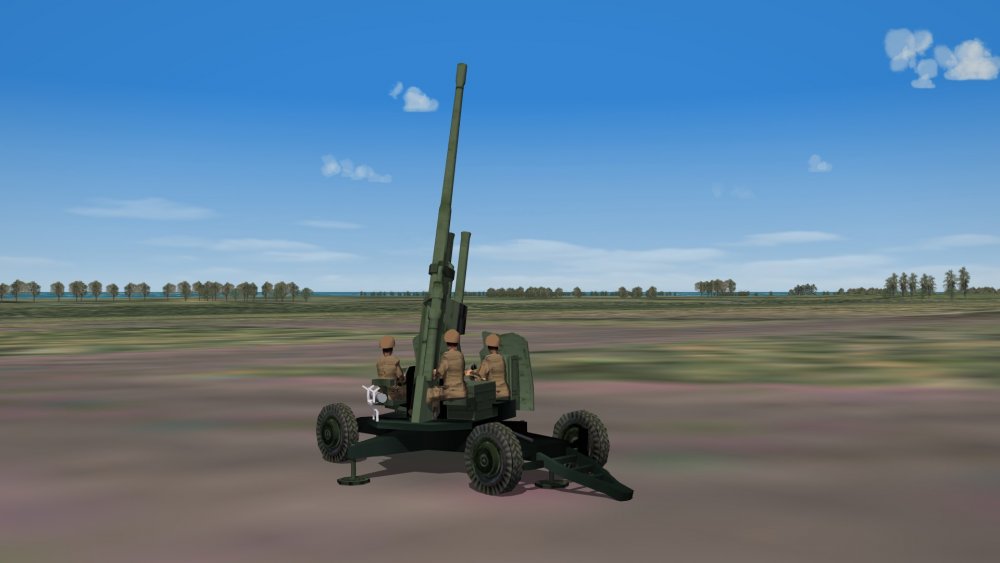
- 4 replies
-
- 14
-
-
Taking off and landing on a carrier with the Su-33 is everything I hoped it would be. The flight model feels right. The animations look great. My only complaint is the naked carrier deck. I can takeoff fly an oval and land over and over using Oculus Rift. What a great experience. It does take a long time to refuel, though. I can see the fuel gauge creeping up while I wait. Taking off with a full load of gas and air-to-air missiles is moderately challenging. I need a long take-off roll before hitting the ramp and still come pretty close to the water before the speed comes up enough to raise the flaps. I would rather be landing an F-4B on a Vietnam era carrier (which I can do in FSX), but this looks good, feels good, and is so much fun, too. I can't wait to see how the F/A-18C and F-14A turn out with their carriers.
-
Well, the Israeli's liked their Mirages upgraded to J79s :)