

MigBuster
-
Posts
9,165 -
Joined
-
Last visited
-
Days Won
27
Content Type
Profiles
Forums
Gallery
Downloads
Store
Everything posted by MigBuster
-
Could be permission related - where's it installed? are you admin on the PC? - I made a point of installing old games outside program files
-
What a retard!!
-
The indignity!
-
Great idea actually - comes off very well
-

-
-
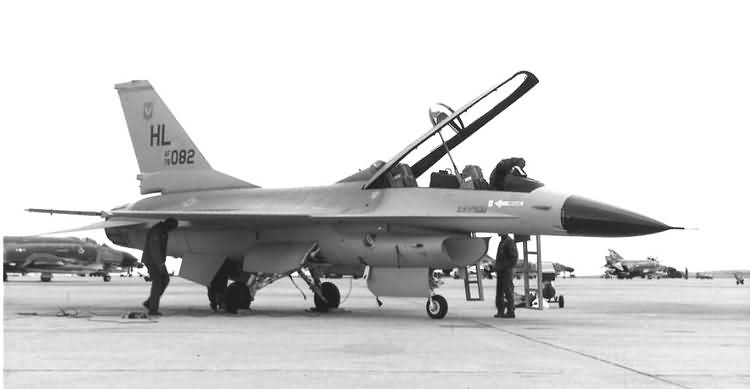
F-16B block 1 #78082 was one of the first F-16s delivered to the USAF. It is seen here after arrival at Hill AFB. Note the telltale black radome of the block 1 models. [uSAF photo] Hill, located in northern Utah, is set to receive the first operational squadron of F-35 Lightning II jets sometime next year. Ultimately, the base is projected to receive 72 F-35As, which will be spread among three fighter squadrons. Once they start to arrive, preparations will begin to send the 48 F-16s currently assigned to Hill, out the door. Base spokesman George Jozens said the base is preparing for the new aircraft by building a $13.5 million hangar to house the jets. There will also be a handful of other construction projects to prepare for the arrival, he said. It will also require some equipment upgrades and new training for operations and maintenance personnel, he said. The Air Force in December selected Hill to serve as an operational base for the new F-35. The F-16's departure from the base will be significant, as the jet has had a long and notable history with Hill. On 1 January 1979, the 16th Tactical Fighter Training Squadron, "First in the F-16", was relocated at Hill AFB, Utah as part of the 388th Tactical Fighter Wing. From 1 January 1979 through 31 March 1983 the 16 TFTS was the first RTU for the F-16 and acted as a worldwide RTU, training over 240 pilots in the F-16. The 4th TFS 'Fightin' Fujins', was the first USAF squadron to achieve Initial Operational Capability (IOC) on November 12th, 1980. In March of 1981, the 4th TFS took twelve of its F-16s to Norway for a month-long deployment, marking the first deployment of the USAF F-16s overseas. In May 1989, the first F-16C block 40 aircraft arrived at Hill AFB, Utah. The new model F-16, designed to accommodate the Low Altitude Navigation and Targeting Infrared for Night (LANTIRN) pod. The 388th TFW was the first unit to fly LANTIRN-equipped F-16s into conflict over the skies of Iraq and Kuwait during Operations Desert Shield and Desert Storm. In the 35-plus years at Hill, the F-16 has been deployed to the Persian Gulf in support of Operation Desert Storm, been a major factor in the global war on terror in wars in Afghanistan and Iraq, and served countless other missions. For more than 30 years, the base had 72 F-16s spread among three squadrons until an Air Force restructuring in 2010, when one squadron was deactivated and Hill lost 24 jets. Many of the Vipers will be reassigned within the Department of Defense bu at this point it is unknown where Hill's final 48 F-16s will end up when they leave the base. There’s optimism that landing the F-35 will insulate Hill from future defense budget cuts. The F-35 could very well give Hill AFB a mission for decades to come, much like the F-16 did when it arrived in 1979. http://www.f-16.net/f-16-news-article4841.html
-
Cool - has rotating 2D clouds - and TK where is my triple AIM-9 launcher!!
-
Hi there and welcome to CA Which EOGBs are we talking about? The Walleyes are pretty good - but often best to dive at the target - make sure you are close enough to give the bomb enough energy to get there. Yes - the HUD can be changed via the _avionics.ini file and creating custom TGAs - take a look at some of these to see whats involved http://combatace.com/files/category/785-avionics/ Did you patch over a modified install? the Thirdwire patches cant account for any user added mods so you must make a copy of the mod folder before patching to avoid that situation
-
Did you install the latest patches? (Nov 2008 probably fixes that)
-
If seeing is believing - Badgers........ http://www.youtube.com/watch?v=F6TZoHw4Yjo http://www.bbc.co.uk/news/world-asia-26641520
-
Guys - that's not me (although I am a similar age) - have moved the link to the top of the page.........sorry for any confusion.
-
Glad to see things are getting back on track for you! hope the trip goes well
-
From: http://www.cracked.com/article_20991_5-reasons-flying-fighter-jet-way-crazier-than-top-gun.html Top Gun came out in 1986, and (for reasons that I should probably question them about) my parents thought it was a perfectly acceptable movie to show a 4-year-old. While I failed to grasp much of the plot and the homoerotic overtones, I did know that flying a thundering war bird powered by fire was the coolest thing I'd ever seen. Before I was even able to tie my shoes, I knew exactly what I wanted to do when I grew up. That's how I wound up spending most of the last decade training and flying the F/A-18 Super Hornet. U.S. Navy This one. And while I never expected things to be exactly like Top Gun (hostile MiGs are decidedly scarce these days), there are quite a few things that Tom Cruise never told me, like ... #5. Ejecting Is One of the Worst Things That Can Happen to You I know what you're thinking: "What? Ejecting is what killed Goose! Of course Top Gun warned you about the violence of a failed ejection! How dare you disparage a cinema classic, sir -- I choose you." Studio-Annika/iStock/Getty Images "See here, what's all this, then?" Keep those cinephile pistols in your belt, because we're not talking about failed ejections here: Even when it goes perfectly, ejections are like getting curb-stomped by a wind god. When you pull the ejection handle, a number of things happen in quick succession. The first is that explosive bolts and/or detonating cord activate to blow the windscreen (or canopy) apart. At the same time, straps around your legs pull your feet to the seat so that your legs aren't torn off at the knees. Next, a rocket under your seat (not a euphemism here -- an honest-to-God rocket) lights off and shoots you up to 200 feet in the air, subjecting you to, in extreme cases, upward of 20 Gs. For reference, at 20 Gs, an average guy now weighs as much as a full-size sedan. This entire process takes about 0.1 seconds. Once you're clear of the jet, your seat separates from you and automatically opens your parachute, a handy feature considering that there's a good chance you'll be knocked unconscious from the shock of ejecting. Martin-Baker They went through a lot of kittens before they figured that one out. Just by pulling the ejection handle, there's a 1-in-10 chance you won't survive. And even when the sequence goes perfectly, you'll most likely suffer some pretty major injuries. Since you're typically flying when you eject, that means as soon as you clear the cockpit, you're greeted by several-hundred-mile-per-hour winds that can send your arms and legs flapping gaily in the breeze like one of those wacky inflatable dancing dudes -- only you're made of meat, and your bones break in the process. It's not unusual for a pilot to suffer career-ending injuries from ejection: Roughly one-third of pilots who eject suffer compression fractures to their spine. It's typical for a pilot to be an inch or two shorter after ejecting. That's right: There's a "make me shorter" handle in your jet. Maybe that adorable little Maverick just ejected a few too many times? Ronald Martinez/Getty Images Entertainment/Getty Images D'awwwww, look at him dressing like a big boy! Kara Hultgreen, the first female fighter pilot in the Navy, died from an ejection mishap. She was coming in to land and lost an engine on her F-14, which started rolling to the side uncontrollably. She pulled the ejection handle, but the F-14 is a two-seater, so the back seat ejected first and the pilot followed a split second later. The guy in back ejected sideways and survived, but by the time Hultgreen's seat fired, the Tomcat had rolled upside down and she ejected straight into the water, killing her instantly. From the outside, ejecting might look like a rocket-powered carnival ride, but I hope to God I never have to take it. #4. Taking Off and Landing on a Carrier Are Way Cooler and Way Scarier Than You Can Imagine Aircraft carriers use a steam or electrically powered catapult ("cat" for short) to fling aircraft from 0 to 165 mph in under two seconds, which is about three times the acceleration of a Bugatti Veyron. Of course, as cool as it is, it wouldn't really be worth mentioning if there wasn't some chance of it killing you. When planes are launched from a carrier, your weight has to be precisely entered to make sure that the cat has enough force to get you up to speed. If your weight is misreported, somebody fat-fingers entering the data, or the catapult suffers a malfunction, you can end up with a "cold cat shot." It is nowhere near as adorable as it sounds: A cold cat shot is when you get to the end of the deck and you are still below your stall speed, which means your wings can't generate enough lift to keep you in the air. If you're only a few knots below stall, your engines might have enough power to get you going before you hit the water. Any slower than that and your only choice is to eject. And even if things go perfectly, you can still suffer freak occurrences like this guy, who got launched directly into a huge wave crashing over the bow (and, amazingly, managed to keep it in the air). And since what goes up must come down, the fine engineers at Acme had to figure out a way to take a plane that normally needs a mile-long runway to land and stop it in just 700 feet. Their answer was to put a giant hook on the back and stretch some wires across the deck. U.S. Navy via Wikipedia Millions of dollars and the finest minds America had to offer. Now, the Navy wouldn't be a very effective fighting force if they let little things like rain or nightfall or zero visibility stop them. As big as carriers are, the ocean is still bigger, so the boat moves with the waves. Because the carrier deck is angled, your miniscule target is not only moving away from you, but also sliding slowly to the right as you're coming in to land. Now try to hit a target that's pitching up and down 30 feet every few seconds. For extra fun, try to land on a pitching deck at night. Or maybe land in a sandstorm where the carrier comes looming out of the haze a split second before you touch down and your life is in the hands of a bored Boeing programmer who's never flown a day in his or her life. One pilot described landing on a carrier as "jumping out of a 10th story window and trying to hit a postage stamp with your tongue." It is by far the toughest thing a naval aviator has to do; even the U.S. Air Force is too scared to try it (of course, they were never meant to do it, but that doesn't mean we can't give them shit about it). Getty Images/Hulton Archive/Getty Images But they did get Iron Eagle, so it evens out in the end. #3. Flying Requires a Lot of Fuel. One Problem: You Don't Carry a Lot of Fuel U.S. Navy Gas is always a concern. Fighter jets are voracious gas-sucking firebeasts, and it's your job to keep the hog fed. Although the jet has internal fuel tanks in the fuselage and wings, you'll usually be carrying external fuel tanks, often outweighing what you're carrying in weapons. U.S. Navy Naval aviation: turning dinosaurs into noise since 1911. Since it's not very practical to have to land every few hours just to gas up, fighters have the ability to perform midair refueling. It's the second most difficult thing we do and can best be described as causing a midair collision as slowly as possible. And you'll be doing it a lot. U.S. Navy "Goddammit, will you just put more than 10 bucks in the tank?!" Everything hinges on where the tanker is. The average OEF mission involved three trips to a tanker, getting gas about every hour. Longer missions require more trips, so after six hours of flying, you still have to muster the concentration needed to tank and then safely trap (that's the carrier-based plane limbo we just talked about) at night. Large tankers have to refuel dozens of aircraft, so it's not as simple as just filling up every time you pass one. It's also not uncommon to receive less than you were scheduled for. When this happens, you have to either chase down other tankers to make up for it or adjust your mission. Tankers can also fail to launch or break during flight, leaving you high and dry, so you always have to know where the closest airfield is and the minimum amount of fuel you need to get there. Around the boat, if a pilot fails to catch the wire on landing multiple times in a row, he's sent to the tanker to get enough gas to give him a couple more passes. If this doesn't work and no airfields are nearby (being in the middle of the ocean and all), then more tankers have to be launched to meet the need. Ifthat can't be done, then you just try to find a polite place to crash. Joe Raedle/Getty Images News/Getty Images Here, there. Anywhere, really. #2. Dogfighting Is Mostly About Trying to Stay Conscious U.S. Navy via Wikipedia Today, fighters are designed to be as effective at blowing stuff up on the ground as they are in the sky (that's what the F/A-18 designation means: Fighter-Attack). On my deployments, a standard combat load had several thousand pounds of bombs, but only one short-range missile. The simple fact is that nobody gets in dogfights anymore; the U.S. has scored fewer than 20 (err slightly more than this!!) air-to-air kills since the end of Vietnam. Purestock/Purestock/Getty Images Ten, if you don't count After Burner kills. Nonetheless, you never know when another country will need to work out some excess aggression, so all pilots are still taught basic fighter maneuvers (BFM). Whereas bombing is very mechanical in nature, BFM is more of an art form, like painting, if painters frequently passed out and then died from painting too hard. During dogfights, pilots have to watch out for G-LOC, which stands for "G-induced loss of consciousness." Whenever you make a tight turn, you subject yourself to G-force, which essentially makes you much heavier than normal. If you undergo enough Gs, your heart isn't strong enough to pump blood to your brain, and you eventually black out. An untrained person can withstand about 3.5 Gs before blacking out. During BFM, pilots have to endure 5 to 7 Gs (F-16 pilots can pull up to 9 Gs) for short periods, and 3 to 4 Gs for up to a few minutes. Since passing out is a tactical disadvantage, pilots have to learn how to combat G-LOC. One of the ways to up your G tolerance is to wear a G-suit. A G-suit has bladders around your legs and torso and inflates to help squeeze the blood back into your head during high-G maneuvers. Pilots are also taught to clench their butt cheeks and flex their legs and abs to try and keep blood in the brain. The weird hiccuping that some of the pilots are doing in that video is how you have to breathe under high Gs; you weigh so much at that point that if you exhaled completely, your body wouldn't be strong enough to inhale again. BFM is also where short fat guys and women shine; higher blood pressure means they can take more Gs. That's right: Porkins was the deadly one. #1. Enemy Fire Is the Least Dangerous Part of Flying U.S.M.C. via Wikipedia Early in flight school, I was flying a T-34 trainer with my instructor, learning how to not suck at this whole "flitting about in the air in defiance of God and nature" business. I was cruising along at 200 mph when nature decided she didn't like being defied and punched me in the face with a turkey buzzard. It crashed through the windscreen, ricocheted off my head, and left a nice exit wound through the side of the canopy. The force of the impact knocked me senseless, and the disintegrated bird entrails made the cockpit look like I'd just shot Marvin in the face. U.S. Navy U.S. Navy "Did you notice a sign out in front of my hangar that says 'dead buzzard storage?!'" Thankfully, my instructor was mostly unharmed, so he took over the controls and managed the emergency landing while I occupied myself with bleeding profusely. In the end, I walked away with a few stitches, a bunch of free beers, and my first kill. U.S. Navy Raise your hand if you can say you've head-butted something to death. These are the sorts of occupational hazards every pilot has to deal with -- even the poor schmoes without missiles -- but flying jets in particular remains a risky proposition. In the absence of MiGs or the odd kamikaze raptor, what makes it so dangerous? Well, I can tell you it isn't the enemy. Terrorists can't really hurt anything in the air apart from helicopters and feelings, and most hostile Middle Eastern countries with proper militaries are using decades-old hardware and whatever training the U.S. or Russia was nice enough to give. In the entire second Iraq War, the U.S. shot down more coalition jets than the Iraqis did. Part of the problem is that fighters are expensive and notoriously high-maintenance aircraft. The Super Hornet requires roughly six hours of maintenance for every hour it flies, and the F-22 requires up to 18 hours per flight hour. Couple the general propensity of shit to break at the worst possible time with a shortage of spare parts and budget cuts, and something is bound to go wrong. During a mission over Afghanistan, I lost an engine due to a broken fan blade, forcing me to limp to an airfield in Kandahar, where I sat for two weeks until a replacement engine could be shipped out. That's your repair time: a goddamn fortnight. Had I been flying a single-engine fighter like the F-16 or the new F-35, things could have been a lot worse. U.S. Navy via Wikipedia "What do you need two for? That only doubles the chance of engine failure." You can see why flying involves a lot of trust. You're entirely reliant on many, many other people to keep you safe. You rely on your wing man not to fly into you; you rely on the ground troops to let you know what areas are safe to fly over; you rely on air traffic controllers to keep everyone properly separated. A poorly coordinated traffic pattern can wind up with you trying to land one jet on top of another. I've been lucky enough to escape my few harrowing moments mostly unscathed, but if you do this job long enough, you'll know someone who has died flying. But in spite of the ever-present specter of death, be it from rocket-powered seats, Looney Tunes catapults, pitching decks, flying gas stations, passing out in the middle of a fight, suicidal birds, busted aircraft, or just the old proverbial "sudden stop at the end," I absolutely love this job and wouldn't trade it for anything. Scott Gries/Getty Images Entertainment/Getty Images I have not lost that lovin' feelin'. http://www.cracked.com/article_20991_5-reasons-flying-fighter-jet-way-crazier-than-top-gun.html
-
Two Syrian Su-24 warplanes came close to the south of Yayladagi town of Hatay province in southern Turkey, the General Staff of the Turkish Armed Forces said in the statement, adding that they moved away only 2.2 sea miles from the Turkish border. The Su-24 represents the most modern and main strike element of the Syrian Arab Air Force (SyAAF). The Su-24s recently received a full factory overhaul (MK2 level) in Russia, ensuring they can maintain a high operational tempo. Syria received a total of 22 Su-24s since 1990. Twenty Su-24MKs were ordered from the Soviet Union in 1988 and delivered in 1990. One Su-24MK and one Su-24MR were donated by Libya in the mid 90's. However, one Su-24 has already been lost in Syrian Civil War, bringing the total inventory down to twenty-one aircraft. The MK version Syria received was a downgraded variant of the Su-24M, the M being built for the Soviet Union and the MK for export customers. The Su-24MR is a reconnaissance aircraft with no provision for bombs, but with two panoramic cameras and a side-looking radar installed instead of the attack radar and the laser/TV system on the Su-24M. On February 8th, 2 Turkish F-16s scrambled to intercept a Syrian MiG-25 'Foxbat' jet which came close to the Turkish southern border. On the same day, two other F-16s scrambled when a Syrian Mi-17 'Hip-H' helicopter came too close. On March 3rd Turkey's military scrambled eight F-16 jets along its Black Sea coast after detecting a Russian IL-20 spy plane flying over international waters parallel to Turkish airspace. Interception of jets between the two countries have increased since a Turkish F-4 Phantom was shot down in 2012 by the Syrian army after it reportedly violated the Syrian airspace. Defense analysts have been watching for additional military buildup in the Black Sea area, which is bordered by six countries including Turkey, Ukraine and Russia. Turkey regularly scrambles jets along its borders and in October alone did so three times after detecting Russian planes in Turkish airspace. Turkey downed a Syrian Mi-17 attack Helicopter last September, saying that it made a 2-km incursion into its airspace while ignoring warnings. http://www.f-16.net/f-16-news-article4842.html
-
You might be able to use some things from here if doing a campaign http://combatace.com/files/file/7233-the-last-stand/
-
-
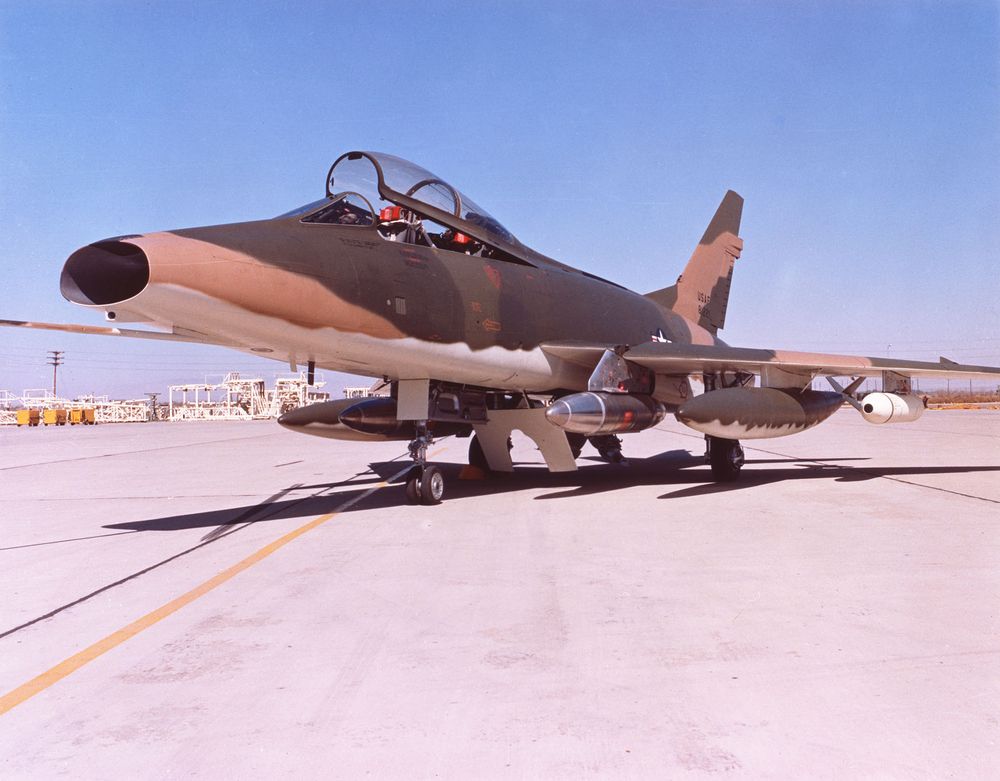
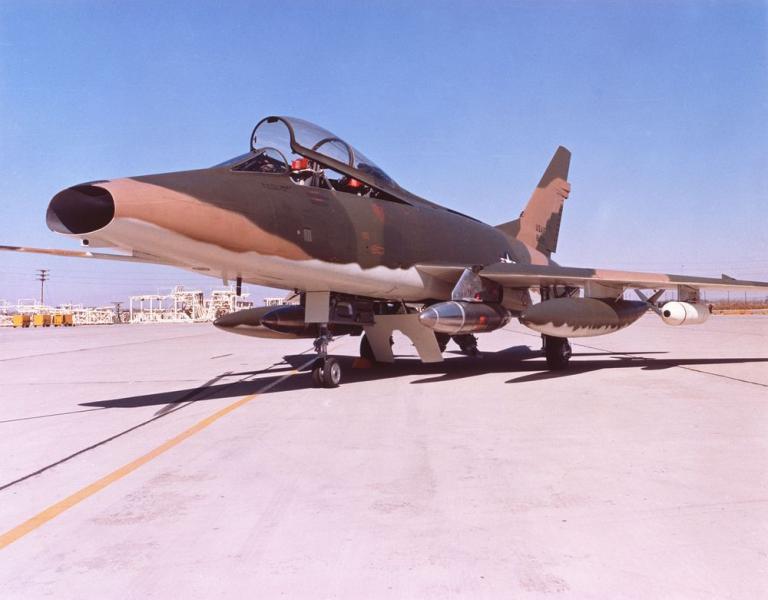
In addition to being the first of the so called “Century Series” fighters and the first U.S. Air Force plane able to reach supersonic speed in level flight, the North American F-100 Super Sabre was also the first of the Wild Weasel aircraft. The concept around Wild Weasels (aircraft specialized in Suppression Of Air Defense missions) dates back to Jul. 24, 1965, when an USAF F-4C Phantom was shot down over North Vietnam by a Soviet made SA-2 Guideline Surface to Air Missile: a proof that the SAMs (Surface to Air Missiles) were a real threat for U.S. aircraft, and something that had to be coped with in the shortest time possible. The first idea relied on the traditional methods of photo and electronic reconnaissance (after the SAM site was located, aircraft on alert would be launched to destroy it). But such an approach was neither timely nor effective since many sites were mobile. Therefore, a small number of aircraft were equipped with electronic devices to locate and mark the SAM sites in real-time for strike aircraft. This method required those aircraft to be fitted with a Radar Homing and Warning (RHAW) device allowing them to know when they were being targeted. The second step was to load these aircraft with missiles, like the AGM-45 Shrike, that could be fired at the radar. The last step was providing more effective jamming to protect themselves. Due to its availability and performance, the two seat version of the Super Sabre, the F-100F, was chosen as the pathfinder aircraft: these aircraft had the task to locate and mark the SAM sites. Their RHAW was fitted with the IR-133 Panoramic Scan Receiver made by Applied Technologies Inc. (the so called ATI equipment), which provided a 360 degree scan on a 3-inch Cathode Ray Tube cockpit display to provide bearing to the signal: moreover it differentiated the various frequency bands and pulse rates to identify the several types of radar signals received, such as surveillance, missile tracking and Anti Aircraft Artillery (AAA) radar. The aim of these kind of missions were explained to the aircrews during several briefings and it was in one of these meetings that an F-100F Electronics Warfare Officer (EWO), the F-100’s back seater, said: “You want me to ride in the back of a two seat fighter with a teenage killer in the front seat? You Gotta Be Shitting Me!” and from that briefing is believed to come the original Wild Weasel slogan “YGBSM” as explained in Ted Spitzmiller’s book Century Series The USAF Quest for air supremacy 1950-1960 . After the visual identification of the target, the Pathfinder had to mark it, by means of 2.75 inch air to ground rockets fired from LAU-3 launchers, for the F-105 Thunderchiefs that followed the F-100 with the task to destroy the SAM site. Often, the SA-2 was launched against the F-100F: to avoid the missile, the Super Sabre aircrew relied on the Launch Warning Receiver (LWR-300) which, with a yellow light in the cockpit, alerted the crew of the imminent launch and with a red light signaled that the missile launch had occurred. A former pathfinder pilot, Colonel Edward Rock in the bookFirst In, Last Out explained that he never noticed the color of the light: “If a SAM was launched, then the azimuth strobe associated with the threat was supposed to blink at 3 cycles per second. I can say that I probably had more than 100 missiles launched at my aircraft and never, not even once, saw the strobe blinking. Probably busy with more important things like saving my life.” The first Wild Weasel F-100Fs arrived at Korat Royal Thai Air Force Base in November 1965. They conducted their first successful mission on Dec. 22 1965, as recalled by another Super Sabre pilot, Lieutenant Colonel Allen Lamb who gave his account to Ted Spitzmiller: “We didn’t just mark the target…we went in first with rockets and came back around with cannons even before some of the Thuds (as it was called the F-105 Thunderchief) had started on a first run. The F-100F was an excellent hunter-killer in that it was very agile. I was very fond of it, and of my ability to fly it.” The F-100F flew these missions until its replacement with the F-105F, which took place in July 1966. However the “Hun” (as the Super Sabre was dubbed by its aircrews) was the first Wild Weasel aircraft and the first fighter to fly in the risky environment of the anti SAM missions, as remembered by Rock: “Due to the limited number of Wild Weasel aircraft we were considered a high value limited asset…we normally flew only the most dangerous missions and in an area where the threat was the very highest.” Image credit: U.S. Air Force http://theaviationist.com/2014/03/13/wild-weasel-f-100/
- 1 reply
-
- 1
-

-
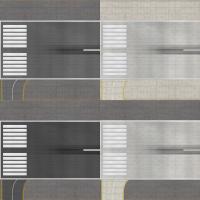
View File Do It Yourself Runway & Taxi sets Separate sets of Runways, taxiways and ramps in different colours - you will need to rename the files for in game use - as per the README Submitter MigBuster Submitted 03/17/2014 Category Base Mods
-
A lot of changes were under the hood so to speak http://combatace.com/topic/56091-whats-new-in-the-sf2-series/
-
When did you start getting problems? To try and track down the problem files you could try cutting and pasting out certain mod folders and running the game.
-
View File Hi Res Runways 2014 (Pack 1) Hi Res runways, taxiways & ramps for SF2 / SF2V / SF2I / SF2E (Pack 1 Euro/US style) See the README for instructions Submitter MigBuster Submitted 03/16/2014 Category Base Mods
-
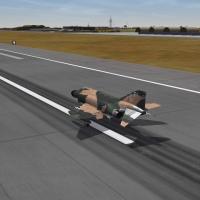
Version v1.1
780 downloads
Hi Res runways, taxiways & ramps for SF2 / SF2V / SF2I / SF2E (Pack 1 Euro/US style) See the README for instructions -
View File Hi Res Runways 2014 (Pack 2) Hi Res runways, taxiways & ramps for SF2 / SF2V / SF2I / SF2E (Pack 1 SEA style) See the README for instructions Submitter MigBuster Submitted 03/16/2014 Category Base Mods