
JediMaster
-
Posts
9,970 -
Joined
-
Last visited
-
Days Won
12
Content Type
Profiles
Forums
Gallery
Downloads
Store
Everything posted by JediMaster
-
Why would they get in that thing??
-
That's because unlike the weather, we have really NO idea how that smoke-and-mirrors show works!
-
Except that as much as I disliked renaming Storm of War to "Il-2" (when CloD has no Il-2s or even any Russian planes in it), I think World of Planes is the stupidest name ever. Should've gone with World of Flight at least. World of Tanks is a stupid name, too, and I think 2 "World of" MMOs is enough, we don't need a 3rd.
-
Oh, you'll only vacation there?
-
As long as the alternatives are more expensive, less portable, or require expensive infrastructure upgrades that increase the cost indirectly, there will be resistance. In fact, the reason oil is lasting this long is because the overall cost has increased to the point where things like shale and sands are now cost-effective, along with new drilling techniques getting at previously unreachable fields or getting it out of unreachable parts of existing fields. Oil at $90/b has proven to be sustainable and while sub-$50/b oil is probably long gone, we'll have $90+ oil for quite some time yet. When oil's price becomes too high THEN we will get the other sources made affordable, if only by comparison if not absolutely.
-
I can't wait for the day when we get another 24 hrs NEWS channel, like CNN was 25 years ago.
-
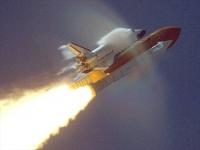
T minus 20 min. STS 135 Closing out the White Room
JediMaster replied to MAKO69's topic in Military and General Aviation
Wasn't that great to watch from the ground. Stupid clouds covered it after about 30 seconds, just like the previous one. Oh well. -
Well, I'm sure human activity isn't helping, but there's one unavoidable fact: the Martian polar caps are shrinking. We're not doing that. Solar energy decreases as a square of the distance, so Mars is getting a lot LESS solar energy than earth. So, doing the math, if our planet gets more solar energy than Mars, and what Mars is getting is enough to make its caps shrink... Does this mean we can do whatever we want? Of course not. We will just make it worse. Would the world change in such a way to make the climate hostile to humanity even if we weren't here? Possibly. The fallacy of the "green" movement is that the Earth and the sun are static. It has been both far warmer and far cooler than it is now with no human intervention. It can easily become either again, and any change could possibly render the planet if not uninhabitable at least inhospitable except for the previously inhospitable regions (ie Antartica becoming a great place to live if it gets real hot and the equatorial areas being nice and temperate if things chill down). So the question is not "is mankind changing the climate", because we know we are, it's "is mankind changing the climate enough, in combination with its own tendency to change anyway, that we or our children or grandchildren will be in severe peril, and what can we do to alleviate the problem?" It's quite possible that if every "emitter" disappeared today, whether coal burner, fossil fuel burner, gas emitter, etc, the world would continue on its merry way with no real observable difference in what is to come ie it's too late for us to change anything except for the worse. Doesn't mean we shouldn't try. But if all our efforts won't help, and business as usual isn't going to make it that much worse, how much effort should we really exert? This is what studies should be for. This is what they have failed to provide.
-
You know, I don't feel older. I DO feel heavier and more sluggish, though, should've had less to eat.
-
Justin Bieber?
-
The problem is there is big money on both sides of this issue. That means politicians are being bought and sold over it. THAT makes it political. Science is not and will never be, but scientific studies that require funding usually are. Trace back every one of these studies and you'll find one side or the other behind the funding, and even if claims of distance are made they're not believed. Maybe if someone like Bill Gates funded such a study, when he has little of interest in either side, it could be viewed reasonably.
-
I'm still pulling for reruns from Vesuvius and Krakatoa!
-
The baby's grandma didn't know, or she wouldn't have reported the girl missing in the first place. Their reaction at the verdict reading was very telling...they were UNhappy. They were hoping the trial would bring out the truth, but of course, it didn't. The reason she got off was quite simple--the defense attorney successfully redefined "reasonable doubt" for the jurors and they went with that. By his definition, if you don't know cause of death you can't pin the murder on anyone because you can't even say it was murder. There exists "reasonable doubt" unless you know. The whole thing of motive, means, and opportunity, all of which the mother had, is meaningless.
-
The air feels a little cleaner, and the light seems a little brighter...
-
In my day you were lucky to have a cold cup of tea. Without sugar, or milk, or tea!
-
Ep 1 will be the test case. If it doesnt do well, they stop. If it does, they do Ep 2. If it doesn't do well, they stop. If it does, they do Ep 3, and so on.
-
Except she was found guilty of lying, 4 separate counts. She may or may not have done it, but she's covering up big time.
-
Thanks, been a crazy busy day, and weekend before it! Tomorrow the normal insanity resumes...
-
Oh yeah, I'm there!
-
I will be going to visit the in-laws on the other side of the block for BBQ and watching the stadium a few miles off launch fireworks. Same as every other 4th, pretty much.
-
Maybe with the DX10 accelerations available the JPG thing is no longer a hindrance. PC's are getting faster but SF2 isn't getting more complex at the same rate. I've been procrastinating big time, hadn't installed the May or June patches yet. I guess I will do that this long weekend and check out the DLC. The Hunter I'm iffy on, but the A-4 looks good.
-
I know when you map an axis in Il-2 it puts a + or - with the name to let you know how it's reading it. While you can't change that in the game, it should be possible to go into the .ini and manually alter the sign. I think it's the conf.ini that has it, but it might be another.
-
I thought AF's last patch was 1.13? Anyway, a couple of things to check is if you have FSAA turned on or not. Try it the other way. Another is check the video settings in the game. I believe "hardware T&L" has issues with modern drivers, and switching to "hardware" works better.
-
More ArmA 2 for me... Good mods for older stuff?
JediMaster replied to streakeagle's topic in Armed Assault Series
My 2 favorite missions in OFP:85 were the "Alone in the Forest" one and the one whose name I forget where you have to escape an enemy camp at night and have nothing but the stars to navigate by (no compass). Once I managed to steal the camp's BMP to escape, running over several enemies on the way out.