

MigBuster
-
Posts
9,165 -
Joined
-
Last visited
-
Days Won
27
Content Type
Profiles
Forums
Gallery
Downloads
Store
Everything posted by MigBuster
-
No Mods I gather? Have you changed any of the graphic card settings? Do you have an NVIDIA GPU in that?
-
For virtual pilots the question of when to ditch your drop tanks is an easy one, that’s right when you feel like it! Of course but when it comes to real world use it has never been that straight forward. So how have they been used in combat over the years? Older viewers may remember the Yankee Air Pirate team actually disabling tank jettison in some of their missions for Wings Over Vietnam to stop players dropping them ha. Quite frankly no one gave a toss about these rather mundane items until the F-35 showed up it seems when all of a sudden they became a massive burden on older generation jets with arguments going to the point of stating they couldn’t even be jettisoned! So now for a rather exciting history of some drop tank usage in combat. A bit of background Drop tank usage became common in WWII, and most will know about P-51s and P-38s on Escort over Germany with drop tanks which were jettisoned when the German fighters showed up. The need for this was to extend the range of the aircraft. [doh really] P-51 flight with drop tanks (Historylink101.com) So, couldn’t they just put more fuel internally? You may notice that tanks used in WWII were relatively small……..piston engines didn’t need that much fuel compared to jet engines. But, by the late 1950s drop tanks had become much larger because the Jet engines were getting more powerful and thus needing much more fuel. More Jet fuel means more weight and fuel is very heavy and takes up space, so if someone is designing a fighter with a set of performance requirements they often had to keep internal fuel to a minimum and put the fuel to meet the range requirement externally in drop tanks. The idea being that the pilot flies to the combat zone on drop tanks but has to jettison the tanks when performance was required. Into the Korean War era Jettisoning tanks was not always as smooth as in flight sims. May 20 1951 James Jabara was part of a 4 FIW fighter Sweep over Sinuju. As soon as MiG-15s were sighted the order came to drop tanks and Jabara punched them but only the left (Port) tank dropped. Stuck with one tank he was supposed to return to base but disregarded orders and managed to get one confirmed kill (by both sides) and damage a second despite the asymmetric control problems he must have been having. F-86 v MiG-15 over Korea (Troy White) F-105 and Vietnam era In this era dropping tanks was common but again didn’t always go without drama. “We never did figure out why they had to drop them right on top of us, and I can assure you that a 20 foot long fuel tank in the face can ruin your entire day.” (J Broughton) So wrote Jack Broughton in 1969 regarding his F-4 escorts, and in Vietnam, flights sometimes even dropped tanks just to go into the combat area clean. This also applied to some Thud drivers as well it appears although Broughton states he preferred to hang on to the tanks if he could for ResCAP. Basically in a ResCAP [Rescue CAP ] situation if the F-105 gets low on fuel they would leave the combat area to Air to Air Refuel, but it needed the tanks to get back to the combat area again for any useful period of time. If they knew they wouldn’t have to refuel again during ResCAP (e.g. getting dark) dropping the empty tanks was done anyway to increase endurance [due to the reduction in Drag and weight]. F-4s had to drop their centerline tanks at least to be able to fire AIM-7s, and ideally ensure they were flying at a speed and attitude / AoA [Angle of Attack] where the tanks didn’t hit the aircraft after jettison and ruin the pilots day! In 1973 Paul Howson fired two AIM-7E-2 Sparrows and both hit the centerline tank although luckily they didn’t penetrate it. Although he thought he had jettisoned the tanks earlier the centerline tank was still attached due to a failure. F-105D Thuds with a KC-135A (USAF) “It is hard to figure out how we can go to the Moon, yet we can’t build a fool proof system that will allow you to let go of a big blob of a tank when you want to.” (J Broughton) Picking up SAM activity the flight of Thuds dropped the tanks, but the curse of the hung drop tank affected one of the flight. The drop tanks now being bigger was a bigger problem because that one aircraft with a hung tank now needs to use a lot more fuel to keep up with the flight, or the rest of the flight needs to fly slower through the danger area! On one mission Jack discovered a failure on the 650 Gal tank that meant he couldn’t transfer fuel from the A-A tanker (KC-135) so opted to jettison it when empty on the way there. Again, getting rid of the tank when empty increased endurance enough for the mission by reducing overall drag and weight. Meanwhile over Israel Typically, Israeli pilots jettisoned the drop tanks when they were vectored towards any suspected enemy aircraft. During the Yom Kippur War this got to 50 drop tanks jettisoned per day, and they were jettisoning them even if the contact they were vectored to was false or friendly. To avoid such waste the policy was changed so they would only drop them once they had visually acquired their targets! On the 14th April 1969, Rouven Rozen had a bit of a pilot fail when he forgot to jettison the centerline tank on his Mirage IIICJ and ended up with a MiG on his tail after some rather sub-par maneuvering. Luckily the MiG pilot wasn’t so hot and he managed to pull him into a scissors and turn things around by getting behind the MiG. In another instance Iftach Spector was flying towards contacts they were vectored to on their radar which turned out to be Drop tanks that had been jettisoned by MiGs falling from the sky. IDF Mirage IIICJs (dailykos.com) The 4th Generation arrives When the F-15/16 came along they had the same design concept as the previous generation F-4s which was fly to the target on external fuel and jettison them for combat however there was one major change. The drop tanks were manufactured to a higher quality and could be used at 9G when empty. Most of the F-4 drop tanks in Nam were ferry tanks and were not really stressed for combat as such but made good canoes. This change no doubt drove up the complexity and cost of the tanks and provided more incentive for the air force to not just jettison them for the hell of it. Some of those drop tanks were converted into canoes by enterprising Vietnamese farmers (Aviationist.com) Into the Storm Now for some examples from more recent conflicts, typically they are jettisoned in emergency situations which includes any A-A engagement, flame out or SAM being fired at you. Desert Storm had its fair share of A-A and A-G action, here Jerry Oney in an F-15E taking a big risk: "Well there we were, a couple of the USAF’s finest, flying the mighty Strike Eagle at around 2000ft below a mostly scattered cloud deck in a two-mile trail at 500kts conducting a road recce for some scuds. Even then I was thinking “this isn’t the greatest idea in the history of the earth”. I was soon proved correct as we flew past this Iraqi airfield and saw the smoke trail of an SA-7, or maybe an SA-9, heading past us and towards lead. The next bit of action seemed compressed into about two seconds or less – lead broke hard into the missile in an attempt to defeat it, I watched the thing overshoot and detonate about 500ft above lead, Bill [the pilot] manoeuvred hard to avoid lead as we now had a face full of F-15E heading towards us. Damn an Eagle can turn. I felt all our ordnance come off the airplane as Bill calmly punched the jettison button as part of our attempt to avoid hitting lead and get our weight down in anticipation of another shot coming our way." F-15Cs with drop tanks (USAF) Cesar Rodriguez flying an F-15C describes one engagement with a MiG: "…so the western AWACs called on GUARD, Pop up contacts, 330 degrees for 13 miles. At 13 miles I had no option but to engage without any SA [Situational Awareness] , so I directed an in-plane turn to 330 degrees, jettisoned wing tanks and put my radar into the location of the target….." Here is another account from Rhory Dreager and Rodriguez of a different engagement in an F-15C: "We do not want to get into any turning merges if we did not have to, so we get our MiG-23 EID [Electronic ID] and AWACS clearances out of the way well before we could shoot. The MiGs were flying at 500ft, and we were flying a cut off intercept on them. At about 40 miles, AWACs told us that one of the MiGs had returned home, so we now had a radar picture of a three-aircraft “Vic” – one guy out in front and the other two guys flying behind and either side. Rodriguez added that RC-135 Rivet Joint also confirmed the EID on the MiG-23s. Dreager ordered a jettison of wing tanks to allow better maneuverability and greater speed with which to increase their WEZ." 17 Jan 1993 F-16C pilot Craig Stevenson was on a no-fly zone patrol with an F-4G over Northern Iraq when a MiG-23 started darting to the no-fly zone. As soon as AWACs had identified the MiG as hostile and called “commit” Craig jettisoned his nearly full fuel tanks but held onto his bombs. “At .95 mach I was well above the selective jettison design limitation for the fuel tanks, and the aircraft was quick to let me know. The jettison was so violent I remember looking back at my horizontal stabilizers to make sure they hadn't been damaged by the fuel tanks.” Air Force Magazine Note that even aircraft that use drop tanks do not always have to use them in combat, especially where A-A tankers are available. In Desert Storm F-16s of the 363rd FW(P) Forward deployed to King Khalid Military City AB in Saudi Arabia with A-10s meaning they could deploy with 4 x MK-84s as standard load-out with no drop tanks: USAF F-16s at KKMC during the Storm - foreground is Block 25D #84-1257 of 17TFS (USAF) Fighters without drop tanks Just to be awkward there have been a few fighters designed post Korean war that have not had the option of using Drop Tanks, these include the F-8 Crusader (non J), Su-27 Flanker, and the F-35 Lightning II. F-8 Crusader (worldwars.net) This means that when fully fueled on take off they have a much higher relative internal fuel load-out and weight because they are carrying the fuel that others carried in drop tanks. So, until the Su-27/F-35 get their fuel down to about 60% say their relative performance is significantly reduced in terms of subsonic climb, acceleration and overall turn performance. However, the lack of drag from large drop tanks will mean they can have better acceleration and higher practical speed through the transonic and supersonic regions of flight when only carrying light to no external stores. These jets also include fuel dump mechanisms that allow them to dump fuel for emergency situations such as an emergency landing. With this approach you also need a very high thrust engine to overcome the extra fuselage size, weight and drag that was put there to hold the extra fuel in the first place. Su-27 intercepts a Swedish ELINT aircaft (Swedish AF) Are drop tanks really the best way of doing things? Valid arguments against include that they take up pylon space, can cause problems if they fail, and impose performance limitations on an aircraft. Also some of the fuel in the drop tank is needed just to offset the extra weight and drag. Logistics of Drop Tanks can be an issue in terms of maintenance and getting enough to a squadron. Did any squadron ever run out of drop tanks post Korean War? [Answers on a post card because I am not aware of any on the Western side]. Cost is another thing that is brought up, it is however much cheaper to jettison the tanks rather than lose the entire aircraft and pilot. Any plus points? Rather good at extending range [duh] You can jettison them, unlike CFTs and bigger airframes. Erm….sometimes can be used to land on if they are empty and the gear fails [or you forget to lower it]: F-16C Block 25 lands on tank at Luke AFB June 17 2004 (F-16.net) The Future Seems the arguments are mute because with F-22, J-20 and Su-57 using drop tanks, and talk of some being developed for F-35 they are not going anywhere in my lifetime. Chegndu J-20 February 2017 (Elephant) Sources Thud Ridge (J.M.Broughton, 1969) Crecy Publishing James Jabara (Sherman S 2001) online Acepilots.com http://acepilots.com/korea_jabara.html Israeli Mirage and Nesher Aces (Alomi. S, 2004) Osprey Publishing F-15E Strike Eagle Units in Combat 1990-2005 (Davies.S, 2005) Osprey Publishing F-15C Eagle Units in Combat (Davies.S, 2005) Osprey Publishing USAF F-4 Phantom II MiG Killers 1972 -73 (P.Davies, 2005) Osprey Publishing Sukhoi Su-27 (Gordon.Y, 2007) Midland Publishing Title Photo credit USAF


- 14 replies
-
- 18
-

-

-
- drop
- drop tanks
- (and 2 more)
-
Flight Sim World: Closure Announcement
MigBuster replied to MigBuster's topic in General Flight Sim News
Yes quite a high price to pay for 3rd party devs!..............saw the Froogle video :) Here's hoping they still bring the Hawk to DCS level. -
Nice one Hans..........not always easy to define old sims when a lot of the new ones are developments of the old. Yo prefer the mostly pre Jet era I would gather from that.
-
View for Carrier Landing / In-Flight Refueling
MigBuster replied to Crusader's topic in Mods & Skinning Discussion
Was an essential for the F-102A! -
Hallo Hans! Any old Sims in particular?
-
It is with great sadness that we announce the future closure of Flight Sim World. As you know, we always had a strong ambition to bring a new experience into the established world of flight simulation, one that deliberately overhauled both the flying experience and the graphical fidelity, offering new ways to fly. Unfortunately, after many detailed discussions, we regrettably don’t see a clear direction that will allow us to keep to the development time we’d want, alongside the player numbers we need. So, slightly before a year since we first launched into Early Access, we have made the intensely difficult decision to fully scale back all future development on Flight Sim World and remove it from sale on 24th May. We’re sure you have lots of questions, we hope we’ve answered a few here. FAQ What happens to Flight Sim World if I already own it? It will remain in your Steam library, available to play in its current format. Will the sim be taken off sale? Yes, and we’re working to the date of 24th May 2018. We want to give anyone who does not yet own a copy of the sim enough time to get a copy and keep it safe in their library for future play. What will happen to any Add-Ons? Add-Ons will also come off sale, but those you already own will still also be in your Steam library. We hope you can give the team the respect they deserve for their tireless hard work to date. Please know that all of us here at Dovetail hold flight simulation, the creators of add-on content, and especially you, the community for this sim, in incredibly high regard for both your support and time with Flight Sim World. - The Flight Sim World Team https://forums.dovetailgames.com/forums/flightsimworld/
-
Hello It is nowhere but on my PC HD 1920 x 1080 if you want a copy of the set?
-
Okay so the Rolling Thunder campaign was never my favourite campaign from the series, in fact might be the most bland. The main reason for this was most probably the fact that there is no forward line of troops and tank columns to fight it out, and gain or lose ground after each mission. Rolling Thunder for real The campaign namesake this is based on was one of the most disastrous and misguided campaigns in the history of aerial warfare. What was hoped would be a few weeks of bombing missions to get North Vietnam back to the negotiating table to stop them trying to invade the South, turned into 3 or so years of bombing targets selected by Washington. Or to put it another way pussy footing around bombing things that did nothing more than improve North Vietnam's resolve to continue on its agenda and also allow it to build up its defenses with the help of the Soviet Union and China. So, 3 years of bombing targets – many times the same targets over and over, and never achieving the desired US strategy. Rolling Thunder in game In the Strike Fighters game engine this translates to what seems like a string of single missions and yes you don’t have much of an objective other than to try and not get shot down. However, unlike auto generated Single missions, Campaign missions are more content filled and almost always include strike packages and flights that help you do your job (If you at least meet your timings). Not only that all the units have their markings and decals as they should. Like history there are no SAMs until mid 1965 and the MiG regiments are limited in number. One great thing about TKs games is the use of "dates", so the game engine can just plonk in the correct objects (Guns/SAMs/MiGs) depending on the date you are flying. This also includes getting rebased and upgraded to better aircraft during the campaign. Vietnam Gold Like most things in Strike Fighters World, mods can really help and I am using the Vietnam Gold mod with a variety of my own changes. This comes with quite a fearsome atmosphere with a ton of guns shooting at you with purple stuff, red stuff and grey puffy stuff. A major benefit is a bigger variety of targets and not just the sodding comms building again. Gameplay Feb 24 1966 and I am flying from Da Nang in an F-100D (1964 version) for the 416th “Silver Knights”. I don’t know what it is about the F-100D that I like because it is outclassed by pretty much all the MiGs. The Lang Chi Electric Power plant is my target (a welcome addition from gold pack I think) – and I need to be on target for 09:10 on the dot. I am maxing out the M-117s here – there are plenty of them available. The SF2 Super Sabre also allows TERS to carry 4 on the inner pylons by default but with extra drag. How to get there hmmm. Those that played Wings Over Vietnam will know various routes into the North to minimise exposure to the SAMs, some of which had a 90% plus probability of kill if you were not flying at about 5ft off the ground. Luckily the SAMs in SF2 and this pack allow you to fly a bit more as they tended too back then! With a target near Yen Bai I can use the highlands as cover and cross in over South NVN where there are little to no SAMs. The Square box waypoint (the Initial Point /IP) is also the spawn point if you use Alt N, so can be moved around if you don’t have time to fly there. Waypoint 3 is fixed as a rendezvous with other flights. If SF2 had been developed, it would have been nice to change the waypoint details for the flights like in Falcon so you could move the fixed waypoint for all flights. Another thing that could have been improved was seeing your actual target area before flying. If you consider Jack Broughton spent all night memorising features etc before going on a mission you can understand the point of just marking the actual target with Padlock or a red dot! As you can see only 2 MiG regiments active with MiG-17F and MiG-21F-13. First Lt Eldon Atterbury is my wingy today. If you do take time to nurture the pilots their stats do improve (if they survive) Let's go then As we fly towards the target other flights are also on route to their targets. After a while several fights occur Due to meticulous planning we reach the target just fine and we roll in from above the cloud base I hit the target but get peppered by a lot of triple A Phew heading out but think my Wingy is a bit lost. Try to search, but no sign of him and no beeper! so off home alone Mystery solved, a MiG-21F-13 gunned him down and I had no idea that was in the area! If only all Vietnam mysteries could be solved so easy! I then went on to fly A-4C/Es for the US Navy in which you get to take off from Carriers in the Gulf on Tonkin Mr SAM is always happy to see you This thud was just lucky! This thud was not so lucky What are all those blotches So still quite intense flying through all the anti air and check 6 for those MiGs as always!


- 3 replies
-
- 12
-
-
- rolling thunder
- sf2
- (and 2 more)
-
The Lightning seems as if it was designed with performance at the cost of almost everything else. The P.1 didn't have any ventral bump until the P.1A.................. looks like a case of where exactly do we stick more internal fuel!
-
DCS World 2.5.1 Open Beta Release The first version of the video memory manager is implemented. This function will purge the video memory when the budget allocated by Windows is reached. Resources that were not used in the last 10 seconds are the first to be purged. The new OFFLINE mode is now implemented. Users can turn on the OFFLINE mode which permits the game to be used without internet identification and without a time limit. Note: users must turn off the OFFLINE mode on the same PC. OFFLINE mode cannot be turned off from another PC even with the same user login. In addition to many important bug fixes, 2.5.1. also offers updated night lighting. As always, we look forward to your feedback and suggestions. You can find the full changelog in the special topic Chinese Asset Pack for DCS World China Asset Pack (CAP) is a free add-on for DCS World developed by Deka Ironwork Simulations. It contains several AI aircrafts, ground and navy units, as well as weapons that have served or are currently serving in China. Deka Ironwork will keep on expanding the asset pack and add more AI units in the future. One of the most exciting features is the Shenyang J-11A (歼-11A) known to NATO as the Flanker B+ whose airframe is based on the Sukhoi Su-27. With 2.5.1, access to this flyable aircraft is available to those who own Flaming Cliffs 3 for DCS World and later on to those that own the Su-27 Standalone. Key features that make the J-11A unique are: 3D Model changes (New LODs, Pilot and other features) Lighting (Nose gear, Landing Lights and more) Windshield Air-to-Air Weapons and Pods (RKL-609 ECM Pod & the R-77 Medium range missile) Dual Rack for Rockets & Bombs You can read more on these changes in our Forums. F-15C Aggressors BFM Campaign The F-15C Aggressors BFM campaign puts you in the cockpit of an F-15C Eagle, as a new Aggressor pilot with the 65th Aggressor Squadron at Nellis Air Force Base. F-15C Aggressors BFM Campaign video Based on real world procedures you will fly as Red Air against Blue Air Forces. Upon arrival you will fly a familiarization flight around the Nevada Test and Training Range (NTTR). Then you will face a series of challenging Basic Fighter Maneuver (BFM) missions against similar and dissimilar aircraft. Your opponents include the F-4E, F-14A, F-15C, F-15E, F-16C, F/A-18C, M-2000C, MiG-29G, CF-188 and MiG-21. Additionally there are 10 single player practice missions with in-air starts so you can perfect your BFM tactics, techniques and procedures. There are over 1000 voiceovers and over 45 pages of briefing material including the F-15C Amplified Checklist, RED FLAG Spins, Red Forces In Flight Guide, Maps, Diagrams, Custom Kneeboards and Mission Data cards. Purchase in the DCS e-shop DCS: F/A-18C Hornet Update Matt and Nick are currently in Minsk and Moscow where work on the Hornet and ancillary units is progressing well. Work has started on the management of aircraft on the CVN-74 carrier deck. Departing aircraft will appear in certain parking and elevators positions and will taxi on to the catapults. Recovering aircraft will taxi to free parking spaces. Subsequent aircraft will go to the elevator and de-spawn. On the deck it will be possible to place static objects (aircraft, equipment, loads). For this purpose we'll provide some new possibilities in the mission editor. A little later, we will show you pictures and videos of this in action. Persian Gulf Map for DCS World If you haven’t yet decided to go for this amazing new terrain module, there is still time to Pre-Purchase the Persian Gulf Map now for $39.99 and save 20%! The price will increase to $49.99 at the end of May 2018. Pre-purchase video The Persian Gulf Map for DCS World focuses on the Strait of Hormuz, which is the strategic choke point between the oil-rich Persian Gulf and the rest of the world. Flanked by Iran to the North and western-supported UAE and Oman to the south, this has been one of the world’s most dangerous flash points for decades. It was the location of Operation Praying Mantis in 1988 in which the US Navy sank several Iranian naval vessels. The region also includes the vast Arabian Sea that is well-suited for combat aircraft carrier operations, and it will be an exciting area of operations for the upcoming Hornet and Tomcat. Be it from land bases in Iran, UAE and Oman, or from the deck of an aircraft carrier, the Persian Gulf Map offers a wide array of combat mission scenarios to prove your mettle. See more screenshots here: Nick Grey answers your questions Many of you submitted questions to Nick, and he was happy to answer them for us, from his favorite aircraft, to his thoughts on what is and what he would like to see in DCS World. You can see the answers and discuss them in the dedicated DCS forum topic. Sincerely, The Eagle Dynamics Team
-
Have you seen this ?
-
Interview with Robert Hierl on the Mig-29 Fulcrum
MigBuster replied to MigBuster's topic in Military and General Aviation
The R-73 had a bit more range, thrust vectoring and a wider field of view this of course doesn't verify the IRCCM outside of what Heirl stated - some of the versions used Cross Array types. IRIS-T like ASRAAM and AIM-9X has a Imaging type seeker.........nothing like the R-73 or AIM-9M of that period. Imaging (IIR) seekers are a quantum leap over those older types regarding IRCCM because they can actually see the aircraft shape in most circumstances and have the computing power. Iraqi MiG-25s had and used Flares...........the Iraqi pilots interviewed have not tried to deny this. -
Interview with Robert Hierl on the Mig-29 Fulcrum
MigBuster replied to MigBuster's topic in Military and General Aviation
Clearly he has assumed things over the years maybe. What is certain is that there are and have been a lot of different flare types over the years as well as the different ways they can be employed so I wouldn't put much into a random 60% figure without knowing what they tested and what they actually had access to. 60% against the flare types they could test perhaps but that would never be valid across the board. Also not going to dismiss anyone who actually took part in the exploitation (would assume Project GRACE) until the detail is declassified. (If ever) In the 80s/ 90s the IRCCM was still very primitive.........If we were to go by the performance of the AIM-9M in 1991 (and although the low altitude could have affected it), the performance vs the flare types involved could be as low as 10%-20% against a MiG-25 in full afterburner - however the reality is there is nothing to say the R-73 would be any better in that situation. -
Interview with Robert Hierl on the Mig-29 Fulcrum
MigBuster replied to MigBuster's topic in Military and General Aviation
Ineffective counter-countermeasures is what i meant - sounds like R-73 filtered out Soviet flares but loved to go after NATO ones -
Interview with Robert Hierl on the Mig-29 Fulcrum
MigBuster replied to MigBuster's topic in Military and General Aviation
Looks like both sides based their IRCM on testing against their own flares only.............time to push the flare effectiveness values back up -
Robert Hierl [Typhoon Test pilot] on his time with the West German Airforce on the F-4F Phantom and on the Mig-29 Fulcrum programs
-
Try reducing it.
-
Interesting not seen so would think Drivers but not sure. Do you have AA and AF set to the max?
-
Hello James glad to see you around still What year are you flying ? single or campaign? There were different levels of AAA for gold were there not. There were a few things required for Win 7 back in the day but as you have it running suspect you may not need them
-
DCS World 2.5.1 Update Version 2.5.1 for DCS World is currently in external testing and includes the new Offline Mode and improved memory management as its primary features. Now that it has been built, our valued 3rd parties are updating their aircraft to operating in version 2.5.1. Once this is complete, we will first move this version to the DCS World 2.5.1 Open Beta branch. Until we can release 2.5.1 with improved memory management, we suggest looking at your System Options in DCS World. One setting that has been found to help out considerably is the Preload Radius setting, cutting that value in half can make a huge difference in load times for multiplayer servers, we suggest tweaking this setting and find what works best for you. DCS: F/A-18C Hornet Update Since the last Hornet update, the flight model continues to be refined; Air Combat Maneuvering (ACM) radar modes now auto-lock targets; the ground suspension model has been refined for landing and taxi behavior; a pilot model has been added to the cockpit view; new skins like the Blue Angels, VMFA-122 and low-vis skins for VMFA-232 and 323 have been added; external sounds are even more realistic; LEX vapors are more realistic looking; and Inertial Navigation Systems (INS) ground alignment has been added. Here you can find three Hornet live streams we did of the Hornet over the upcoming Persian Gulf map: Part 1: Hornet over UAE and Oman Part 2: Hornet over Iran Part 3: Hornet over the Persian Gulf islands We have also released our 7th Hornet academic video, this one on Hornet waypoint navigation While this will eventually apply to all aircraft, the Hornet will be one of the first DCS World aircraft to incorporate our new rain drops on canopy effect. While still very much WIP, this little snippet shows of the general tech and animation we are using. Persian Gulf Map for DCS World Pre-Purchase the Persian Gulf Map now for $39.99 and save 20%! The price will increase to $49.99 at the end of May 2018. Pre-purchase video SA-2 Guideline (S-75 Dvina) Coming to DCS World Although DCS World includes a large selection of Surface-to-Air Missile (SAM) systems, the iconic SA-2 Guideline (S-75 Dvina) has been absent. We are now in the final stages of bringing this historic SAM to DCS World as part of a free update. Developed and first deployed by the Soviet Union in 1957, the SA-2 was designed as a medium- to high-altitude anti-aircraft systems using command guidance. Serving nations throughout the world, the SA-2 became the mode widely deployed SAM in history, with variants produced in China and Iran. It was an SA-2 that led to the shoot down in Francis Gary Powers in a U-2 spy plane over the Soviet Union in 1960. A typical SA-2 SAM battery consists of a "Fan Song" missile guidance radar, six two-stage S-75 missiles with launchers, and reload vehicles. A typical SA-2 battery is laid out with the launchers forming a characteristic "flower" pattern. Multiple batters comprise an SA-2 battalion, with a supporting "Spoon Rest" early warning radar and command and control vans. Three SA-2 SAM battalions are then organized into a larger SA-2 SAM regiment. The SA-2 is still in service to this day and will provide a valuable element to creating even more realistic DCS World battlefields. DCS World War II Assets Update There are three primary components that currently make up the DCS World War II, the Normandy 1944 map, the warbirds, and the World War II Assets Pack. We’d like to update you on each of these: DCS: Normandy 1944 Map Since the map’s release, there have been several improvements like new period objects (windmills, water towers, farm houses, etc.), better beach lines, corrected mesh errors, cleaned up textures, and more detail in the England portion of the map. Currently, Urga Media (the developer) is occupied with their Syria map. However, once the Syria map is complete, we will discuss with them further improvements to the Normandy map like use of speedtrees. Warbirds In addition to completing the final touches to the Spitfire (fuel tanks and bombs), our other primary focus has been the P-47D. More so than any other warbird though, this has been the biggest challenge due to the lack of data. Following the war, all wind tunnel and needed flight dynamics data was destroyed. To overcome this, we are using Flow Vision to recreate the needed data. This has proven a long and expensive endeavor. However, to create the detailed flight dynamics that DCS requires, we consider it mandatory. In consideration of what to work on after the Thunderbolt and Me-262, we asked people to express what they would like to see next, thanks for all the votes, we have submitted the results to the team and will look at what can be done in the future! You can view the results here: Forum World War II Assets Pack Many new aircraft and ground units are in development for the DCS World War II Assets Pack and we’ve included images of a few of them in this week’s newsletter. We plan to release the first big update to the pack in June 2018. At that time, the cost of the pack will increase by $5 given the additional content. Sincerely, The Eagle Dynamics Team
-
You playing flight sims again ! Other than that Strike Fighters 3 is out next month........................or not.
-
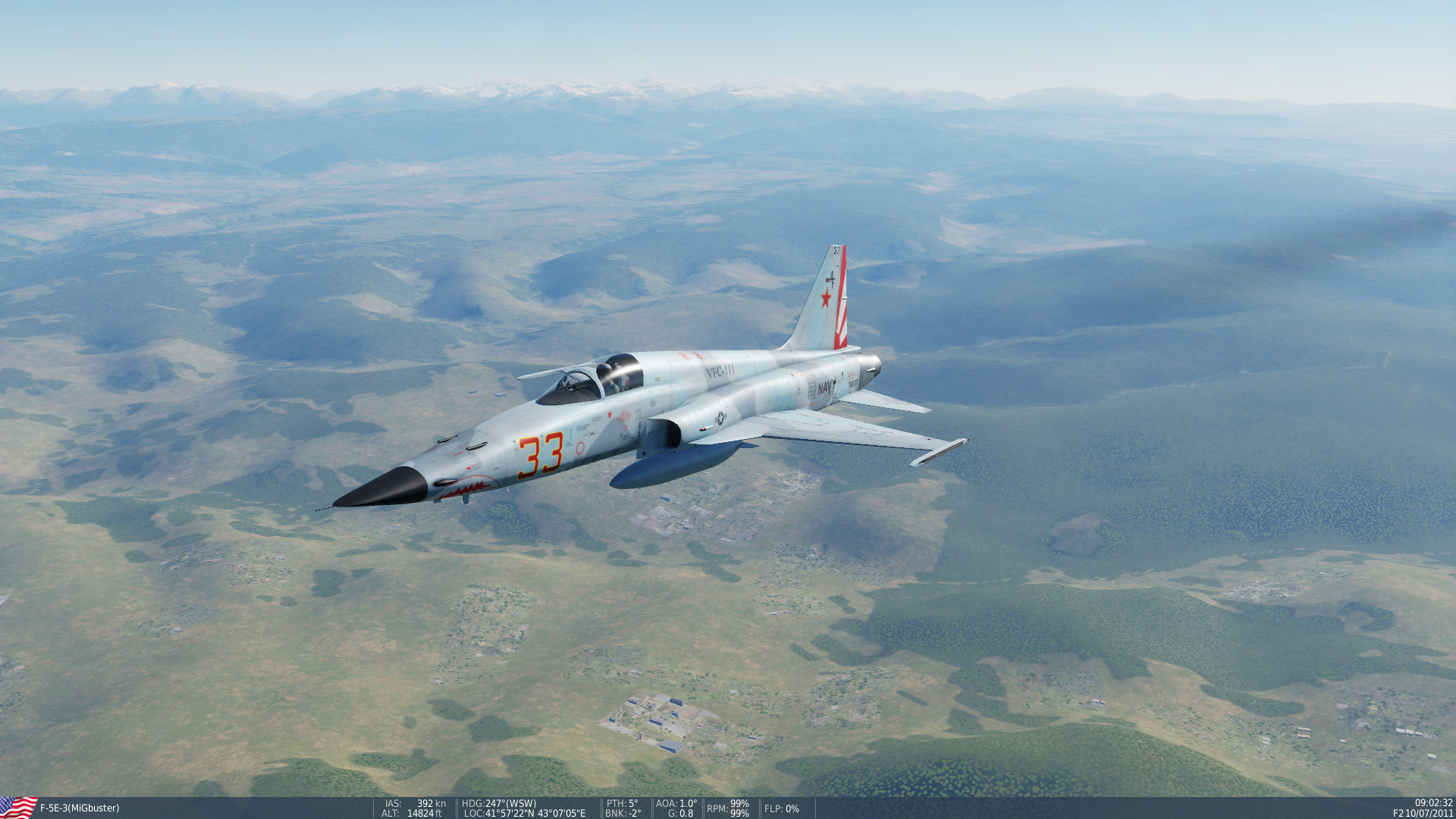
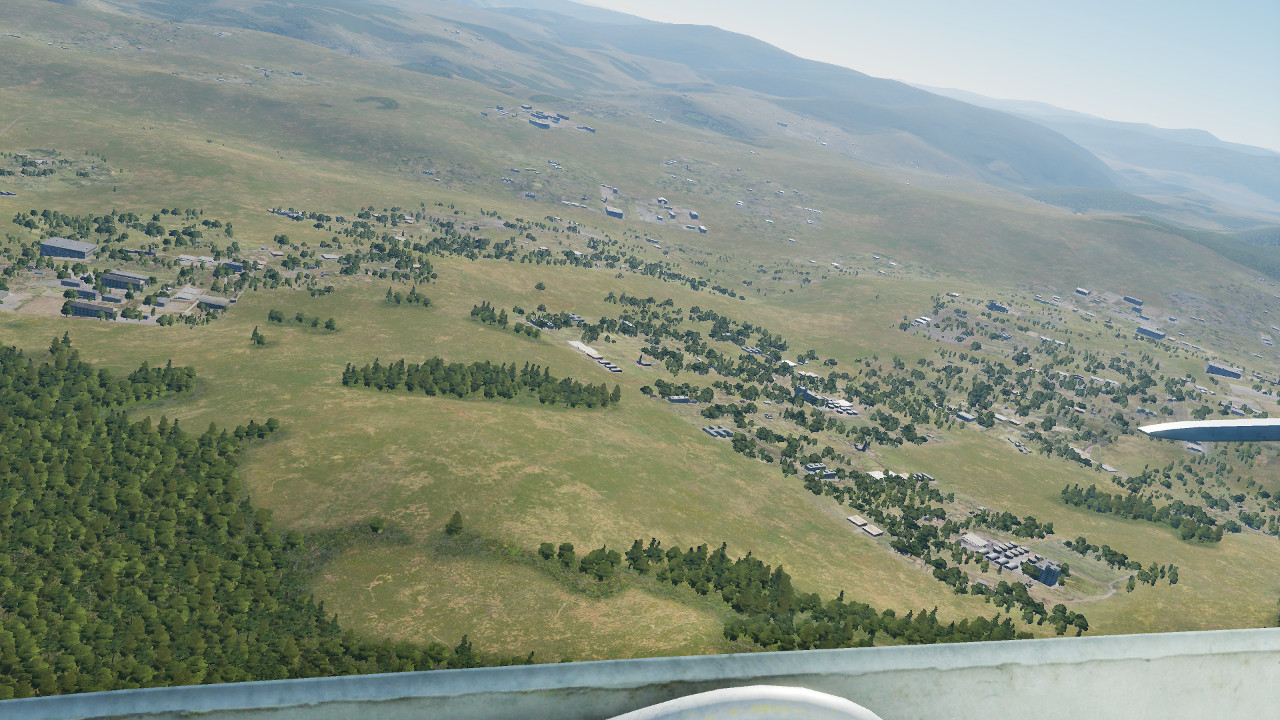
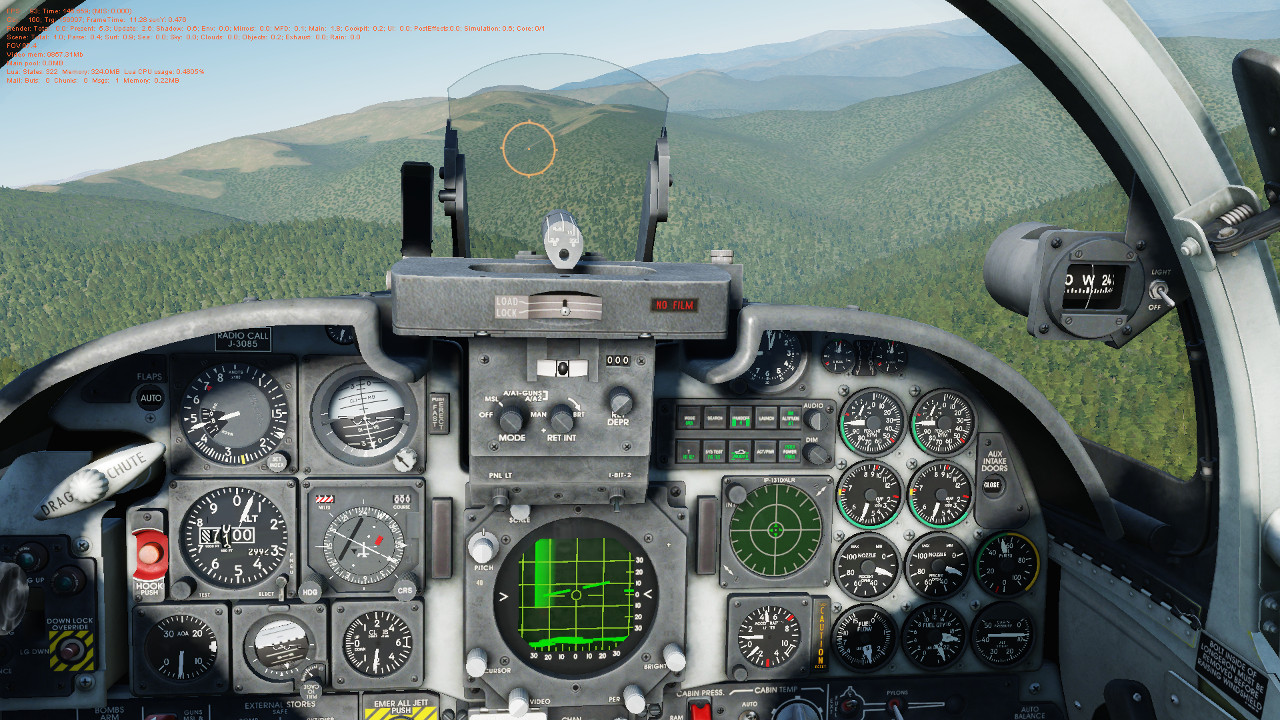
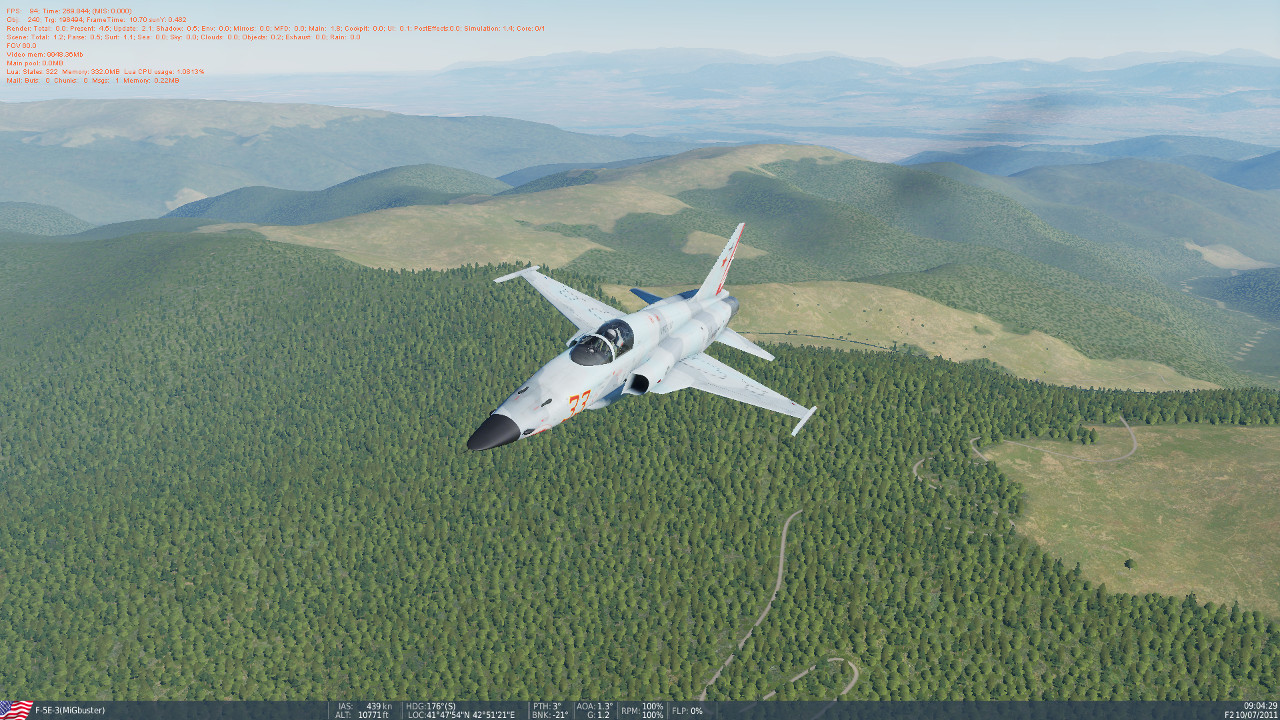
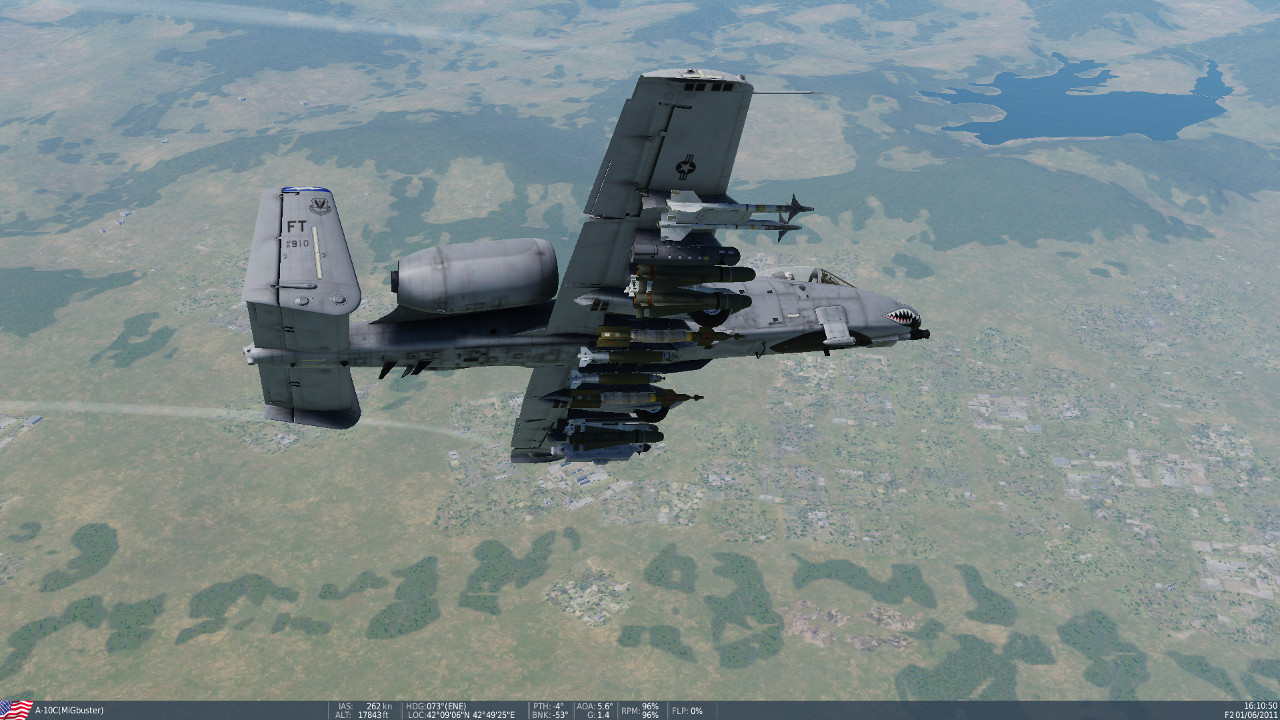
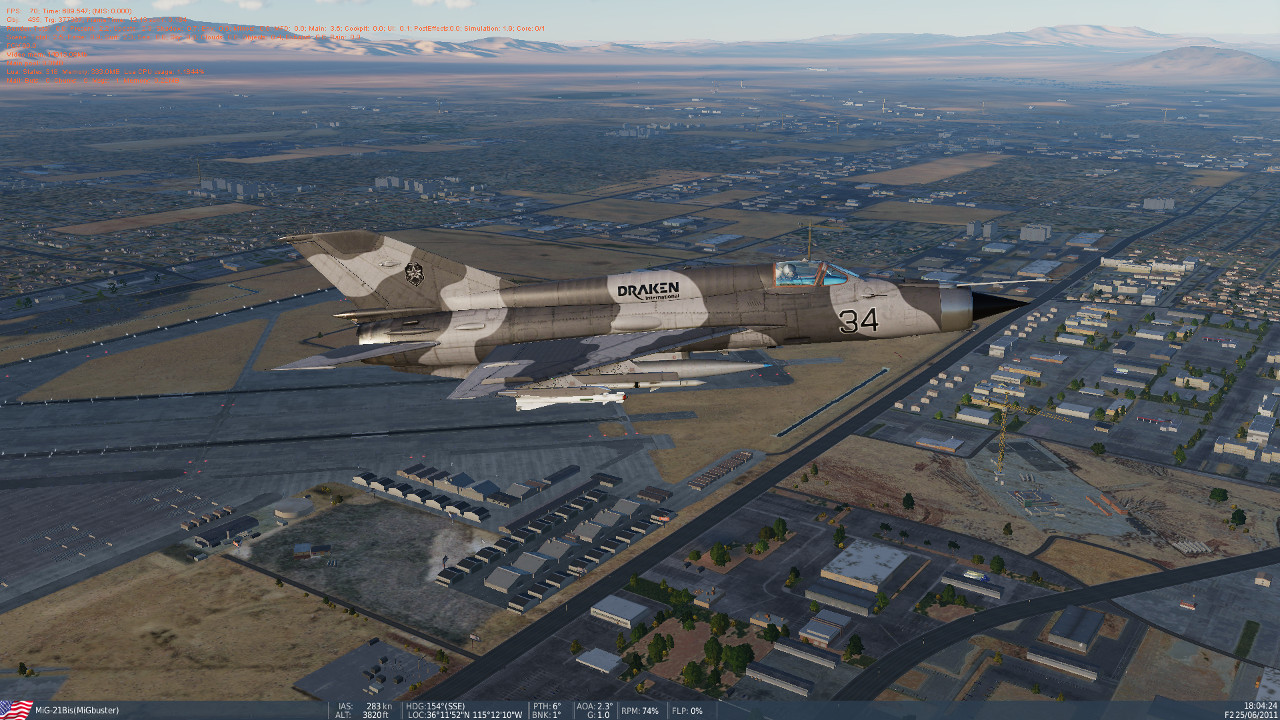
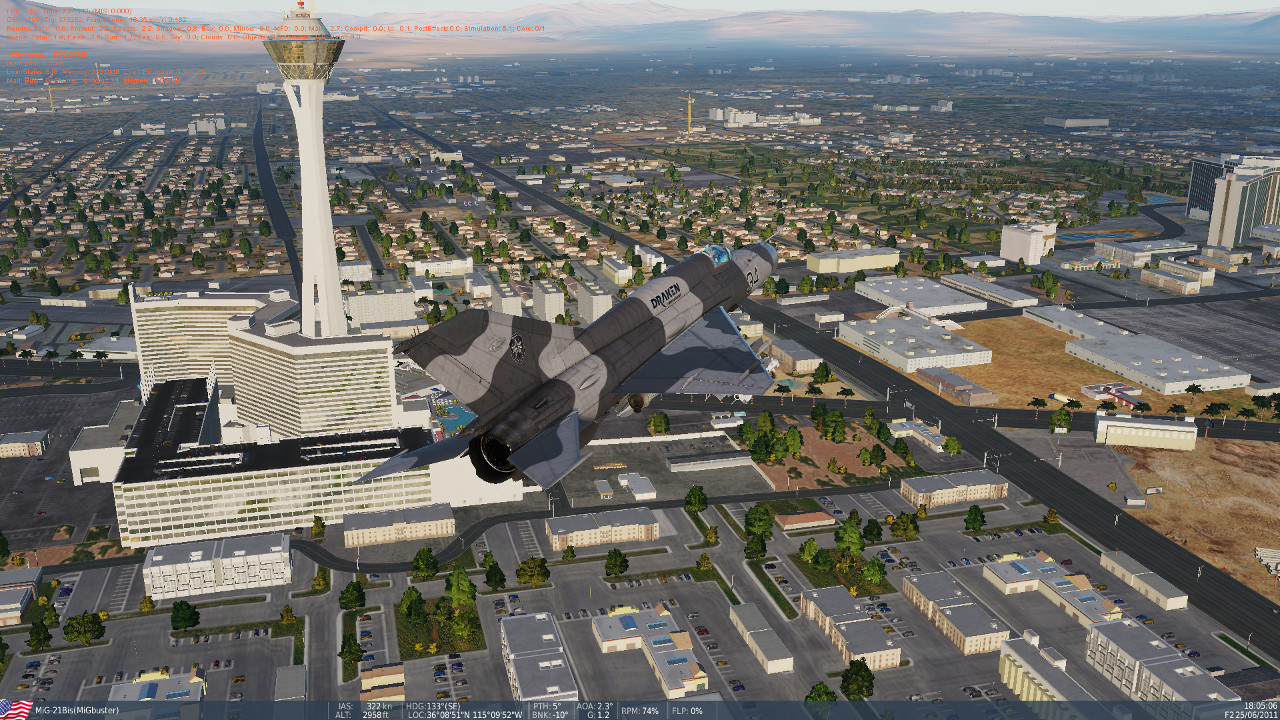
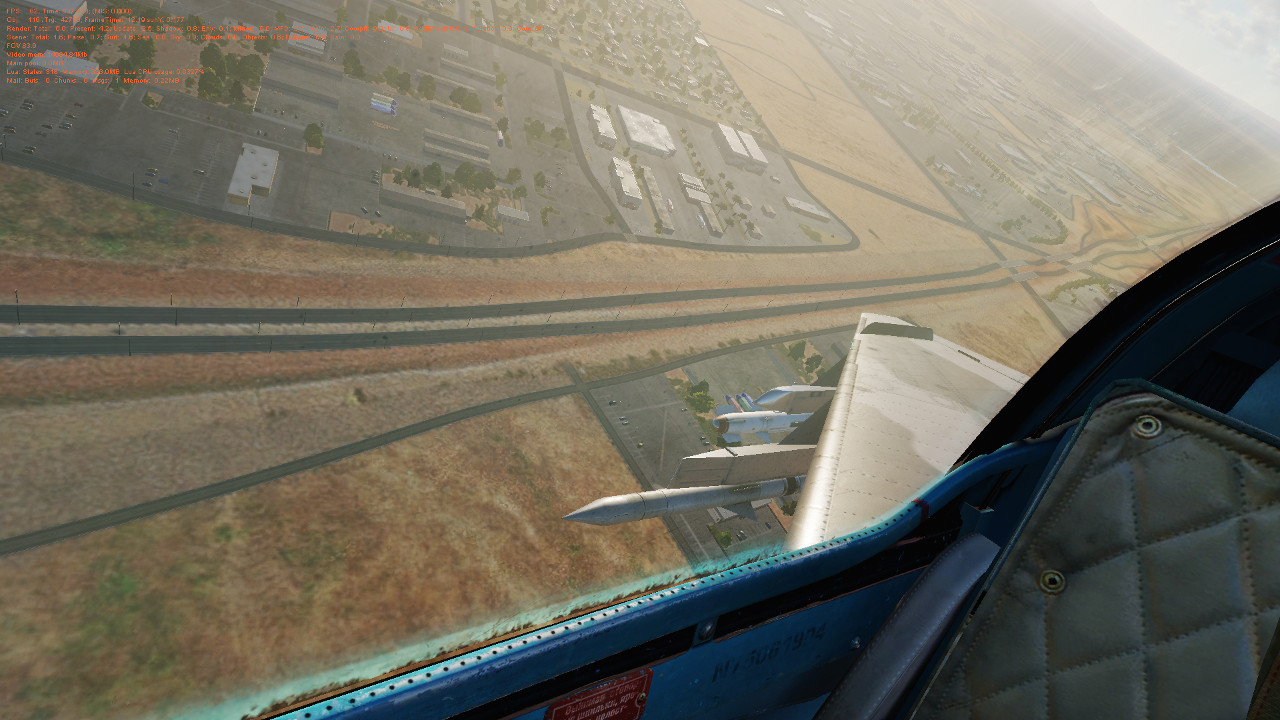
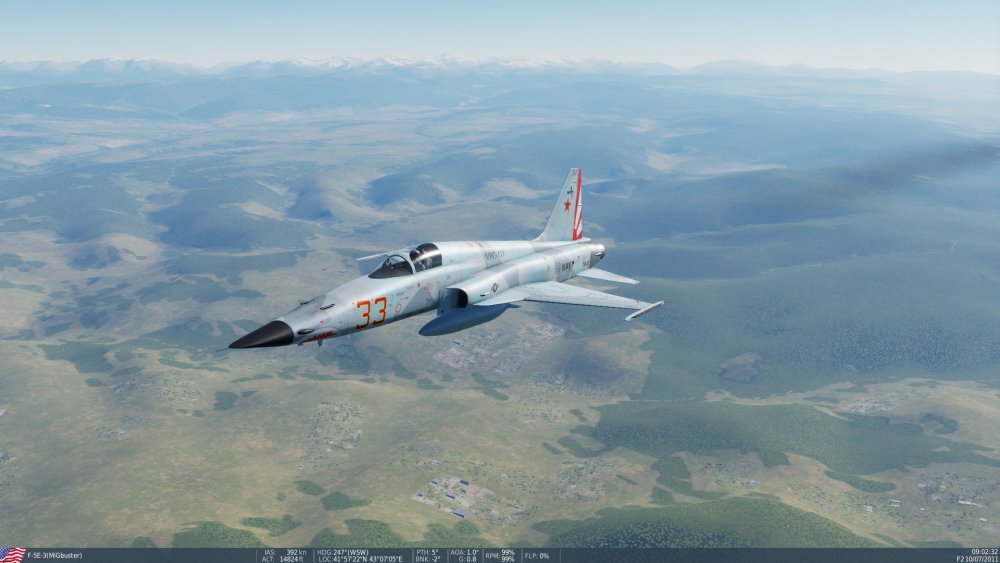
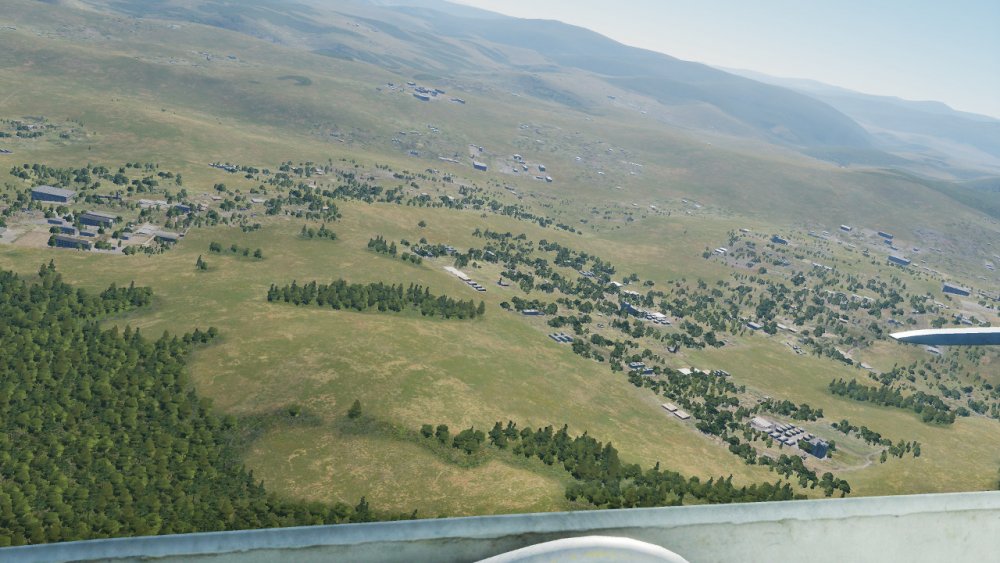
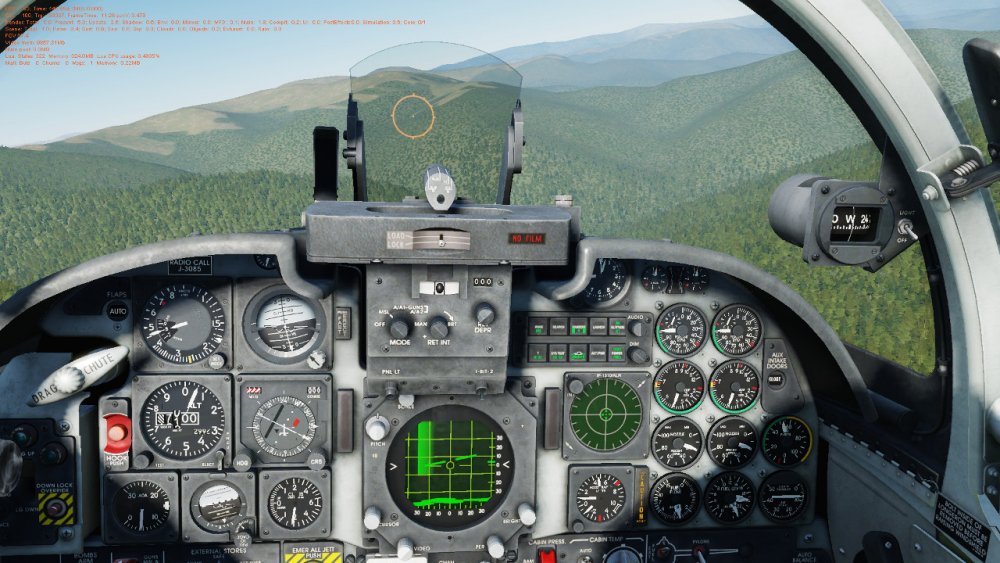
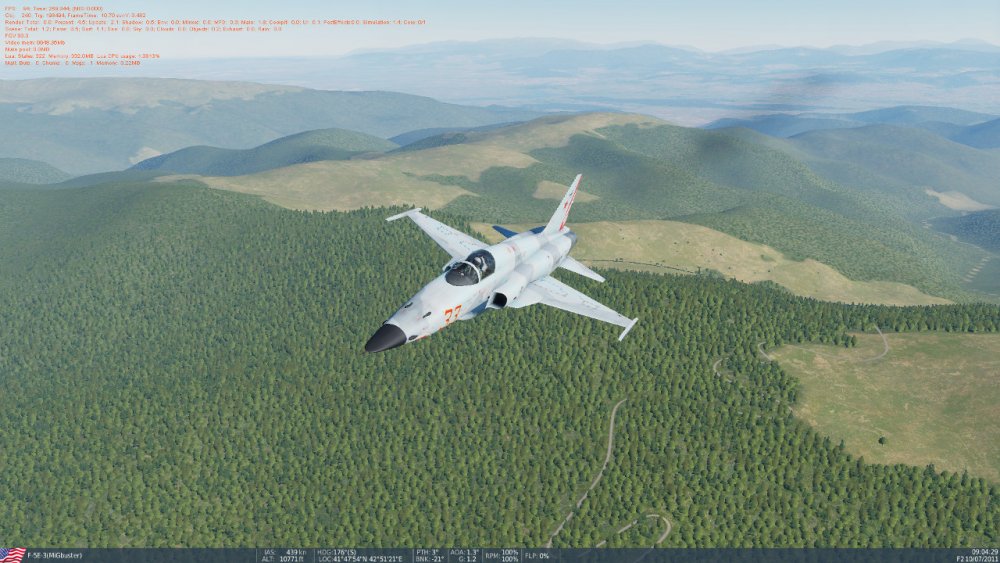
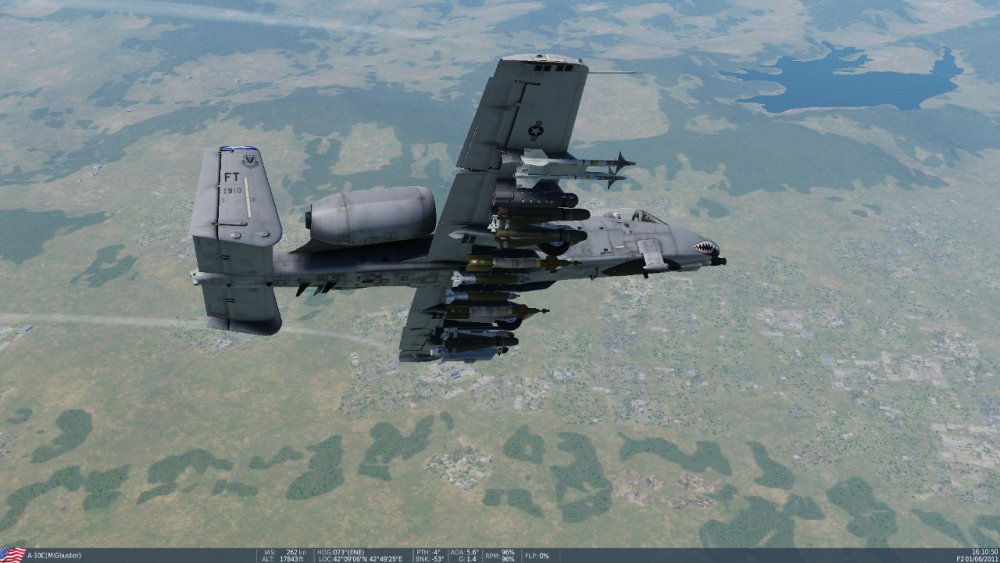
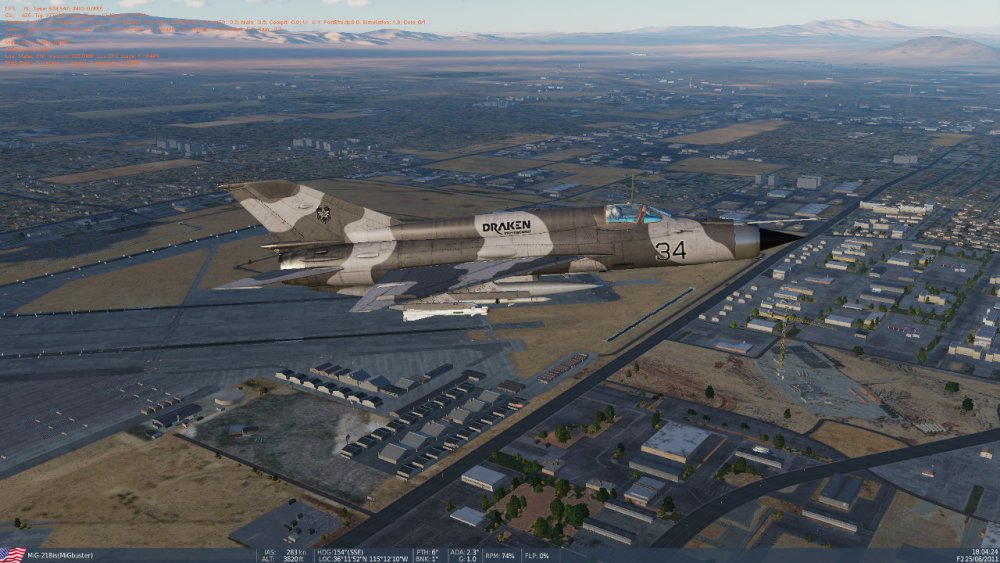
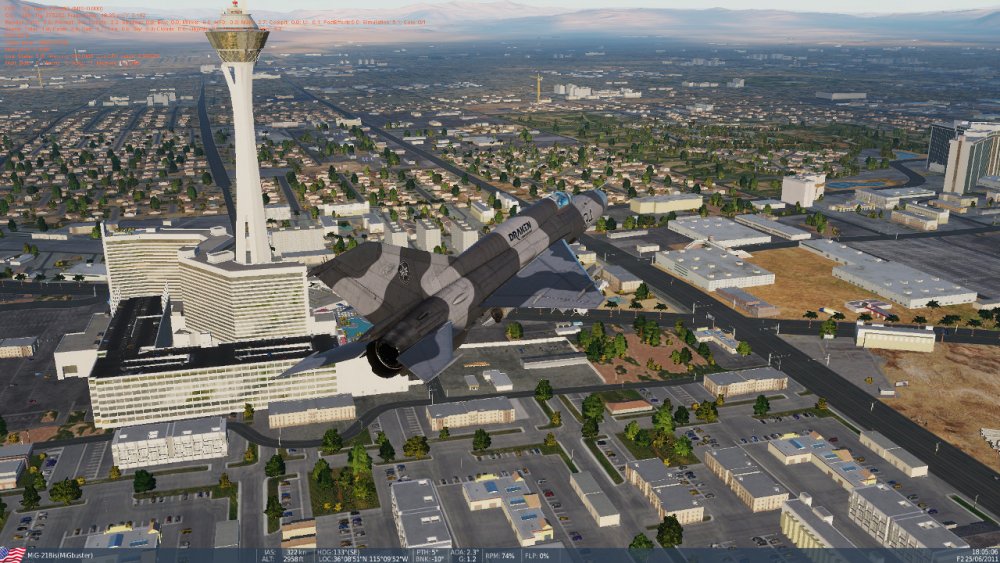
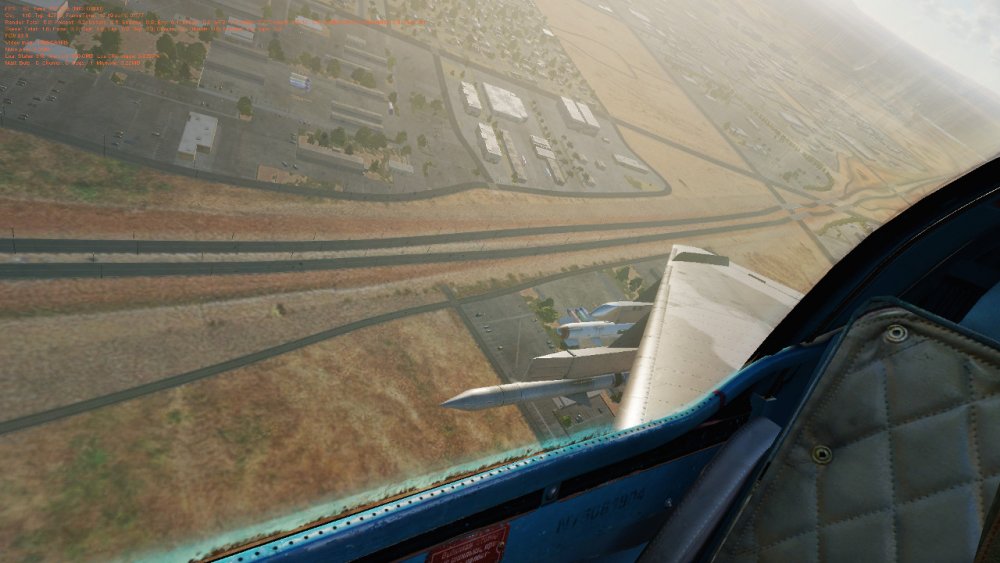
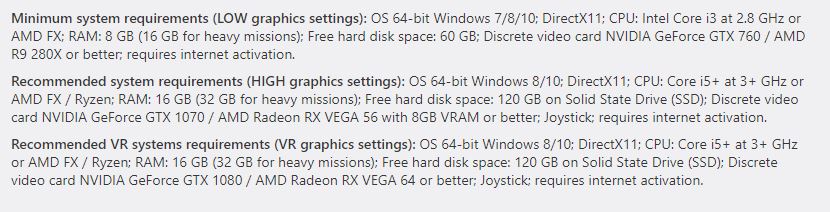
DCS World 2.5 recently came out of Beta and was released fully to the public. Primarily this means that there is again only one DCS version in development and 2.5 replaces 1.5 as the major branch for players, hopefully simplifying things a bit. The old 1.5 version will still be available for now but will not be developed further I understand. If you were not aware DCS has been going through a transition period where the old 1.5 game engine was being used alongside several Beta versions including 2.2 and 2.5 which could do a few things 1.5 could not. A-10C - yes the engines are just big hair dryers and produce power accordingly New features The main change with the DCS World 2.5 game engine was the transition to Direct X 11 (DX11) from Direct X 9 (DX9), so a major overhaul of the graphics engine that can utilise more modern techniques and hardware. F-5E flies through the valley of the trees R.I.P. Graphics Card Unfortunately, it appears my graphics card is at the low end of the spectrum for this game. My trusty MSI GTX 780 which I obtained solely because I knew it ran BMS Falcon 4 at the time is sitting at max puff, and despite my best efforts to fiddle with the GFX settings is not doing much more than warming up the room after 10 mins of playtime. I do actually get around 80 to 140 fps on the rather low settings, but I am still getting stutter at low level over the building and trees so have had to turn off Antialiasing. Sadly, although the move from DX9 to DX11 will benefit the game for the future, for me at the moment on my rig it looks far worse than Strike Fighters 2 (DX10) and BMS Falcon (DX9) because I can max them out. That shouldn’t put too many off hopefully. I am like many waiting for the new NVIDIA 2080/1180 or whatever, and hoping sanity prevails and virtual currency miners stop buying up all the cards to make an extra 3 dollars a year. Revamped Caucasus - might look better with some new hardware Unified Terrain Maps With the v2.5 release I could finally install the Nevada map that I purchased in 2015 and run it alongside the revamped Caucasus map and even think about getting some Nevada campaigns. Previously Nevada only worked in the Beta versions so I was only using the old Caucasus map in 1.5 up to now. The Draken MiG-21bis pilot hoped to pick up some bargains from the shopping mall later The Sun my eyes! 3D trees Not just 3D trees but collideable 3D trees, and this along with the 3D buildings is where a lot of the extra system resource is required. This will certainly make things more interesting for Chopper pilots! Some may remember as clouds and 2D trees were introduced to Strike Fighters through patches and mods that the system requirements to run them also increased exponentially. Some asked TK back them to optimise the game engine – and with SF2 there was a big revamp in the engine, but still required a lot more power to run it. Today I think I run it on max settings through brute force computing power as opposed to code optimisation. Trees - thousands of em! Las Vegas is vast in size and polycount
- 5 replies
-
- 3
-
-
-
- 2.5
- brief look
- (and 4 more)
-
Pre-Purchase Persian Gulf Map for DCS World! Pre-Purchase the Persian Gulf Map now for $39.99 and save 20%! The price will increase to $49.99 at the end of May 2018. The Persian Gulf Map for DCS World focuses on the Strait of Hormuz, which is the strategic choke point between the oil-rich Persian Gulf and the rest of the world. Flanked by Iran to the North and western-supported UAE and Oman to the south, this has been one of the world’s most dangerous flash points for decades. It was the location of Operation Praying Mantis in 1988 in which the US Navy sank several Iranian naval vessels. The region also includes the vast Arabian Sea that is well-suited for combat aircraft carrier operations, and it will be an amazing area of operations for the upcoming Hornet and Tomcat. Be it from land bases in Iran, UAE and Oman, or from the deck of an aircraft carrier, the Persian Gulf Map offers a wide array of combat mission scenarios to prove your mettle. Key Features: 90,000 sq nm highly detailed map area that centers on the Strait of Hormuz. As part of DCS World 2.5, this map include highly detailed terrain, textures, seas, and buildings. 13 accurately created airbases in Iran, the UAE and Oman. Airbases include a variety of landing aids that can include TACAN, VASI lights, realistic approach lights, and VOR. Detailed cities such as Dubai, Abu Dhabi, and Bandar Abbas with unique buildings. "Strong Hold" islands such as Abu Musa, Siri, and the Tunb islands. Iran, the UAE and Oman will be added to the list of DCS World nations. Unique trees, bushes, grass and other vegetation using speedtree technology. Varied terrain from towering mountains and valleys to desert plains. New Iranian liveries Sincerely, The Eagle Dynamics Team
- 1 reply
-
- 1
-
-
Never in the field of Human conflict have so many hampered, limited and controlled so few as in the air campaign in North Vietnam. (Churchill + HW Baldwin) Note - These articles are a compacted summary of a rather large topic and cannot include every detail. The Muppet Show that was Lyndon B Johnson, Robert McNamara, and friends demonstrating how they didn’t have a clue when running Rolling Thunder from the White House was certainly almost criminal if not treasonous. However, the lack of understanding didn’t stop there because the SAC dominated US Air Force was also trying to run things from afar leading to some very strange policy decisions for those in the field. Air to Air Training in Vietnam To fight and use guns A-A you need to be trained in the first place, if you wish to become experienced that is. If you remember the pilot comments from Part 1 you may have noticed the ones from the USAF seemed to include comments regarding poor training and back seat drivers……. USAF training Not wanting to fight a long war with the same group of pilots the USAF set up a policy that would rotate the available pilots. USAF policy was thus to fly a tour which was 1 year in South Vietnam, or 100 missions over North Vietnam. Unfortunately, the war went on longer than expected and basically, the USAF had problems getting enough pilots to fill the roles. One great way [or not] around this was to lower standards and send through pilots that may have been washed out pre-war. Part of policy was to produce “universal pilots” that could in theory fly any aircraft, so yes transport pilots who perhaps never had the aptitude to fly fighters now transitioning to fighters and being sent to Vietnam. The Replacement Training Units (RTUs) produced pilots poorly trained in A-A because of the USAFs corporate beliefs that ACM among inexperienced pilots would lead to accidents. USAF culture at the time was obsessed with flying safety. [Dying in combat due to lack of basic training was not on the Health & Safety spreadsheet perhaps!] Another problem was the time it took to train A-A didn’t quite fit in with the time they wanted to spend training a pilot before sending them into combat (fixed at 6 months at one point). By 1967, 200 pilots a month were entering training, however the quality had deteriorated to a point where they were having problems completing the landing/take off part let alone the rest! To add to the mess the USAF had too many Navigators and not enough Pilots. So, what did they do? That’s right they started sticking 2 pilots in each F-4 as policy. The ‘genius’ idea being that the pilot in the back would learn the systems then move to the front seat. In reality it seems the pilot in the back was a waste of a pilot that was not trained properly or interested in learning the radar systems. This and other factors lead to the two-man crew being anything but an effective team in combat!! F-4s and F-105s around a KC-135 (USAF) US Navy Training Unlike the USAF the USN couldn’t lower the bar /standards to get more pilots because they had to be able to land on a carrier, and it was decided early whether they were fighter or heavy. Because of this USN pilot tours were typically longer than USAF ones (over 100 missions up North) and pilots would fly 2 combat cruises every 14 months by policy from 1967 to ensure there was some rest period. Unlike the USAF, the Navy used highly trained, and dedicated RIOs (Radar Intercept Officers) in the back seat, that funnily enough worked a lot better. F-4Bs from VF-111 Sundowners (US Navy) How Rolling Thunder changed air to air training (or not) USAF Decided the poor performance during Rolling Thunder was more related to technical issues, and actually reduced air-to-air training after 1968 if you could believe something so ridiculous [the 2 pilot F-4 policy was at least rescinded!]. Although it was recognised by most it needed to change urgently, the internal politics and policies meant that was not happening. Real change only happened after 1972 with the change in high level staff and attitudes leading to the creation of programs like Red Flag. US Navy After the dismal F-4 air-to-air results the USN decided its F-4 pilots had not been adequately trained properly. Being ‘fleet defense’, training was based on using missiles and they had even abolished the Fleet Air Gunnery Unit in that time. Thus, air-to-air combat skills had deteriorated. [note: this didn’t apply to the well-trained F-8 crews of course that had far better results] This lead in 1969 to the creation of the Navy Fighter Weapons School (Top Gun) to get the Navy F-4 crews back to speed. The Navy also improved the technical side - including better over land detection with the ALQ-91 ( Similar to ‘Combat Tree’), and had significantly better AIM-9 versions such as the D/G/H. F-4J from VF-114 (US Navy) How did the different attitudes to training work out for the USAF? During Linebacker 1 & 2 the US Navy kill ratio against MiGs was 6-1 and the USAFs was 2-1 however the kill ratios don’t include all the factors e.g. USAF F-4D/Es had Combat Tree, flew different Route Packs etc. So, to illustrate how inept USAF training really was at the end of US involvement in the war. In August / Sept 1972 a group of USN F-8 pilots spent a few weeks at Udorn RTAFB flying A-A training (or DACT) against USAF F-4 crews of the premier USAF MiG killing wing. The well-trained F-8 pilots [who had been used to dueling with USN F-4 Top Gun pilots] embarrassed the USAF F-4 crews, and were appalled at the tactics, training and lack of skill from a supposed A-A unit. An F-8 pilot said,” The contest between the F-4 and F-8s was so uneven at first we were ashamed by the disparity. The sight that remains in my mind is a chilling one for any number of MiG pilots must have identical views. The pitiful sight of four super fighters [USAF F-4s] in front of you all tucked in finger four, pulling a level turn. An atoll fired anywhere in parameters would be the proverbial mosquito in a nudist colony and wouldn’t know where to begin.” (Clashes by ex USAF F-4 veteran Michel III) The USN F-8 pilots felt the USAF crews needed basic instruction, not just training missions! Also consider that some of the USAF pilots were instructors or graduates of the USAF Fighter Weapons School, that was still preaching obsolete useless tactics and was resistant to change. This only confirmed what the USAF pilots already knew (they were so far behind). The USN report when sent to PACAF was dismissed by some as inter-service bias it seems. This next account sums things up perfectly: In 1974 the Air Force reassigned me from an overseas assignment in England to Nellis. When I arrived, I had over 1,200 hours in the F–4, including 365 combat hours. I had never flown a dissimilar air combat sortie (DACT). I had never carried a training AIM–9 and had not even seen one since my combat tour four years earlier. I had never used a gun camera. The only tactical formation I had flown was Fluid Four/Fighting Wing. I had never intercepted a target at low altitude. In other words, I was a typical F–4 pilot with a combat tour. (CR Anderegg - who went on to fly the vastly superior F-15 along with some actual A-A training!) F-4Bs of VF-114 (US Navy) The not so mysterious case of the VPAF Aces The first batch of VPAF (Vietnamese Peoples Air Force) pilots were sent in 1956 to China and were being trained on MiG-17s by 1960 in both China but primarily in the Soviet Union. The MiG-17 had no missiles initially and thus air combat employing guns had to be taught, so training included things like dogfighting. Drop outs were high with only around 20% of the pilots passing by the mid-1960s (the rest becoming ground technicians). This was lower than other Soviet ally nation pilots who typically had a better baseline education and had often already flown aircraft. [some of the Vietnamese had literally never seen an aircraft before] Over North Vietnam the MiGs became part of an Integrated Air Defence system (IADS) and had to fit around the AAA and later SAM defenses flying in restricted areas and altitudes and often tied to the GCI (Ground Control Intercept) stations. The VPAF were also consistently changing tactics that the pilots had to adapt to. However, the MiG pilots mostly had only one primary role and that was air-to- air combat. Being outnumbered but often having better situational awareness they often fought ambush “hit and run” tactics in small numbers. [this was smart!] What we can deduce is: They didn’t fly a 100-mission tour then go home, they had to fight until death. Fighting for their home land probably meant motivation and dedication were not an issue. [Unlike the US, the VPAF were fighting a ‘total war’] If they were shot down and survived then they were still on home turf. With the experience and training some of these pilots were no doubt very skilled flyers. So, for example out of 18 VPAF MiG-21 pilots given official Ace status, 16 of them were shot down and some of them were shot down 3 times! MiG-21MF Fishbed with AA-1s and AA-2s (Wikipedia) Let’s do the myth and mystery of Colonel Tomb Prior to better information the ‘13 kill ace, Colonel Tomb’ was apparently shot down and killed on 10 May 1972 in a famous (and very close) 1 v 1 MiG-17F v F-4J dogfight against US Navy Top Gun Graduates Randy Cunningham/Willie Driscoll. Willie Driscoll in a 2018 podcast describes how capable he thought the pilot was. [but still also thinks he had 13 kills to his name]. Showtime 100 downs a MiG-17 (dogfighthistory.be) In 2007 A document called On Watch was declassified and released by Freedom of Information by the National Security Agency (NSA). In the section “Comrade Toon Flies the unfriendly skies”, it seems that NSA SIGINT analysts were able to unlock the MiG pilots callsign system and had identified an ace who flew out of Phuc Yen called “Toon”. Head of the Seventh Air Force General Momyer wanted him out of the skies and it is said became obsessed with getting rid of him. It states: “The SIGINT detachment alerted Momyer’s HQ whenever Toon was scheduled to fly a mission, and Momyer would send his planes aloft to hunt down the Red Baron of North Vietnam.” It seems that Toon was quite adept at avoiding these aircraft and one dark night [no date] after taking off from Vinh (South NVN) in a MiG-21 and avoiding the US fighters he intercepted a flight of B-52s and fired 2 missiles. One failed but the other lodged into the wing of a B-52 and didn’t detonate. Despite this the B-52s, following standard procedure ditched their ordnance and so he had a mission kill anyway. It states they were never able to catch him (or perhaps it meant "them" ?). Trying to match this up...........In 1971 MiG-21 Ace Dinh Ton appears to be the only Ace [6 claims / 4 match up] involved in intercepting B-52s from South NVN. On the 4th October he took off from Dong Hoi (near Vinh), but was unable to fire on the B-52s because of the Escorting F-4s. On the 20th November Hoang Bieu took off from Vinh [MiG-21] as a diversion and another pilot (Vu Dinh Rang) was able to fire two R-3S Atolls [from his MiG-21] at a B-52 and one of the missiles hit and damaged the bomber. This was the first successful intercept of a B-52 according to the VPAF [ USAFs "War Above The Clouds" does mention a Missile fired from a MiG at B-52s on the 20th November during Commando Hunt VII - causing the mission to be called off ] So, although it looks like there really was an ace called Toon I do wonder if they were able to see everything and not still tracking different pilots. If [big if] the real Toon was Dinh Ton, then he was eventually shot down on 11 Sept 1972 in a MiG-21U by a VMFA-333 F-4J (Lasseter/Cummings) Both Ton and the backseat IP ejected safely. No VPAF pilot claimed more than 9 kills, the 13 number most likely came from VPAF MiGs photographed and sent to the media at the time including May 1968 a photo of MiG-21PFL (4326) with 13 red stars (kills) on its nose and MiG-17 (3020). In reality the 13 kills were the sum of those claimed by several different flyers of that Jet. MiG-17 Fresco (warbirdsresourcegroup.org) So, who did Driscoll / Cunningham shoot down then on the 10th May? Four MiG-17s were scrambled to intercept the raid on the Hai Duong Railway yard that Showtime 100 (Cunningham/Driscoll) was covering. Pilots Do Hang, Tran Van Kiem, Nguyen Van Tho were 923rd regiment MiG-17 pilots hit by missiles on that date but nothing conclusive describing a prolonged 1v1 fight. (Hang and Kiem were both killed) There were J-6s (Chinese MiG-19s) also in combat that day (925th regiment) but over different areas. Only Le Duc Oanh was shot down on the 10th being hit by a missile and ejected (later died of injuries) but not described as a prolonged 1v1 dogfight. Le Van Tuong was the other fatality when he overran the runway and turned over. No MiG-19/J-6s claims were made by the US on the 10th despite one being shot down - they were probably (understandably) misidentified as MiG-17s it seems by US pilots in the heat of combat. Shenyang J-6 / MiG-19S Farmer (vnmilitaria.com) When it comes to A-A guns over Vietnam let us not forget The F-8 Crusader Unlike the USN F-4 pilots the F-8 community was well trained in traditional BFM/ACM from the start and could make use of the 4 cannon in its nose providing they didn’t fire them under high G loading that caused them to Jam! (Leading one pilot to describe the guns as very unreliable under High G loading). This training served them well and by the end of Rolling Thunder the stats would suggest they did well compared to the F-4 units, which of course was replacing the F-8s at that time. Out of the 19 A-A kill claims, 3 were with the gun. F-8E (Seaforces.com) The F-105 Thunderchief In somewhat of a paradox the USAF F-105 had the most encounters over Vietnam with MiGs and racked up about 26 MiG-17 kills (out of 140 gun engagements) with its M61A1 Gatling Gun. Some F-105 pilots had complained of poor A-A training in Red Baron. Jack Broughton described a different community with many old heads from Korea who knew their A-A anyway (considered themselves fighter jocks) and trainees were taught when they came to theatre. Some probable reasons for the gun kills include: The F-105 often didn’t carry AIM-9Bs due to available pylons or sometimes lack of availability. The AIM-9B was inferior to the AIM-9D used by the F-8. The M61A1 was far more reliable than the F-8s (MK-12) guns, only failing in about 12 percent of firing passes Being ‘All Aspect’ the gun was easier to employ over the restrictive AIM-9B envelope. F-105D - king of the Brrrt (Global Aviation Resource) Guns on modern fighters (the F-35A) The last US A-A (manned) gun kill was in Feb 1991 when an A-10A shot down an Iraqi Mi-8 Helicopter. There is also a 1992 video of a FAV F-16A gunning down an OV-10E in a Venezuelan coup. But who cares really because guns have been used in all the low-key wars since then. In fact, jets including the F-14/16/15/18/Harrier have all used guns to strafe enemy personnel and equipment on a very regular basis. So, as we see just in 1963 with the F-4E, the requirement for a gun for Air to Ground is just as strong now as it was then. Let’s look at why the USAF may have put an internal gun on the F-35A, according to a 2007 paper by Colonel Charles Moore who was so adamant the F-35A needed a gun that he writes: Regardless of the opinions of the USMC, USN or (F-35) Joint Program Office, the USAF must not become dismayed or discouraged by the difficulties in achieving the capabilities it has determined it required. Within the air to air and air to ground environments, the gun has proven to be a reliable and irreplaceable weapon. Even if Lockheed [Martin] declares it will not be able to fully meet the requirements and specifications the USAF desires, disallowing requirement relief sends a strong message that the capabilities offered by the gun are not negotiable. Important these are “Arguments For” only (there are probably very valid arguments against) and quite a few things can change in 11 years! His arguments include: On A-A use A-A missiles do not have a 100% PK, especially against advanced adversaries. Its limited missile supply could be exhausted quickly if faced by a significant number of low tech adversaries. The F-35 may not be able to egress from all adversaries based on its slower speeds and may need to stay and fight. When defending other assets, it may need to stand and fight regardless. Gun employment is less reliant on on-board systems working such as radar. All the modern tech in the world cannot protect an aircraft from the oldest weapon in A-A combat [when in range]. The Gun is simple, efficient, effective and always available. On Gun Pods It is seldom known when you will need a gun system so carrying it only when needed is not practical. Risk of RCS (Radar Cross Section) increase. Risk of having performance issues like the previous gun pods e.g. GAU 5 (Pave Claw) or SUU16/23 Additional logistics required. On A-G use Despite being poor in power compared to PGMs and IAMs, the gun will remain after those have been expended and can be used if called upon. This happened many time in Desert Storm, Enduring Freedom and Iraqi Freedom. Can be used where PGM/IAMs are too powerful and can be prohibited or ill-advised such as urban situations. Can be used on moving targets. Gun considered the only true multi role weapon to be carried. Can be used to supress (rather than kill) and provide just a warning. Sometimes offers a quicker reaction time because of less setup over other ordnance. Less dependent on targeting sensors so can be used in event of failures with those. F-35A Lightning II - gun is port side (USAF) Sources Clashes (M.L.Michel III, 1997) Naval Institute Press Thud Ridge (J.M.Broughton, 1969) Crecy Publishing F-105 Thunderchief MiG Killers of the Vietnam War (P.Davies, 2014) Osprey Publishing F-8 Crusader Units of the Vietnam War (P. Mersky, 1998) Osprey Publishing MiG-21 Units of the Vietnam War (I.Toperczer, 2001) Osprey Publishing MiG-17 and MiG-19 Units of the Vietnam War (I.Toperczer, 2001) Osprey Publishing MiG-21 Aces of the Vietnam War (I.Toperczer, 2017) Osprey Publishing MiG-17 and MiG-19 Aces of the Vietnam War (I.Toperczer, 2017) Osprey Publishing USAF McDonnell Douglas F-4 Phantom II (P.Davies, 2013) Osprey Publishing USN McDonnell Douglas F-4 Phantom II (P.Davies, 2016) Osprey Publishing US Navy F-4 Phantom II MiG Killers 1972 -73 (B.Elward & P.Davies, 2002) Osprey Publishing US Navy F-4 Phantom II MiG Killers 1965 -70 (B.Elward & P.Davies, 2001) Osprey Publishing USAF F-4 Phantom II MiG Killers 1972 -73 (P.Davies, 2005) Osprey Publishing USAF F-4 Phantom II MiG Killers 1965 -68 (P.Davies, 2004) Osprey Publishing The Revolt of the Majors: How the Air Force changed after Vietnam (M.L.Michell III) RED BARON Project Volume I - III (1969) Weapon Systems Evaluation Group (WSEG) The Need for a Permanent Gun System on the F-35 JSF (Colonel C.Moore, 2007) Air Force Fellows Air University, Maxwell AF Base SIERRA HOTEL (C. R.ANDEREGG, 2001) Air Force History and Museums Program All the Missiles Work (Fino, SA, 2015) Air Force Research Institute Research Study of radar reliability and its impact on life-cycle costs for the APQ-113. 114, -120 and -144 radars (1973). Technical report by General Electric under contract to the USAF. McDonnell F-4E Phantom II (Baugher J, 2002) online ON WATCH Profiles from the National Security Agencys past 40 years (1984) National Security Agency War from above the clouds (Head WP, 2002) Air University Press Maxwell AFB Information on F-4E radar range from Forum entry by ex F-4 flyer Walt BJ (Bjorneby, Walter) Willie Driscoll interview from Podcast Episode 009 “Vietnam Ace” (V.Aiello, 2018 ) http://fighterpilotpodcast.com/ Title photo credit USAF


- 4 replies
-
- 8
-
-
-
- colonel tomb
- f-105
- (and 11 more)