Jump to content

First Eagles - WWI and Early Years - Add-On Aircraft

Sub Category  
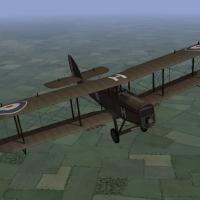
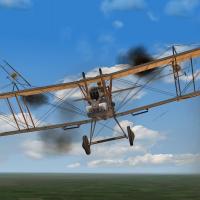
    1. The Rumpler C.I was a general purpose two-seat plane first produced in 1915. It was used on all fronts and served throughout the war. My model is armed with a Parabellum machine gun on a Schneider Ring in the rear cockpit along with a synchronized Spandau mounted on the left side the engine.
       
      I have included two loadouts, one for eight 11 kilo bombs carried under the wings, and another for two 50 kilo bombs carried under the fuselage.
       
      I have also included three skinning options - A plain linen and a light blue paint representing early models, and a green/mauve camouflage for later in the war. I have included my templates for those who want to make additional skins.
       
      This plane uses the national markings that come with First Eagles, so you can change nationalities to fly for Austria, Bulgaria or the Turks.
       
      I have included decals for serial numbers and, on the linen and light blue skins, for flight letters. You can choose the letter in the loadout screen. The numbers will be applied randomly.
       
      Historical Notes:
      The serial numbers are fictitious, but in the correct range for the Rumpler C.I.
      I don't know if the flight letters are realistic. The plane looked too naked, and I saw one photo of a Rumpler with a letter "J" on the side, so I allowed my imagination to take over.
       
      Credits:
      My thanks again to Ojcar for making the excellent FM file for this plane.
      Also, my thanks to Nix for making the realistic engine sound file for the Mercedes 6 cylinder engine. (This is the same sound file used with the Albatros C.III so you may already have it.)
       
      Installation instructions:
      For FE1: Unzip the file and move the folder named "RumplerC1" into the FirstEagles/Objects/Airplanes folder. You also need to move the sound file "mercedes160m2.wav" into the FirstEagles/Sounds folder.
       
      For FE2: Unzip the file and move the folder named "RumplerC1" into the FirstEagles/Objects/Airplanes folder. Then in the FirstEagles/Objects/Decals folder, create a new folder named "RumplerC1". Move the folder named "D" from your Airplanes/RumplerC1 folder into the Decals/RumplerC1 folder you just made. You also need to move the sound file "mercedes160m2.wav" into the FirstEagles/Sounds folder.
      749 5
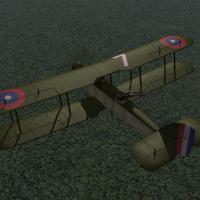
    2. The Caudron G.4 was a twin engine French bomber. It was introduced late in 1915, it used wing warping for banking and had four rudders. The plane was widely used, and saw service on most of the fronts. After 1916, it was used mostly for night bombing and reconnaissance.
       
      I have included four skins, a French linen, an Italian linen, a Russian grey, and a British brown. I have included some personal markings, but the serial number is so hard to see on this plane, that I only made one. My skinning templates are included in the download.
       
      There are three bomb loadouts, including one internal, and two external bomb loads. I had to make a special pilot, because the stock FE pilot would not fit in the Caudron cockpit. The new pilot is included in the download.
       
      Historical Note
      All of the examples I found had linen skins, except for some Russian grey or light blue planes. I have included a British brown skin because it seemed likely that other colors than plane linen were used, although I found no evidence of it.
       
      Credits
      Thanks to Ojcar for making the data file for the Caudron G.4.
      Thanks also to Whiteknight06604 who originally suggested this plane more than a year ago, and provided some resources at that time. Thanks also to Jeanba, who helped research skins for the Caudron G.4.
       

      Installation Instructions
      For FE1 - Unzip the file. Open the folder named "PutInAircraftFolder." Move the folder named "CaudronG4" and the two pilot files into your FirstEagles/Objects/Aircraft folder. The files named "CaudronPilot.lod" and "CaudronPilot.bmp" should be in the Aircraft folder, but not in any other folder. Open the "PutInSoundsFolder" and move the file named "LeRhone9c80hp1m4.wav" into your FirstEagles/Sounds folder.
       
      For FE2 - Unzip the file. Open the folder named "PutInAircraftFolder." Move the folder named "CaudronG4" into your FirstEagles/Objects/Aircraft folder. Move the files named "CaudronPilot.lod" and "CaudronPilot.bmp" into the FirstEagles/Objects/Pilots folder. Then in the FirstEagles/Objects/Decals folder, create a new folder named "CaudronG4". Move the folder named "D" from the Aircraft/CaudronG4 folder into the Decals/CaudronG4 folder you just made. Open the "PutInSoundsFolder" and move the file named "LeRhone9c80hp1m4.wav" into your FirstEagles/Sounds folder.
      389 3
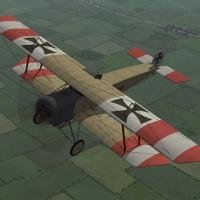
    3. The Lebed 12 was a Russian general purpose plane introduced in early 1917. It saw service through the remainder of the war and was used extensively by both sides in the civil wars. It was the most highly produced Russian designed aircraft of World War I and equipped four divisions as well as several training schools. The Lebed 12 was armed with a single Colt-Browning machine gun and could carry a small bomb load.
       
      My version has two skins. I have included my skinning templates, decals for the Lebed version insignia for the tail and fuselage, and Peter01's data for the Colt-Browning machine gun. Installation instructions for the gun data are included in a separate text file, included with the download.
       
      Credits:
      My thanks to Ojcar for making the FM file for this plane, and for making adjustments for the machine gun and loadouts.
      Thanks to Peter01 for making the improved data for the Colt-Browning machine gun.
      Thanks to Crowford for correcting how I placed the decals.
       
      Installation instructions:
      For FE1: Unzip the file and move the folder named "Lebed12" into the FirstEagles/Objects/Aircraft folder. To install the gun, follow the instructions in the file named "InstructionsForInstallingGuns".
       
      For FE2: Unzip the file and move the folder named "Lebed12" into the FirstEagles/Objects/Aircraft folder. Then in the FirstEagles/Objects/Decals folder, create a new folder named "Lebed12". Move the folder named "D" from the Aircraft/Lebed12 folder into the Decals/Lebed12 folder you just made. To install the gun, follow the instructions in the file named "InstructionsForInstallingGuns".
      234 1
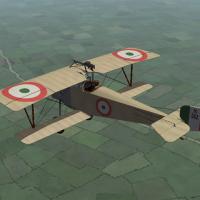
    4. The Farman F.40 was a joint design by the two Farman Brothers, Maurice and Henri, combining features of the MF.11 and HF.22. Like the other Farman designs, placing the engine in the rear gave the gunner an open field of fire. The F.40 was used for reconnaissance and as a light bomber and was widely used by most of the Entente forces. The long wingspan gave stability, but made it slow to maneuver. French squadrons began replacing it in 1916.
       
      My plane includes loadouts for a light bomb load and for Le Prieur rockets. I have included three skins, French, Belgian, and Russian. Decals and my skinning templates are included in the download.
       
      I have included ojcar's "DummyMachineGun" data, Peter01's Lewis Machine Gun data and P10ppy's Le Prieur rockets with this download.
       
      Warning
      The Farman F.40 has a wider wingspan than First Eagles expects so if you start on the runway, your wings will be touching the wings of the planes next to you. This will cause an immediate collision and you or other planes in your flight may lose their wingtips as soon as the game starts. Best to start in the air, or modify the airfield.ini in the terrain folder to space out the planes on the runway.
       
      Credits
      Thanks to Ojcar for making the data file for the Farman F.40 and for making the data for the dummy machine gun. And for helping me with the installation package for FE2.
      Thanks also to P10ppy who made the Le Prieur rockets, and to Peter01 who made the data for the Lewis Gun.
      Thanks also to Crowford who provided resources for the Farman cockpits.
       
      -----------------------------
       
      Installation Instructions
      For FE1 - Unzip the file. Move the folder named "FarmanF40" into your FirstEagles/Objects/Aircraft folder.
       
      For FE2 - Unzip the file. Move the folder named "FarmanF40" into your FirstEagles/Objects/Aircraft folder. Then in the FirstEagles/Objects/Decals folder, create a new folder named "FarmanF40". Move the folder named "D" from your Aircraft/FarmanF40 folder into the Decals/FarmanF40 folder you just made.
       
       
      You may not need to install the guns or rockets, they have been used on other planes and you may already have them. Instructions for installing the guns and rockets, if you should need them, are in a separate file included in this download.
      298 0
    5. The LVG C.II was an early German two seater. It had a ring-mounted Parabellum machine gun for the observer, later versions also had a LMG machine gun mounted on the fuselage for the pilot. It was used mostly for reconnaissance, but could also carry a small bomb load. The LVG C.II was the first plane to bomb London, in November 1915.
       
      My version has three skins (grey, blue, and linen) and two sets of decals. There are two bomb loadouts, one with four light bombs, another with a single large bomb. I have included my skinning templates with the download.
       
      Credits:
      My thanks to Ojcar for making the data.INI file for this plane and for resources to help with the shape of the fuselage.
       
      Installation instructions:
      For FE1: Unzip the file and move the folder named "LVGC2" into the FirstEagles/Objects/Aircraft folder.
       
      For FE2: Unzip the file and move the folder named "LVGC2" into the FirstEagles/Objects/Aircraft folder. Then in the FirstEagles/Objects/Decals folder, create a new folder named "LVGC2". Move the folder named "D" from the Aircraft/LVGC2 folder into the Decals/LVGC2 folder you just made.
      316 3
    6. This is the final update of the Martinsyde G.100, thanks to Stephen1918 who tweaked the files. The bomb racks now only show when the plane is carrying bombs, the prop spins, sample decals have been added for anyone who wants to make his own markings, and revised installation instructions have been added - all due to Stephen1918's efforts. Thanks, Steve.
       
      I mistakenly attached the files for the G.102 to this upload - when released by CA, it will now have the correct G.100 files.
      312 1
    7. The Martinsyde G.102 was a G.100 aircraft with a more powerful 160 hp Beardmore engine, which gave it slightly better performance. Again I could not have produced this upload without the patient help from Stephen1918, ocjar, gterl, and Wrench. Thanks, guys.
      275 1
    8. The BE12a was a single seat version of the BE2e introduced in 1917. It was intended to be an improvement over the BE12, but the wing configuration did not improve maneuverability very much and it was only produced in small numbers. Like the BE12, it carried a synchronized Vickers gun mounted on the side of the fuselage and could carry up to 230 pounds of bombs. The BE12a was used briefly on the Western Front but saw much of its service in Palestine.
       
      My BE12a has three loadouts for light, medium, amd heavy bombs. I have included a green paint (PC10) skin and a full set of number decals. My skinning templates are included in the download.
       
       
      Credits
      Thanks to Ojcar for making the data file for the BE12a, and for providing reference materials for the plane.
       
       
      Installation Instructions
      For FE1 - Unzip the file and move the folder named "RAFBE12a" into the FirstEagles/Objects/Aircraft folder.
       
      For FE2 - Unzip the file and move the folder named "RAFBE12a" into the FirstEagles/Objects/Aircraft folder. Then in the FirstEagles/Objects/Decals folder, create new folder named "RAFBE12a". Move the folder named "D" from the Aircraft/RAFBE12a folder into the Decals/RAFBE12a folder you just made.
      241 0
    9. The BE12 was a single seat version of the BE2c introduced in 1916. It had the wings of the BE2c, but had a larger, 12 cylinder (RAF4a) engine. There was a synchronized Vickers gun mounted on the side of the fuselage and it could carry up to 230 pounds of bombs. The more powerful engine made the BE12 a faster plane, but it didn't have the maneuverability required for a fighter. The BE12 was used mostly for recon and light bombing missions.
       
      My BE12 has three loadouts for light, medium, amd heavy bombs. I have included two skins, a green paint (PC10), and a clear doped linen skin. A full set of number decals and my skinning templates are included in the download.
       
       
      Credits
      Thanks to Ojcar for making the data file for the BE12, and for providing reference materials for the plane.
       
       
      Installation Instructions
      For FE1 - Unzip the file and move the folder named "RAFBE12" into the FirstEagles/Objects/Aircraft folder.
       
      For FE2 - Unzip the file and move the folder named "RAFBE12" into the FirstEagles/Objects/Aircraft folder. Then in the FirstEagles/Objects/Decals folder, create new folder named "RAFBE12". Move the folder named "D" from the Aircraft/RAFBE12 folder into the Decals/RAFBE12 folder you just made.
      254 0
    10. The AEG C.IV was a German 2 seater that was introduced in 1916 and saw service until the end of the war. It served on the Western, Eastern, and Palestine fronts and was operated by Bulgaria and Turkey as well as by Germany. It was primarily a reconnaissance plane, but was also used as a bomber escort, although not very successfully. It had a fixed Spandau machine gun for the pilot, a Parabellum on a ring mount for the observer, and could carry a small bomb load.
       
      I have included two skins, a green and lilac camo, and a green and brown camo. I have also included a full set of number decals. My skinning templates are included in the download.
       
      There are two bomb loadouts, one internal, and one external mounted under the wings. It is doubtful that the AEG C.IV carried external bombs, but I liked the look of it. For historical accuracy, you probably shouldn't use the External Bombs loadout.
       
       
      Credits
      Thanks to Ojcar for making the data file for the AEG C.IV and for providing valuable information, especially for the cockpit details.
      Thanks also to Nix, who made the sound file for the Mercedes 160hp engine.
       
      Thanks to Ojcar (again) for pointing out the problem with the decals.
       
       
      Installation Instructions
      For FE1 - Unzip the file and move the folder named "AEGC4" into your FirstEagles/Objects/Aircraft folder. You also need to move the sound file "mercedes160m2.wav" into the FirstEagles/Sounds folder.
       
      For FE2 - Unzip the file and move the folder named "AEGC4" into the FirstEagles/Objects/Aircraft folder. Then in the FirstEagles/Objects/Decals folder, create new folder named "AEGC4". Move the folder named "D" from the Aircraft/AEGC4 folder into the Decals/AEGC4 folder you just made. You also need to move the sound file "mercedes160m2.wav" into the FirstEagles/Sounds folder.
      348 4
    11. The Nieuport 12 was built under license by Beardmore & Co. Ltd. for both the RNAS and the RFC. The Beardmore version differed from the French version in many small ways; the most obvious differences were - a vertical stabilizer at the tail, a slightly longer lower wing, and a different engine cowling. My version has a Lewis Gun mounted on a Scarff Ring for the observer and a Vickers Gun mounted on the fuselage for the pilot.
       
      The British built Nieuports had the insignia placed differently from the French versions, my decal ini's are British style. I have included two skins, a brown and linen skin for the RFC, and a dark green skin for the RNAS. There is a set of appropriate serial number decals for each. My skinning templates are included with the download. I have also made British faces for the cockpit instruments.
       
      Because of the many minor differences, the skins, cockpit, and data file are not interchangeable with my original Nieuport 12.
       
       
      Credits:
      My thanks to Ojcar for making the data file for the original N12, I have made slight changes for the Beardmore version.
       
       
      Installation instructions:
      For FE1: Unzip the file and move the folder named "Nieuport12Beardmore" into the FirstEagles/Objects/Aircraft folder.
       
      For FE2: Unzip the file and move the folder named "Nieuport12Beardmore" into the FirstEagles/Objects/Aircraft folder. Then in the FirstEagles/Objects/Decals folder, create a new folder named "Nieuport12Beardmore". Move the folder named "D" from the Airplanes/Nieuport12Beardmore folder into the Decals/Nieuport12Beardmore folder you just made.
      255 1
    12. The Moska MB bis was a Russian single wing fighter, first deployed in 1916 and produced throughout the rest of World War I. It did not have a synchronized gun and the stock plane had the gun mounted at an angle to fire over the prop. I have created a "field modded" version with a horizontal gun and with deflector plates on the prop. Both versions use the same skins.
       
      I have included my skinning templates with the download. The planes uses the stock decals, so there is no "D" folder with this plane.
       
      One of the distinctive features of the Moska MB was that its wings could be folded for shipping and transport. I have included a static model, with folded wings, that can be used by modders in their terrains. The static version has a destroyed version and includes the Types.ini data.
       
       
      Credits
      Thanks to Ojcar for making the data file for the Moska MB bis.
      Thanks also to Nix for creating the sound file for the Gnome 80hp engine.
       
       
      Installation Instructions
      For FE1 - Unzip the file and move the folders named "MoskaMBbis" and "MoskaMBbisMod"into the FirstEagles/Objects/Aircraft folder. You also need to move the sound file "gnome80m4.wav" into the FirstEagles/Sounds folder.
       
      For FE2 - Unzip the file and move the folders named "MoskaMBbis" and "MoskaMBbisMod"into the FirstEagles/Objects/Aircraft folder. You also need to move the sound file "gnome80m4.wav" into the FirstEagles/Sounds folder.
      206 1
    13. AI FLYABLE RIGID AIRSHIPS:
      Well, a quick and dirty work to make AI flyable two of the excellent Stephen1918 airships.
      -The real L32 Zeppelin was shot down in 1916 over Horns Reef by the cruisers Galetea and Phaeton while trying to raid England. Before this it made 77 recon missions over North Sea.
      The model we have is intended to have a generic German rigid Airship to use in campaign mode (you should create units with one plane and only one pilot).
      -The real R23 class was never used in combat, but two of the improved R23X were built in 1918, and in fact one of them, the R29 attacked the UB-115 U-boat (it also was attacked by some ships. The submarine was sunk, and this was the only recoorded success of a British rigid airship.
      Both airships are hard to destroy with machine guns, but the AI fighters will try to pass through the Airship sometimes (a game engine limit). Bad idea! The fighter will be destroyed (and the pilot probably will had the VC or Legion d'honneur) and the Airship badly damaged.
      To install them you should put the AirshipR23 and ZeppelinL32 folders into your Aircraft folder.
      Enjoy it!
      Both models and skins by Stephen1918
      All FMs, Loadouts and .ini stuff by Ojcar
      Special thanks to Peter01 and Hitchingbroke!
      397 1
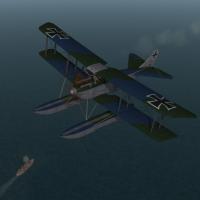
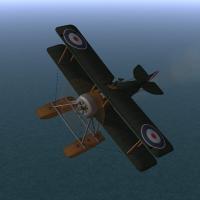
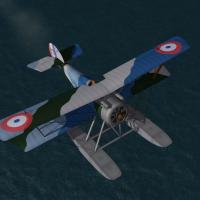
    14. The Albatros W.4 was a float plane version of the D.II. It used the same fuselage, engine, and armament as the D.II, but had a wider wingspan and tail. The W.4 was used for recon and spotting missions in the North Sea, the Baltic, and by Austria-Hungary in the Adriatic Sea.
       
      This is a late version of the W.4 with the radiator mounted on the upper wing. I have included a complete set of number decals, and two skins - a blue hex camo skin for Germany and one for Austria-Hungary. I have also included my skinning templates. The skins for the late Albatros W.4 are interchangeable with the early version skins.
       
      My version includes a loadout for a light bomb load, even though the W.4 was not used for bombing. You can delete the loadout file if you want more historical accuracy.
       
      Since it's a float plane, the W.4 works best in the Flanders, Gibraltar or other terrain that has a lot of water. The plane will actually take off and land from a conventional airfield, but it looks strange to see the floats going under the ground. It would be best to start the missions in the air. The plane will show up occassionally parked on an airfield, but its availability is listed as "Rare" so it shouldn't happen too often.
       
      Credits
      Thanks to Ojcar for making the data file for the Albatros W.4.
      Thanks to Nix for providing the sound for the Mercedes engine.
      And thanks to Quack74 for giving me the idea for a float plane.
       
      Installation Instructions
      For FE1 - Unzip the file and move the folder named "AlbatrosW4Late" into the FirstEagles/Objects/Aircraft folder. You also need to move the sound file "mercedes160m2.wav" into the FirstEagles/Sounds folder.
       
      For FE2 - Unzip the file and move the folder named "AlbatrosW4Late" into the FirstEagles/Objects/Aircraft folder. Then in the FirstEagles/Objects/Decals folder, create new folder named "AlbatrosW4Late". Move the folder named "D" from the Aircraft/AlbatrosW4Late folder into the Decals/AlbatrosW4Late folder you just made. You also need to move the sound file "mercedes160m2.wav" into the FirstEagles/Sounds folder.
      241 0
    15. The Albatros W.4 was a float plane version of the D.II. It used the same fuselage, engine, and armament as the D.II, but had a wider wingspan and tail. The W.4 was used for recon and spotting missions in the North Sea, the Baltic, and by Austria-Hungary in the Adriatic Sea.
       
      I have made an early version of the W.4 with the radiators mounted on the sides of the fuselage. I have included a complete set of number decals, and three skins - a basic wood and linen skin for Germany, one for Austria-Hungary, and an early hex camo skin. I have also included my skinning templates. The skins for the early Albatros W.4 are interchangeable with the late version skins.
       
      My version includes a loadout for a light bomb load, even though the W.4 was not used for bombing. You can delete the loadout file if you want more historical accuracy.
       
      Since it's a float plane, the W.4 works best in the Flanders, Gibraltar or other terrain that has a lot of water. The plane will actually take off and land from a conventional airfield, but it looks strange to see the floats going under the ground. It would be best to start the missions in the air. The plane will show up occasionally parked on an airfield, but its availability is listed as "Rare" so it shouldn't happen too often.
       
      Credits
      Thanks to Ojcar for making the data file for the Albatros W.4.
      Thanks to Nix for providing the sound for the Mercedes engine.
      And thanks to Quack74 for giving me the idea for a float plane.
       
      Installation Instructions
      For FE1 - Unzip the file and move the folder named "AlbatrosW4" into the FirstEagles/Objects/Aircraft folder. You also need to move the sound file "mercedes160m2.wav" into the FirstEagles/Sounds folder.
       
      For FE2 - Unzip the file and move the folder named "AlbatrosW4" into the FirstEagles/Objects/Aircraft folder. Then in the FirstEagles/Objects/Decals folder, create new folder named "AlbatrosW4". Move the folder named "D" from the Aircraft/AlbatrosW4 folder into the Decals/AlbatrosW4 folder you just made. You also need to move the sound file "mercedes160m2.wav" into the FirstEagles/Sounds folder.
      318 0
×
×
  • Create New...

Important Information

By using this site, you agree to our Terms of Use, Privacy Policy, and We have placed cookies on your device to help make this website better. You can adjust your cookie settings, otherwise we'll assume you're okay to continue..